
How to Choose and Grow an Apple Tree That Can Bear Fruit
Malus domestica Rosaceae
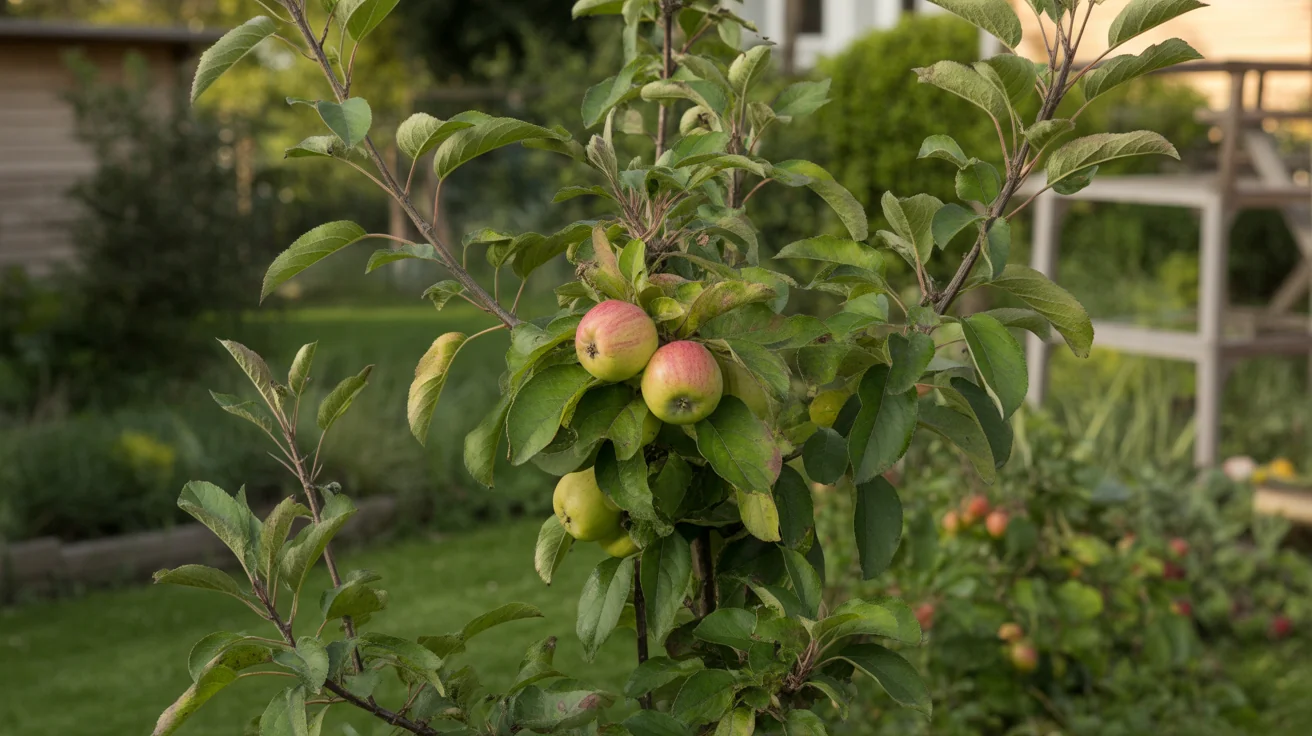
Apple trees can be excellent backyard fruit trees when the variety, rootstock, pollination partner, sun, and pruning plan fit the site. The tree is not hard to grow, but reliable fruit asks for more planning than simply planting a grocery-store favorite.
Care snapshot
Rootstock Decides How Big This Tree Gets
Nearly every backyard apple tree is two plants grafted together, a named fruiting variety joined to a rootstock chosen specifically to control size, anchorage, and how soon the tree begins bearing.
Rootstock naming follows a standard numbering system, where M9 and M26 keep trees small and precocious, MM111 and M111 grow larger and more drought-tolerant, and seedling rootstock produces the biggest, slowest-to-bear tree of all. A dwarfing rootstock like M9 needs permanent staking for its whole life, since the root system it produces is genuinely too small to anchor a mature canopy on its own.
A tree on a semi-vigorous rootstock such as MM106 needs less staking than a full dwarf, but it still bears earlier and stays smaller than a tree grown on its own roots from seed.
Buying by rootstock first and variety second keeps the size promise honest, since two trees labeled the same variety can reach very different mature heights depending on what they were grafted onto.
Interstem trees add a short third piece of wood between the rootstock and the fruiting variety specifically to combine two rootstocks' traits, pairing a hardy root system with a dwarfing effect the base rootstock alone could not provide.
A nursery tag reading M9 or Bud 9 describes a similar size class under different breeding-program names, so checking the code against a rootstock comparison chart avoids guessing at an unfamiliar label.
Match Bloom Groups Before You Buy
Most apple tree varieties cannot fertilize their own flowers, so a second, genetically different variety blooming at the same time needs to be growing nearby, whether in your own yard or a close neighbor's.
Nurseries sort varieties into bloom groups, often labeled early, mid, or late season, and pairing two varieties from the same or adjacent groups gives pollen the overlap window it needs, a system pear trees use in much the same way. A flowering crabapple can substitute for a second named apple, since crabapples are reliable, long-blooming pollen sources that most apple varieties readily accept.
A few triploid varieties, including some Jonagold and Gravenstein selections, produce sterile pollen and need two other compatible varieties nearby instead of just one, since they cannot pollinate a partner back.
Bees do the actual work of moving pollen between flowers, so a yard with other early spring blooms for foraging bees supports fruit set nearly as much as the second tree does.
Bloom timing shifts a little with weather every year, so a pairing that overlapped well last spring can still miss by a few days if one variety breaks bud earlier during a warm season.
Grafting a pollinator branch onto an established tree solves a small-yard pollination gap without planting a whole second tree, since one compatible limb can supply enough pollen for the rest of the canopy.
Give Apples Open Sky and Airflow
Apple trees need 6-8 or more hours of direct sun for strong bloom, full fruit color, and enough leaf energy to size a real crop. A shaded tree still grows leaves, but it blooms weakly and dries slowly after rain, which raises fungal pressure inside a crowded canopy.
Airflow through the canopy is a light problem in disguise, since a tree with room to breathe dries faster after dew or rain, cutting the wet-leaf window that scab and rust spores need to infect.
Frost pockets deserve their own site check separate from sun, since a low spot that collects cold air can freeze blossoms even on an otherwise sunny slope.
- Best site: open, sunny, and clear of frost pockets.
- Avoid: shade from buildings or large trees.
- Warm climates: protect fruit from sunburn with good leaf cover, not deep shade.
- Spacing: leave enough room to prune around the whole canopy.
A south-facing slope warms earlier in spring, which can push bloom into a frost-risk window in regions with unpredictable late freezes, so a gentler exposure sometimes protects a crop better than the warmest spot available.
Reflected heat off a nearby wall or driveway can push fruit ripening a little earlier, a detail worth factoring in if you are timing harvest for a specific use.
Planting on a rise rather than in a low corner of the yard lets cold air drain away from the blossoms on a still, clear spring night.
Deep, Infrequent Water Builds Real Roots
Young apple trees need steady moisture while roots spread into surrounding soil, and drought stress in the first two years slows establishment and can delay the tree's first real crop. Water deeply and infrequently rather than sprinkling the surface daily, using the same deep watering habit that pulls roots downward and outward instead of keeping them shallow near the surface.
A mulch ring 2-4 inches deep conserves soil moisture, but keep it pulled back from the trunk, since wet mulch against bark invites rot and rodents.
Mature trees tolerate short dry spells far better than young ones, since an established root system has already reached moisture a first-year tree's shallow roots cannot.
A shallow soil basin built around the drip line during the first couple of seasons keeps water from running off before it soaks in, especially on sloped ground.
Container-grown apple trees dry out faster than the same variety planted in the ground, since a pot's limited soil volume heats and drains faster than open native soil.
Watering needs drop off sharply once a tree is established, so a routine built for a two-year-old tree usually needs scaling back within a few more seasons.
Plant So the Graft Union Stays Above Soil
Apple trees grow best in well-drained loam with a slightly acidic to neutral pH, and standing water after rain is a bigger problem than modest native fertility. Loosen a wide planting area rather than digging one small rich hole, and backfill mostly with existing soil so roots grow outward instead of circling inside a compost pocket.
Keep the graft union several inches above the finished soil line. If it ends up buried, the scion can root on its own and bypass the rootstock chosen to control size.
- pH target
- About 6.0-7.0
- Drainage
- No standing water after rain
- Planting hole
- Wide, shallow, and mostly native soil
- Graft union
- Kept 2-3 inches above finished soil
A test hole filled with water settles a drainage question faster than guessing from soil texture alone, since water still standing after several hours signals a site worth amending or avoiding.
A raised planting mound helps in heavier clay soils, where digging a single hole simply creates a bathtub that traps winter rain around the roots.
Staking a newly planted tree loosely, rather than rigidly, lets the trunk flex a little in the wind, which actually helps it develop stronger taper than a trunk locked completely still.
Choose a Training Shape, Then Thin to Break Biennial Bearing
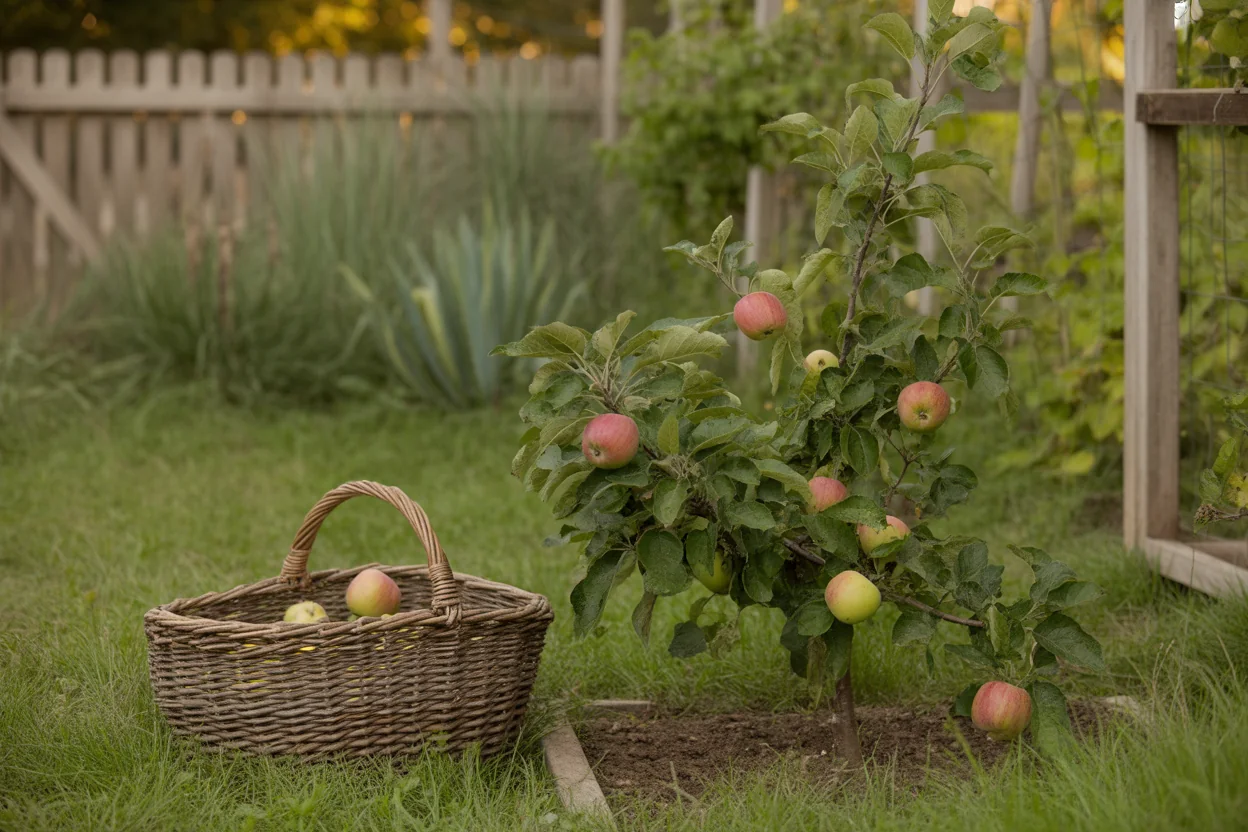
Decide on a training shape before the first structural cut. Central leader keeps one dominant trunk with tiered scaffold branches, open center removes the leader for a wider, sunnier bowl shape, and espalier trains branches flat against a wall or wire for tight spaces.
Prune in winter or very early spring, before buds break, removing crossing wood, dead branches, and steep competing leaders so light reaches the whole canopy, not just the outer edge.
After bloom, thin fruit clusters down to one apple every 6 inches, since crowded fruit rubs together, sizes smaller, and increases the odds of the tree resting the following year instead of cropping again. Thinning around the King bloom, the first and usually largest flower in each cluster, gives the best-sized fruit room to develop instead of competing with three or four smaller flowers nearby.
A tree that skips bearing every other year is often paying for a heavy crop the year before that was never thinned, and the same weak-fruit-set pattern behind apple trees with poor fruit set can make the following year look like a mystery instead of an unthinned crop's consequence.
- Choose a training shape before the first cut. Prune structure in late winter or early spring.
- Thin fruitlets to one every 6 inches after bloom. Remove extra bloom around the King flower first.
- Watch for a heavy-light bearing pattern year to year.
Watersprouts, the thin, upright shoots that crowd a canopy's interior after heavy pruning, are worth removing as they appear rather than waiting for the next winter session, since they shade the fruiting wood beneath them all summer.
A young tree trained hard in its first three years asks for far less corrective pruning later, since scaffold angles set while wood is still flexible hold their shape better than angles forced onto older, stiffer limbs.
Renewal pruning on an older, overgrown tree works best spread across two or three seasons rather than removed all at once, since a single drastic cut can trigger a flush of weak, upright watersprouts instead of productive fruiting wood.
Diagnose Scab, Fire Blight, and Codling Moth Early
Apple scab, cedar-apple rust, fire blight, codling moth, and apple maggot each leave a distinct signature, and matching the symptom to the cause works better than spraying on a generic schedule. Apple scab shows as olive-brown, velvety spots on leaves and fruit and thrives in wet spring weather, while cedar-apple rust needs a nearby juniper host and shows as bright orange spots dotted with small black centers.
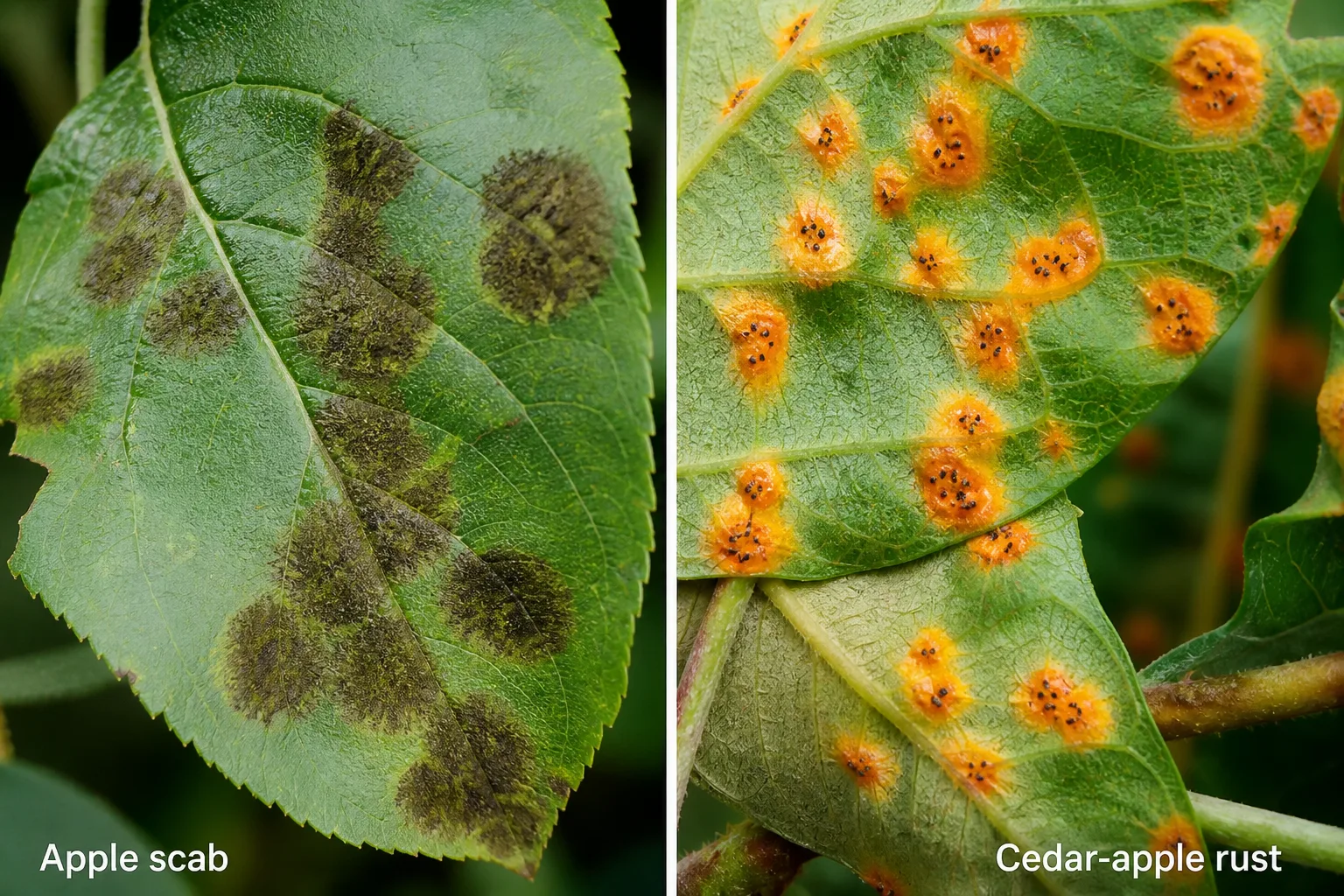
Olive-brown, velvety leaf and fruit spots that spread in wet spring weather.
Bright orange spots with small black dots, needs a nearby juniper host.
Blackened shoots that curl into a shepherd's-crook shape.
Tunneled fruit, either from the blossom end inward or in winding brown trails.
Fire blight blackens shoot tips into a shape growers call a shepherd's crook, and pruning infected wood in dry weather, several inches into clearly healthy tissue, keeps it from spreading through the rest of the canopy.
Codling moth larvae tunnel into the fruit core, usually entering near the blossom end, while apple maggot flies leave dimpled skin and brown tunnels that wind through the flesh instead of heading straight to the core. Red sticky-ball traps hung in the canopy in early summer catch apple maggot flies before they lay eggs, giving a real population count instead of a guess about spray timing.
A dormant-season oil spray, applied while the tree is still bare in late winter, smothers overwintering insect eggs and some fungal spores before the growing season gives them a head start.
Removing mummified fruit left hanging from the previous season clears out a source of fungal spores that would otherwise reinfect new leaves as soon as spring rain arrives.
A resistant cultivar planted from the start reduces spray pressure more reliably than treating an already-susceptible variety after disease sets in, since prevention beats a season of reactive fungicide spraying.
If you want a lower-spray comparison before committing to a second fruit tree, peach trees generally carry an even heavier pest and disease calendar than apples do.
Harvest by Feel, Then Store for Months
A ripe apple lifts and twists free from the branch with a gentle upward turn rather than needing to be pulled or cut, and the seeds inside darken from white to brown as the fruit matures. Background skin color is a more reliable ripeness cue than red blush, since blush can develop from sun exposure well before the fruit is actually ready, while a green background shifting toward yellow signals real maturity.
Apples ripen and are picked variety by variety over several weeks, not all at once, so checking a few fruit per visit works better than planning one single harvest day for the whole tree.
Apples release ethylene gas as they ripen, so storing them away from other fresh produce keeps nearby vegetables from ripening or spoiling faster than they should.
A cold, humid space near freezing, such as a garage refrigerator or a root cellar, can hold many storage-type apple varieties for months, far longer than a plum or peach would ever keep.
Slicing a test apple and touching the cut surface with a drop of iodine solution is a quick way to check starch conversion, since starch stains dark while ripe, sugar-converted flesh stays clear.
Storage varieties bred for long keeping, such as many late-season russets, hold their texture in cold storage far better than early-season dessert apples meant to be eaten within weeks of picking.
Windfalls, Pits, and Pet Safety
Apple flesh is safe to eat, but the seeds, leaves, and stems contain cyanogenic compounds, so pets and livestock should not be allowed to chew large amounts of plant material or gorge on fallen fruit.
Windfalls attract wasps, rodents, and wildlife, so cleaning up fallen apples regularly near patios, play areas, and walkways keeps the mess from becoming a bigger problem than the fruit itself.
Spring blossoms feed pollinators, so avoid spraying broad insecticides during bloom, when bees are actively working the flowers your crop depends on.
A tree trained to keep fruit within easy reach also keeps ripe apples from hanging so high that windfalls become the only practical way to harvest the top of the canopy.
Deer and other browsing wildlife will readily strip low branches of both leaves and fruit, so a trunk guard or low fence matters more in the first few years than after the canopy grows out of easy reach.
A yard planted with pollinator plants gives spring bees other options besides the apple blossoms alone, and smaller plantings such as blueberries, blackberries, and raspberries fill gaps a full-size tree canopy leaves unused.
Frequently Asked Questions
Do I need two apple trees to get fruit?
Many apple trees need a different compatible variety blooming nearby for good fruit set. Some are partly self-fertile, but even those usually crop better with a partner or crabapple.
How long does an apple tree take to fruit?
Dwarf apple trees may bear light crops in 2-4 years. Semi-dwarf trees often take 4-6 years, and standard trees can take longer.
How much sun does an apple tree need?
An apple tree needs 6-8 or more hours of direct sun for strong bloom, fruit color, sugar development, and lower disease pressure.
Can apple trees grow in containers?
Very dwarf apple trees can grow in large containers, but they need steady water, winter root protection, and careful pruning to stay productive.
Why did my apple tree flower but not fruit?
An apple tree may flower without fruit because of frost, poor pollination, lack of a compatible partner, low chill, shade, or young tree age.
Are apple trees safe for dogs?
The ASPCA lists apple tree seeds, leaves, and stems as toxic to dogs, cats, and horses because they contain cyanide-forming compounds, so do not let dogs chew them. Keep pets away from piles of windfalls.
Sources & References
Related Plants
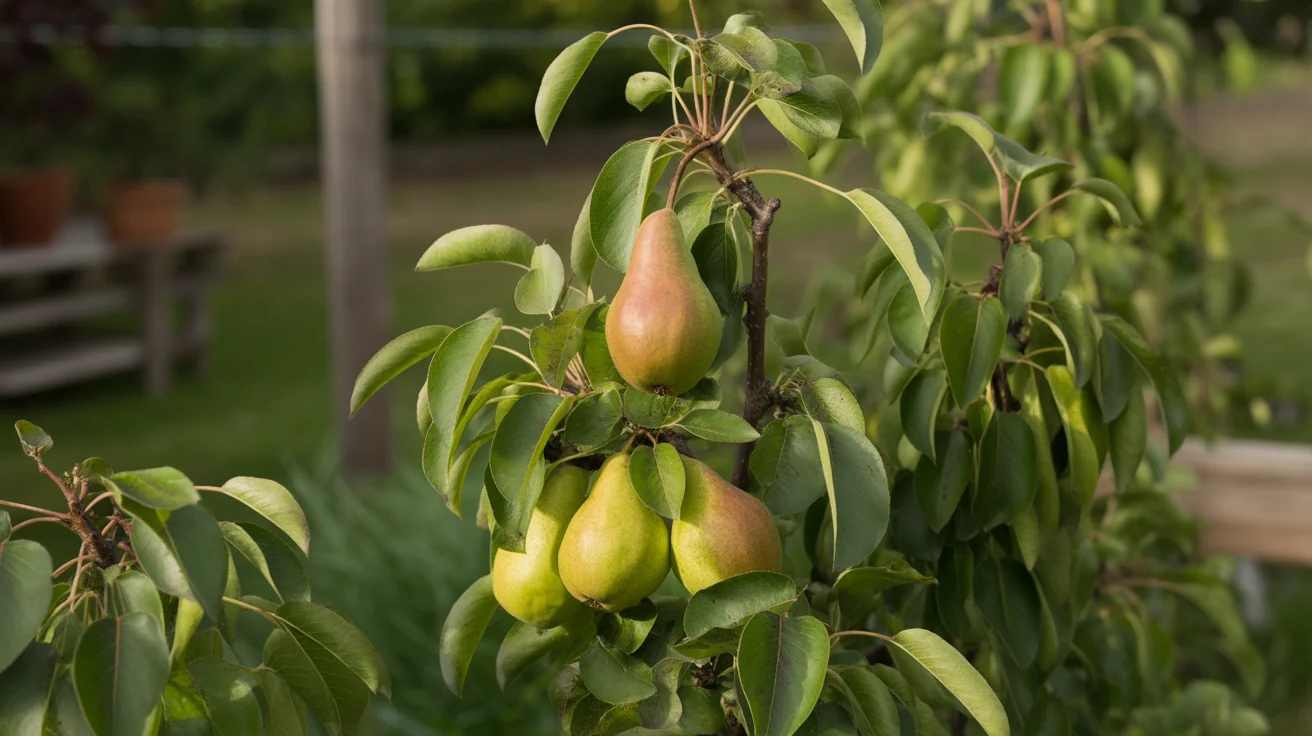
Pear Tree
Another pome fruit with similar training needs and spring bloom concerns.
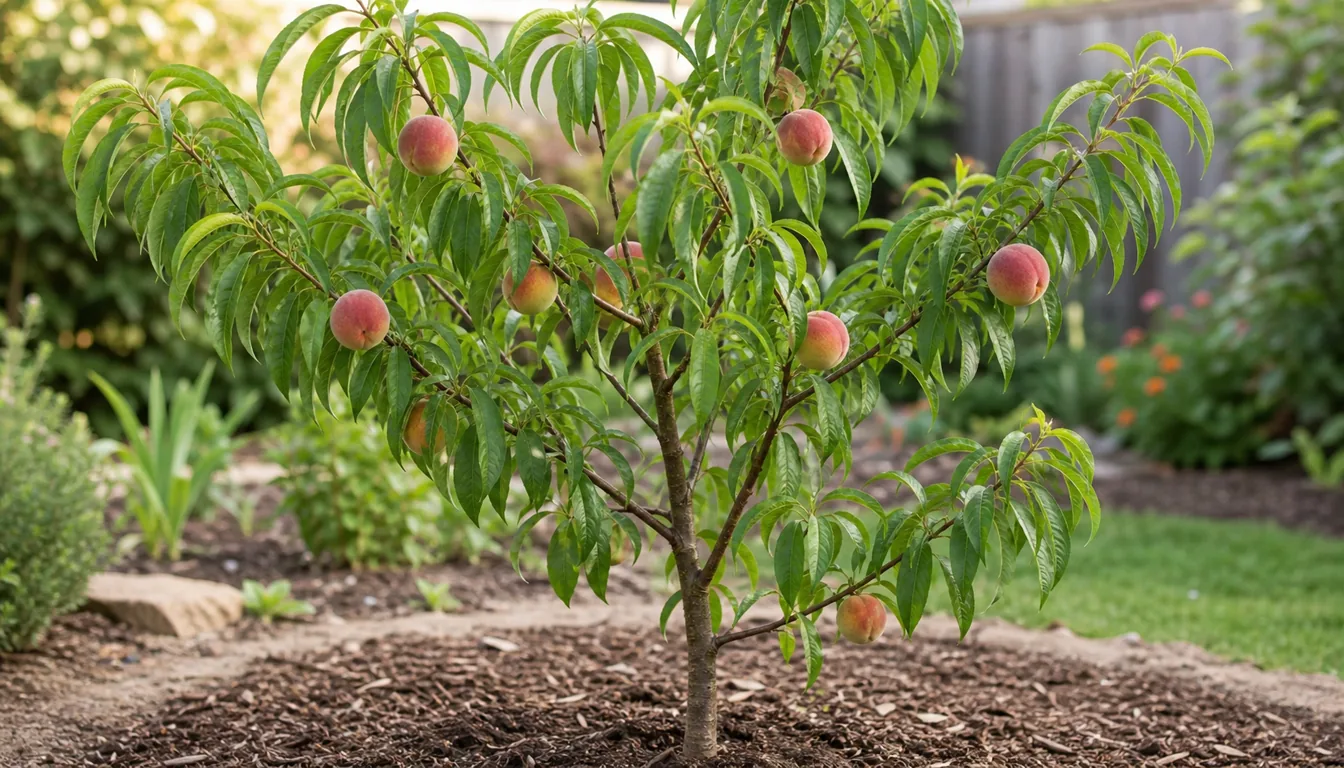
Peach Tree
A stone fruit with heavier pruning demands and earlier cropping.
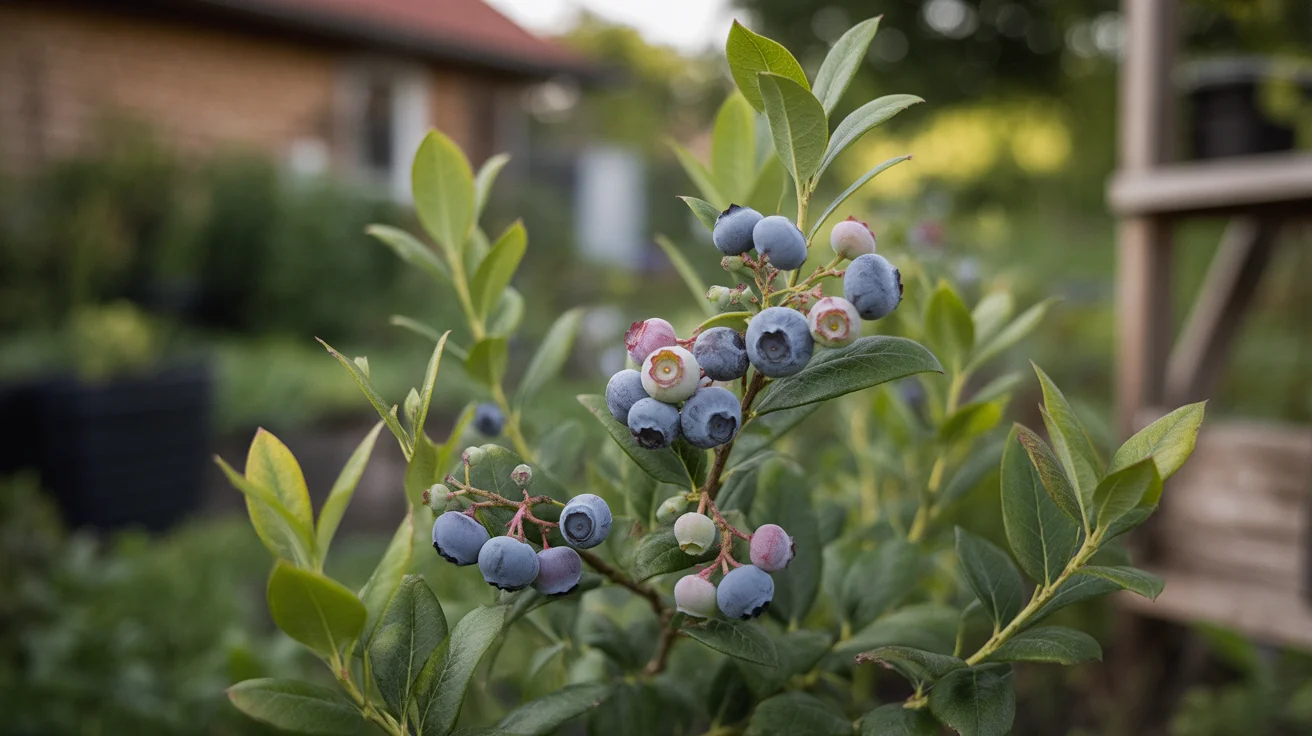
Blueberry
A smaller fruit shrub that suits yards without room for tree canopies.
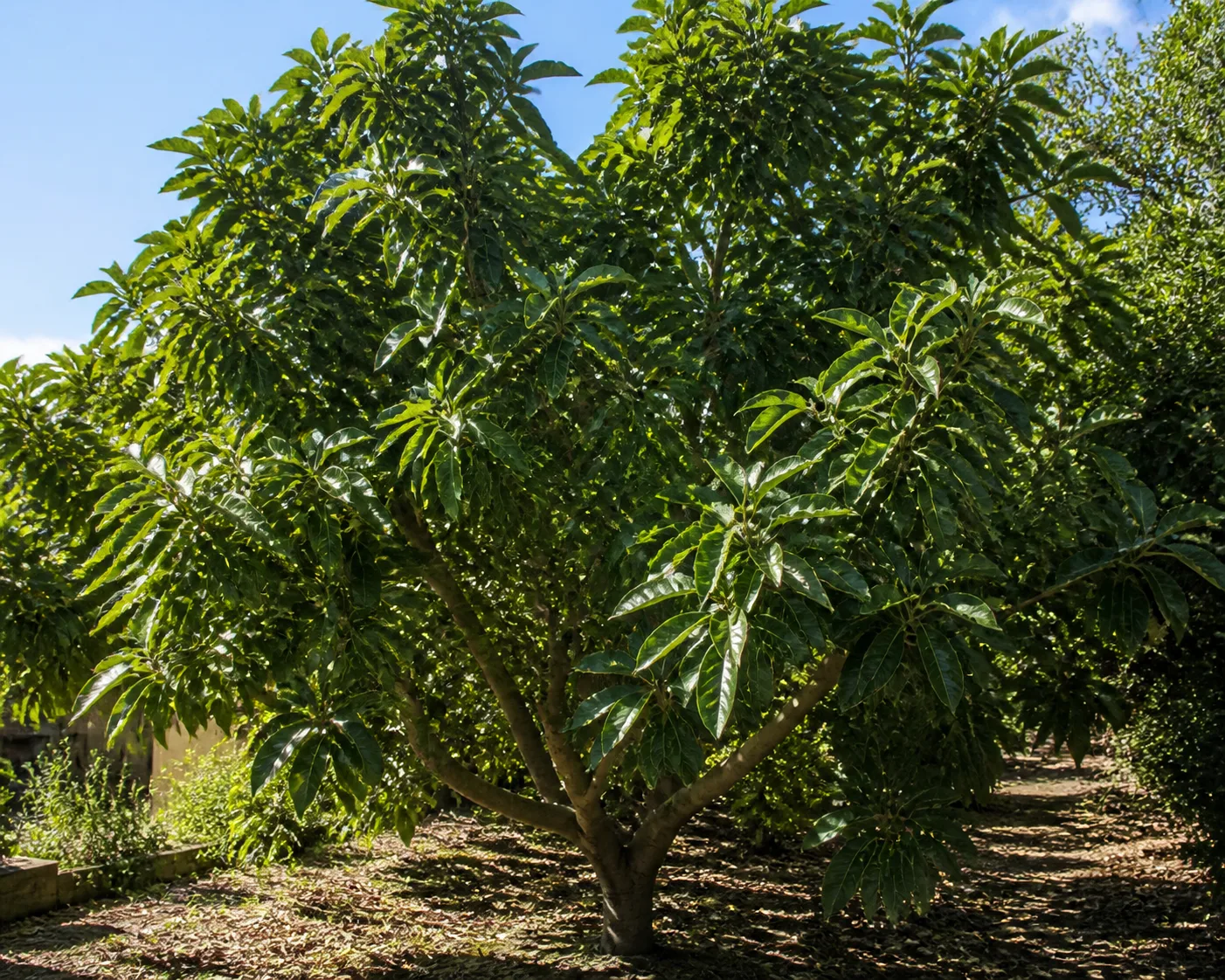
Avocado Tree
Avocado tree is a subtropical evergreen fruit tree for frost-free gardens, warm patios, and bright indoor…
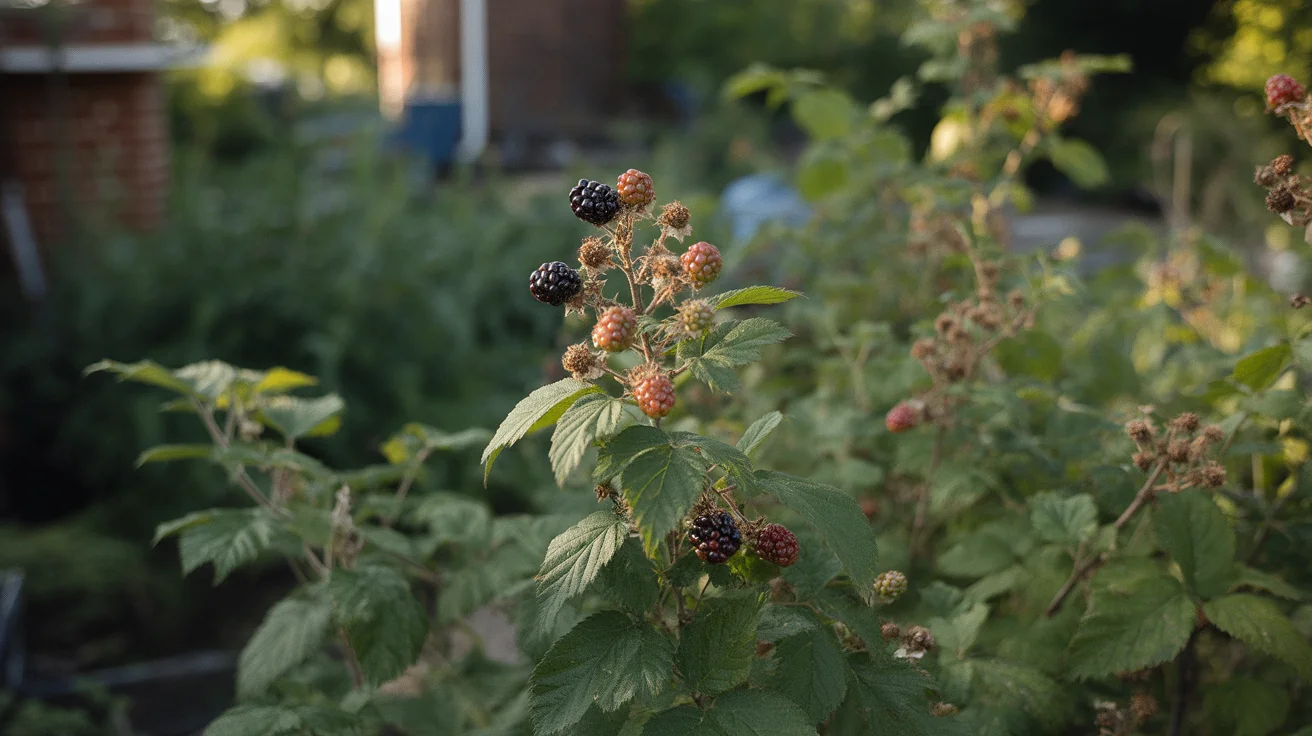
Blackberry
Blackberries are perennial brambles grown for summer fruit on managed canes.
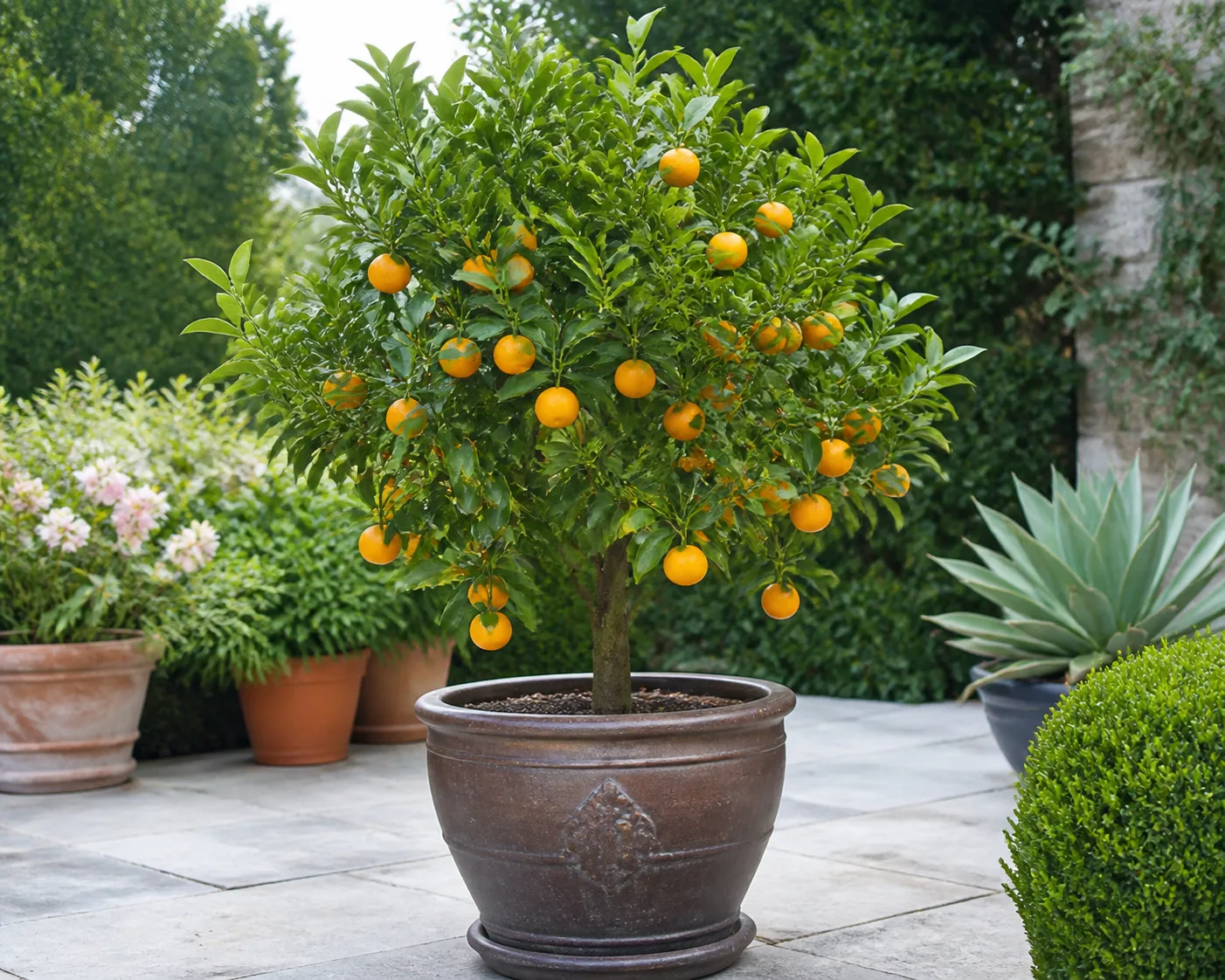
Dwarf Citrus
Dwarf citrus includes different fruiting varieties grown on size-controlling rootstocks, along with naturally smaller…