
Best Red Flowers for Hummingbirds and Garden Beds
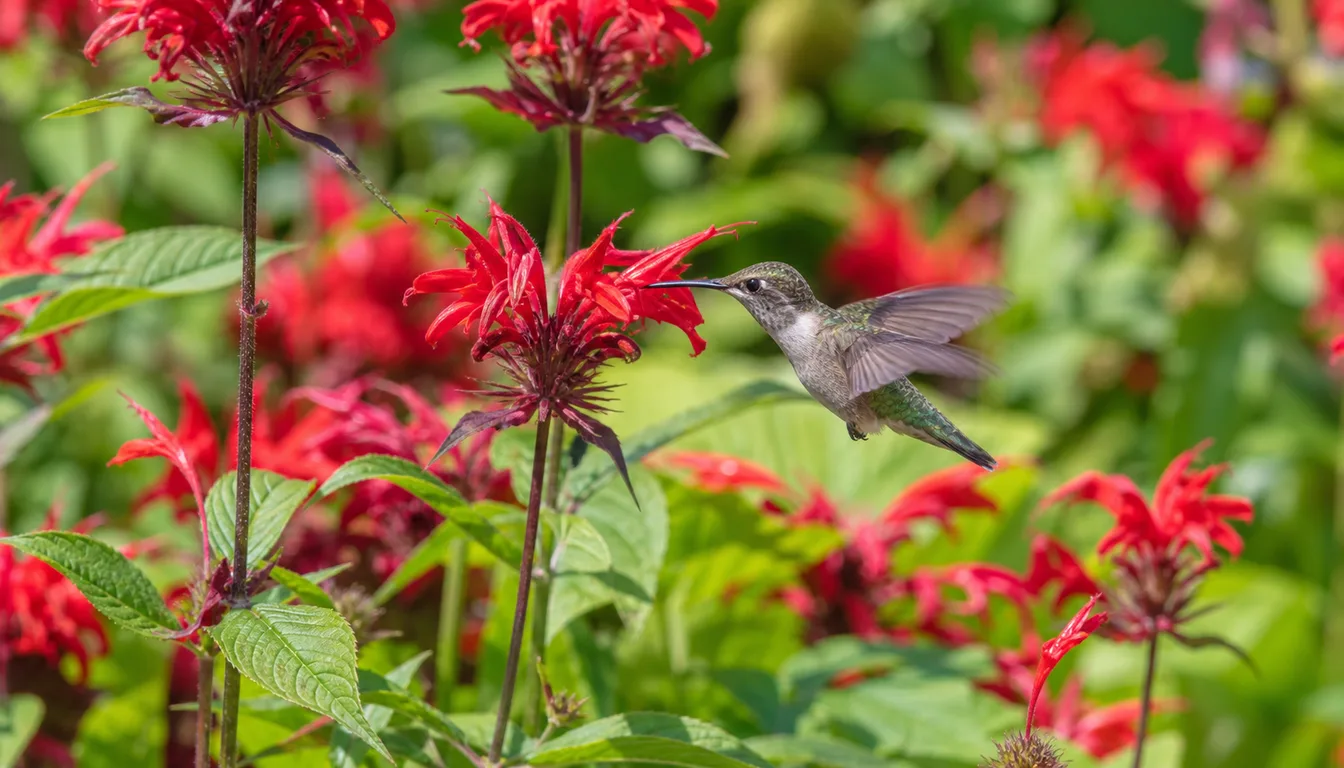
Red is the one flower color with a documented audience. Hummingbirds see the red end of the spectrum clearly and bees very nearly do not, which is why bird-pollinated flowers across unrelated plant families keep arriving at the same color.
That fact decides more than it looks like it should. It tells you which reds to buy, what a red bed gives up, and, along with one quirk of human night vision, where red should and should not be planted.
At a glance
Bees Barely See Red, and Hummingbirds See It Well
Red's reputation with hummingbirds comes down to a difference in eyesight. Bee vision runs from ultraviolet through blue and green and does not reach far into red, while birds see the red end clearly.
To a bee a pure red petal reads as something close to dark, with no signal worth crossing a garden for.
Birds are the audience these flowers evolved for, which is why red bird-pollinated flowers have appeared independently all over the world.
Color alone is only half the advice, though. A hummingbird feeds from a narrow tube, so a flat open red flower gives it nothing to work with no matter how bright the petals are.
The other marks confirm it, since bird flowers are usually scentless and carry dilute nectar in quantity because a bird hunts by sight rather than smell.
Plant red knowing what it does and does not recruit. A red-heavy bed will bring hummingbirds and feed noticeably fewer bees than the same bed in blue or purple, so mix in something they can see if pollinators in general are the point.
Pros
- Draws hummingbirds more reliably than any other flower color
- Reads as a focal point from across a yard in daylight
- Tubular reds supply nectar at a time when little else does
Cons
- Feeds far fewer bees, which see almost nothing at the red end
- Disappears first as the light falls, so evening gardens lose it
- Strong afternoon sun bleaches many reds toward pink within a season
The Reds Worth Planting, Sorted by What You Want From Them
Height and season are the usual way to sort a color list, and neither tells you whether the plant does the job you wanted red for. Purpose does.
The tubular reds are the ones that actually feed birds, and salvia, crocosmia, cardinal flower, penstemon and bee balm all carry the narrow trumpet a hummingbird can reach into.
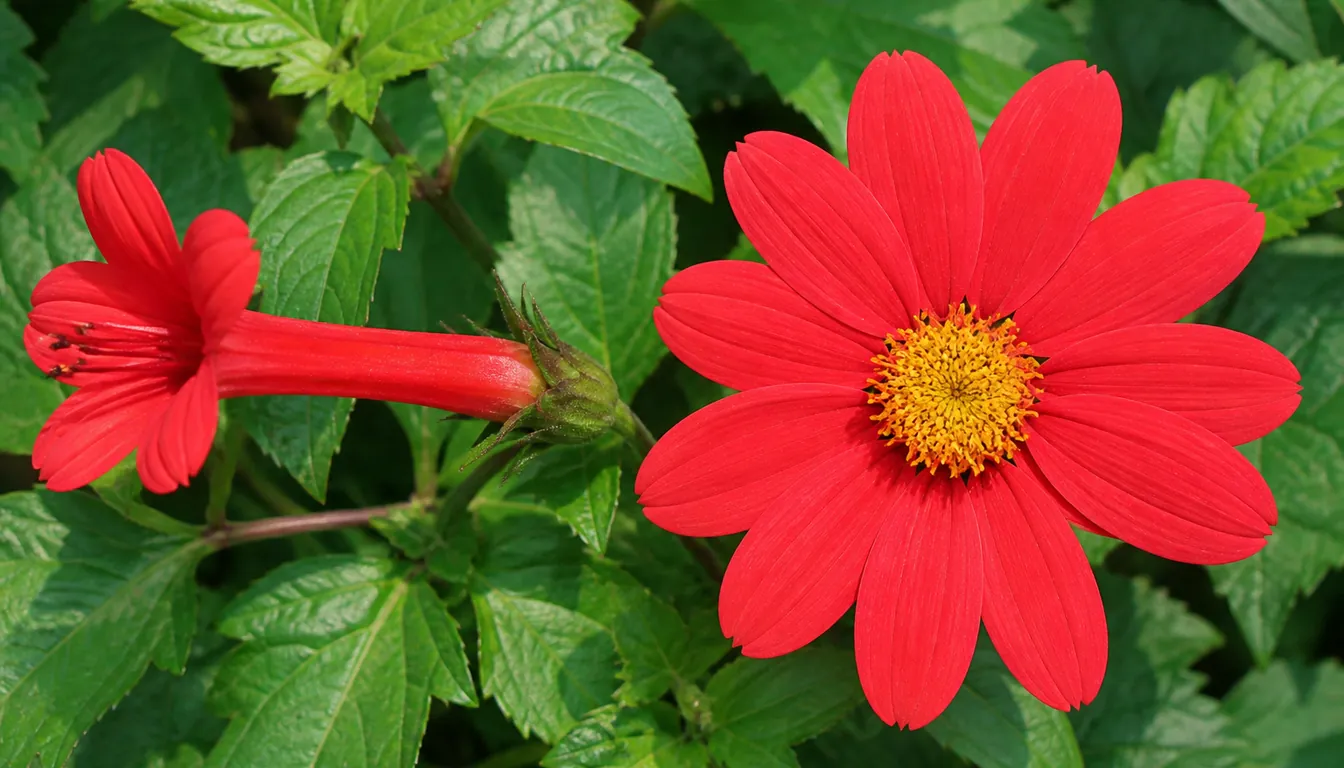
The bedding reds give you color and nothing else, which is a perfectly good reason to buy them. Petunia, zinnia, geranium and celosia hold saturated red through a season without offering birds a way in.
At larger scale the choices change. Hibiscus, rose and red daylily carry red at shrub and border size rather than at bedding size, and a peony against a rose is worth thinking through before committing the space.
Near-black burgundy comes with a caveat, because it reads as a hole rather than a color from any distance and needs a pale neighbor in the brightest position you have.
Shade narrows the list sharply, since most of the tubular reds want real sun. Azalea and bleeding heart are the shade options, and a broader shade perennial list is worth having before you plant.
| Plant | Flower shape | What it is for | Light |
|---|---|---|---|
| Salvia | Narrow tube | Hummingbirds | Full sun |
| Crocosmia | Narrow tube | Hummingbirds | Full sun |
| Cardinal flower | Narrow tube | Hummingbirds | Sun to part shade |
| Bee balm | Tubular cluster | Hummingbirds and bees | Full sun |
| Petunia | Shallow trumpet | Bedding color | Full sun |
| Zinnia | Flat daisy | Bedding color | Full sun |
| Geranium | Flat cluster | Bedding color | Sun to part shade |
| Hibiscus | Wide open | Border scale | Full sun |
| Rose | Cupped | Border scale | Full sun |
| Daylily | Open trumpet | Border scale | Sun to part shade |
| Azalea | Funnel | Shade color | Part to full shade |
| Bleeding heart | Pendant | Shade color | Shade |
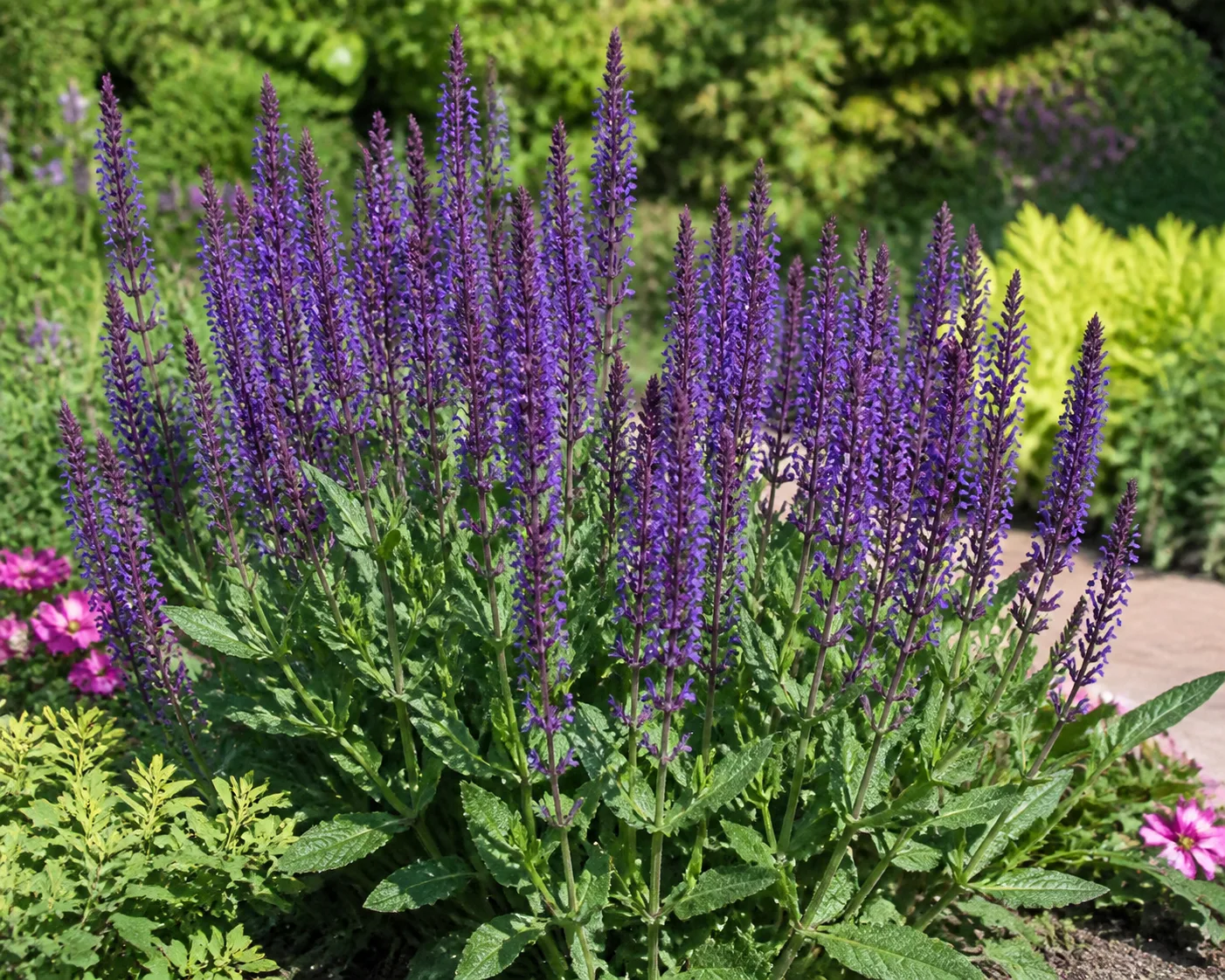
Salvia
Tubular red flowers that hummingbirds can reach
- Mature fit
- Use the cultivar's labeled height in a sunny border
- Main tradeoff
- Hardiness and moisture needs vary widely between salvia species
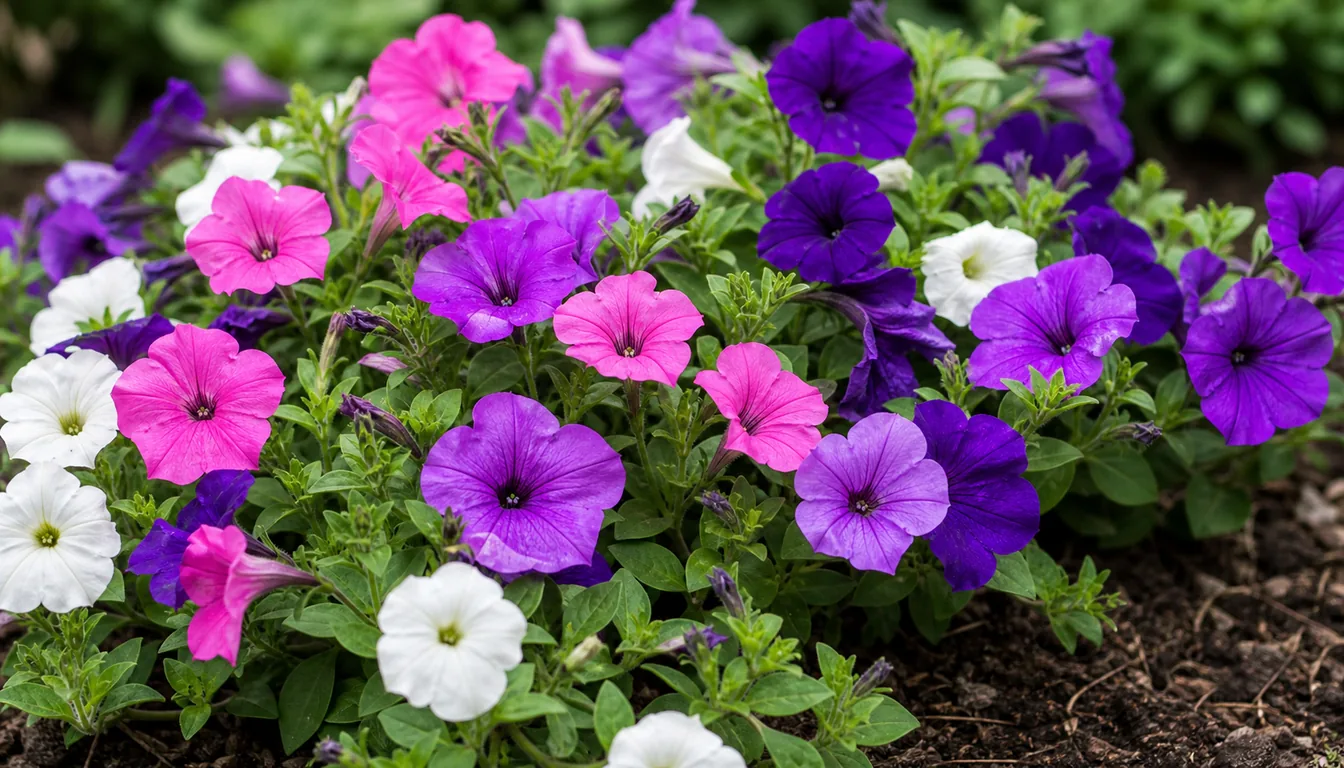
Petunia
Saturated red bedding color through one growing season
- Mature fit
- Choose an upright or trailing form for the bed edge or container
- Main tradeoff
- Its shallow trumpet is more useful for color than as a hummingbird flower
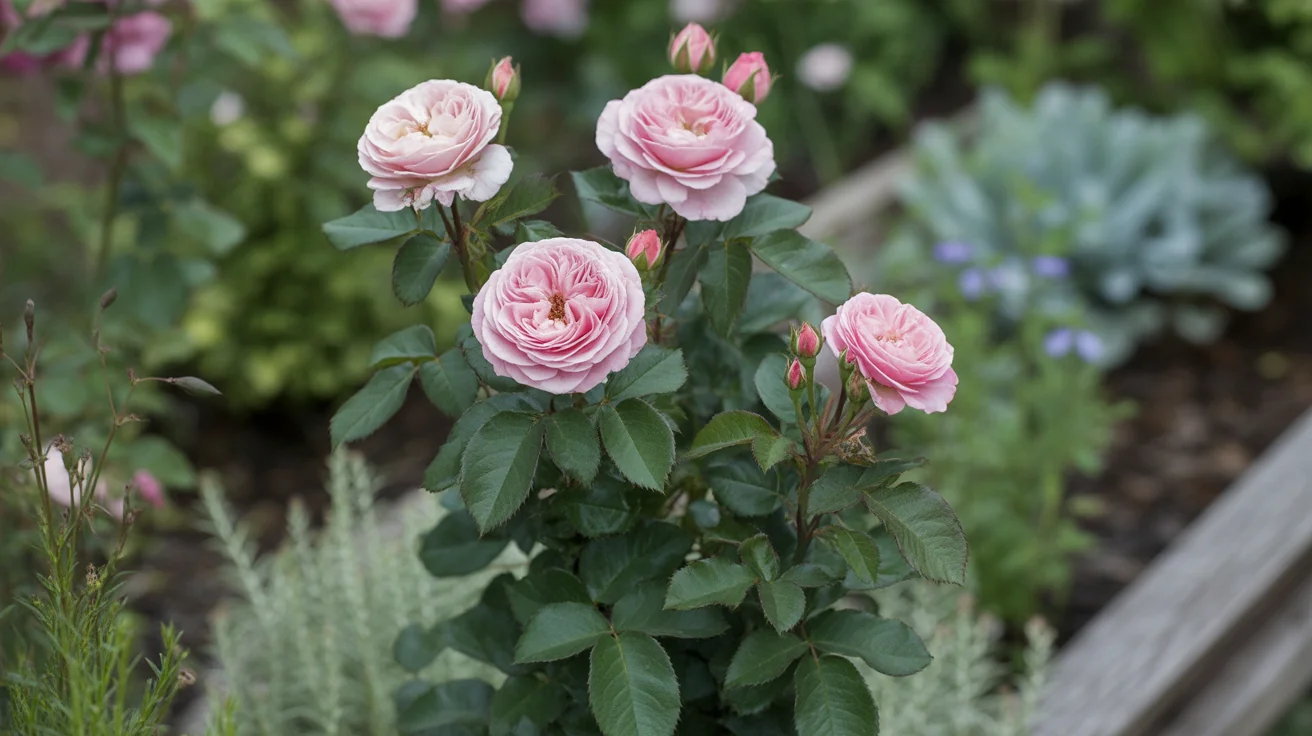
Rose
Cupped red flowers at shrub scale
- Mature fit
- Reserve a full-sun position sized for the chosen rose class
- Main tradeoff
- Cultivar disease resistance and maintenance differ sharply
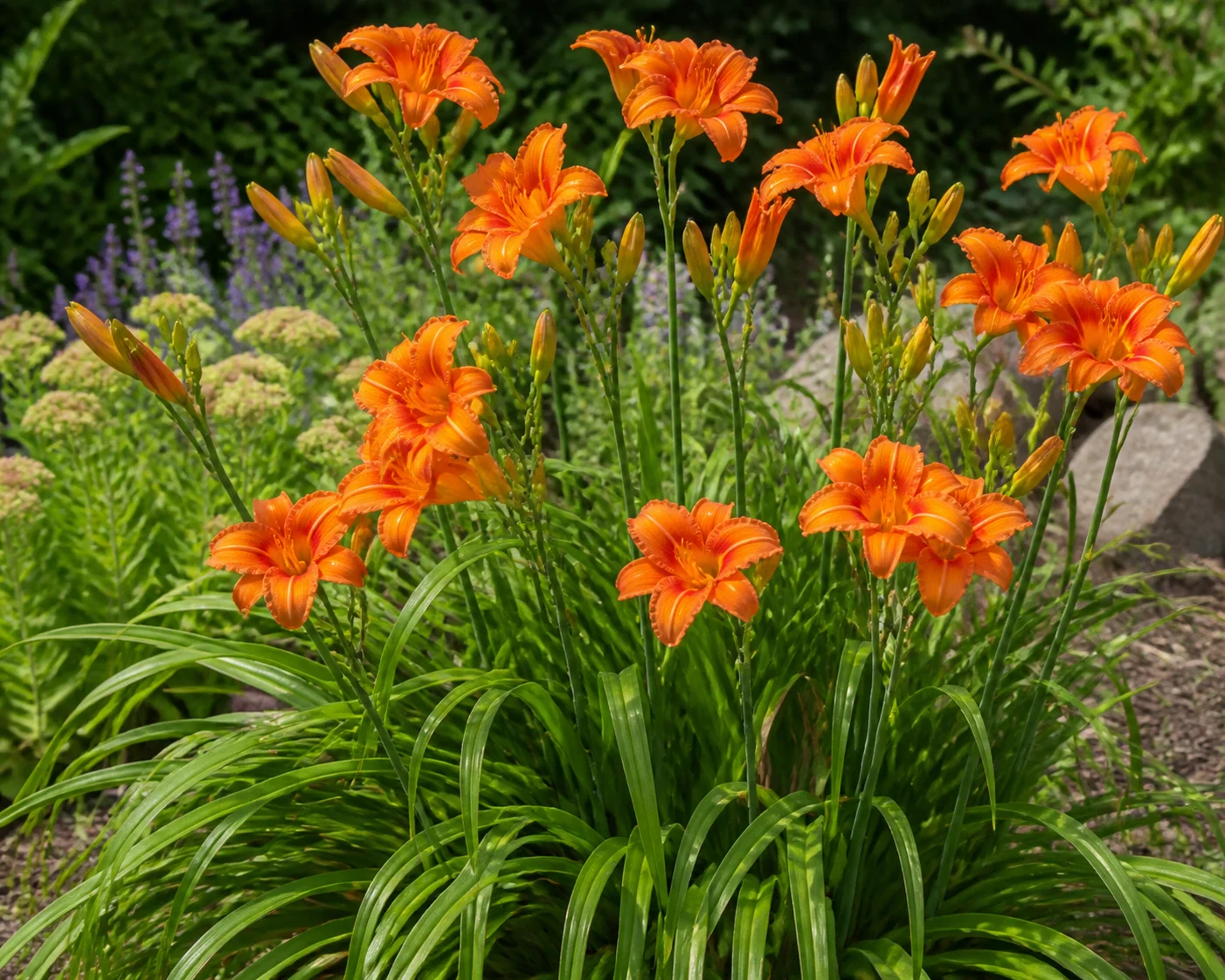
Daylily
Red border-scale flowers from a returning clump
- Mature fit
- Use it in sun or light part shade with room for the clump to widen
- Main tradeoff
- Each open flower lasts one day before later buds replace it
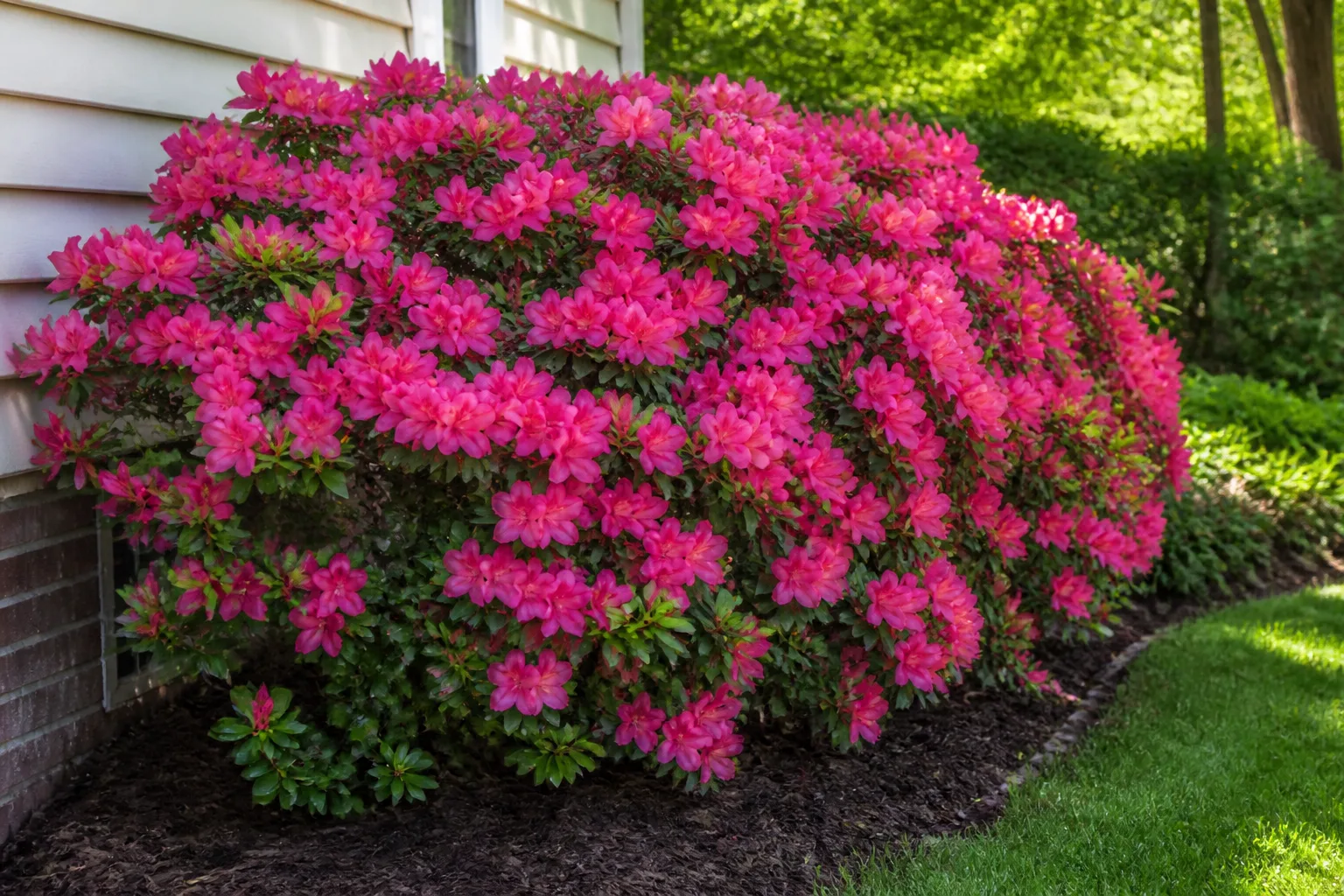
Azalea
A red flowering shrub for a partly shaded bed
- Mature fit
- Choose the cultivar by mature size and the site's available shade
- Main tradeoff
- Soil acidity and even moisture still decide whether it performs
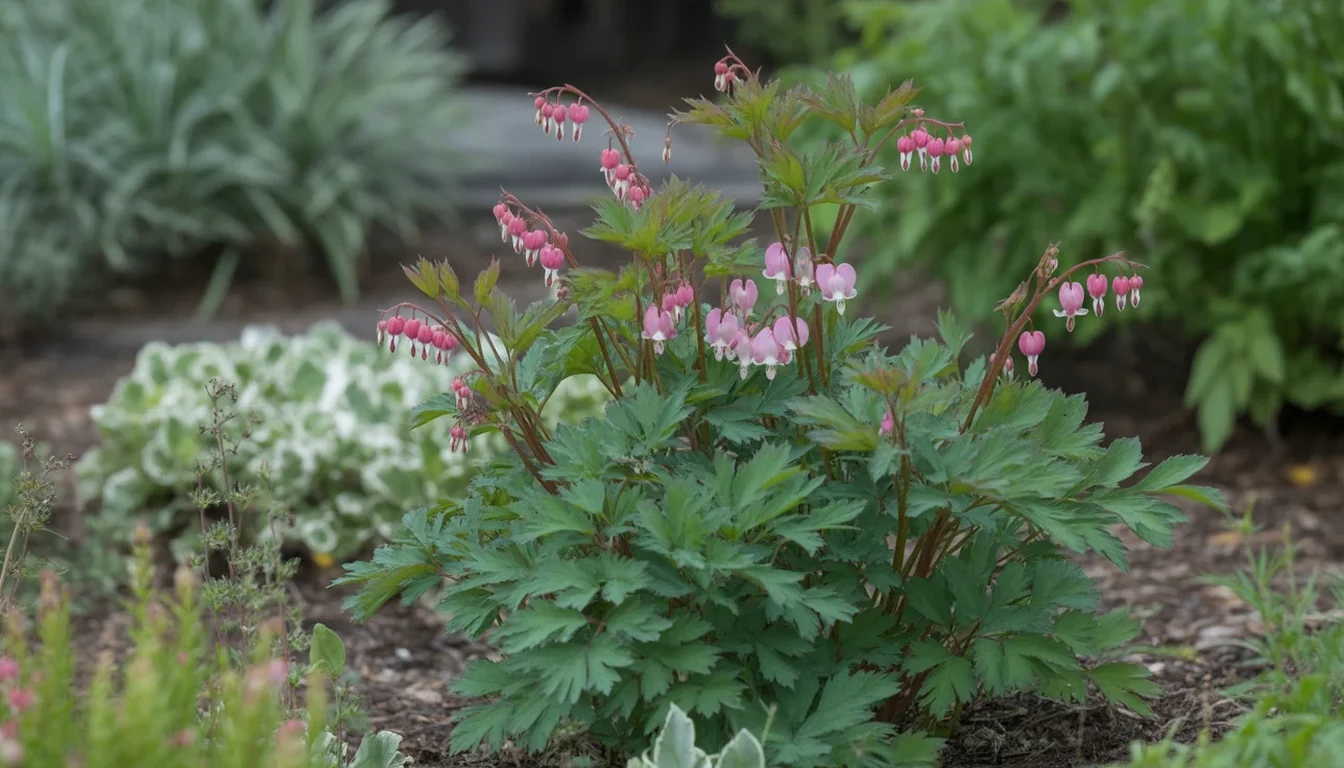
Bleeding Heart
Pendant red flowers for a shaded perennial layer
- Mature fit
- Place it where neighboring foliage can cover the space later
- Main tradeoff
- The plant may go dormant after its spring display
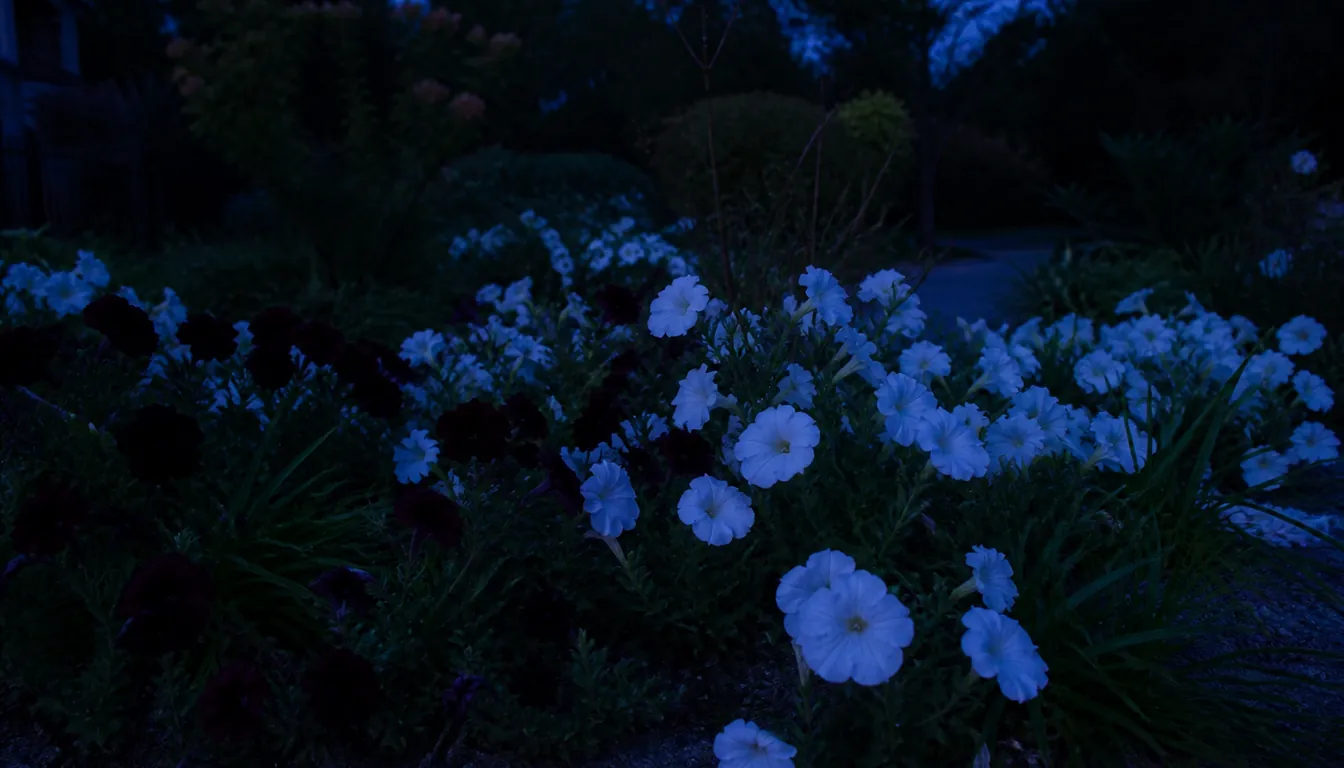
Red Is the First Color to Go at Dusk
As light fades, the eye's peak sensitivity shifts toward the blue-green end of the spectrum, and reds darken faster than anything else. Red is the first color in the garden to stop being a color.
The consequence lands on anyone who works. A red border that looked commanding at midday is a dark mass by the time you get home in the evening, while white flowers in the same bed are still perfectly visible.
Put red where daylight finds it. A morning path, a bed under a window used during the day, or anywhere the garden gets looked at before dusk, and give the evening view to colors that survive it.
Two Different Things Are Called Fading
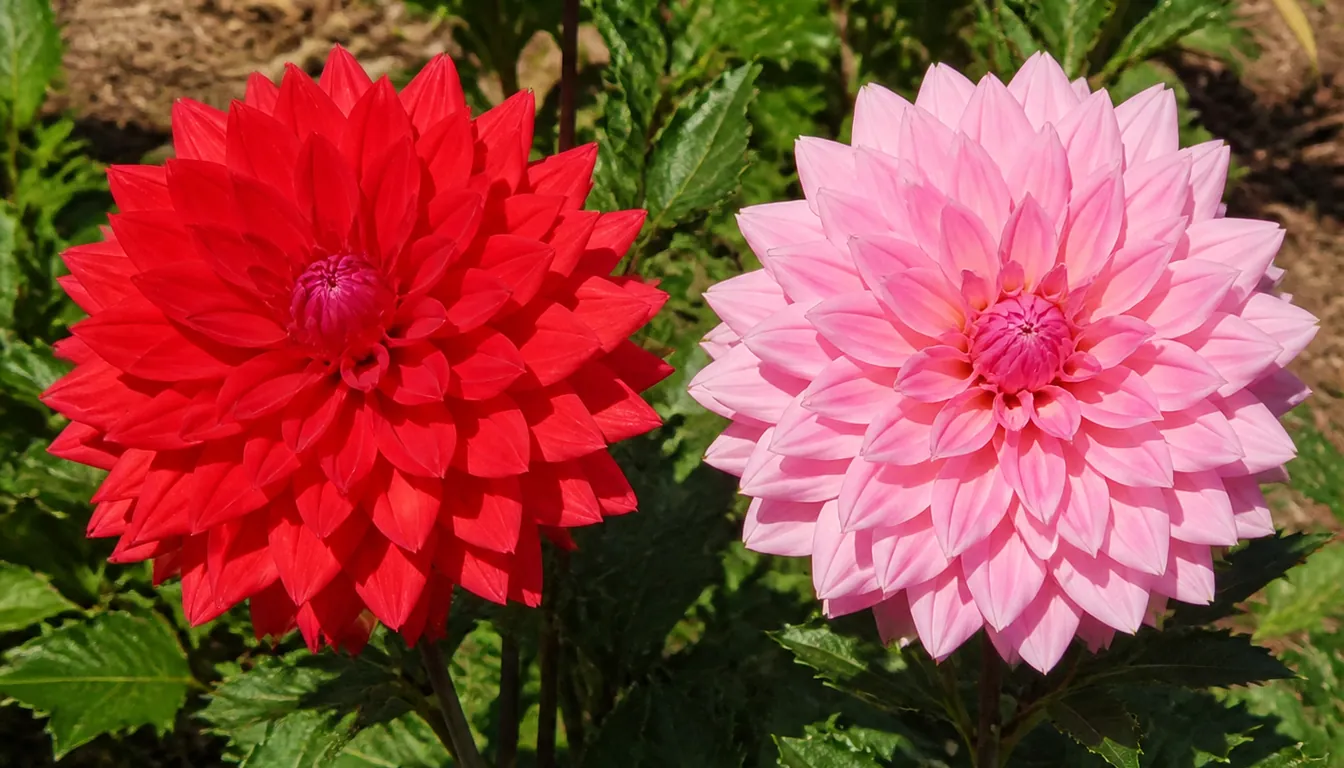
People use the word fading for two different things, and the fix is different for each. One is the sun taking the color out, and the other is the flower changing as it ages.
Sun bleaching works on the whole plant at once, washing a saturated red toward pale pink over a season of strong afternoon sun while the petals stay firm and undamaged.
Aging works flower by flower. Some cultivars open red and drift toward pink or purple as each individual bloom matures, so you see both shades on the plant at the same time and nothing has gone wrong.
Site for the first and accept the second. Afternoon shade holds red where full sun bleaches it, which makes bleaching a planting decision rather than an aftercare one, and no feeding or soil treatment restores color to a bloom that has already lost it.
- Sun bleaching
- Whole plant fades together, over a season
- Bleaching fix
- Afternoon shade, chosen at planting
- Aging drift
- Flower by flower, both shades present at once
- Aging fix
- None needed, it is normal for the cultivar
- Not fading
- Limp, spotted or crisp petals, which is a different problem
- What never works
- Fertilizer or soil amendments to restore red
What Should You Plant Beside Red Flowers?
Give red something quiet to sit against, since green mass and silver foliage separate it from nearby colors without adding a second focal point.
The pairing to watch is red beside strong pink, because the two are close enough that the difference can look accidental rather than deliberate.
Green foliage
The quietest background lets red remain the focal point.
Silver leaves
Cool contrast separates dark reds from surrounding foliage.
White flowers
Bright contrast keeps red visible in mixed beds.
Strong pink
Separate the colors or repeat the pairing deliberately.
Pro Tips
- Buy tubular reds if hummingbirds are the point, since a flat red flower gives a bird nothing to feed from.
- Mix blues and purples into a red bed if you want bees as well, because they see almost nothing at the red end.
- Plant red where daylight reaches it, and keep it away from the view you mostly see after work.
- Give near-black burgundy a pale neighbor and your brightest position, or it reads as a hole from any distance.
- Treat sun bleaching as a siting decision. Afternoon shade holds red where full sun washes it toward pink.
- Check whether both red and pink blooms are on the plant at once, which means the cultivar ages that way rather than failing.
Frequently Asked Questions
Why do hummingbirds like red flowers?
Because they can see red clearly while bees largely cannot, so red flowers signal to birds without advertising to the insects that would take the nectar first. The shape matters as much as the color, since a hummingbird feeds from a narrow tube and a flat red flower offers it nothing.
Do red flowers attract bees?
Much less than blue, purple or yellow ones, because bee vision runs from ultraviolet through green and barely reaches the red end, so a red petal reads as dark to them. Some red flowers do get bee visits, usually guided by ultraviolet markings the human eye cannot see, so it is a strong tendency rather than an absolute rule.
Which red flowers are best for hummingbirds?
The ones with a narrow tubular flower, which means salvia, crocosmia, cardinal flower, penstemon and bee balm rather than red zinnias or geraniums. Scentless flowers carrying plenty of dilute nectar are the classic bird-pollinated design and a reliable thing to look for.
Why do my red flowers look dull in the evening?
Because as light dims the eye becomes relatively more sensitive to blue-green and less to red, so red is the first garden color to go dark. If you mostly see your garden after work, plant red where daylight reaches it and give the evening view to white or pale colors.
Why did my red flowers turn pink?
Either sun bleaching or normal aging, and the pattern tells you which. Bleaching fades the whole plant together over a season in strong afternoon sun, while an aging cultivar shifts flower by flower so you see red and pink on the plant at the same time.
What color goes well with red flowers?
Green mass and silver foliage are the safest partners, because they separate red from everything else without introducing a second strong color. White works well too, and the pairing to think twice about is red beside strong pink, which usually reads as accidental.
Sources & References
Related Guides
Best Butterfly Garden Plants for a Complete Habitat
The best butterfly garden plants do two different jobs. Host plants feed caterpillars, while nectar…
15 min read
Best Fall-Blooming Flowers for Color Near Frost
A bed that still carries flowers in October usually was planned before temperatures fell.
9 min read
Best Fast-Growing Trees for Shade and Privacy
The best fast-growing tree is the one whose mature crown, roots, climate range, and maintenance…
16 min read
Best Fragrant Flowers for Every Yard and Season
The best fragrant flowers depend on climate, light, space, and the hours you use the yard.
15 min read
Best Full-Sun Perennials for Hot, Bright Beds
The best full-sun perennials are the ones that match the bed's soil moisture and drainage, local…
14 min read
Best Ground Cover Plants for Sun, Shade, and Slopes
The best ground cover is a plant that survives the site and performs the job without escaping into…
18 min read