Care snapshot
- Light
- Full sun to part shade, at least some shade in Florida
- Water
- Regular water until established, then mainly in extended dry periods
- Height
- 4 to 8 ft (NC State), 6 to 10 ft in Florida (UF/IFAS)
- Zone
- Zones 5a to 9b (NC State), 5b to 9 (UF/IFAS EDIS)
- Spread
- 4 to 10 ft wide (NC State)
- Temperature
- Hardy to Zone 5, where flower buds may be injured (UConn)
How Do You Tell Oakleaf Hydrangea From Other Hydrangeas?
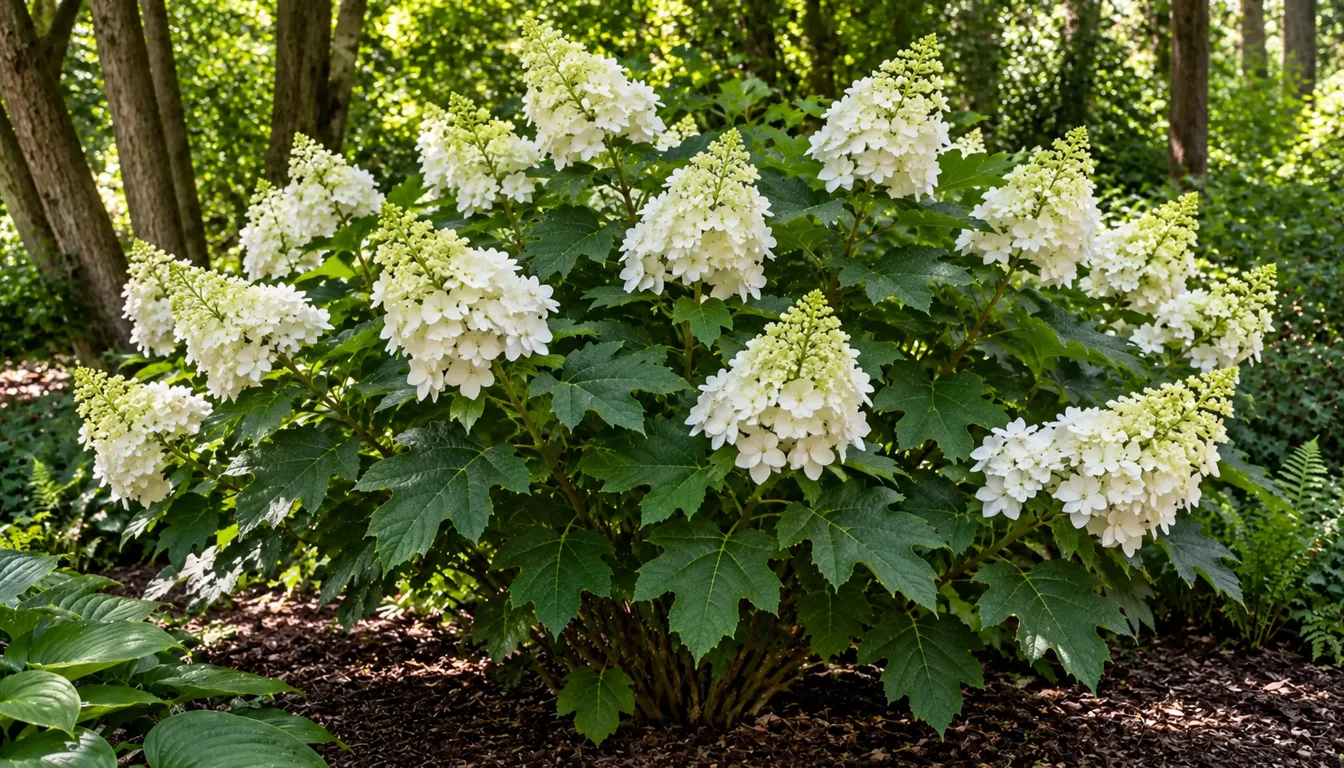
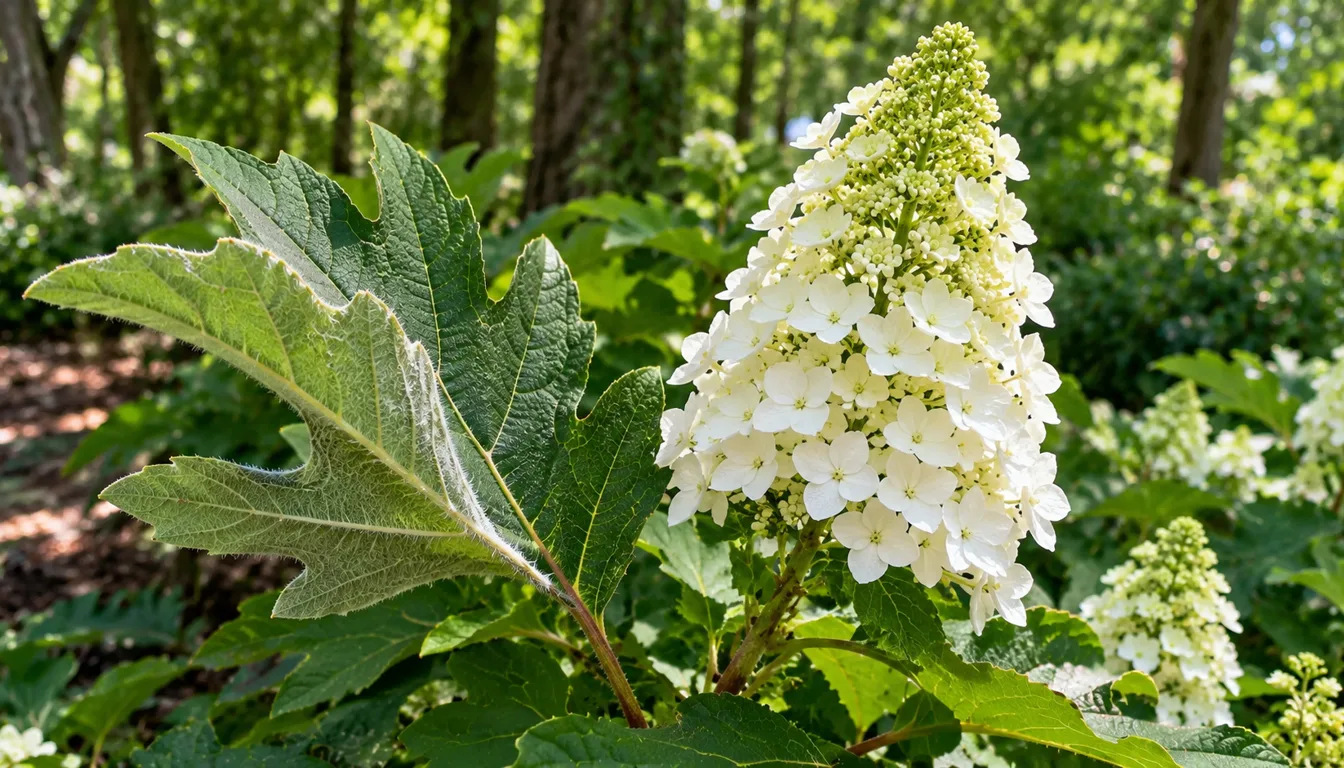
Oakleaf hydrangea (Hydrangea quercifolia) is an upright, multi-stemmed, deciduous shrub native to the Southeastern United States, where it prefers moist woods and stream banks (NC State). Two features tell it apart from bigleaf hydrangea, the form UConn says is most common in landscape beds, and they are the lobed, oak-shaped leaf and the cone-shaped flower cluster.
Each leaf has 3 to 7 lobes, is fuzzy when young, and grows 3 to 8 inches long and 2 to 6 inches wide (NC State). The leaves are largest on shaded plants, where they reach 8 to 12 inches (UF/IFAS).
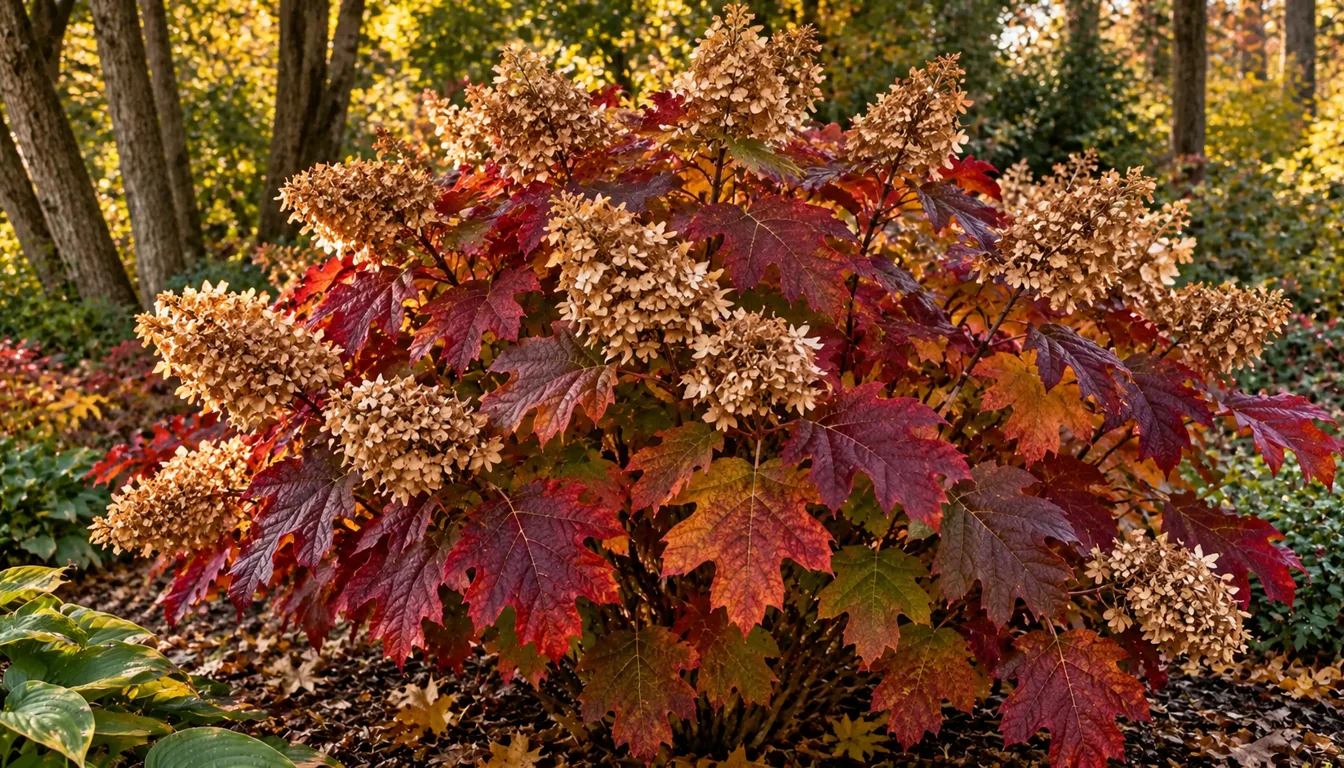
Upright pyramidal panicles 4 to 12 inches long carry creamy white flowers in late spring and summer, and the flowers fade to pink and then tan in fall (NC State).
Size depends on the cultivar and the region. The shrub reaches 4 to 8 feet tall and 4 to 10 feet wide in NC State's listing, and 6 to 10 feet tall in Florida (UF/IFAS). It sprawls somewhat and sends up new shoots (UF/IFAS), so it needs room to spread.
What Does Oakleaf Hydrangea Look Like in Each Season?
The shrub offers a different feature in each season, from fuzzy new leaves in spring to peeling bark in winter.
- Spring
- Fuzzy new leaves, then blooms from mid-spring to early summer (NC State)
- Summer
- Upright pyramidal panicles of creamy white flowers that fade to pink and then tan, and UF/IFAS says they stay on the plant for months
- Fall
- Leaves turn red, bronze or purple and may stay on well into winter (UF/IFAS). NC State lists wine, orange and mahogany.
- Winter
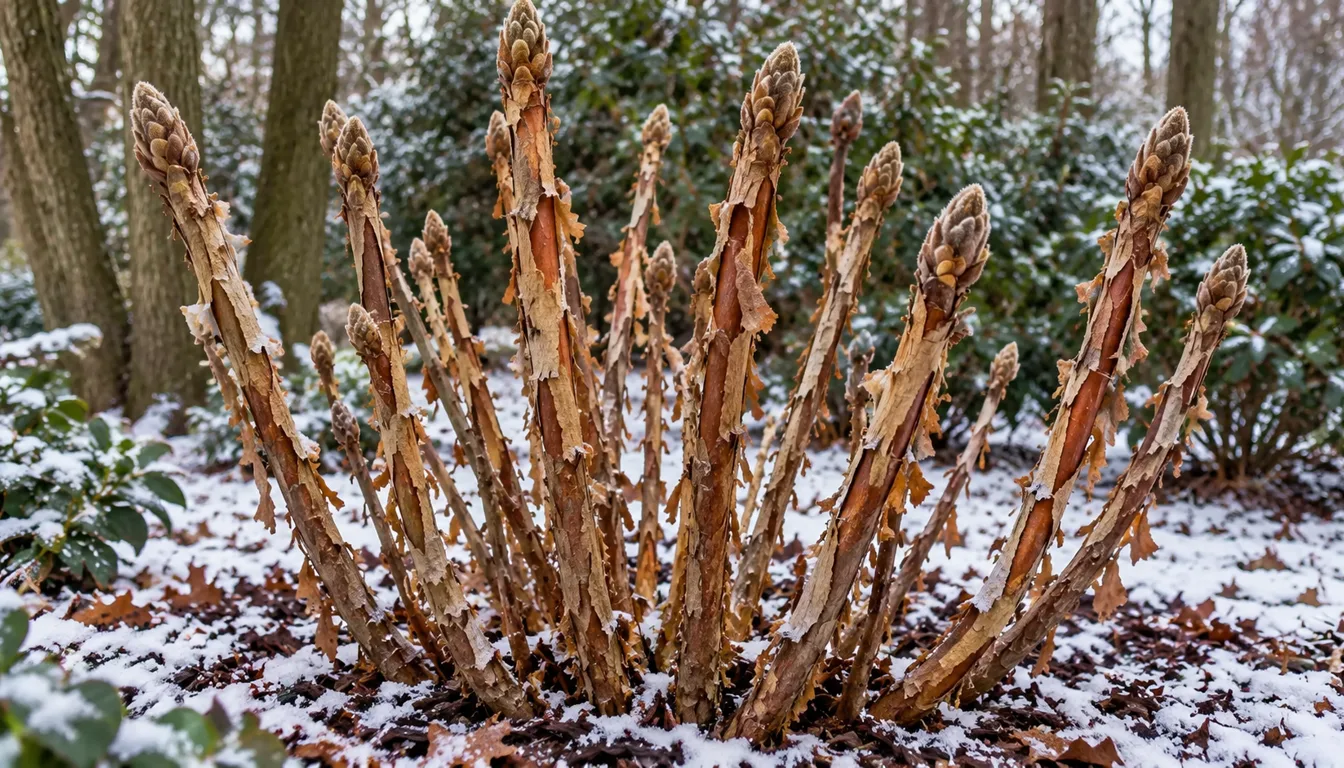
- Older branches show brown papery bark peeling back to cinnamon-colored bark underneath (NC State)
The flowers are fragrant and attract butterflies and other insects, and songbirds eat the seeds (NC State). In South Carolina they open creamy white in May, age to dusky pink and dry to papery brown in fall, and native bees, syrphid flies and honeybees visit the tiny fertile flowers, since the large showy flowers are sterile (Clemson).
The shrub is highly suitable as a specimen or accent plant, and in large open spaces it can be massed or arranged as an informal hedge (NC State). Because of its size, most residential landscapes only need one or two plants, and it makes a nice accent in a shrub border or growing out of a ground cover (UF/IFAS).
How Much Sun and What Soil Does Oakleaf Hydrangea Want?
Oakleaf hydrangea does well in full sun to part shade, but it needs some sun to bloom (NC State). How much shade it wants shifts with the region. In Florida it needs at least some shade, and UF/IFAS describes it as an understory plant for partial to almost full shade. In Connecticut, UConn calls it the best hydrangea for hot climates and says the foliage is more colorful with more sun.
Heavy shade costs flowers, because hydrangeas as a group bloom less, or not at all, under a large tree or on the north side of a structure (UConn). A site darker than that is a better fit for other shade shrubs.
The soil it wants is organically rich, well drained and medium in moisture, and summer mulch helps keep it that way (NC State). It performs best in fertile, well-drained soil but tolerates other conditions (UF/IFAS), including clay, sand, loam and slightly alkaline soil (UF/IFAS FPS-259).
- Room to spread, since it can sprawl and sends up new shoots (UF/IFAS).
- A well-drained spot, because wet feet cause root rot (Clemson).
- A place where the winter bark and fall color can be seen from the house.
How Do You Plant, Water and Feed Oakleaf Hydrangea?
Avoid planting in hot, dry weather, because UF/IFAS calls that the worst time to plant a shrub, and it says a new shrub needs about 5 to 7 months to become established. For moving an existing plant, UConn says to transplant hydrangeas while they are dormant.
UF/IFAS gives these steps for planting shrubs in Florida.
- Dig a wide, shallow hole at least one and a half times wider than the root ball and one or two inches shallower than it.
- Set the shrub so the root flare sits above the soil surface, and backfill with native soil, because compost in the hole breaks down too quickly in Florida's sandy soils.
- Add plenty of water to the root ball and the planting hole.
- Mulch around the plant but not on top of the root ball, pulled at least 2 inches away from the base.
Until the roots spread into the surrounding soil, the shrub needs regular irrigation applied directly to the root ball (UF/IFAS). UConn says to water thoroughly after transplanting and then regularly through the first two summers, soaking deeply on a less frequent schedule than daily watering.
After that, an established shrub needs water mainly during extended dry periods (UF/IFAS). It takes less water than bigleaf hydrangea but needs soil that drains, because wet feet cause root rot (Clemson).
An established shrub requires no attention (UF/IFAS FPS-259), so fertilize only if the plant needs it. Poor soil fertility and excess nitrogen are both among the reasons hydrangeas fail to bloom (Clemson).
When Should You Prune Oakleaf Hydrangea?
Prune, if needed, immediately after flowering, because oakleaf hydrangea blooms on old wood (NC State), and UF/IFAS gives the same timing so that next year's blooms are not removed.
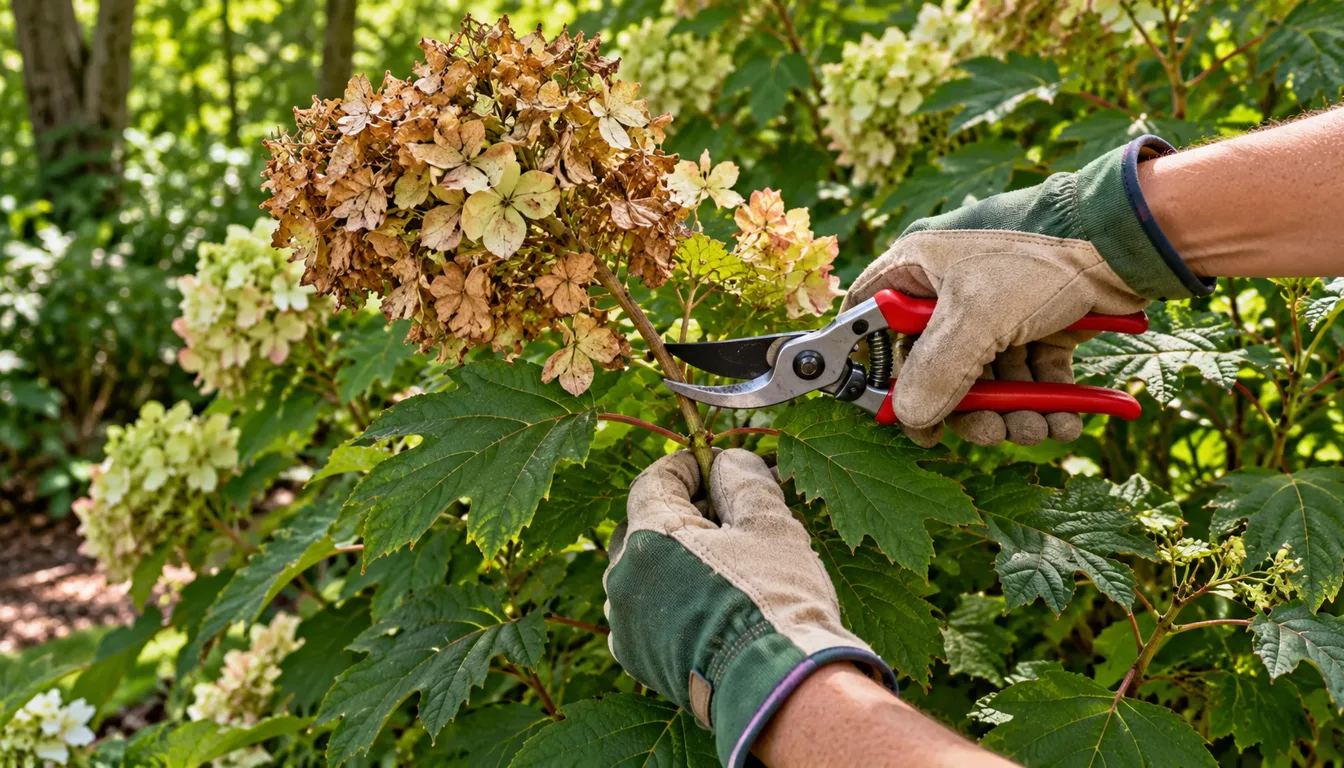
UConn is more precise for oakleaf hydrangea, advising pruning in July as the blooms start to fade but before next year's flower buds are set, and none in fall, winter or early spring. NC State allows one pruning outside that window, for winter-damaged stems in early spring.
An older plant can be revitalized by removing about one-third of the stems down to the ground each summer after blooming, starting at about 5 years old (UConn). A fuller shrub comes from cutting old growth or pinching new growth by removing the top of the shoot (UF/IFAS).
If space is tight, a compact cultivar such as ‘Pee Wee’ solves it at planting time (UF/IFAS), and the same site says to look up a shrub's mature size before you plant it.
Which Oakleaf Hydrangea Cultivar Fits Your Space?
Compact cultivars such as ‘Pee Wee’ suit tight spaces (UF/IFAS). Cultivar notes are from NC State unless marked.
- ‘Pee Wee’
- 3 to 4 ft tall, 4 to 5 ft wide, squat 4 to 5 in panicles, purple-red fall color
- ‘Sikes Dwarf’
- 3 by 4 ft with smaller leaves
- ‘Ruby Slippers’
- Semi-dwarf
- Gatsby Glow Ball (‘NCHQ1’)
- Compact, 3 to 4 ft tall and wide
- ‘Snow Queen’
- 6 by 6 ft, flowers remain erect, cold hardy down to zone 5. UF/IFAS says its blooms change from white to pink.
- ‘Harmony’
- Ball-like white to cream panicles up to 12 in across
- ‘Snowflake’
- Double white flowers in 12 to 15 in panicles of sterile flowers that can make stems flop, 6 to 8 ft
- ‘Alice’
- Large flowers that change from white to pink, up to 12 ft tall (University of Illinois Extension)
- ‘Little Honey’
- Golden foliage
At the cold end of the range, ‘Snow Queen’ is listed as cold hardy to zone 5 (NC State), and UConn warns that flower bud injury is likely in zone 5. In North Florida the top of the shrub may die back in winter and needs shelter from high winds (UF/IFAS).
What Problems Does Oakleaf Hydrangea Get, and Is It Safe for Pets?
Oakleaf hydrangea has no significant problems in NC State's profile, with aphids and spider mites as occasional visitors and some susceptibility to leaf blight and powdery mildew. UF/IFAS lists the same four for Florida.
Hydrangeas as a group can get Cercospora leaf spot, anthracnose and powdery mildew, so Clemson advises removing fallen leaves each season and watering with drip irrigation or soaker hoses to keep the foliage dry. The common insect pests are aphids, hydrangea leaftiers that web leaves together, and rose chafers that chew foliage and flowers (Clemson).
If aphids keep coming back, why aphids keep returning covers controls that spare beneficial insects.
These are the causes to check when oakleaf hydrangea does not bloom.
- Pruning after the buds formed removes next year's flowers, since it blooms on old wood (NC State, UF/IFAS).
- Freezing weather after a late-winter warm spell can kill flower buds that had begun to break dormancy (UConn), and Clemson calls winter injury the most common reason hydrangeas fail to bloom.
- Too much shade reduces bloom, and the plant needs some sun to bloom (NC State).
- Poor soil fertility or excess nitrogen can also stop bloom (Clemson).
Is oakleaf hydrangea safe for pets?
Frequently Asked Questions
Can oakleaf hydrangea grow in full sun?
In many places, yes. NC State says it does well in full sun to part shade and needs some sun to bloom, and UConn calls it the best hydrangea for hot climates. UF/IFAS says it needs at least some shade in Florida.
Does oakleaf hydrangea attract wildlife?
Yes. NC State says the flowers attract butterflies and other insects and songbirds eat the seeds, and Clemson says native bees, syrphid flies and honeybees visit the tiny fertile flowers.
When should I prune oakleaf hydrangea?
Prune right after flowering, because it blooms on old wood and later cuts remove next year's flower buds (NC State, UF/IFAS). UConn advises pruning in July and not in fall, winter or early spring.
How big does oakleaf hydrangea get?
NC State lists 4 to 8 feet tall and 4 to 10 feet wide, and UF/IFAS gives 6 to 10 feet tall in Florida. ‘Pee Wee’ stays near 3 to 4 feet tall and ‘Sikes Dwarf’ near 3 feet (NC State). University of Illinois Extension gives a smaller 3 to 6 feet for the species and 2 to 3 feet for ‘Pee Wee’.
Is oakleaf hydrangea native to the United States?
Yes. It is native to the Southeastern US, where it grows in moist woods and along stream banks (NC State), and UF/IFAS says it is one of a few native hydrangeas in Florida.
Why is my oakleaf hydrangea not blooming?
Pruning at the wrong time is one cause, since it blooms on old wood. Clemson calls winter injury the most common reason hydrangeas fail to bloom, and too much shade, poor soil fertility and excess nitrogen are other causes.
Does soil pH change oakleaf hydrangea flower color?
No. Clemson says oakleaf hydrangea flower color is not affected by soil pH, while bigleaf hydrangea flowers are blue in acidic soil and pink in alkaline soil.
How often should I water a new oakleaf hydrangea?
UF/IFAS says a new shrub needs regular irrigation until its roots expand into the site, which takes about 5 to 7 months in Florida. UConn says to water thoroughly after transplanting and then regularly during the first two summers, deeply and on a less frequent schedule than daily.
Sources & References
- Hydrangea quercifolia, North Carolina Extension Gardener Plant Toolbox
- Oakleaf Hydrangea, UF/IFAS Gardening Solutions
- Hydrangea quercifolia: Oakleaf Hydrangea, UF/IFAS EDIS FPS-259
- Planting and Establishing Shrubs, UF/IFAS Gardening Solutions
- Hydrangea, ASPCA Toxic and Non-Toxic Plants
- Pruning Hydrangeas, Clemson Cooperative Extension HGIC
- Native Hydrangeas, Clemson Cooperative Extension HGIC
- Hydrangea Care in South Carolina, Clemson Cooperative Extension HGIC
- Hydrangea, UConn Home and Garden Education Center
- Oakleaf Hydrangea, University of Illinois Extension Selecting Shrubs for Your Home
- Physocarpus opulifolius, North Carolina Extension Gardener Plant Toolbox
- Callicarpa americana, North Carolina Extension Gardener Plant Toolbox