Care snapshot
- Light
- Part to full shade
- Water
- Consistently moist, well-drained
- Height
- 12 to 18 in
- Zone
- Zones 5 to 9
- Spread
- 1 to 2 ft wide
- Temperature
- Best in cool summers
What Is Japanese Forest Grass, and How Big Does It Get?
Japanese forest grass (Hakonechloa macra), also sold as Hakone grass, grows wild on wet, rocky cliffs and in moist woodlands in the mountains of central Japan, and the genus is named for Mount Hakone (NC State). Few grasses do well in shade and also have ornamental value, and Wisconsin Extension calls this one one of the best ornamental grasses for shade.
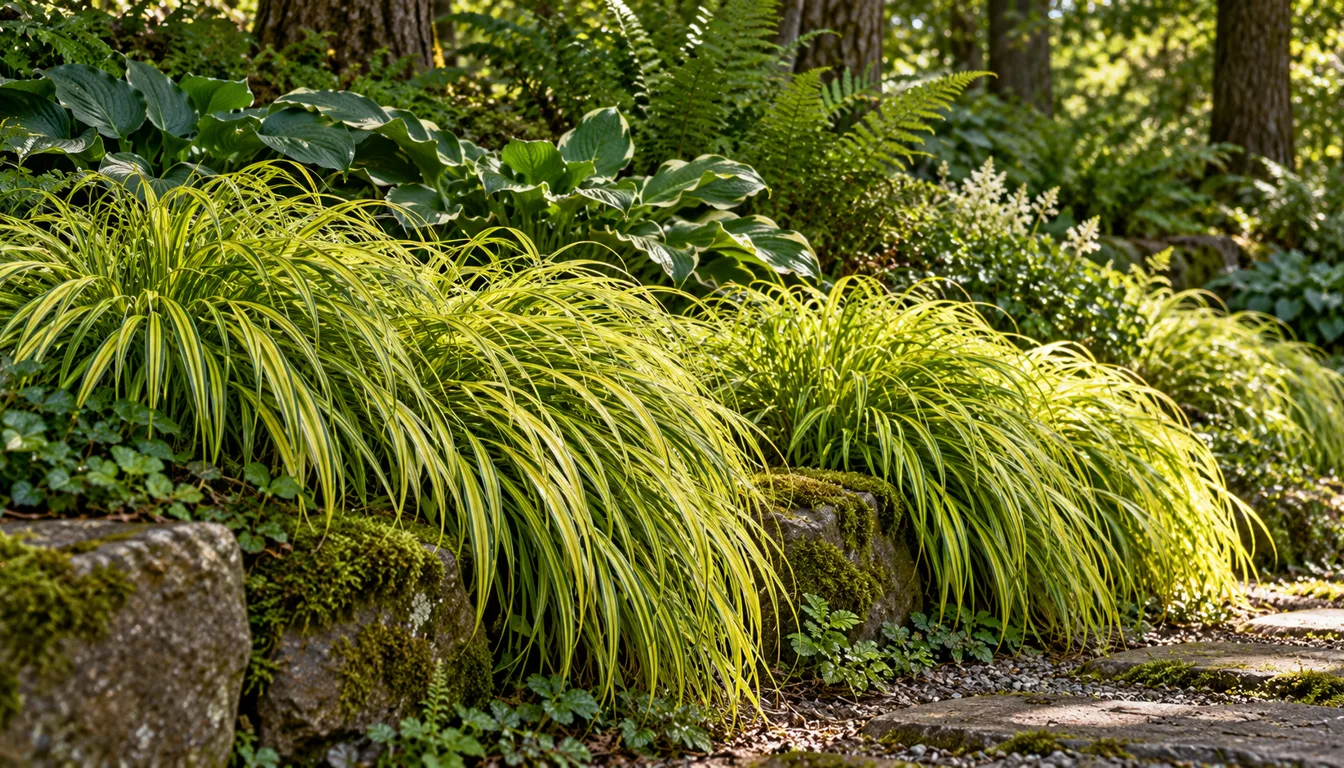
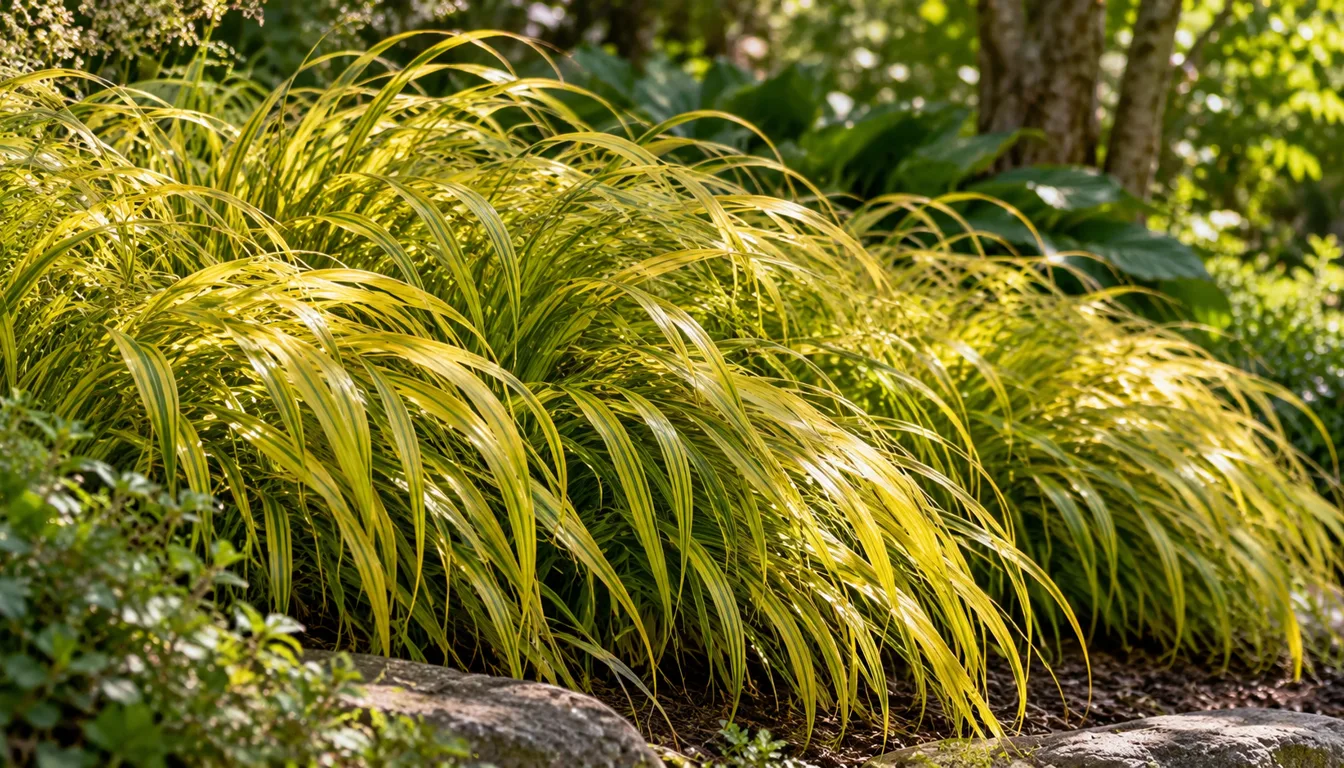
The leaves are bamboo-like, about 10 inches long, and they tend to flow in the same direction, so a clump looks like a cascading waterfall. The plant spreads slowly by rhizomes and stolons, and NC State does not consider it invasive.
Greenish-yellow, wispy flowers open in mid to late summer and are often hidden by the foliage. In fall the leaves blush red to pink with an orange to reddish cast, then turn light brown and collapse in winter. Unlike many other ornamental grasses, it gives no winter interest because it dies back to the ground (Wisconsin).
When you choose a spot, plan for a mound about 12 to 18 inches tall and 1 to 2 feet wide.
- Type
- Deciduous perennial grass
- Height
- A mound 12 to 18 in tall (NC State)
- Width
- 1 to 2 ft (NC State)
- Growth rate
- Slow
- Hardiness
- Zones 5 to 9 (NC State, Clemson). Wisconsin lists the species as hardy to zone 4 and the cultivars as often zone 5.
- Fall color
- Red to pink blush
How Much Light Does Each Leaf Color Need?
Japanese forest grass tolerates part to full shade, particularly in hot summers, and gives its best color when shielded from full sun, especially in the variegated forms (NC State). Wisconsin Extension describes how the light changes a gold form:
- Partial or dappled shade gives the brightest yellow-gold foliage.
- Full shade fades the foliage to lime green.
- Full sun in a cool-summer climate bleaches it to creamy white.
- Full sun in a hot climate tends to burn it.
The cultivars are more ornamental than the green species, but they also tend to be slower growing and less sun and drought tolerant (Wisconsin). If your spot gets more sun or dries out faster than a gold form likes, the green species tolerates more sun and drought than the cultivars do, and ‘Albostriata’ tolerates more sun than the gold forms.
The cultivars also differ in height. Clemson gives 1 to 1½ feet for the plant overall, depending on the variety, in zones 5 to 9.
- Green species
- Faster and more sun and drought tolerant than the cultivars (Wisconsin)
- ‘Aureola’
- Bright gold with narrow green stripes and a red to pink fall flush. About 15 in tall (Clemson), forming a 12 to 18 inch mound that prefers light to moderate shade (Illinois).
- ‘All Gold’
- More upright and spiky, compact at 12 to 18 in, slow growing (Wisconsin)
- ‘Fubuki’
- Similar to ‘Aureola’, with green and white variegated foliage at about 14 in (Clemson).
- ‘Albostriata’
- Green with creamy white stripes, more sun tolerant than the gold forms, somewhat faster growing, and taller, to as much as 3 ft (Wisconsin)
- ‘Benikaze’
- Green in summer, with older leaves taking shades of red when the weather cools (Wisconsin)
- ‘Nicolas’
- Green turning red, yellow, and orange in fall (NC State)
Heat is the second limit on where it grows. NC State says the grass grows best in cool-summer climates and may not tolerate the hot summers of the southern United States, such as zones 8 through 9, where the leaves may also scorch if moisture is inconsistent. If your summers are that hot, look at other shade perennials. The guide to the best shade plants lists more options for a shaded bed.
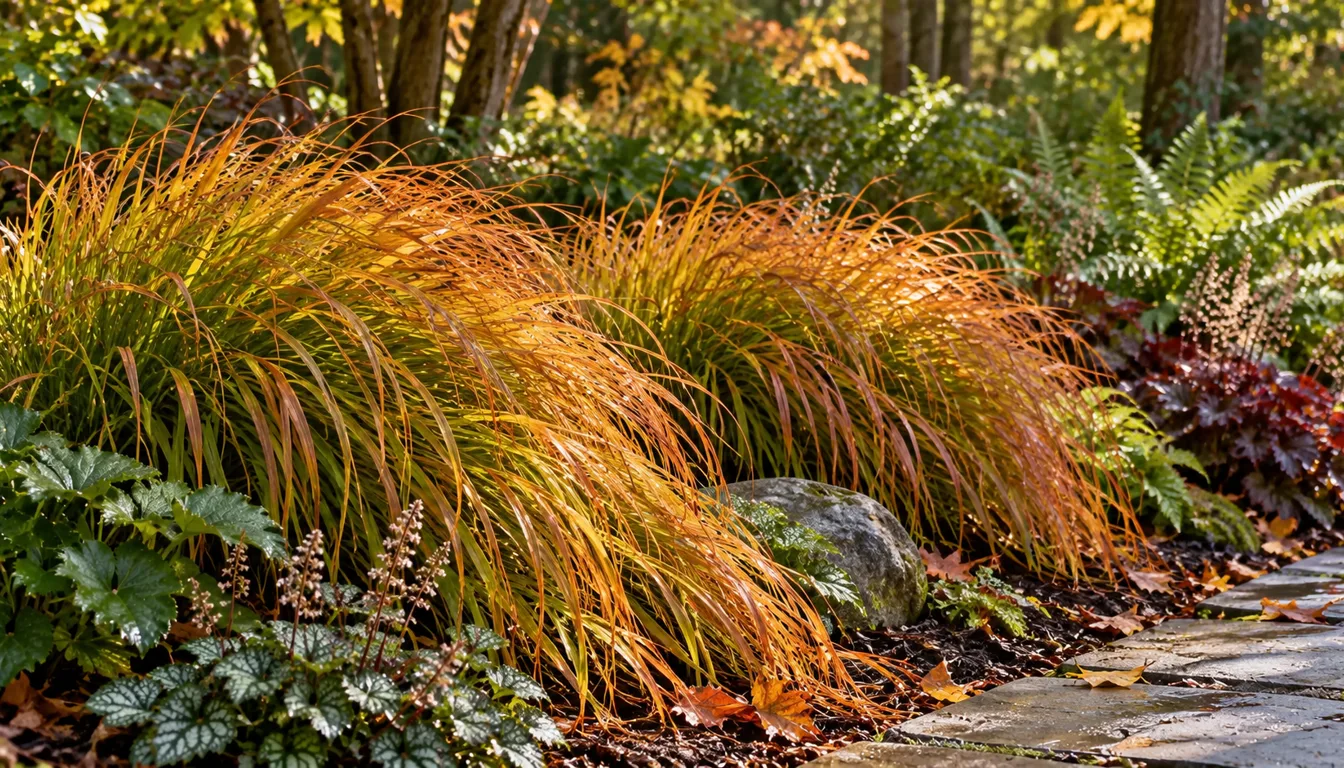
What Soil and Water Does Japanese Forest Grass Need?
Japanese forest grass needs rich, consistently moist, well-drained soil, and NC State says it will not grow in poorly drained soil, heavy clay, or very dry soil. Wisconsin Extension adds that it prefers acidic soil high in organic matter and does best in evenly moist soil, especially during spring growth and in hot weather.
Space plants 10 to 18 inches apart, as Illinois Extension does for ‘Aureola’. After transplanting, plants tend to “sit” for several weeks as they root out before putting on much top growth (Wisconsin), so little new growth in the first weeks is expected.
If leaves scorch in summer, check the moisture first, because NC State says they may scorch in heat when moisture is inconsistent. In a hot climate, also check whether a gold form is getting full sun, since Wisconsin says the cultivars tend to burn there. The guide to spotting underwatered plants covers the early signs.
Root heaving can occur during winter frosts, according to NC State, which recommends a thick layer of mulch over the crowns before winter to prevent it.
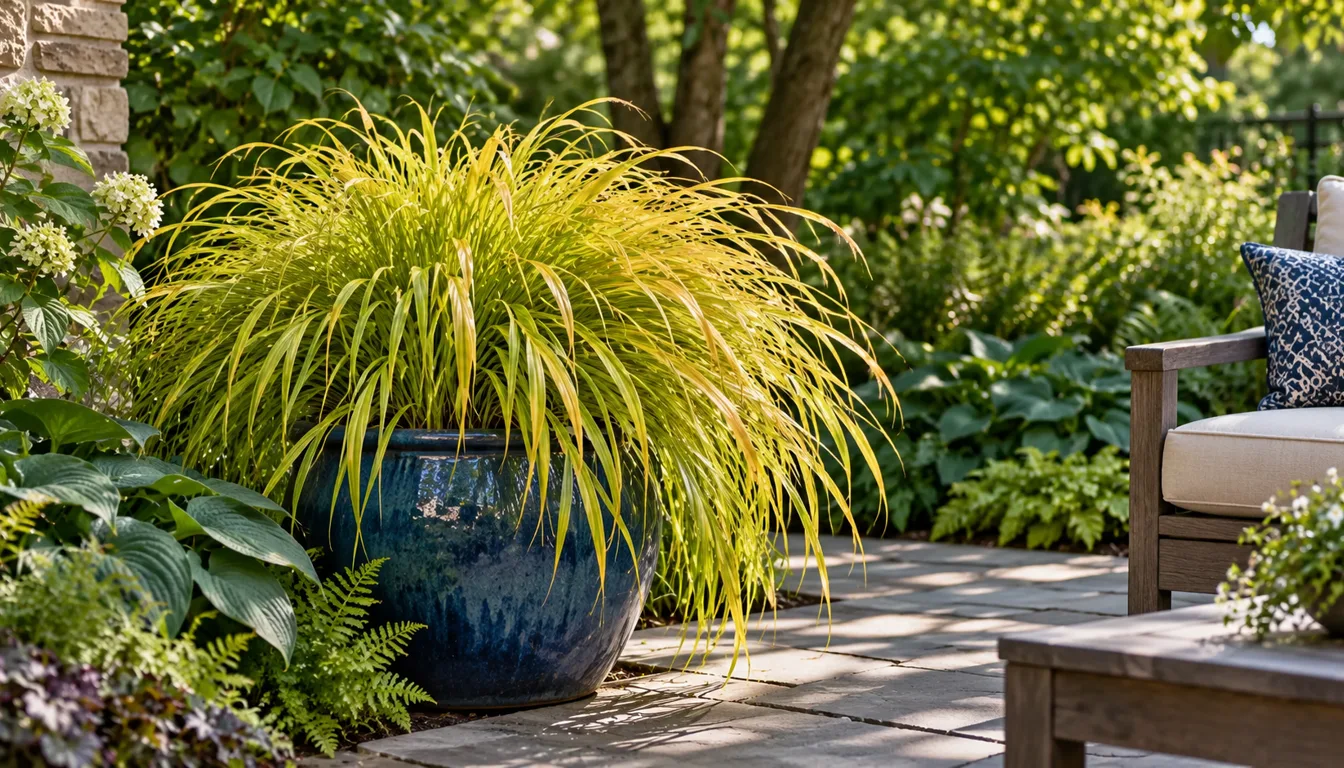
Hakone grass also grows well in containers, where it cascades over the sides (Wisconsin). An exposed container above ground will not overwinter it, so bury the pot in late fall or move it to a cool, sheltered spot such as an unheated garage.
Because the grass wants evenly moist soil, the guide on how to water potted plants applies to a container planting.
When Do You Cut Back and Divide Japanese Forest Grass?
Cut the dead foliage back to the ground in late winter or early spring (Wisconsin, NC State). Because the plant is relatively slow to reappear in spring, like other warm-season grasses, a late start does not mean a dead plant.
Spring is also the time to divide, and NC State names division as the best way to propagate it. Wisconsin says to divide clumps just as new foliage emerges, every 2 to 3 years or as necessary to propagate, while NC State adds that the plant grows slowly and may take years until division is required.
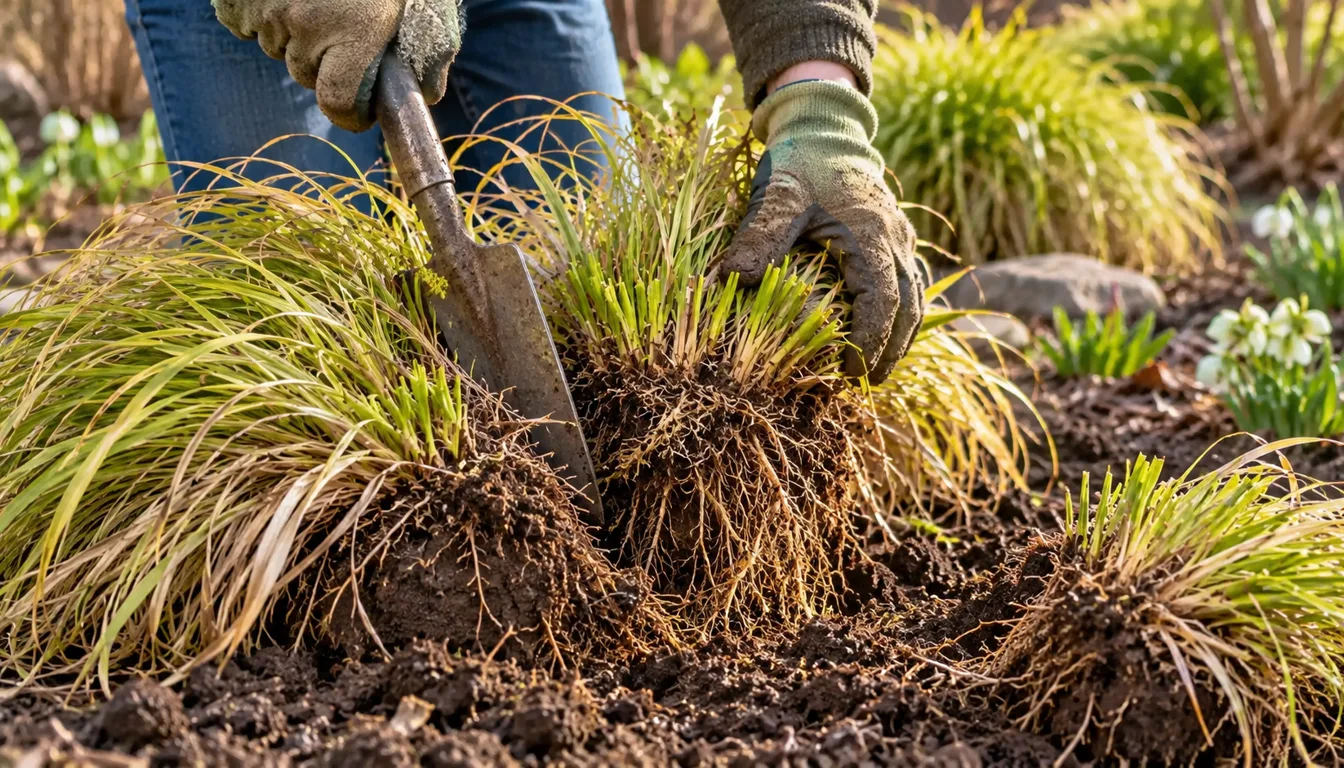
A divided piece is a transplant, so it tends to sit for several weeks as it roots out before it puts on much top growth (Wisconsin).
Where Does Japanese Forest Grass Look Best?
Wisconsin Extension recommends the golden and variegated cultivars to brighten shady or woodland gardens, either as a single focal plant or in drifts. Its list of places includes:
- An accent in a shady woodland garden, or a border along a shaded path (NC State).
- The top of a wall or terrace, where it can cascade over the edge.
- The base of a tree or post, such as a Japanese maple.
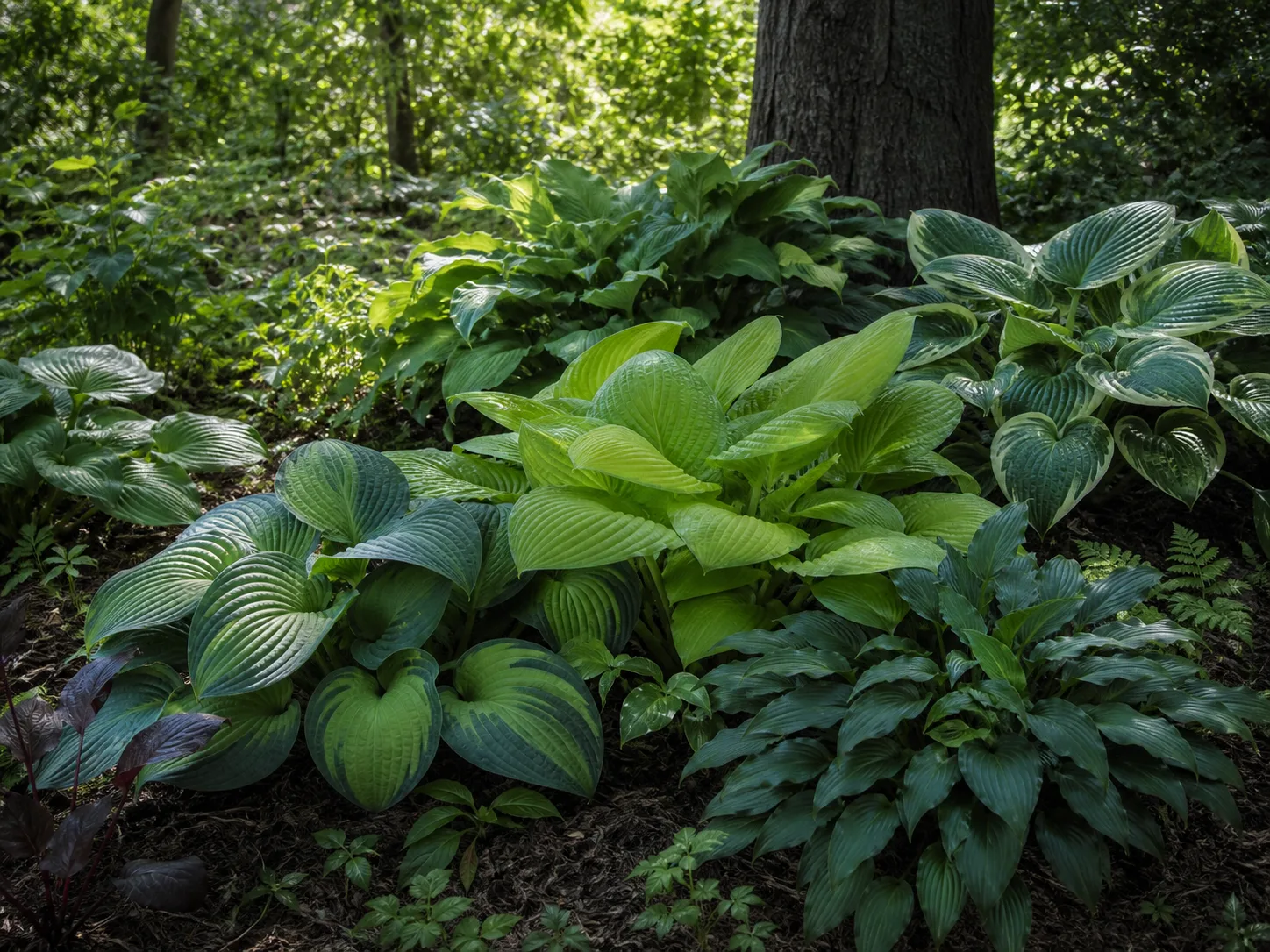
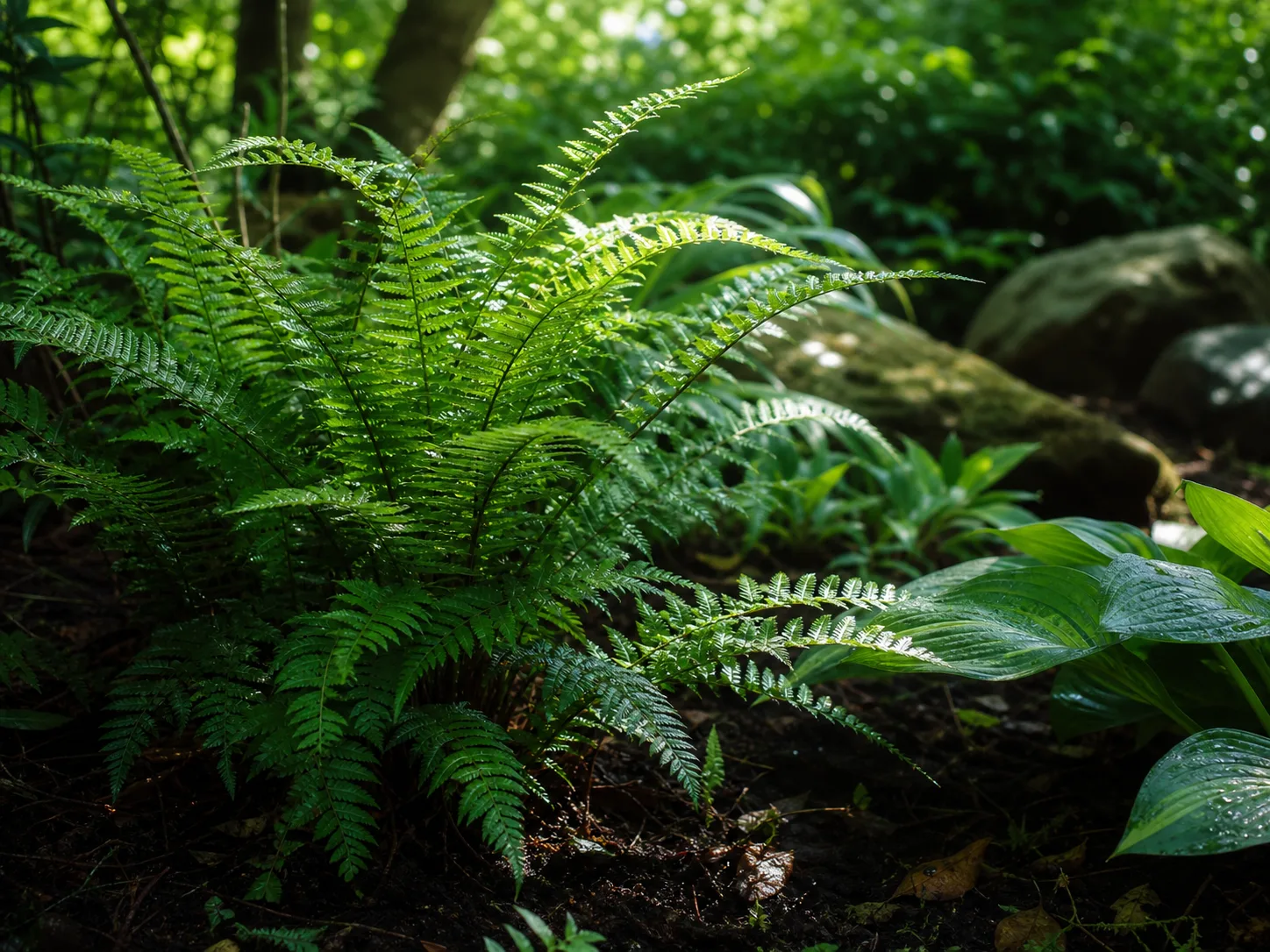
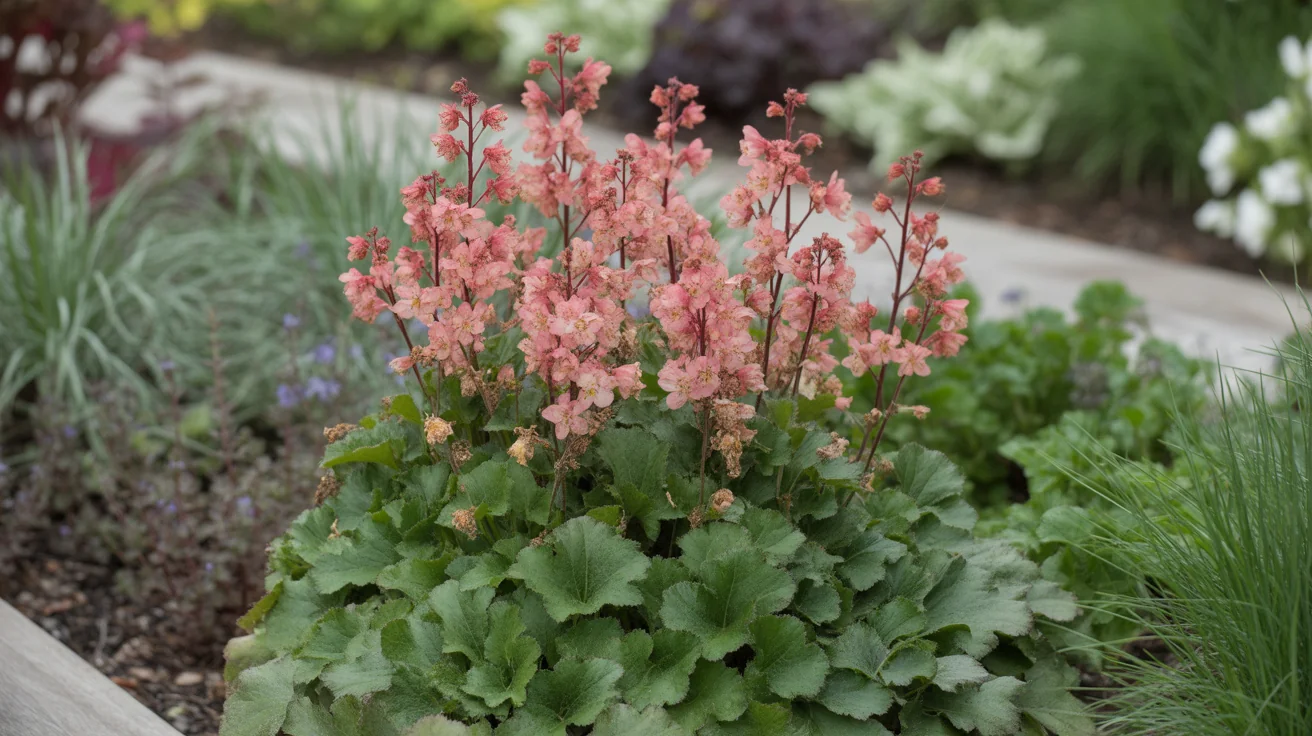
For companions, Wisconsin combines it with larger, deep green or blue-leaved plants such as hostas and mugo pine. Ferns also appear on that list, and dark-leaved heuchera makes an eye-catching combination.
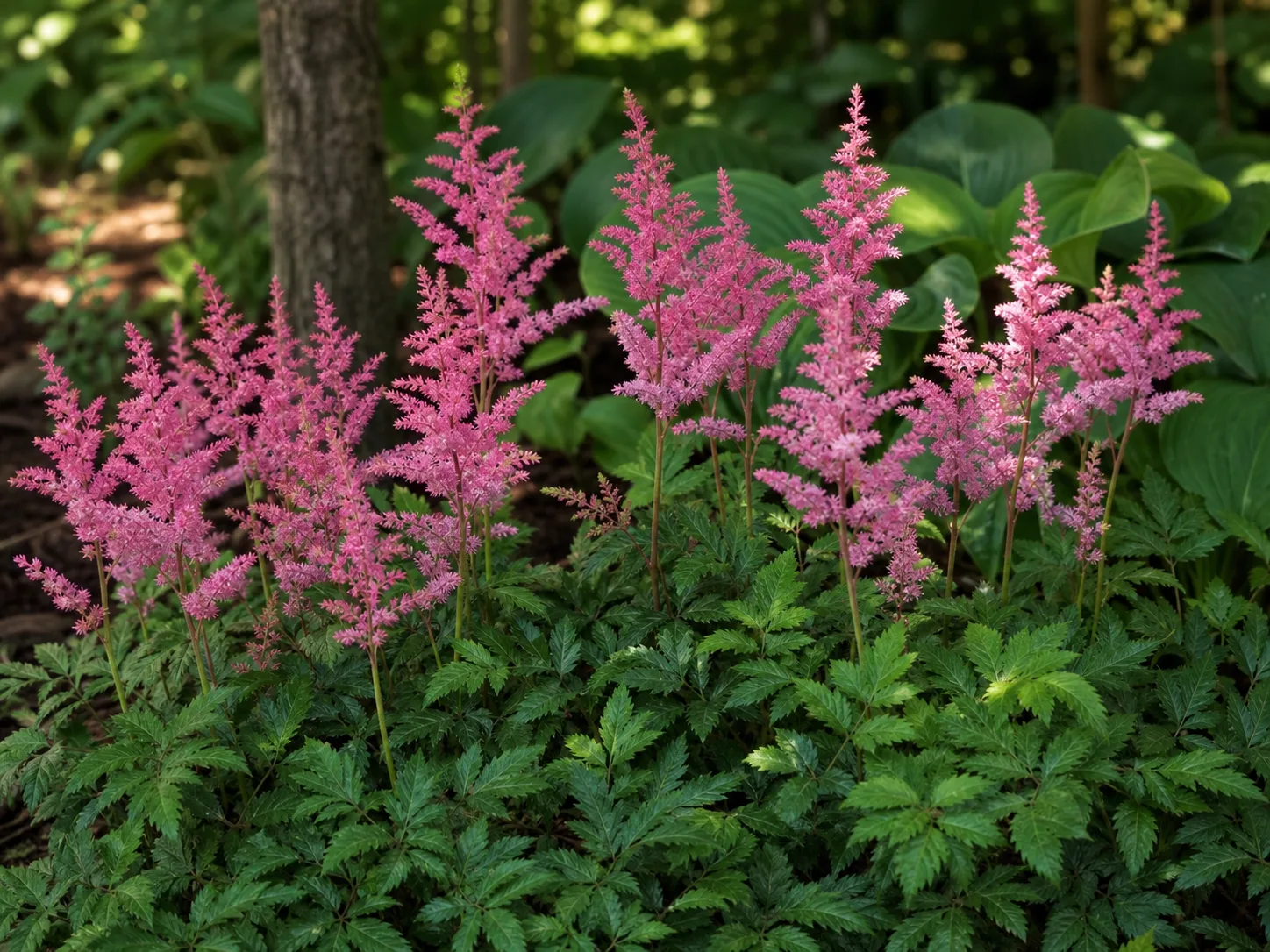
A gold or variegated form also works as a backdrop for dark-colored flowers, and Wisconsin names Astilbe ‘Burgundy’ among them.
NC State lists it as generally insect and disease free, deer resistant, and tolerant of black walnut and urban pollution. Gold forms bleach or burn in full sun, so a sunny bed is better planted with one of these ornamental grasses for sunny gardens.
Frequently Asked Questions
Can Japanese forest grass grow in full sun?
It gives the best color when shielded from full sun, and gold forms bleach in full sun in cool climates and tend to burn in full sun in hot climates.
Is Japanese forest grass invasive?
No. It spreads by rhizomes and stolons, but NC State does not consider it invasive, and Wisconsin notes that the cultivars do not produce viable seed.
Why is my Japanese forest grass turning brown?
The leaves may scorch in heat if moisture is inconsistent. Before winter the foliage turns light brown, and the plant dies back to the ground, which is normal.
Does Japanese forest grass grow in the South?
It is rated for zones 5 to 9 but grows best in cool-summer climates and may not tolerate hot Southern summers in zones 8 and 9.
How fast does Japanese forest grass spread?
Slowly. Japanese forest grass is slow growing and may take a while to become established.
When should I cut back Japanese forest grass?
Cut the foliage back to the ground in late winter or early spring.
How far apart should I plant Japanese forest grass?
Space ‘Aureola’ 10 to 18 inches apart (Illinois). It forms a 12 to 18 inch mound and spreads at a slow rate.