
Do Squash Bugs Bite People?
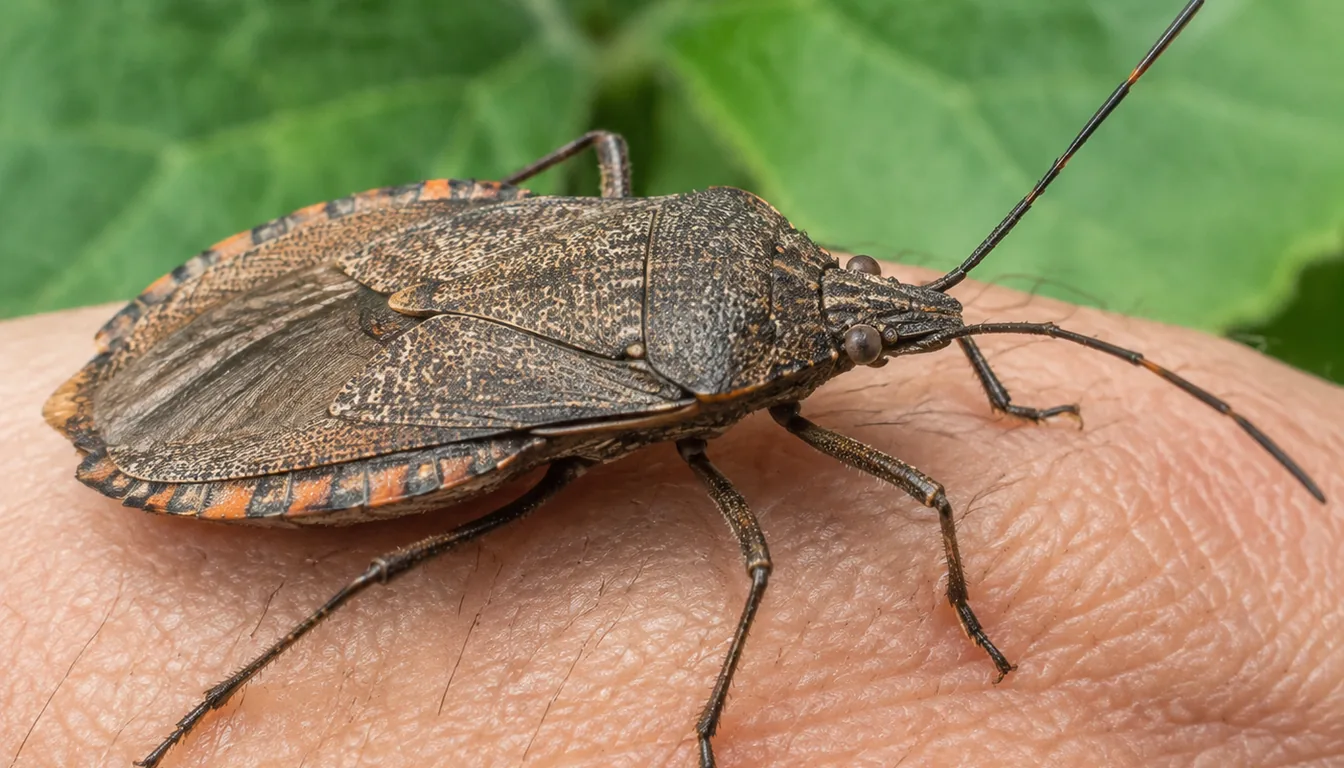
No. A squash bug cannot bite you.
Its mouthparts are a slender stylet built to pierce plant tissue and draw sap, which is a different tool from the chewing jaws or the cutting mouthparts that draw blood.
Handle one roughly and it may poke defensively. That is the extent of it, and there is no venom, no sting and nothing it can pass to a person.
The damage worth worrying about is on the vine, and the part most gardeners miss is the eggs.
At a glance
Do Squash Bugs Bite People?
They cannot, and the reason is anatomy rather than temperament.
A squash bug feeds by sliding a needle-like stylet into leaf and stem tissue and pulling sap through it. That structure works on a plant cell wall and does nothing useful against skin.
What people report as a bite is a defensive poke from a bug held tightly in a closed hand.
It stings briefly, leaves at most a small red mark, and needs nothing more than washing the spot. There is no venom involved and no disease a squash bug carries to people.
Children and pets are in the same position. A squash bug is not dangerous to hold, and a dog that eats one is dealing with a bad taste rather than a poison.
The smell is the part that surprises people. Squash bugs are relatives of stink bugs and release the same sort of sharp odor when crushed, which is a defense and not a warning of anything worse.
What Does a Squash Bug Look Like?
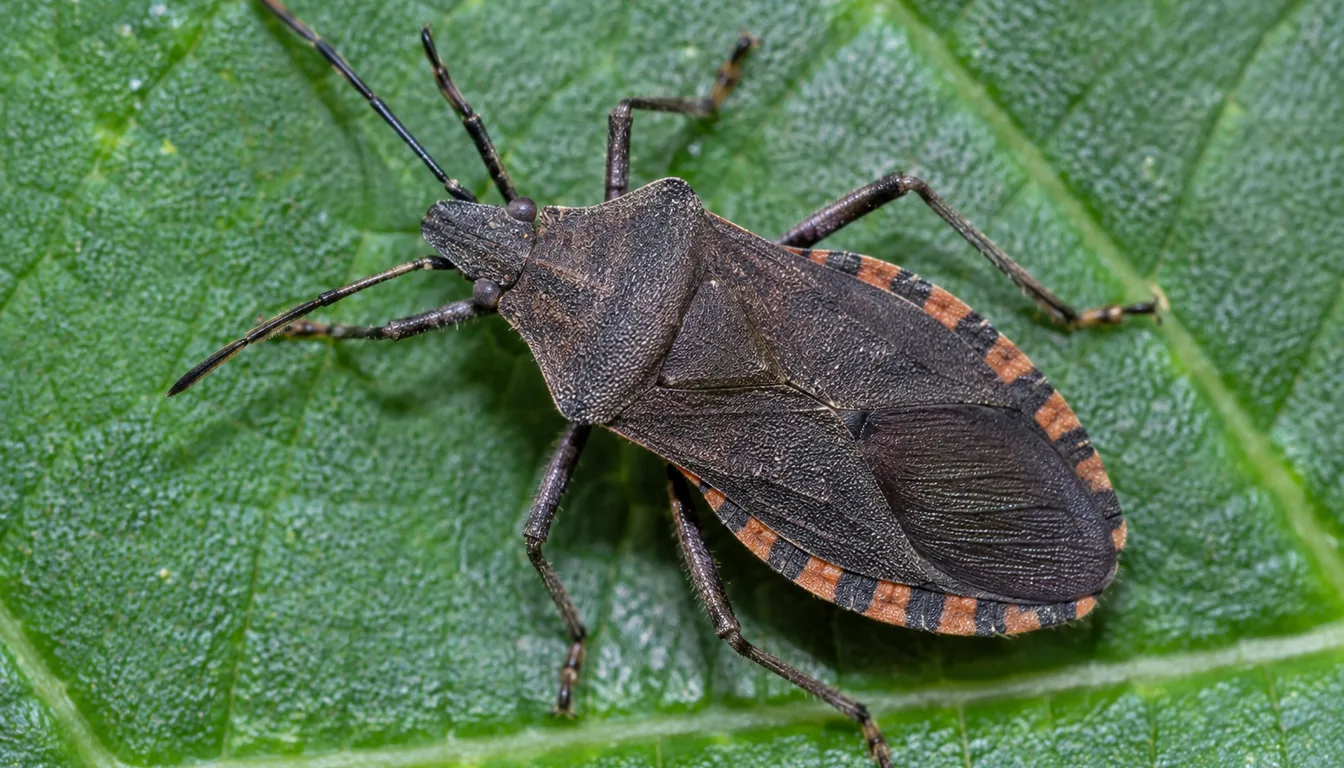
An adult runs about 5/8 inch long, which makes it noticeably bigger than most beetles on the same plant.
The body is gray to black, flat-backed and elongated, with orange and brown striping along the outer edges of the abdomen.
The confusion is almost always with a stink bug, and at a glance the two really do look alike.
Three points separate them. A squash bug is larger, more elongated, and gray rather than the green of a common stink bug, and the full side-by-side lives on the squash bug and stink bug comparison.
Where you find it settles most of the remaining doubt.
Squash bugs stay on cucurbits, so an insect on squash, pumpkin, zucchini or cucumber foliage is far more likely to be this one.
- Adult length
- About 5/8 inch
- Color
- Gray to black, with orange and brown edge striping
- Shape
- Flat-backed and elongated, wider than a beetle
- Against a stink bug
- Larger, longer, gray instead of green
- Where it sits
- On cucurbit leaves and stems, rarely elsewhere
- When crushed
- Sharp stink-bug odor
Where to Find the Eggs, and Why They Matter Most
Adults are the ones you notice. The eggs are the ones worth hunting, because scraping a cluster off a leaf removes a dozen insects before any of them feed.
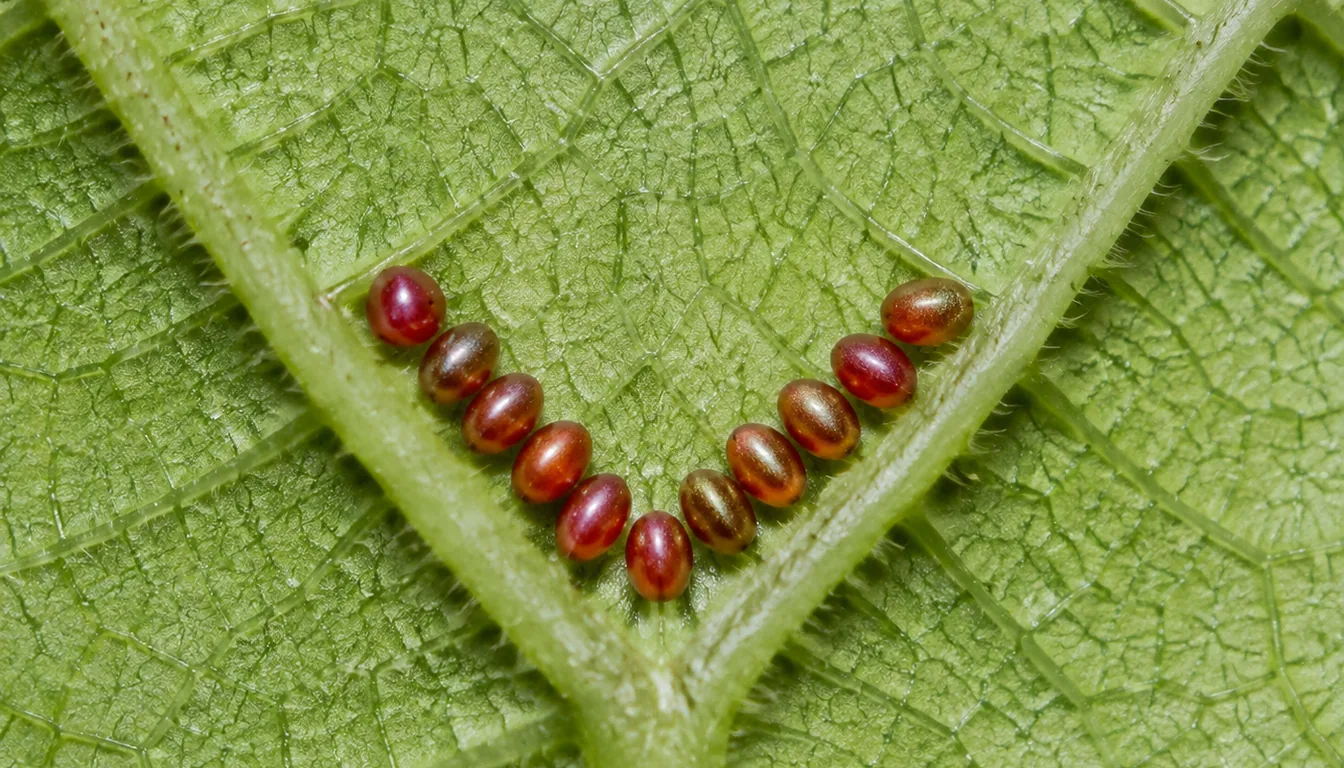
Look on the undersides of leaves, usually in the angle where two veins meet.
The clusters are unmistakable once you have seen one. A dozen elliptical eggs or more sit in a tight group, often laid out in a V shape that follows the vein junction.
Color runs from tan through orange to brick red, and it darkens noticeably just before the eggs hatch.
That darkening is your clock. From laying to hatching takes 7 to 10 days, so a weekly check through early summer catches most clusters while they are still eggs.
Removal needs no product. Scrape the cluster off with a thumbnail or a piece of duct tape and drop it in soapy water, and check the leaf either side of the one you found.
Why the Young Ones Look Like a Different Insect
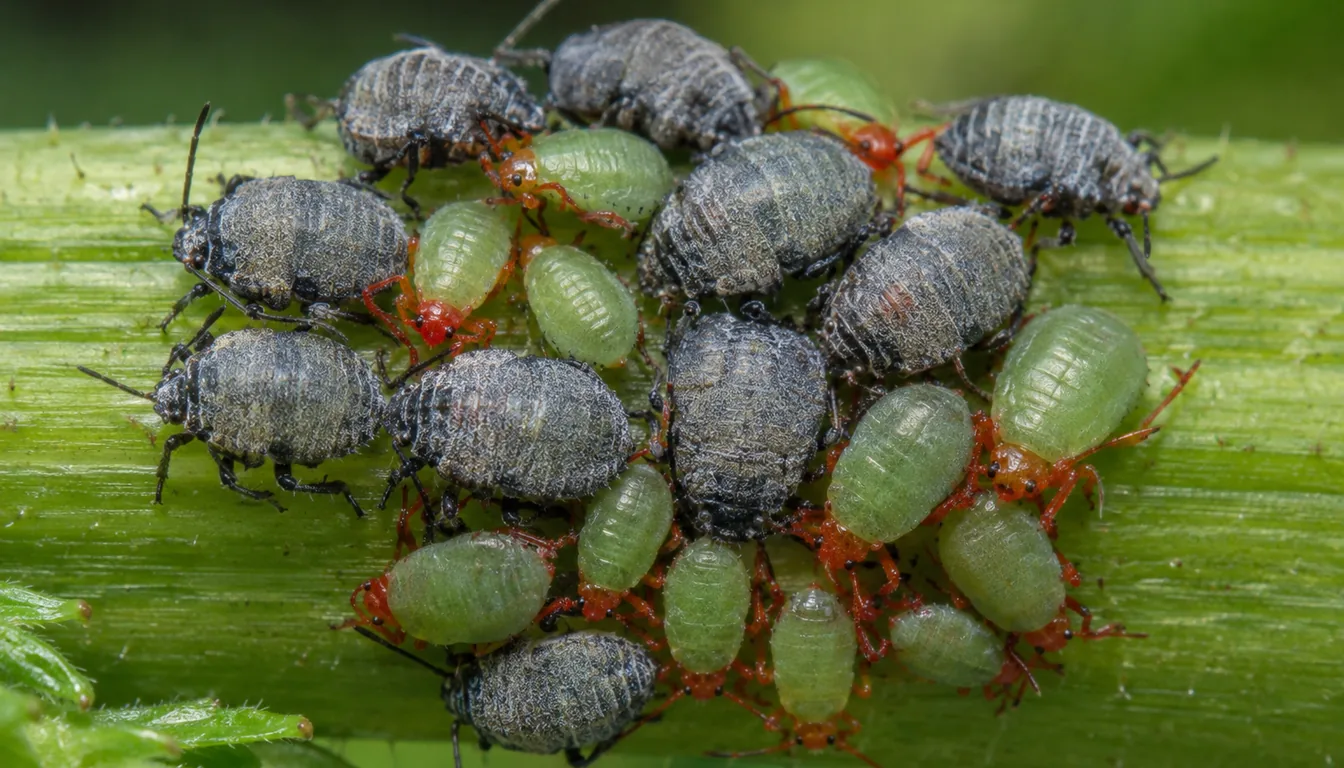
Newly hatched nymphs share almost nothing with the adult, which is why people report two pests on one plant.
The youngest have red legs over a pale green body, and they cluster tightly near where they hatched.
As they grow, the red turns black and the body takes on what looks like a coating of fine gray powder.
They pass through 5 instars over as much as six weeks before reaching the adult form.
Grouping is the giveaway at every stage. Nymphs gather at the base of the plant or under leaves rather than spreading out, so finding one usually means finding twenty.
What Squash Bugs Do to the Plant
This is the part that actually costs you a harvest.
Feeding pulls sap out of leaves and stems, and that alone disrupts the flow of water and nutrients through the vine.
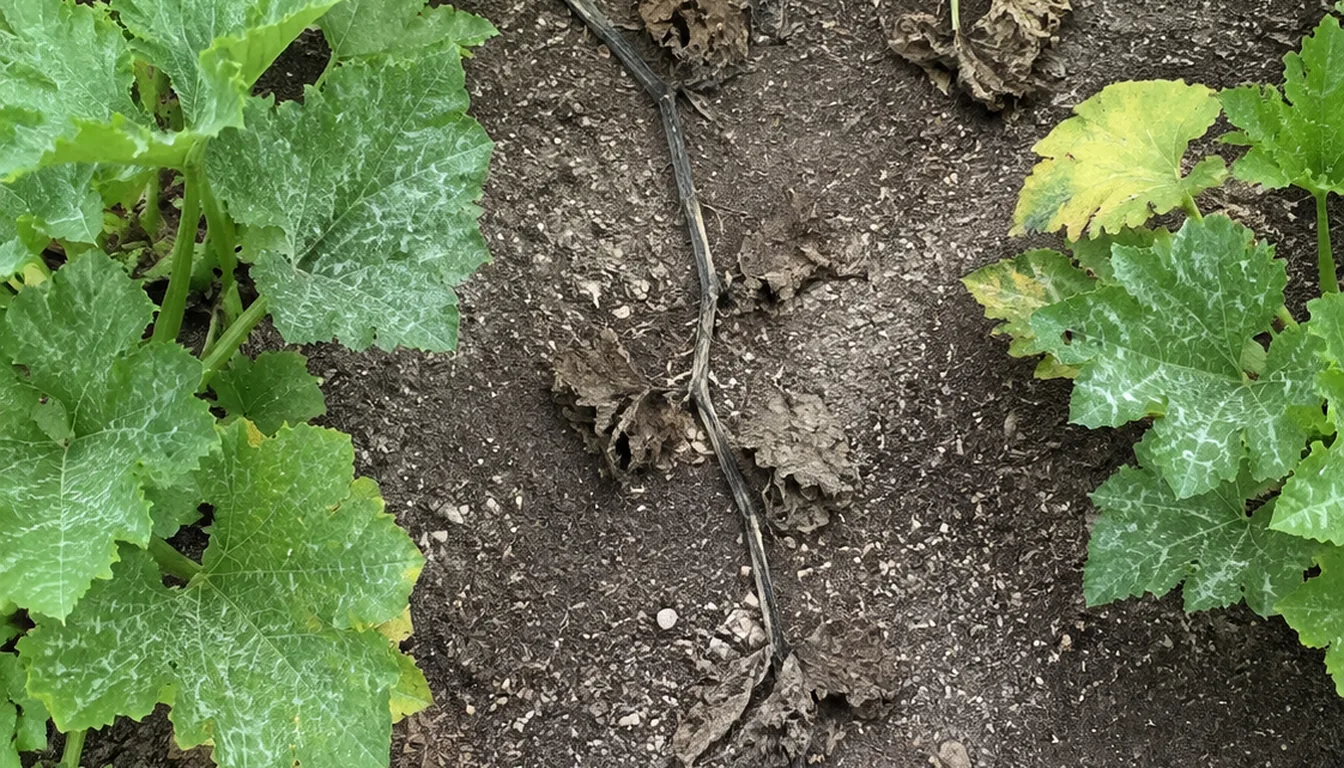
The bug also injects a toxic substance as it feeds. Affected vines turn black and dry out, which is why a plant can collapse faster than the number of insects on it seems to justify.
The pattern reads as sudden wilt. A runner looks fine in the morning and flat by afternoon, and the leaves crisp rather than yellowing gradually.
Not every cucurbit suffers equally. Wisconsin Extension reports winter squash such as hubbards and marrows taking the worst of it, while Butternut, Royal Acorn and Sweet Cheese hold up better.
Why Did the Vine Wilt? Three Causes, Not One
Sudden collapse on a squash plant has three common causes, and squash bugs are only one of them.
Treating the wrong one wastes the season, because the response to each is completely different.
Squash bug damage builds. You see the insects, the feeding is spread over leaves and stems, and the wilt arrives after the population has been visible for a while.
Squash vine borer works from inside and gives almost no warning. Look at the base of the stem for a small hole with damp sawdust-like frass pushed out of it, which is the one sign nothing else produces.
Bacterial wilt travels with cucumber beetle feeding and moves fastest of the three. It usually takes the whole plant rather than one runner, and cutting a stem gives a sticky thread when the cut faces are pressed together and pulled apart.
| Cause | What you see on the plant | The tell that confirms it |
|---|---|---|
| Squash bug feeding | One runner at a time, blackening and drying | Adults, nymph clusters or egg masses present |
| Squash vine borer | Whole plant flops fast, base still green above | A hole with wet frass at the stem base |
| Bacterial wilt | Whole plant wilts, often before flowering finishes | A sticky thread when a cut stem is pressed and pulled |
Check the stem base first whenever a plant goes down overnight. That single look separates the borer from the other two in a few seconds and costs nothing.
When Do Squash Bugs Show Up?
Adults do not arrive from somewhere else. They overwinter in the garden.
They shelter in plant debris, under rocks and in similar protected spots, then emerge over an extended stretch of late spring rather than all at once.
That staggered emergence is why one clean sweep never finishes the job.
In colder regions there is only one generation a year, so the population you see in August grew from the adults that walked out of your own mulch in May.
Warmer regions can run a partial second generation, which stretches the pressure later into the season and makes autumn cleanup matter more rather than less.
- Overwinters as
- Adults, in debris, under rocks and boards
- Emerges
- Over an extended period in late spring
- Generations
- One per year in northern gardens
- Egg to hatch
- 7 to 10 days
- Nymph to adult
- Five instars over as much as 6 weeks
- Watch hardest
- Seedlings, new transplants, and plants in flower
Clearing old vines and loose debris at the end of the season removes the shelter. It is the cheapest control available and the one most often skipped.
What to Do Each Month of the Season
Squash bug control is almost entirely a timing problem, and the same hour spent in June is worth several in August.
The reason is the single generation. Every insect you meet in late summer traces back to an adult that emerged in spring and a cluster of eggs laid in early summer.
| When | What is happening | What to do |
|---|---|---|
| Late spring | Overwintered adults emerge over several weeks | Row cover the seedlings, lay trap boards, clear last year's debris |
| Early summer | Adults mate and lay on leaf undersides | Weekly egg check, scrape every cluster, uncover at flowering |
| Midsummer | Nymphs cluster and feed, damage becomes visible | Knock clusters into soapy water, decide which plants to give up on |
| Late summer | Adults mature, feeding damage peaks | Harvest what will finish, pull spent and infested vines |
| Autumn | Adults look for shelter | Remove vines, boards and loose mulch so nothing overwinters in the bed |
The autumn step is the one most people skip and it does the most work.
An adult that cannot find shelter in your bed overwinters somewhere else, and the population that shows up next May is smaller because of a job that took twenty minutes in October.
Rotation helps for the same reason. Cucurbits planted where they grew last year meet the adults that overwintered right there, so moving the patch even a short distance costs them a search.
How to Cut Their Numbers Without Spraying
Hand control genuinely works on this pest, which is not true of every insect in the garden.
Wisconsin Extension puts it plainly, that destroying egg masses and hand-picking adults is often sufficient on its own.
- Lay a trap boardPut a flat board on the soil beside each plant. Squash bugs gather underneath it overnight, so lifting it in the morning gives you the whole group at once.
- Check leaf undersides weeklyWork through early summer and scrape every egg cluster you find into soapy water, then check the neighboring leaves.
- Cover the seedlingsRow cover over young plants keeps egg-laying adults off during the stage that can least afford the damage.
- Uncover at floweringTake the cover off once flowers open, or you exclude the pollinators the fruit depends on.
- Knock nymph clusters into soapy waterThey cannot fly and they stay bunched, so a jar held under the group takes most of it in one go.
- Clear debris in autumnRemove spent vines, loose boards and mulch piles so the overwintering adults have nowhere sheltered to sit.
Timing matters more than effort here. The same hour spent in June, before the first eggs hatch, is worth several hours spent in August chasing adults that can fly.
Variety choice does some of the work before the season starts.
Wisconsin Extension names Butternut, Royal Acorn and Sweet Cheese as holding up better, while hubbard and marrow types take the worst of it.
Interplanting is worth trying but not worth relying on. The companion planting approach can reduce pressure at the margins, and it does not replace the weekly egg check.
None of this depends on catching every insect. Getting the numbers down before flowering is what protects the harvest, and a trap board plus a weekly egg check does most of that on its own.
When Hand Control Has Already Lost
There is a point in most seasons where picking bugs off stops being the answer, and recognizing it saves a lot of pointless mornings.
The signal is not the number of adults. It is nymph clusters on more than a few leaves at once, because that means the eggs went unfound for at least two weeks.
By that stage a single plant can carry several hundred insects across all stages, and each morning's collection is a fraction of what hatched overnight.
Three things are worth doing at that point, and none of them is more hand-picking.
Sacrifice the worst plant. Pulling and bagging one heavily infested vine takes a large share of the population out of the bed in one motion, and the remaining plants often recover enough to crop.
Check what the plant is actually going to give you. A squash already carrying mature fruit can often be left to finish while the bugs work on foliage it no longer needs.
A plant still flowering in August with heavy feeding damage is unlikely to set and ripen anything, and it is a reservoir for next year's overwintering adults.
Clear it early rather than nursing it. The season's real decision is usually which plants to give up on, not which spray to buy.
Pro Tips
- A squash bug cannot bite through skin. Its mouthparts are built for plant sap.
- Check leaf undersides weekly through early summer, at the angle where two veins meet.
- Scrape egg clusters into soapy water with a thumbnail or a strip of duct tape.
- Lay a flat board beside each plant and collect what gathers under it each morning.
- Take row covers off once flowers open, or the fruit goes unpollinated.
- Butternut, Royal Acorn and Sweet Cheese hold up better than hubbard types.
- Clear spent vines and loose debris in autumn so the adults have nowhere to overwinter.
- Nymph clusters on several leaves at once means the eggs went unfound for two weeks.
- Bag an infested vine for the trash. Eggs survive a cool compost pile.
- Move the cucurbit patch each year, since the adults overwinter where they fed.
Frequently Asked Questions
Do squash bugs bite humans?
No, because their mouthparts are a piercing stylet built to draw sap from plant tissue and it does nothing against skin. A bug squeezed in a closed hand may poke defensively, which stings briefly and leaves at most a small red mark.
Are squash bugs poisonous or dangerous to pets?
They carry no venom and pass nothing to people or animals. A dog that eats one is dealing with the same sharp odor stink bugs release when crushed, which is unpleasant rather than harmful.
How do I tell a squash bug from a stink bug?
A squash bug is larger and more elongated, and it is gray rather than green. Location settles the rest, since squash bugs stay on cucurbit foliage.
What do squash bug eggs look like?
Small elliptical eggs in tight clusters of a dozen or more, tan through orange to brick red, usually on a leaf underside where two veins meet. They darken just before hatching, which takes seven to ten days.
Why did my squash vine wilt so suddenly?
Squash bugs disrupt the flow of water and nutrients as they feed and inject a substance that turns vines black and dry. That produces a collapse faster than the visible number of insects suggests, and the leaves crisp rather than yellowing slowly.
When should I give up on hand-picking squash bugs?
When nymph clusters appear on several leaves at once, because that means eggs went unfound for about two weeks and a plant can already carry several hundred insects. At that point pulling the worst vine removes more of the population than a morning of picking.
Can I compost squash bug infested vines?
No, because eggs and nymphs survive a cool pile and a vine pulled in August returns to the bed as compost the following spring. Bag it for the trash instead, or burn it where that is allowed.
Sources & References
Related Guides
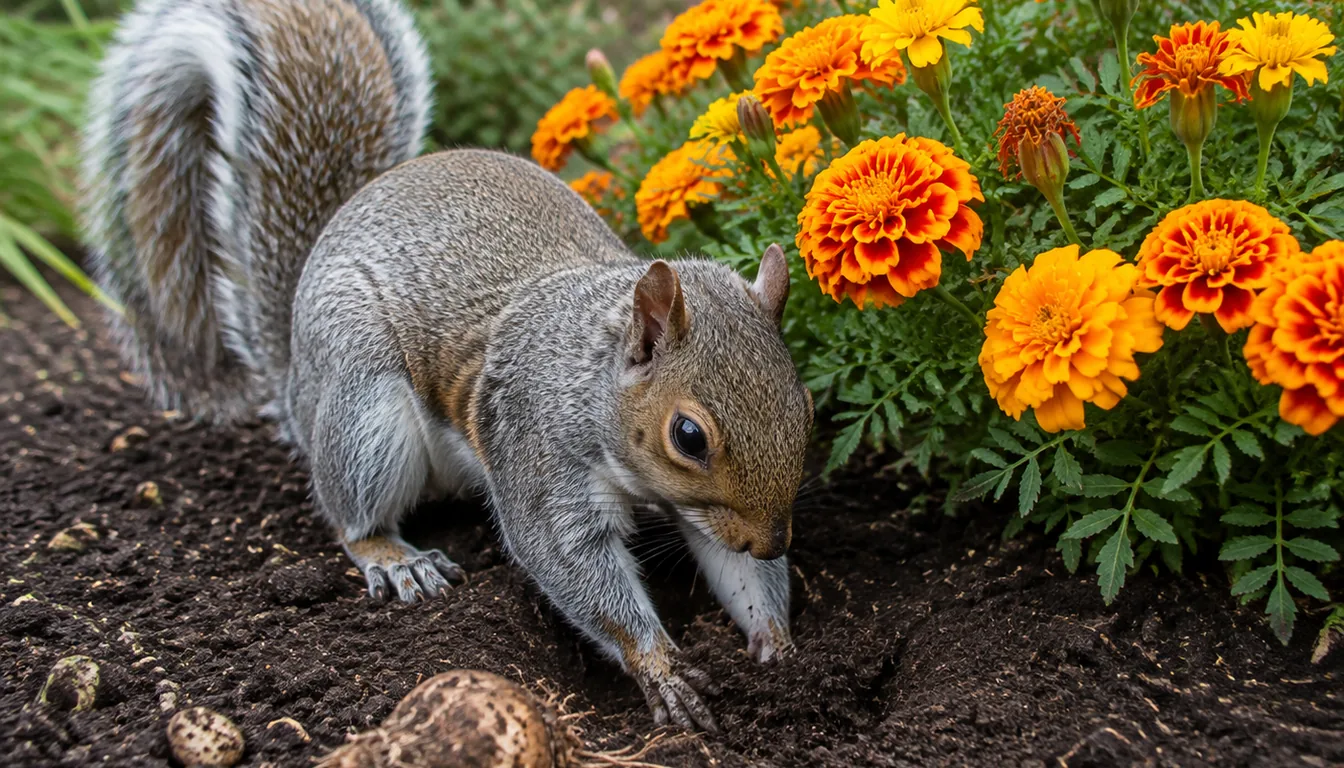
Do Marigolds Keep Squirrels Away From Your Garden?
Squirrels can strip a bed of seedlings or freshly planted bulbs in a single morning.
11 min read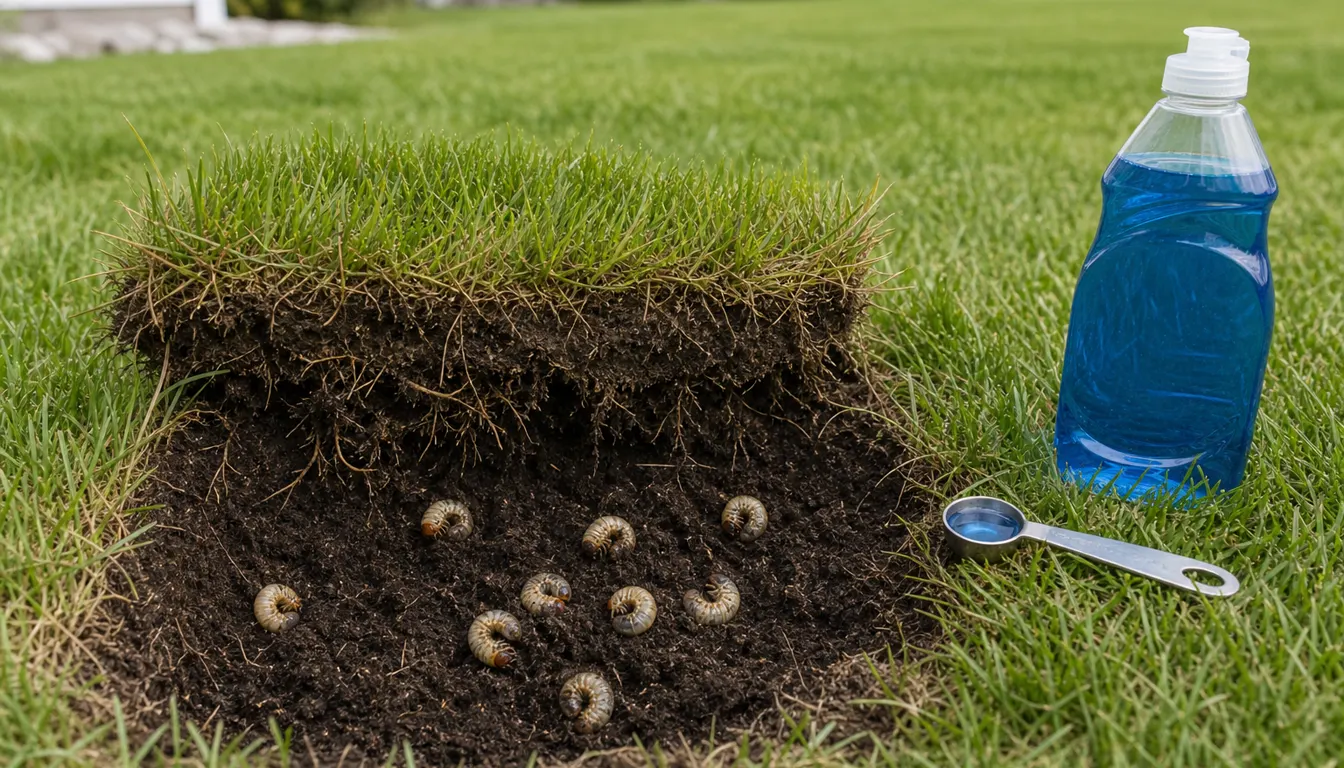
Does Dawn Dish Soap Kill Grubs? Why It Fails and What Works Instead
No. Dawn and other dish detergents do not bring white grubs to the surface, and they do not kill…
9 min read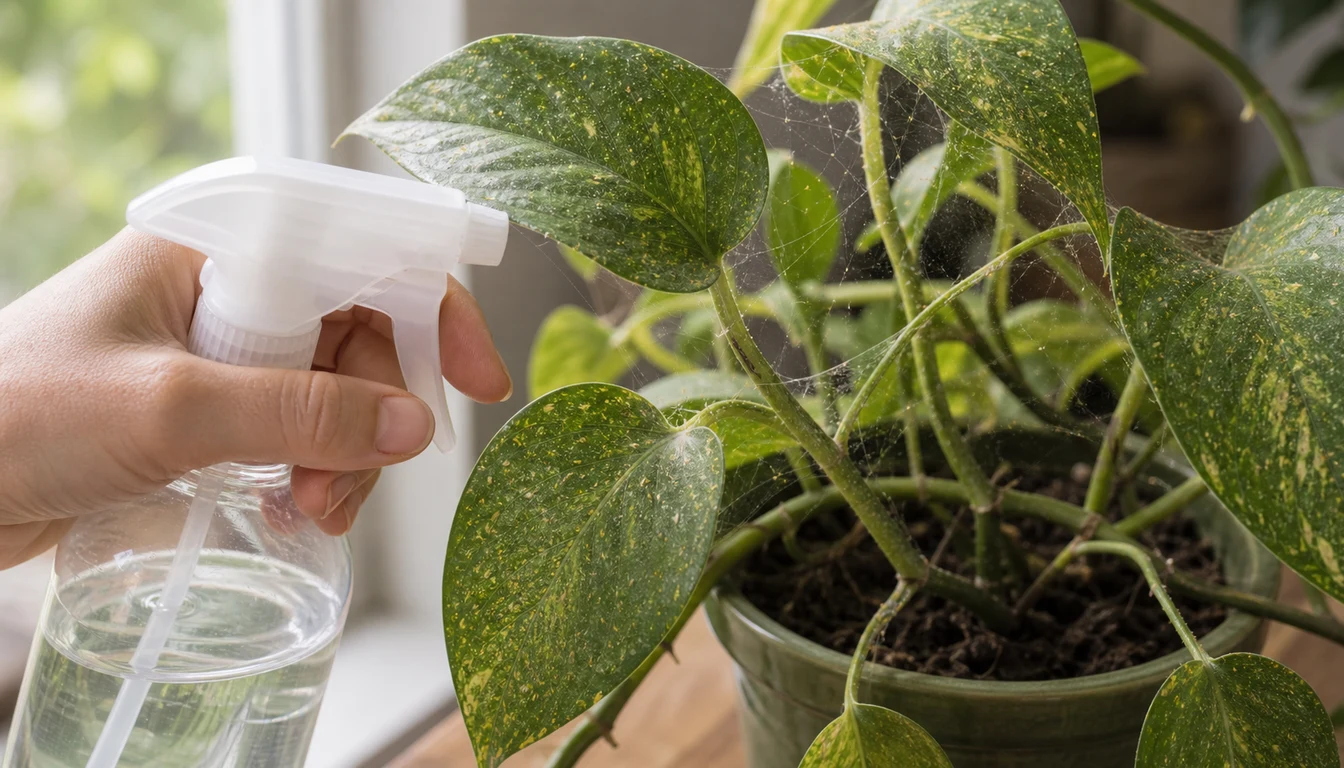
How Do You Get Rid of Spider Mites on Houseplants?
Spider mites on houseplants often can be reduced by repeatedly washing the leaf undersides.
11 min read
How Much Neem Oil Per Gallon? Read and Scale the Label Rate
There is no universal amount of neem oil per gallon. The rate belongs to the exact product and its…
11 min read
How to Control Fungus Gnats in Houseplant Soil
Fungus gnat control works best when it addresses the larvae in potting mix as well as the adults…
15 min read
How to Identify Lawn Grubs Before You Treat the Grass
Brown grass, birds, or skunk damage can suggest white grubs, but none proves the diagnosis.
16 min read