
How to Identify Lawn Grubs Before You Treat the Grass
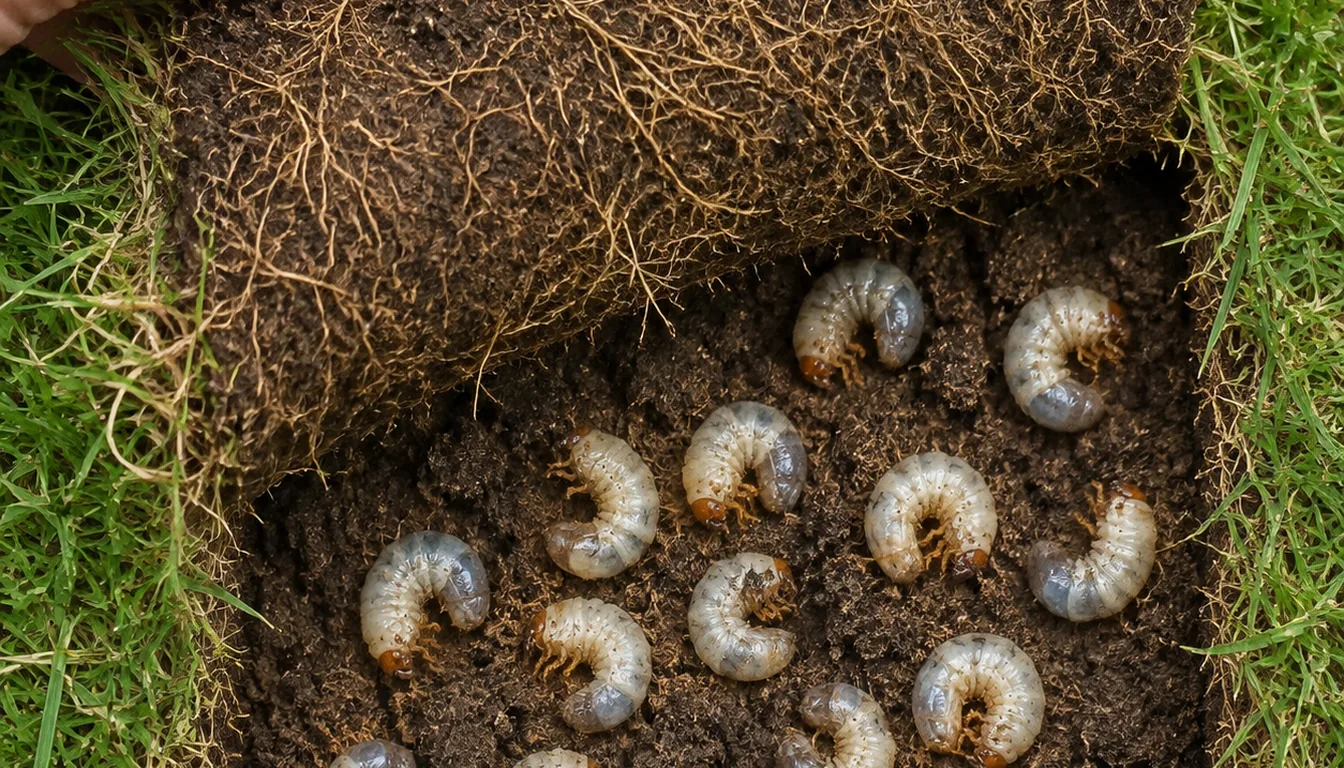
Brown grass, birds, or skunk damage can suggest white grubs, but none proves the diagnosis. The useful confirmation is live C-shaped larvae in the root zone beneath turf with damaged or missing roots.
Lift samples at the advancing edge of a patch, count the larvae over a known area, and compare several locations before deciding whether control is needed.
White grubs are larvae of scarab beetles, including Japanese beetles, masked chafers, and May or June beetles. Species, life cycle, turf health, soil moisture, and season all affect damage and treatment timing, so one threshold or product cannot cover every lawn.
The steps below help you recognize the pattern, sample without destroying the yard, separate grubs from look-alike problems, and take the least disruptive action that fits the evidence.
At a glance
What Does Grub Damage Look and Feel Like?
White grubs feed on grass roots. As roots disappear, affected turf may wilt despite adequate soil moisture, turn tan in irregular patches, feel spongy, and detach from the soil more easily than healthy sod.
Severe injury can let you roll the turf back like a loose carpet.
The strongest surface pattern is a patch that expands through late summer or early fall while nearby irrigated grass remains rooted. In spring, previously injured areas may green slowly or remain thin, but mature grubs are often harder to control then and the visible injury may reflect feeding that occurred months earlier.
Run a hand through the grass and tug gently at the crowns. Healthy Kentucky bluegrass, fescue, or perennial ryegrass should resist because roots bind the sod to soil.
Turf that lifts is worth sampling, but loose turf can also follow root disease, construction damage, or extreme drought.
Use the clues together. - Irregular thinning or browning during a plausible feeding period.
- Turf feels springy or poorly anchored compared with adjacent grass. - Roots beneath the patch are shortened, sparse, or absent.
- Live white grubs occur in several samples near active damage.
Do not diagnose from color alone. A green lawn can contain a few grubs without meaningful injury, while a brown lawn can have none.
How to Check a Lawn for Grubs
Choose the border between healthy-looking and damaged grass. The center of an old dead patch may no longer have roots or larvae, while the edge is where active feeding is easier to find.
Sample a healthy comparison area as well.
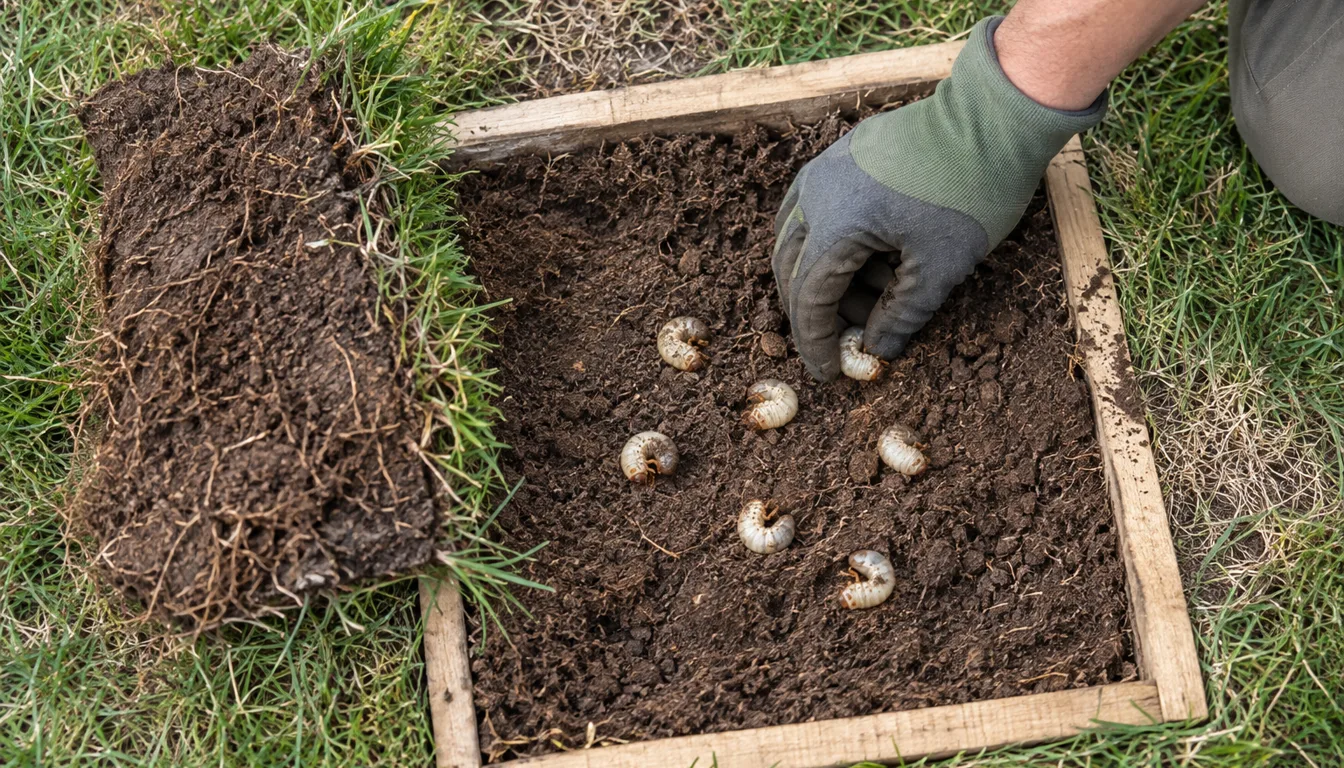
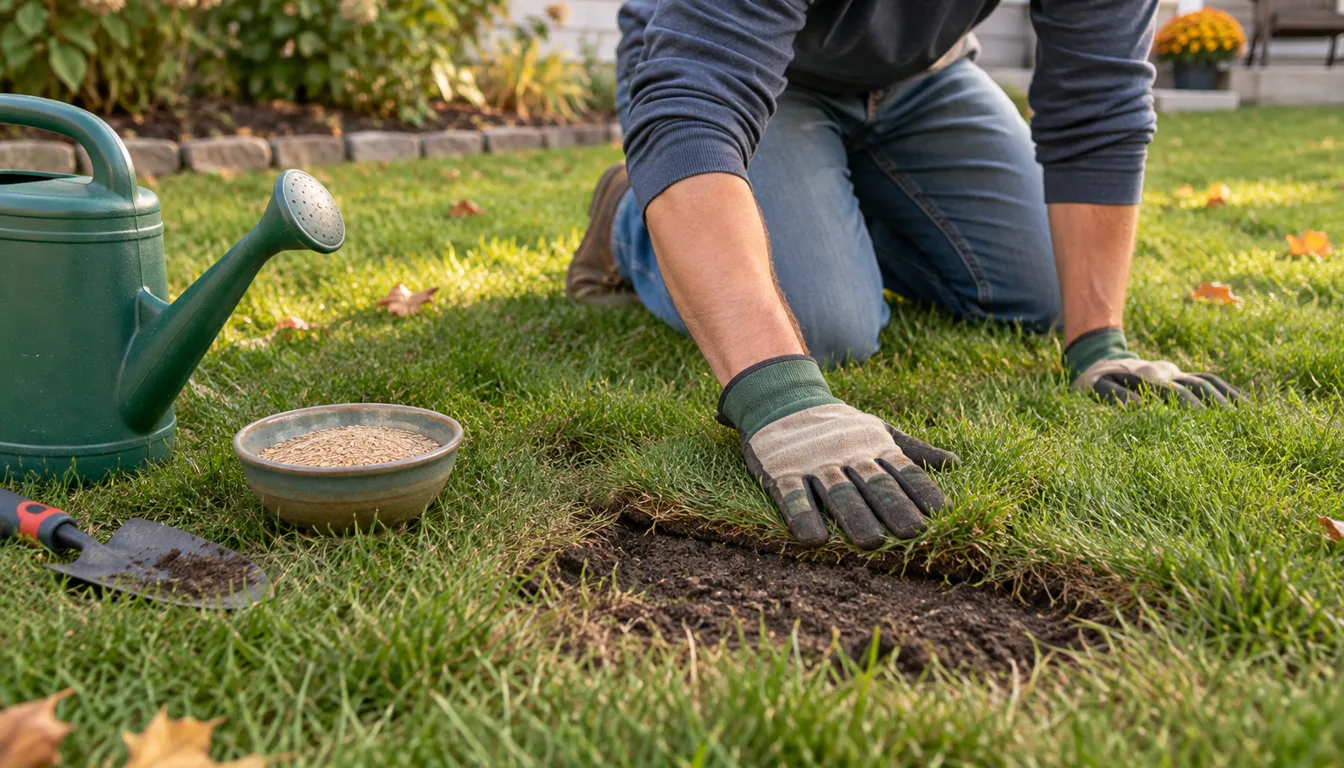
Cut three sides of a square with a flat spade or sturdy knife. Penn State guidance uses a one-square-foot sample two to four inches deep.
Smaller quarter-square-foot samples can also work if you multiply the count correctly and take more of them.
Keep the sampled area consistent so counts can be compared.
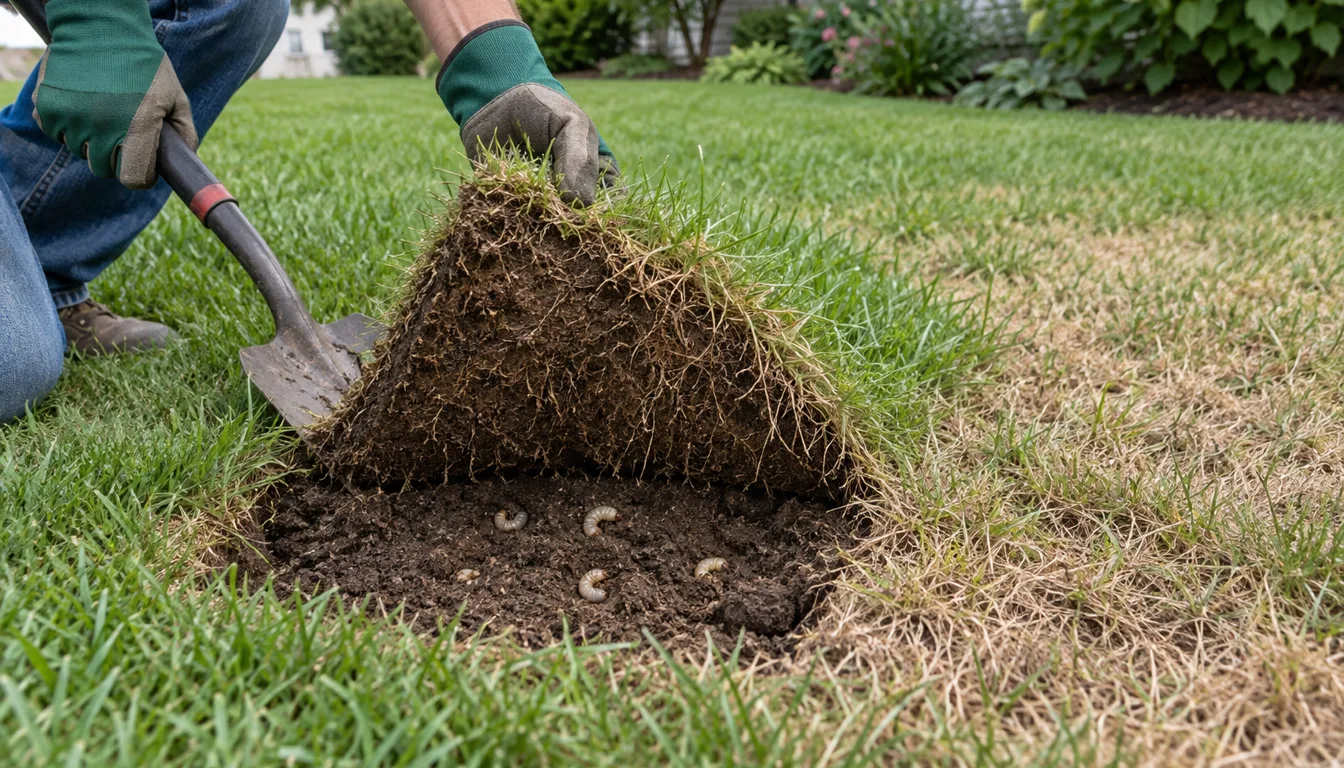
- Lift the sod as a hinged flap without tearing remaining roots.
- Inspect the underside of the thatch and the top few inches of soil.
- Break apart loose soil and count every white grub in the measured area.
- Note body size and take a clear photo of the head, legs, and rear end if identification is uncertain.
- Replace the sod, press it firmly into contact with soil, and water the cut area.
Take several samples across the affected zone because grubs are patchy. Record zeroes as well as positive counts.
Finding ten larvae in one square and none elsewhere calls for a different response from finding comparable counts throughout the lawn.
A single grub confirms that a beetle larva is present. It does not prove that the population caused the visible damage or that the whole lawn needs treatment.
How Can You Recognize a White Grub?
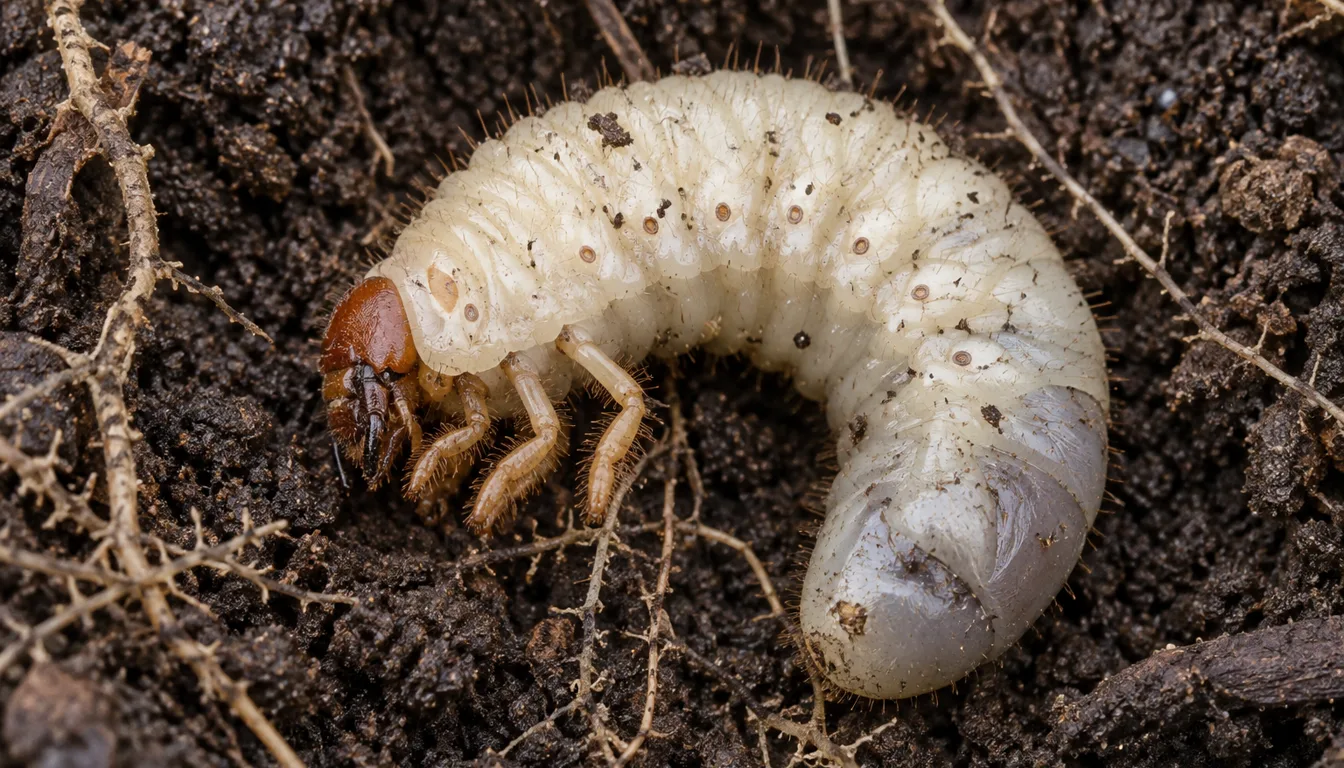
Typical scarab grubs are creamy white, soft-bodied, and C-shaped when disturbed. They have a distinct brown head and three pairs of legs immediately behind it.
Dark material may be visible through the rear of an actively feeding larva.
That general appearance separates them from legless fly larvae and from many caterpillars, but it does not identify the beetle species. Specialists examine the raster, the pattern of hairs and the shape of the anal slit on the underside of the last abdominal segment, along with size and location.
Species matters because Japanese beetles and masked chafers usually have one-year cycles, while some May or June beetles take longer. The vulnerable stage and effective timing may differ, and a pesticide label may list some grubs but not others.
Place several larvae in a ventilated container with a little moist soil if your county Extension office requests a sample. Otherwise, send sharp close-up photos with a ruler for scale.
Do not assume every large grub is simply an older version of the same pest.
The surrounding grass can help describe the site but cannot identify the larva. Grubs can injure both cool-season turf and warm-season lawns such as bermuda grass or zoysia, with local species and seasonal timing determining risk.
How Many Grubs Are Too Many?
There is no universal action number. Penn State notes that roughly five to ten grubs per square foot is often used for curative decisions depending on species, while Illinois guidance describes healthy turf tolerating populations near twelve per square foot.
These are decision ranges, not guarantees.
A well-rooted, irrigated lawn may tolerate feeding that damages drought-stressed turf. Animal digging can make a low grub population unacceptable even when root loss is limited, and a high count in a small isolated pocket may justify spot treatment rather than a broadcast application.
Judge four things together. | Evidence | Why it matters | | --- | --- | | Grubs per measured square foot | Makes samples comparable | | Species and larval size | Changes life cycle and product timing | | Active root damage | Connects the insects to the symptom | | Lawn condition and use | Determines how much injury the turf can tolerate |
If counts sit near a published threshold, identify the species and consult current local Extension guidance before treating. If counts are low and roots are intact, improve turf health and monitor.
If counts are high in repeated samples with active root loss, choose a control labeled for that grub, turf site, and life stage.
Never average only the positive samples. Map each sample and its count so a dense corner does not turn into an unnecessary whole-yard application.
Grubs or Drought, Disease, and Thatch?
Drought-stressed turf turns gray-green, folds or curls, and later browns, but its roots often remain attached until stress becomes severe. Check moisture below the surface and compare sprinkler coverage.
The deep-watering guide can help measure what actually reached the root zone.
Fungal diseases may show spots, bands, greasy margins, mycelium, or rings on the leaves and canopy. Sod usually does not roll back solely because of a foliar disease.
A plant diagnostic lab is safer than applying an insecticide and fungicide together “just in case.”
A thick thatch layer feels springy even when roots are healthy. Cut a vertical profile.
Thatch is the tan, interwoven organic layer between green tissue and mineral soil.
Grubs live and feed around the root zone. a thatch problem without larvae needs a lawn-management response, not grub control.
Dog urine commonly produces smaller spots, sometimes with a dark-green margin where diluted nitrogen stimulates growth. Fertilizer spill follows the walking or spreading pattern.
Chemical or heat injury can also stop abruptly at a hard edge, unlike many biological patches.
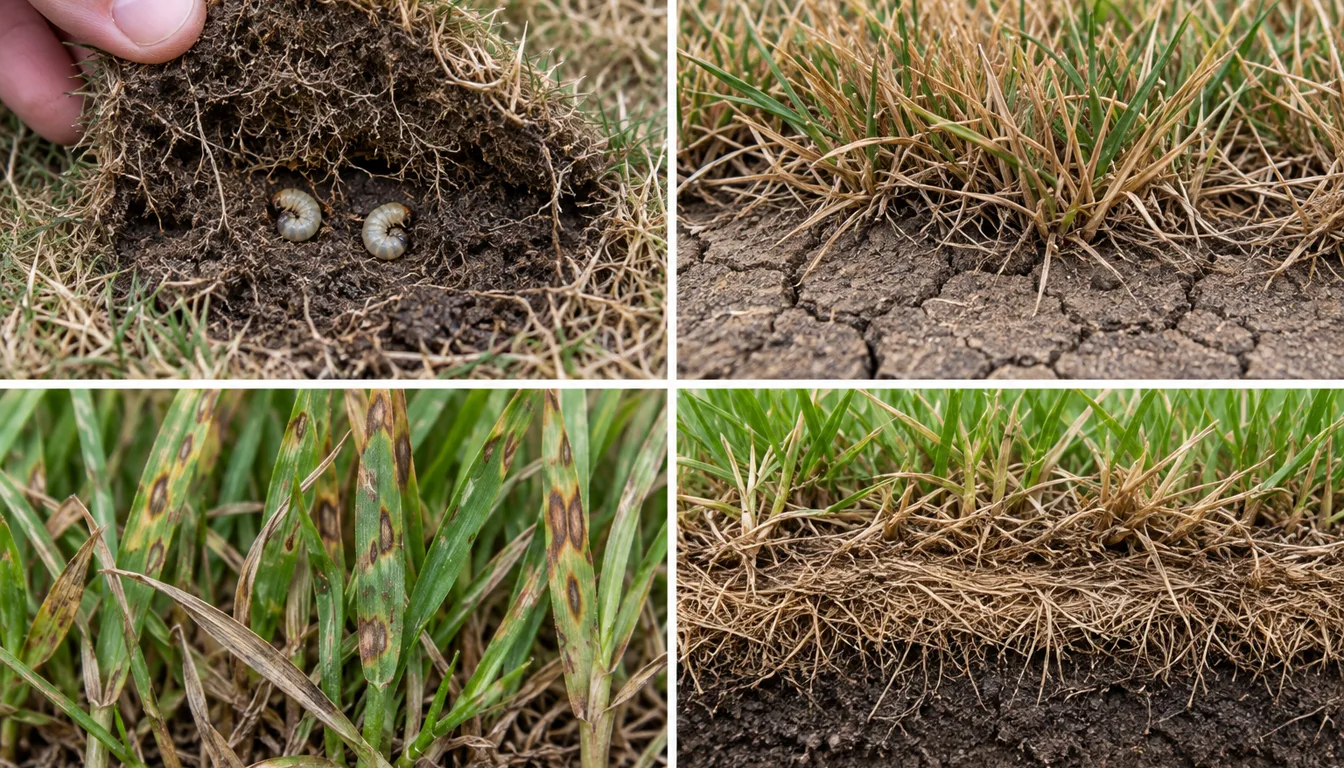
| Observation | More consistent with |
|---|---|
| Turf lifts. roots are missing. grubs present | White grub feeding |
| Turf stays anchored. soil is powder dry | Drought or irrigation gap |
| Spots or lesions occur on individual blades | Disease or leaf-feeding injury |
| Springy layer is visible above intact roots | Excess thatch |
| Small circular patch with greener edge | Pet urine or localized nitrogen |
Do Birds, Skunks, or Raccoons Prove You Have Grubs?
Animals digging or pecking in turf are useful scouts, but they are not a diagnosis. Skunks and raccoons may flip sod or make cone-shaped holes while searching for grubs.
Birds can congregate where larvae are near the surface.
The disruption may become more visible than the root feeding itself.
Those animals also eat earthworms and other soil organisms. Moles mainly respond to available soil prey and can remain active even when damaging grub populations are absent.
Acorns or other buried food near oak trees can attract digging for a separate reason.
Sample beneath fresh disturbance and just beyond it. If roots remain dense and only a few grubs appear, repair and press the sod back into place, then address wildlife access if necessary.
Killing non-target soil life to remove a food source is unlikely to be a sound long-term strategy.
When animal activity reveals a genuinely high, damaging grub population, restrict treatment to the area supported by samples. Recheck after the labeled control interval rather than assuming the absence of fresh digging proves every larva died.
When Is Grub Damage Most Likely?
Many annual white grubs hatch in summer and feed near the surface as small larvae. Damage becomes noticeable from late summer into fall as they grow, especially when heat or drought reduces the turf's ability to replace roots.
They move deeper as soil cools, return toward the root zone in spring, then mature into beetles.
That cycle varies by species and climate. Some May or June beetles develop over multiple years, and warm regions have different scarabs and seasonal windows from northern lawns.
Soil temperature and moisture can move larvae vertically, so a dry top layer may push them below a shallow sample.
The visible month also does not identify the cause by itself. Cool-season lawns may show late-summer injury, while warm-season [link:plant:st-augustine-grass|St.
Augustine grass] or zoysia may reveal weak areas as growth changes. Sample when the suspect larvae are expected near the root zone and use local phenology rather than a national calendar.
Preventive and curative products are not interchangeable. Some preventive active ingredients work best against newly hatched larvae and may take time.
A fast curative option may be labeled for larger active grubs but have a shorter treatment window.
Spring applications against mature annual grubs are often less effective and may not be warranted.
Identify the grub and life stage before buying a product. The wrong active ingredient at the wrong time can leave the population unchanged while exposing other organisms.
What Should You Do After Confirming Lawn Grubs?
If counts are below the locally relevant threshold and roots remain functional, monitor rather than treat. Maintain the mowing height recommended for the grass, irrigate during establishment or drought where appropriate, and avoid excess nitrogen that creates weak, thirsty growth.
A healthy lawn can tolerate some feeding.
When repeated samples show a damaging population, identify the species and select only a product labeled for that pest, turf site, and current larval stage. Read the full label for rate, protective equipment, pollinator precautions, irrigation, reentry, and environmental restrictions.
The label is the legal instruction.
Treat the confirmed zone instead of assuming every square foot is infested.
Biological options also have exact handling requirements. Beneficial nematodes such as Heterorhabditis bacteriophora must be viable, protected from drying and ultraviolet light, applied to suitably moist soil, and irrigated as directed.
They are living organisms, not shelf-stable granules that can be used casually.
After control, press lifted sod into moist soil. Reseed or patch only where crowns and roots are dead, matching the existing grass and the correct seeding season.
overseeding guidance helps with larger thin areas.
Warm-season turf may recover through stolons or need plugs or sod rather than cool-season seed.
Finish with one evidence-based recheck. Sample the treated edge after the product's stated response time and photograph the same locations.
If grubs remain, do not stack another pesticide automatically, verify application, life stage, and diagnosis with local Extension support.
Pro Tips
- Sample the transition between healthy and damaged turf, not only the dead center.
- Measure every sample so counts can be converted to larvae per square foot.
- Take several samples and record zero counts as well as positive ones.
- Replace each turf flap, press it firmly to the soil, and water it after inspection.
- Photograph the larva's head, legs, underside, and size for species help.
- Use root damage plus grub counts; neither surface color nor animal digging is proof alone.
- Follow the pesticide label and local timing rather than a generic national schedule.
Frequently Asked Questions
What is the clearest sign of grubs in a lawn?
Loose turf with damaged roots plus live C-shaped scarab larvae in repeated measured samples is the clearest evidence. Brown grass or animal digging without a root-zone count remains only a clue.
How deep should I dig to find lawn grubs?
Lift the sod and inspect the thatch underside and roughly the top two to four inches of soil. In dry or cold conditions, larvae may move deeper, so local timing and soil moisture affect whether a sample finds them.
How many grubs per square foot require treatment?
Published ranges vary by species and turf condition. roughly five to twelve per square foot appears in Extension guidance.
Use local thresholds together with active root damage, repeated counts, and the lawn's ability to tolerate feeding.
Can a grub-damaged lawn recover without reseeding?
Turf with surviving crowns and roots may reconnect after the sod is pressed down, watered, and protected from further injury. Areas with dead crowns or missing roots need patching with seed, plugs, or sod appropriate to the grass and season.
Should I treat the entire lawn after finding grubs?
Usually not without evidence that the population is widespread. Map several measured samples and spot-treat confirmed areas when the product label and local guidance allow it.
Sources & References
Related Guides
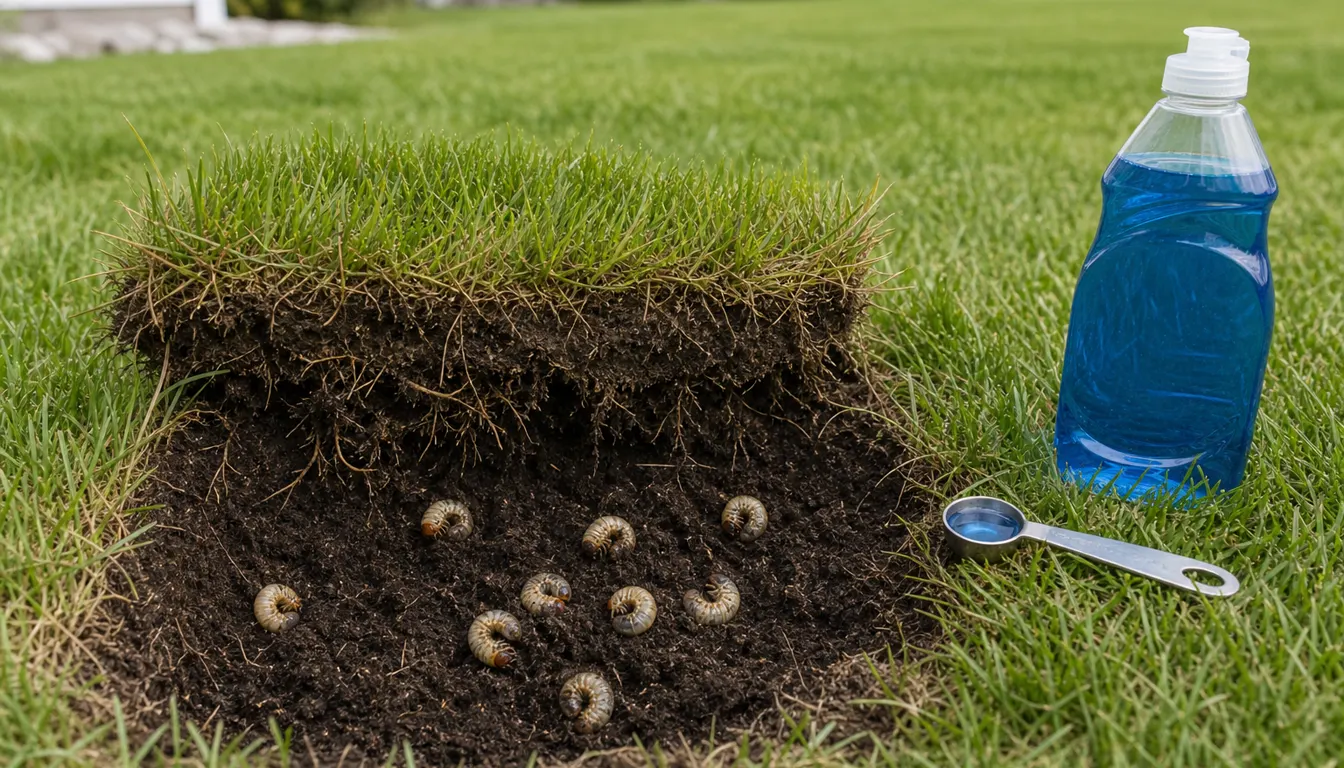
Dawn Dish Soap for Grubs: What Actually Works
Soap solutions can help you spot-check for grubs and knock back a few pests, but they are not…
10 min read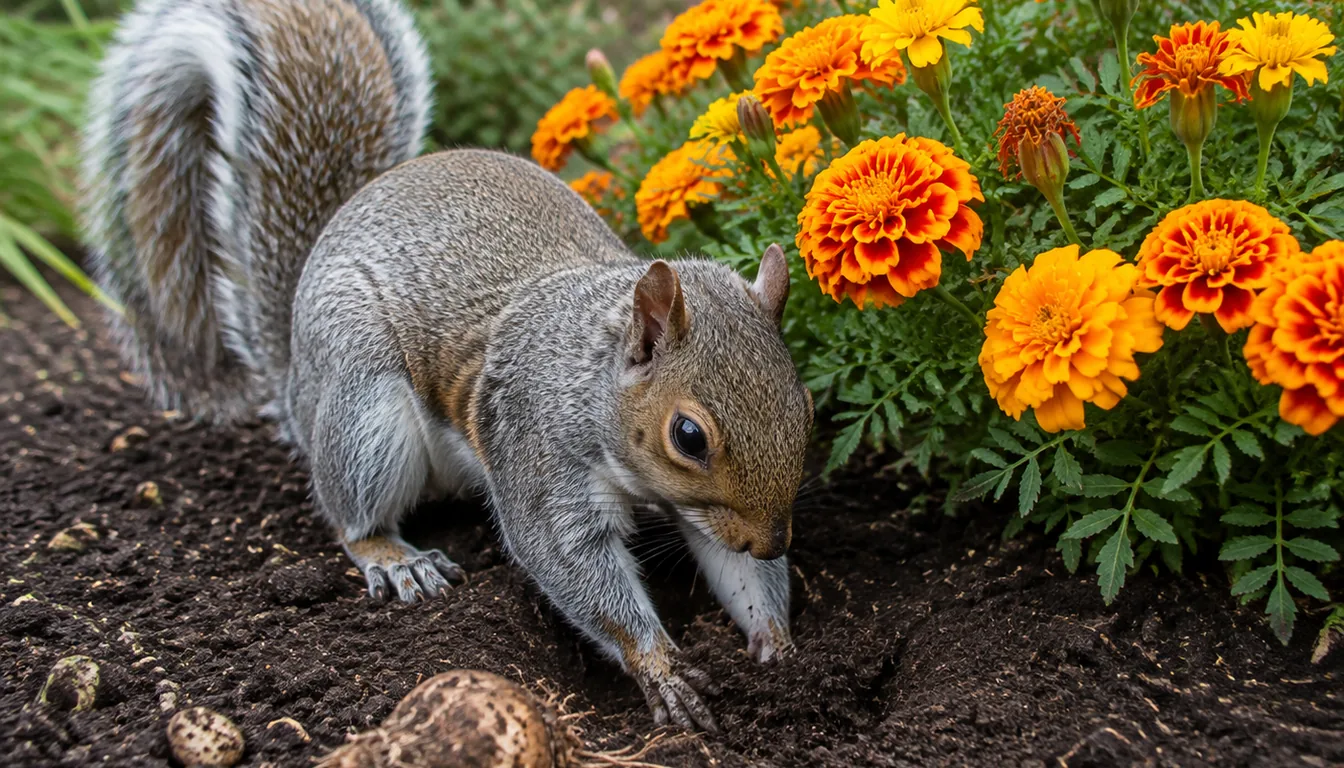
Do Marigolds Keep Squirrels Away From Your Garden?
Squirrels can strip a bed of seedlings or freshly planted bulbs in a single morning.
11 min read
Do Squash Bugs Bite People?
No. A squash bug cannot bite you. Its mouthparts are a slender stylet built to pierce plant tissue…
9 min read
How Do You Get Rid of Spider Mites on Houseplants?
Spider mites on houseplants often can be reduced by repeatedly washing the leaf undersides.
11 min read
How Much Neem Oil Per Gallon? Read and Scale the Label Rate
There is no universal amount of neem oil per gallon. The rate belongs to the exact product and its…
11 min read
How to Control Fungus Gnats in Houseplant Soil
Fungus gnat control works best when it addresses the larvae in potting mix as well as the adults…
15 min read