At a glance
- Short Answer
- No squirrel fact sheet mentions marigolds
- Best Use
- Color, plus the odor Minnesota Extension says deer and rabbits avoid
- Works Best With
- Hardware cloth or chicken wire over bulbs and seeded rows, and fine mesh around small beds
- Protection Level
- Wire covers are the fact sheets' main tool, and repellents have limited success
Physical covers are what these sources use to protect bulbs and seedlings. The sections below show what squirrels go after in each season, how to wire a bulb bed, and how to handle beds, fruit, repellents and bird feeders.
Can Marigolds Really Repel Squirrels?
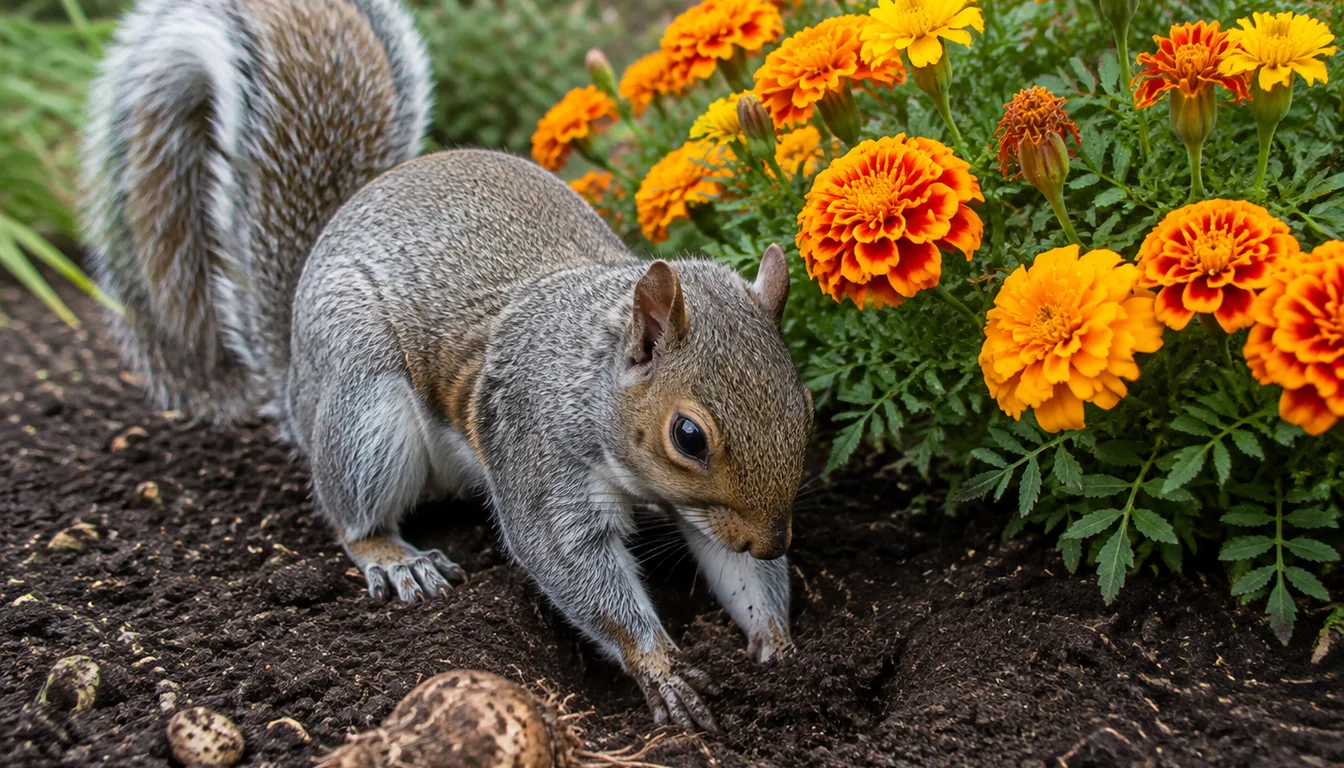
Marigold foliage has a distinct odor, and Minnesota Extension says deer and rabbits tend to avoid it, which is why it recommends marigolds as companion plants against those pests. That page does not mention squirrels.
The squirrel fact sheets are built on other tools. Between them, the three list habitat changes, mesh fences, taste repellents and trapping. None of the three mentions marigolds.
Whether marigold scent changes what a squirrel does is a question these sources leave open, and the plan below does not depend on it. If deer are the animals in your beds, the deer-resistant plants guide covers them. Rabbits have their own rabbit-resistant plants guide.
What Are Squirrels Actually Doing in Your Garden?
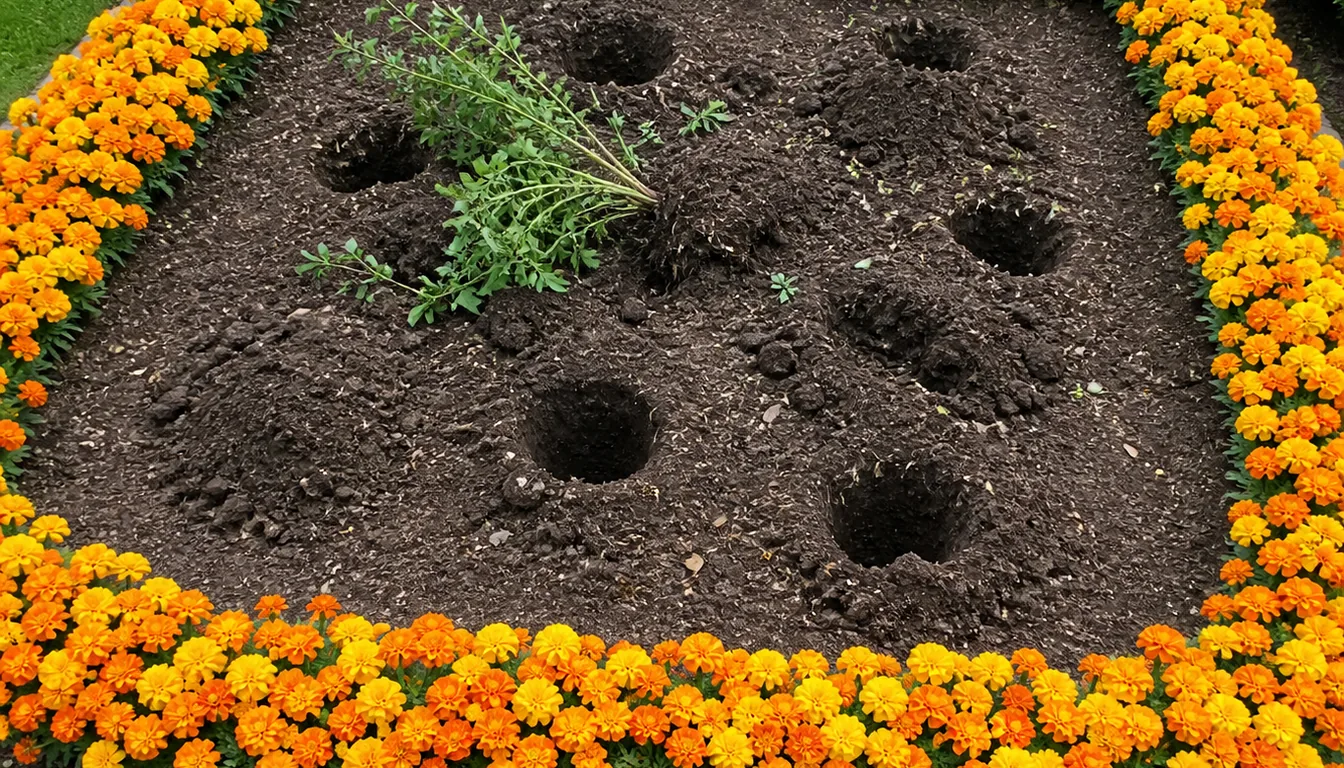
Squirrels dig holes in garden soil and turf to bury nuts, acorns and seeds, mostly in the fall, and they may never retrieve what they cache. They also dig up seeds and bulbs of vegetables and flowers, chew on spring-planted potted plants, and eat ripened fruit and grains.
What goes up depends on what the squirrels are after.
| What squirrels go after | What to put up |
|---|---|
| Newly planted bulbs, and soil dug for burying nuts | Hardware cloth or chicken wire over the bulb bed |
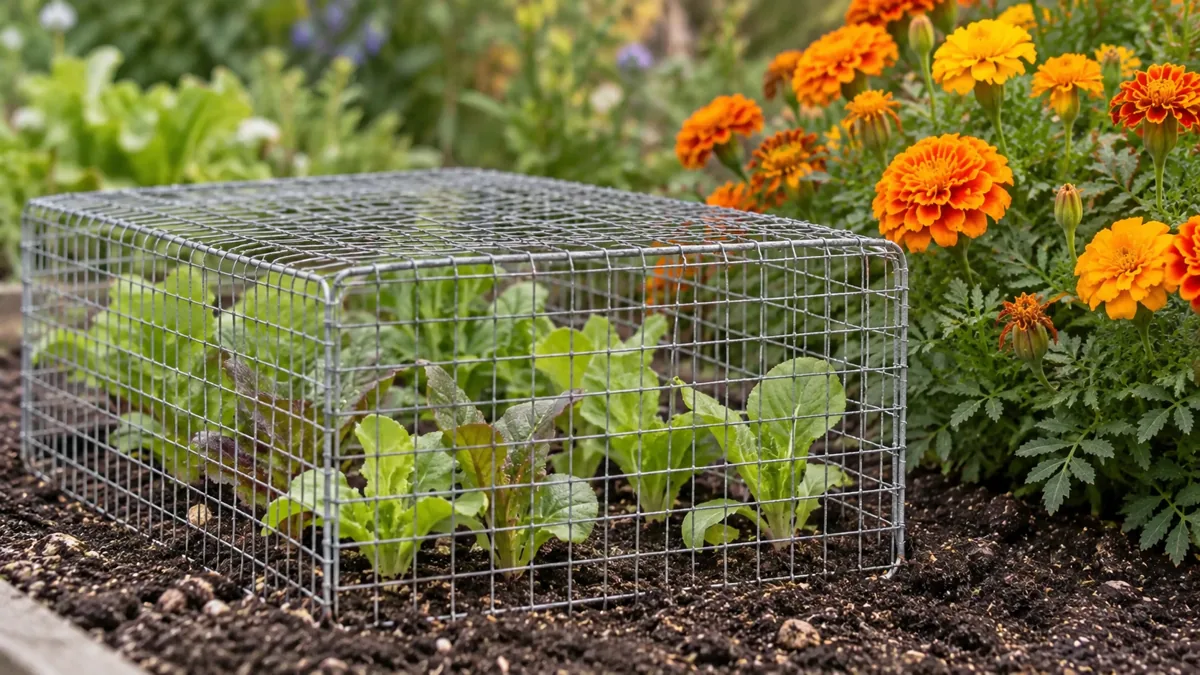
| Newly seeded rows | Cage-like covers of 1-inch hexagon chicken wire |
| Strawberries, tomatoes, corn and other crops | Mesh fences or enclosures around small areas |
| Fruit and nut trees | Netting on a single tree, sometimes |
How Do You Keep Squirrels From Digging Up Bulbs?
The best way to keep squirrels from digging up tulips and other bulbs is to cover the planting area with chicken wire or hardware cloth. Planting depth and firm soil should make digging harder before the wire goes on, so the order matters.
- Plant at full depthSet tulips, daffodils and hyacinths 6 to 8 inches deep, and crocuses and grape hyacinths 3 to 4 inches deep.
- Firm and water the soilTamp the soil down with your hands as you fill the hole, then water the planting area.
- Lay the wire over the bedUse chicken wire or hardware cloth, and weigh it down with bricks or other heavy objects.
- Take it off in early springRemove the wire before the tulip foliage begins to emerge.
How Do You Protect Vegetable Beds, Seedlings, and Fruit?
For newly seeded or established crops, UC IPM describes cage-like freestanding covers made of 1-inch hexagon chicken wire. Nebraska says wire mesh fences with a weave no larger than 1/2 inch, or mesh enclosures, may be practical for keeping squirrels out of small areas.
Fruit trees are harder, because it is virtually impossible to keep squirrels out of fruit or nut trees given their climbing and jumping ability. Sometimes, when other unprotected trees are nearby, netting a single tree protects its crop. Squirrels can readily gnaw through plastic netting, but they may not persist if enough other food is easy to reach.
In larger areas little else can be done other than removing the squirrels by cage trapping or shooting where that is safe and legal. The last section covers the trapping rules.
Do Squirrel Repellents Work?
Three university fact sheets describe squirrel repellents as of limited use. Very few are available, bitter-tasting (denatonium) repellents have had a very limited success rate, capsaicin products vary with how much other food is around, and sticky polybutene products are only marginally effective and messy to use.
Taste repellents can be used on seeds, bulbs and flowers that will not be eaten. On food crops, timing matters.
UC IPM says squirrels quickly become used to frightening devices that use sight or sound and pay little attention to them after a couple of days, and that none of these devices have proven very effective. Home remedies such as garlic or egg sprays, coffee grounds and bar soap do not appear in any of these fact sheets, so they get no place in this plan.
How Do You Keep Squirrels Out of Bird Feeders?
A gray squirrel can jump sideways 8 feet, straight up 4 feet and down 15 feet, then hang on where it lands, so Nebraska recommends these steps.
- Mount the feeder on a large-diameter metal pole at least 5 feet off the ground and 10 feet from branches or other structures a squirrel could leap from, with a baffle on the pole
- Skip greased poles and sliding two-part poles, which usually fail
- Enclose the whole feeder in 2-inch wire mesh, which lets small birds feed and keeps squirrels out
- Try a feeder with weight-activated perches, which can reduce seed theft
Nebraska adds that capsaicin mixed into birdseed may be effective, while UC IPM says birdseed repellents have not shown to be effective.
What If Squirrels Keep Coming Back?
Keeping squirrels out of a yard or garden is a continuous challenge, partly because many people feed squirrels and put up nest boxes for them. Feeding them is ill-advised, since well-fed squirrels quickly fill available nesting areas and are more likely to invade buildings.
For a raided feeder, Penn State still suggests an alternative food such as an ear of corn wired or nailed to a tree or fence post away from the problem spot, which sits uneasily with Nebraska's advice not to feed squirrels.
Trapping is regulated. A kill trap is usually the most effective way to thin out the population, but new squirrels move in to fill the void and trapping usually becomes an ongoing process. Check with your state wildlife agency first, because Nebraska requires a trapped squirrel to be released within 100 yards of where it was caught or euthanized, and California makes releasing one elsewhere illegal without a permit.
Pro Tips
- Plant tulips, daffodils and hyacinths 6 to 8 inches deep, firm the soil, and cover the bed with hardware cloth or chicken wire.
- Take the bulb wire off in early spring, before the tulip foliage begins to emerge.
- Cover seeded rows with cage-like chicken wire covers; for small areas, Nebraska describes wire mesh with a weave no larger than 1/2 inch.
- Check the label before spraying a capsaicin repellent on fruit or vegetables; Penn State describes one that goes on only before the produce forms or after it is off the plant.
- Mount bird feeders on a metal pole at least 5 feet high and 10 feet from branches, with a baffle.
- Do not count on scare devices, since squirrels pay little attention to them after a couple of days.
Frequently Asked Questions
Do marigolds actually keep squirrels away from gardens?
No source says so. Minnesota Extension credits marigold odor with deterring deer and rabbits and does not mention squirrels, and the squirrel fact sheets from Penn State, Nebraska and UC IPM do not mention marigolds. They rely on wire covers, fences and repellents of limited success.
What is the best way to keep squirrels from digging up tulip bulbs?
Iowa State says to plant tulips 6 to 8 inches deep, firm the soil, and cover the planting area with chicken wire or hardware cloth weighed down with bricks. Remove the wire in early spring before the foliage begins to emerge.
Will marigolds keep squirrels away from bird feeders?
No source suggests it. Nebraska recommends a large-diameter metal pole at least 5 feet off the ground and 10 feet from branches or other structures a squirrel could leap from, with a baffle, or a feeder enclosed in 2-inch wire mesh.
Are marigolds enough to protect tomatoes and berries from squirrels?
UC IPM lists strawberries, tomatoes and corn among the crops squirrels may feed on while foraging on the ground. It describes cage-like covers of 1-inch hexagon chicken wire for crops, and Nebraska says wire mesh fences with a weave no larger than 1/2 inch may be practical for small areas.
Do scare devices or sprays keep squirrels out?
Only weakly. UC IPM says squirrels pay little attention to frightening devices after a couple of days, and Penn State says taste repellents have had a very limited success rate and capsaicin products vary with how much other food is available.
Sources & References
- Marigolds, University of Minnesota Extension
- Tree Squirrels, Penn State Extension
- Control of Tree Squirrel Damage (G1924), University of Nebraska-Lincoln Extension
- Tree Squirrels Pest Notes, UC Statewide IPM Program
- How can I keep squirrels from digging up newly planted tulip bulbs? Iowa State University Extension