
Best Tall Perennials for Seasonal Privacy Screens
Seated eye level is about 4 feet, and many perennials stay lower. Choose taller plants, size the bed, and plan for the screen to open each November.
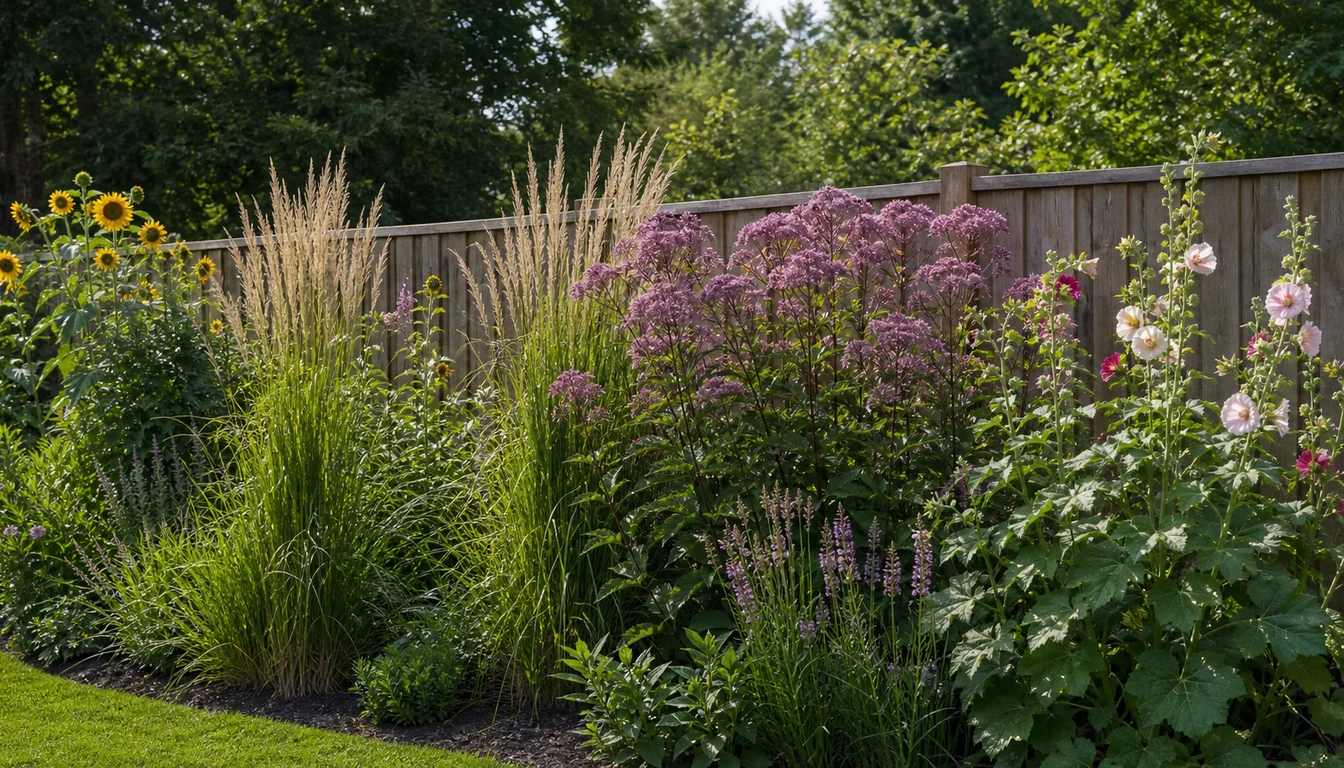
At a glance
A perennial screen is a summer answer, not a wall.
Before any plant name is useful you need a number, because the height that hides a view from a patio chair is not the height that hides it from standing. This page gives that number first, then the plants that actually reach it, and it is honest about the months when none of them do.
How Tall the Screen Actually Has to Be
Measure from where the problem happens rather than from the bed. Seated eye level is roughly 4 feet above the ground for most adults, and standing eye level is roughly 5 feet to 5 feet 6 inches.
The seated number is the one worth chasing, because clearing 4 feet with a planting is realistic while blocking a standing view along a boundary means 6 feet of dense growth, which is a hedge or a fence rather than a perennial bed.
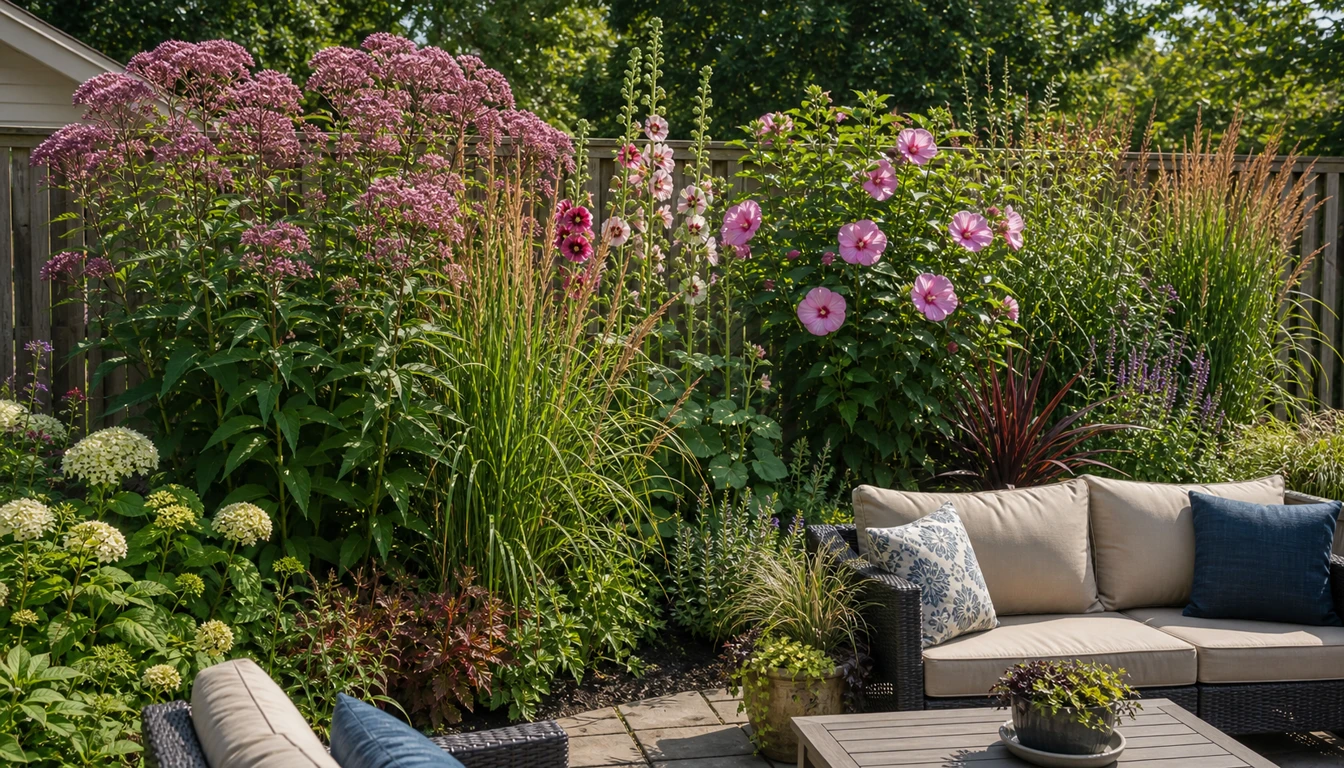
Two things move the target and neither is about the plants. Ground level decides everything, so a neighboring deck or a slope above you raises the requirement past anything herbaceous can reach, and distance works in your favor, because a screen planted close to the seat blocks far more of the view than a taller one at the property line.
| Where you are looking from | Eye level to clear | What that means |
|---|---|---|
| Seated on a patio | About 4 ft | Achievable with tall perennials and grasses |
| Standing in the yard | 5 to 5 ft 6 in | Needs the tallest grasses, or a woody layer |
| Seated, screen close to the chair | About 4 ft | Easiest case, since nearer blocks more |
| Neighbor's deck or upslope | Above 6 ft | Beyond herbaceous, use a tree or structure |
| Kitchen window, indoors | 4 to 5 ft at the window's distance | Judge it from inside, not from the garden |
Most Perennials Are Not Tall Enough, and These Are
The standard perennial border list tops out below the number you just measured. Coneflower is 2 to 4 feet, daylily 1.5 to 3, yarrow 1 to 3 and Russian sage 2 to 4, so none of them clears a seated sightline on their own.
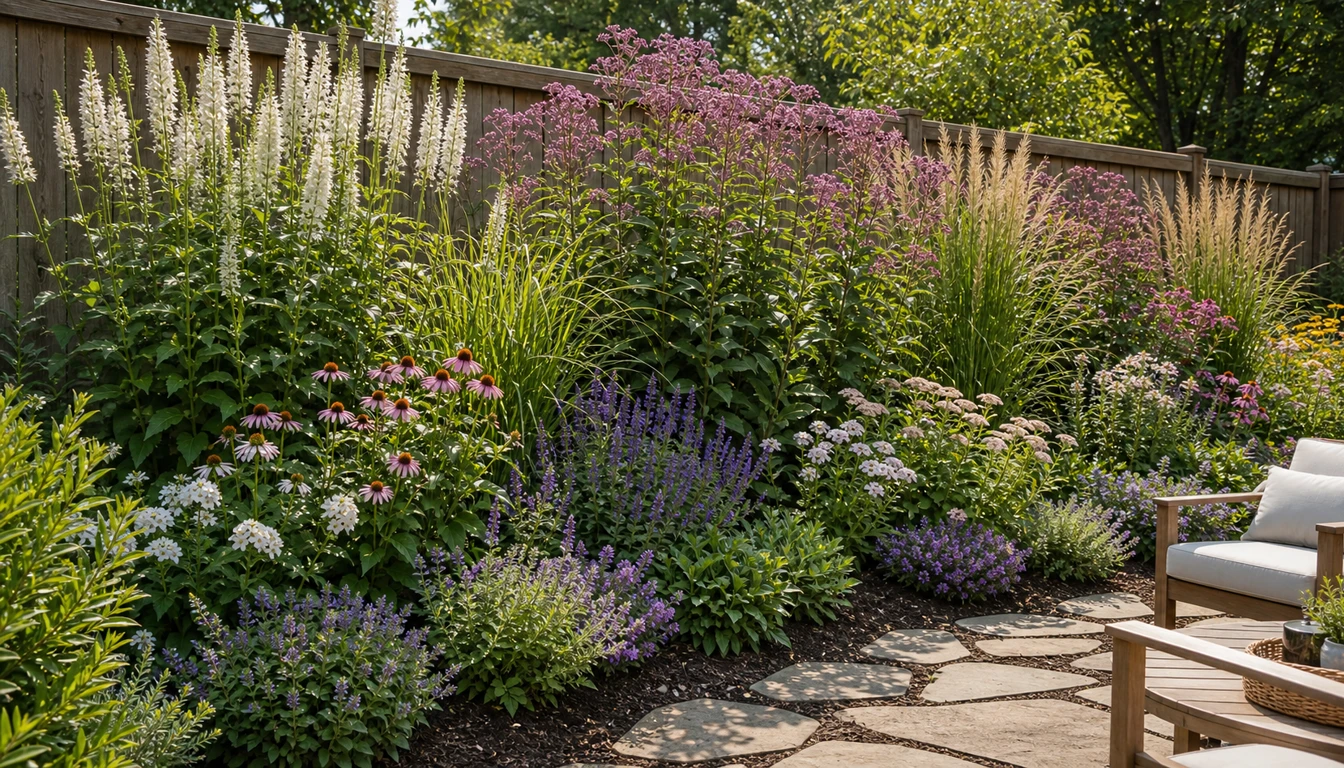
Three groups do reach screening height. Ornamental grasses are the tallest reliable herbaceous option and hold their structure longest, hardy hibiscus reaches 3 to 8 feet with a solid leafy mass, and tall aster cultivars run to 6 feet where the dwarf ones stop at 1.
The shorter perennials are not useless, they are simply filling the band below the tall stems, which is the part of the screen a seated person is actually looking through.
| Plant | Height | What it does | What it needs |
|---|---|---|---|
| Miscanthus | 5-8 ft | The tallest herbaceous screen; check state invasive lists | Full sun |
| Switchgrass | 3-6 ft | Native, upright, wind-firm | Full sun |
| Feather reed grass | 4-5 ft | Narrow and vertical, sterile, stands into winter | Full sun |
| Hardy hibiscus | 3-8 ft | Dense leafy mass, late to emerge in spring | Sun, steady moisture |
| Tall aster | To 6 ft | Closes the late-season gap | Sun to light shade |
| Russian sage | 2-4 ft | Airy upper-middle, not a screen alone | Full sun, dry |
| Garden phlox | 2-4 ft | Middle band; needs air movement for mildew | Sun, airflow |
| Daylily and yarrow | 1-3 ft | Lower band and front mass | Full sun |
In a Narrow Strip, Plant a Vine Instead
A layered screen needs roughly 3 feet of bed depth and 4 to 5 feet for three layers, and below that there is no room to stagger, so the planting becomes a single row that leans into the path and shows daylight between every stem.
A vine solves the same problem from a trellis footprint. Clematis reaches 6 to 20 feet depending on variety and asks only that its roots stay shaded while the top is in sun, whereas wisteria reaches 20 to 30 feet and needs a structure built for the weight rather than a garden-center trellis.
Spacing along the run matters as much as depth. Set tall perennials and grasses at their mature width, commonly 2 to 4 feet apart, and leave 18 inches to 2 feet of access behind the planting so the fence stays reachable for maintenance.
If the bed is under 3 feet deep, stop planning a planted screen and put the height on a support. A clematis on a trellis gives you more cover in a two-foot strip than any perennial can.
Close the Band at Seated Height
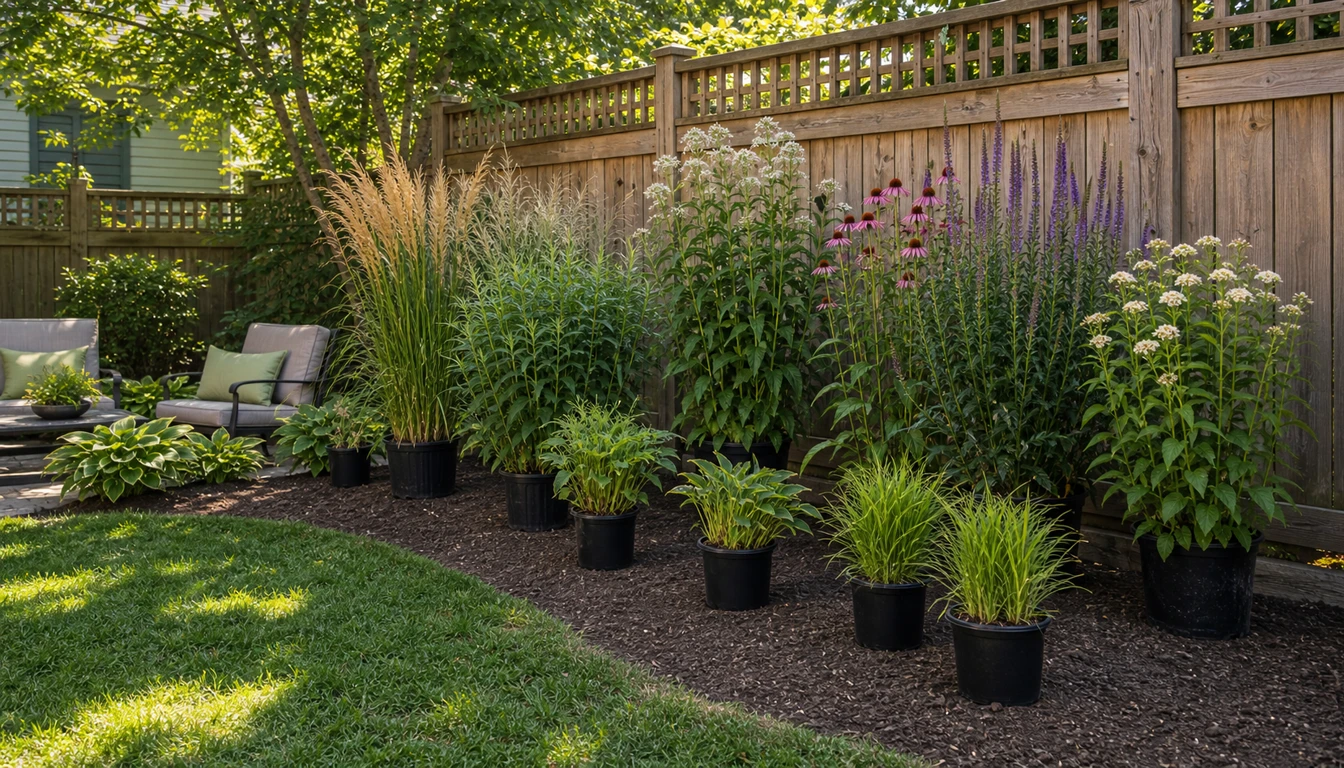
Tall perennials and grasses carry nearly all their mass well above 3 feet, and the open band between roughly 1 and 4 feet is exactly what a seated viewer looks through. A screen can be spectacular at flower height and useless where it matters.
Plant that band on purpose rather than hoping the tall stems fill it.
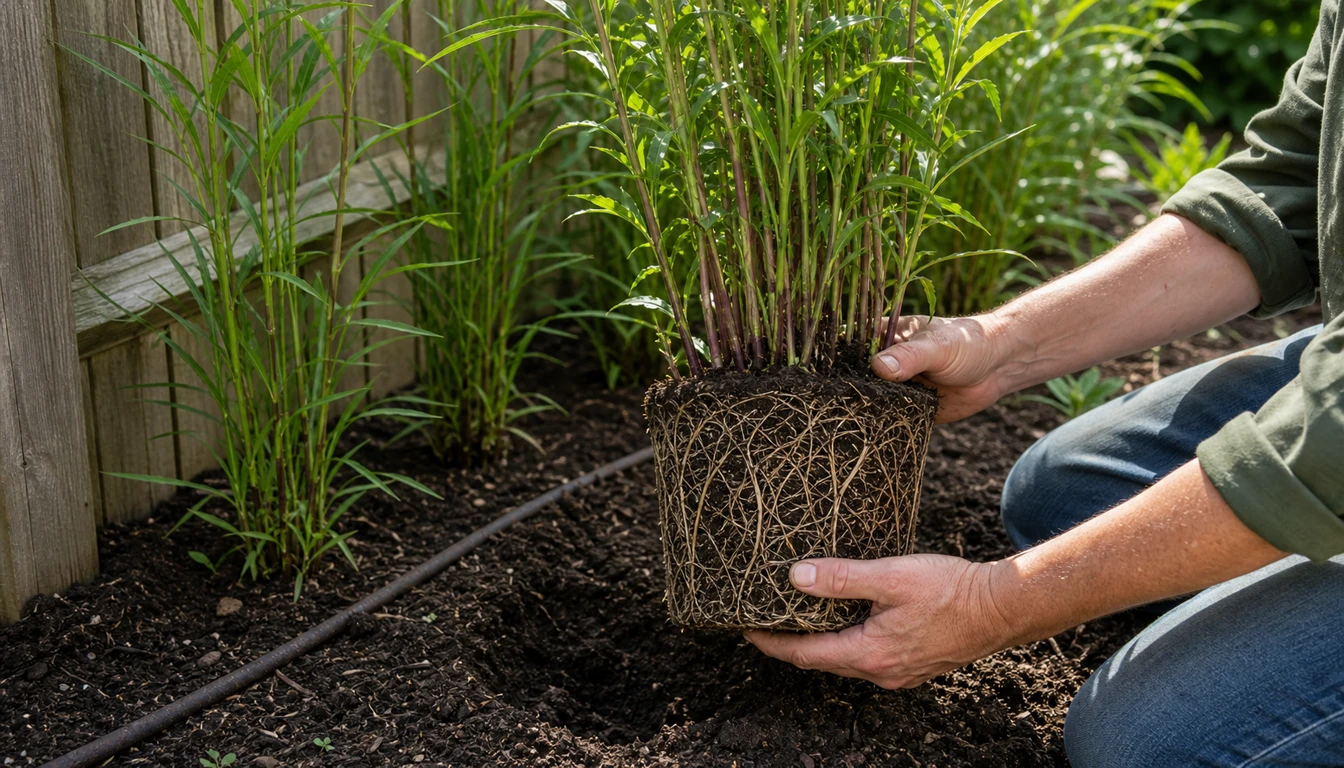
- Back of the bed: grasses, hardy hibiscus or tall aster, carrying everything above 4 ft
- Middle: Russian sage or garden phlox at 2 to 4 ft, thickening the upper-middle
- Front, in sun: daylily and yarrow for tough lower mass under 3 ft
- Front, in part shade: astilbe or hosta, which cover the low band but will never screen on their own
Put the Supports In Before the Stems Need Them
Supports have to be in place by the time stems reach about a third of their final height. Put them in then and the plant grows up through the frame, while putting them in later means gathering a fallen screen into a bundle that looks worse than the gap it hid.
Two growing habits cause most of the falling and both are things you did, since heavy nitrogen produces fast height on weak stems while shallow frequent watering leaves the roots near the surface where nothing anchors.
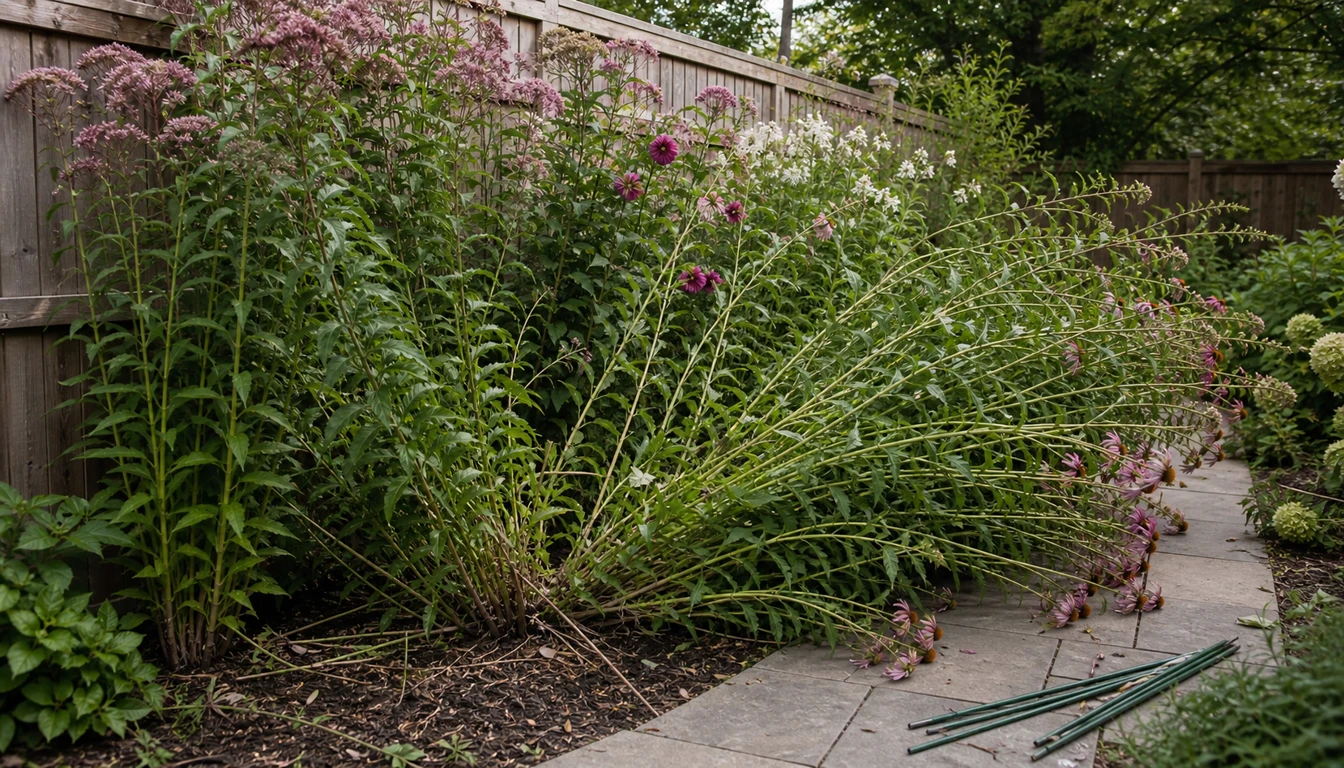
- At a third of final height: hoops and stakes in, before you need them
- All season: feed lightly, since fast growth is the wrong kind of height
- All season: water deeply and less often so roots go down
- After a storm: cut damaged stems rather than tying the whole clump upright
Winter Is When a Perennial Screen Stops Working
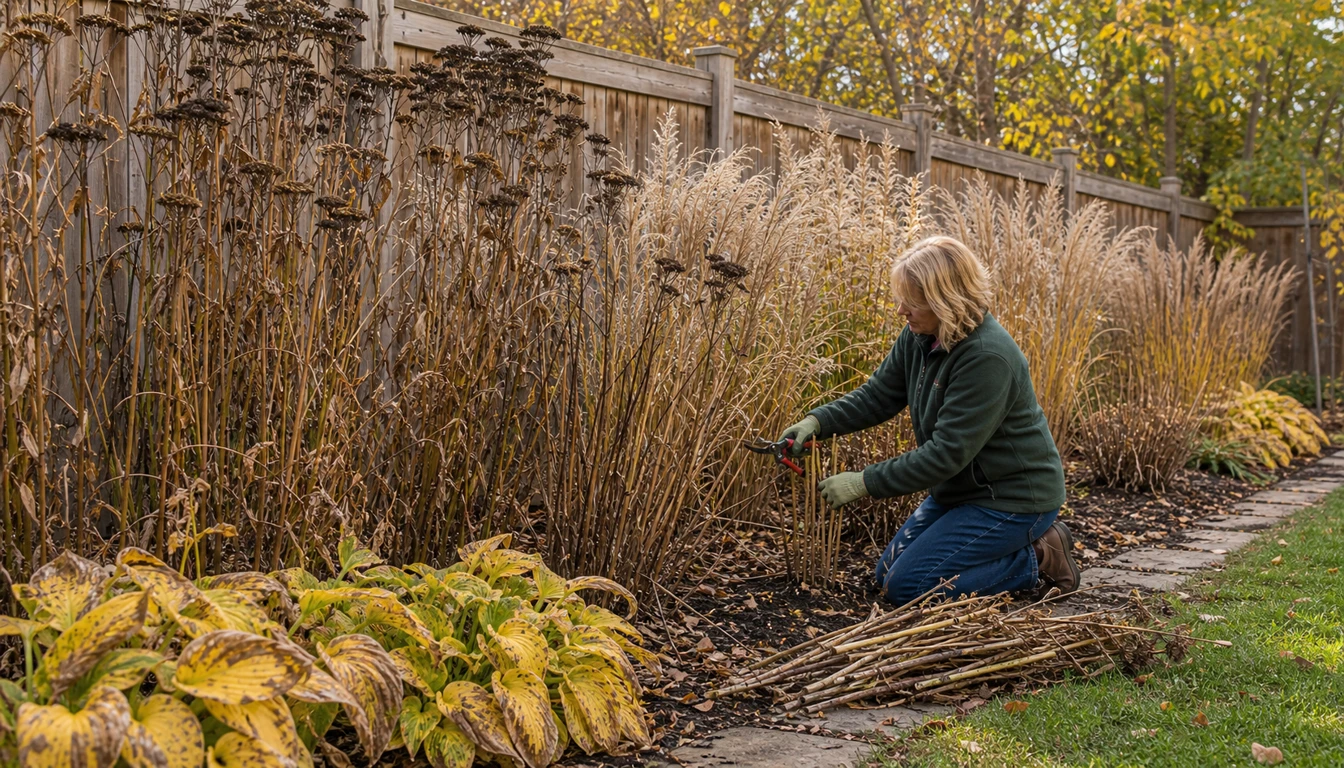
Herbaceous perennials die back, so in a cold-winter garden the view is open from roughly November until May. Ornamental grasses hold standing structure longest, but they thin and flatten under snow rather than staying dense.
If the view has to stay covered all year, the permanent layer goes in behind the perennials. A rose of sharon at 8 to 12 feet, a butterfly bush at 5 to 10, or privacy trees for a taller boundary all do that work, with the perennials softening the front.
Prune collapsed stems before they mat down and trap moisture around the crown, leaving the grasses until late winter since they are the last thing still standing. Whether the woody layer behind them holds its leaves is the choice that decides everything, because an evergreen screens all twelve months while a deciduous one only thickens a view that was already covered.
Stand at the window in November and look at the view you are trying to hide. If what you see then is unacceptable, the screen needs a woody layer, and no perennial list on this page will substitute for it.
Judge It From the Seat, Not From the Bed
Take one photograph a month from the same seat on roughly the same date. That single habit settles next season's decisions better than any amount of standing in the bed admiring individual plants.
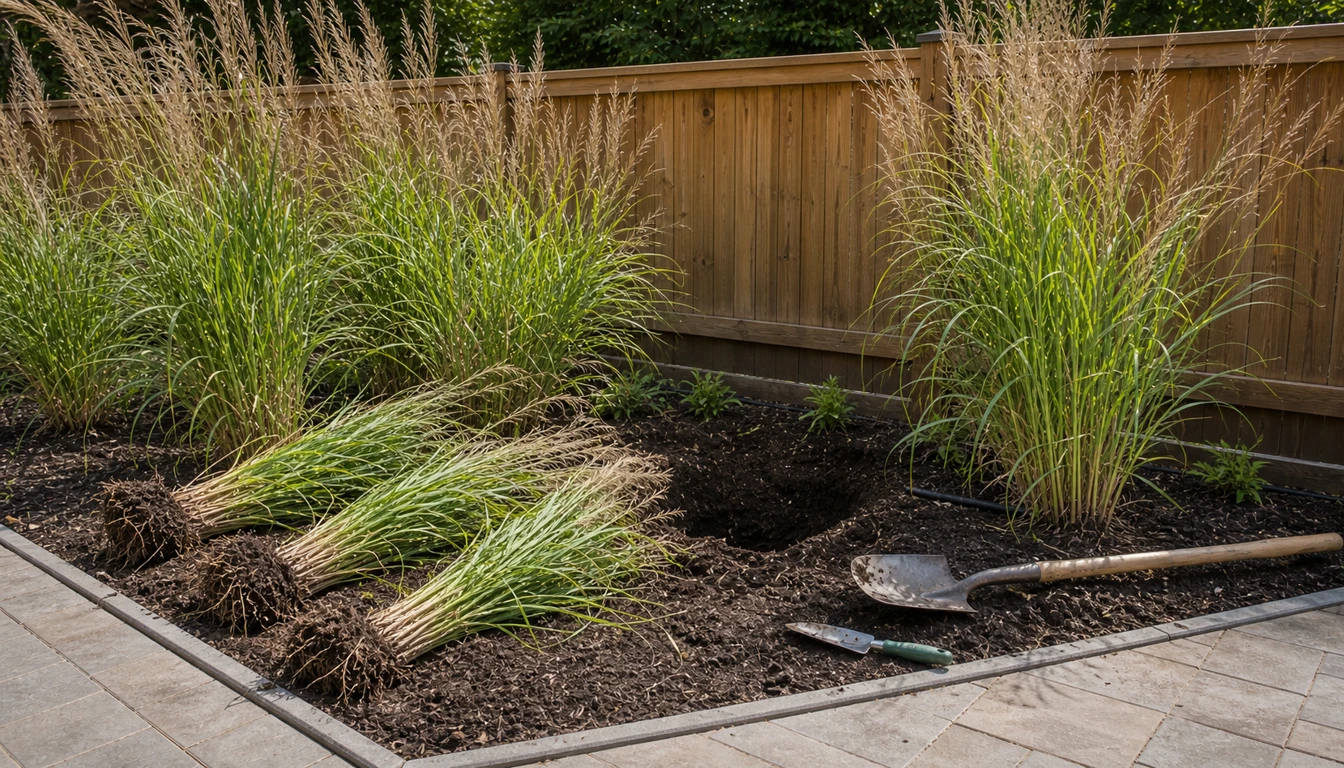
Then expand what worked by dividing it rather than buying it again, since most clumps divide well every three or four years and a plant that already proved itself in your conditions is worth more than a new one.
- The date it closed: tells you whether the screen arrives before the season you need it
- The date it opened: tells you how long the useful window really is
- The lower band: note whether you could see through at seated height
- What fell: a plant that leaned into the path twice is the wrong plant, not a staking problem
Quick Tips
- Measure the target first, since seated eye level is about 4 feet and standing is 5 to 5 feet 6 inches.
- Plant the screen close to the seat rather than at the property line, because nearer blocks more.
- Use ornamental grasses, hardy hibiscus or tall aster for anything above 4 feet.
- Give the bed 3 feet of depth to layer, and use a vine on a trellis if you cannot.
- Plant the 1 to 4 foot band on purpose, since that is what a seated viewer looks through.
- Get hoops in when stems reach a third of their height, not after the first storm.
- Check the November view before planting, and add a woody layer if it matters.
Recommended Plants
5 perennials worth considering.
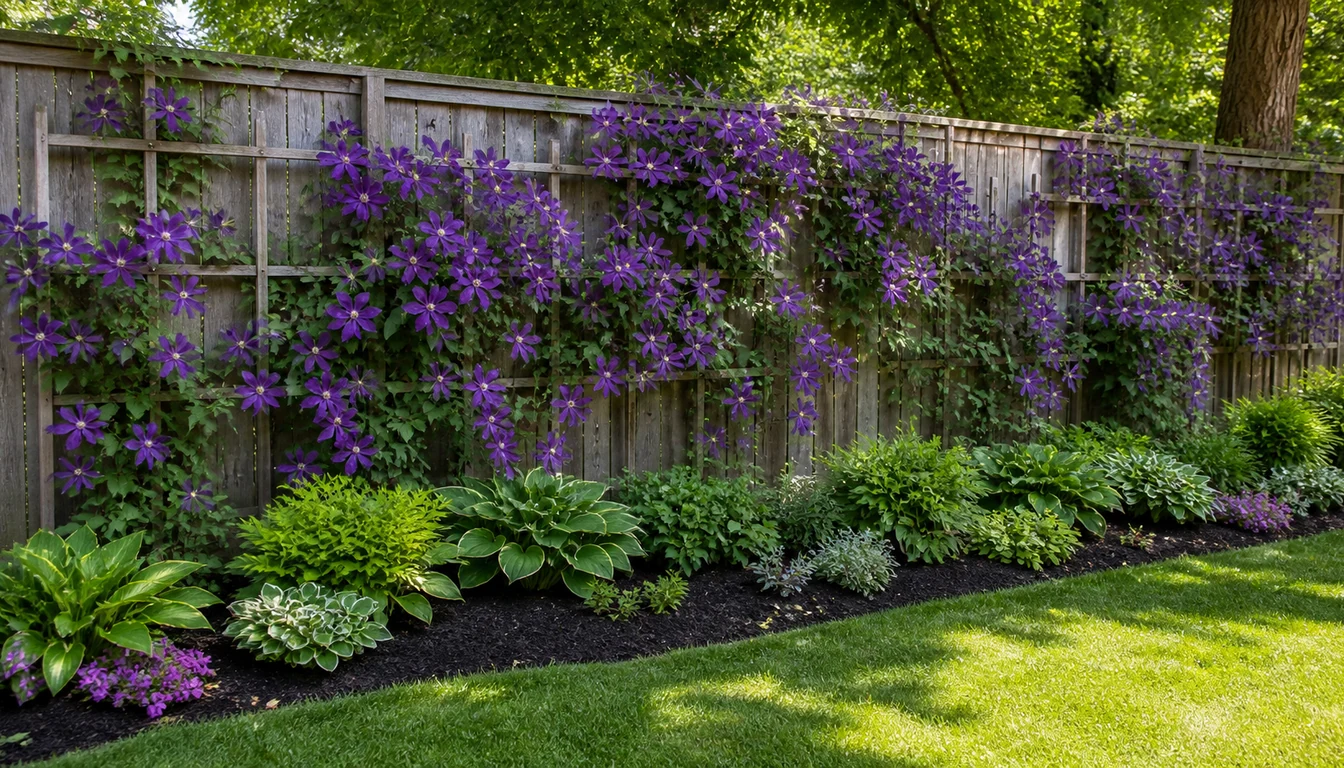
Clematis
A Clematis grips with its leaf stalks, so it can only climb something thin, and every cut you make depends on which of…
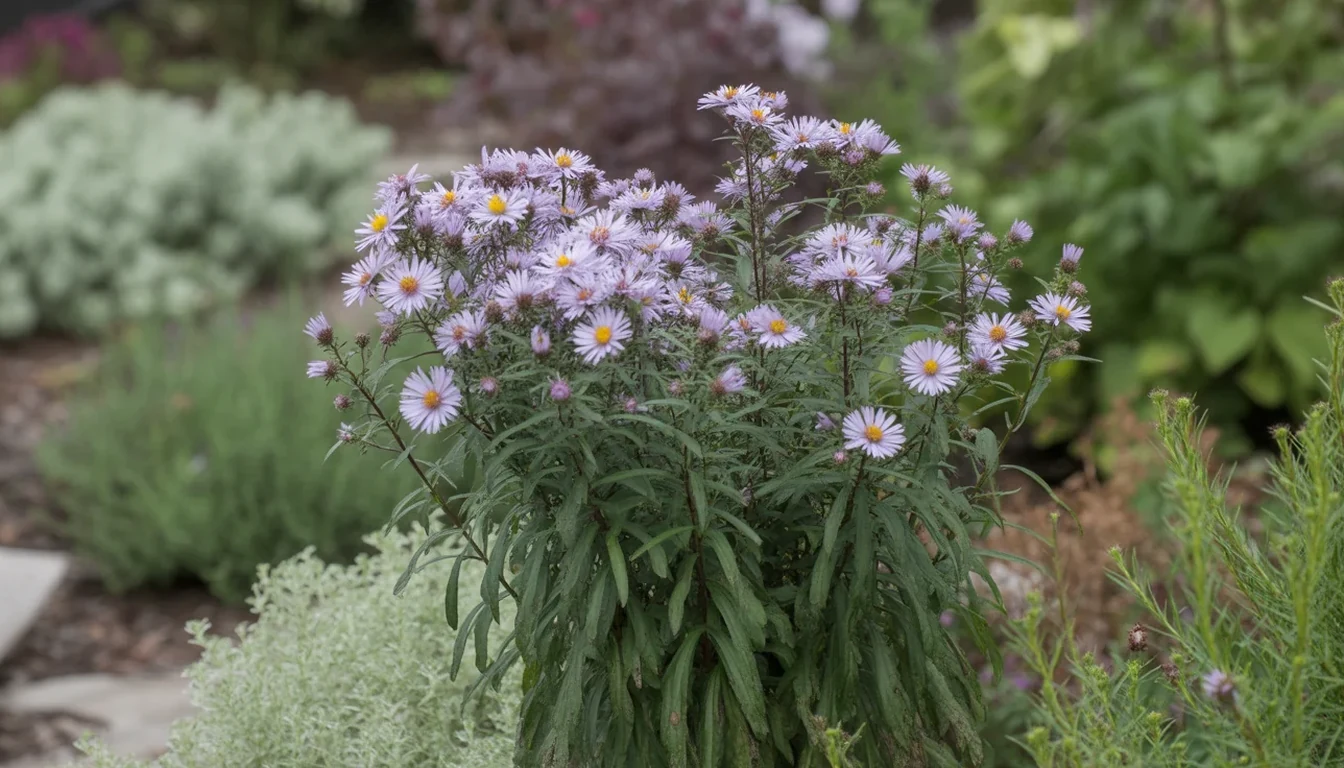
Aster
Gardeners blame the weather when an Aster splits open in September, but the shape was decided in early summer.
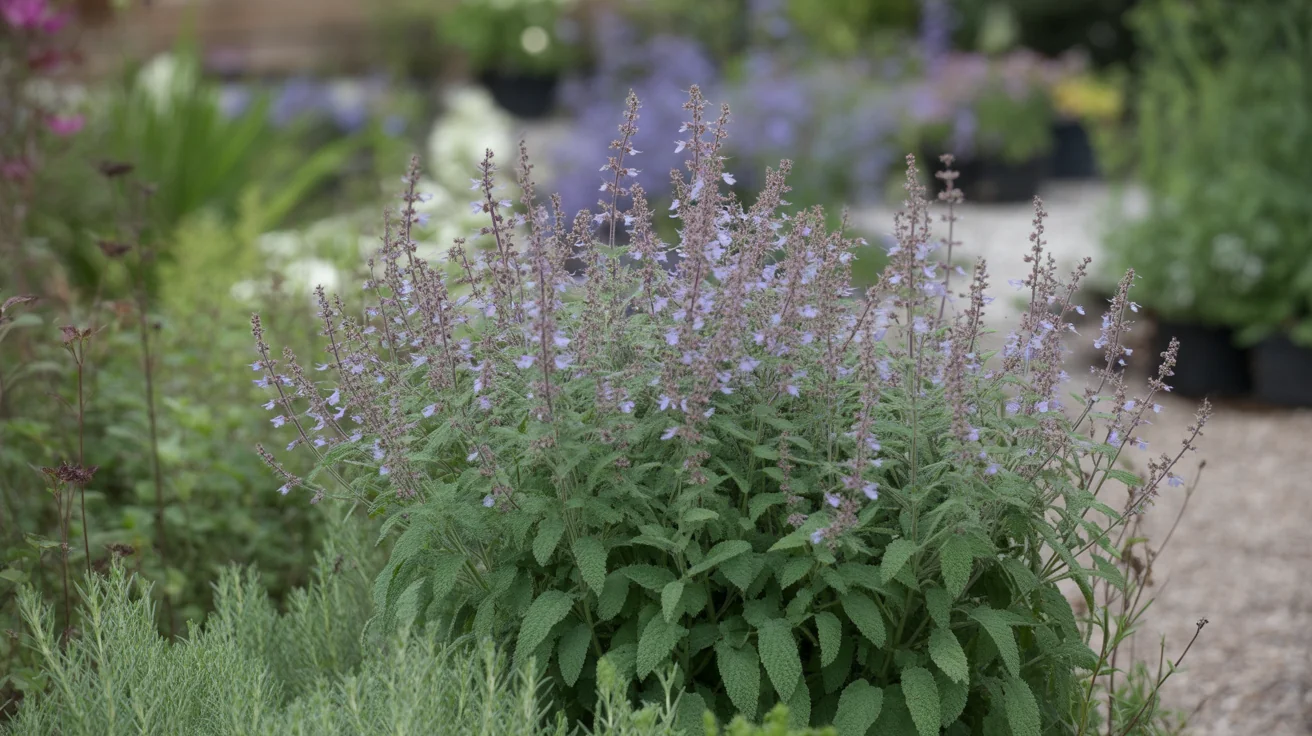
Russian Sage
By mid to late summer, Russian Sage (Salvia yangii) throws up airy clouds of lavender-blue flowers just when many…
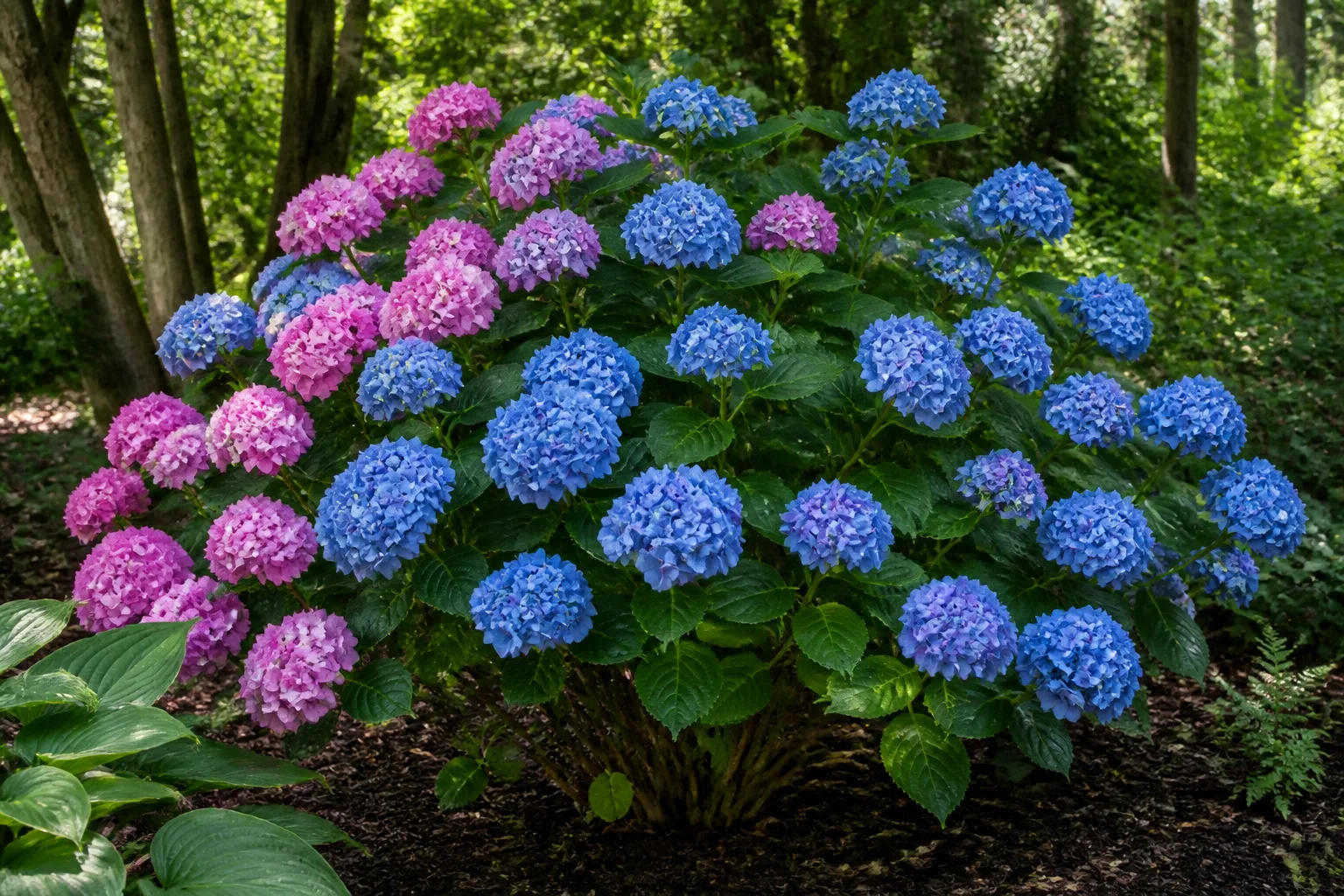
Bigleaf Hydrangea
Bigleaf hydrangea (Hydrangea macrophylla) produces mophead or lacecap flowers, but winter survival and reliable…
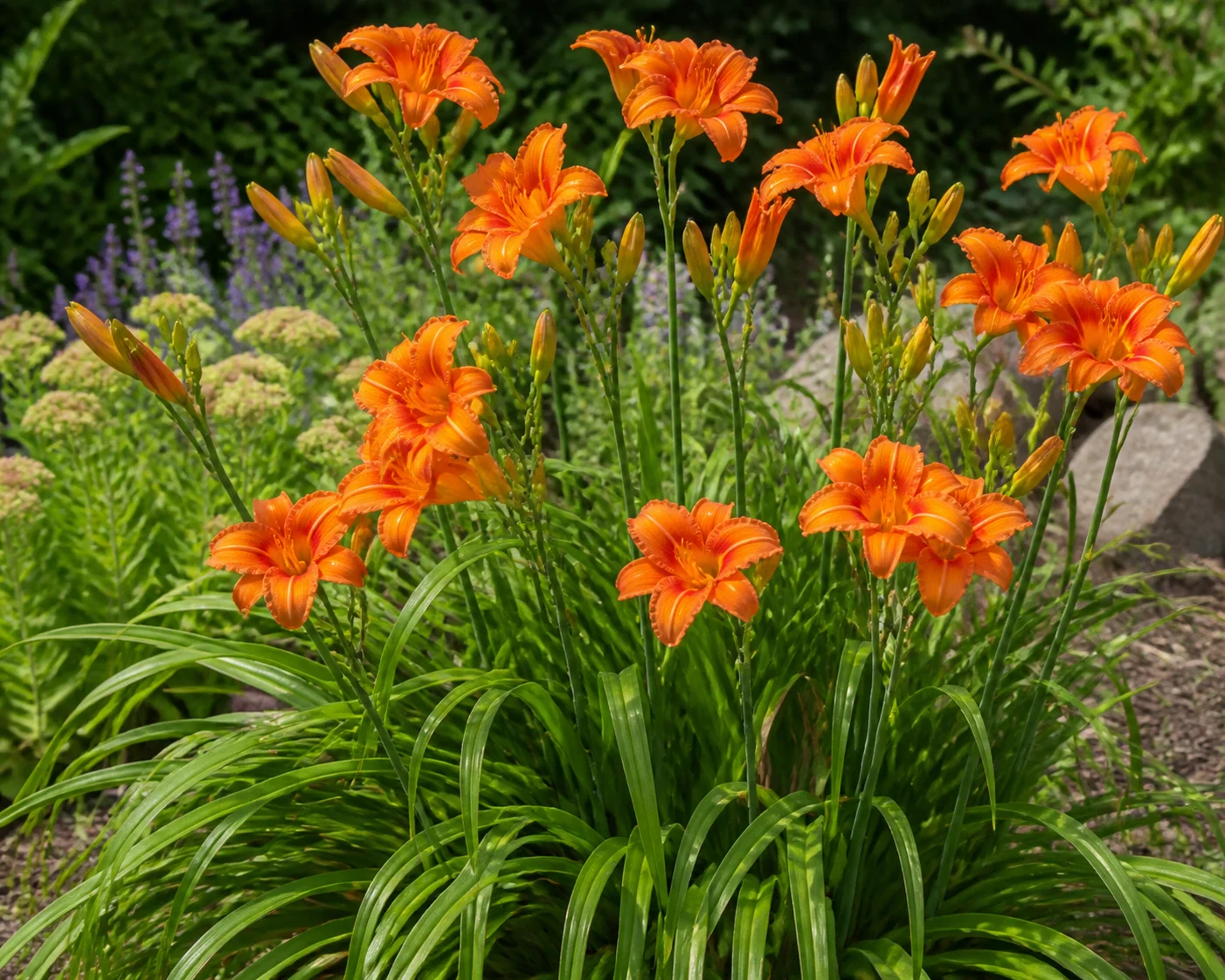
Daylily
Brown, tired flower beds that burn out by July usually come from fussy plants that quit in heat or poor soil.
Frequently Asked Questions
How tall does a privacy screen need to be?
About 4 feet clears a seated view for most adults, while a standing view needs 5 to 5 feet 6 inches. Ground level overrides both, so a neighboring deck or an upslope pushes the requirement past anything herbaceous can reach.
Which perennials are tall enough to screen a view?
Ornamental grasses are the tallest reliable option, with miscanthus at 5 to 8 feet and switchgrass at 3 to 6, followed by hardy hibiscus at 3 to 8 and tall aster cultivars to 6. Border staples like coneflower, daylily and yarrow all top out below seated eye level and belong in the lower band instead.
How deep does the bed need to be?
Roughly 3 feet to stagger two layers, and 4 to 5 feet if you want three. Below 3 feet there is no room to overlap, so the planting becomes a single leaning row with daylight between the stems.
Can perennials give year-round privacy?
No, and this is the honest limit of the whole approach. Herbaceous plants die back, so in a cold-winter garden the view is open from roughly November until May, and a woody layer behind them is what makes a screen permanent.
Why does my perennial screen fall over every summer?
Usually because supports went in late, and partly because of how it was grown. Get hoops in when the stems are about a third of their final height, feed lightly since nitrogen makes fast weak growth, and water deeply so roots go down instead of sideways.
What can I plant in a narrow strip along a fence?
A vine, because a strip under 3 feet deep cannot hold a layered planting. Clematis reaches 6 to 20 feet from a trellis footprint, and wisteria goes to 20 to 30 feet but needs a structure built for the weight rather than a garden trellis.