Care snapshot
- Light
- Full sun (6+ hours) to partial shade (2-6 hours)
- Water
- Adapts to all soil types and drainage
- Height
- 4 to 12 ft by cultivar
- Zone
- Zones 5 to 9
- Spread
- 4 to 6 ft wide
- Temperature
- High flammability rating (NC State)
What Does Maiden Grass Look Like, and How Big Does It Get?
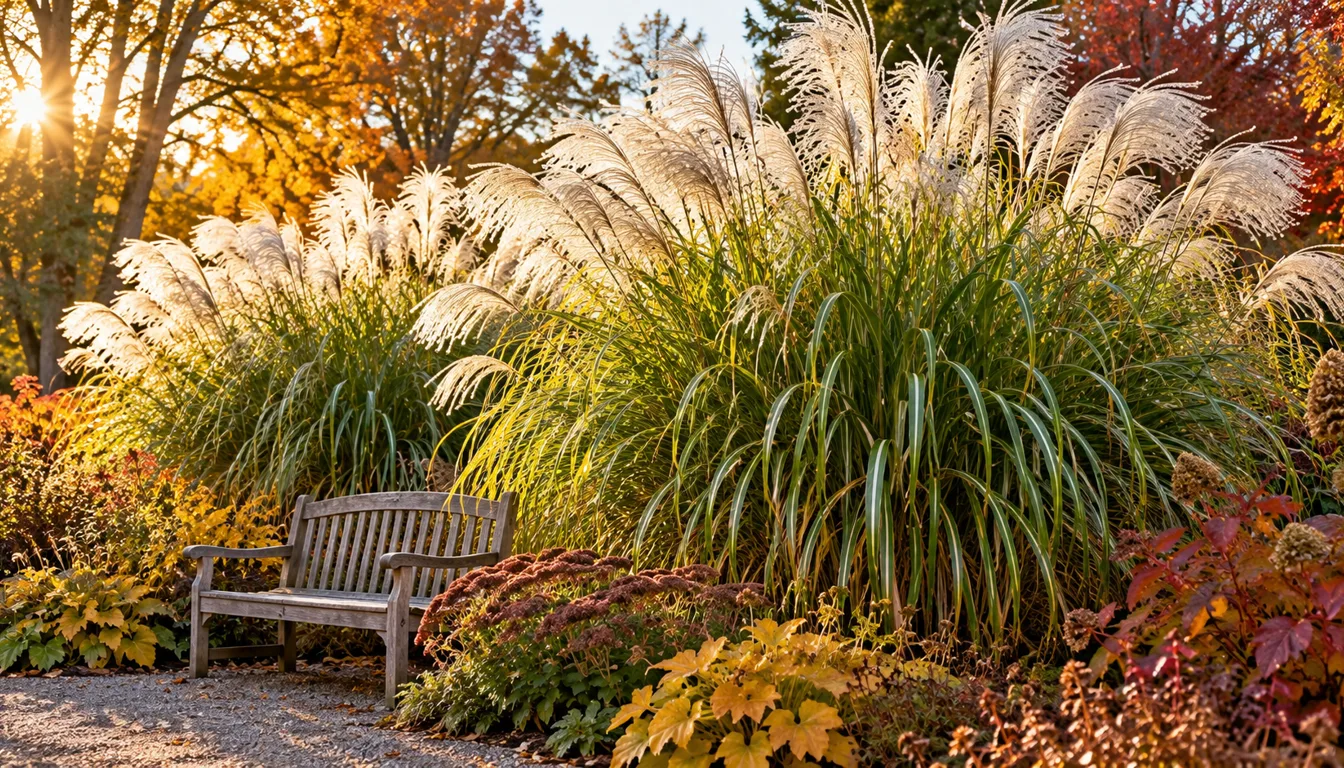
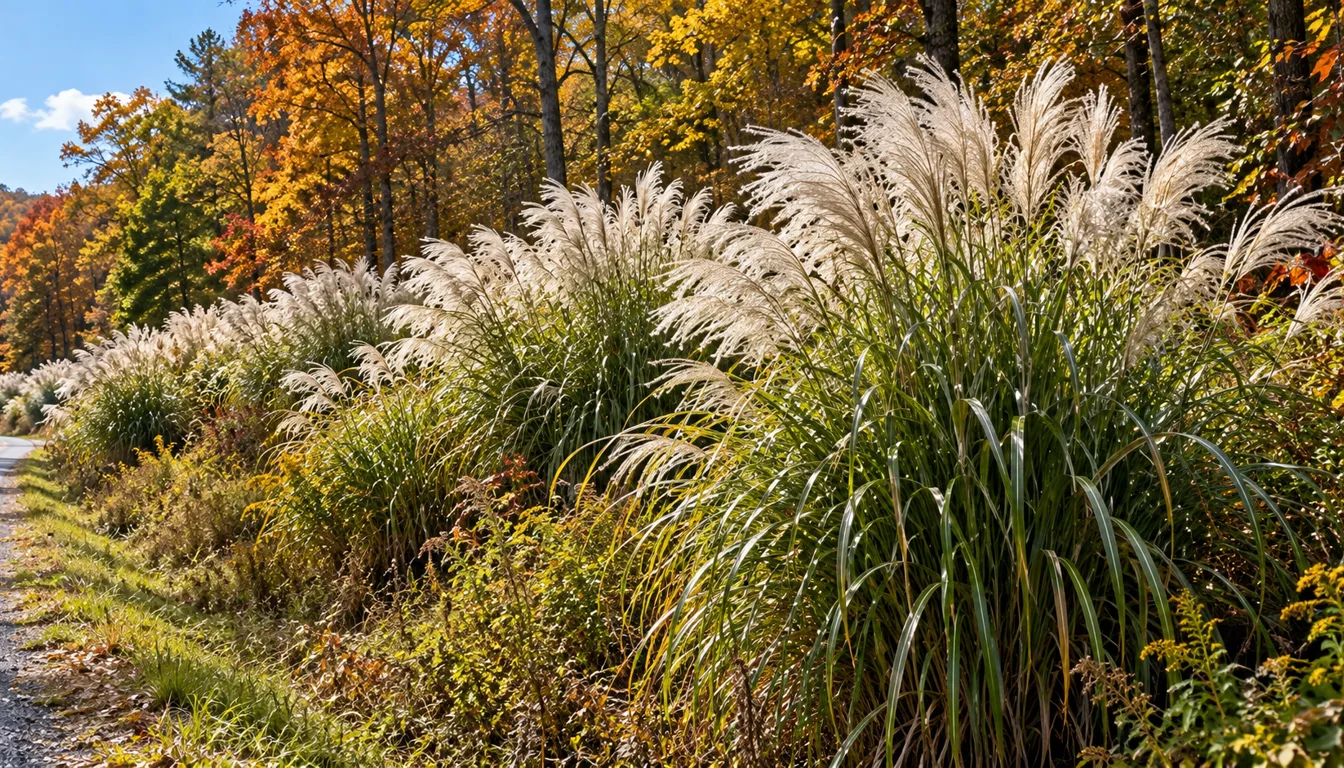
Miscanthus sinensis, sold as maiden grass, eulalia, Japanese silver grass, or Chinese silvergrass, is a clumping deciduous grass from Asia that NC State rates for zones 5 to 9. A mature clump spreads 4 to 6 feet wide and stands 4 to 12 feet tall, with arching blades that run from a quarter inch to 2 inches wide and 3 to 5 feet long.
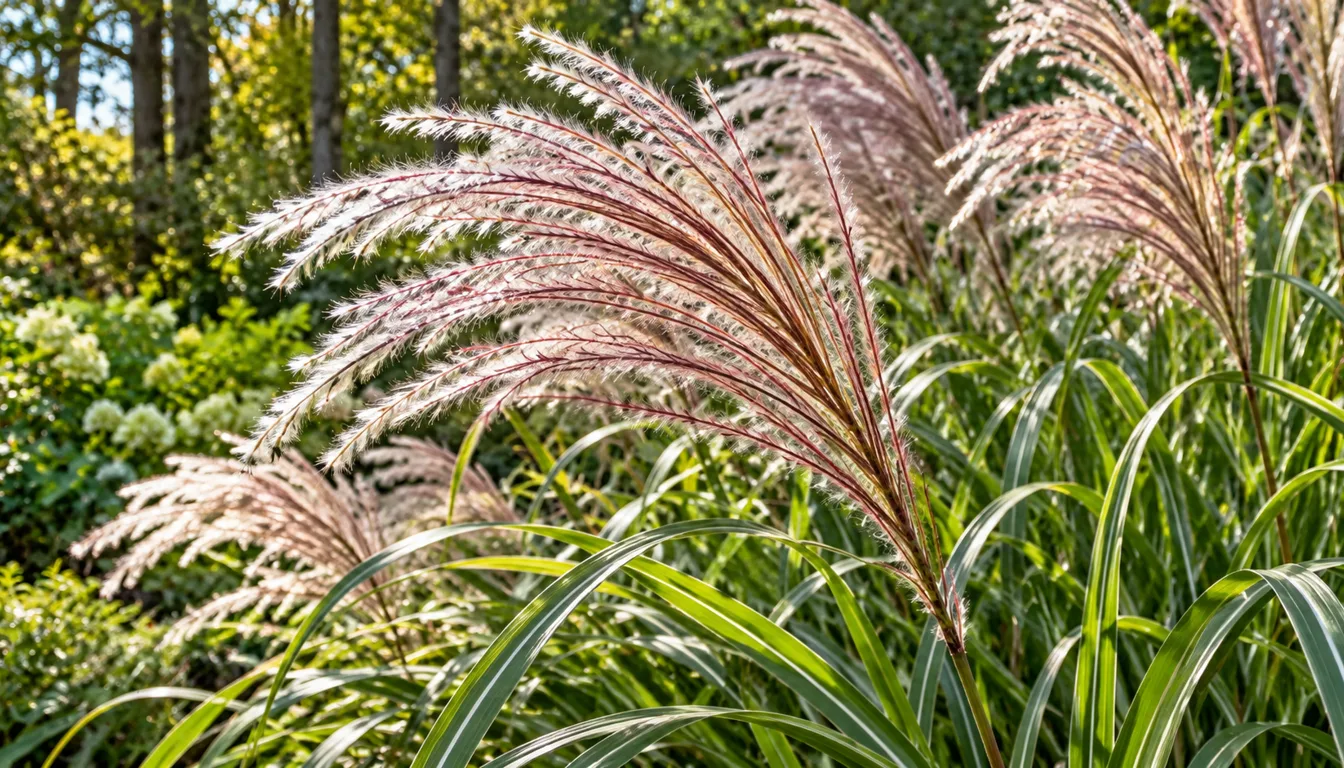
In fall each clump sends up plumes made of finger-like racemes up to 8 inches long, and the Buncombe County office of NC State Extension puts the flowering at September through November. The plumes are also how the plant spreads. As the fruits develop, the flower axes grow hairs that help the seed travel, and the wind-disseminated seeds increase the plant's invasive nature.
NC State adds that maiden grass is common along roadsides and disturbed areas, and that heavy mulching helps prevent seed germination.
Is Miscanthus Invasive or Regulated Where You Live?
Check your state before buying, because the rules differ from state to state. The NC Invasive Plant Council lists Miscanthus sinensis as invasive in North Carolina, and NC State says the plant is problematic enough that alternatives should be considered. The Buncombe County office adds that it spreads by wind and water through its many seed heads and by its rhizomes, displaces native vegetation, and raises fire risk.
In South Carolina, maidengrass is on Clemson's list of undesirable or non-native invasive ornamental grasses. These grasses reseed freely and are not recommended for landscapes, since they escape into natural areas and displace the native grasses and plants that feed pollinators and wildlife.
Four other states set rules for sellers, and New York, New Jersey, and Delaware exempt a few named cultivars.
- Massachusetts
- Added to the Prohibited Plant List as of December 8, 2025, with existing stock sold only through December 31, 2026
- New York
- Regulated species that must be labeled, with My Fair Maiden (NCMS1) and Scout (Tift M77) conditionally exempt
- New Jersey
- On the Prohibited Invasive Plant List, propagation banned from January 1, 2027 and sales from January 1, 2030 without a permit, with NCMS1 and Tift M77 exempt
- Delaware
- Added to the Invasive Plant List with enforcement from May 1, 2028, with Scout, Bandwidth, High Frequency, and My Fair Maiden conditionally exempt
How Much Sun, Water, and Room Does Miscanthus Need?
Maiden grass adapts to all types of soil and drainage and grows in all but the shadiest sites. NC State lists full sun (6 or more hours of direct sun) and partial shade (2 to 6 hours) as its light conditions, and it resists deer, drought, humidity, salt, wet soil, and wind. Clumps reach up to 6 feet wide, and NC State gives 6 to 12 feet as the space to plan for.
Divide an existing clump in early spring, just before new growth starts. Clemson gives that timing for warm-season grasses, and Colorado State finds spring division before growth resumes the most successful for Miscanthus in Colorado's cold, dry winters.
You know a clump is due when its center dies and the blades grow only around the edges (Colorado State). Clemson puts the usual interval for most grasses at every 3 to 4 years, and it adds that overgrown grasses can be incredibly difficult to dig and divide. Colorado State's steps run in this order.
- Cut the foliage back to 4 to 6 inches.
- Dig the entire clump out of the ground.
- Cut through the core with a sharp spade, a large knife, an axe, or in some cases a chainsaw, halving the clump and then quartering it.
- Separate the living divisions from dead or diseased tissue by hand, and keep a good root system on each division.
- Replant as soon as possible, water well, and protect the divisions with mulch up to 3 inches deep.
How Do You Cut Back or Remove Miscanthus?
Cut the old growth down in late winter or early spring, before or just as the new blades begin to appear. Clemson says to cut the stems to a few inches above ground level. Cutting near the base also stimulates new growth during spring green-up, according to the Buncombe County office.
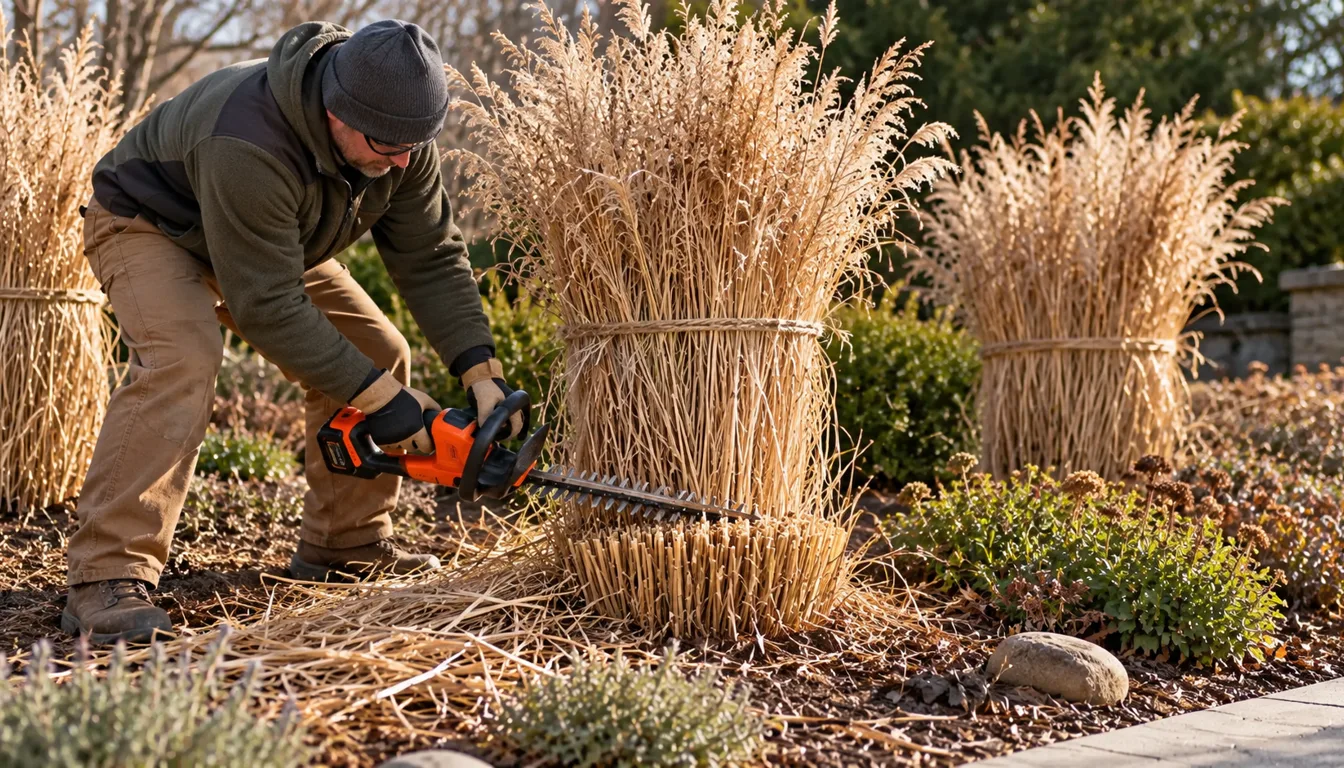
If you keep the plant and want it to stay put, the University of Arkansas Extension suggests cutting away the plumes before the seeds are released, which it says can keep maiden grass from escaping cultivation.
An established clump is hard to remove because of its large rhizomatous root mass, so NC State's method takes several rounds. You let the grass regrow to about 12 inches before spraying, because more leaf gives the herbicide more area to enter through and reach the rhizomes, according to the Buncombe County office. That office also says to start treatment before seed enters the seed bank in the fall.
- Let the clump regrow to about 12 inches.
- Treat the new foliage with a 1 percent glyphosate solution plus a surfactant.
- Cut it back once the foliage dies.
- Repeat until regrowth stops, and mulch heavily, since heavy mulching helps prevent seed germination.
Expect several treatments for full control, as the Buncombe County office says multiple treatments will more than likely be needed. NC State's plant page gives a 1 percent glyphosate solution while the Buncombe office gives 1 to 3 percent, so follow the product label for the rate and for where you may spray.
Which Miscanthus Cultivars Set Less Seed, and What Can You Plant Instead?
NC State's cultivar list is the place to start, and the entries to look for say low seed set, reduced fertility, or sterile. ‘Morning Light’ and ‘Little Zebra’ appear on that list for their foliage and disease resistance, not for seed.
- ‘Gracillimus’
- Slender, narrow, weeping leaves, low seed set (NC State)
- ‘Morning Light’
- Narrow leaves with three white stripes, silver effect (NC State)
- ‘Graziella’
- Narrow leaves, copper red and orange fall color, low seed set (NC State)
- ‘Hinjo’
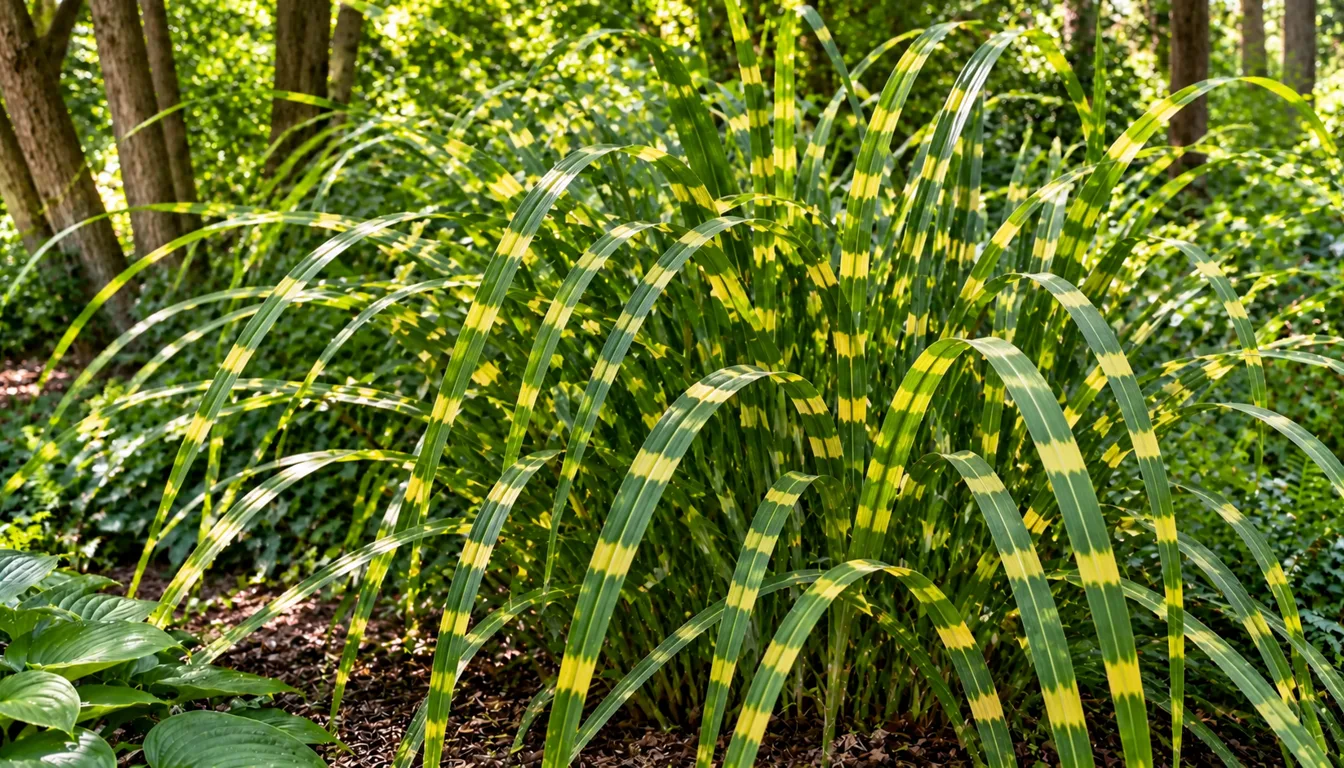
- Dwarf, horizontal yellow bands, low seed set (NC State)
- ‘Little Zebra’
- Good resistance to phytophthora (NC State)
- ‘Cosmopolitan’
- Wide creamy-edged leaves, low seed set (NC State)
- ‘Yaku Jima’
- Dwarf form, low seed set (NC State)
- ‘Zebrinus’
- 6 to 7 ft tall, with transverse yellow bands on the leaves, low seed set (NC State)
- Bandwidth (‘NCMS2B’)
- Reduced fertility, gold-striped leaves, rust resistant, NC State introduction
- My Fair Maiden (‘NCMS1’)
- Reduced fertility (NC State)
- ‘Scout’
- Sterile cultivar from UGA (NC State)
A low seed set alone does not put a cultivar on a state's exempt list. New York and New Jersey each exempt only My Fair Maiden (‘NCMS1’) and Scout (‘Tift M77’), and Delaware exempts four cultivars, Scout, Bandwidth, High Frequency, and My Fair Maiden. Apart from Bandwidth, My Fair Maiden, and ‘Scout’, the cultivars in the table are not on those three exempt lists.
If your state restricts maiden grass, or you would rather not risk escaping seed, Clemson's ornamental grass list includes native grasses to plant instead. It calls giant sacaton an excellent native substitute for maidengrass.
- Switchgrass (Panicum virgatum) is a native grass with showy flowers and fall color that reseeds occasionally but is not invasive, and Clemson lists ‘Cloud Nine’ at 5 to 7 feet and ‘Heavy Metal’ at 4 to 5 feet for zones 5 to 9.
- Indian grass (Sorghastrum nutans) is a tall, upright native with dark gold plumes in late summer. It reseeds but is not invasive, and Clemson gives it zones 4 to 9.
- Giant sacaton (Sporobolus wrightii) is native to the southwestern U.S. and forms an arching clump 3 to 5 feet tall in zones 3 to 9, and it prefers full sun and well-drained soil.
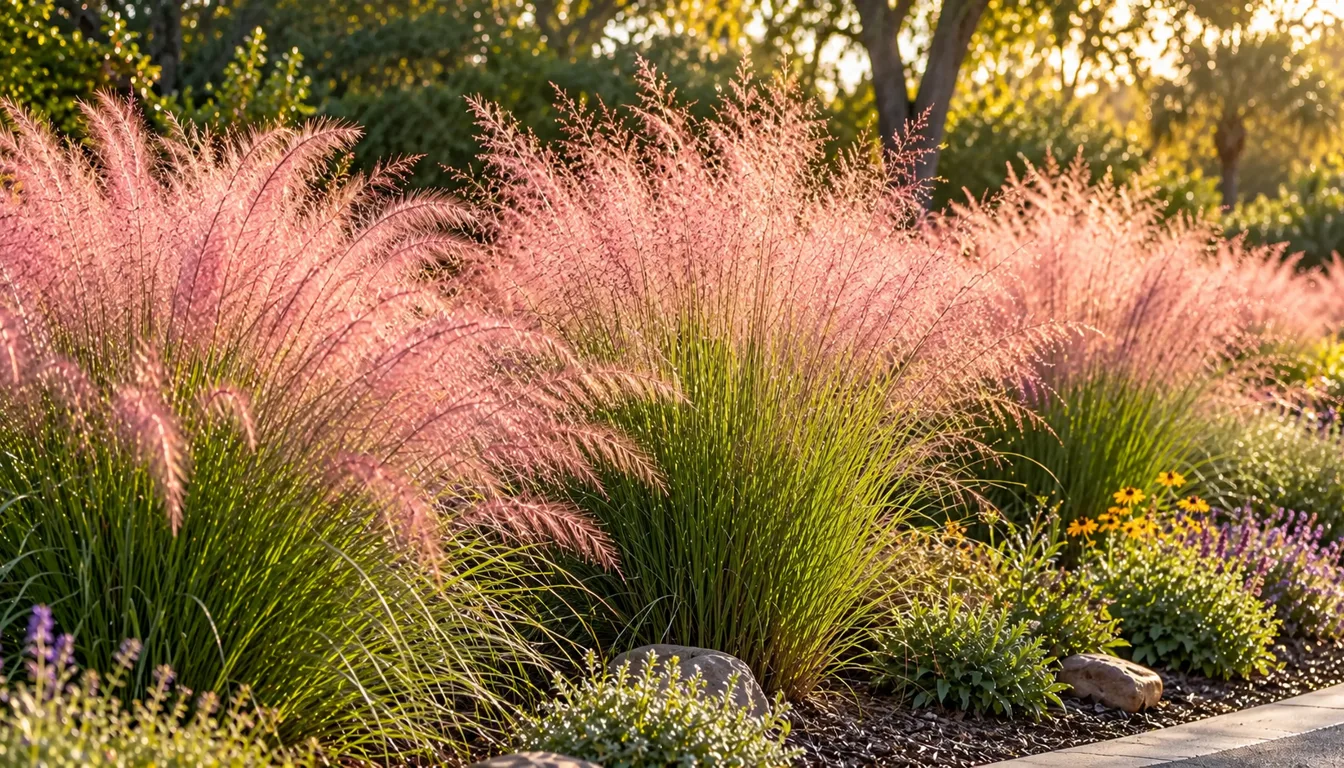
- Pink muhly is a North American native that can reach 4 feet tall and 3 feet wide, with pink flowers in fall, and the pink muhly grass profile covers its care.
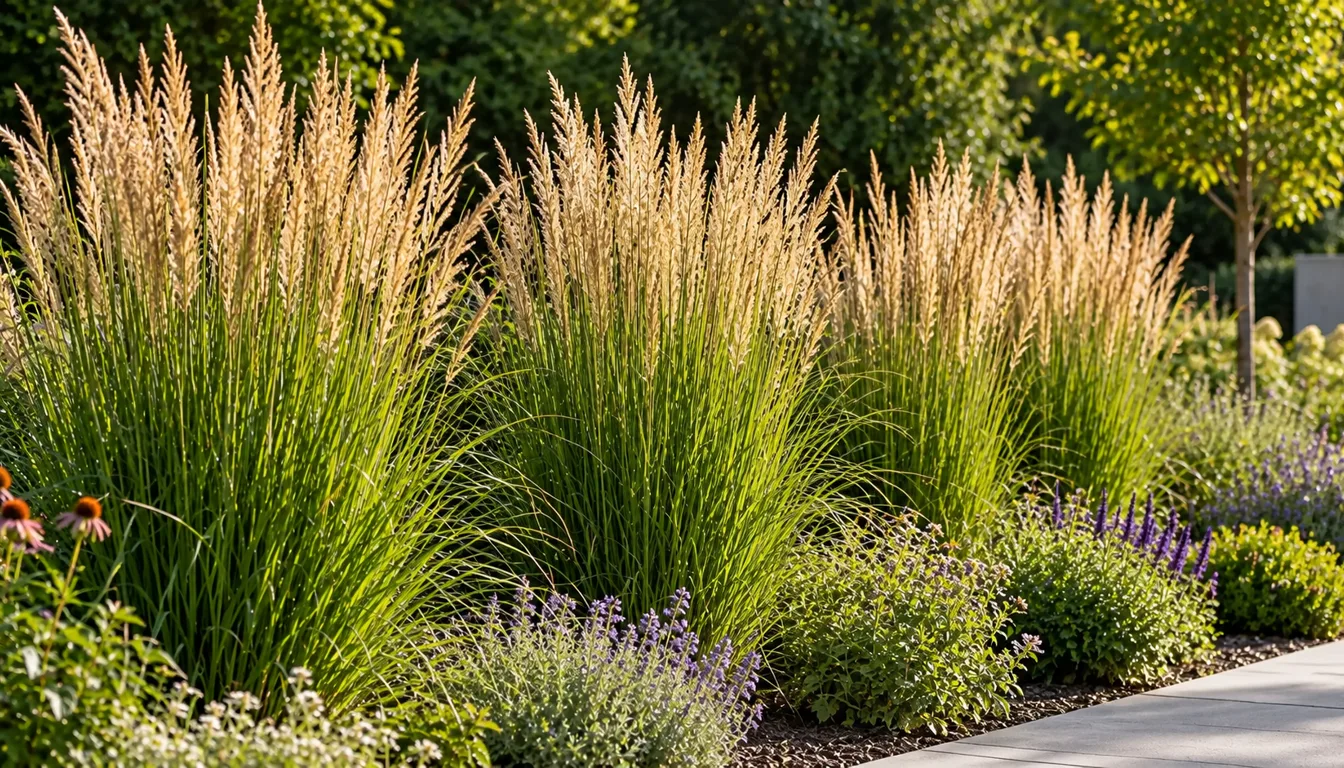
- ‘Karl Foerster’ feather reed grass is sterile, so it will not reseed in the landscape according to Wisconsin Extension, and it is covered in the feather reed grass profile.
NC State's plant page gives no pet toxicity rating for maiden grass, so its safety for pets is unknown.
For more border grasses, see the ornamental grasses list, and for another large plant in a sunny border, see Russian sage.
Frequently Asked Questions
Does cutting off the plumes keep maiden grass from spreading?
The University of Arkansas Extension says cutting away the plumes before the seeds are released can keep maiden grass from escaping cultivation. NC State notes that the seeds are wind-disseminated.
Why wait until maiden grass is 12 inches tall before spraying it?
Regrown foliage gives the herbicide more area to enter through and reach the rhizomes, according to the Buncombe County office of NC State Extension. NC State's plant page gives a 1 percent glyphosate solution with a surfactant, the Buncombe office gives 1 to 3 percent, and the product label sets the final rate.
How low do I cut maiden grass in late winter?
Clemson says to cut the stems to a few inches above ground level. NC State says to cut in late winter or early spring, before or just as the new blades begin to appear.
Is miscanthus a fire hazard?
NC State gives it a high flammability rating and says it should not be planted within the defensible space of your home.
Will heavy mulch stop miscanthus seedlings?
Heavy mulching helps prevent seed germination, according to NC State. It does not remove an established clump, which NC State says is hard to remove because of its large rhizomatous root mass.
How often should I divide maiden grass?
Clemson puts the usual interval for most ornamental grasses at every 3 to 4 years. Colorado State says division is necessary when the center of the clump dies and the blades grow only around the edges.
Is maiden grass safe around pets?
Unknown. NC State's plant page gives miscanthus no pet toxicity rating, and unknown is not a safe or a toxic classification.
Sources & References
- Miscanthus sinensis, North Carolina Extension Gardener Plant Toolbox
- Massachusetts Prohibited Plant List Updates, Mass.gov
- Invasive Species Regulations, New York State DEC
- Invasive Plants, New Jersey Department of Agriculture
- Nursery Inspection and Invasive Plant List, Delaware Department of Agriculture
- Ornamental Grasses and Grass-like Plants, Clemson Cooperative Extension HGIC
- Dividing Ornamental Grasses, PlantTalk Colorado, Colorado State University Extension
- Invasive Plant BOLO, Maidenhair Grass, NC State Extension Buncombe County Center
- Maiden Grass, University of Arkansas Division of Agriculture Extension
- Feather Reed Grass, Wisconsin Horticulture Extension
- Muhlenbergia capillaris, North Carolina Extension Gardener Plant Toolbox