
What's Bahia Grass? How to Live With the Seed Stalks
Paspalum notatum Poaceae
Bahia grass is a warm-season utility lawn built for sandy, hungry ground where fussier grasses give up. It is coarse and open rather than fine and dense, it sends up V-shaped seed stalks all summer, and two of the weed killers sold for neighboring southern lawns will damage it.
Plant it where toughness matters more than a manicured look.
Care snapshot
What Makes Bahia Grass Look Different From Every Other Lawn?
Bahia grass is Paspalum notatum, a warm-season perennial in the grass family Poaceae. It arrived in Florida around 1913 as a forage grass, which is worth knowing before you judge it as a lawn, because nothing about it was selected for looking good.
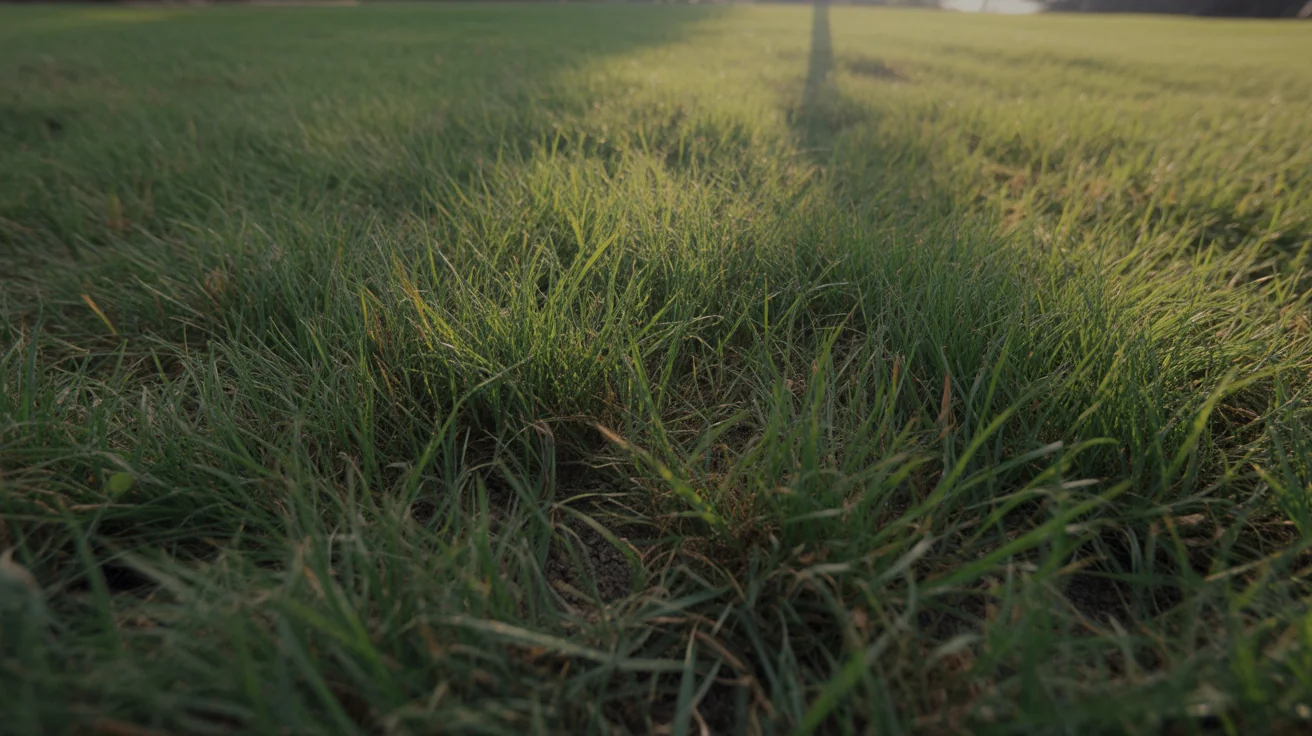
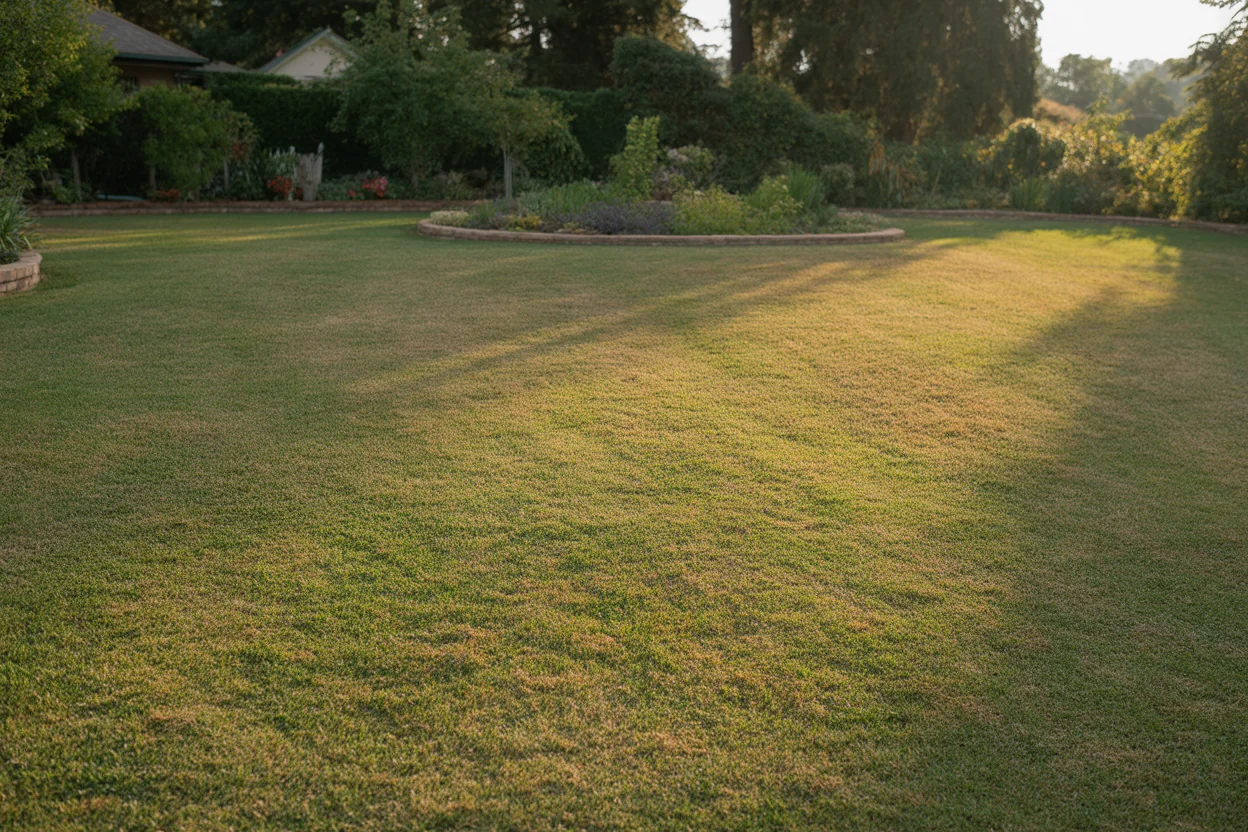
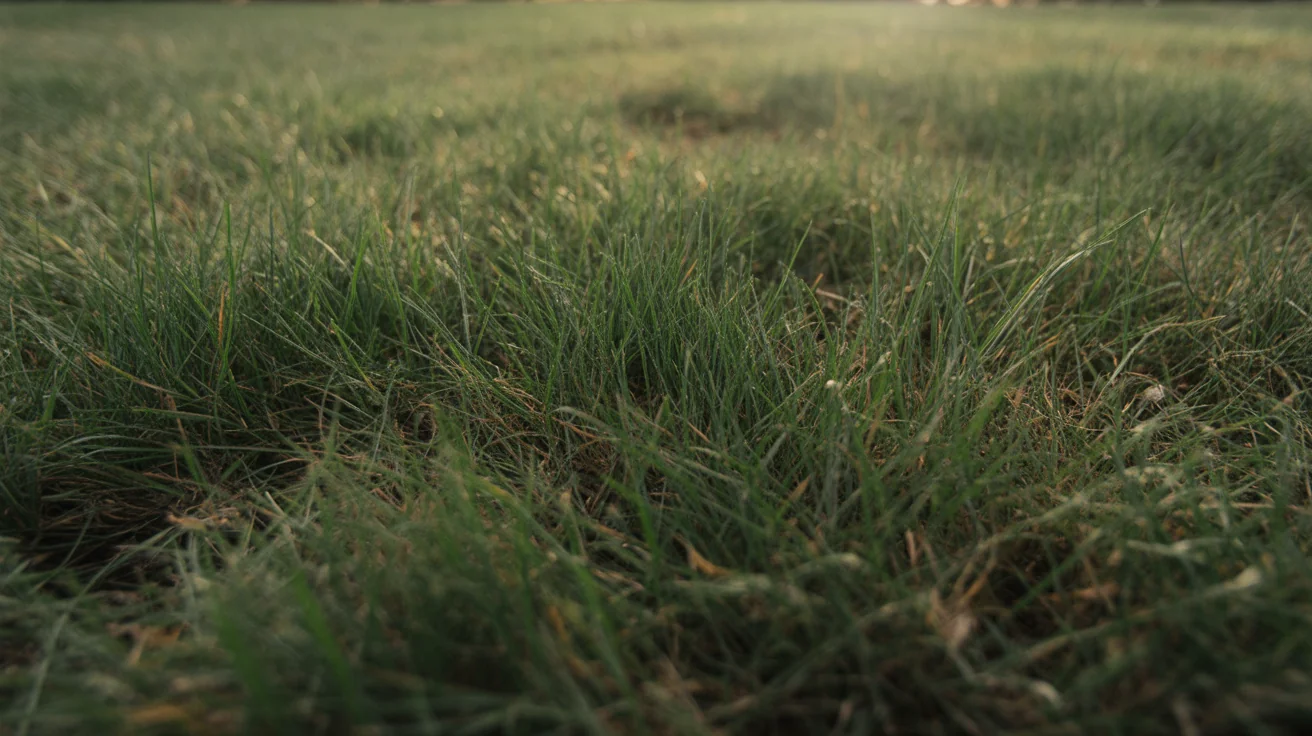
The texture is the first thing people notice and the thing most complaints come back to. It is coarse-bladed, with an open canopy, light green rather than dark, and you can see soil between the plants in a way you cannot in zoysia grass or a fed bermuda lawn.
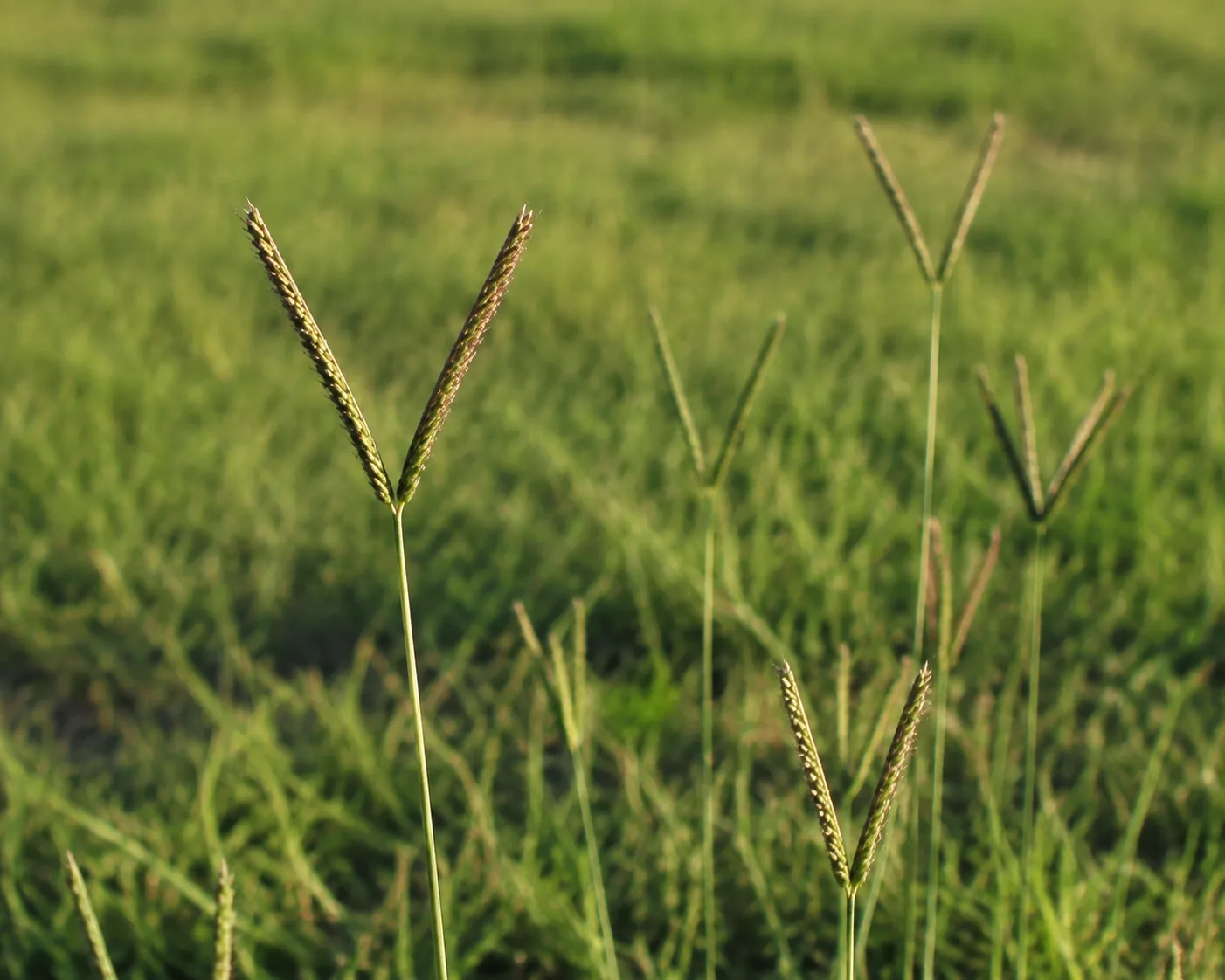
Identification is easy once you know the signature. It sends up tall thin stalks topped with a V-shaped seedhead carrying two branches, occasionally three, and nothing else in a southern lawn looks quite like it.
- Botanical name
- Paspalum notatum Fleugge
- Type
- Warm-season perennial, spreads by seed and strong rhizomes
- Zones
- 8 to 10, best growth at 75 to 90°F
- Mowing height
- 3 to 4 inches, every 7 to 14 days in growth
- Nitrogen
- 1 to 2 pounds per 1,000 square feet per year
- Soil
- Sandy and acidic, and it yellows above pH 7.0
Underneath, it is doing something the top does not advertise. An extensive deep root system is where the drought tolerance comes from, and it is also why the grass turns up on road shoulders and eroding banks where a finer lawn would have given up.
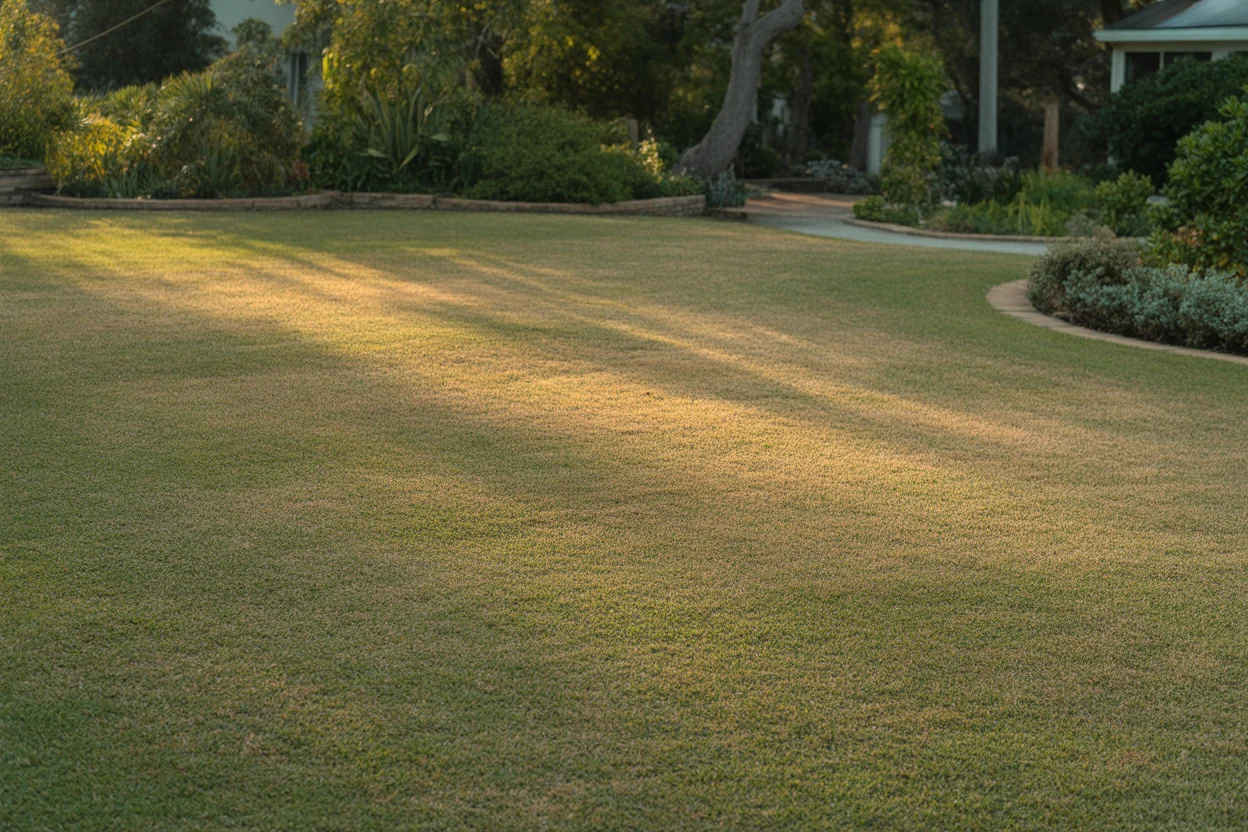
Everything above adds up to a utility grass. It suits large lots, sandy ground and places you would rather not irrigate, and it disappoints anybody hoping for the dense even carpet a St. Augustine lawn delivers on the same street.
How Often Do You Mow a Grass That Keeps Sending Up Seed Stalks?
Mow at 3 to 4 inches, every 7 to 14 days while the grass is actively growing. Louisiana gives the range slightly lower at 2.5 to 4 inches, and either way this is a tall cut by lawn standards.
What sets the interval apart from other lawns is what you are cutting. Through the long days of summer the seed stalks come up faster than the leaf does, so you are mowing to keep the seedheads down rather than to keep the height down, and skipping a week shows up as a field of V-shaped stalks rather than as shaggy grass.
The stalks are tough enough to matter for equipment. Use a sharp, heavy-duty rotary blade, because a dull one tears the stalks instead of cutting them and leaves the lawn looking ragged at exactly the moment you mowed it to look tidier.
Never take more than a third of the leaf blade in one pass. Clippings can stay where they fall, since this grass does not build excessive thatch and the clippings return nutrients to the soil, which is one reason dethatching is rarely the answer here.
Which Weed Killers Damage Bahia Grass?
Two of them, and both are ordinary purchases in the states where this grass grows.
The mistake is easy to make and hard to reverse.
Somebody replaces a centipede lawn with bahia and keeps the same weed program, or treats a mixed yard as one lawn, or borrows a half-empty jug from a neighbor whose grass is a different species.
Read the label for those two names before anything gets sprayed, and check them against what centipede grass tolerates if the yard holds both.
Preemergence timing is regional rather than seasonal. Florida recommendations put it at February 1 in the south of the state, February 15 in central Florida and March 1 in the north, which is earlier than most people expect to be thinking about crabgrass.
Pensacola or Argentine Bahia Grass?
The choice is appearance against toughness, and both options stay firmly utility-grade.
Pensacola was selected in 1935 and is the most widely grown. It carries longer, narrower leaf blades and an extensive root system that gives it excellent stress tolerance, it handles both heat and cold well, and it holds color and resists winter dormancy better than any other bahiagrass.
It also throws more seedheads than the alternative, which is the price of all that.
Argentine makes a denser, darker sod with wider leaf blades, and it has good insect and disease resistance. Its seed is produced by apomixis, so the plants that come up are genetically identical to the parent.
The catch is a shorter growing season, since exposed to cool temperatures it loses color sooner than Pensacola does.
Common bahia is the one to walk away from. It is sparse, coarse, light-colored and very susceptible to cold, and it is not recommended for lawns at all.
More seedheads to mow, better cold tolerance and longer color. The choice for acreage, banks and anywhere near the cold edge of the range.
Denser and darker with fewer seed stalks, but it browns earlier in fall. The choice near a house, patio or street frontage.
Sparse and cold-tender. Not recommended for lawns, whatever the bag costs.
Neither cultivar changes what the species is. If the seedheads are the problem, Argentine reduces them rather than removing them, and a bahia lawn still asks for a mower every week or two through summer.
Why Do Bahia Grass Blades Turn Yellow on Some Soils?
The soil is too alkaline for it, and the lawn is not hungry. That distinction is the single most useful thing to know before feeding a yellow bahia lawn, because the usual response makes it worse.
The grass prefers acidic soil, with Louisiana giving the workable range as pH 5.5 to 7. Above pH 7.0 iron stops being available to the plant, and the leaf blades yellow while nitrogen is not the limiting factor at all.
The correction is iron rather than fertilizer. Ferrous sulfate at 2 ounces in 3 to 5 gallons of water per 1,000 square feet puts the missing element back where the plant can reach it, and a soil test tells you whether that is the problem before you spend on either.
- Preferred soil
- Sandy to sandy loam, well drained, modest fertility
- Soil pH
- 5.5 to 7, and yellowing sets in above 7.0
- Poor soil
- High tolerance, suits infertile and eroded sites
- Struggles on
- Compacted and poorly drained ground
Drainage is the limit rather than fertility. Sandy, hungry ground is where this grass beats its neighbors, and heavy compacted soil that holds water after a storm is where it thins out and lets weeds in.
How Much Fertilizer Does Bahia Grass Actually Need?
Less than the bag tells you, and the figure depends on where you live. Florida recommendations run 1 to 2 pounds of nitrogen per 1,000 square feet per year, while Louisiana caps it at 1 pound a year.
- Annual total. 1 to 2 pounds of nitrogen per 1,000 square feet across Florida, up to 1 pound in Louisiana.
- Any single application. No more than 0.7 pounds of soluble, quick-release nitrogen per 1,000 square feet.
- Start date. Mid-April in north Florida, early April in central Florida, once the grass is actually growing.
Pushing past those numbers does not buy density. It buys floppy growth, more mowing and heavier weed pressure, which is the opposite of the reason most people planted this grass.
Standard lawn feeding rates are written for hungrier turf than this.
Does a Brown Bahia Lawn Need Water?
Usually not. In drought this grass enters a drought-induced dormancy, turning brown and stopping growth while the crowns and that deep root system wait, and it can hold there through extended periods without water.
When you do irrigate, apply 0.5 to 0.75 inch per application and do it as needed rather than on a schedule. In a normal year across much of the Gulf South, rainfall alone is enough for an established lawn, which is the case deep watering makes for beds as well.
New plantings are the exception, and the schedule tightens sharply.
- Days 1 to 10. Short 5 to 10 minute irrigations several times through the day.
- Days 10 to 20. A quarter to half an inch, once daily.
- After that. Two to three times weekly, then taper to as-needed.
A screwdriver settles most arguments. Push it 3 to 4 inches into the soil, and if it slides in easily and comes out cool you can wait another day or two before watering a lawn that would rather be left alone.
How Do You Start a Bahia Grass Lawn From Seed?
Seed, almost always. This is one of the few lawn grasses where seeding is the normal route rather than the budget one, and plugging and sprigging are not recommended for it at all.
Sod exists and works, but the economics stop making sense on the large lots this grass suits.
Sow 5 to 10 pounds of seed per 1,000 square feet. That rate is far higher than a bermuda grass lawn wants, and the reason is simply that bahia seed is large, so a pound of it contains fewer seeds.
Time it for spring or early summer, while the grass grows fastest. Toward the cold edge of the range, avoid seeding in late fall, because seedlings that have not established go into winter without the roots to survive it.
Seed-to-soil contact is what decides whether the stand takes.
- Buy scarified seed, chemically treated to break dormancy, which germinates faster and more evenly than untreated seed.
- Clear and rake the ground so the seed lands on soil rather than on thatch or debris.
- Cover lightly, with no more than a quarter to half an inch of soil over the seed.
- Press or roll the area so the first rain does not float the seed into a low corner.
Then leave it alone longer than instinct allows.
Do not fertilize for 30 to 60 days after planting, and expect the first mowing 14 to 21 days in.
Feeding early grows the weeds that are competing with your seedlings, not the seedlings.
The first season will look thin and uneven, and that is the honest cost of a lower seed rate as much as anything else.
Cutting the rate to save money buys a more open stand, which weeds and erosion both move into before the rhizomes close it.
Filling bare lawn patches covers the repair later.
Mole Crickets, Armyworms, or Something Else Entirely?
Most bad-looking patches are not insects. Drought, low fertility, shade and compaction account for more damaged bahia turf than everything with legs put together, and this grass has relatively few disease and insect problems to begin with.
Mole crickets are the exception worth learning. They tunnel under the turf and sever roots, leaving ground that feels spongy underfoot.
You can bring them up before spending anything. Pour 2 gallons of water with 1 to 2 ounces of lemon-scented dish detergent over 2 square feet of suspect turf, then wait and watch what surfaces.
Mole cricket and armyworm damage get confused constantly, and the difference is visible once you know what separates them.
Tunneling leaves the grass still attached over raised spongy ground.
Chewing leaves bare ragged stubble with nothing disturbed underneath.
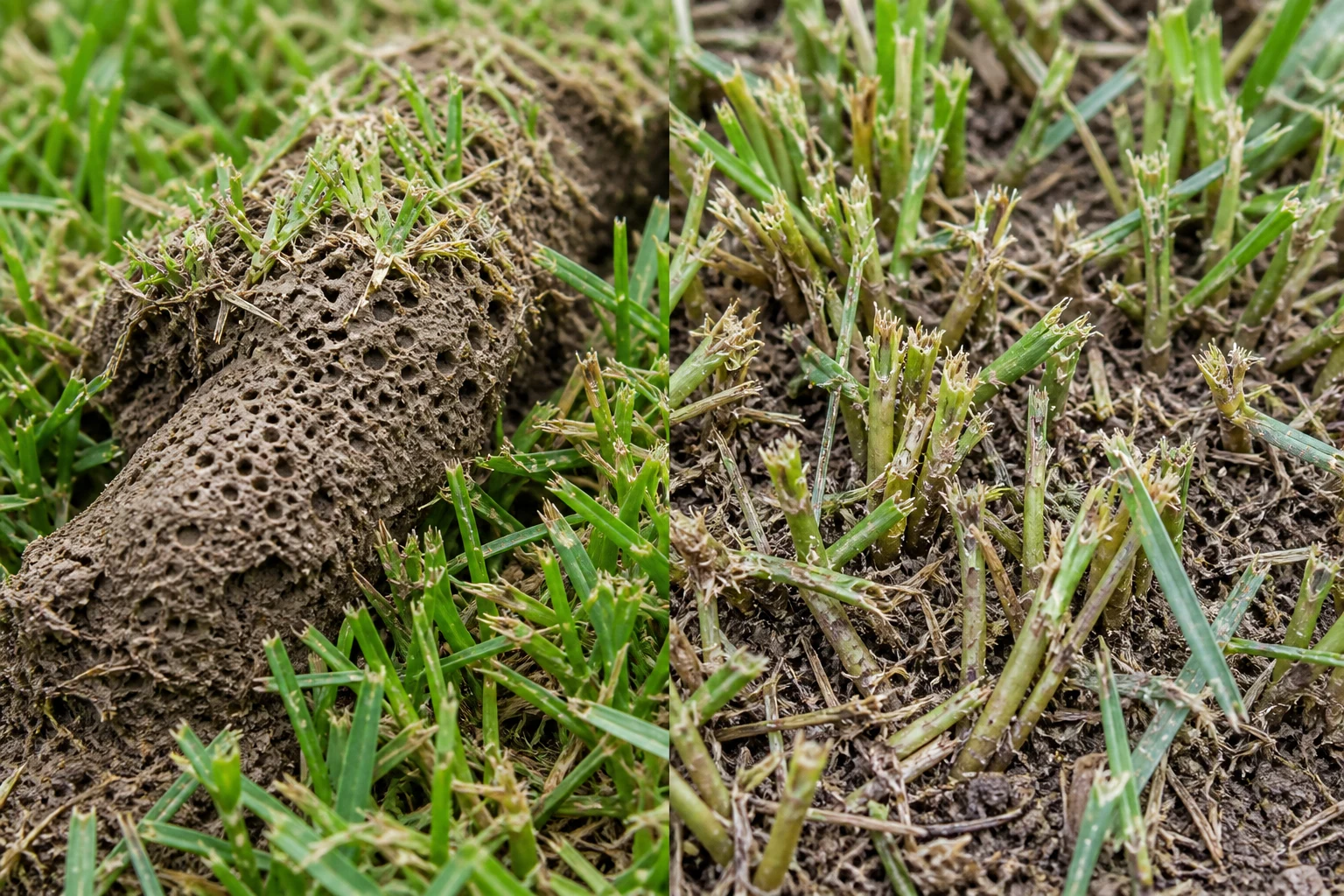
Raised spongy tunnels and thinning turf. Bait-type insecticides show real promise, and treating small nymphs beats treating adults.
Blades chewed to stubble across an area within days, mostly in late summer. Look for caterpillars at the soil surface and spot-treat fast.
Spots several inches across scattered through the lawn. It answers to half a pound of nitrogen per 1,000 square feet rather than to a fungicide.
One quiet advantage rarely gets mentioned. Nematodes are not typically as damaging to bahiagrass as they are to other lawn grasses, which matters in the sandy soils where nematode pressure on a St. Augustine lawn can be the deciding problem.
Who Should Not Plant Bahia Grass?
Anybody who wants a fine manicured lawn, and anybody whose neighbors do.
Where it does belong is clear enough.
Think large rural lots, road edges, sandy banks and erosion control in Zones 8 to 10, on ground you would rather not irrigate or fertilize. Those aggressive rhizomes and that deep root system hold soil that a cool-season lawn could not.
Pet safety is unrated. Bahiagrass is widely grown for grazing, but neither the ASPCA nor NC State gives it a pet toxicity rating.
The neighbor problem is the part sales copy leaves out.
Clemson's factsheet on this grass is about killing it, under the nickname highwaygrass, because the same rhizomes and summer reseeding that hold your bank carry it into the lawn next door.
Mowing field edges before the seedheads mature is the difference between a boundary and a dispute.
Frequently Asked Questions
Is bahia grass good for a primary home lawn?
Bahia grass works for low-maintenance lawns where you accept a coarser texture and visible seedheads. If you want a dense, carpet-like look, options like bermuda or zoysia are usually better choices.
How often should I mow bahia grass?
Mow at 3 to 4 inches, every 7 to 14 days while the grass is growing.
Through summer you are cutting seed stalks rather than leaf, so skipping a week shows up as a field of V-shaped stalks.
Never remove more than a third of the leaf blade in one pass, and use a sharp heavy-duty rotary blade, because a dull one tears the tough stalks instead of cutting them.
Will bahia grass survive cold winters?
Bahia is a warm-season grass and performs best in mild winters. In colder parts of its range it can suffer winter kill and may thin out, so it is not ideal where snow cover and extended freezes are common.
What's the difference between Argentine and Pensacola bahia grass?
Argentine bahia has a slightly darker green color and fewer tall seed stalks, making it the better pick near patios and home lawns. Pensacola bahia handles cold and poor soil even better, with narrower leaves and more seedheads, so it suits roadsides and large utility areas where coverage matters more than looks.
How often should I fertilize a Bahia grass lawn?
Very lightly.
Florida recommendations run 1 to 2 pounds of nitrogen per 1,000 square feet per year, Louisiana caps it at 1 pound a year, and no single application should exceed 0.7 pounds of soluble nitrogen.
Feeding harder buys floppy growth, more mowing and more weeds rather than the dark green color other grasses give you.
Is Bahia grass good for high-traffic play areas?
It handles occasional traffic and recovers if it gets time to rest, but wear tolerance is one of its listed weaknesses. For constant sports-level use, bermuda grass or zoysia hold up better.
Sources & References
- ENH6/LH006: Bahiagrass for Florida Lawns, UF/IFAS Extension
- ENH-03/LH013: Establishing Your Florida Lawn, UF/IFAS Extension
- Louisiana Home Lawn Series: Bahiagrass, LSU AgCenter
- Bahiagrass, Clemson Cooperative Extension Home and Garden Information Center
- Bahiagrass, Texas A&M AgriLife Turfgrass Science
- North Carolina Extension Gardener Plant Toolbox - Paspalum notatum
Related Plants
Bermuda Grass
Denser, higher-maintenance warm-season turf that needs more fertilizer than bahia.
Zoysia Grass
Fine to medium-textured warm-season grass with slower spread and thicker carpet.
Tall Fescue
Cool-season option for cooler areas where bahia struggles with winter damage.
Buffalo Grass
Many people treat buffalo grass like a regular high-input lawn, then wonder why it looks thin and weedy.
Centipede Grass
Centipedegrass is a slow-growing, light-green lawn grass for suitable warm-climate sites.
Fescue
Fescue is not a grass, it is a genus. More than 450 species carry the name and about ten make turf, split into a coarse…