Perennial Ryegrass vs Kentucky Bluegrass
Perennial ryegrass establishes quickly and tolerates wear well. Kentucky bluegrass starts more slowly from seed but spreads into small gaps through underground stems. Both can form lasting turf where adapted, and a mixture can combine useful traits.
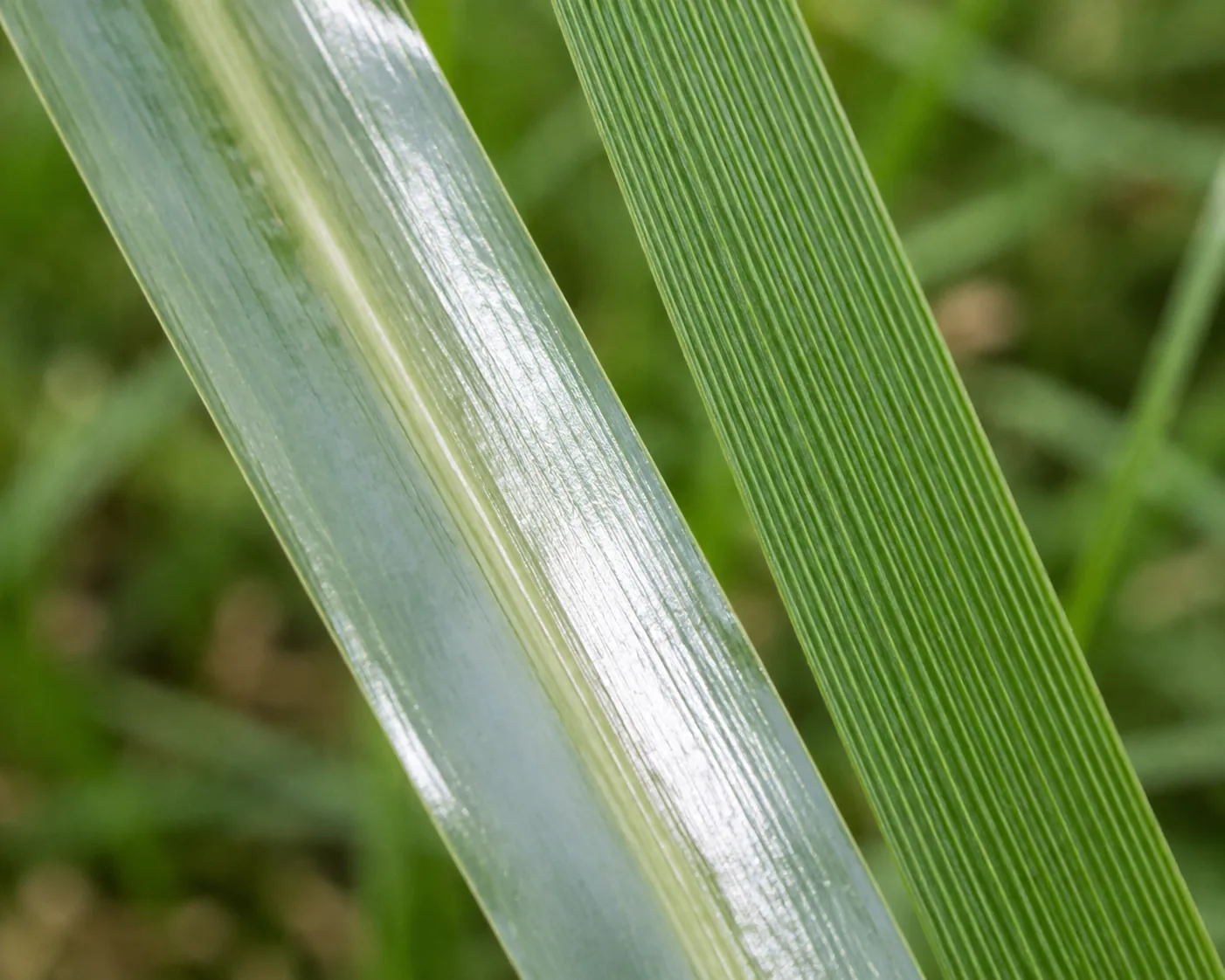
Perennial Ryegrass
Lolium perenne
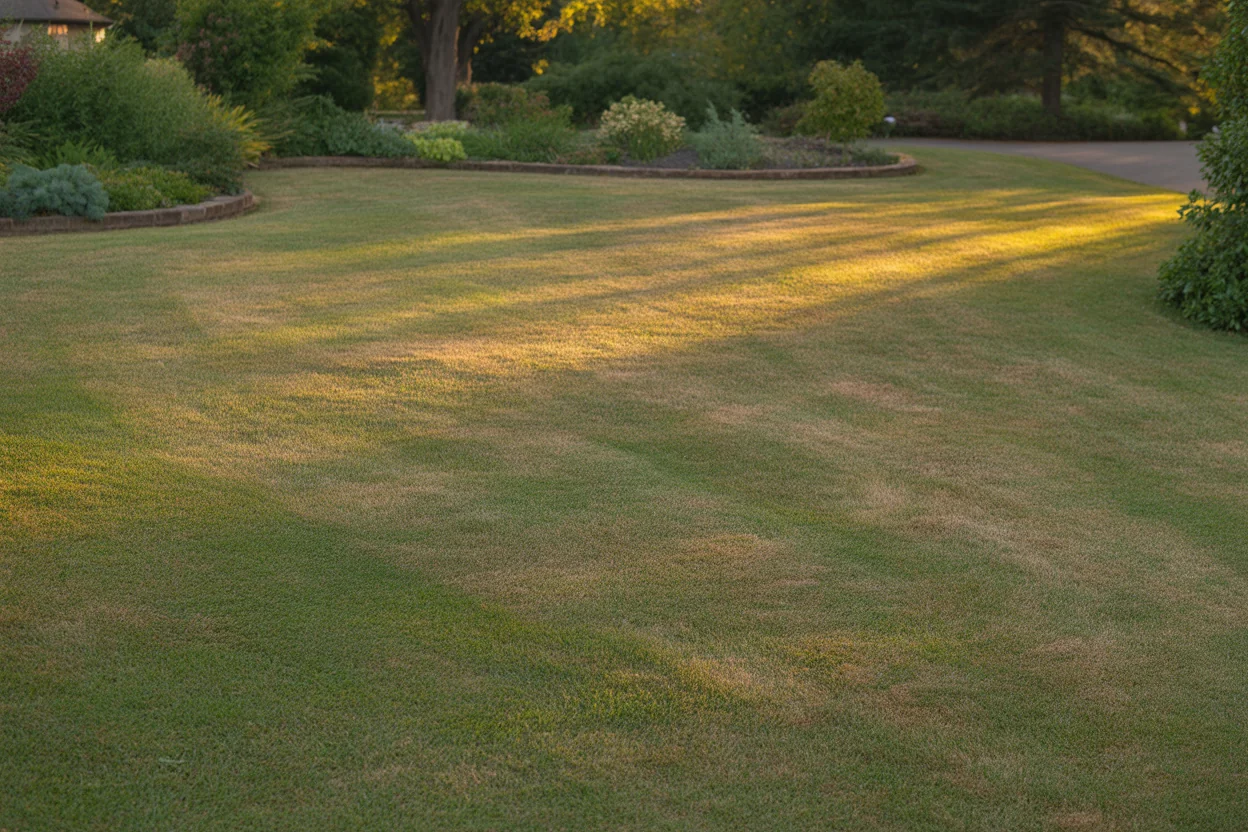
Kentucky Bluegrass
Poa pratensis
Perennial ryegrass and Kentucky bluegrass often appear in the same lawn mix because establishment speed and repair after damage are different needs. Ryegrass supplies rapid seedling growth, while bluegrass can extend beyond surviving plants to fill nearby openings.
Perennial ryegrass is not just a temporary substitute for a permanent lawn. It is used in established lawns and playing surfaces, including mild coastal climates. Annual ryegrass is a different plant, and recommendations for temporary annual cover should not be transferred to perennial ryegrass.
The practical choice depends on whether the lawn needs new plants quickly, recovery between periods of use, or a mixture suited to local conditions. A fast green surface alone does not show that new turf is ready for heavy traffic.
Specifications
Compare the traits that change the growing decision.
| Feature | Perennial Ryegrass | Kentucky Bluegrass |
|---|---|---|
| Plant life cycle | Perennial | Perennial |
| Seed establishment | Usually faster | Usually slower |
| Growth habit | Bunch-forming, without stolons or rhizomes | Spreads through underground rhizomes |
| Traffic response | Strong wear tolerance, limited spread into empty patches | Lateral recovery from surviving turf |
| Typical use | Permanent turf, mixtures and some overseeding uses | Permanent turf and mixtures |
| Summer limits | Heat and drought response depends on region and cultivar | Heat stress and summer dormancy can occur |
| Deep shade | Not a reliable choice | Not a reliable choice, despite cultivar differences |
The growth habit helps predict how a lawn recovers, but it cannot predict a fixed lifespan or annual maintenance bill. Both species also vary by cultivar, so a locally recommended seed mixture is more informative than a general promise of fast or durable grass.
Best Use Cases
Choose by the job the planting needs to do.
Seeding thin or disturbed ground
Speed of emergence
Rapid germination makes perennial ryegrass useful for overseeding thin turf. Penn State reports emergence in about five to seven days under suitable conditions, but weather, moisture and seedbed conditions can change that timing.
Kentucky bluegrass generally emerges more slowly. A bluegrass-containing mixture may look uneven early because its species are developing at different speeds. Seeing ryegrass first is not proof that the bluegrass seed has failed.
A lawn that gets regular use
Resisting damage and recovering from it
Perennial ryegrass has strong wear tolerance, making it useful on regularly used turf. Its bunch growth cannot readily bridge a bare area after the plants there have died, so rapid overseeding and protection of seedlings may still be needed.
Kentucky bluegrass has a way to grow into small openings through rhizomes. That does not make it immune to wear or soil compaction. A mixture can combine resistance to traffic with recovery potential, provided use allows the grass time to grow.
Hot or dry summers
Regional adaptation comes first
UC IPM describes perennial ryegrass as especially suited to California coastal areas with moderate temperatures. Inland heat and drought can be limiting there. Penn State describes its performance differently in Pennsylvania, so a broad heat-tolerance label needs regional context.
Kentucky bluegrass can become dormant when water is limited, but UC IPM also reports poor summer performance in hot California locations. Its ability to spread does not establish that it will outperform ryegrass in every hot, dry lawn.
What a ryegrass and bluegrass mixture changes
A mixture offers more than an average of two germination times. Ryegrass helps establish cover while the slower bluegrass develops. Once the lawn is established, the combination retains plants with different responses to wear and disease.
Fast-growing ryegrass can also compete strongly with slower seedlings. That is why adding as much ryegrass as possible is not automatically an improvement. Published mixture recommendations differ by region and intended use, and the proportions need to match the product and local guidance.
A blend of cultivars within one species and a mixture of different species are different purchases. The label identifies which grasses are actually present. The phrase fast lawn does not show whether the bag contains perennial ryegrass, annual ryegrass or a mixture.
Where the site is deeply shaded or the aim is very low maintenance, neither option necessarily solves the problem. Fine fescues can be useful in suitable shaded, lightly used settings, while tall fescue may deserve consideration where heat and rooting depth are central concerns. Their limits differ from those of ryegrass and bluegrass.
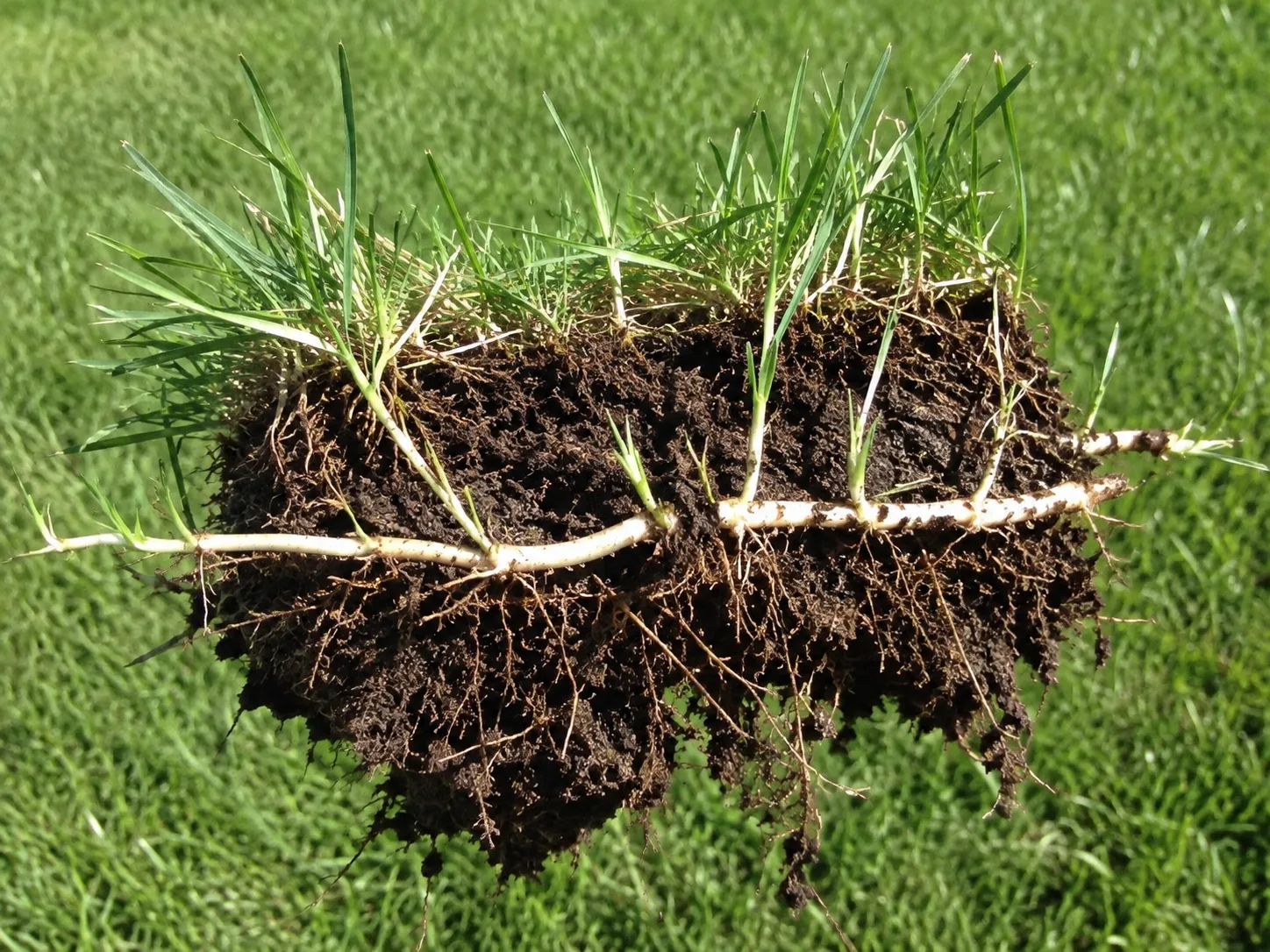
How bluegrass grows back into small openings
A rhizome is an underground stem. It can extend away from a bluegrass crown and form new shoots, providing a route into nearby bare ground. Ryegrass instead thickens around existing crowns, so an empty patch lacks the same source of spreading shoots.
The difference matters most when living turf remains around the damaged area. Rhizomes cannot quickly restore an entire dead lawn, and ongoing compaction, shade or traffic can prevent recovery. A small gap after a temporary disturbance and a permanently worn footpath are different repair problems.
Protection matters after overseeding too. Faster germination reduces the wait for visible seedlings, but those seedlings still need to develop roots and withstand mowing before they can tolerate regular use. Sowing again without addressing continued wear can repeat the original failure.
Permanent turf and winter overseeding are different decisions
Perennial ryegrass can persist as permanent turf in an adapted climate. Penn State includes it among grasses suitable alone or in mixtures, while NC State recommends it with bluegrass in that state's mountain region. The different recommendations reflect local conditions rather than a fixed expiration date for ryegrass.
Winter overseeding of dormant bermudagrass uses ryegrass for a seasonal purpose. That does not make the plant itself annual, and it raises a separate question about the return of the warm-season lawn. A northern cool-season mixture and a southern winter-overseeding program should not share one universal recipe.
For starting a lawn, sod and seed involve different costs and waiting periods. Sod provides immediate cover but needs rooting care. Seed offers more species choices and usually a lower initial cost, while requiring a longer protected establishment period.
The useful budget comparison is the cost of establishing the intended area and maintaining turf that suits it. A cheap bag that contains the wrong species, or fast seedlings planted into an unresolved wear problem, does not answer that need.