
Native Region
Central and South America (Florida, Mexico, Caribbean)
Peperomia obtusifolia
Family: Piperaceae
Native Region
Central and South America (Florida, Mexico, Caribbean)
Baby Rubber Plant (*Peperomia obtusifolia*) is a member of the Piperaceae — the pepper family — native to the subtropical understories of Florida, Mexico, and the Caribbean. In its natural range it grows as an understory plant in humid, shaded forests, which explains why it adapts so well to indoor conditions: medium light and room humidity are what it knows. If you are building a collection of easy-care indoor plants, this species pairs naturally with other pet-safe picks like ZZ plant and cast iron plant.
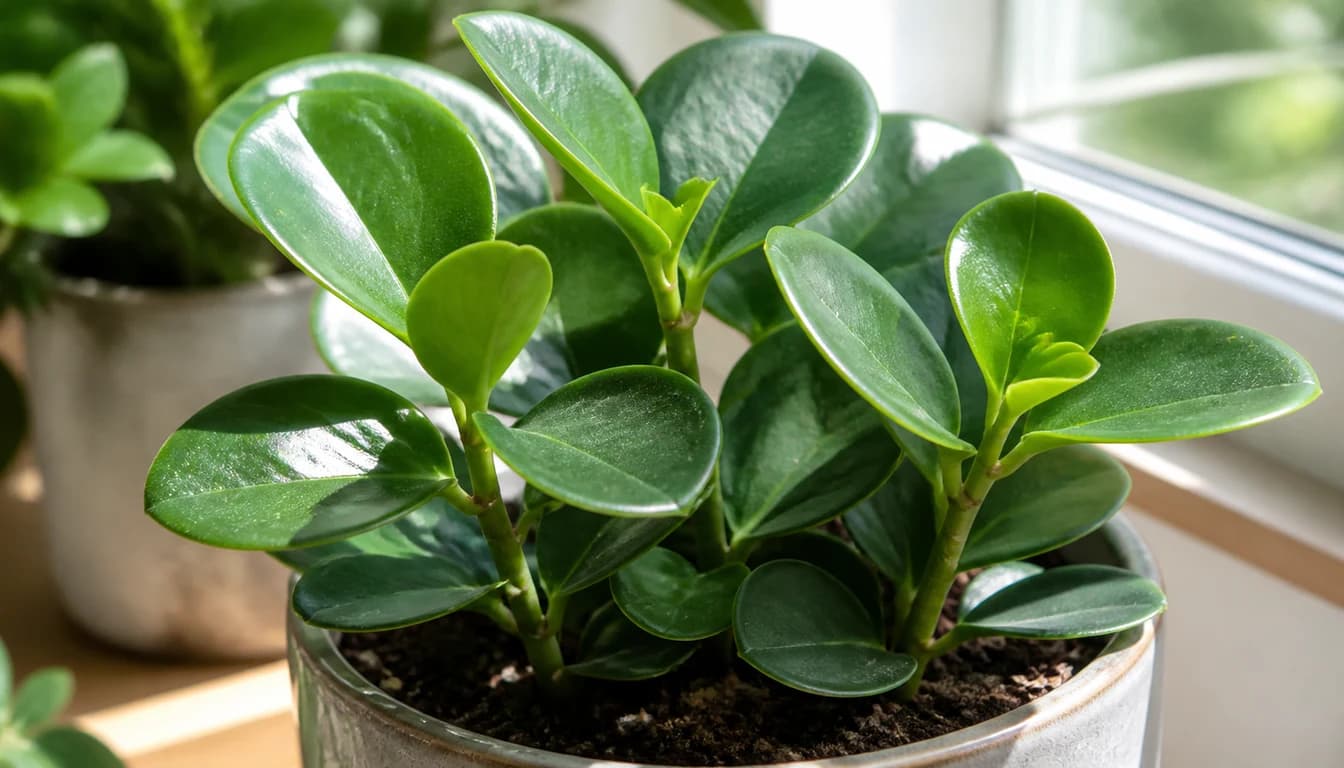
The leaves are the main draw. Thick, oval, and remarkably glossy, each one sits on a short petiole and points slightly upward like a small green spoon. New growth emerges from a central rosette, giving the plant a compact, upright habit that rarely spreads beyond 12 inches in any direction. The stem is succulent and fleshy, storing water the same way cacti do — a detail that makes sense once you know this plant evolved in seasonally dry tropical forests.
Growth is slow. A well-grown specimen adds two to four inches per year under typical indoor conditions. After a few years, the lower leaves may drop naturally, revealing a short woody stem that gives the plant a miniature tree-like silhouette. This is not a problem — it is normal aging. Regular light pruning keeps the shape bushy and full.
The standard green form of *Peperomia obtusifolia* is what most nurseries stock — deep, glossy green leaves with a subtle waxy sheen. It is the most forgiving and the fastest-growing of the cultivars, making it the natural starting point for new growers. If you love the genus but want bolder patterning, watermelon peperomia offers dramatic stripes on a similarly compact frame.
The variegated forms are where things get interesting. 'Variegata' has cream or pale yellow edges that frame each leaf, while 'Gold Tip' sports golden-yellow coloring concentrated at the leaf tips. 'Marble' blends green and white in irregular patches across the entire leaf surface. All three need slightly more light than the plain green form to maintain their coloring — low light pushes them back toward solid green.
A less common but striking cultivar is 'Miniature', which stays under 6 inches tall with proportionally smaller leaves. It is genuinely dwarf, not just a young plant — even after years of growth, it remains tabletop-sized. If shelf space is tight, this is the one to hunt down at specialty nurseries.
Medium to bright indirect light is the sweet spot for Baby Rubber Plant. An east-facing window, a spot a few feet back from a south or west window, or a well-lit office with fluorescent or LED ceiling lights all work. This is a plant that genuinely thrives in the light conditions most homes already provide.
Variegated cultivars push the light requirement upward — they need bright indirect consistently to keep their cream, white, or gold markings from fading. A spot within 2 to 4 feet of a south or west window is ideal for 'Variegata' or 'Gold Tip'. Without enough light, the variegation retreats and the new leaves come in solid green. This is not damage; the plant is simply prioritizing chlorophyll production over decorative coloring.
Direct afternoon sun can scorch the leaves, especially on variegated forms, leaving bleached or brown patches. Morning sun through an east window is gentler and actually encourages thicker, more compact growth. If your only option is a south window, pull the plant back 4 to 6 feet or hang a sheer curtain to filter the intensity. Spaces that only offer dim corners may need a different pick — our low light plants guide covers species that truly thrive in low-light rooms.
Baby Rubber Plant holds water in its thick, succulent leaves and stems, so it wants a dry spell between drinks. Let the top inch of soil dry completely before watering — usually every 7 to 10 days in spring and summer, stretching to every 14 to 21 days in fall and winter when growth slows.
When you water, soak the soil evenly until excess drains from the bottom, then empty the saucer. A light sprinkle on the surface does nothing useful — the roots sit deeper than you might expect for such a small plant. Thorough, infrequent watering mimics the wet-dry cycle of its native tropical understory, where brief rains alternate with stretches of dry leaf litter. Our watering frequency guide explains the reasoning behind soak-and-dry methods for succulent-leaved houseplants like this one.
Overwatering is the most common mistake. The succulent roots and stems rot quickly in soggy soil, and the first signs are soft, translucent patches on the lower leaves followed by a mushy stem base. By the time you see stem rot, the plant may already be beyond saving. When in doubt, wait a few more days — this species handles thirst far better than excess moisture.
Standard potting mix works for Baby Rubber Plant, but it drains too slowly if used straight from the bag. A blend of two parts potting soil to one part perlite creates the airy, fast-draining texture these roots prefer. The goal is soil that holds a little moisture but never stays soggy — think damp sponge, not wrung-out towel. Proper drainage holes in pots matter as much as the mix itself — even the best soil stays waterlogged without them.
Terra cotta is an excellent pot choice here. The porous clay pulls moisture from the soil surface and dries faster than plastic, giving you a built-in safety margin against overwatering. Plastic and glazed ceramic work too, but they retain moisture longer — adjust your watering frequency accordingly.
Baby Rubber Plant grows slowly and tolerates being rootbound, so repotting is infrequent. Every 2 to 3 years is typical, or when roots are visibly poking out of the drainage holes. Go up only one pot size — 1 to 2 inches wider. A pot that is too large holds excess moisture around the roots and is a direct path to rot. Spring is the ideal window for repotting, just as the plant wakes up from its slower winter growth.
This is one of the easiest houseplants to propagate — and that is not hyperbole. Leaf cuttings, stem cuttings, and division all work reliably, and the thick, fleshy tissue stores enough energy for the cutting to root without much pampering. If you have a friend with a healthy plant, a single stem cutting is all you need to start your own. Our pruning guide covers making clean cuts that heal quickly and minimize the risk of infection.
For stem cuttings, snip a 3- to 4-inch section with two or three leaves and a node. Let the cut end air-dry for a day — the wound seals over and reduces rot risk. Then insert the cutting into moist perlite or a 50/50 perlite-vermiculite mix, place it in bright indirect light, and keep the medium lightly moist. Roots typically form within 2 to 3 weeks.
Leaf propagation is slower but equally reliable. Cut a mature leaf with its petiole attached, dip the cut end in rooting hormone if you have it (not strictly necessary), and insert it into moist perlite. Within 4 to 6 weeks, tiny roots emerge from the petiole base, followed by a miniature rosette. The parent leaf may yellow and drop off — that is fine; the new plantlet is independent by then.
Mealybugs are the most persistent pest on Baby Rubber Plant. They tuck themselves into the tight spaces where leaves meet stems — exactly the spots you would not think to check on a compact rosette. White, waxy tufts are the giveaway, and a single missed colony can explode within a week in warm, dry conditions.
Spider mites show up in winter when indoor air is dry. Fine webbing on the leaf undersides and a stippled, faded appearance on the upper surface are the tells. Our neem oil guide covers treatment ratios — a diluted neem spray every five to seven days for three rounds usually clears them out. Wiping both leaf surfaces with a damp cloth first removes eggs and speeds the process.
Beyond pests, the most common issues trace back to watering mistakes. Leaf drop and soft stems mean overwatering. Wrinkled, slightly curled leaves signal thirst. Brown, crispy leaf edges point to low humidity or direct sun exposure. None of these require pesticides — they are care adjustments.
Baby Rubber Plant grows actively from March through October, pushing new leaves every few weeks when conditions are right. This is the window for fertilizing — a balanced liquid fertilizer diluted to half strength every four to six weeks supports steady growth without burning the sensitive roots. Hold off on fertilizer from November through February when the plant is resting; our fertilizing guide explains the reasoning behind seasonal feeding schedules for indoor plants.
Summer heat above 85°F combined with dry air can slow growth and attract spider mites. A pebble tray filled with water beneath the pot raises local humidity without wetting the leaves. Grouping this plant with other tropicals like pothos or other peperomias creates a beneficial microclimate that buffers temperature swings.
Winter care is straightforward: water less, feed not at all, and keep the plant away from heater vents. Dry, heated air is the biggest winter hazard — it desiccates leaf edges and invites mites. A humidifier in the room or a pebble tray makes a meaningful difference. Do not repot in winter; the plant is not actively growing and disturbed roots heal slowly in cool conditions.
Baby Rubber Plant is non-toxic to cats and dogs according to the ASPCA. Chewing the leaves may cause mild stomach upset — drooling or a brief bout of loose stool — but nothing requiring a veterinary visit. This is one of the few thick-leaved, succulent houseplants you can keep without worrying about curious pets; if you want more options, spider plant shares the same pet-safe profile and thrives in similar light conditions.
The plant's sap can cause mild skin irritation in sensitive individuals. If you are pruning or taking cuttings and notice redness or itching on your hands afterward, wash the area with soap and water. Wearing lightweight gloves during pruning eliminates the issue entirely.
From an ecological perspective, *Peperomia obtusifolia* is widely propagated through tissue culture and stem cuttings in commercial nurseries. Wild populations in Florida are listed as threatened due to habitat loss, but the houseplants you buy are nursery-grown, not collected from the wild. Purchasing from reputable growers supports sustainable horticulture and keeps pressure off wild stands.
Baby Rubber Plant is non-toxic to cats and dogs per the ASPCA. Mild stomach upset is possible if large quantities are chewed, but no serious toxicity risk exists.
Keep Exploring
 Houseplants
Philodendron (Philodendron hederaceum) is the classic trailing houseplant that pairs heart-shaped leaves with easy-care tolerance. It climbs, trails, and fills
 Houseplants
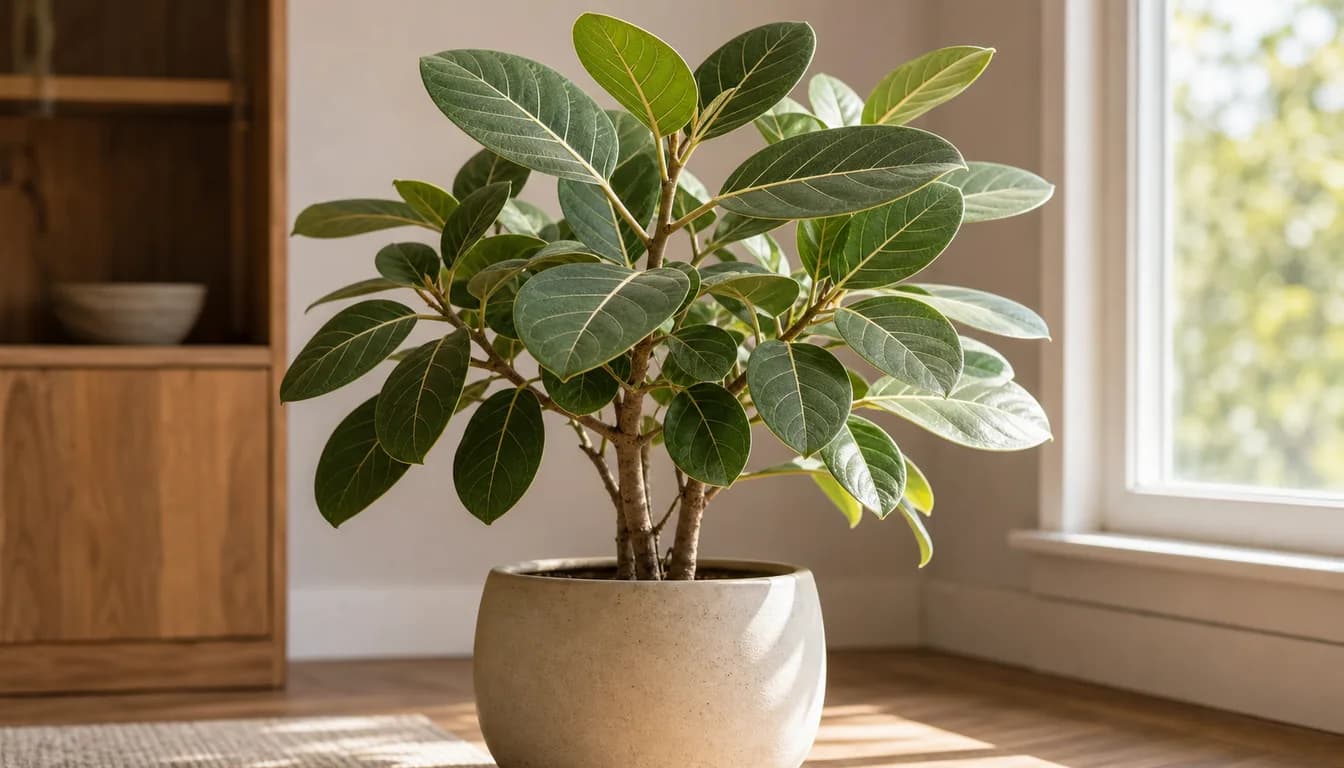
Ficus Audrey (Ficus benghalensis) is the banyan fig that grows into a genuine indoor tree — not a shrub pretending to be one. Its large, oval, velvety leaves de
 Houseplants
Free Weekly Digest
Plant care tips, straight to your inbox
Zone-specific advice, seasonal reminders, and new plant guides — no filler.
Baby Rubber Plant stems rot quickly in waterlogged soil. If the base feels mushy or the soil smells sour, stop watering immediately, check the roots, and repot in fresh, dry soil if needed.
Air plants are living sculptures that thrive without soil, anchoring to driftwood, rocks, or shells while drawing moisture from the air. Their silvery-green ros
Free Weekly Digest
Plant tips in your inbox
Zone-specific advice and seasonal reminders — no filler.