verifiedExpert Verified
Ficus Audrey
Ficus benghalensis
Family: Moraceae
wb_sunnyLight
Bright indirect light; tolerates some direct morning sun
water_dropWater
Moderate; let top 2 inches dry between waterings
heightHeight
3-6 ft indoors; can reach 10+ ft with time
publicZone
Outdoors in Zone 10b-12; indoors anywhere
airAir Quality
NASA Certified
Native Region
Indian subcontinent and Southeast Asia
biotechBotanical Profile and Growth Habit
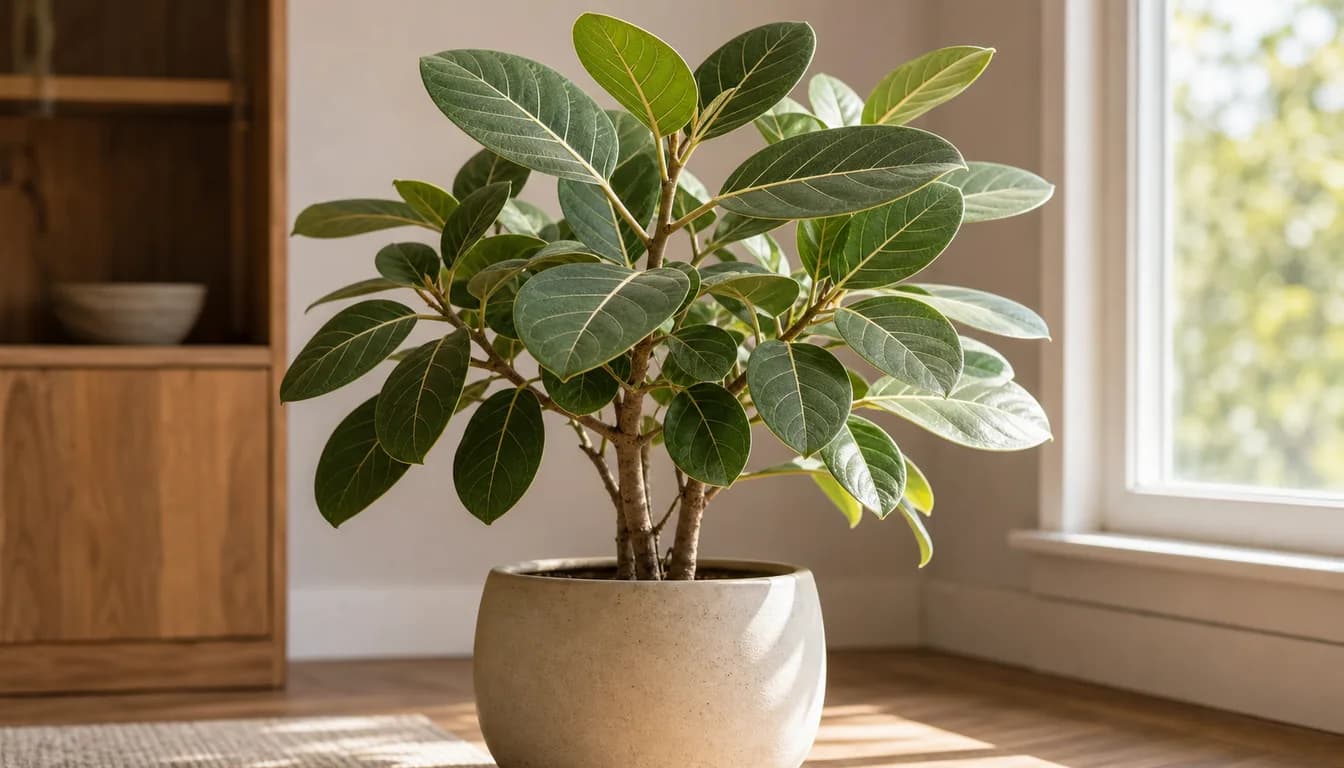
Ficus Audrey is the indoor form of the Indian banyan — the same tree that grows to 100 feet in the wild and sends down aerial roots from its branches to become a forest of trunks. As a houseplant, it stays manageable at 3 to 6 feet, but it still develops that characteristic thickening trunk and spreading canopy that makes ficus trees so architecturally compelling.
The leaves are what set Audrey apart from other ficus species. Each leaf is a broad, oval shape 6 to 10 inches long with a matte, velvety surface — not the glossy shine of rubber plant or the violin shape of fiddle leaf fig.
Young leaves emerge pale green with a coppery underside, then darken to a rich forest green with prominent pale veins as they mature.
In its native range across India and Southeast Asia, Ficus benghalensis is a strangler fig — it germinates in the canopy of other trees and eventually envelops its host. Indoors, it grows as a single-trunk specimen that can live for decades with basic care. It's one of the faster-growing indoor trees, adding 1 to 2 feet per year in good conditions.
- fiber_manual_recordGrowth habit: upright, single-trunk tree with spreading canopy; develops aerial roots in humid conditions
- fiber_manual_recordMature size: 3-6 ft indoors; can reach 10+ ft in bright rooms with support
- fiber_manual_recordLeaf texture: matte, velvety, oval; 6-10 inches; prominent pale veins; coppery undersides
- fiber_manual_recordTrunk: thickens with age into a sculptural, banyan-like base
wb_sunnyLight and Placement
Ficus Audrey needs bright indirect light to develop its signature thick trunk and full canopy — a spot within 4 to 6 feet of a south or east window is ideal. Unlike fiddle leaf fig, Audrey tolerates slightly lower light without dropping leaves, but the growth will be leggier and the trunk thinner.
A few hours of direct morning sun from an east window actually encourages faster trunk thickening and more aerial root development. Too much afternoon sun through a west window can scorch the velvety leaf surface, leaving brown, papery patches.
Ficus Audrey is more tolerant of being moved than fiddle leaf fig, but it still prefers a consistent spot. If you need to relocate it, do it gradually over a week or two rather than shifting it from a dark corner to a sunny sill overnight.
- fiber_manual_recordIdeal: 4-6 feet from a south or east window with bright, filtered light
- fiber_manual_recordMorning sun: a few hours of direct east light encourages trunk thickening
- fiber_manual_recordLow light: survives but grows thin and leggy; no trunk development
- fiber_manual_recordAvoid: unfiltered afternoon sun that scorches the velvety leaf surface
Guide — See AlsoAir Purifying Plants for Cleaner Indoor AirLearn how to pick, place, and care for air purifying plants so they help your indoor air instead of just looking pretty.
chevron_rightwater_dropWatering
Ficus Audrey likes evenly moist soil during the growing season — not soggy, not bone dry; water when the top 2 inches of soil feel dry, which usually means every 7 to 10 days in spring and summer. In winter, growth slows and the soil stays wet longer, so stretch to every 10 to 14 days.
When you do water, soak the soil thoroughly until water runs from the drainage hole, then empty the saucer. Ficus trees hate sitting in wet feet — the combination of cool soil and standing water is the fastest route to root rot. Our drainage holes guide covers why this matters.
The most common sign of watering problems in ficus is leaf drop. If leaves yellow and fall after the soil has been wet for days, you're overwatering. If leaves brown at the edges and curl inward, the plant is thirsty. Audrey is more forgiving than fiddle leaf fig about inconsistent watering, but it still prefers a steady rhythm.
- check_circleCheck soil first: water when the top 2 inches are dry — use a chopstick or finger
- check_circleWater thoroughly: soak until excess drains; empty the saucer within 30 minutes
- check_circleReduce in winter: stretch to every 10-14 days when growth slows
- check_circleHumidity helps: mist leaves weekly or place on a pebble tray during dry winters
That steadier rhythm is what keeps Audrey from sulking. Once the root ball stops swinging between swampy and bone dry, the leaf drop usually settles down too.
Ficus Audrey develops aerial roots in humid conditions — thin, brown tendrils that grow from the trunk toward the soil. These are normal and healthy, not a sign of disease. In tropical climates they eventually become secondary trunks.
Email Updates
Join the KnowTheYard update list
Zone-specific advice, seasonal reminders, and new plant guides — no filler.
compostSoil and Repotting
Ficus Audrey needs well-draining soil that retains some moisture — too fast-draining and the roots dry out between waterings; too heavy and the soil stays soggy. A mix of two parts potting soil, one part perlite, and one part orchid bark gives the right balance for most indoor growers.
Repot every 12 to 18 months in spring, going up one pot size (2 inches wider). Audrey grows fast enough to become root-bound within two years — you'll know it's time when water runs straight through without wetting the soil, or when roots circle the drainage holes. A pot that's too large holds excess moisture around the roots and invites rot.
For a tree that will eventually reach 4 to 6 feet, a heavy ceramic or terracotta pot provides stability and prevents tipping. The weight also helps the trunk thicken ? a lightweight plastic pot on a windy sill can cause the young tree to lean. Proper drainage still matters just as much, even when the pot itself is heavy.
- fiber_manual_recordSoil mix: 2 parts potting soil, 1 part perlite, 1 part orchid bark
- fiber_manual_recordPot type: heavy ceramic or terracotta for stability; 2 inches wider than root ball
- fiber_manual_recordRepotting frequency: every 12-18 months, or when root-bound
- fiber_manual_recordBest time: spring, when growth resumes and the plant recovers quickly
Guide — See AlsoBest Herbs to Grow Indoors for Real Harvests, Not Spindly PotsChoose indoor herbs that can actually produce in your light, temperature, and container setup, then match each one to th
chevron_right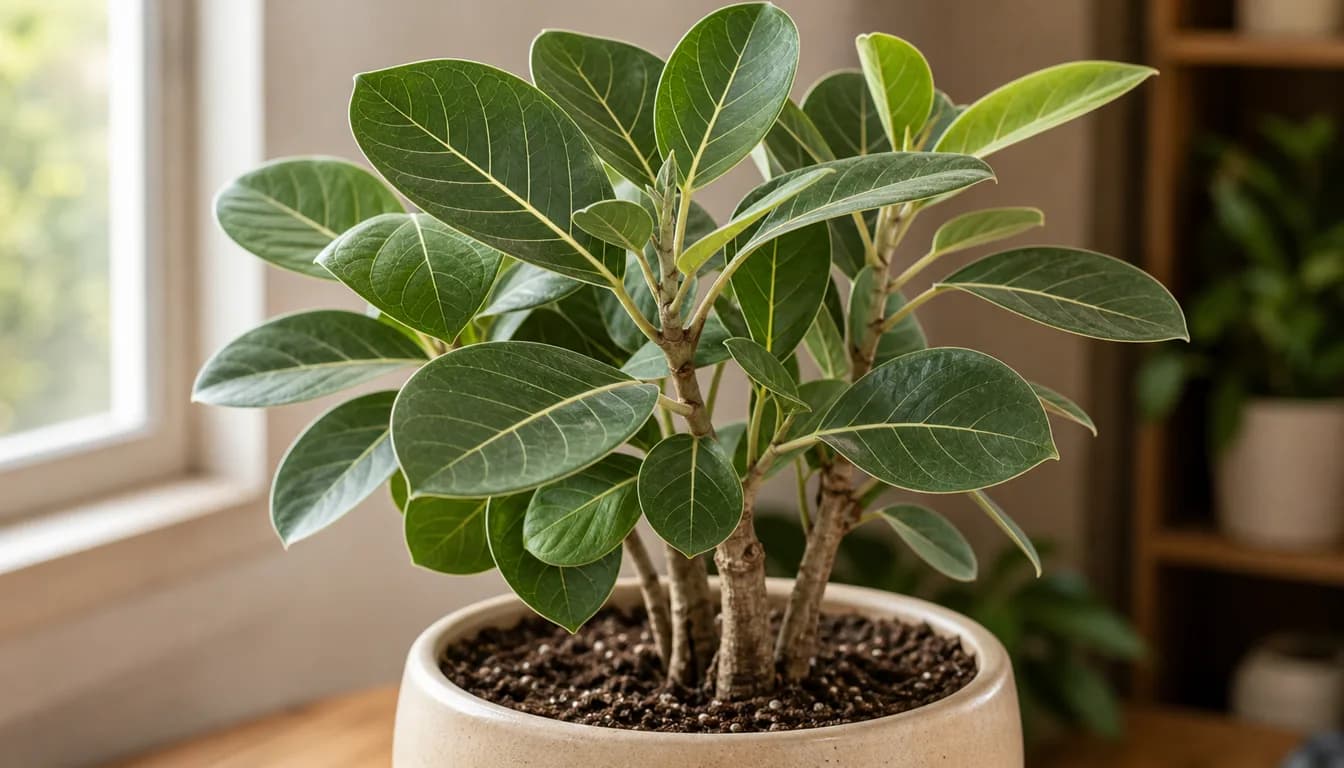
content_cutPropagation
Ficus Audrey propagates through stem cuttings, but the process is messier than most houseplants — the plant exudes a milky white sap when cut that irritates skin and stains clothing. Wear gloves and have a paper towel ready.
Cut a 6-8 inch section of stem with two to three leaves, making the cut just below a node. Dip the cut end in rooting hormone (optional but speeds things up), then insert it into moist perlite or a mix of perlite and peat. Place in bright, indirect light and cover with a clear plastic bag to maintain humidity.
Roots typically develop within 4 to 6 weeks — you'll know it's working when you see new leaf growth. The cutting needs consistent warmth (above 65°F) and indirect light; direct sun through the plastic bag will cook it. Once roots are 2-3 inches long, pot the cutting into standard ficus soil mix.
- check_circleStem cuttings: 6-8 inches with 2-3 leaves; cut below a node
- check_circleRooting medium: moist perlite or perlite-peat mix; cover with plastic bag
- check_circleRooting time: 4-6 weeks in warm, bright indirect light
- check_circleWatch for: milky sap — wear gloves, have paper towels ready
- check_circlePot up: when roots are 2-3 inches long and new growth appears
pest_controlPests and Common Problems
Ficus Audrey is susceptible to spider mites, scale, and thrips — the same pests that plague most ficus species. Spider mites are the most common, appearing as fine webbing on leaf undersides and tiny speckled dots on the leaf surface, especially during dry winter months.
For spider mites, increase humidity around the plant and wipe leaves with a damp cloth weekly — mites hate moisture. For heavier infestations, apply neem oil or insecticidal soap directly to the undersides of leaves. Our neem oil guide covers mixing ratios.
The most common non-pest problem is leaf drop — ficus trees are notorious for dropping leaves when stressed by relocation, temperature changes, or inconsistent watering. Audrey is more tolerant than fiddle leaf fig, but a sudden move from a bright spot to a dark corner will still cost you leaves. Give the plant time to adjust.
- fiber_manual_recordSpider mites: fine webbing on undersides — increase humidity, wipe leaves, treat with neem
- fiber_manual_recordScale: brown waxy bumps on stems — scrape off manually or treat with rubbing alcohol
- fiber_manual_recordThrips: tiny slender insects on new growth — isolate and treat with neem oil weekly
- fiber_manual_recordLeaf drop: stress from moving, drafts, or watering changes — stabilize environment
Guide — See AlsoBest Indoor Plants for Every Room and Light LevelA practical guide to choosing the best indoor plants for your home, covering beginner-friendly picks, low light champion
chevron_rightcalendar_monthSeasonal Care
Ficus Audrey's most dramatic seasonal behavior is leaf drop in fall — as light levels decrease, the plant sheds older leaves to conserve energy. This is normal and doesn't mean the plant is dying. New leaves will emerge in spring when growth resumes.
Spring is the time to repot, prune, and take cuttings. The plant puts on its most vigorous growth from March through June, and any wounds heal fastest during this period. Feed monthly with a balanced liquid fertilizer diluted to half strength.
Winter care focuses on maintaining humidity rather than growth. Indoor heating creates dry air that crispy leaf edges on Audrey. Mist daily or place the pot on a pebble tray. Reduce watering to every two weeks and stop fertilizing — the plant isn't growing, it's surviving.
- fiber_manual_recordSpring: repot, prune, take cuttings; resume monthly feeding; watch for aerial roots
- fiber_manual_recordSummer: water every 7-10 days; rotate for even growth; watch for spider mites
- fiber_manual_recordFall: expect some leaf drop as light decreases — normal, not a crisis
- fiber_manual_recordWinter: water every 10-14 days; increase humidity; protect from cold drafts
petsSafety and Pet Toxicity
Ficus Audrey is toxic to cats and dogs — all parts of the plant contain ficin, a proteolytic enzyme that causes oral irritation, drooling, and vomiting when chewed. The milky sap is the most concentrated source, so keep pets away from fresh cuts or broken leaves.
For humans, the milky sap causes skin irritation on contact and can trigger allergic reactions in sensitive individuals. Wear gloves when pruning or propagating. The sap also stains clothing and furniture — protect surfaces when working with cuttings.
If you want a pet-safe tree-form houseplant, consider money tree first. Cast iron plant gives you the same slow, upright presence without the toxicity concerns.
Our houseplant collection flags pet safety on every profile.
Ficus Audrey contains ficin, a milky sap that causes oral irritation and vomiting in cats and dogs. Keep out of reach and wear gloves when handling cuttings.
local_floristPopular Varieties
The standard Ficus benghalensis is the most common form sold as 'Ficus Audrey,' but a few related ficus species are sometimes confused with it or offered alongside it.
Ficus benghalensisThe classic Audrey — matte, velvety leaves with pale veins; thickens into a banyan-like trunk.
Ficus benghalensis 'Variegata'Rare variegated form with cream and green marbled leaves; slower growing and more expensive.
Ficus microcarpaOften sold as 'Ficus Ginseng' — thick, exposed roots with a rounded canopy; used for bonsai.
Ficus lyrataFiddle leaf fig — related but different leaf shape; fussier about placement and more prone to leaf drop.
eco
Keep Exploring
Related Plants
 Houseplants
Peperomia Watermelon
Peperomia Watermelon is the compact, pet-safe succulent with leaves patterned like watermelon rind — silver-green stripes over dark green that radiate from the
 Houseplants
Hoya
Hoya carnosa is a twining, waxy-leaved houseplant that rewards patient care with clusters of fragrant star-shaped blooms. It thrives in bright indoor light, lea
 Houseplants
African Violet
African Violet (Saintpaulia ionantha) is the classic blooming houseplant that rewards consistent care with clusters of velvety flowers in purple, pink, whit
quiz
Frequently Asked Questions
How often should I water a ficus audrey?expand_more
Water every 7-10 days in spring and summer, and every 10-14 days in fall and winter. Check that the top 2 inches of soil are dry before watering. Ficus Audrey prefers consistent moisture but won't tolerate soggy soil.
Why is my ficus audrey dropping leaves?expand_more
Leaf drop is usually caused by relocation stress, temperature changes, or inconsistent watering. Ficus trees are creatures of habit — they hate being moved. If you recently moved the plant, give it a few weeks to adjust. If not, check your watering schedule and temperature.
Is ficus audrey safe for cats and dogs?expand_more
No. Ficus Audrey contains ficin, a milky sap that causes oral irritation and vomiting in pets if chewed. The symptoms are uncomfortable but rarely life-threatening. Keep the plant out of reach or choose a pet-safe alternative.
How fast does ficus audrey grow?expand_more
In ideal conditions (bright indirect light, consistent watering, regular feeding), Ficus Audrey can add 1-2 feet per year. It's one of the faster-growing indoor trees, developing a thick trunk within a few years.
Can ficus audrey grow in a north-facing room?expand_more
It will survive but grow slowly and become leggy without developing a thick trunk. Ficus Audrey needs bright indirect light to thrive. If your north-facing room is dim, consider a grow light or choose a more shade-tolerant plant like snake plant or ZZ plant.