Wateringschedule9 min read
How to Water Succulents Without Rotting the Roots
Learn how often to water succulents, what a proper soak-and-dry cycle looks like, and how light, pot type, season, and soil change the schedule.
Succulents die more often from kindness than neglect. Most problems start when we water them like tropical foliage instead of letting the root zone dry deeply between soakings.
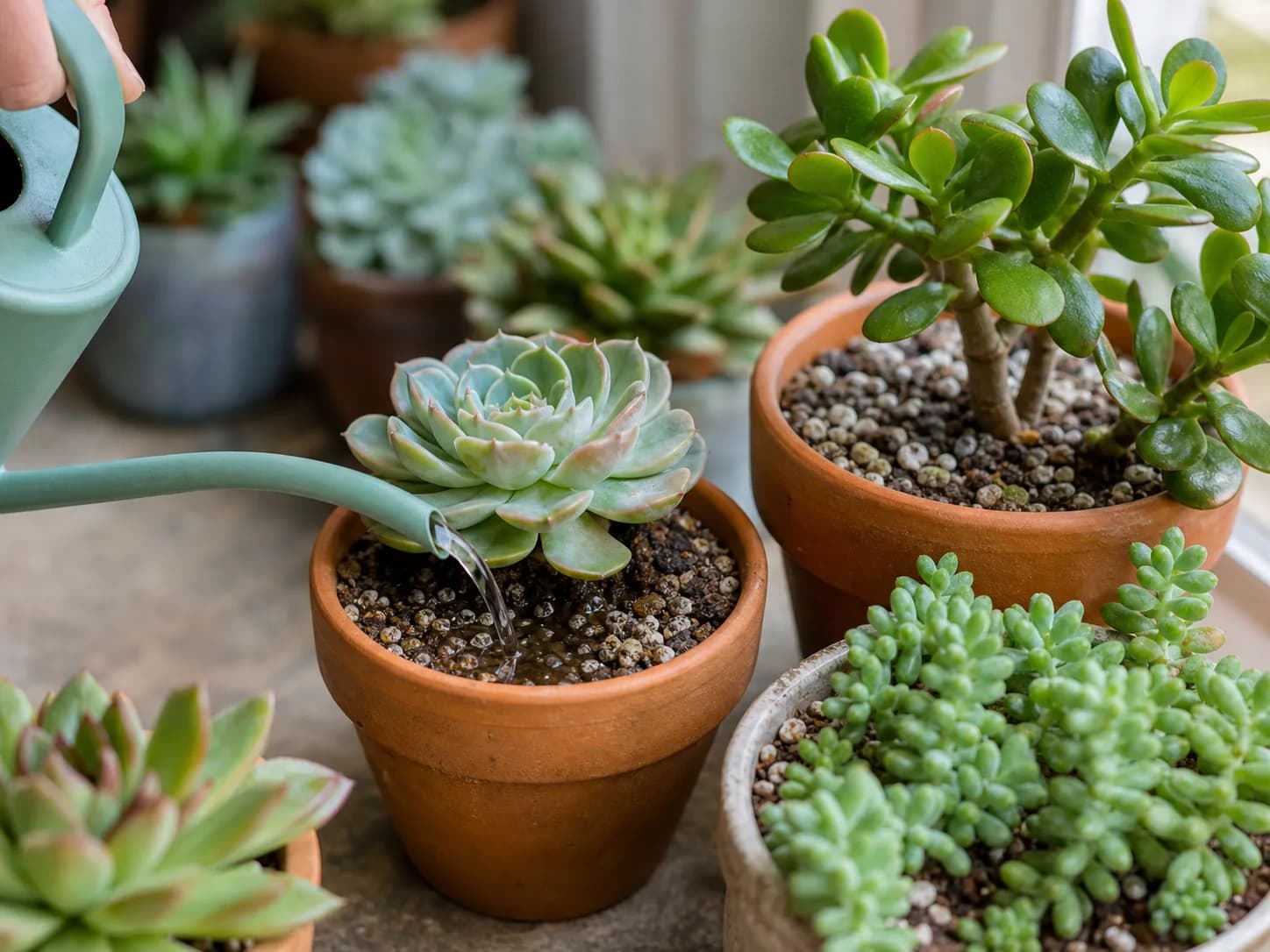
The goal is not tiny sips on a fixed schedule. The goal is a full soak, a full drain, and then real drying time before the next drink. Once you understand that cycle, watering Aloe Vera gets much easier. Jade Plant and trailing pots follow the same basic rhythm. Tough upright plants like Snake Plant also prefer this calmer routine.
water_dropThe soak-and-dry rule matters more than the calendar
A succulent wants a full drink, then a real dry spell. Water until the mix is fully moistened and excess runs out; then leave the plant alone until the root zone dries again.
That is different from giving a little splash every few days. Small surface drinks leave lower roots dry while the top stays damp, which is a perfect setup for weak growth and rot.
Water deeply, then let the mix dry almost completely before watering again. That rule applies to potted Aloe Vera and Jade Plant. Even tougher indoor plants like ZZ Plant get kept too wet when people skip the dry spell.
- fiber_manual_recordCorrect cycle: Soak, drain, dry, then repeat
- fiber_manual_recordWrong cycle: Frequent shallow splashes
- fiber_manual_recordMain goal: Moisture reaches roots without staying trapped there
wb_sunnyHow often changes with light, pot size, and season
No one schedule fits every succulent because light and airflow change how fast the pot dries. A sunny windowsill plant in a small terra-cotta pot may need water every 10-14 days, while the same plant in lower light can go several weeks.
Winter usually stretches the gap. Growth slows, sun weakens, and the pot stays wet longer. Summer shortens it, especially for containers outside or near hot glass.
This is why fixed reminders fail. Use pot weight, dry soil depth, and leaf firmness instead of copying a calendar from a tropical guide like houseplant watering frequency. Succulents need a much drier rhythm.
Outdoor mats of Sedum can stretch even longer once rooted in gritty soil.
- fiber_manual_recordBright, warm conditions: Water a bit more often
- fiber_manual_recordCool or dim conditions: Water much less often
- fiber_manual_recordBest habit: Check the pot, not the date
Guide — See AlsoSigns of Overwatering Plants and How to Catch Them EarlyLearn the real signs of overwatering plants, how they differ from underwatering, and simple checks you can use to fix yo
chevron_rightyardPot and soil choices control half the schedule
Fast drainage is part of watering, not a separate bonus. A gritty mix and a pot with a real drainage hole let you water thoroughly without trapping moisture for too long.
Terra-cotta dries faster than glazed ceramic or plastic, which is why it often saves beginners from chronic overwatering. That matters on indoor growers like String of Dolphins. Jade Plant in a soggy decorative pot usually suffers more from trapped moisture than from drought.
If your mix stays damp more than a week after watering in average indoor light, the structure is too heavy. Repot using a sharper mix, or follow repotting steps if the current setup keeps collapsing around the roots.
For container setup, the same drainage logic in drainage hole rules matters more than the exact watering day.
- fiber_manual_recordBest pot feature: True drainage hole
- fiber_manual_recordBest texture: Fast-draining, gritty mix
- fiber_manual_recordWarning sign: Damp soil lingering many days after watering
Email Updates
Join the KnowTheYard update list
Zone-specific advice, seasonal reminders, and new plant guides — no filler.
homeIndoor and outdoor succulents dry at different speeds
Outdoor containers in heat and wind can dry surprisingly fast, while indoor plants in still air may hold moisture for much longer. Treat the environment as part of the plant.
Indoor succulents in average rooms often want slower, deeper cycles. Outdoor pots, especially on hot patios, may need more frequent checks because sun and breeze pull water out quickly. Ground-planted Sedum usually needs the least help of all once established.
A plant moved outdoors for summer should be watched closely for the first couple of weeks. The same adjustment mindset you use to harden off seedlings applies here too; more sun usually means the pot will dry faster than your indoor routine expected.
- fiber_manual_recordIndoor pots: Usually slower drying, lower evaporation
- fiber_manual_recordOutdoor containers: Faster drying in sun and wind
- fiber_manual_recordIn-ground succulents: Often need the least frequent watering once rooted
Guide — See AlsoSigns of Overwatering Grass and How to Fix ThemLearn how to spot the real signs of overwatering grass, stop the damage, and reset your watering schedule before the law
chevron_rightwater_dropHow to tell overwatering from underwatering
Overwatered succulents go soft. Leaves may turn translucent, mushy, or yellow, and stems can collapse from the base. Underwatered succulents usually wrinkle, thin out, or look deflated while tissue stays firm enough to recover.
That distinction matters. A thirsty Jade Plant can usually recover after a good soak. A rotting Aloe Vera needs less water, better drainage, and sometimes fresh mix. ZZ Plant shows the same warning when its thick roots sit wet.
If the pot is heavy and the leaves are soft, go straight to overwatered plant recovery. If the pot is feather-light and leaves are wrinkled, water deeply and let the plant rehydrate over the next day or two.
Soft means too wet; wrinkled usually means too dry.
- fiber_manual_recordOverwatered signs: Mushy leaves, yellowing, base collapse
- fiber_manual_recordUnderwatered signs: Wrinkles, thinning leaves, very light pot
- fiber_manual_recordFirst check: Pot weight plus leaf texture
warningCommon mistakes that keep succulents struggling
The most common mistake is watering on a weekly habit. Another is misting the surface and calling that a watering routine, which wets the top but never fully serves the roots.
People also keep succulents in decorative containers without drainage and then wonder why leaves go mushy. Finally, low light and overwatering often arrive together; the plant is already using less water, but the schedule never changed.
If your succulent keeps failing, simplify the system. Brighter light, a draining pot, and fewer but deeper waterings solve more problems than fancy products do. When the whole potting setup is wrong, compare it with houseplant soil mix basics before watering again.
- fiber_manual_recordDo not water weekly by default
- fiber_manual_recordDo not rely on misting for root-zone moisture
- fiber_manual_recordDo not trap runoff in cachepots or saucers
Guide — See AlsoIs It Bad to Water Plants at Night? What Actually MattersWondering if it is bad to water plants at night? We break down when evening watering is fine, when it causes disease, an
chevron_righttips_and_updates
Pro Tips
- check_circleLift the pot after watering and again when dry so you learn the weight difference.
- check_circleIf a succulent is in low light, assume it needs water less often than you think.
- check_circleUse terra-cotta and a gritty mix if you tend to overwater.
- check_circleA wrinkled succulent can recover faster than a rotting one, so do not rush to water at the first hint of doubt.
- check_circleWater at the soil line instead of splashing the leaves and crown.
quiz
Frequently Asked Questions
How often should I water indoor succulents?expand_more
There is no single interval. Many indoor succulents land somewhere between every 10 days and every few weeks, depending on light, pot size, and season.
Should succulent soil dry completely before watering?expand_more
It should dry deeply, often almost completely, before the next soaking. The exact level depends on the plant and pot, but succulents should not stay constantly damp.
Is misting enough for succulents?expand_more
No. Succulent roots need a deep soak, not just damp surface pebbles. Misting does not replace proper watering.
Why are my succulent leaves mushy after watering?expand_more
Mushy leaves usually point to overwatering, trapped moisture, or a mix that drains too slowly. Let the pot dry and check the root zone before watering again.
Related Guides
Best Time to Water Flowers for Stronger Blooms
Learn exactly when to water flowers so blooms last longer, plants stay healthier, and you are not wasting water. Covers beds, containers, and hanging baskets.
10 min read
Best Time to Water Indoor Plants for Healthy Growth
Learn exactly when to water indoor plants during the day, how timing changes by season and light level, and how to avoid rot and droop without using a strict calendar schedule.
11 min read
Best Time to Water Plants for Healthier Roots
Learn exactly when to water indoor and outdoor plants so roots drink deeply, leaves stay healthy, and soil stays in the ideal moisture range instead of staying soggy or bone dry.
11 min read