verifiedSource Reviewed
Chinese Evergreen: Color for Low Light, If You Keep It Warm
Aglaonema commutatum
Family: Araceae
wb_sunnyLight
Low to medium indirect light; brighter light for pink or pale cultivars
water_dropWater
Moderate; let the top 1-2 inches dry before watering
heightHeight
1-3 ft indoors depending on variety
publicZone
Outdoors in Zones 10-12; indoors anywhere
airAir Quality
Air Quality Note

Native Region
Southeast Asia (Philippines, Indonesia, Malaysia)
paletteChoose Leaf Color by the Light You Actually Have
The first Chinese Evergreen decision is cultivar color. Dark green and silver types handle low light better. Pink, red, and very pale types usually need brighter indirect light to keep color without thinning out.
This is why the plant works so well in offices and bedrooms but still needs a realistic match. A dark corner can keep a green-silver plant handsome, while a pink cultivar may fade or stall there.
If the room is extremely dim and you do not care about patterned color, Cast Iron Plant may be the better long-term choice. Chinese Evergreen owns the middle ground: low-light tolerance with visible foliage pattern.
Dark green/silverBest for low-light rooms and offices
Pink/redBest for medium to bright indirect light
Very pale leavesBest where light is bright but filtered
wb_sunnyLow Light Is Useful, But No Light Is Not a Plan
Low-light tolerance comes from slow, careful growth. The plant still needs indirect light from a window or grow light to replace old leaves and hold pattern.
A windowless room can hold the plant for a short display, but it is not a permanent care plan unless you add a grow light. The plant may sit green for a while, then stop making useful new leaves.
A small grow light can turn a weak corner into a real growing spot. That matters most for pink or pale cultivars.
For the toughest dark-room comparison, look at ZZ Plant. ZZ stores water in rhizomes and tolerates neglect differently; Chinese Evergreen gives more leaf color but asks for steadier warmth.
lightbulbJudge new leaves, not old leaves
Old leaves can stay attractive in weak light. New leaves tell the truth: smaller, duller, or fewer new leaves mean the room is too dim.
Guide — See AlsoAir Purifying Plants for Cleaner Indoor AirLearn how to pick, place, and care for air purifying plants so they help your indoor air instead of just looking pretty.
chevron_rightthermostatKeep the Crown Warm and Out of Drafts
Cold is the hidden failure point. A Chinese Evergreen can handle low light better than it handles cold wet roots or a draft blowing across the crown.
Keep it away from exterior doors, winter windows, air-conditioner blasts, and cold floors. If the pot feels cold for hours after watering, the root zone is not in the forgiving range anymore.
Cold damage often shows up later as yellowing or soft stems. By then the mistake happened days earlier at the window, floor, or vent.
- check_circleUse a room that stays above about 65 F for best growth.
- check_circleAvoid watering right before a cold night near a window.
- check_circleMove the plant back from glass in winter.
- check_circleDo not place it where a vent blows directly into the crown.
This warm-crown rule separates it from a hardier low-light plant like Snake Plant. Both tolerate shade, but Chinese Evergreen is quicker to resent cold wet conditions.
Email Updates
Join the KnowTheYard update list
Zone-specific advice, seasonal reminders, and new plant guides — no filler.
water_dropWater After the Top Layer Dries, Then Drain Fully
Moderate watering is the target, not swampy kindness. Let the top 1-2 inches dry, water thoroughly, and empty the saucer so the crown and roots do not sit wet.
Low light slows water use. A plant across the room from a window may need far less water than the same cultivar in bright filtered light.
If you are unsure which side you are on, compare with overwatering versus underwatering. On this plant, yellow lower leaves plus wet mix usually matter more than a dry-looking surface.
Ready for waterTop layer dry, pot lighter, leaves still firm
Too wetYellowing, soft stems, sour mix, or cold heavy pot
Too dryCurling, limp leaves with a very light pot
Guide — See AlsoBest Herbs to Grow Indoors for Real Harvests, Not Spindly PotsChoose indoor herbs that can actually produce in your light, temperature, and container setup, then match each one to th
chevron_right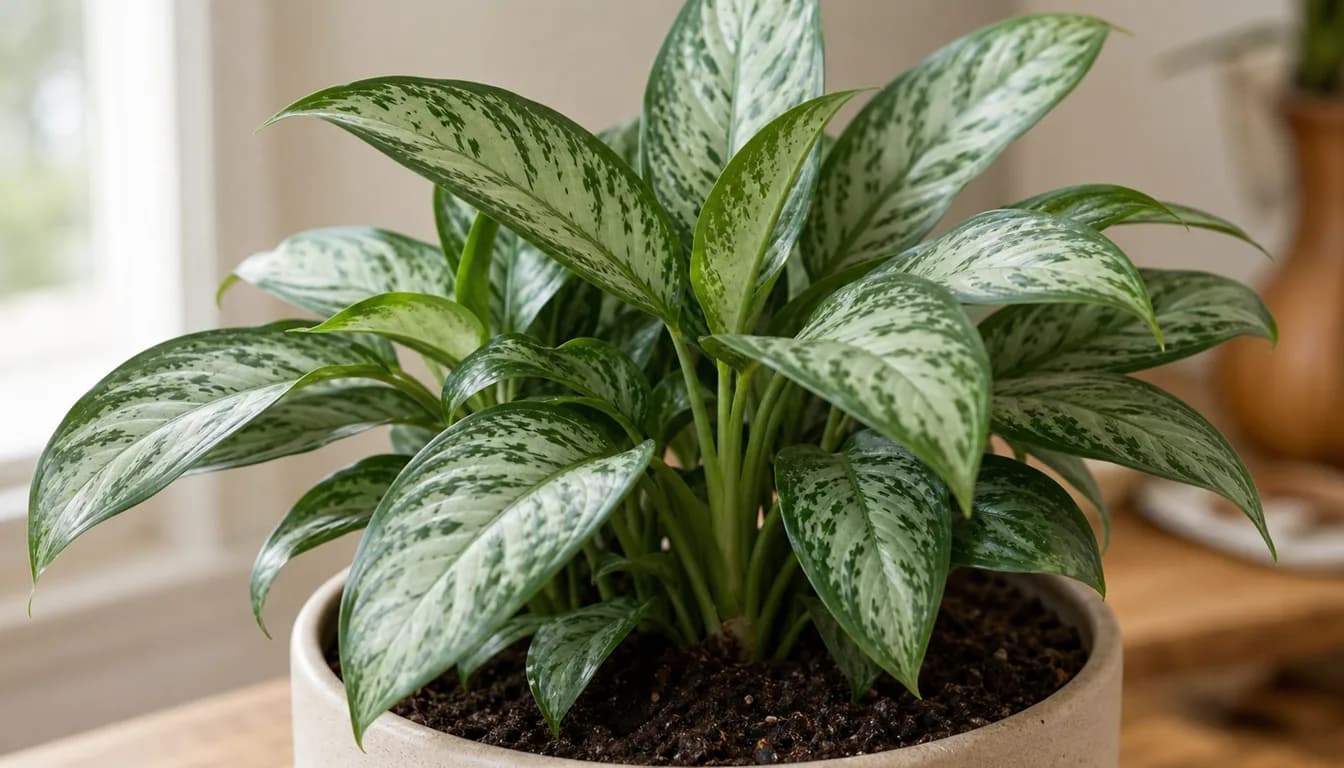
potted_plantPot for Slow Clump Growth, Not Fast Expansion
Clump growth changes the pot decision. Chinese Evergreen does not need a large pot to prove it is loved. A modest pot keeps the root zone easier to dry and the plant more stable.
Use a loose houseplant mix with drainage support from perlite, bark, or similar coarse material. The goal is a mix that holds some moisture but does not seal around the roots.
Repot only when roots fill the pot or the mix breaks down. If you need the broader steps, repot houseplants covers the timing, but this plant rewards patience.
- 1Choose a pot with drainage.
- 2Move up one size only when roots justify it.
- 3Keep the crown at the same soil height.
- 4Water less for a while after repotting in low light.
call_splitDivide Only When the Clump Gives You a Real Reason
Division is the practical way to propagate Chinese Evergreen, but it should not be a routine haircut. A small division without roots struggles, and a freshly split plant in low light recovers slowly.
Wait until the plant has several strong stems and the pot is genuinely crowded. Divide during active growth, keep roots attached to each piece, and pot divisions into small containers.
Ready to divideCrowded clump with several rooted stems
Too earlyOne or two stems, weak roots, or winter-low light
AftercareWarmth, medium light, and careful watering until new leaves appear
Guide — See AlsoBest Indoor Plants for Every Room and Light LevelA practical guide to choosing the best indoor plants for your home, covering beginner-friendly picks, low light champion
chevron_righttroubleshootRead Leaf Edges, Yellowing, and Soft Stems Separately
Brown tips, yellow lower leaves, and soft stems do not have the same cause. The symptom location tells you whether to adjust water, light, warmth, or pest control.
Mealybugs and scale can hide where leaves meet stems. If pests are present, use houseplant neem oil carefully and keep the plant warm while it recovers.
pest_controlBrown tips
Often dry air, mineral buildup, or water-quality stress.
pest_controlYellow lower leaves
Can be old age, but several at once often mean wet roots.
pest_controlFaded color
Often too little light for that cultivar.
pest_controlSoft stems
Cold wet root-zone stress or rot risk.
health_and_safetyUse Height and Placement Because It Is Not Pet-Safe
This is not a pet-safe floor plant. Like many aroids, Chinese Evergreen contains calcium oxalate crystals that can irritate the mouth if a pet or child chews the leaves.
Place it where the broad leaves cannot tempt pets. If you need a safer patterned plant, Prayer Plant is a better direction.
Peperomia is another better fit for low shelves in homes with chewing pets. Chinese Evergreen belongs higher or behind a barrier.
warningLow light often means low shelves
Do not put a toxic low-light plant on the floor just because the floor corner is dim. Choose a higher stand or a pet-safe plant.
Guide — See AlsoBest Low-Light PlantsChoose and care for resilient, low-light houseplants for north-facing rooms, bathrooms, and shaded corners. Practical pl
chevron_righteco
Keep Exploring
Related Plants
 Houseplants
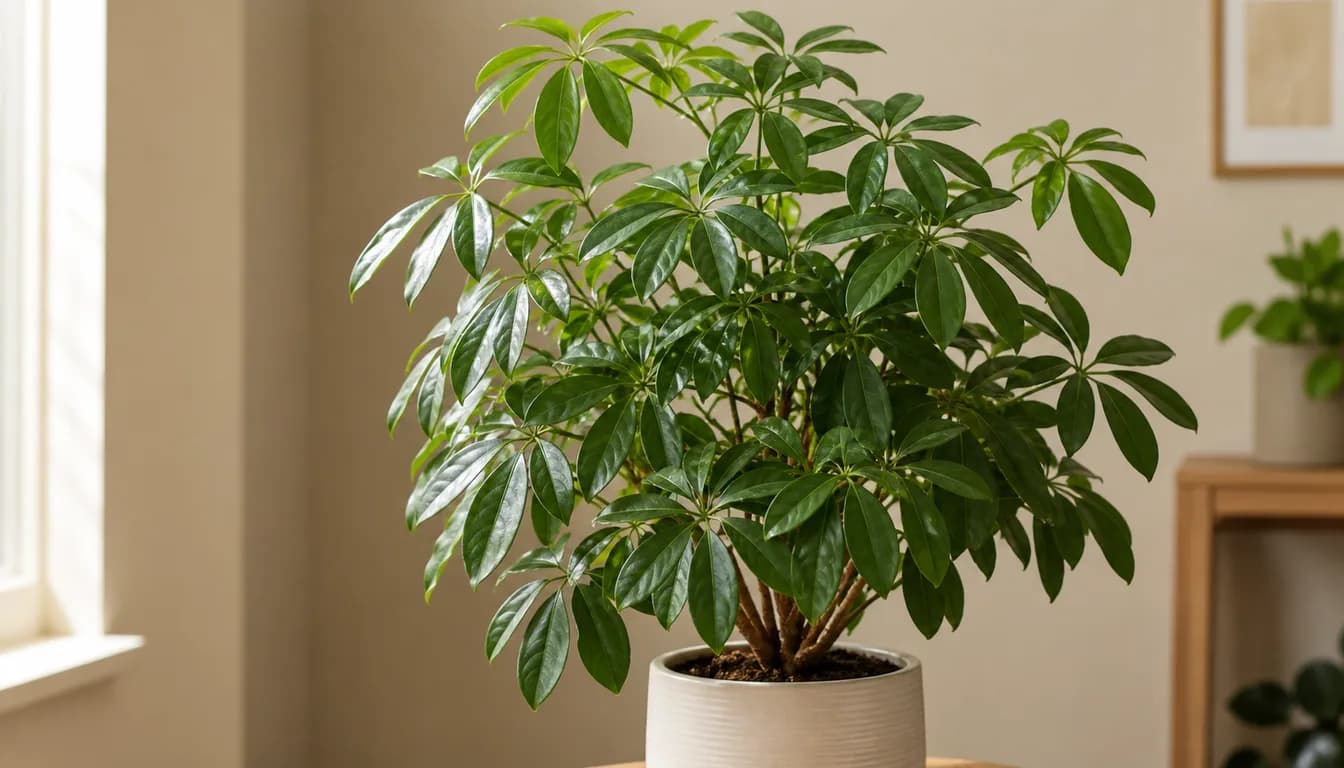
Schefflera
Schefflera is an indoor umbrella tree that grows fast when light, pruning, and pot size stay in balance. The care problem is not keeping it alive; the real
 Houseplants
Bird Of Paradise
Bold, paddle-shaped leaves and crane-like orange and blue flowers make the Bird of Paradise a statement houseplant. With strong light, warm indoor temperatu
 Houseplants
Majesty Palm
Majesty Palm gives a room soft resort-style fronds, but it is not a low-care palm. It needs bright indirect light, even root moisture, and humid air; dry ro
quiz
Frequently Asked Questions
Can Chinese Evergreen grow in low light?expand_more
Yes, especially green and silver types. It still needs some indirect light or a grow light; a windowless room is only a short-term display without added light.
How often should I water Chinese Evergreen?expand_more
Water when the top 1-2 inches of mix dry and the pot feels lighter. In low light or winter, wait longer because the plant drinks more slowly.
Why are my Chinese Evergreen leaves turning yellow?expand_more
One old lower leaf can be normal. Several yellow leaves, especially with wet soil, usually point to overwatering, cold roots, or slow drainage.
Is Chinese Evergreen safe for cats and dogs?expand_more
No. Keep it away from pets that chew plants because the leaves contain irritating calcium oxalate crystals.
How do I propagate Chinese Evergreen?expand_more
Divide a crowded clump during active growth. Each division should have roots and several healthy leaves before it goes into its own small pot.