
St. Augustine Grass in Shade: When Repair Makes Sense
St. Augustine can grow in partial shade, but the cultivar and the site determine whether it will stay dense. A lawn that thins beneath a maturing tree may have too little light, competition for moisture, or several problems together. More fertilizer or another layer of sod will not remove those limits.
Repair makes sense where the cause can be corrected without harming the tree. Where dense shade and exposed roots remain, a mulched area can protect the tree and end the cycle of replacing turf that cannot persist.
Cultivar and light set the limits
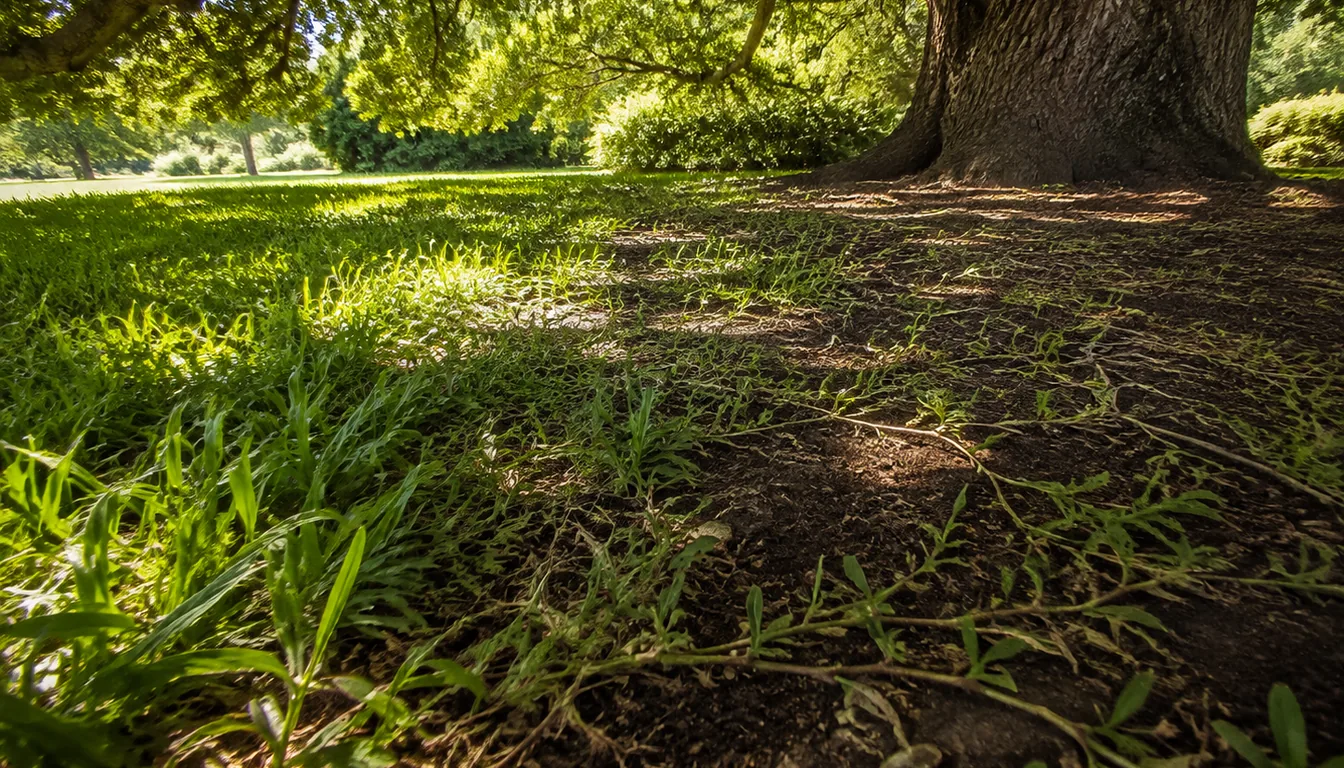
The name St. Augustine covers cultivars with different tolerances. UF/IFAS describes Floratam as relatively poor in shade and reports that it does not persist well with less than six hours of daily sunlight. That is a Floratam limitation, not a universal pass-or-fail test for every St. Augustine lawn.
Bitterblue has better shade tolerance, and Seville is another option for shady sites, although Seville is cold sensitive. Palmetto tolerates partial shade but not dense shade. A cultivar suited to a sheltered Florida yard may therefore be a poor replacement in a colder part of the species' range.
The useful light observation is what reaches the grass itself while the tree is fully leafed out. A bright view from a window can hide a lawn shaded by a fence, a low branch or another building. Scattered sun patches also move, so one sunny reading does not describe the whole day.
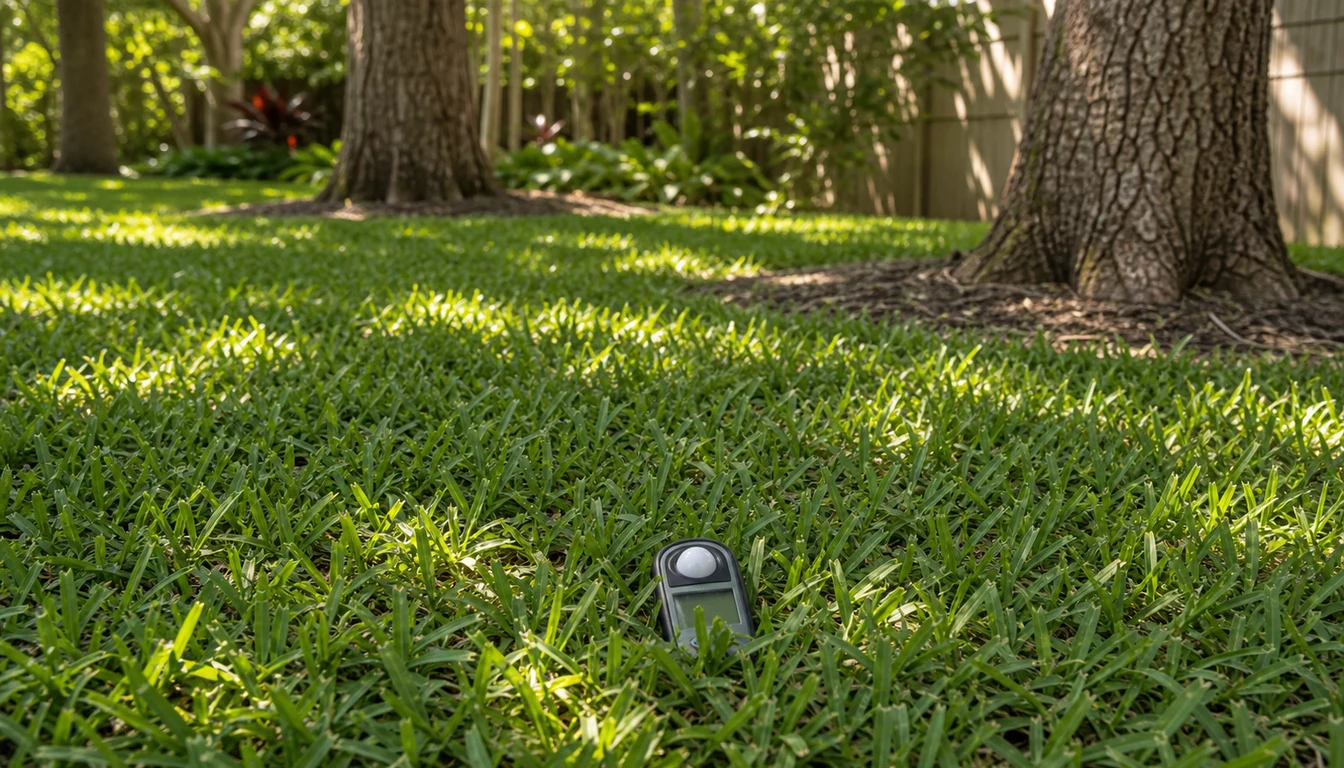
- Note when direct sunlight begins and ends at the failing patch, including interruptions from buildings and branches.
- Keep direct sunlight separate from filtered light. A few snapshots or a single light-meter reading cannot establish the day's total.
- Compare the patch with a healthier part of the same lawn, then revisit the pattern as foliage and the season change.
These observations help explain the site, but they do not produce a guaranteed survival threshold. Persistent thinning under an expanding canopy is evidence to investigate light limitation, especially if care and traffic have stayed similar.
A thin patch needs more than a shade diagnosis
Low light reduces the energy available to sustain grass growth and roots. That explains why a lawn can decline as a tree grows even though the homeowner has not changed the mowing or fertilizer routine.
The location alone does not establish the cause. Tree roots compete for moisture, while a poorly drained shaded corner may stay wet too long. Traffic and compacted soil can further limit rooting, and St. Augustine has poor tolerance for repeated wear. Sparse runners or a brown patch cannot reliably separate those problems from insects or disease.
| Observation | What it suggests | What it does not establish |
|---|---|---|
| Thinning follows the expanding canopy, with healthier turf beyond it | Reduced light may be contributing | That water, soil or pests are irrelevant |
| Folded or blue-gray leaves and lingering footprints | Water stress deserves attention | Why roots cannot supply enough water |
| Soil stays saturated between rain and irrigation | Drainage or excessive irrigation needs investigation | The identity of a root disease |
| A worn route or a former storage area matches the bare patch | Traffic or compaction may be involved | That aerating through tree roots is safe |
| Damage keeps spreading despite correcting care | Closer pest, root or disease examination is warranted | A specific diagnosis from patch shape alone |
A useful first comparison pairs the light pattern with soil moisture and recent events, such as irrigation changes, construction or repeated foot traffic. Moss, weeds and yellow leaves are clues about the setting, not stand-alone tests for shade, drainage or nutrient deficiency.
More lawn light must not come at the tree’s expense
Pruning is not automatically the right answer to a thinning lawn. Removing a branch may leave the patch shaded by the rest of the canopy or by a building. There is no reliable promise that raising a canopy by a set height will add a set number of sunlight hours.
An arborist can assess whether an appropriate cut would meaningfully change light at the patch and whether the tree can tolerate it. Tree species, condition and branch structure matter more than a lawn-driven percentage or a routine pruning interval. A healthy mature tree may be more valuable to the yard than the turf beneath it.
Do not cut exposed tree roots or bury them under added soil to make room for grass. UGA Extension explains that structural roots support the tree and that root injury can cause delayed decline or instability. Thick soil cover can also deprive roots of oxygen.
Where roots make mowing difficult, mulch removes the need to run a mower over them. Keeping mulch away from the trunk and preserving the existing soil level protects the tree while giving the lawn a practical stopping point.
Mowing and water adjustments follow the actual patch
Leaves capture the light that supports growth. Cutting shaded St. Augustine short removes some of that capacity, so a higher setting within the cultivar's recommended range can help. It cannot make deep shade suitable for turf.
For conventional rotary mowing, UF/IFAS recommends 3.5–4 inches for standard cultivars such as Floratam and Bitterblue. Seville has a lower growth habit and a recommended height of 2–2.5 inches. Applying the standard-cultivar setting to every dwarf lawn ignores a real difference in growth and thatch tendency.
Mowing frequency follows growth. A shaded patch may not need cutting whenever a sunny part does, but leaving it until a large amount must be removed creates another stress. Removing no more than about a third of the leaf length at one mowing and keeping the blade sharp limits that damage.
For water, the important distinction is between reduced drying in shade and competition from tree roots. Neither “always wet” nor “always dry” describes every tree-covered lawn. Soil moisture at the affected patch and the grass's condition are more useful than copying a sunny zone's timer setting.
For established Florida lawns, UF/IFAS describes watering as needed and applying roughly half to three-quarters of an inch per event. That is regional guidance for an irrigation event, not a weekly quota. Rain, soil infiltration, root depth and local restrictions affect its application. Newly planted plugs need a different establishment schedule.
Catch cans reveal what sprinklers actually deliver and whether coverage is uneven. If one dry area needs water while the shaded area is still moist, addressing that dry area separately avoids watering both for the same reason. An arbitrary percentage reduction in sprinkler runtime can leave uneven delivery unresolved.
Fertilizer cannot replace missing light
Grass in shade generally needs less fertilizer than grass in full sun. Extra nitrogen can encourage growth that the limited light cannot sustain, while excessive fertilizer and irrigation also favor thatch and some disease problems.
The appropriate rate still depends on location, soil conditions, the existing lawn and the product. UF/IFAS uses different annual nitrogen ranges for northern, central and southern Florida, then adjusts within those ranges for site conditions. A single annual amount for every shaded St. Augustine lawn loses that regional context.
A local lawn recommendation provides the starting rate and season, while the label supplies the product's nutrient concentration and application directions. A fertilizer calculator can convert a supported nutrient rate and measured lawn area into product weight. It cannot decide whether the shaded patch needs fertilizer in the first place.
Calibrating the spreader connects its setting and walking pace to a measured amount of product over a known area. Changing pace or the gate opening by eye can make the application uneven. Slow-release nitrogen changes nutrient delivery, but a slow-release or organic label does not make excessive application harmless.
Yellowing also needs interpretation. On high-pH sites, iron availability can affect color, and adding nitrogen does not correct that underlying condition. Soil testing and the pattern of decline help distinguish a nutrient issue from a patch whose main constraint is light.
Repair follows a corrected cause
Sod, plugs and sprigs are the established ways to plant St. Augustine. Sod covers bare soil immediately, but it still needs rooting before normal use. Plugs leave gaps that must close through runner growth, which depends on conditions rather than a promised number of weeks.
A small repair is reasonable when the site has enough light for the selected cultivar and the other cause of decline has been addressed. Replacing a shaded patch with the same cultivar under the same unchanged canopy repeats the original problem.
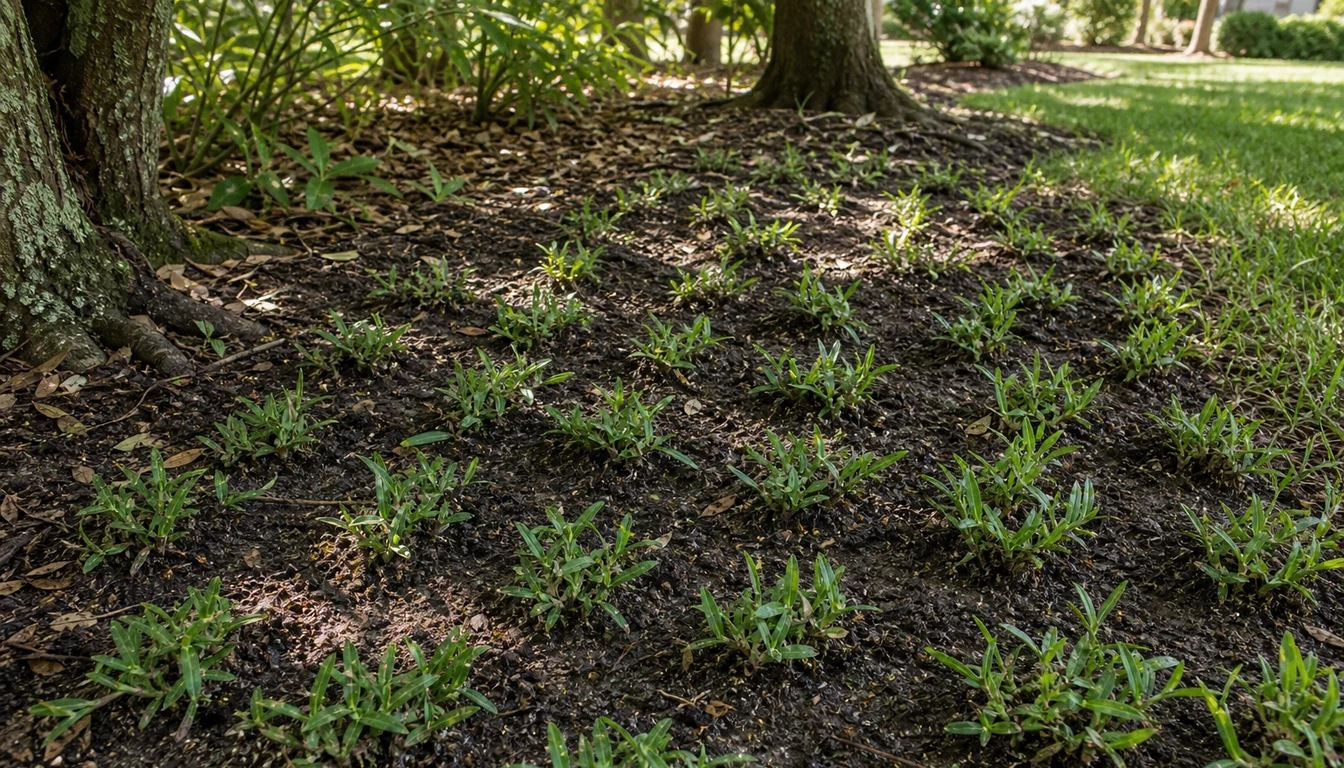
- Identify the existing cultivar when possible and confirm that replacement material fits the site's light and climate. Matching material avoids a conspicuous difference in texture or growth.
- Clear loose debris gently and provide soil contact without cutting tree roots, deeply tilling beneath the canopy or covering roots with fill. If preparation would require that damage, a different use for the area is more appropriate.
- Install healthy sod or plugs according to the supplier's cultivar-specific directions. Closer plugs reduce the distance runners must cover, but do not overcome inadequate light.
- Keep the new root zone moist during establishment, adjusting for actual rain and drying. As roots develop, reduce frequent light watering toward the established lawn's needs. Protect the repair from traffic while it roots.
New growth, rooting and the direction of the patch's edges are more useful progress signs than a fixed fill-in deadline. Slow growth during cool weather, poor rooting and persistent light limitation require different responses. Failure to close gaps in six or eight weeks does not, by itself, identify which one is responsible.
Timing changes with region and canopy
St. Augustine establishes most readily when it can grow actively, but “plant in summer” is incomplete advice. Heat, drought and freezing weather can each make establishment harder, and the best window differs across its range.
UF/IFAS illustrates that difference within Florida alone. It favors late fall, winter or spring for establishment in south Florida, while advising against cold winter conditions and hot, dry summer periods in central and north Florida. A USDA hardiness zone describes average winter extremes, not the current soil moisture, growing conditions or planting window.
Leaf emergence can also change a site's suitability after planting. A patch that looks promising beneath a leafless tree may receive much less light after the canopy fills. Observing the site under its limiting seasonal conditions avoids judging long-term suitability from a favorable week.
Tree work has its own timing and risk considerations. A convenient turf-establishment date does not establish the right pruning date for the tree above it.
When another treatment would be a guess
A patch that continues to expand after reasonable care adjustments deserves closer examination before another product is applied. St. Augustine can suffer from chinch bugs, leaf diseases and root problems, and those causes can overlap with environmental stress.
The St. Augustine profile explains the main pest clues and their limits. A specimen or local Extension assessment may be needed when observations cannot separate the causes. A response to extra water, or a lack of response, does not conclusively identify insects, drought or root disease.
Preventive treatment by guesswork can introduce another problem. UF/IFAS cautions that some lawn herbicides can damage landscape plants whose roots extend into the treated area. The target weed, grass cultivar, surrounding plants and label restrictions all matter before treatment.
Similarly, aggressive dethatching is not a routine cure for a sparse lawn. It removes material and can injure turf, so the presence of an actual thatch layer and the grass's ability to recover matter. Bare soil between weak runners is not evidence that a dethatcher is needed.
Where mulch or another planting makes more sense
A permanent shaded area does not have to remain a failing lawn. Where dense shade cannot reasonably change, exposed roots prevent safe preparation, or normal foot traffic repeatedly destroys thin turf, replacing that part of the lawn can resolve a mismatch that care adjustments cannot.
Mulch protects exposed roots from mowing and leaves the tree's soil level intact. A shade planting is another possibility, but its water needs, local climate and mature size still have to fit the location. A plant that tolerates shade does not automatically tolerate dry tree-root competition or the same foot traffic as a path.
The practical boundary is where healthy turf can be maintained without repeatedly disturbing the tree or repairing the same unsuitable patch. It need not follow a fixed percentage of the yard or wait for a prescribed number of failed renovations. Keeping the viable lawn and giving the difficult area a better use is a sound outcome.
Sources & References
Related Guides
Best Time to Aerate and Overseed for a Thicker Lawn
Most lawns never reach their potential because aeration and overseeding happen at the wrong time.
11 min read
Best Time to Overseed a Northeast Lawn for Thick Turf
Overseeding in the Northeast is all about catching that short window when soil is warm, air is…
11 min read
Can You Overseed a Lawn Without Aerating It First?
Thin turf and bare patches do not always mean you need to rent an aerator.
11 min read
Dethatching vs Aerating: Which Does Your Lawn Need?
Choose dethatching when a measured layer of thatch has become excessive.
16 min read
How Long After Planting Grass Seed Can You Walk On It Safely
Most new lawns fail not from bad seed, but from feet, paws, and mower wheels showing up too soon…
11 min read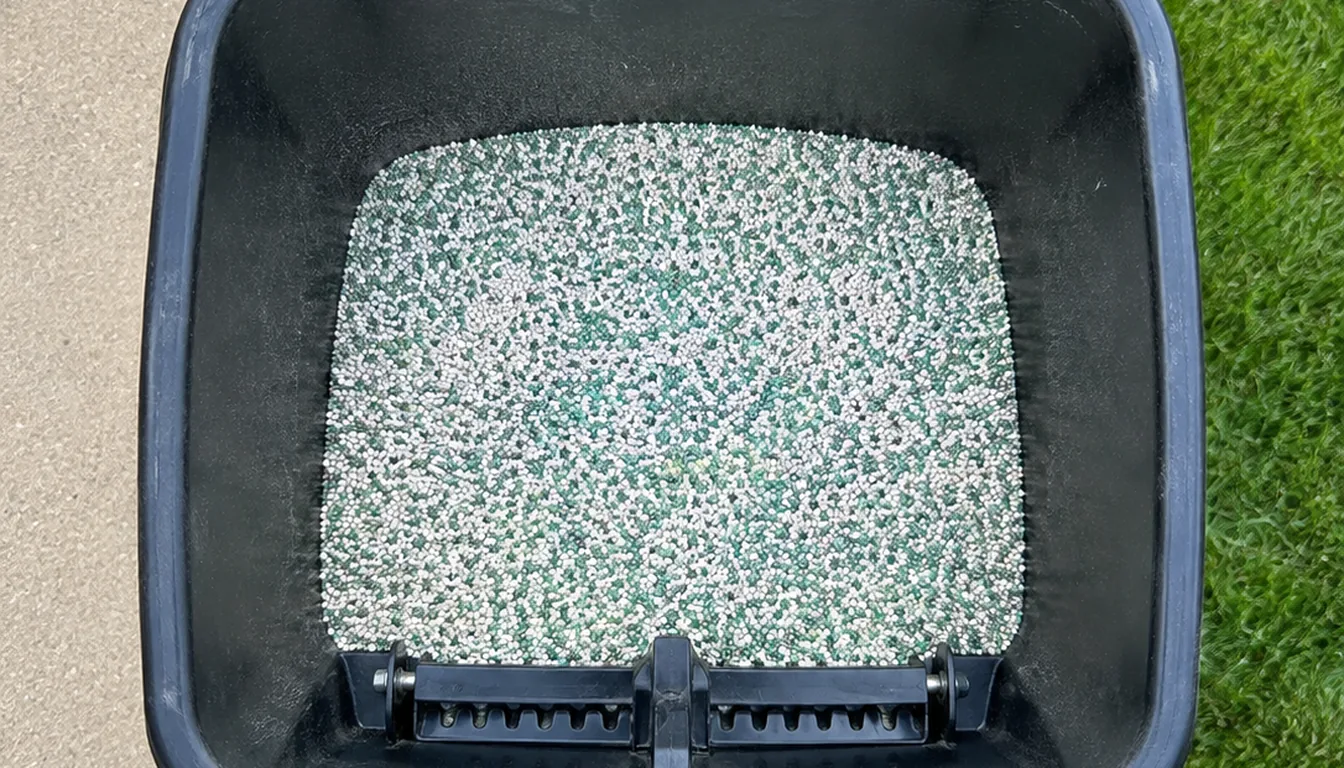
How to Fertilize a Lawn Without Burning It
Those yellow stripes and crispy patches after fertilizing are almost always user error, not bad…
14 min read