
What Is the Best Time to Overseed a Midwest Lawn?
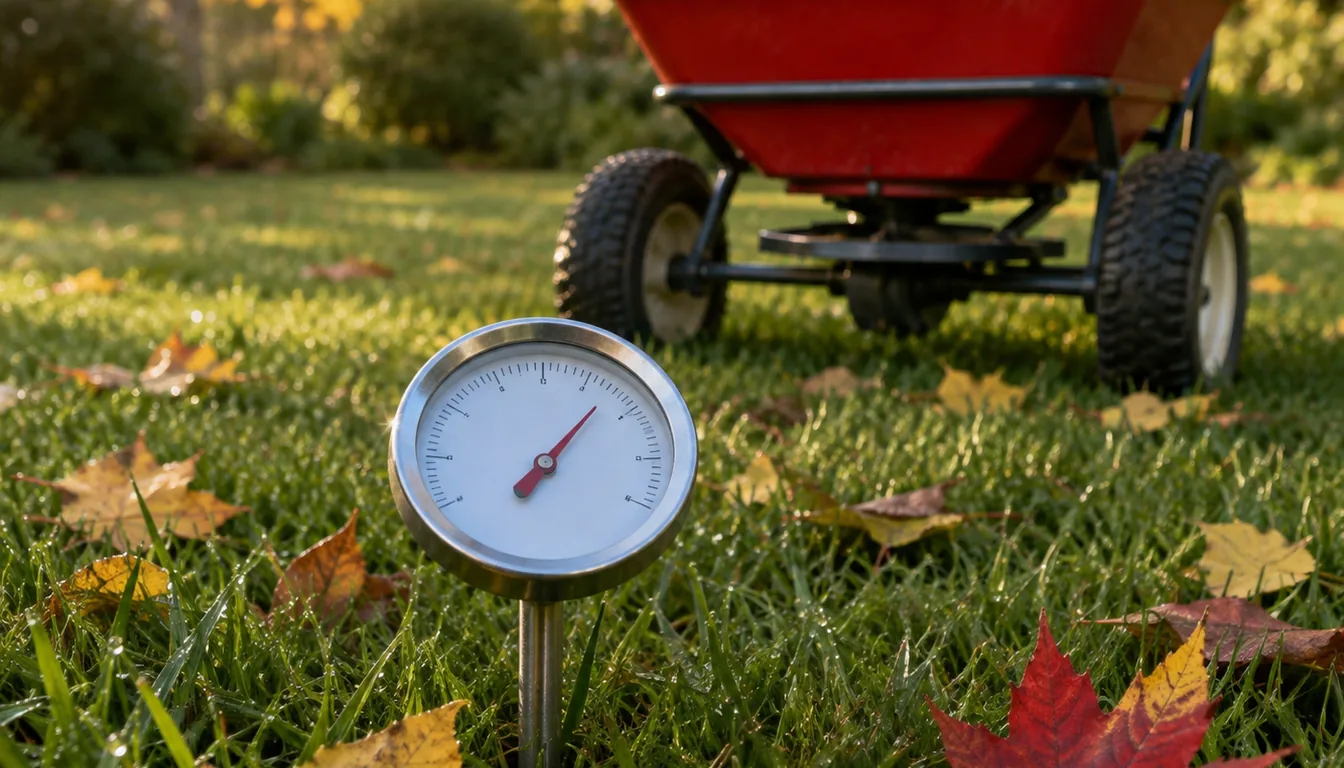
For most cool-season lawns in the Midwest, late summer to early fall is the best time to overseed.
Northern locations may begin in early or mid-August, much of the central Midwest works from mid-August into September, and southern transition areas often seed during September.
Those are starting points, not one regional deadline. Minnesota, southern Illinois, and Missouri have different calendars, and a slow-establishing Kentucky bluegrass blend needs more favorable weather ahead than a faster perennial ryegrass blend.
Use your state Extension window first, then choose a day when the soil can be prepared, irrigation is available, and extreme heat or a washing storm is not imminent.
The separate overseeding process covers application from mowing through seed placement.
At a glance
When Is the Best Time to Overseed in the Midwest?
The practical answer is the locally recommended late-summer or early-fall seeding period for cool-season turf.
Warm soil supports germination while cooler air reduces the drying pressure that young grass faces in midsummer.
- Main season
- Late summer to early fall for permanent cool-season lawns
- Northern start
- Often early to mid-August
- Central start
- Commonly mid- to late August
- Southern transition start
- Often late August into September
- Best local authority
- Your state or county Extension lawn calendar
- Poor shortcut
- USDA plant hardiness zone alone
A USDA hardiness zone describes average annual extreme minimum temperature.
It does not tell you when this year's heat will break, how wet the seedbed is, or how soon a particular grass must establish.
The same zone can also cross states whose Extension services recommend different dates. Use the state calendar as the outer boundary, then adjust within it for your species, weather, and ability to care for the seed.
Do not delay only because a daytime high still feels summery.
Late-summer soil commonly remains warm enough for germination after evenings begin to cool, which is one reason this period works so well.
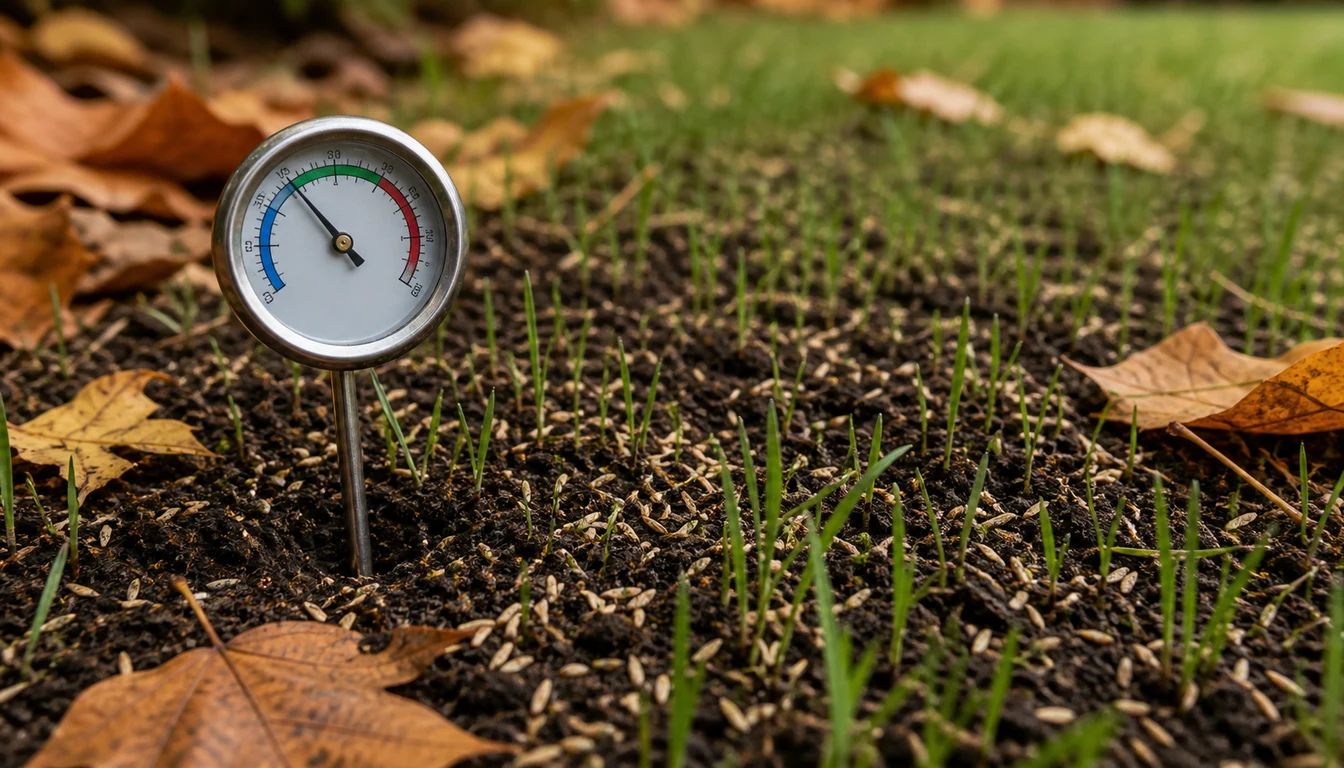
You also do not need a single magic soil-temperature reading before starting. A thermometer can reveal an unusually hot pavement edge or a cold shaded pocket, but it cannot replace the proven local calendar.
This timing applies to permanent cool-season lawns.
Seeding ryegrass over dormant warm-season turf for winter color is a different system, and repairing a permanent Bermuda grass or zoysia grass lawn belongs in its active warm-weather growing season.
What Is the Fall Overseeding Window in Your State?
Midwest Extension calendars overlap, but they do not produce one date for the entire region.
The ranges below are useful planning references for established cool-season lawns. Local weather, latitude, and the specific Extension publication still control the final choice.
| Area | Published starting window | How to use it |
|---|---|---|
| Minnesota | Mid-August to mid-September | Favor the earlier part for slower grass or northern sites |
| Wisconsin | Late August to early September | Prepare before the narrow prime period arrives |
| Iowa | Mid-August to mid-September | Central and southern sites may retain a little more fall time |
| Northern Illinois | Early August to early September | Start earlier than the rest of Illinois |
| Central Illinois | Mid-August to mid-September | Use weather and species to choose within the range |
| Southern Illinois | September | Do not copy the northern Illinois start date |
| Indiana | About August 15 to September 15 | Northern Indiana generally begins first |
| Kansas | September for cool-season lawns | Heat and water availability can decide the workable week |
| Missouri | About August 25 to October 10 | Earlier in the range gives seedlings more establishment time |
These dates are not promises that every day in the range is equally good.
A week of extreme heat, saturated soil, a regional watering restriction, or an approaching downpour can make a technically correct date a poor planting day.
The table also should not be stretched to every place called the Midwest. Michigan, Ohio, Nebraska, North Dakota, and South Dakota gardeners should use their own state or county Extension recommendation rather than borrowing the closest row.
If two trustworthy local publications give slightly different dates, look at what each one covers. A new-lawn seeding calendar, an overseeding recommendation, and a dormant-seeding article may intentionally use different windows.
Start preparation before the opening date.
Soil testing, weed-treatment intervals, irrigation repairs, seed shopping, and equipment rental can take longer than expected.
Arriving at the first suitable week with the site ready is more valuable than discovering the ideal window after a herbicide label or broken sprinkler forces a delay.
Why Does Late Summer Beat Spring for Cool-Season Grass?
Late summer combines warm soil with a trend toward cooler nights.
Seed can germinate while the new plants move into weeks of favorable cool-season growth instead of immediately facing summer heat.
Annual warm-season weeds also become less aggressive as fall approaches. In spring, desirable grass seedlings and crabgrass often try to occupy the same open soil, and many crabgrass preventers cannot be used at normal seeding time.
Existing turf still matters.
A dense canopy can intercept seed, while a badly weakened lawn may leave exposed soil vulnerable to erosion. Neither condition is fixed by choosing the right date alone.
Fall timing gives you a better chance to open the canopy and maintain surface moisture without asking seedlings to survive the hottest part of the year. It does not remove the need for seed-to-soil contact, suitable species, and reliable water.
Spring remains a valid fallback for bare soil that cannot wait, erosion-prone areas, winter damage, and small repairs.
The tradeoff is a shorter path from germination to heat, plus a harder weed-control decision.
That tradeoff is why Extension sources commonly call spring the second choice for major cool-season seeding. It can succeed with early timing and careful care, but it offers less room for delay.
Midsummer is the weakest default.
High evaporative demand can dry the shallow seed zone quickly, and tender roots have little reserve when heat arrives before they are established.
Which Grass Seed Fits the Time You Have Left?
A seed label can contain several grasses that emerge and mature at different speeds.
That means the last sensible date for one blend may be too late for another, even on the same lawn.
Perennial ryegrass is valued for relatively fast emergence and can provide quicker cover. Kentucky bluegrass establishes more slowly but can spread later through rhizomes, while tall fescue forms durable bunches when its cultivars suit the site.
Fine fescues can contribute shade tolerance and lower-input performance in suitable climates. They are not a universal repair for deep shade, where tree roots and inadequate light may still prevent lasting turf.
| Grass in the blend | Establishment tendency | Timing implication |
|---|---|---|
| Perennial ryegrass | Faster emergence and early cover | Useful where the local window is shorter, if it fits the permanent lawn |
| Tall fescue | Bunch-forming plants with moderate establishment | Leave enough fall growth for individual plants to root and tiller |
| Kentucky bluegrass | Slower establishment with later rhizome spread | Favor the earlier part of the local window |
| Fine fescue | Species vary, often used for lower-input or partly shaded sites | Match the exact species and cultivar to local recommendations |
Do not add a fast grass simply to make the lawn green sooner.
Blade width, color, disease response, mowing needs, and long-term climate fit still determine whether the repair will look and perform like the surrounding turf.
Read the analysis on the bag for named species and cultivars, germination percentage, weed seed, other crop seed, inert matter, and lot information. A vague “sun and shade” picture is not enough to judge what will remain after establishment.
When the season is late, ask whether a locally recommended faster component can join the existing lawn without creating a permanent mismatch. The perennial ryegrass and Kentucky bluegrass comparison helps explain why the quicker-looking choice and the longer-term spreading choice are not interchangeable.
Is the Lawn Ready to Be Overseeded?
A thin lawn is a symptom.
Overseeding makes sense when desirable grass still forms a useful base and the cause of thinning can be corrected, but a yard dominated by perennial weeds or the wrong grass may need renovation instead.
- Desirable turf still covers much of the area
- The grass species fits the site's climate, sun, and intended use
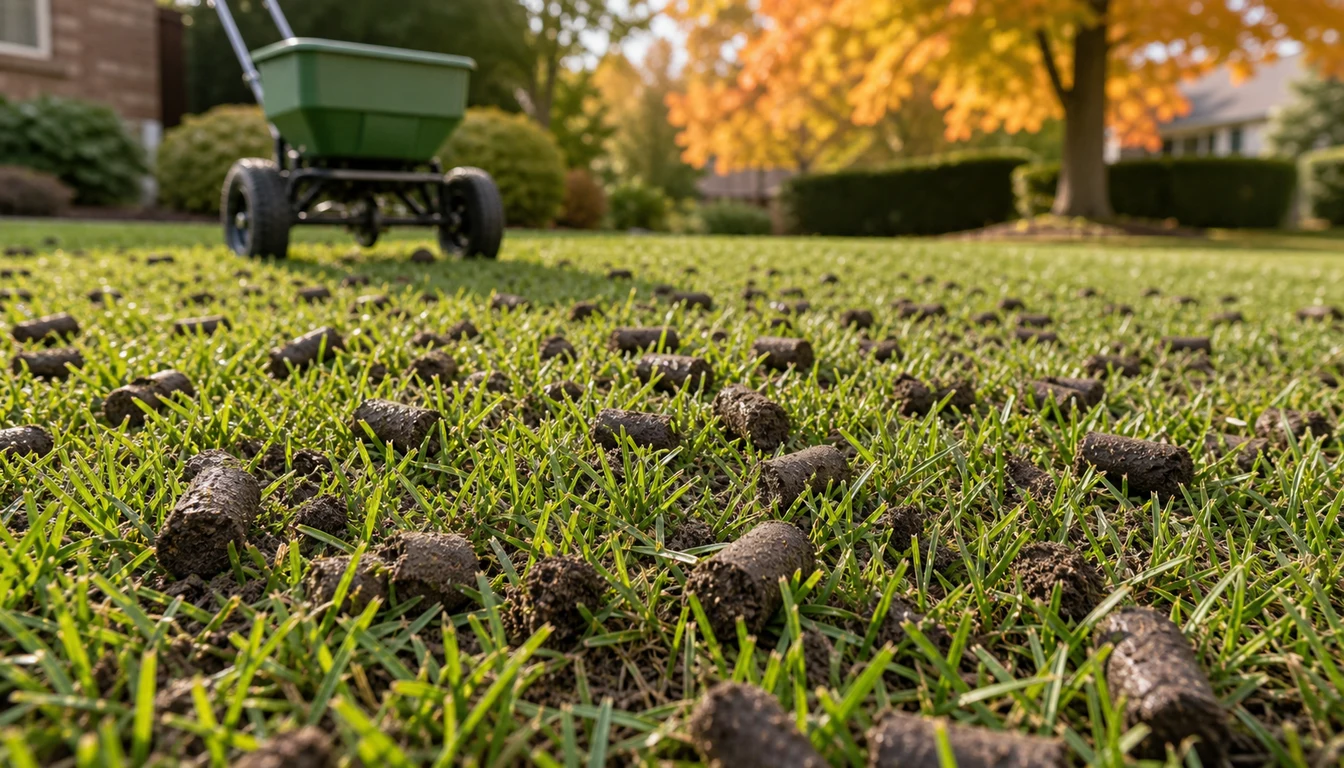
- Leaves, clippings, or thatch can be opened so seed reaches soil
- Drainage problems and concentrated traffic have been corrected
- Irrigation can keep the seed zone moist through uneven fall weather
- No recent pesticide label blocks seeding during the chosen window
- Enough locally favorable growing time remains for the selected blend
Map the failure pattern before buying seed. Thin strips beside pavement suggest heat or irrigation coverage problems, bare routes suggest traffic or compaction, and loss beneath trees points toward light and root competition.
A soil test can guide lime and nutrient decisions, but it cannot diagnose every pattern.
Dig several small plugs and look for compacted layers, poor rooting, buried debris, saturated soil, or a dry layer beneath apparently wet leaves.
Core aeration belongs where soil is compacted. If the ground accepts a screwdriver easily and roots penetrate well, aggressive aeration may add cost and surface disruption without solving the real problem.
If aeration is justified, use equipment that removes cores and plan the work while the desirable grass is actively growing. The aeration timing decision depends on grass type and soil condition, not the overseeding date alone.
Choose spot repair when only a few isolated areas failed.
Choose renovation when weeds, unsuitable turf, grading problems, or broad loss make the remaining stand a poor foundation.
How Should Weather Change the Exact Seeding Day?
Once you are inside the local Extension window, use the forecast to select a workable stretch.
You need enough moisture control for germination and enough favorable weather afterward for seedlings to become established.
Avoid broadcasting immediately before a storm likely to move soil or seed. A gentle rain can help settle the surface, but intense runoff can carry seed into low spots and leave streaks on slopes.
An unusual hot spell is another reason to wait a few days when the calendar allows.
Heat does not make every fall seeding fail, but it increases how often the shallow seedbed must be checked and raises the cost of missed irrigation.
Soil should be workable rather than muddy, crusted, or powder-dry. A soil thermometer can reveal meaningful differences between a sunny pavement edge and a shaded low area, yet a national germination range should not overrule your local Extension dates.
First-frost averages provide context, not a countdown guarantee.
Frost arrives on different dates each year, and grass species differ in how long they need between emergence and winter stress.
Use the published local closing date instead of subtracting one universal number of weeks from the average frost date. Favor the earlier side for slower blends, and contact county Extension when a late project falls between fall seeding and dormant seeding.
Microclimates change aftercare more reliably than they change the regional calendar.
South- and west-facing slopes dry quickly. Shaded soil may stay wet, windy open sites lose moisture, and pavement can heat a narrow edge.
Treat those areas as separate irrigation zones if necessary. Moving the entire lawn's planting date because one strip behaves differently is less useful than correcting that strip's site problem.
Can You Overseed in Spring or Use Dormant Seeding?
Spring and dormant seeding solve different problems.
Spring uses the first workable cool-season growth period, while dormant seeding places seed after conditions are cold enough to prevent fall germination so it can emerge later.
| Option | Best use | Main advantage | Main risk |
|---|---|---|---|
| Normal fall overseeding | A planned repair within the local Extension window | Long favorable establishment period before summer | Can fail if started too late or without irrigation |
| Early spring seeding | Bare soil, winter injury, or repair that cannot wait | Seedlings begin during cool-season growth | Weed competition and approaching summer heat reduce the margin |
| Dormant seeding | Selected northern sites after soil is cold enough to prevent germination | Seed is in place for early spring conditions | Warm spells, runoff, erosion, and variable success can expose or kill seed |
| Wait for next fall | A late project with no urgent soil-cover need | Avoids spending seed in a poor establishment window | Thin areas remain for another season |
For spring work, seed as early as local guidance and workable soil allow. Do not cultivate saturated ground, and confirm that the spring weed-control plan is compatible with new seed.
Dormant seeding is not simply late overseeding.
If seed germinates during a warm fall interval and tender plants are then exposed to winter, the project can fail before spring.
Northern Extension sources tend to describe dormant seeding as more viable than southern transition-state sources, but even there results vary. Snowmelt, freeze-thaw movement, birds, erosion, and spring weather all affect the outcome.
Use county Extension guidance for the actual dormant-seeding date and site method. Slopes, drainage channels, and bare areas that shed water are poor places to make a casual trial.
Waiting is a valid lawn-care decision.
If the site is stable and the reliable window has closed, correct drainage, traffic, weeds, or irrigation now and arrive prepared for the next late-summer opening.
What Must Be Settled Before You Open the Seed Bag?
Pesticide timing can overrule the calendar. Many preemergence herbicides stop desirable grass seedlings along with annual weeds, and some postemergence products require a waiting interval before or after seeding.
Confirm seed-to-soil contact next. Seed resting on tall leaves, matted clippings, or a thick surface layer can dry without rooting, even when it is spread on the ideal date.
Mow within the safe range for the existing grass, remove loose debris, and expose soil with the least aggressive method that fixes the actual barrier. Dethatching and core aeration should respond to measured thatch or compaction rather than being automatic purchases.
Measure the lawn and use the overseeding rate printed for that species or blend.
Extra seed can crowd seedlings, while too little leaves avoidable gaps.
Set up irrigation before seeding. Run each zone with straight-sided containers to find dry corners and excessive overlap, then repair clogged nozzles or poor coverage while the lawn can still tolerate foot traffic.
A soil test should decide whether lime or nutrients are needed.
Starter fertilizer is not an automatic requirement, and phosphorus rules vary by location. Use the soil recommendation, local regulation, and product label.
Finally, protect access. Plan routes for pets, children, deliveries, and mowing so the young area is not repeatedly crossed.
When those conditions are not ready, postponing several days inside the window usually costs less than sowing immediately and repeating the entire job.
How Do You Protect Seedlings After Overseeding?
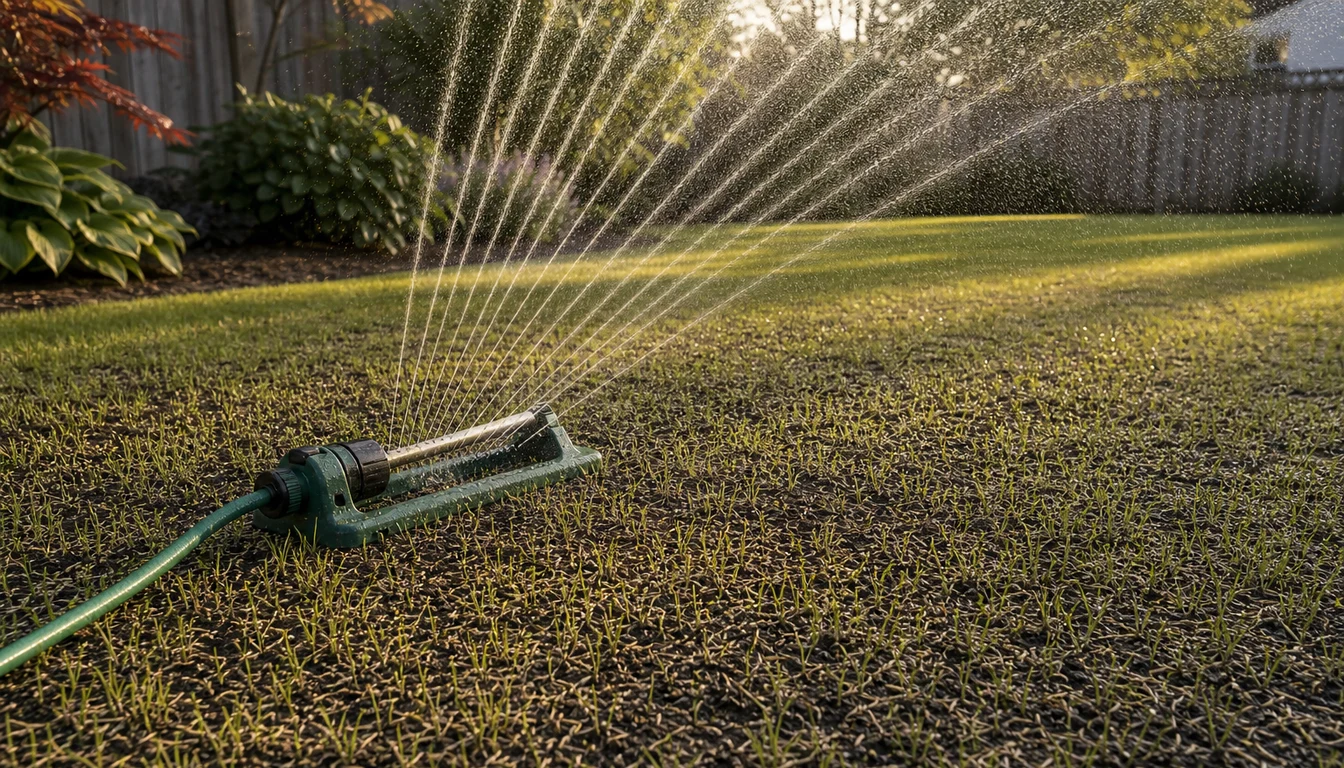
Fresh seed needs the upper soil layer to remain evenly moist through germination.
There is no universal schedule of two, three, or four cycles per day because wind, shade, soil, sprinkler output, rain, slope, and species change the drying rate.
Check the surface several times during the first days. Water before the seed zone dries, applying only enough to moisten it without puddling, runoff, erosion, or seed movement.
The detailed new-grass watering plan explains how to move from surface moisture to deeper, less frequent watering as roots develop. Make that change gradually rather than switching seedlings directly to an established-lawn schedule.
Germination will not occur at one moment across a blend.
Protect later-emerging seed while avoiding saturated soil around grass that has already emerged.
Rain changes the next irrigation decision, but a wet driveway does not prove that useful water reached the soil beneath the canopy. Inspect several locations and account for tree cover and sprinkler shadows.
Existing grass may need mowing before every seedling looks mature. Follow the mowing readiness checks by confirming that the soil carries the mower without rutting, the blade is sharp, and turns do not pull weak plants.
Avoid heavy traffic until the new grass is rooted and tolerates normal mowing.
A green haze shows emergence, not a durable playing surface.
Do not apply a postemergence herbicide or another fertilizer by a generic number of days. Seedling-stage restrictions and mowing requirements differ among labels, while nutrient needs depend on the soil and the product already used.
What Should You Do If the Fall Window Is Closing?
Late in the season, the right decision depends on the lawn's condition, the blend, and whether the local fall deadline has passed. The answer may be to seed a small urgent area, use an approved dormant-seeding method later, or wait.
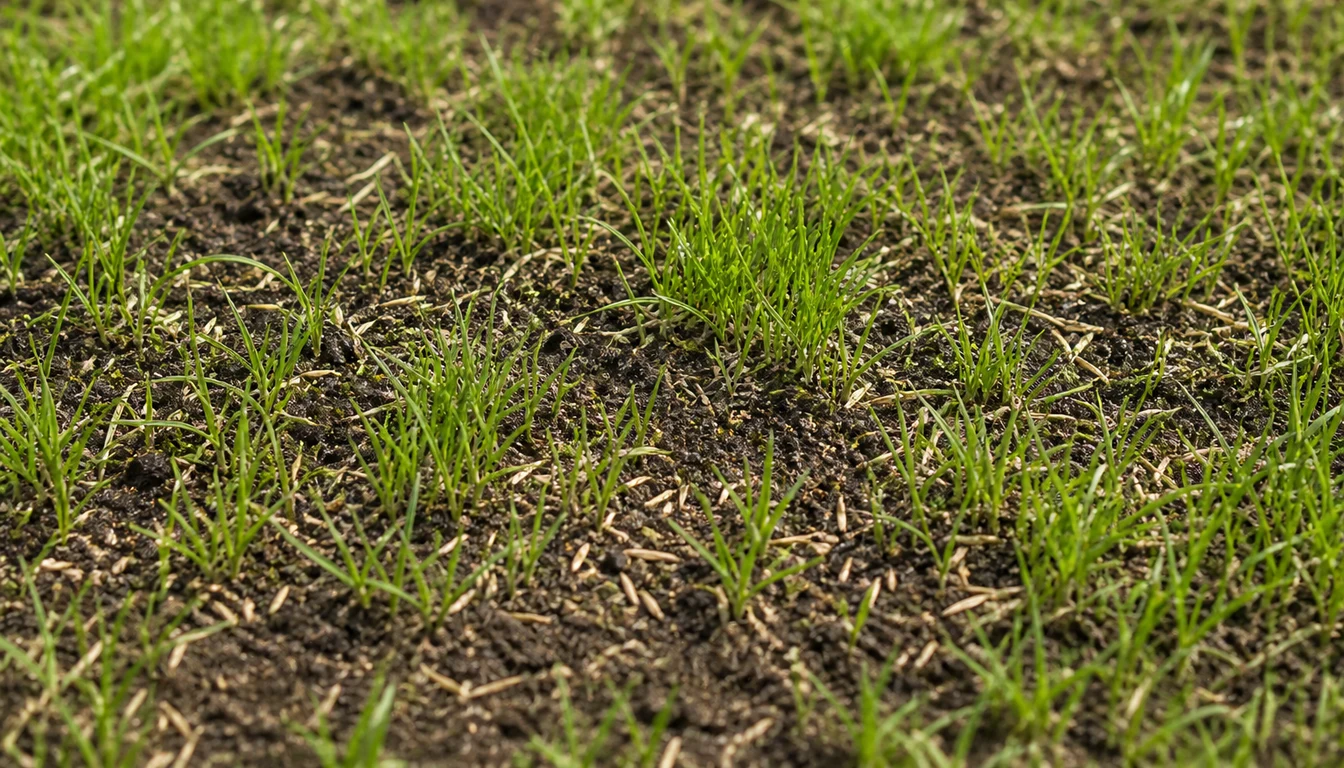
Inside the local window with irrigation ready
Seed now if the site is prepared and the forecast is workable.
Inside the window with a Kentucky bluegrass-heavy blend
Favor the earliest suitable day or ask Extension whether a faster compatible blend is wiser.
Past the normal window with stable thin turf
Wait for the next reliable seeding period and correct site problems first.
Past the window with bare erosion-prone soil
Ask county Extension about temporary cover, dormant seeding, or another stabilization method.
Recent herbicide conflicts with seeding
Follow the label interval even when it means missing the preferred calendar.
Seed already washed into rows
Correct runoff and redistribute or patch only when the remaining local window supports establishment.
Do not keep adding seed to a bare patch without finding the pattern.
Seed that emerged everywhere except a sprinkler edge points toward coverage. Failure along a footpath points toward traffic, while loss beneath a tree points toward light or root competition.
Rake or disturb young areas only when the benefit outweighs the damage to seedlings already present. Broad reseeding can uproot surviving plants and reset watering for the whole lawn.
Keep the seed label, date, application rate, weather notes, and irrigation observations. That record makes a failed strip easier to diagnose and prevents a second application at an unknown rate.
Judge the project by established grass that survives mowing and normal irrigation, not by the first flush of green. A permanent repair matters more than quick color before winter.
Pro Tips
- Use your state or county Extension seeding window before consulting hardiness zones or a national soil-temperature chart.
- Prepare irrigation, seed, equipment, and pesticide records before the local window opens.
- Choose the earlier part of the window for slower-establishing blends and northern locations.
- Treat spring as a useful fallback with more weed and summer-heat risk, not an equal default.
- Use dormant seeding only when local guidance supports the site and the soil is cold enough to prevent fall germination.
- Keep the seed zone evenly moist by observation instead of following a fixed daily watering count.
- Let the pesticide label and soil test decide chemical and nutrient timing.
Frequently Asked Questions
What month is best to overseed a Midwest lawn?
September is central to many Midwest calendars, but it is not the best single answer for every state. Northern Illinois may begin in early August, Minnesota and Iowa commonly use mid-August to mid-September, and Missouri's published range extends later.
Use the local Extension range and favor its earlier side for northern sites or slower-establishing grass.
Is October too late to overseed in the Midwest?
October is beyond the normal cool-season overseeding window in much of the northern and central Midwest, while parts of Missouri may still fall within published early-October guidance. A warm afternoon does not prove enough establishment time remains.
Check county Extension guidance before spending seed. If the reliable window has closed, waiting or using a locally approved dormant-seeding method may be safer.
Can I overseed a Midwest lawn in spring?
Yes. Early spring can repair bare soil and winter damage, but spring seedlings face increasing weed competition and summer heat sooner than fall seedlings.
Seed as early as local guidance and workable soil allow, and make sure any crabgrass-control product is labeled for use with new seeding.
Should I aerate before overseeding?
Aerate when compaction limits roots or prevents good surface preparation. A lawn with open soil, healthy rooting, and no compaction does not need aeration merely because seed will be applied.
If you aerate, use a core aerator during active grass growth and still distribute seed for broad soil contact rather than concentrating it in deep holes.
What soil temperature is best for Midwest overseeding?
There is no single reading that should replace your local seeding calendar. Soil temperature can help identify unusually hot or cold parts of a yard, but species, forecast, moisture, and remaining growing time still matter.
Start with state or county Extension dates, then use site observations to select a workable day within that window.
Can I apply crabgrass preventer and overseed at the same time?
Many crabgrass preventers also stop desirable grass seedlings, so the normal answer is no unless the exact label permits seeding at that timing. Products and active ingredients have different intervals.
Read the label for the turf species, rate, and before-or-after-seeding restriction. Missing the seeding window is safer than ignoring that legal direction.
Sources & References
- University of Minnesota Extension: Renovating a Lawn for Quality and Sustainability
- University of Illinois Extension: Planting a New Lawn
- Iowa State University Extension: Late Summer and Fall Lawn Care
- Purdue Extension: Now Is the Time to Improve Your Home Lawn
- University of Wisconsin Extension: Wisconsin Lawn Care Calendar
- University of Missouri Extension: Cool-Season Grasses: Lawn Establishment and Renovation
- Kansas State University Extension: Relieve Stress on Cool-Season Lawns in September
Related Guides
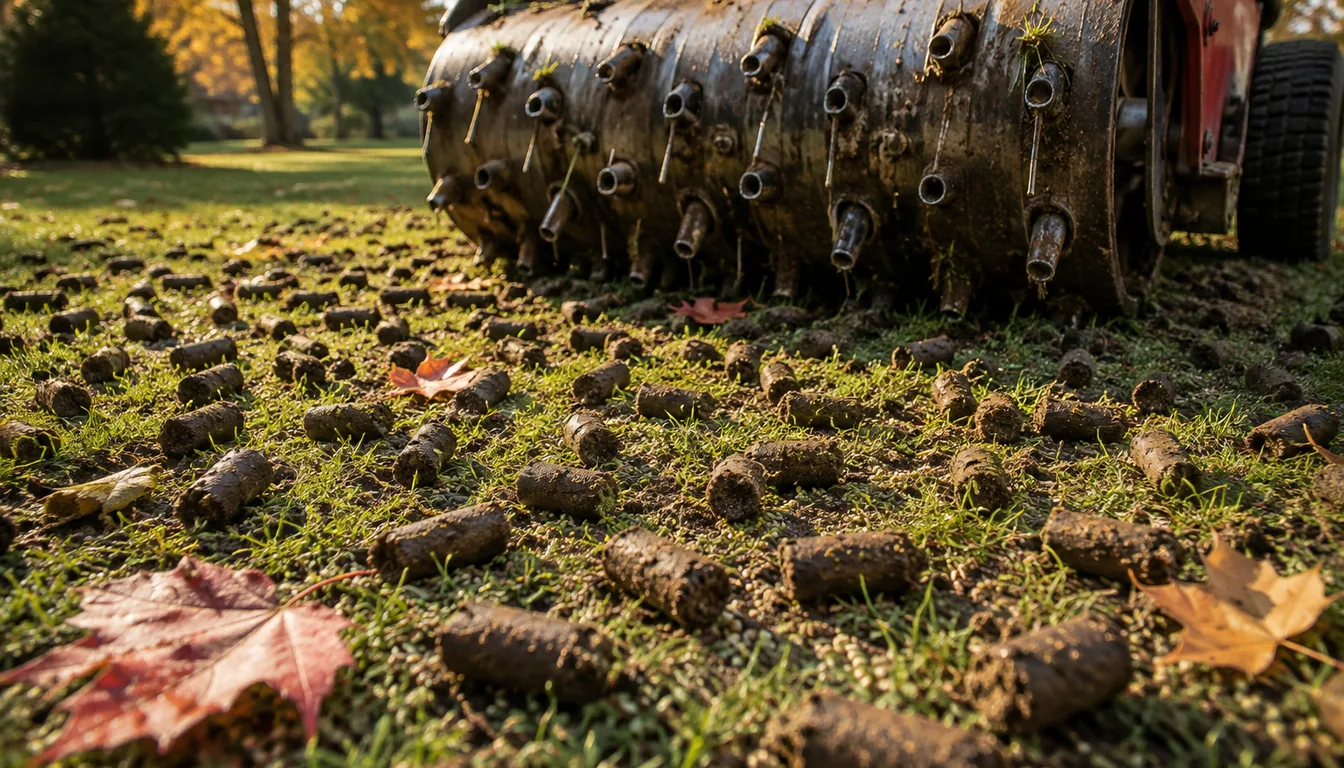
Best Time to Aerate and Overseed for a Thicker Lawn
Most lawns never reach their potential because aeration and overseeding happen at the wrong time.
11 min read
Best Time to Overseed a Northeast Lawn for Thick Turf
Overseeding in the Northeast is all about catching that short window when soil is warm, air is…
11 min read
Can You Overseed a Lawn Without Aerating It First?
Thin turf and bare patches do not always mean you need to rent an aerator.
11 min read
Dethatching vs Aerating: Which Does Your Lawn Need?
Choose dethatching when a measured layer of thatch has become excessive.
16 min read
How Long After Planting Grass Seed Can You Walk On It Safely
Most new lawns fail not from bad seed, but from feet, paws, and mower wheels showing up too soon…
11 min read
How to Fertilize a Lawn Without Burning It
Those yellow stripes and crispy patches after fertilizing are almost always user error, not bad…
14 min read