At a glance
- Nitrogen per feeding
- 1 lb or less per 1,000 sq ft
- Product for 1 lb of nitrogen
- 100 divided by the first number on the bag
- Cool-season timing
- Fall in most regional rows, with dates in the table
- Warm-season timing
- After green-up, while the grass is growing
- Burn repair
- Soak with 1 inch of water, two or three times
Start with your grass type, because the date and the number of feedings depend on it.
Is Your Lawn Warm-Season or Cool-Season Grass?
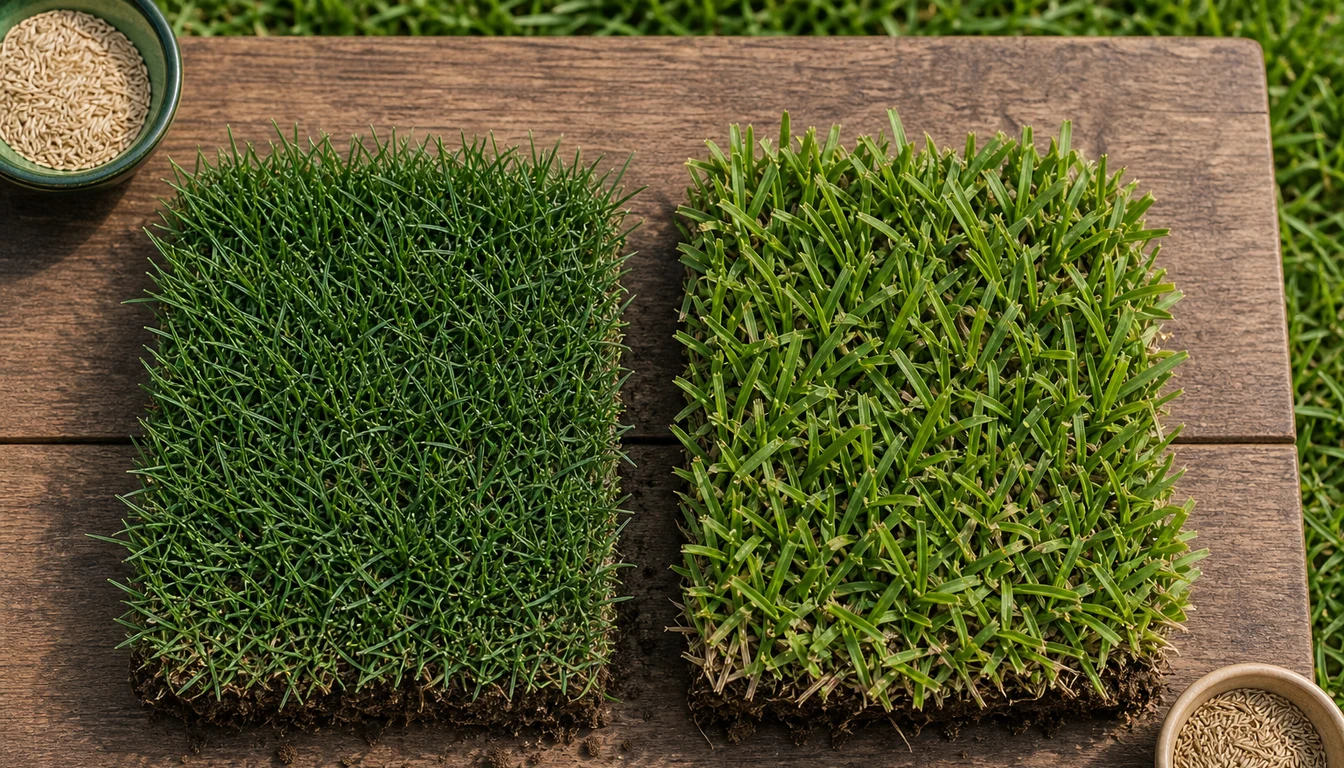
Warm-season and cool-season grasses grow in different parts of the year. Warm-season grasses such as bermudagrass, zoysiagrass, St. Augustinegrass, centipedegrass and bahiagrass grow best in summer, go dormant at the first heavy frost and turn brown, then green up slowly the next spring. Cool-season grasses such as tall fescue, Kentucky bluegrass, fine fescue and perennial ryegrass grow best in spring and fall, grow less in summer and stay reasonably green through winter.
Outside its growing season the grass is less likely to absorb the nutrients, which can then leach into nearby water. A bahia lawn that stays thin after feeding may have another problem, which bahia grass thinning covers.
When Should You Fertilize Each Type?
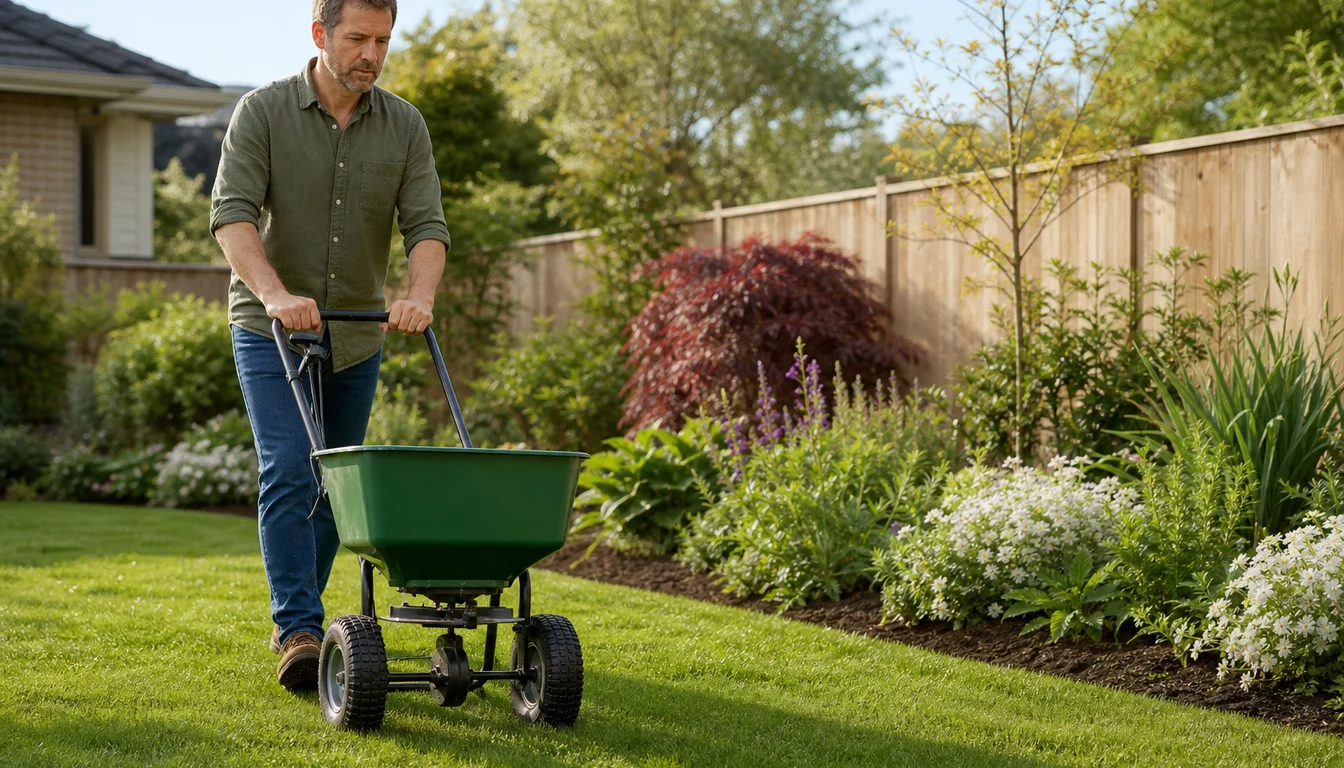
Extension calendars differ by region, and each row below is that state's own advice.
| Area and grass | Published timing | What else the source says |
|---|---|---|
| Minnesota lawns | Aug, Sept, early Oct and May-June, depending on upkeep | A watered lawn with clippings removed gets up to four feedings, and an unwatered lawn with clippings left gets one in Sept |
| Colorado, bluegrass | Late Sept to early Nov at lower altitudes, earlier in the mountains | The turf must be green and the soil moist when nitrogen goes on |
| North Carolina Piedmont, tall fescue | No nitrogen between the February feeding and September | One extra feeding up to 0.5 lb N per 1,000 sq ft, no later than April 15, only for color |
| South Carolina Piedmont, bermudagrass and zoysiagrass | First nitrogen once the grass has greened up and is growing, 3 to 5 lb N per year | Tall fescue and Kentucky bluegrass get 1 to 3 lb N per year in the Piedmont and mountains |
| North and Central Florida, lawn grass | About April through September | South Florida grass grows year-round |
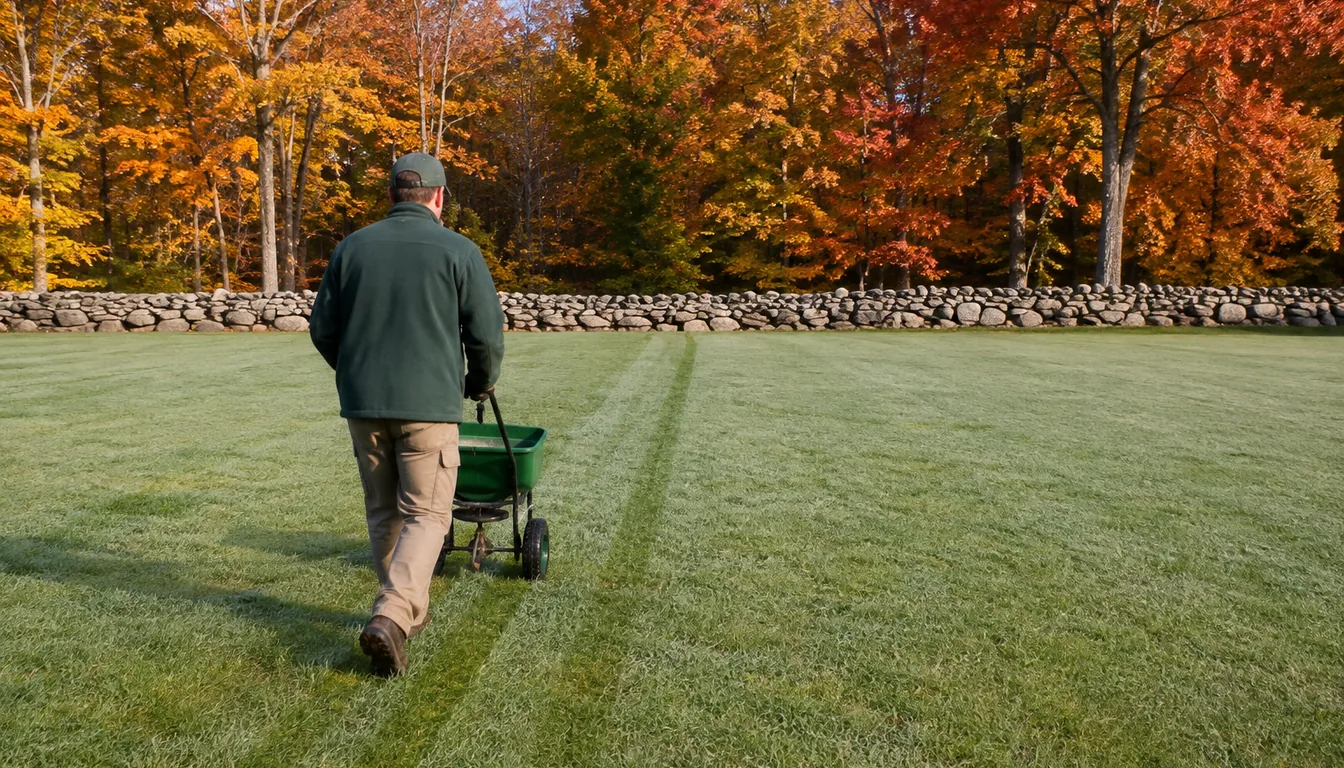
For cool-season grass, fall is the common window in the rows above. Colorado State calls it the best time to feed bluegrass, because the lawn goes into winter with a healthier root system and greens up earlier in spring without the excess top growth, or the mowing chores, that spring feeding brings.
Spring and summer feedings carry a risk, since high rates, or repeated low rates, of nitrogen on cool-season grass greatly increase the severity of brown patch, a disease that can kill the grass. The fall fertilizing guide covers that season in more detail.
A warm-season lawn gets its first nitrogen of the year once the grass has greened up and is growing, and skipping fall and winter nitrogen reduces winter injury. Texas lawns follow their own calendar in the Texas lawn fertilizer timing guide.
Maryland law restricts when lawn fertilizer can be applied, and many Florida cities, counties and communities have fertilizer ordinances that vary by location, so check your local rules before you pick a date.
Which Fertilizer and How Much Per Feeding?
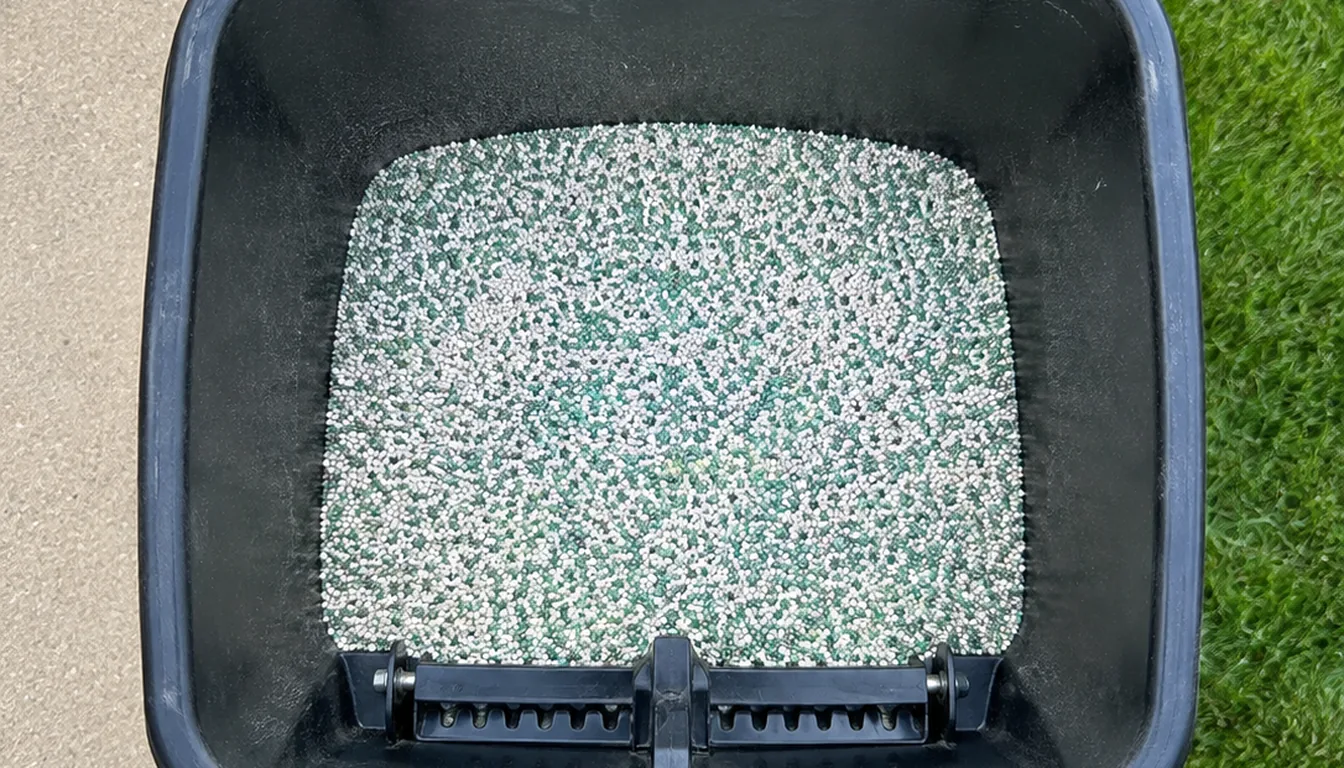
The three numbers on a bag give the percent of nitrogen, phosphorus (as phosphate) and potassium (as potash) by weight, and the first number is nitrogen. Nitrogen is the nutrient a home lawn needs on a regular basis, and it is also the one that often burns the lawn at an excessive rate. Phosphorus is a different case, because established lawns respond little to it and a soil test should show the need before you add any.
Extension guidance from Minnesota, South Carolina and Florida keeps a single feeding at 1 pound of nitrogen per 1,000 square feet or less, and Clemson uses half a pound for low-maintenance lawns. To turn pounds of nitrogen into pounds of product, divide 100 by the first number on the bag. A 16-4-8 bag needs 6.25 pounds per 1,000 square feet to deliver 1 pound of nitrogen, and 3.13 pounds to deliver half a pound.
Release speed changes how easily a product burns the lawn.
| Type | How it behaves | What to know |
|---|---|---|
| Quick release such as urea or ammonium nitrate | Turns into usable nutrients rapidly, so it goes on more often at low rates | Burning is particularly a problem with fast-release fertilizers |
| Slow release such as sulfur-coated urea, urea formaldehyde or IBDU | Releases over a period of time as microbes break it down | Can still burn, but nutrients usually do not build up to such high concentrations |
| Natural organics such as Milorganite or manure | Typically slow-release, with lower nutrient concentrations, so more product is needed per pound of nitrogen | The grass takes up the same nitrogen forms either way, after soil microbes convert organic nitrogen |
A soil test every two to three years shows how much lime, phosphorus and potassium an established lawn needs, and skipping the test can lead to under- or overfertilization. Leaving the clippings on the lawn may reduce the need for fertilizer by 20 to 30 percent.
How Do You Measure the Lawn and Calibrate the Spreader?
Every rate above is per 1,000 square feet, so the lawn's area comes first. Measure it yourself or read it from a property survey. Split the yard into rectangles and triangles, multiply length by width for each, and add them. For a 5,000 square foot lawn fed with the 16-4-8 bag, 6.25 pounds per thousand comes to about 31 pounds of product.
The label setting is a good starting point but is not always accurate, because the output changes with the size, weight and density of the product and with how fast you walk. A faster pace lowers the rate and a slower pace raises it, so the test below is worth repeating for each fertilizer and for each person who will push the spreader.
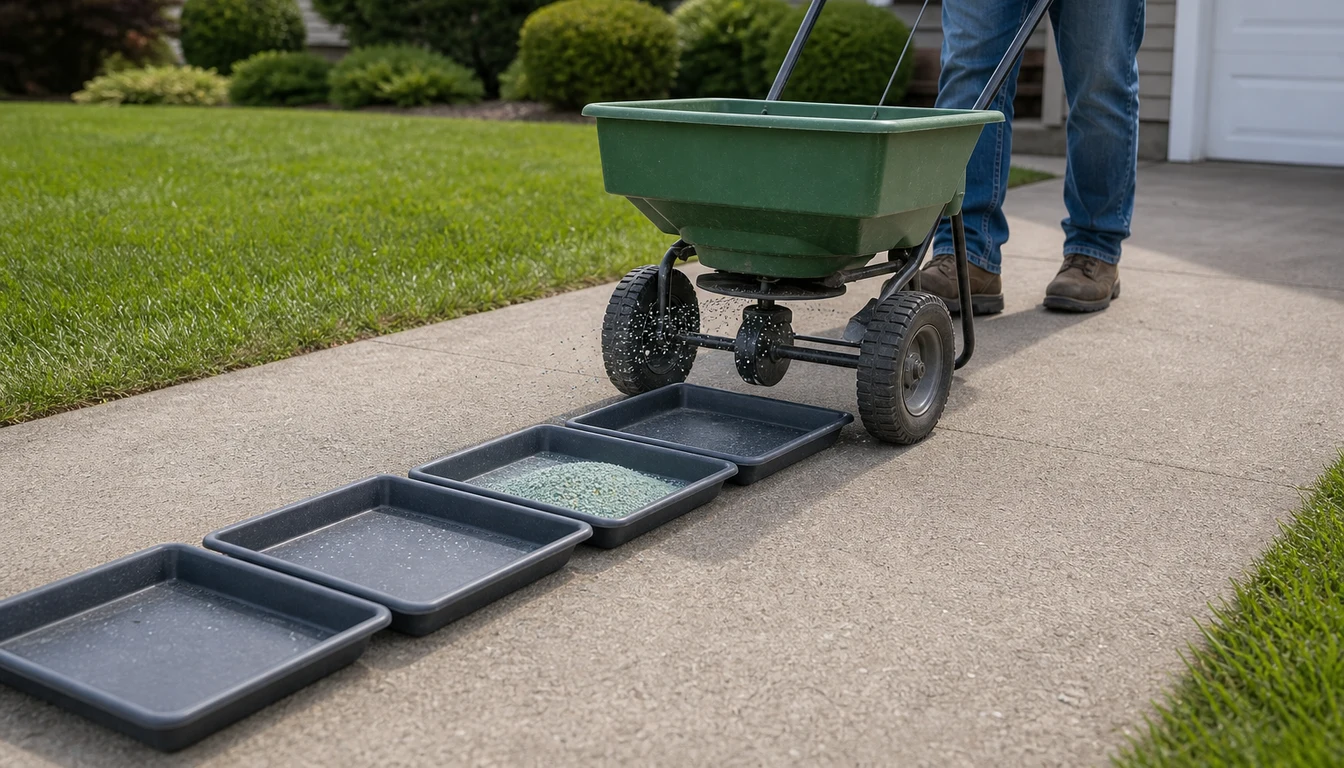
- Mark a test stripMeasure a straight line of 50 or 100 feet on pavement or an unused patch of lawn, and mark both ends.
- Work out the product for the stripMultiply the pounds per 1,000 square feet by the swath width times the strip length, then divide by 1,000. A drop spreader's swath is as wide as the spreader.
- Weigh a known amount into the hopperStart with the label setting and about 10 pounds of fertilizer.
- Walk the strip at your normal paceOpen the hopper at the first mark and close it at the second.
- Weigh what is leftSubtract it from the starting weight to see what went on, then adjust the dial and repeat until it matches the figure from step 2.
Plan two coverage passes at right angles to each other, each at half the rate, so every part of the lawn is covered twice. Clemson's example for a 1 pound rate puts 0.5 pound on each pass. A drop spreader suits smaller areas and the edges of the lawn, because it spreads only as wide as the hopper.
How Do You Apply Fertilizer and Water It In?
Burn is most common when a lawn is fertilized in hot weather or without being watered, and practically all inorganic fertilizers can burn grass foliage if they stay on it. Watering rinses the granules off the blades and into the soil, so water in unless the label says otherwise.
Before you spread
- Grass blades are dry and the weather is cooler, not hot
- The soil is moist, not dry and cold
- No heavy rain is forecast for the next 24 hours
- A deflector shield is on the spreader if you are working beside pavement
- A sprinkler or hose is ready to run as soon as you finish
Watering needs only enough to rinse the blades and wet the top 1/2 inch of soil.
Storms or flooding wash fertilizer away before the lawn can use it, and fertilizer left on a sidewalk, driveway or gutter adds substantially to nutrient runoff into lakes and streams. Sweep up spills instead of rinsing them away.
A new lawn is fed on a different schedule. NC State applies a starter fertilizer high in phosphorus when the site is prepared and fertilizes seedlings about six to eight weeks after they emerge, and UF/IFAS says to wait at least 30 to 60 days after planting so the roots can establish first.
How Do You Spot and Fix Fertilizer Burn?
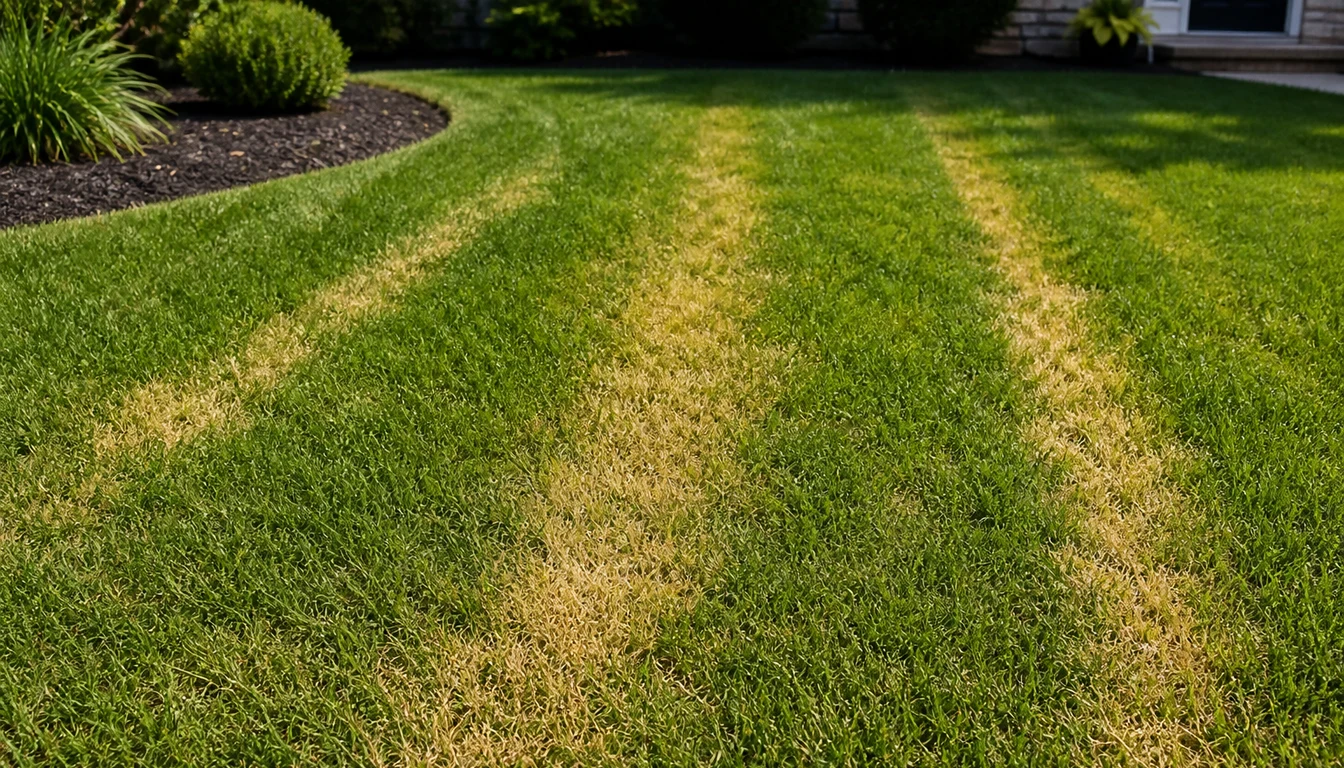
Fertilizer burn usually looks like drought stress, because excess fertilizer salts keep roots from absorbing or retaining enough water. Since the symptoms resemble drought, check whether you overlapped spreader passes, used a wrong spreader setting, or spilled fertilizer from the spreader or an open bag.
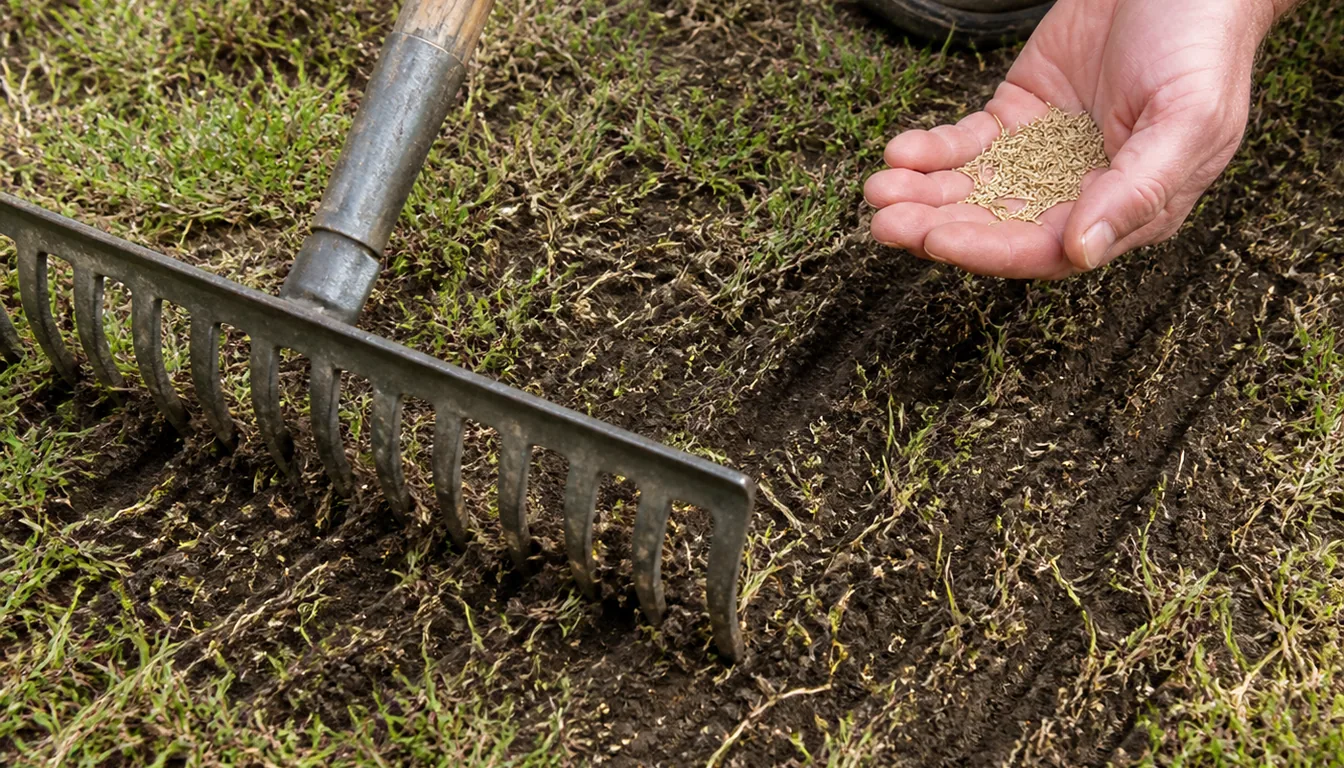
Collect any spilled fertilizer first. Then dilute what is left by soaking the area with 1 inch of water, enough to fill a rain gauge to 1 inch, and repeat that two or three times to leach the excess salts out of the soil. Grass that dies from too much root loss has to be replanted, and the steps for that are in the overseeding guide.
Should You Use a Weed-and-Feed Product?
A weed-and-feed bag combines fertilizer with a herbicide, and University of Minnesota Extension lists several reasons it may not be the best choice. The best time to kill a given weed is often not the best time to feed the lawn, and crabgrass preventers belong on much earlier in spring than fertilizer does.
The watering rule is where the two jobs collide. Watering in protects the lawn from burn, but many herbicides need to stay on the plant leaves to work, so the label has to say whether to water in. Where only a few weeds grow, spot treating them is just as easy as covering the whole lawn, and applying fertilizer and weed killer separately is the best approach for the environment.
Pro Tips
- Use the bag setting only as a starting point, then test the spreader on a measured strip.
- Make two passes at right angles, each at half the rate, so every part of the lawn is covered twice.
- Water in right after spreading unless the label says otherwise.
- Sweep granules off sidewalks and driveways instead of rinsing them away.
- Feed cool-season grass in fall, and skip high nitrogen rates on it in spring and summer.
- Take a soil test every two to three years before adding phosphorus or potassium.
Frequently Asked Questions
How long should I water after fertilizing my lawn?
Water right after spreading, unless the label says otherwise. UF/IFAS says to irrigate just long enough to rinse the fertilizer off the blades and into the soil, and that wetting the top 1/2 inch of soil is enough.
Can I fertilize a newly planted lawn?
Not right away. NC State puts a starter fertilizer high in phosphorus into the prepared site, then fertilizes new seedlings about six to eight weeks after they emerge, and UF/IFAS says to wait at least 30 to 60 days after planting.
Is organic fertilizer safer for the lawn than synthetic?
Clemson says the type makes no difference to the grass, because grasses take up nitrogen only as nitrate or ammonium and organic nitrogen must be converted first by soil microorganisms. Slow-release products, natural or manufactured, can still burn, but their nutrients usually do not build up to high concentrations.
Should I bag the clippings?
No, unless the clippings are heavy enough to hold the grass down or shade it. Left on the lawn, they decay, release nutrients and may reduce fertilizer needs by 20 to 30 percent, according to NC State.
What temperature is too hot to fertilize a lawn safely?
These sources give no single temperature. Burn most often follows fertilizing in hot weather, Clemson says to apply fertilizer when it is cooler and the leaves are dry, and NC State says high or repeated nitrogen rates on cool-season grass in spring or summer greatly increase the severity of brown patch.
Sources & References
- University of Minnesota Extension, Fertilizing lawns
- Clemson Cooperative Extension, Fertilizing Lawns
- Clemson Cooperative Extension, Calibrating Spreaders
- NC State Extension, Extension Gardener Handbook, Lawns
- University of Maryland Extension, Lawn Problems Not Caused by Pests or Diseases
- UF/IFAS Gardening Solutions, Fertilizing Your Florida Lawn
- Colorado State University Extension, PlantTalk Colorado, Fall Lawn Fertilization
- Colorado State University Extension, PlantTalk Colorado, Fall Lawn Fertilization During Drought