
When to Aerate an Ohio Lawn, and How Your Region Changes It
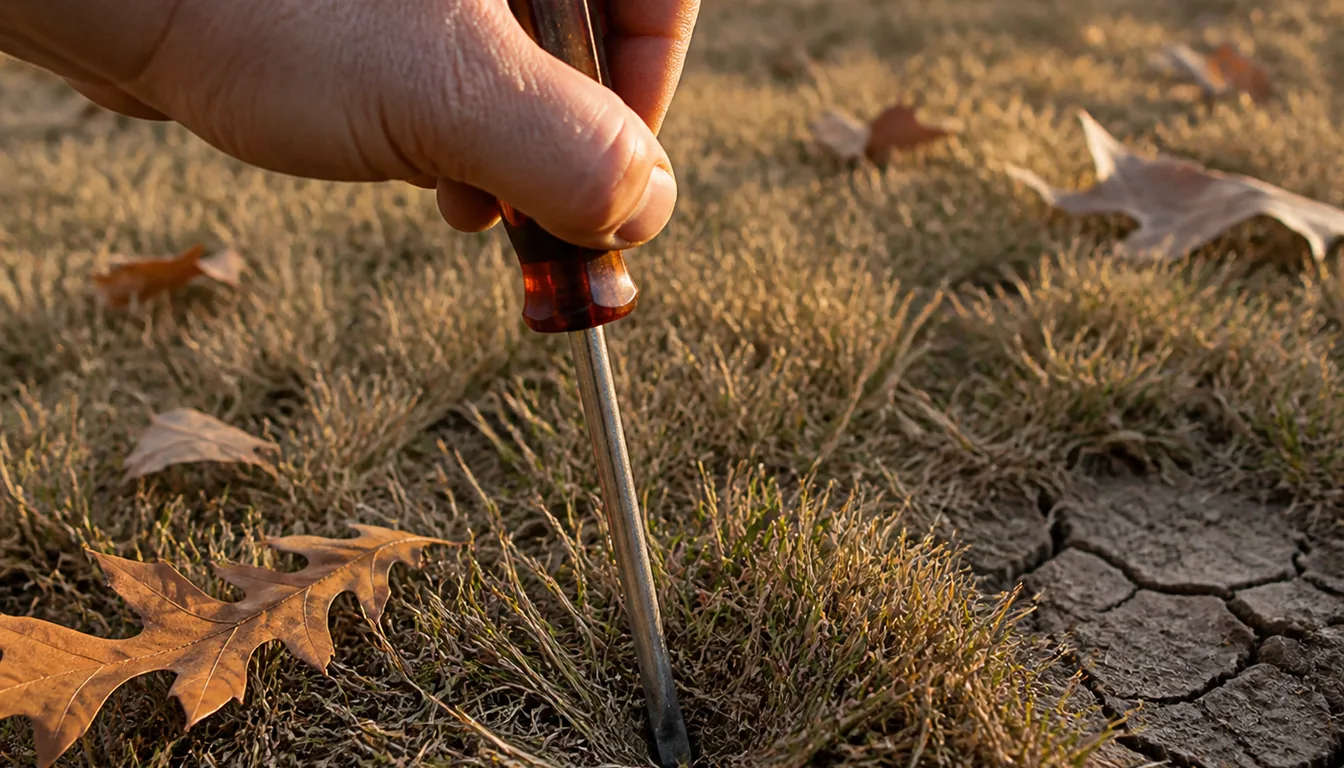
Most Ohio lawns are best aerated in early fall, timed to the fall seeding window when the lawn is thin, with April or May as the second choice. Ohio State University Extension's lawn calendar lists core aeration in October and again in spring when thatch is heavy or the soil is compacted, and it adds that the job can be done any time the soil is moist enough to pull real cores.
Where you live in Ohio changes the dates more than the method. The Ohio State calendar is written for central Ohio, and its timing runs 10 to 14 days earlier in southern Ohio and about that much later in the north. Fall seeding moves the other way. Northern Ohio's window opens and closes first, so a Toledo or Cleveland lawn that needs seed after aeration has to be finished before a lawn near Cincinnati or Columbus.
At a glance
Which Ohio Lawns Need Core Aeration?
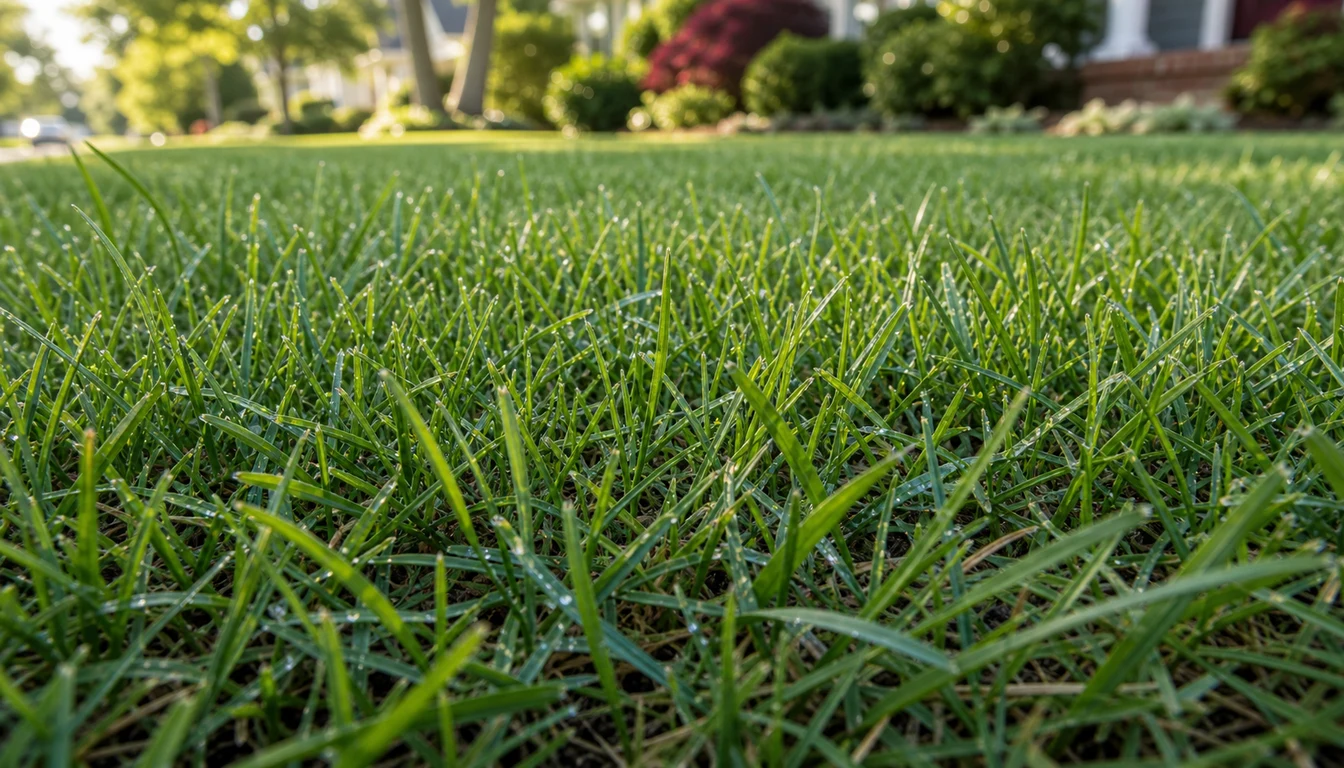
Ohio State Extension recommends cool-season grasses for Ohio and names only four species as useful for home lawns. They are turf-type tall fescue, Kentucky bluegrass, perennial ryegrass, and fine fescue. Which of them dominates your lawn changes why you would aerate it.
Core aeration does two jobs. It relieves compacted soil so water and air reach the roots, and it helps manage thatch, the layer of old roots, crowns, and stems that sits on the soil surface. Ohio State treats thatch thicker than 1/2 inch as a problem because it can block water, air, and fertilizer and give insects and disease a place to settle.
| Main grass in the lawn | Thatch tendency (Ohio State) | Usual reason to aerate |
|---|---|---|
| Kentucky bluegrass | Most prone, especially when heavily fertilized | Thatch over 1/2 inch, compaction, or both |
| Fine fescue | Less prone than bluegrass because its rhizomes are shorter | Compaction in shaded or worn spots |
| Turf-type tall fescue | Ohio State says it does not form thatch, having no rhizomes | Compaction only |
| Perennial ryegrass | Ohio State says it does not form thatch | Compaction only |
That table explains why two neighbors can need different schedules. A tall fescue lawn on firm, well-drained soil may go years without coring, because the job it would do there is mostly absent. A heavily fed bluegrass lawn on clay near a new house may need it far more often, since it can build thatch and compaction at the same time. If you are not sure whether thatch or compaction is the issue, dethatching versus aerating covers how to tell them apart.
A few southern Ohio lawns are planted in warm-season zoysiagrass or bermudagrass. Those lawns follow a summer aeration schedule instead of the fall one.
When Does Fall Aeration Fit in Northern, Central, and Southern Ohio?
The fall date depends on whether seed goes down after the aerator. If the lawn is thin and you plan to overseed, aeration belongs inside Ohio State's seeding window, because the new grass needs enough growing weeks to survive its first winter. If you are aerating only to relieve compaction or thatch, the lawn has more room, and the Ohio State calendar places core aeration in October.
| Region | Best fall seeding window | Seed no later than |
|---|---|---|
| Northern Ohio | August 15 to September 15 | October 15 |
| Central Ohio | Any time in September | October 30 |
| Southern Ohio | Any time in September | October 30 |
The cutoff dates come from the same Ohio State fact sheet. It warns that lawns seeded later in fall may not grow enough to survive winter, and that a seeding missed by those dates is better postponed to spring. A northern Ohio homeowner who aerates on October 20 can still relieve compaction, but should not count on seed sown into those holes.
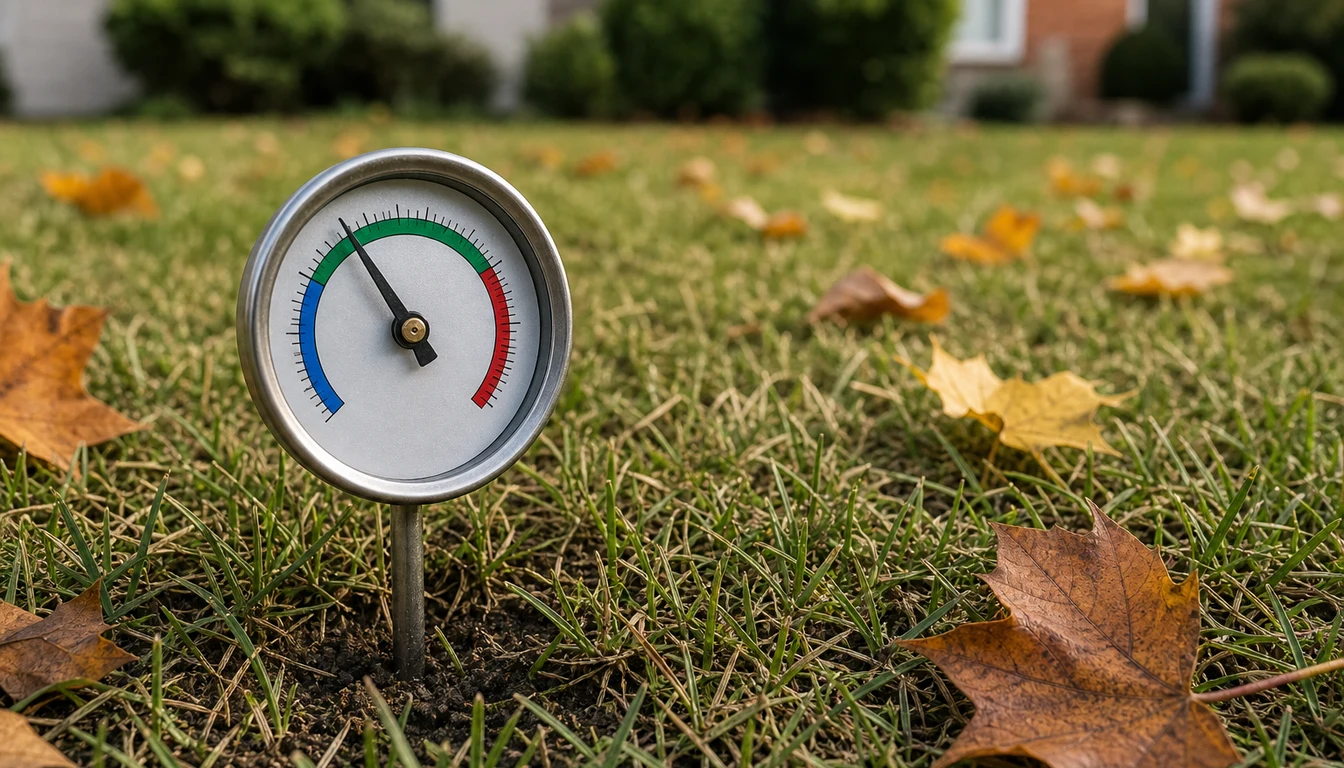
Soil temperature explains why the window works. Ohio State's turfgrass program describes 50 to 65 degrees F at a 2-inch depth as the best germination range for cool-season grasses, and in late summer the soil holds that warmth while nights cool. A probe thermometer confirms the range in your own yard, which helps in a hot, dry fall like 2024, when Ohio State reported that only irrigated or mulched seedings germinated well.
Fall also suits the grass itself. A Purdue and Illinois turf publication for this region recommends aerating Kentucky bluegrass, perennial ryegrass, fine fescue, and tall fescue in September or April, when the turf is growing actively and can close the holes.
Is Spring Aeration Worth It in Ohio?
Spring aeration works in Ohio, and Ohio State's calendar includes it for April and May when thatch is excessive or the soil is compacted. The catch is what usually comes with it. Spring is a poor time to seed cool-season grass here, so spring aeration is best treated as soil work rather than the start of a renovation.
An Ohio State Extension article on spring seeding lists the reasons. Seedlings face more weed competition, crabgrass herbicides can stop grass seed from germinating, the soil may be too cold or too wet, and the young grass has only a short time to root before summer heat. If you must seed in spring, Ohio State's advice is to sow as early as possible, preferably in March, and to favor fast-germinating seed such as ryegrass.
Regional timing matters here too. Because the Ohio State calendar runs 10 to 14 days earlier in southern Ohio and later in the north, a lawn near Marietta may be ready for April work while a lawn near Sandusky is still cold and wet. The right spring day is the first stretch when the grass is clearly growing and the soil has drained enough to pull firm cores.
How Can You Tell the Soil Is Ready to Pull Cores?
Soil moisture decides the day. Ohio State says aeration can be done whenever there is enough moisture to pull cores, and Clemson Extension describes the target as moderately moist soil, easy to penetrate but not wet. Dry soil stops the tines short, and soggy soil smears the hole walls and lets the machine rut the lawn.
A long screwdriver gives a quick reading. If it will not push a few inches into the lawn by hand, tines will bounce off the same ground, and a deep watering a day or two ahead will help. If water squeezes up around your shoe, wait for the soil to drain.
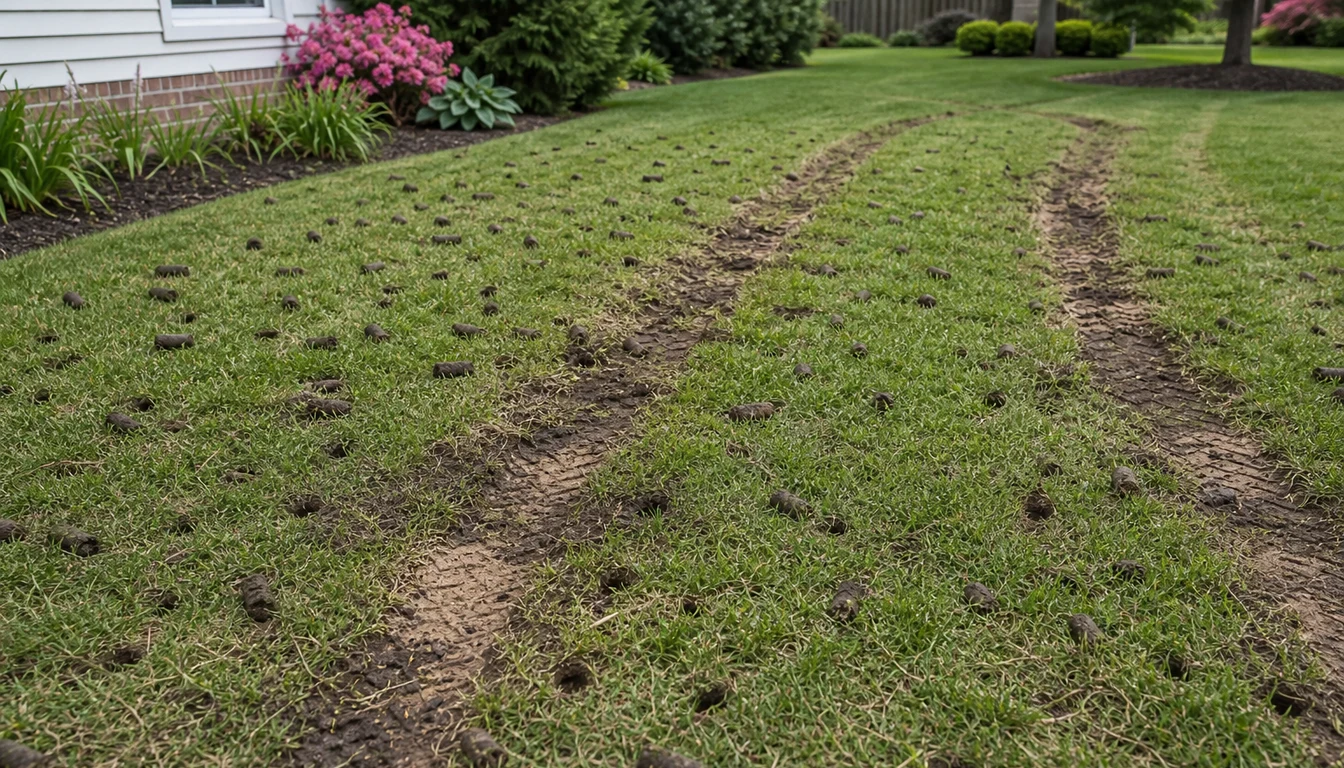
Count the cores, not the passes. Ohio State says real soil cores must come out at about nine per square foot for the job to work, and at least 20 per square foot before any compost topdressing. The Purdue and Illinois publication puts the most useful range at 20 to 40 holes per square foot, 2 to 3 inches deep, and notes that many rental machines need several passes to get there. Spiking or slicing tools that leave no core are not aeration, according to both sources.
- Soil is moist enough that a screwdriver pushes in a few inches.
- Sprinkler heads, shallow irrigation lines, and pet fence wire are flagged.
- The machine pulls whole cores, not just dimples.
- A square foot of lawn shows at least nine holes, and closer to 20 if you will topdress.
How Do You Pair Aeration With Fall Overseeding in Ohio?
Ohio State's overseeding sequence uses the aerator as part of seedbed preparation. The lawn is mowed short, about 1 to 1.5 inches, then core aerated. A slice seeder places the seed at about 1.5 times the package rate, compost is spread to lightly cover it, and the lawn is watered well. After that the mowing height goes back to normal, foot traffic stays off, and the seedbed gets light, frequent water until most seed has sprouted.
The short first mowing matters because it lets seed reach soil instead of resting on leaf blades. It is a one-time step for seeding, not a new mowing height, and mowing after overseeding explains how to bring the lawn back to its normal height without pulling up seedlings.
Seed choice follows the grass already in the lawn. Ohio State's seed table gives three starting points. A sunny bluegrass lawn takes about 80 percent Kentucky bluegrass and 20 percent perennial ryegrass at 2 to 3 pounds per 1,000 square feet. A shady lawn takes bluegrass with 50 to 70 percent fine fescue. A tall fescue lawn takes tall fescue alone, or with no more than 10 to 20 percent bluegrass, at 6 to 8 pounds. Ohio State notes that tall fescue is often kept unmixed because its color, texture, and habit stand out, which is why tall fescue and Kentucky bluegrass should not be swapped casually when patching an existing lawn.
Seeding is one of the few times extra phosphorus is justified in an Ohio lawn. Ohio State notes that starter fertilizers such as 18-25-12 carry more phosphorus to help young seedlings establish. For the full seeding routine after the aerator leaves, aerating and overseeding together and watering new grass seed cover the next steps.
What Should Happen After the Aerator Leaves?
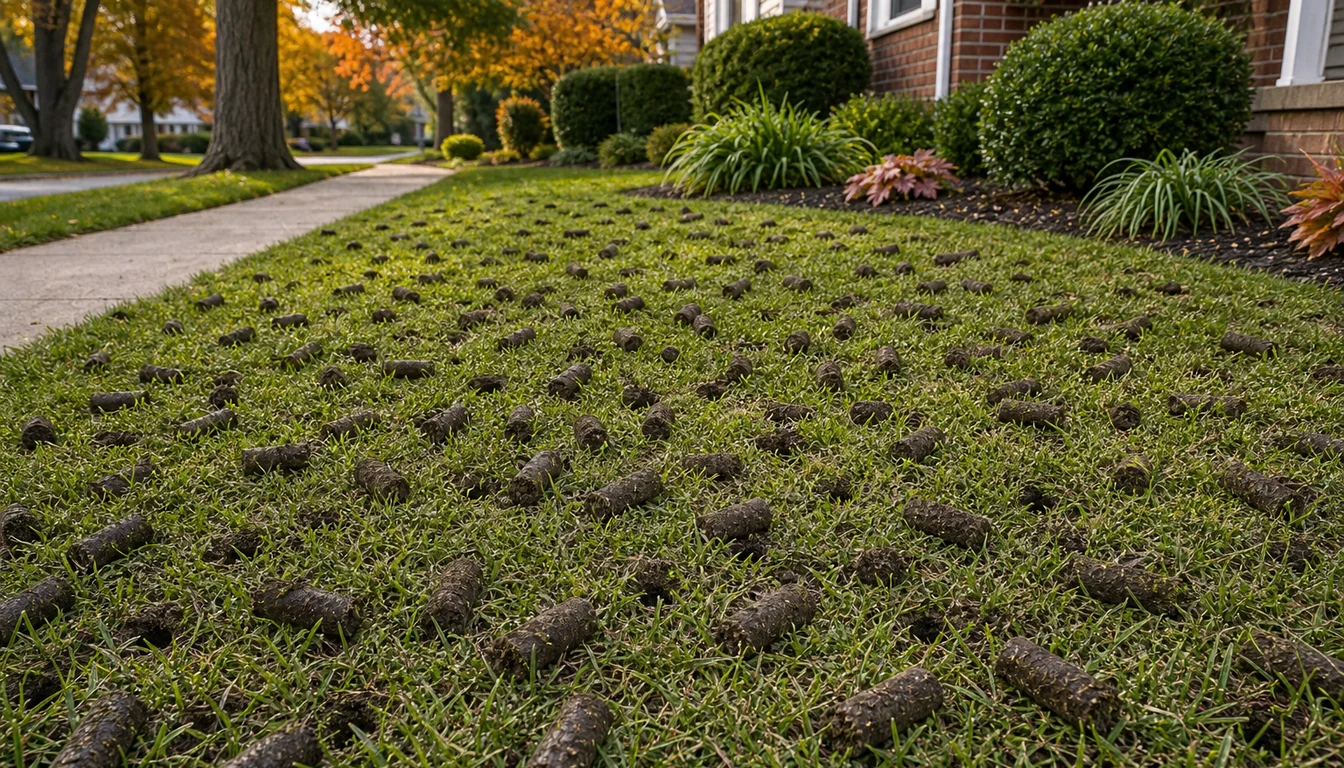
Leave the cores where they fall. Ohio State's guidance is to let them decompose on the surface, where rain and mowing break them up and return soil to the thatch layer.
Compost topdressing is optional, and it only works with enough holes. Ohio State recommends about 1/4 inch of compost, roughly 3/4 cubic yard per 1,000 square feet, applied in spring or fall alongside core aeration and dragged into the holes. It warns that topdressing a thatchy lawn without heavy coring, at least 20 cores per square foot, adds to the thatch problem instead of fixing it.
Fertilizer timing in Ohio is set by season, not by the aeration date. Ohio State lists April and May, then September and October as the general fertilizing windows, and its organic lawn calendar uses September and November. Summer feeding is not recommended for homeowners because it increases several turf diseases. If the aeration falls in September, the regular fall feeding described in fall lawn fertilizing fits right after it.
Ohio adds a water-quality reason to go easy on phosphorus. Ohio State's fact sheet on protecting Ohio waterways ties lawn fertilizer to the algal blooms in Lake Erie, including the 2014 bloom that left 400,000 Toledo residents without tap water for two days. It recommends a soil test, low- or no-phosphorus fertilizer on established lawns, and sweeping spilled granules off driveways and sidewalks so rain cannot carry them into storm drains.
What About Zoysia and Bermuda Lawns in Southern Ohio?
Ohio State's mowing fact sheet mentions zoysiagrass and bermudagrass lawns in the southern part of the state. These grasses brown out in cold weather and grow in summer, so the cool-season fall window does not fit them.
The Purdue and Illinois publication recommends aerating zoysiagrass in early to mid-summer, and Clemson Extension places warm-season aeration in late spring and summer, when the grass is actively growing and can fill the holes. A fall coring in October would leave a warm-season lawn with open holes as it heads into dormancy.
Mixed yards need two schedules. If a zoysia strip borders a fescue lawn, the fescue gets its fall aeration and the zoysia waits for summer.
Pro Tips
- Plan fall aeration inside Ohio State's seeding window if seed will follow, August 15 to September 15 in northern Ohio and September farther south.
- Do not count on seed sown after October 15 in northern Ohio or October 30 in central and southern Ohio.
- Aim for at least nine cores per square foot, and closer to 20 if you plan to topdress with compost.
- Water a day or two ahead if the soil is too hard for a screwdriver to push in a few inches.
- Skip pre-emergent crabgrass products where you will seed, unless the product is mesotrione.
- Leave the soil cores on the lawn to break down.
- Use low- or no-phosphorus fertilizer on established Ohio lawns unless a soil test shows a need.
Frequently Asked Questions
How often should an Ohio lawn be core aerated?
As often as thatch or compaction calls for it, which Ohio State does not tie to a fixed number of years. A heavily fertilized bluegrass lawn on clay or a high-traffic yard may need it yearly, while a tall fescue lawn on well-drained soil may rarely need it because tall fescue rarely builds a thatch problem.
Is spring or fall better for aerating in Ohio?
Fall is better when the lawn also needs seed, because it falls inside Ohio State's seeding window. Spring aeration in April or May is fine for relieving compaction or thatch, but spring seeding faces more weeds, cold or wet soil, and a short time to root before summer.
Can I aerate in late October in northern Ohio?
You can aerate to relieve compaction as long as the soil pulls cores and the grass is still growing. Do not plan to overseed into those holes, because Ohio State says seeding in northern Ohio should be done by October 15 or postponed until spring.
Can I aerate and use crabgrass preventer at the same time?
Not where you plan to seed, because most pre-emergent products also stop grass seed from germinating. Ohio State names mesotrione as the exception, and Clemson Extension advises applying pre-emergents after aeration rather than before.
Do I need to pick up the cores after aerating?
No. Ohio State's guidance is to leave the cores on the lawn surface, where they break down over the following weeks.
Sources & References
- Ohio State University Extension, Natural Organic Lawn Care (HYG-4031)
- Ohio State University Extension, Efficient Lawn Care Practices to Help Protect Ohio's Waterways (HYG-5812)
- Ohio State University Extension, Lawn Mowing (HYG-5816)
- Ohio State University Turfgrass Science, Seed Establishment in Fall
- Ohio State University Extension, Fairfield County, Spring Lawn Seeding Tips
- Purdue University and University of Illinois, Mowing, Dethatching, Aerifying and Rolling Turf (AY-8-W)
- Clemson Cooperative Extension, Aerating Lawns (HGIC 1200)
Related Guides
Best Time to Aerate and Overseed for a Thicker Lawn
Most lawns never reach their potential because aeration and overseeding happen at the wrong time.
11 min read
Best Time to Overseed a Northeast Lawn for Thick Turf
Overseeding in the Northeast is all about catching that short window when soil is warm, air is…
11 min read
Can You Overseed a Lawn Without Aerating It First?
Thin turf and bare patches do not always mean you need to rent an aerator.
11 min read
Dethatching vs Aerating: Which Does Your Lawn Need?
Choose dethatching when a measured layer of thatch has become excessive.
16 min read
How Long After Planting Grass Seed Can You Walk On It Safely
Most new lawns fail not from bad seed, but from feet, paws, and mower wheels showing up too soon…
11 min read
How to Fertilize a Lawn Without Burning It
Those yellow stripes and crispy patches after fertilizing are almost always user error, not bad…
14 min read