
When to Mow After Overseeding, for Cool-Season and Bermuda Lawns
Mow an overseeded lawn when the existing grass reaches its normal mowing trigger and the soil is firm enough to walk on, not on a fixed number of weeks. Michigan State University Extension's advice after interseeding a thin lawn is to keep the normal mowing schedule, because mowing helps the turf spread sideways and fill the area. Waiting until the old grass is so tall it falls over shades the seedlings and makes the eventual cut harder on everything.
This differs from a brand-new lawn, where every plant is a seedling and the first cut waits for the seedlings themselves. In an overseeded lawn the mower meets the established grass first. Seedlings shorter than the deck height pass under the blade untouched, so the questions are how tall the old canopy has grown and whether the ground can carry the mower. For a lawn started from bare soil, mowing new grass for the first time covers that separate case.
At a glance
Why Does the Old Grass Set the First Mowing Date?
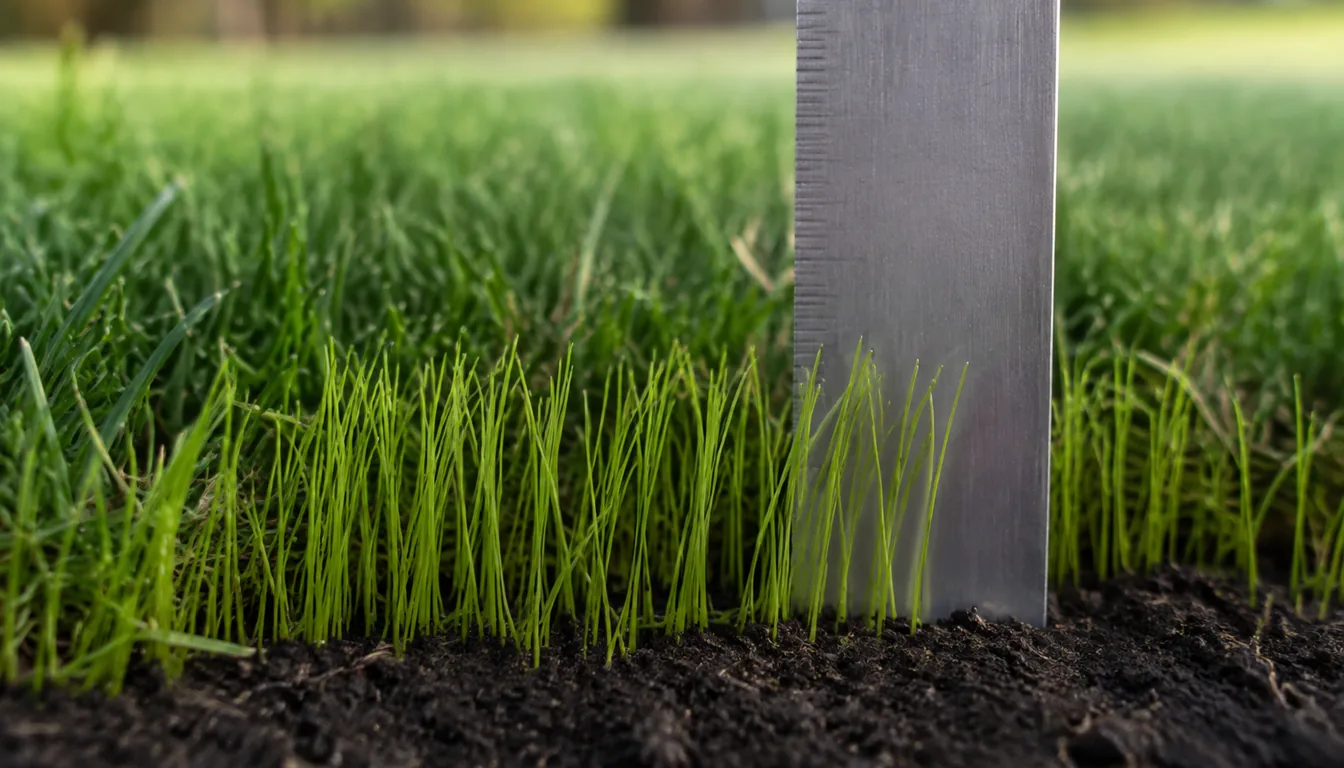
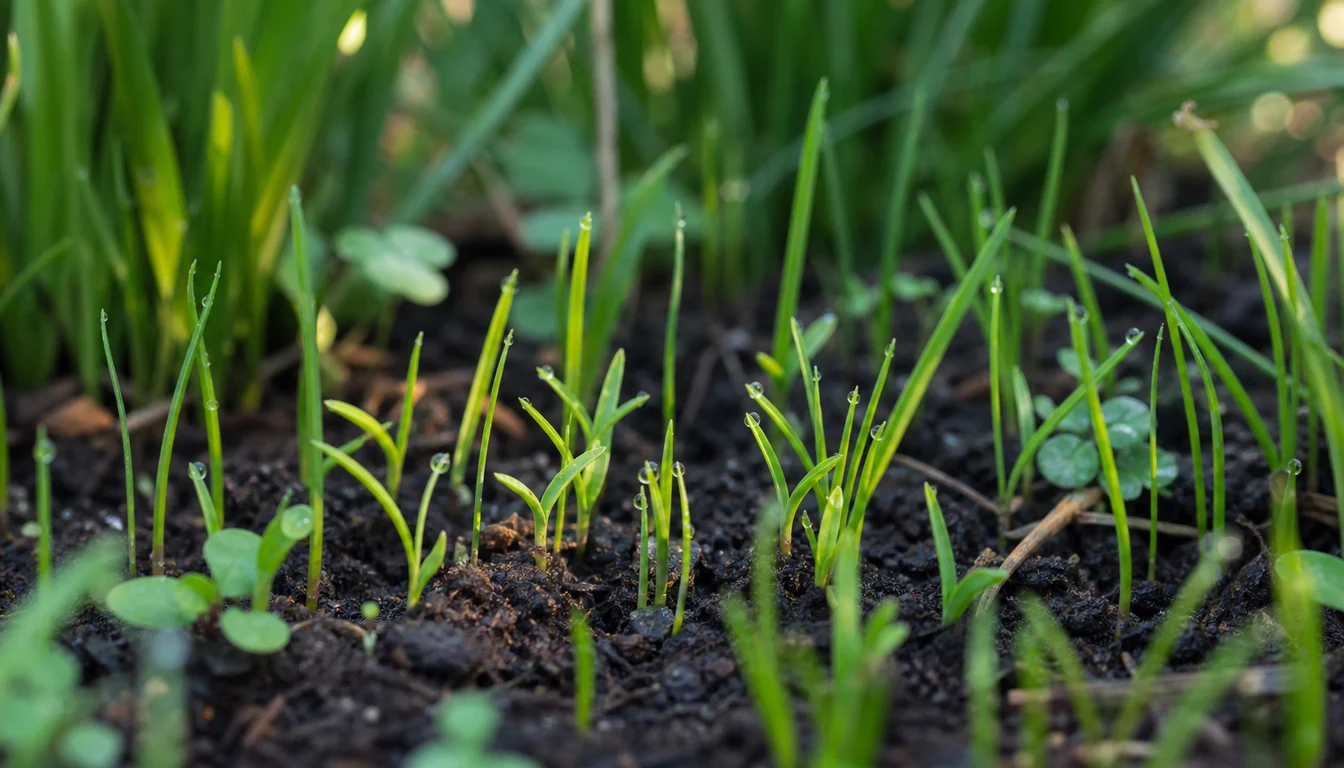
A rotary mower cuts only what stands above the deck height. If the lawn is kept at 3 inches, a 1-inch seedling is not touched by the blade, while the established grass around it may already be past 4 inches. Letting that older grass grow on to protect the seedlings works against them, because it shades and crowds the new plants while they are trying to root.
MSU makes the point directly in its fall seeding tips. Do not wait until the turf is so tall it is falling over, and on an interseeded thin lawn, keep the normal mowing schedule. The existing grass also acts like a mulch that holds soil moisture for the seed, an advantage MSU lists for interseeding over seeding bare ground.
What the mower can hurt is the soil surface and the seedling roots, not the seedling leaves. Wheels on soft, wet ground press seed and young plants into ruts, and sharp turns twist shallow roots loose. The first cut after overseeding is therefore about ground condition and the old grass's height, and the seedlings mostly need you to avoid tearing up the surface.
How Does Pre-Seeding Mowing Change the First Cut?
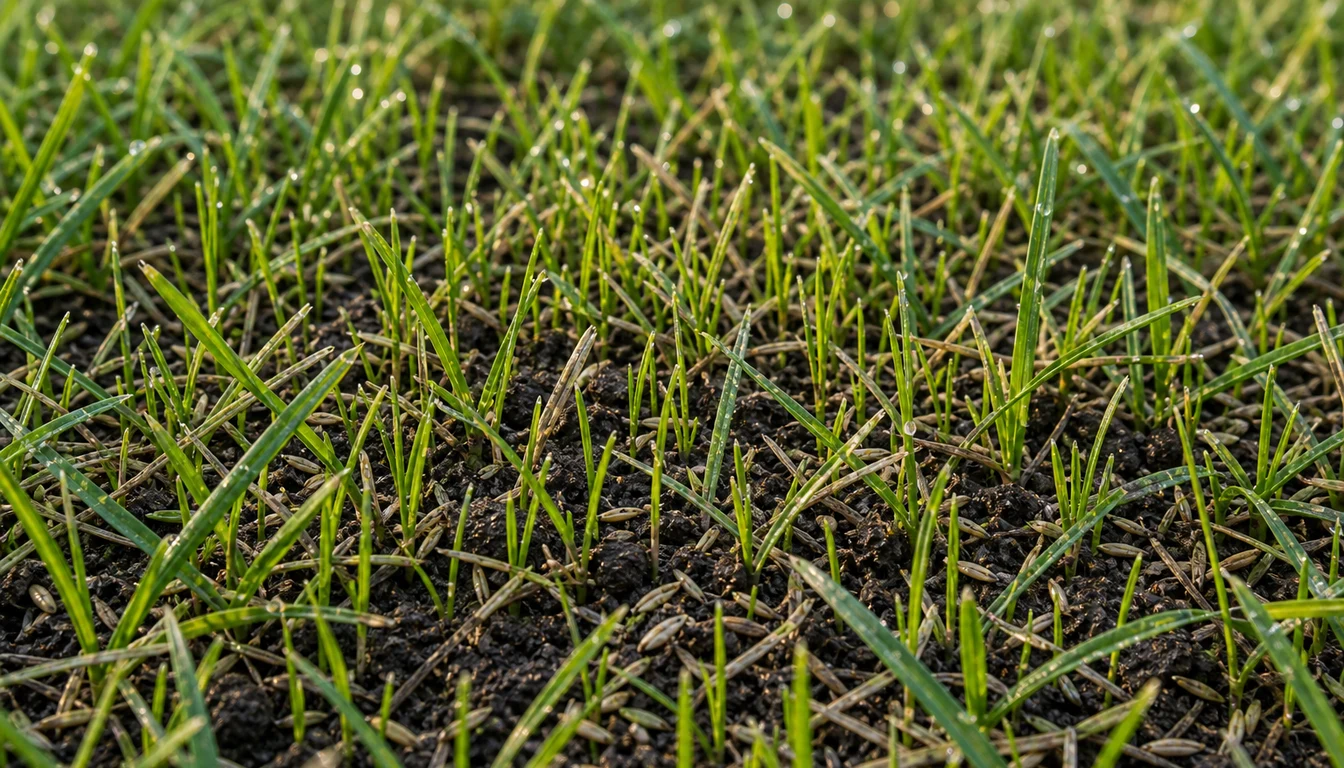
Ohio State University Extension's overseeding method starts with a short mowing so seed can reach soil. Its sequence for cool-season lawns mows the lawn to 1 to 1.5 inches, cores it, slice seeds, covers the seed lightly, and then returns the mowing height to normal. That short cut is a one-time seeding step. The lawn then grows back toward its normal height while the seed germinates.
Because the lawn starts short, the first mowing after seeding often comes later than the usual weekly cut. The established grass has to grow from about an inch back past its normal height before it needs cutting, which in cool fall weather can take a while. Set the deck back to the normal height before that first pass rather than mowing at the low seeding height again, because a second scalping cut thins the old grass and exposes the seedbed to drying.
If you overseeded without lowering the lawn first, the first mowing comes sooner. The old grass is already near its trigger height, and the timing question is mostly about whether the watered seedbed has firmed up enough to walk on.
Overseeding without aerating and the full overseeding method explain the preparation steps that come before this one.
How Tall Can the Existing Grass Get Before You Mow?
Use the lawn's normal mowing height and the one-third rule, which Ohio State states as never removing more than a third of the leaf blade at once. In its example, a lawn kept at 3 inches is mowed before the blades pass 4.5 inches.
| Grass in the lawn | Ohio State mowing range | Mow before it reaches (if kept at the top of the range) |
|---|---|---|
| Kentucky bluegrass | 2.0 to 4.0 inches | About 6 inches |
| Perennial ryegrass | 2.0 to 4.0 inches | About 6 inches |
| Fine fescue | 2.0 to 4.0 inches | About 6 inches |
| Tall fescue | 2.5 to 4.0 inches | About 6 inches |
| Zoysiagrass | 1.0 to 2.5 inches | About 3.75 inches |
| Common bermudagrass | 1.0 to 2.0 inches | About 3 inches |
The right column assumes the top of each range. A bluegrass lawn kept at 3 inches is cut before 4.5 inches, and a tall fescue lawn kept at 3.5 inches before about 5.25 inches.
Penn State Extension uses a tighter trigger for stands made up mostly of seedlings, mowing when plants are no more than one-third taller than the cutting height, so a 3-inch lawn is cut just before it reaches 4 inches. If overseeding turned a nearly bare area into mostly seedlings, follow that tighter trigger on that patch. In a lawn that was simply thin, the established grass sets the schedule.
If wet weather lets the lawn get far too tall, Ohio State's fix is to mow once at the highest setting, let the clippings dry, and then lower the deck and mow again in a different direction. That keeps any single cut within the one-third rule.
When Is the Ground Firm Enough to Carry the Mower?
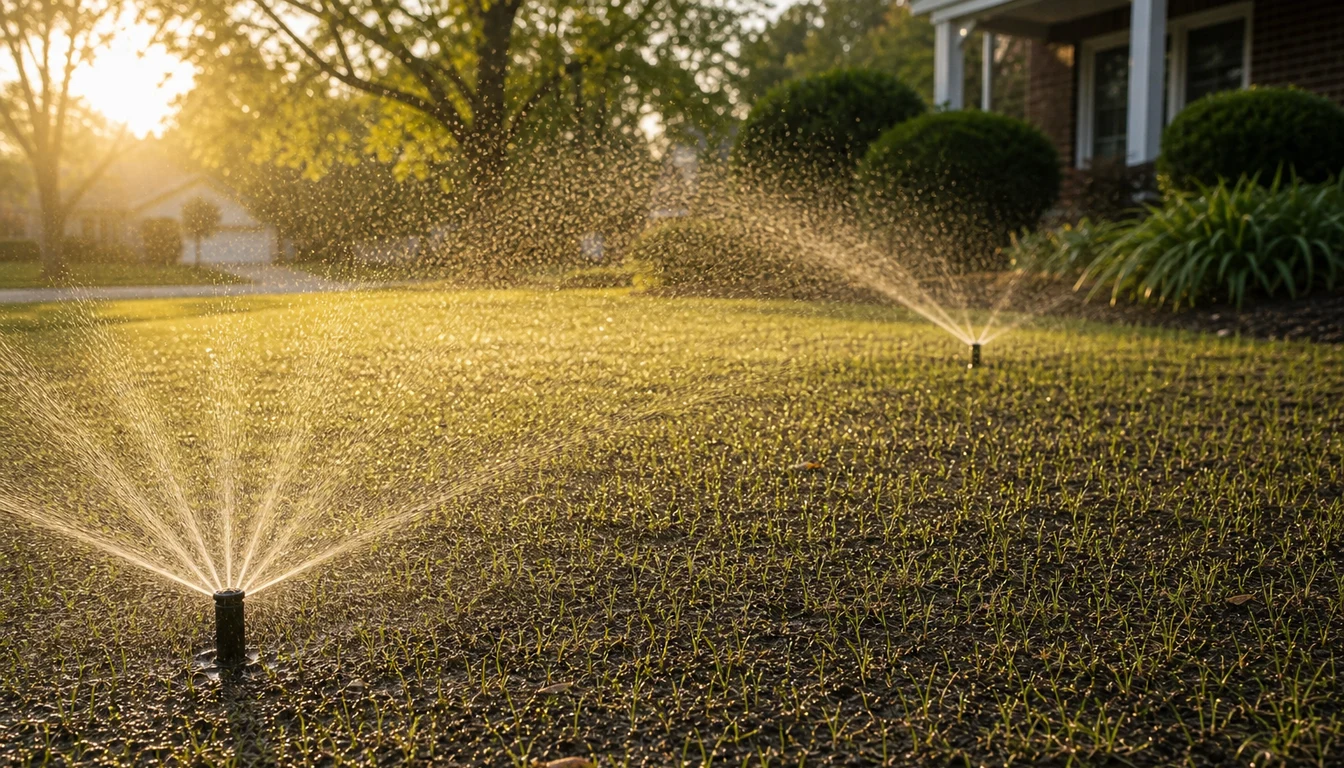
New seed needs a moist surface, and MSU warns that keeping a seeded area moist may take watering several times a day. That moisture is what makes the first mowing risky. Soft, wet soil lets wheels sink and drag seed and seedlings out of place.
Penn State's test is simple. Walk onto the lawn and watch whether the grass plants move back upright where you stepped. If they do, the lawn can probably carry a mower. If footprints stay pressed in, or mud sticks to your shoes, the seedlings would be trampled.
Timing the cut within the watering cycle helps. Mow after the surface has dried, before the next watering, because Ohio State also notes that wet turf cuts poorly, clogs rotary mowers, and drops clippings in clumps.
- 1. Check the old grassMeasure a few spots and compare with the lawn's one-third trigger.
- 2. Test the groundWalk a short path and confirm the grass springs back and no mud sticks.
- 3. Set the deckReturn it to the lawn's normal height, not the short pre-seeding height.
- 4. Use the lightest mowerPenn State advises a lightweight mower for new establishments.
- 5. Turn wideMake turns on pavement or established turf rather than pivoting on the seedbed.
Keep other traffic off the seeded areas. Penn State's guidance is to limit foot and vehicle traffic until the new grass is well rooted and has been mowed several times. Walking on new grass seed covers that waiting period in more detail.
What Changes When the Seed Mix Grows at Different Speeds?
Cool-season seed mixes rarely come up together. MSU's seeding bulletin rates perennial ryegrass as fast to establish, tall fescue and fine fescue as medium, and Kentucky bluegrass as slow. MSU adds that ryegrasses germinate the quickest of the lawn grasses, which is why it suggests 10 to 15 percent ryegrass in bluegrass mixtures to give quick cover.
In an overseeded lawn, that spread matters less than it seems. The fast ryegrass and the established grass will reach the mower first, while the slow bluegrass seedlings stay short and below the blade for weeks. Mowing on the old grass's schedule does not cut them. It does keep the taller canopy from shading them while they emerge.
The perennial ryegrass and Kentucky bluegrass comparison covers why the two grasses behave so differently after seeding. For a lawn where Kentucky bluegrass was the main seed, expect the thin spots to look sparse for several weeks after the first mowings, even when everything is going well.
How Do You Mow Bermudagrass Overseeded With Ryegrass?
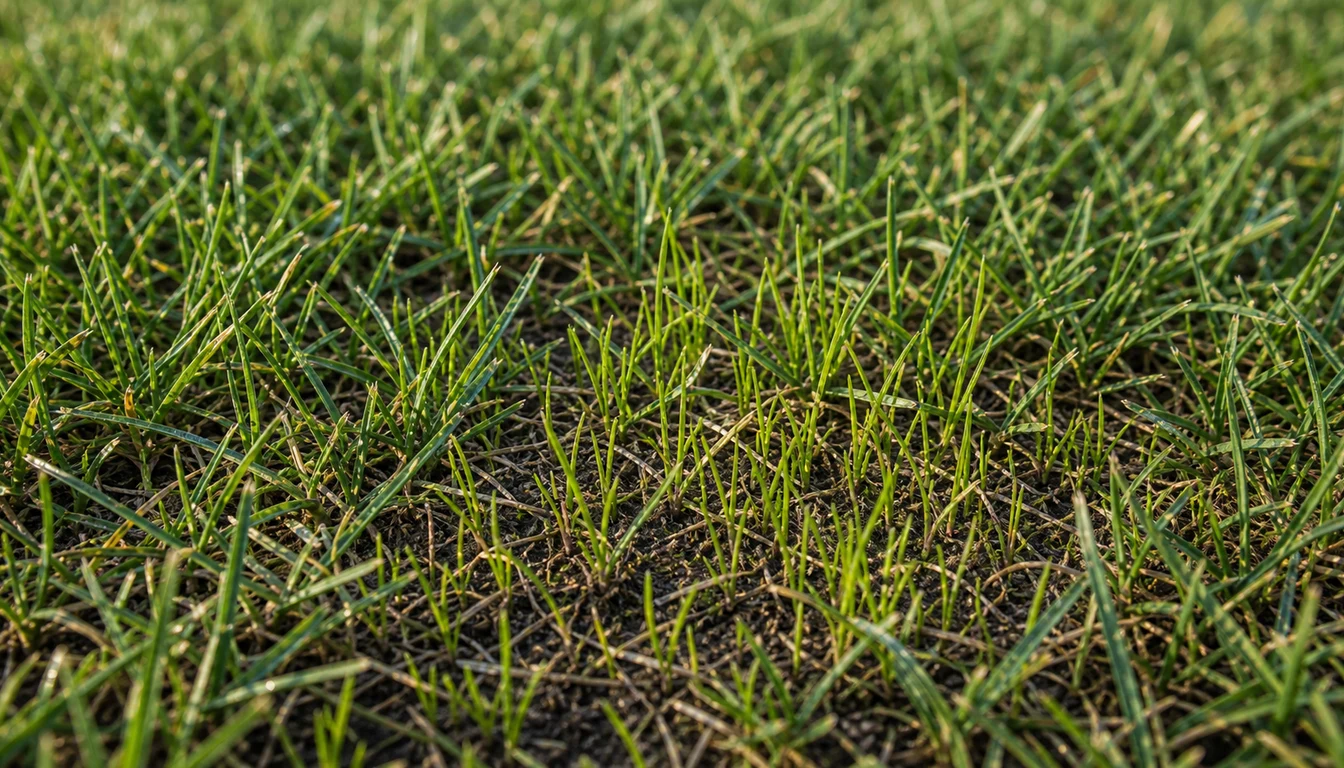
Warm-season lawns are overseeded for a different reason. The goal is winter color while the base grass is dormant, and Clemson Extension recommends doing it only on bermudagrass lawns. Clemson warns that the extra water, fertilizer, and shade from overseeding can severely set back centipedegrass, zoysiagrass, and St. Augustinegrass in spring, and University of Arizona Extension also calls St. Augustinegrass and zoysiagrass generally unsuited to overseeding.
The mowing schedule runs in three stages.
| Stage | Clemson guidance | Why it matters |
|---|---|---|
| Before seeding | Dethatch if needed and mow the bermudagrass closely, catching or raking the clippings | Seed has to reach soil through the dormant canopy |
| First cuts of the ryegrass | Mow when the ryegrass is tall enough to cut, about 1 to 2 inches, then mow to 1 to 1.5 inches whenever it reaches 2 to 2.5 inches | Keeps the winter cover dense, with a sharp blade so ryegrass leaves are not torn |
| Spring transition | Mow the ryegrass down to about 1 inch without scalping the bermudagrass | Weakens the ryegrass so the bermudagrass can green up |
Clemson adds one timing rule that conflicts with same-day aerating and seeding. If a bermudagrass lawn needs core aeration before ryegrass overseeding, overseed about 30 days after coring so the holes heal and the winter turf comes up evenly rather than in speckles.
Thin warm-season lawns reseeded with their own species follow a different calendar. Clemson places warm-season seeding in spring, with a target of early May in South Carolina, and starts mowing those seedlings when they reach one-third above the normal mowing height. Ohio State's mowing range for common bermudagrass is 1 to 2 inches, so the trigger arrives early.
Clippings, Weed Control, and Fertilizer in the First Weeks
Clippings can usually stay. Ohio State notes that clippings break down quickly and do not add to thatch, but any clumps should be broken up with a leaf rake and spread out, or the area mowed again the next day in another direction. In an overseeded lawn, a wet clump left on a thin patch can smother seedlings, so mowing a dry lawn and dispersing clumps matters more than bagging.
Weed control has to wait, and sources give different waiting periods. Penn State says many broadleaf herbicides should not be applied until 4 to 6 weeks after establishment, MSU's seeding bulletin puts it after the second or third mowing, and MSU's overseeding article says about two months, which rules out treatment the same fall. The herbicide label sets the actual interval for that product. Crabgrass preventers are a separate problem, because most of them stop grass seed from germinating at all, and Ohio State names mesotrione as the exception for seeding.
Fertilizer timing belongs to the seeding plan rather than the mowing plan. MSU suggests a starter fertilizer at 1 pound of nitrogen per 1,000 square feet when interseeding, and Penn State adds a light follow-up feeding 4 to 8 weeks later when growth needs it. Fertilizing new grass covers those rates for seed and sod.
Pro Tips
- Mow on the existing grass's schedule, using its normal height and the one-third rule.
- Return the deck to the normal height before the first cut if you mowed short for seeding.
- Walk a test path first and mow only if the grass springs back and no mud sticks to your shoes.
- Mow after the seedbed surface dries and before the next watering.
- Turn on pavement or established turf instead of pivoting on seeded patches.
- Break up any clipping clumps so they do not smother thin areas.
- On bermudagrass overseeded with ryegrass, mow the ryegrass down to about 1 inch in spring to help the bermudagrass return.
Frequently Asked Questions
Can I mow if only part of the overseeded area has sprouted?
Yes, if the established grass has reached its mowing trigger and the ground is firm. Seedlings shorter than the deck height are not cut, so the main risk is wheels sinking into a wet seedbed, not the blade.
Should I bag or mulch clippings after overseeding?
Short, dry clippings can stay on the lawn. Break up any clumps with a leaf rake or mow again the next day in another direction, as Ohio State suggests, so wet piles do not smother thin seeded patches.
How soon after overseeding can I use a riding mower?
Penn State advises a lightweight mower for new establishments and keeping vehicle traffic off until the new grass is well rooted and has been mowed several times. A heavy rider on a damp seedbed is the most likely way to rut it.
Should I mow lower after overseeding to help the seedlings?
Only before seeding. Ohio State's method mows the lawn to 1 to 1.5 inches ahead of seeding and then returns to the normal height, and repeating the short cut afterward thins the old grass and dries the seedbed.
What if I accidentally scalped the lawn after overseeding?
Raise the deck back to the normal height, keep the seedbed moist, and stay off the area while it recovers. Thin streaks can be seeded again if they are still bare once the rest of the lawn fills in.
Sources & References
- Michigan State University Extension, Tips for seeding lawns in September
- Michigan State University Extension, Establishing a New Lawn Using Seed (E2910)
- Michigan State University Extension, Late season lawn seeding
- Ohio State University Extension, Natural Organic Lawn Care (HYG-4031)
- Ohio State University Extension, Lawn Mowing (HYG-5816)
- Ohio State University Extension, Efficient Lawn Care Practices to Help Protect Ohio's Waterways (HYG-5812)
- Penn State Extension, Lawn Establishment
- Clemson Cooperative Extension, Overseeding With Ryegrass (HGIC 1206)
- Clemson Cooperative Extension, Lawn Establishment (HGIC 1203)
- University of Arizona Cooperative Extension, Overseeding Winter Grasses into Bermudagrass Turf (AZ1683)
Related Guides
Best Time to Aerate and Overseed for a Thicker Lawn
Most lawns never reach their potential because aeration and overseeding happen at the wrong time.
11 min read
Best Time to Overseed a Northeast Lawn for Thick Turf
Overseeding in the Northeast is all about catching that short window when soil is warm, air is…
11 min read
Can You Overseed a Lawn Without Aerating It First?
Thin turf and bare patches do not always mean you need to rent an aerator.
11 min read
Dethatching vs Aerating: Which Does Your Lawn Need?
Choose dethatching when a measured layer of thatch has become excessive.
16 min read
How Long After Planting Grass Seed Can You Walk On It Safely
Most new lawns fail not from bad seed, but from feet, paws, and mower wheels showing up too soon…
11 min read
How to Fertilize a Lawn Without Burning It
Those yellow stripes and crispy patches after fertilizing are almost always user error, not bad…
14 min read