
Is Overseeding Worth It for Your Lawn?
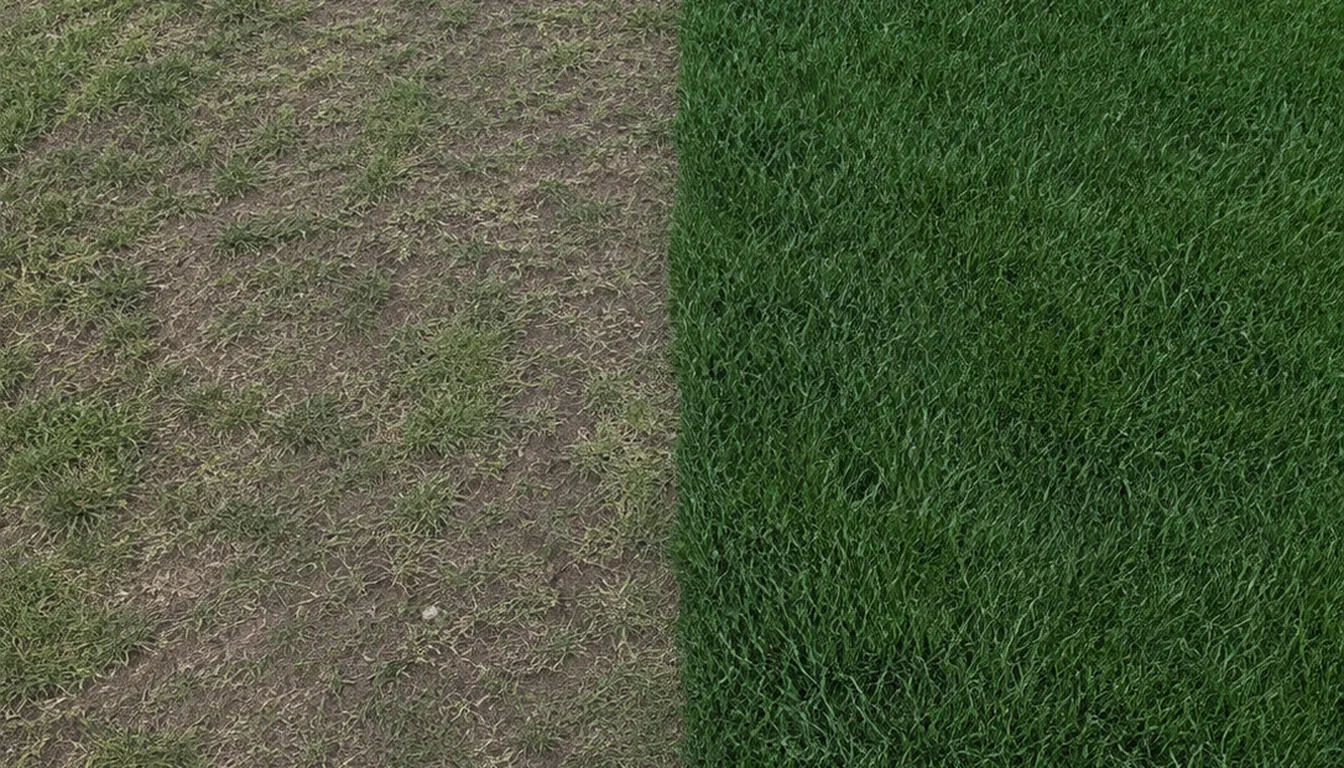
Overseeding is worth it when desirable grass still occupies much of the lawn, open soil can be exposed for seed contact, and you have corrected the reason the turf became thin.
It is usually poor value when shade, drainage, compaction, traffic, disease, insects, or the wrong grass species will defeat the new seedlings again. A lawn dominated by weeds or dead turf often needs renovation, sod, plugs, or a different planting rather than more seed scattered over the surface.
The answer also changes with grass type. Cool-season lawns are commonly thickened with seed, while several warm-season lawns are repaired more reliably by their own runners, plugs, or sod.
Buy seed only after the site, species, timing, preparation, and watering plan all agree.
The bag is often the least demanding part of the job.
At a glance
Use Five Conditions to Decide Whether Overseeding Is Worth It
A thin lawn is a symptom, not a diagnosis. Overseeding pays only when seedlings can survive the same site that thinned the established grass.
- The existing grass species belongs in the site's climate, light, and soil
- Desirable turf still forms a useful base rather than isolated islands
- Thatch or debris can be opened enough for seed to reach soil
- The seeding window leaves time for establishment before severe heat or cold
- You can protect moisture and limit traffic through germination and early growth
Failing one condition does not always cancel the project, but it changes the work.
Compacted soil may need core aeration, a shaded edge may need a more suitable species, and a low spot may need drainage correction before seed is involved.
The cause of thinning must be corrected before more plants are added. Overseeding increases the number of young plants competing for the same light, water, air, and root space.
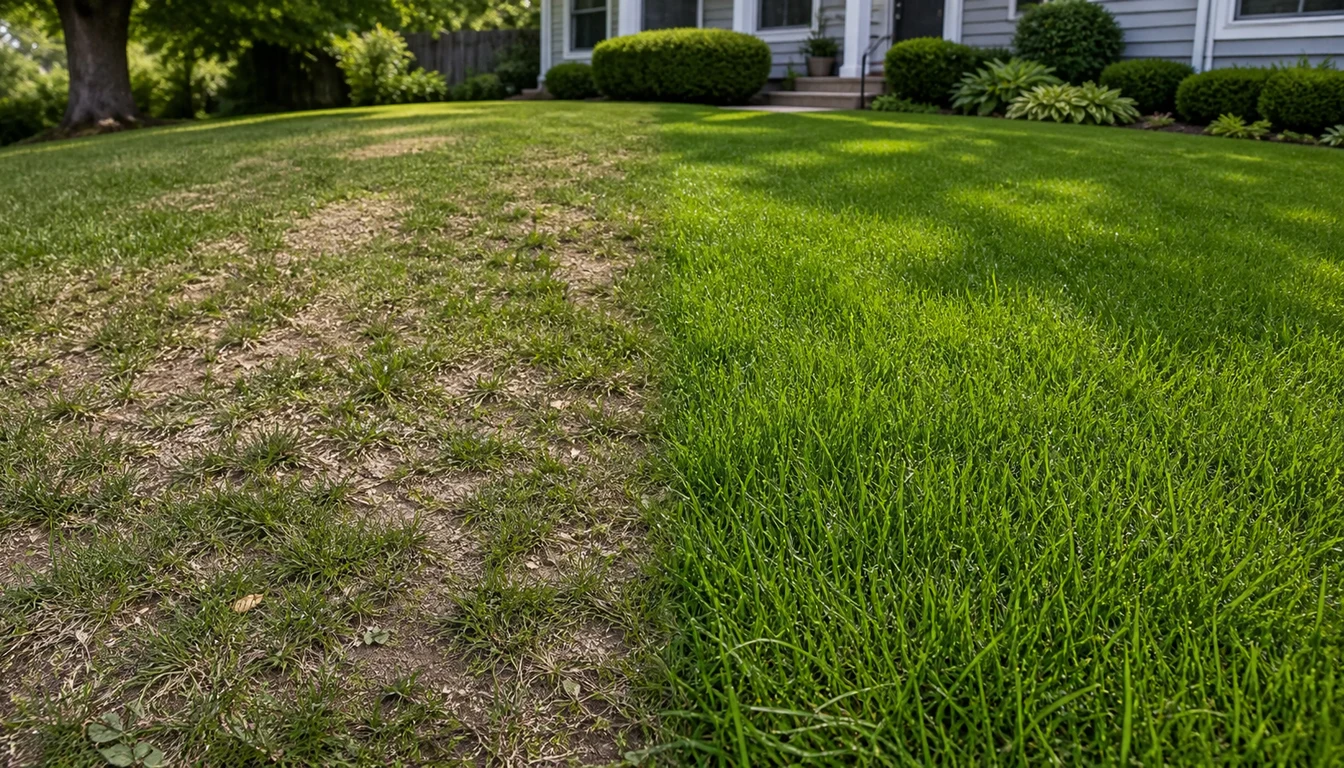
A small worn route from the gate to the patio may be a spot-repair job.
Broad loss across a lawn, several weed species, and uneven grades point toward renovation because preserving the remaining turf no longer saves much labor.
Separate Overseeding, Spot Repair, and Full Renovation
These projects use some of the same seed and tools, but they do not solve the same scale of failure.
| Project | Best fit | What stays | Main tradeoff |
|---|---|---|---|
| Overseeding | Thin but usable turf across a meaningful area | Most existing grass | New seedlings compete with the old canopy |
| Spot seeding | A few worn or damaged patches | Nearly all of the lawn | Color and texture may differ if seed is mismatched |
| Renovation | Widespread weeds, wrong species, or severely failed turf | Little or none of the old stand | More preparation, erosion risk, and temporary loss of use |
| Sod or plugs | Fast cover, erosion control, or grasses rarely established from seed | Prepared soil, not the failed surface | Higher material cost and demanding early watering |
Do not turn a renovation into an overseed merely to avoid the word “kill.” If undesirable grass and perennial weeds remain, new seed may add plants without changing what dominates the lawn.
Conversely, removing a workable lawn wastes its root system, soil cover, and mature plants.
Preserve the stand when its species and growing conditions are sound enough to support the repair.
A realistic boundary comes from mapping the lawn, not guessing one percentage.
Mark healthy turf, bare soil, weeds, shade, wet ground, compacted routes, and pest damage, then see whether the same repair applies across the area.
Find Out Why the Lawn Thinned Before Adding Seed
Start with the pattern. Grass that disappears beneath trees has a different limit from turf worn along a footpath or killed in a low, wet basin.
Uniform pale thinning
Check mowing height, fertility, irrigation coverage, and root health
Loss under a canopy
Measure available light and root competition before choosing shade-tolerant grass
Bare route or play area
Reduce traffic or change the surface before expecting seedlings to persist
Soft or algae-covered low spot
Correct drainage and excess irrigation
Loose turf that lifts like carpet
Inspect roots and soil for grub or animal damage
Dense spongy surface
Measure thatch and expose soil before broadcast seeding
A soil test can guide lime and nutrient decisions, but it does not identify shade, compaction, insects, or irrigation gaps.
Pair the lab result with a site inspection.
Dig several small wedges through the root zone. Look at root depth, soil moisture, layering, compaction, and whether the desirable grass has living crowns or spreading stems.
Do not call every summer-brown lawn dead. Dormant turf can retain living crowns, while dead areas remain loose, bare, or fail to recover when the species returns to active growth.
Correct the cause far enough that a seedling has a better future than the grass it replaces. Otherwise the project buys one green flush followed by the same decline.
Cool-Season Lawns Usually Offer the Clearest Payoff
Tall fescue, perennial ryegrass, fine fescues, and Kentucky bluegrass are commonly sold in seed, but their repair habits differ. Tall fescue plants mainly enlarge by tillering, so dead gaps do not close quickly without seed.
Kentucky bluegrass can spread through rhizomes, although a badly thinned stand may still recover too slowly to meet the lawn's use.
Perennial ryegrass germinates relatively quickly and can help establish cover, but the blend must suit the long-term climate and disease pressure.
| Grass | Natural gap filling | What overseeding can add |
|---|---|---|
| Tall fescue | Limited lateral spread | New plants in open spaces and improved cultivars |
| Kentucky bluegrass | Rhizomes can fill small gaps | Faster density recovery where the stand is broadly thin |
| Perennial ryegrass | Bunch growth with little lateral spread | Quick establishment and wear repair in suitable climates |
| Fine fescues | Bunching or short rhizomes by species | Coverage in lower-input or partly shaded sites where adapted |
Use locally recommended cultivars and the seed label rather than a generic “sun and shade” promise.
The label lists species, cultivar, germination, pure seed, other crop seed, weed seed, and inert matter.
The best timing normally places cool-season germination before a long period of favorable root growth.
In much of the northern United States that means late summer into early fall, but local Extension dates are more useful than a hardiness-zone shortcut.
Spring can work when the site and irrigation support it. Competition from spring weeds and approaching summer heat often makes the establishment window less forgiving.
Warm-Season Lawns Need a Different Decision
Bermudagrass can be established from seed when the cultivar and site are appropriate, but many zoysiagrass, St. Augustinegrass, and hybrid bermudagrass lawns are maintained with vegetative material. Their bare areas may be better repaired with plugs, sprigs, sod, or healthy lateral growth.
Seeding a different species into an established warm-season lawn can create a mismatched stand. Color, blade width, mowing height, disease response, and seasonal dormancy may no longer look uniform.
That temporary system may make sense for a sports surface or a homeowner who values winter green enough to accept the maintenance.
It is not the same as repairing the permanent warm-season lawn.
Seed warm-season species only during their recommended active-establishment window, when soil is warm and enough growing season remains. Late attempts can germinate and still fail to build the roots and cover needed before dormancy.
For a lawn capable of spreading, remove the limiting stress and encourage healthy edges before assuming seed is required. A small plug test can show whether the grass can occupy the repaired soil.
Count Water, Access, and Follow-Up as Part of the Cost
Seed price alone makes overseeding look inexpensive. The real comparison includes preparation, equipment, water, time, restricted lawn use, follow-up mowing, and the chance of repeating a failed job.
- Seed
- Use the label's coverage rate and your measured square footage
- Preparation
- Include mowing, debris removal, dethatching, aeration, or slit seeding only where needed
- Water
- Estimate whether irrigation can keep the seed zone evenly moist across every area
- Access
- Account for keeping children, pets, deliveries, and equipment off tender seedlings
- Follow-up
- Include mowing, later irrigation, fertility based on local guidance, and patch correction
Measure the actual lawn rather than the property lot.
Subtract buildings, beds, pavement, and any area that will not be seeded, then add only a modest allowance for calibration and overlap.
A contractor quote should state seed species or blend, application rate, preparation, starter fertilizer if used, watering responsibility, and what happens when weather disrupts establishment. “Aeration and overseeding” without those details is difficult to compare.
Sod costs more in material but may reduce erosion exposure and deliver immediate cover. It still needs soil preparation and close watering, so its price does not buy freedom from aftercare.
Overseeding gives strong value when your labor preserves a good existing stand.
It gives weak value when the same money merely postpones a necessary site change or renovation.
Create Seed-to-Soil Contact Without Damaging Good Turf
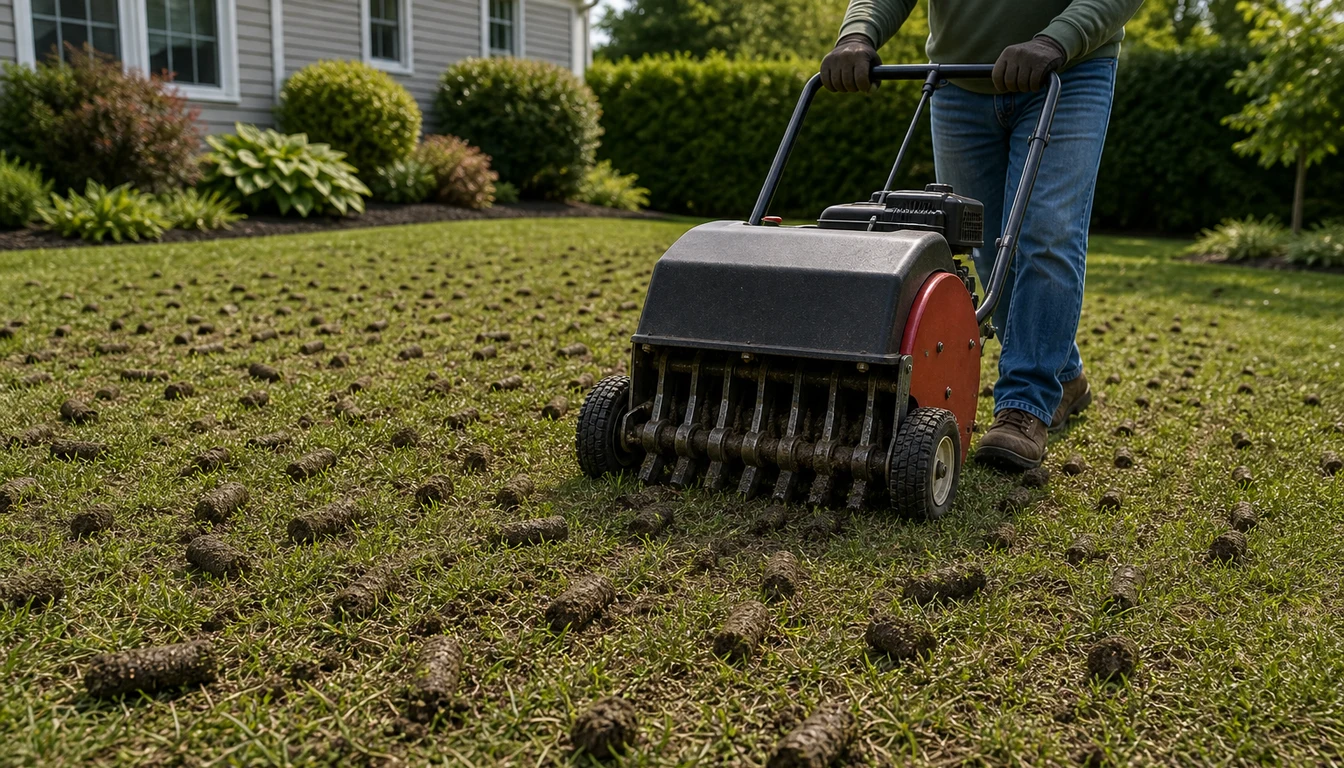
Grass seed lodged on leaves, matted clippings, or thick thatch dries quickly and may never root into soil. Preparation should expose enough surface for contact while keeping useful existing plants alive.
- Mow and collect debrisShorten the existing canopy within the grass's safe mowing range and remove loose clippings.
- Inspect the surfaceRake small areas and measure thatch rather than assuming every lawn needs dethatching.
- Correct compactionUse core aeration where soil is compacted, making enough passes to affect the problem area.
- Place seed against soilBroadcast in calibrated directions or use equipment that cuts shallow grooves at the seed-label depth.
- Settle the surfaceLight raking or rolling may improve contact without burying small grass seed too deeply.
Core aeration can improve compacted soil, but the holes are not the target seedbed. Seeds concentrated at the bottom may be too deep, while the useful benefit comes from reduced compaction and more exposed soil across the surface.
Slit seeders can improve placement on large or difficult sites when calibrated correctly.
Their blades should not cut so deeply that seed disappears below its recommended planting depth.
Dethatching is justified by a measured, restrictive layer rather than routine.
Aggressive removal can tear out the very turf the overseeding project is meant to preserve.
Calibrate Seed and Fertilizer Instead of Making One Heavy Pass
Read the seed label for the recommended overseeding rate because species and blends differ. More seed can create crowded seedlings that compete for light, water, and nutrients.
Divide the measured amount into two portions and apply them in crossing directions with a calibrated spreader. This reduces stripes and missed areas without increasing the total rate.
- Measure the areaRecord the square feet assigned to each seed blend.
- Weigh the seedUse the overseeding rate on the bag for that measured area.
- Calibrate a test runCatch or weigh output over a known area before treating the lawn.
- Apply in crossing passesUse half the total in each direction and watch overlap at turns.
- Record what was usedSave the label and note the cultivar, lot, rate, and date.
Starter fertilizer is not automatically required in the same amount on every soil. Follow local soil-test guidance and phosphorus rules, then use a product labeled for the site if nutrients are needed.
Do not apply a conventional preemergence herbicide unless its label allows seeding at that timing. Many products that stop annual weed seedlings also stop desirable grass seedlings.
Herbicide intervals vary by active ingredient, rate, turf species, and direction of travel between treatment and seeding. The product label owns that interval.
Water by Seedbed Moisture, Then Shift as Roots Grow
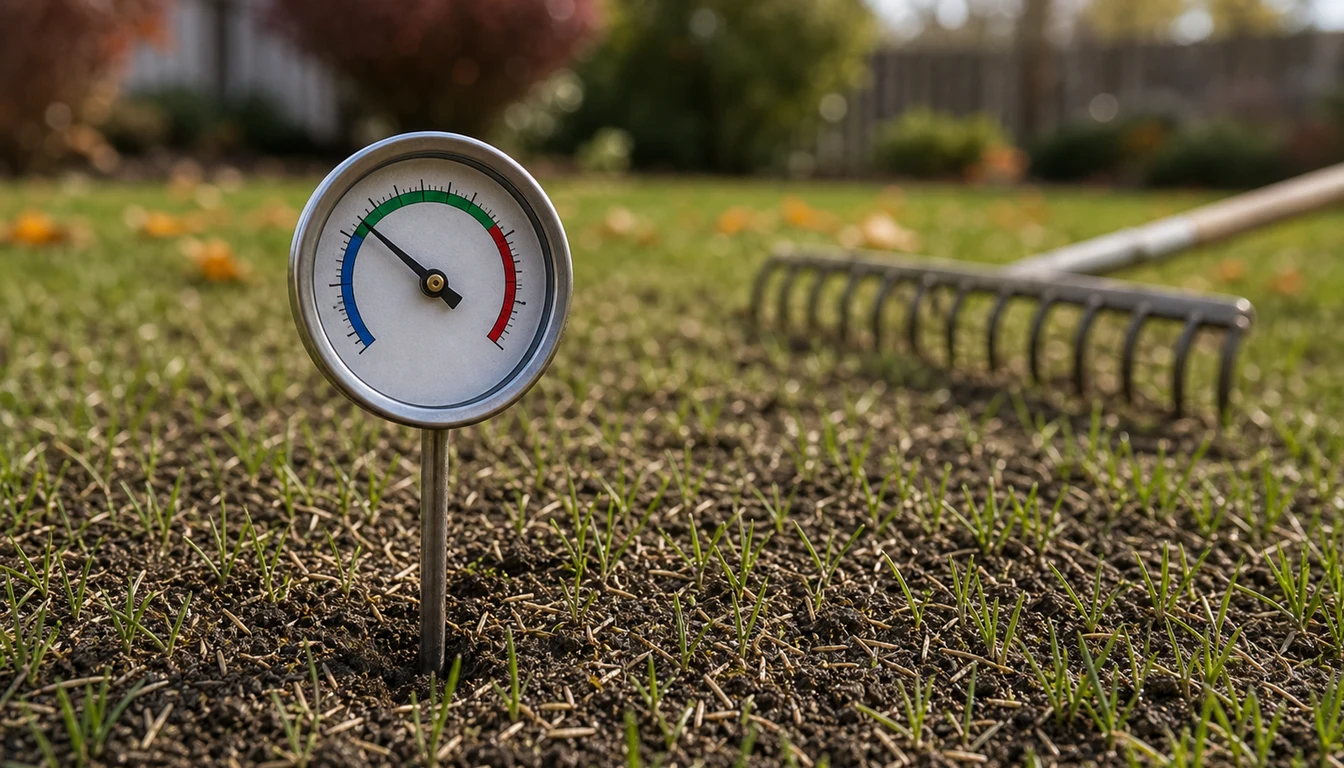
Fresh seed needs the upper soil layer to stay evenly moist through germination, but a national schedule of two or four waterings per day cannot account for soil, shade, wind, sprinkler output, rain, or species.
Check the surface several times during the first days.
Water when the seed zone approaches dryness, using enough to moisten it without puddles, runoff, seed movement, or persistently saturated soil.
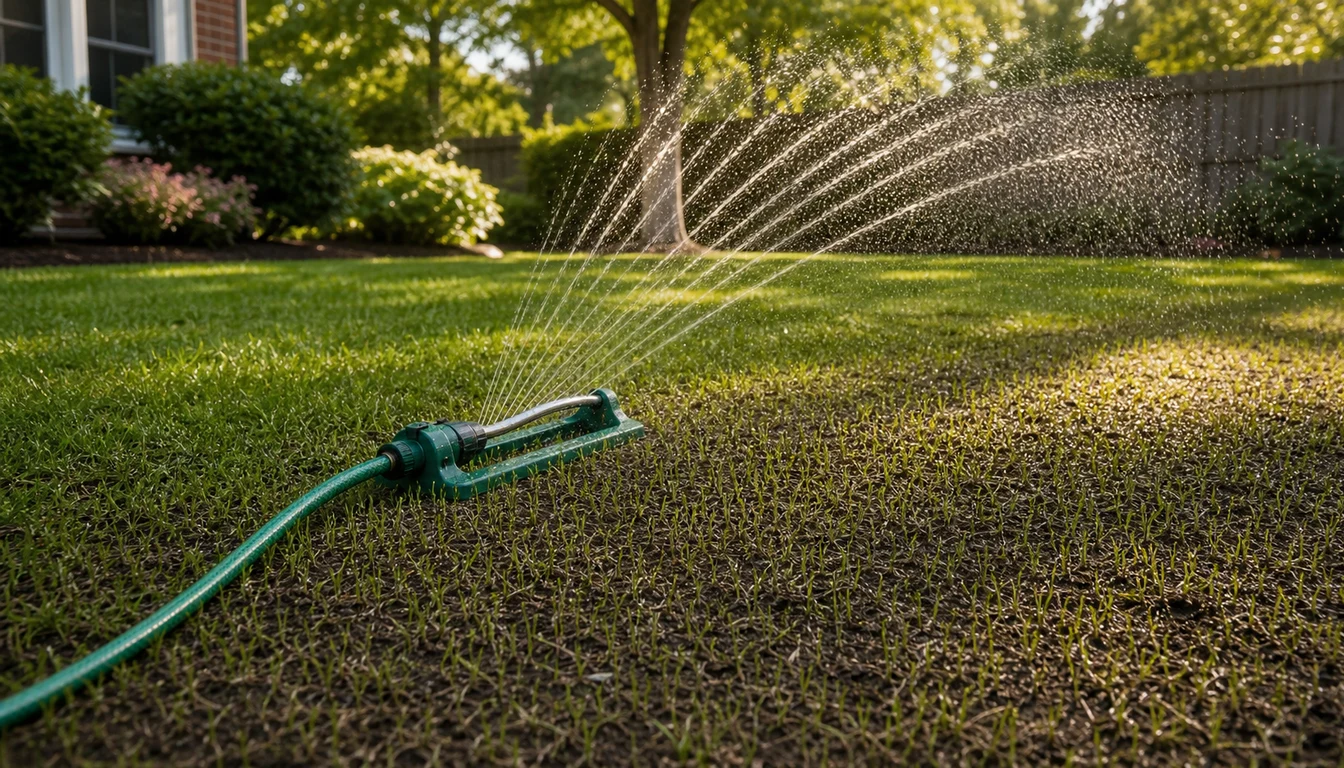
| Stage | Moisture goal | What to watch |
|---|---|---|
| Before germination | Even moisture around seed | Dry crust, washed seed, puddles, runoff |
| Mixed emergence | Protect later-germinating seed while avoiding saturation | Green areas beside bare areas that still contain seed |
| Young seedlings | Moisture through the developing root zone | Wilt, footprints, soft soil, shallow isolated wetting |
| Established new turf | Longer intervals and deeper wetting appropriate to species and soil | Roots, weather, mowing response, and local restrictions |
Run a plain-water irrigation test before seeding. Place identical straight-sided containers across each zone and compare the collected depth so dry corners are found before they become bare patches.
As roots extend, reduce frequency gradually and wet more of the root zone.
A sudden jump from constant surface moisture to mature-lawn irrigation can strand shallow seedlings.
Rain changes the next decision, not the entire plan. Check what reached the soil beneath the canopy instead of assuming a wet sidewalk means the seedbed received enough.
Keep Mowing, Traffic, and Weed Control From Undoing the Work
Existing grass keeps growing while new seed germinates. Waiting too long to mow can shade seedlings, while mowing too early on soft soil can rut the surface and pull weak plants.
Mow when the established canopy needs it and the ground is firm enough to carry the mower. Use a sharp blade, turn gently, and follow the one-third mowing rule for the established species rather than waiting for one universal seedling height.
Expect weeds because preparation also exposes soil for their seed.
Hand removal may work in small areas, but any herbicide must be compatible with the grass species and seedling stage on its label.
Some labels require several mowings before a postemergence treatment. Others restrict the interval by time or growth stage, so a generic six-week rule can be wrong in either direction.
Fertilize and irrigate the entire lawn for healthy establishment, not maximum color. Excessive nitrogen can push succulent top growth before roots and heat tolerance are ready.
Judge the Stand After Establishment, Not at First Germination
Germination speed varies among species, and emergence is only the first checkpoint. The useful result is a stand that survives mowing, normal irrigation, weather, traffic, and competition from the existing lawn.
- Map thin areas and compare them with irrigation coverage
- Check whether failures repeat shade, traffic, drainage, or compaction patterns
- Separate slow-germinating zones from washed or dried seed
- Confirm that the seed blend matches the texture and season of the existing turf
- Wait for the locally expected establishment period before reseeding every gap
- Change the site or repair method when the same constraint remains
Patch small misses after correcting calibration or water coverage. Do not repeat the entire project simply because one strip at a turn or sprinkler edge failed.
If broad areas fail while seed germinated elsewhere, investigate placement, soil moisture, planting depth, chemical history, and weather. A seed lot problem usually does not respect the exact outline of a sprinkler gap or compacted path.
A successful overseed leaves permanent suitable grass rather than a few weeks of green.
If the site still rejects turf, the better investment may be drainage work, traffic hardening, a shade-adapted groundcover, or less lawn.
Pro Tips
- Map the cause of thinning before choosing a seed blend.
- Use locally recommended cultivars and the overseeding rate on the seed label.
- Measure the lawn area and calibrate the spreader before opening every bag.
- Aerate for measured compaction, not because seed supposedly belongs in deep core holes.
- Keep the seed zone evenly moist by observation rather than a fixed daily count.
- Record seed lot, rate, date, weather, and herbicide history so failures can be diagnosed.
Frequently Asked Questions
Is overseeding worth it if a lawn is mostly weeds?
Usually not until the unwanted plants and the reason for turf loss are addressed. When desirable grass no longer forms a useful base, renovation often gives better control over species, seed placement, grading, and weed competition.
Should I aerate every time I overseed?
Aerate when compaction or surface conditions justify it. A lawn with open soil and no compaction may not benefit enough to offset the disruption, while a heavily trafficked lawn may need several passes before seeding.
Can warm-season grass be overseeded?
Some bermudagrass can be seeded, while many St. Augustinegrass, zoysiagrass, and hybrid bermudagrass lawns are repaired vegetatively. Temporary winter rye overseeding is a separate choice with added maintenance and spring competition.
How often should newly overseeded grass be watered?
Water often enough to keep the seed zone evenly moist without runoff or saturation. The actual frequency changes with weather, soil, shade, sprinkler output, seed stage, and local watering restrictions.
Can I overseed after using weed control?
Only when the herbicide label permits seeding at that interval. Preemergence and postemergence products have different restrictions, and some require a stated time or number of mowings before or after seeding.
Sources & References
- Penn State Extension: Lawn Establishment
- University of Missouri Extension: Cool-Season Grasses, Lawn Establishment and Renovation
- Clemson Cooperative Extension: Overseeding Warm-Season Lawns
- University of Maryland Extension: Lawn Renovation and Overseeding
- Purdue University Extension: Establishing Turfgrass Areas From Seed
Related Guides
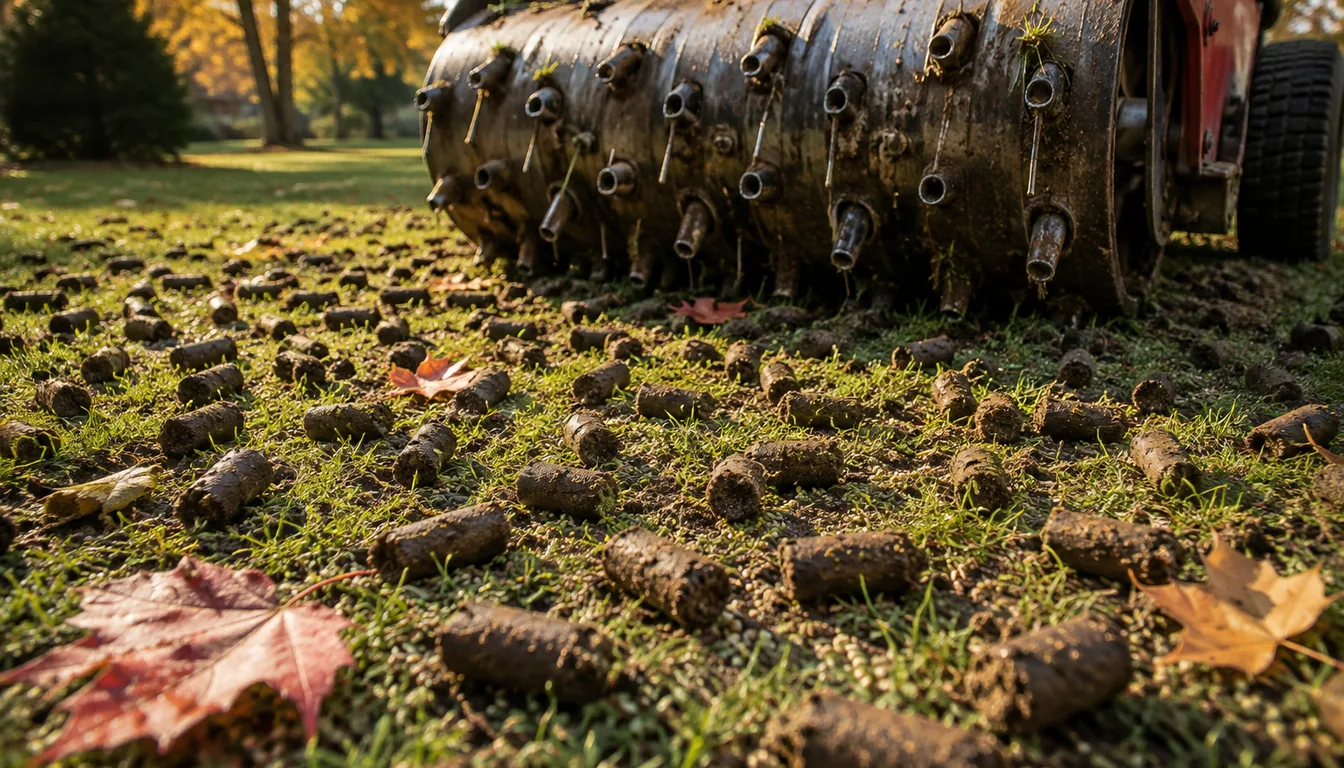
Best Time to Aerate and Overseed for a Thicker Lawn
Most lawns never reach their potential because aeration and overseeding happen at the wrong time.
11 min read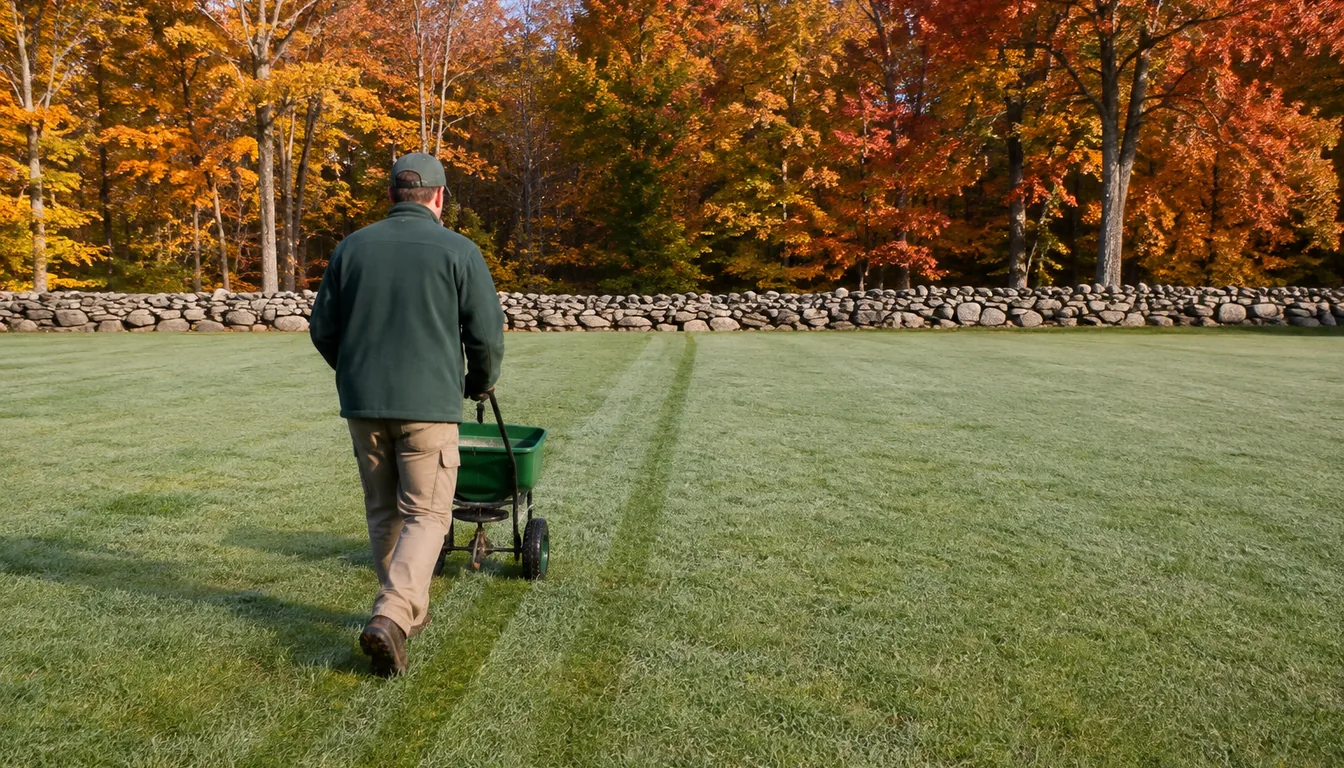
Best Time to Overseed a Northeast Lawn for Thick Turf
Overseeding in the Northeast is all about catching that short window when soil is warm, air is…
11 min read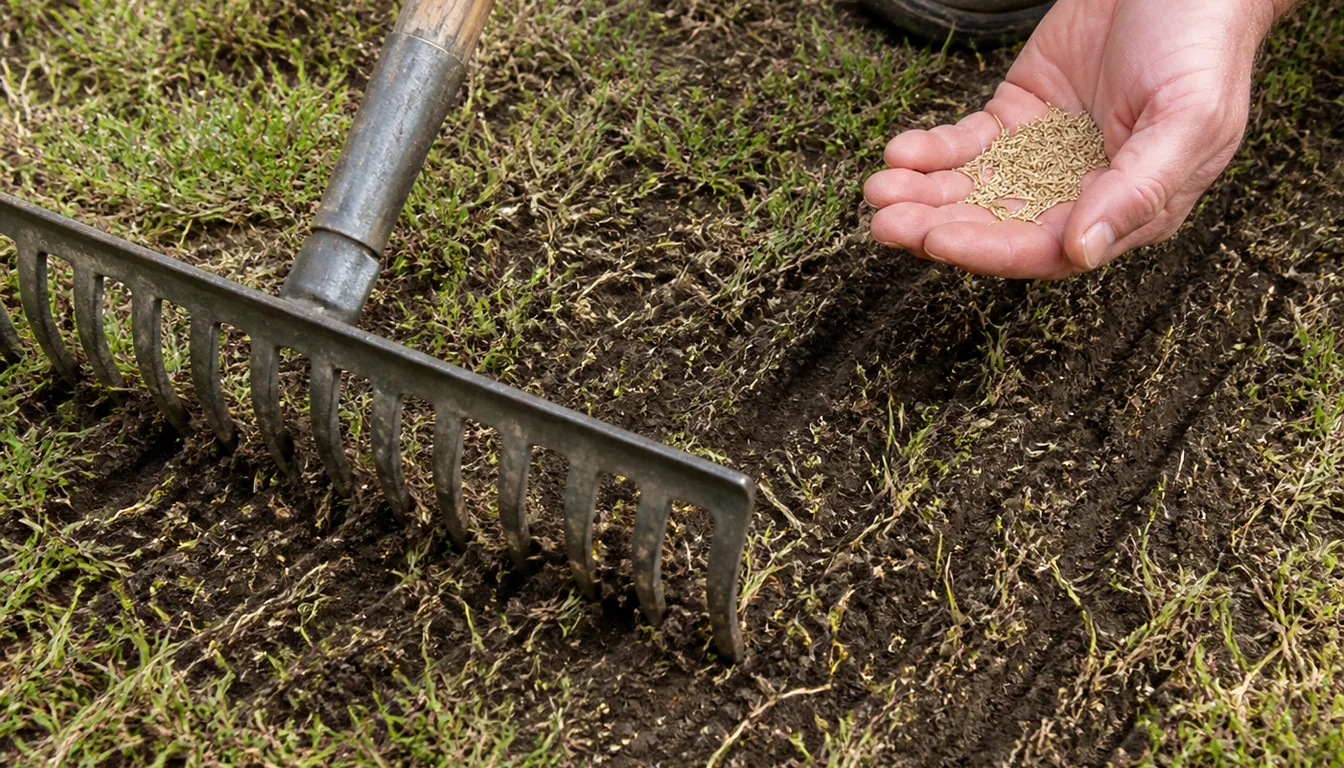
Can You Overseed a Lawn Without Aerating It First?
Thin turf and bare patches do not always mean you need to rent an aerator.
11 min read
Dethatching vs Aerating: Which Does Your Lawn Need?
Choose dethatching when a measured layer of thatch has become excessive.
16 min read
How Long After Planting Grass Seed Can You Walk On It Safely
Most new lawns fail not from bad seed, but from feet, paws, and mower wheels showing up too soon…
11 min read
How to Fertilize a Lawn Without Burning It
Those yellow stripes and crispy patches after fertilizing are almost always user error, not bad…
14 min read