When to Fertilize Each Part of the Garden, Season by Season
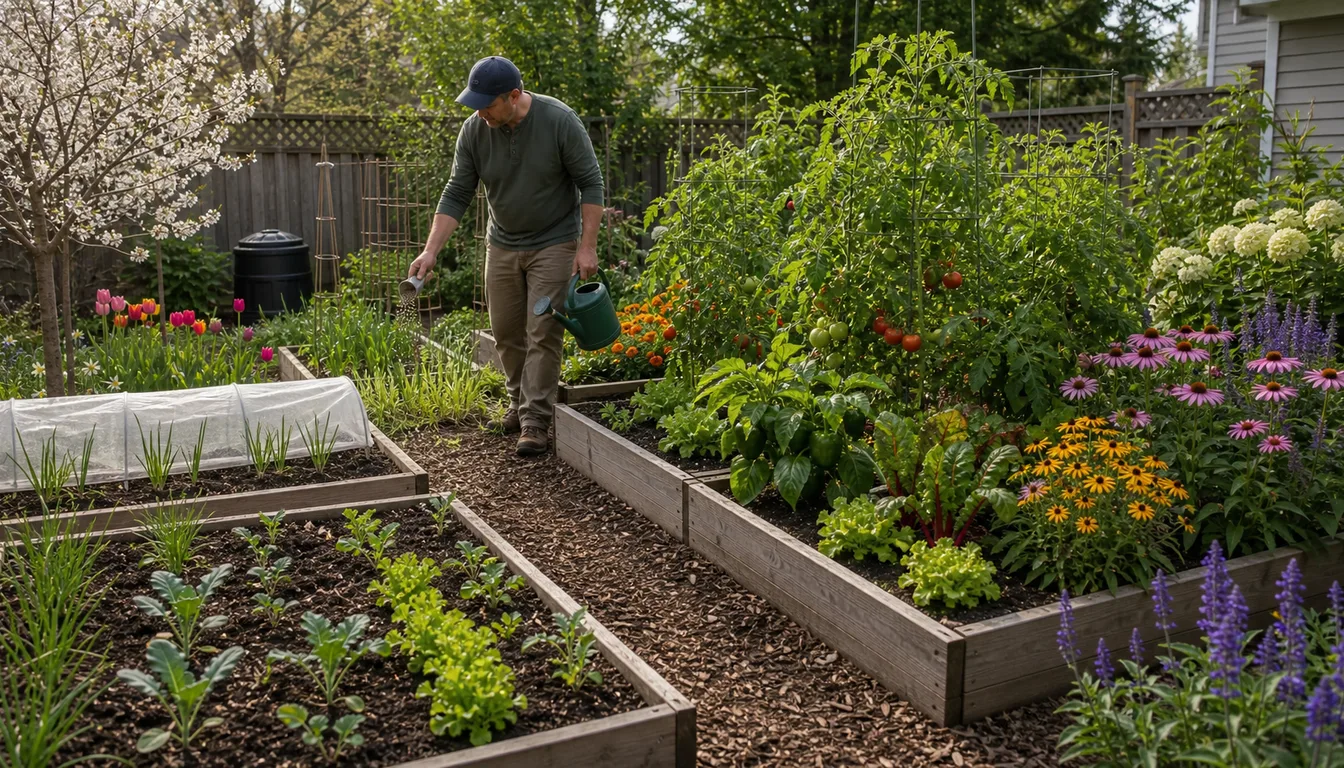
There is no single date to fertilize a garden, because each part of a yard runs on its own clock. Vegetables and annual flowers keep using fertilizer through the summer. Most perennials need one feeding, just before their shoots come up in spring, and many need none. Fruit trees are fed between budbreak and petal drop, cool-season lawns mainly from late summer through fall, and trees and shrubs growing in a fed lawn usually need nothing of their own.
Feeding the whole yard on one weekend therefore puts fertilizer on some plants at the right moment and on others at the wrong one. The calendar below sorts the yard by part and by season, and it names the plants that are better left alone.
At a glance
What Decides When Fertilizer Helps?
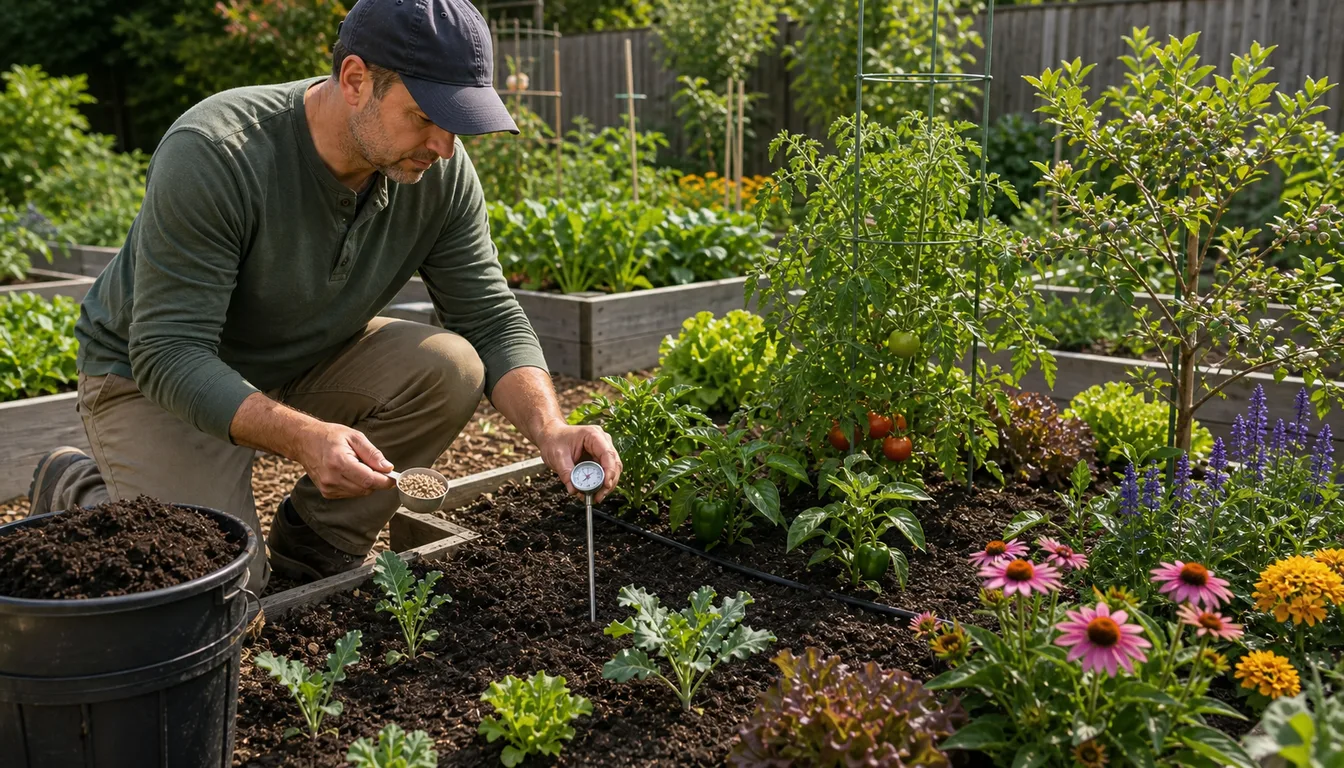
Two things decide when fertilizer does any good. The soil has to be warm and moist enough to release nutrients, and the plant has to be at a stage where it is using them.
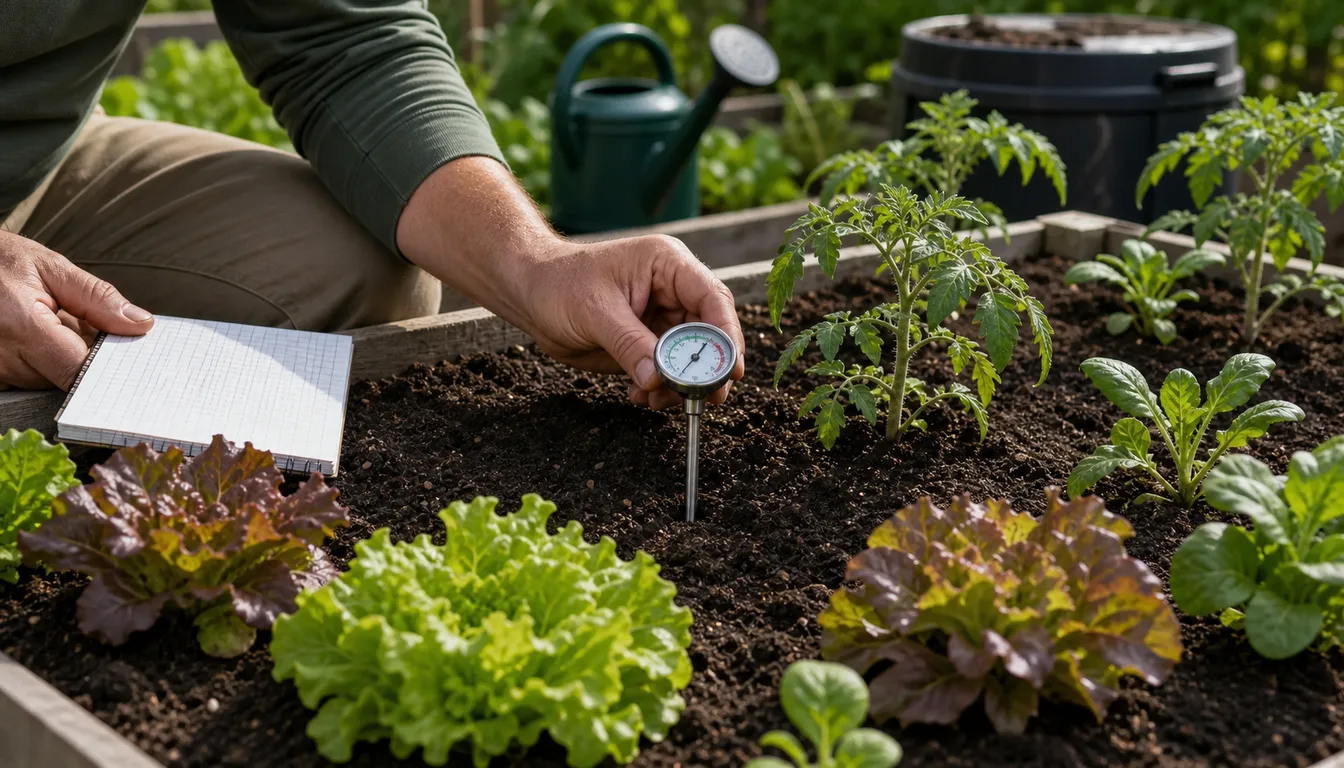
Soil warmth matters most for organic products. Colorado State explains that soil microorganisms must convert organic fertilizers before plants can take up the nutrients, and that this activity depends on soil temperatures above 50°F with enough moisture. Dry or cold soil delays the release. Oregon State adds that cold soil slows microbes working on synthetic fertilizers too.
Early-spring color can mislead. Michigan State notes that cool soils can limit uptake of some nutrients, so new foliage may look light green or yellow in early spring even when the soil holds enough. An early pale cast in cold soil is therefore not by itself a reason to feed.
The plant's stage is the second clock. A tree is fed before its buds open, a perennial as its shoots push up, a cool-season lawn while it thickens in fall. Each part of the calendar below follows one of those stages, which is why the dates differ so much across one yard.
Which Part of the Yard Is Fed When?
| Part of the yard | Main feeding window | Leave it alone or watch |
|---|---|---|
| Vegetable beds | Before planting, then side-dresses at each crop's stage | Beans and peas need little or no nitrogen |
| Annual flowers | Just before planting, then every 6 weeks for more growth | Repeat feedings follow a soil test |
| Perennial flowers | Once, just before or as new shoots emerge in spring | Many in healthy soil need none |
| Spring bulbs kept year to year | As shoots emerge, or after blooms fade, not both | Bulbs replaced each fall need none |
| Fruit trees | Just before budbreak, finished by petal drop | Summer |
| Blueberries | Early spring before budbreak | After bloom |
| Raspberries | Spring, before new growth begins | Late spring and summer |
| Grapes | Early spring | Late spring and summer |
| Shade trees and shrubs | Only when short of nitrogen, in early spring or late fall after leaf drop | In a fed lawn, and in late summer where winter comes early |
| Cool-season lawn | Mostly late summer through fall | Little to none in summer |
| Warm-season lawn | After the second mowing, about 6 weeks after the last frost | Late fall, with a cutoff that varies by region |
The table comes from several extension services. The fruit, berry and grape windows are Iowa State's, the annual and perennial rates are Clemson's and Michigan State's, the lawn windows are Purdue's, Clemson's and Texas A&M's, and the tree guidance matches the tree and shrub feeding guide.
Read across a row and the pattern is consistent. Fertilizer goes on when a plant is about to make the growth that gives the harvest, the flowers or the turf, and it stops before growth that would have no time to mature.
What Gets Fed in Spring, and in What Order?
Spring is crowded, so the order matters. Woody fruit plants come first, because their window closes early. Iowa State's fruit-tree window opens just before budbreak and is best finished by petal drop. Blueberries are fed in early spring before budbreak and not after bloom, and established raspberries before new growth begins.
Perennial flowers come next. Michigan State recommends a single application just before or as new spring growth pushes up, and no more than 1 pound of nitrogen per 1,000 square feet where no compost is used, about a quarter of what a lawn gets in a season. Clemson's version is 1 to 2 pounds of a slow-release 12-6-6 per 100 square feet just before new shoots emerge.
Spring bulbs that stay in the ground are fed as their shoots appear. Iowa State gives a choice of that moment or after the blooms fade, but not both, at 2 to 3 pounds of 5-10-5 per 100 square feet. Illinois puts the spring feeding when shoots first appear, ideally four to six weeks before bloom. Hybrid tulips replaced every fall need nothing.
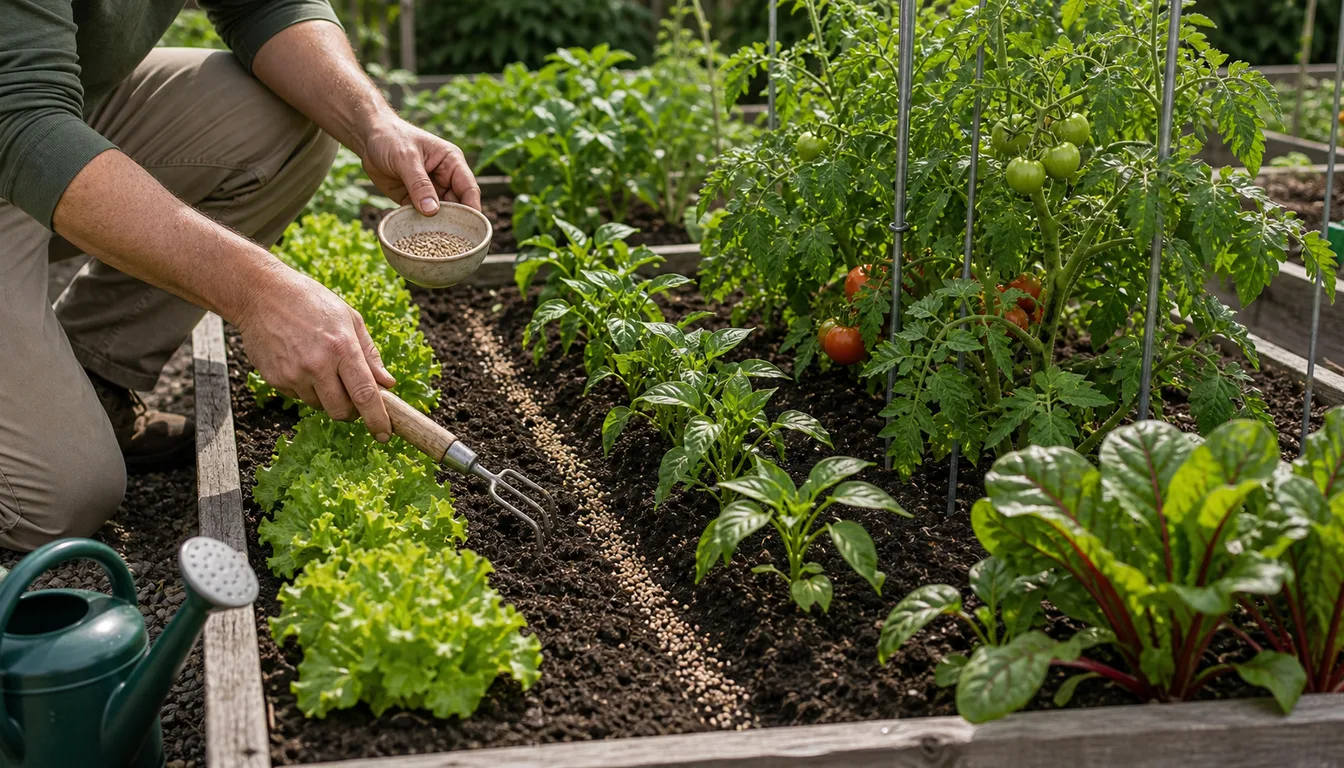
Vegetable beds get their pre-plant feed just before planting, and annual flowers get theirs at the same point. Cool-season lawns get only a light spring feeding. Purdue advises less nitrogen during the spring growth flush and a slow-release product when nitrogen is applied in spring, because the main lawn feeding belongs in fall.
What Keeps Getting Fed Through Summer?
Summer belongs to the plants that keep growing and producing. Clemson repeats the slow-release feeding for annual flowers at 6-week intervals for additional growth, and vegetables get their side-dresses at each crop's stage, laid out in when to apply vegetable fertilizer.
A few perennials also earn a second feed. Michigan State names daylilies, peonies, chrysanthemums and tall phlox as plants that benefit from a summer application as well as the spring one. Most other perennials do not, and Michigan State warns that an over-fertilized perennial grows leggy, flops and can produce foliage at the expense of blooms.
The longer list is what stays unfed in summer. Iowa State advises against summer fertilization of trees and shrubs, because it pushes late growth that may not harden before winter, and it says not to fertilize grapes or raspberries in late spring or summer. Purdue gives cool-season lawns little to no nitrogen in summer unless they are watered often or clippings are removed.
Heat and drought add one more rule. Fertilizer needs soil moisture to be taken up, so a plant wilting from drought gets water first and fertilizer, if it still needs any, on another day.
Why Do Late Summer and Fall Depend on the Plant?
Late summer and fall are where regions disagree most, and the right answer depends on the plant and the winter.
Cool-season lawns get their main feeding now. Purdue says bluegrasses, fescues and ryegrasses benefit most when the majority of their nitrogen goes on from late summer through autumn, with up to 1 pound of nitrogen per 1,000 square feet a month from late August through early November. The details by region are in fall lawn fertilizing.
Warm-season lawns go the other way, toward a cutoff. Clemson gives August 15 as the latest date for nitrogen on a warm-season lawn in South Carolina. Texas A&M allows a light fall feeding as long as the last one goes on at least 6 weeks before the expected first frost, which puts the last date anywhere from September 15 in Amarillo to November 1 in Corpus Christi. The Texas lawn timing guide covers that state's dates.
In cold-winter areas, trees and shrubs have a window that opens only after the leaves fall. Maryland Extension says never to fertilize them in late summer or early fall, when new growth would start just as they prepare for dormancy, and it gives late October through early December as the fall window. Iowa State puts the same window at mid-October through November. The tree guide adds the condition that the soil should still be above 40°F.
Long, mild seasons are the exception. Clemson, writing for South Carolina, lists late summer to early fall as a feeding window when it matches plant demand. The tree guide reads the difference as climate, so the late-summer feed is skipped where winter arrives hard and early and stays available where it does not.
Fruit has two special cases. Everbearing and day-neutral strawberries take a second feeding in early August, and June-bearing strawberries are fed during renovation right after their last harvest.
Which Parts of the Yard Often Need No Fertilizer?
Some of the most common fertilizing in a yard is also the least needed.
Trees and shrubs in a fed lawn
Their roots already take up the lawn fertilizer. Iowa State says healthy, vigorous trees and shrubs generally need no fertilizer at all.
Perennials in good soil
Michigan State notes that many perennial experts recommend no fertilizer in a healthy garden soil. Sandy, low-organic beds are the exception that benefits from light feeding.
Bulbs grown as annuals
Iowa State says hybrid tulips replaced each fall need no fertilizer, since they will not be asked to bloom again.
Beans and peas
Bacteria in their roots supply much of their nitrogen, and Colorado State advises against nitrogen side-dresses on beans.
Leaving these out has a practical payoff. It frees the fertilizer, and the attention, for the beds that are actually short. A soil test settles which ones those are, because it measures phosphorus, potassium and pH, while leaf color in a single spring can reflect cold soil or a watering problem instead of hunger.
Houseplants are outside this calendar entirely. They follow light and new growth indoors rather than the outdoor seasons, which is covered in when to fertilize plants indoors and out.
Pro Tips
- Feed fruit trees, blueberries and raspberries first in spring, since their window closes by bloom or new growth.
- Give most perennials a single feeding as the shoots come up, and skip it in rich, healthy soil.
- Choose spring emergence or after bloom for bulbs kept year to year, not both.
- Put most of a cool-season lawn's nitrogen down from late summer through fall.
- Keep fertilizer off trees and shrubs in late summer in cold-winter areas, and feed them after leaf drop if they need it.
- Leave trees in a fertilized lawn without extra feed.
Frequently Asked Questions
What month should I fertilize my garden?
It depends on the part of the garden. Fruit trees and most perennials are fed in early spring, vegetables and annuals at planting and through summer, and cool-season lawns mostly from late summer through fall. A single month for the whole yard puts fertilizer on some plants at the wrong time.
Should I fertilize the garden in fall?
Some of it. Cool-season lawns get their main feeding from late summer through fall, and trees and shrubs that need feeding can be fed after leaf drop. Warm-season lawns have a cutoff, August 15 in South Carolina per Clemson, and in cold-winter regions woody plants should not be fed in late summer or early fall.
Do perennials need fertilizer every year?
Often not. Michigan State notes that many perennial experts recommend none in a healthy garden soil. Perennials in sandy soil low in organic matter benefit from one light feeding as new growth emerges in spring.
When should fruit trees be fertilized?
In early spring. Iowa State starts just before budbreak and finishes by petal drop, and it advises against summer feeding, which pushes late growth that may not harden before winter.
Can I fertilize everything in the yard on the same day?
Only by feeding some plants at the wrong time. A spring weekend suits fruit trees and perennials but comes too early for warm-season lawns, and a fall weekend suits cool-season lawns but is wrong for warm-season lawns in many regions.
Sources & References
- Organic Fertilizers, Colorado State University Extension
- Growing Vegetables in Central Oregon (EM 9128), Oregon State University Extension
- Fertilizing Established Perennials: Feed 'Em and Weep, Michigan State University Extension
- Growing Perennials, Clemson Cooperative Extension
- Growing Annuals, Clemson Cooperative Extension
- Care of Spring-Flowering Bulbs After Bloom, Iowa State University Extension
- Caring for Your Spring Bulbs, University of Illinois Extension
- Fertilizing Tree and Small Fruits in the Home Garden, Iowa State University Extension
- Should I Fertilize Established Trees and Shrubs?, Iowa State University Extension
- Fertilizing Trees and Shrubs and Nutrient Deficiency Symptoms, University of Maryland Extension
- Fertilizing Trees and Shrubs, Clemson Cooperative Extension
- Fertilizing Established Cool-Season Lawns (AY-22-W), Purdue Extension
- Prepare Warm-Season Lawns for Winter, Clemson Cooperative Extension
- Fertilizing Texas Lawns: 10-Point Checklist for Warm-Season Grasses (E-436), Texas A&M AgriLife Extension
- Vegetable Gardening: Nitrogen Recommendations, Colorado State University Extension
Related Guides
Best Fertilizer for Indoor Plants: How to Choose
The best fertilizer for most indoor plants is a complete fertilizer labeled for houseplants, with…
15 min read
Best Fertilizer for Vegetables by Garden Type
Fertilizer only helps vegetables if it matches what your soil and crops need.
11 min read
Can You Fertilize Wet Grass Safely?
A wet lawn right when you planned to fertilize creates second thoughts fast.
11 min read
How Long Does Compost Take to Be Ready?
Compost does not follow a calendar, it follows conditions.
11 min read
How to Fertilize Tomatoes Without Overfeeding
Fertilize tomatoes according to a soil test and product label, not a fixed weekly calendar.
15 min read
How to Fertilize a Vegetable Garden for Maximum Yield
Fertilizer is not magic dust. It is plant food in a specific ratio.
14 min read