
How to Fertilize Tomatoes Without Overfeeding
Fertilize tomatoes according to a soil test and product label, not a fixed weekly calendar. In garden soil, the main application often goes in before planting.
A later side-dress may be useful after fruit begins to form if the test and plant growth support it.
Container tomatoes need smaller, repeated applications because frequent watering carries nutrients out of potting mix.
Too much nitrogen produces vigorous vines at the expense of flowers and fruit, while concentrated fertilizer on dry roots can cause salt injury. Flower drop by itself is not proof of a nutrient shortage.
Heat, cold, poor pollination, and uneven moisture are common causes.
Read the soil report first, then use the three numbers on the label to measure a side-dress and decide whether a pale or unproductive plant actually needs food. If you feed the whole vegetable garden, count that application before adding anything specifically for tomatoes.
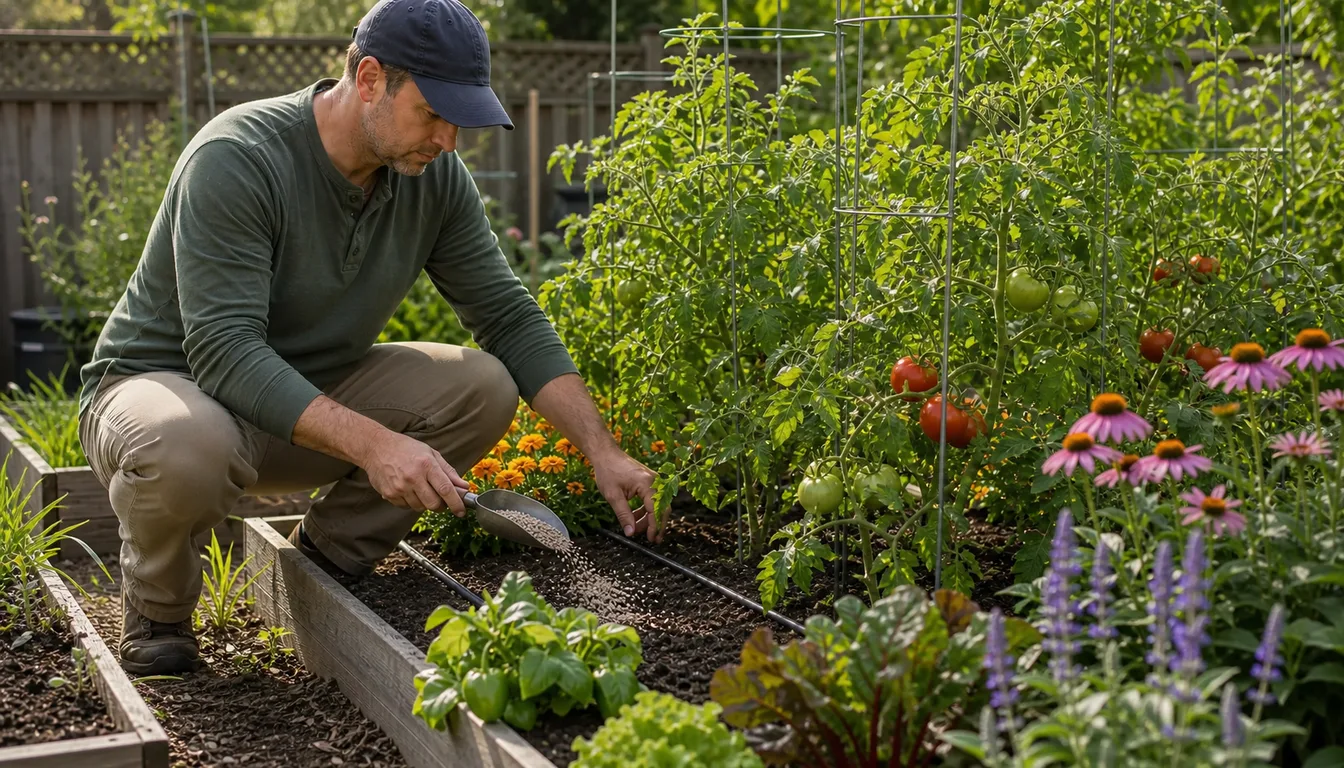
At a glance
Start With a Soil Test and the Fertilizer Label
A soil test reports pH and the nutrients already present. That matters because phosphorus and potassium can accumulate in garden beds.
Repeatedly applying a high-phosphorus “tomato” product when the soil already tests high does not improve fruit set and can create an avoidable imbalance.
Collect the sample before adding compost, lime, or fertilizer and follow the laboratory's depth and mixing instructions. Select the crop recommendation for vegetables or tomatoes, then calculate the product amount from the bed area and the analysis on the bag.
The three numbers form a fertilizer analysis by weight. A 5-10-10 fertilizer contains 5 percent nitrogen, 10 percent phosphate, and 10 percent potash.
They do not mean “five parts now, ten parts at bloom.”
Products with different analyses require different amounts to deliver the same nutrient rate.
| Information you have | Best decision |
|---|---|
| Current soil test with a tomato recommendation | Follow its nutrient and lime rates |
| No test and an established garden bed | Test before adding phosphorus or potassium |
| Fresh commercial potting mix | Check whether starter or controlled-release fertilizer is included |
| Reused container mix | Refresh structure, then feed from the mix and fertilizer labels |
A report also prevents pH guesswork. Tomatoes generally grow well in slightly acidic soil, but lime belongs only where the test calls for it.
Compost improves soil structure and supplies some nutrients, yet its fertility varies and must be counted with the rest of the program.
How to Fertilize Seedlings and New Transplants
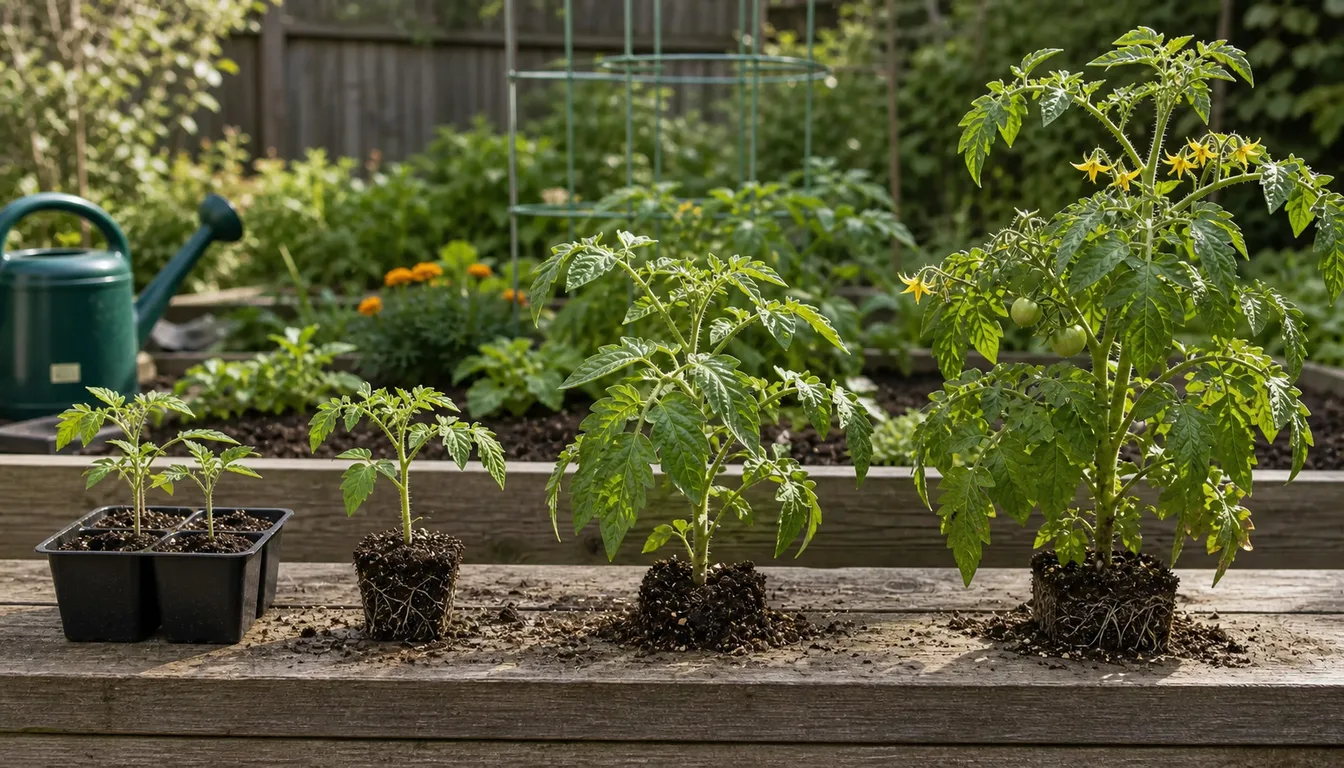
Seedlings in a mix that contains fertilizer may need no additional feeding before transplant. In an unfertilized seed-starting medium, begin only after true leaves develop and use a soluble product at the seedling rate printed on its label.
Arbitrary half- or quarter-strength recipes are unreliable because product concentrations differ.
Pale seedlings are not always hungry. Cold, saturated mix limits root function, crowded cells restrict growth, and insufficient light makes stems weak.
Correct those conditions before adding more dissolved salts around small roots.
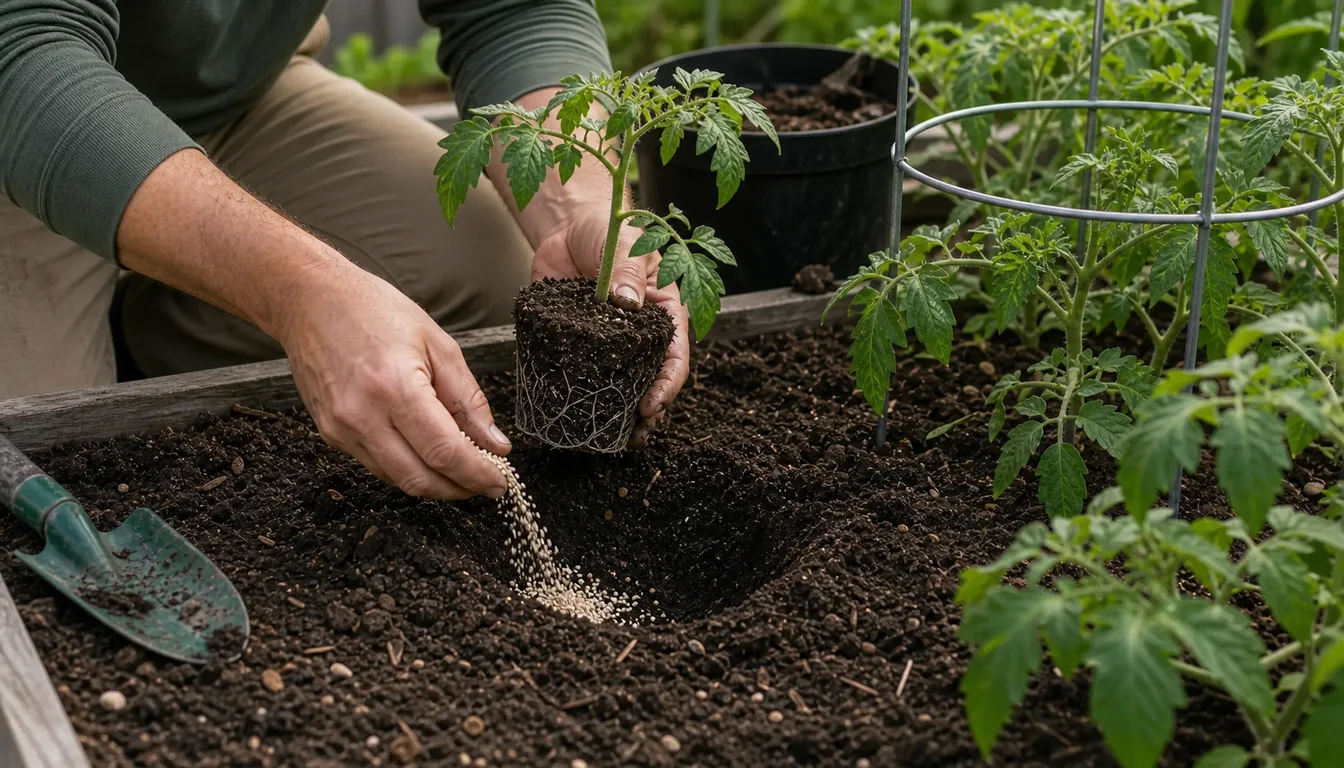
For a garden bed, broadcast and incorporate the soil-test recommendation before planting, or use a labeled starter solution if local guidance calls for one. Never drop dry granules into the hole where roots will touch them.
A concentrated band can injure a transplant precisely when it has the least root system available to recover.
Water thoroughly after planting and allow new growth to show that the roots have established. An automatic feed two weeks later is unnecessary when the preplant rate was correct and leaves are expanding normally.
Resume only at the side-dress stage recommended for the soil and region.
Count nutrients in potting mix, compost, manure, preplant fertilizer, and starter solution. Layering several “gentle” products can still exceed the intended rate.
If basil or another crop shares the bed, place a measured tomato side-dress where the tomato roots can reach it rather than broadcasting the same rate over every companion.
Should You Fertilize When Tomatoes Flower?
The first yellow flower is a checkpoint, not an automatic instruction to change fertilizers. If the plant is medium green, new leaves are normal size, internodes are not excessively long, and the soil recommendation was met before planting, wait for the fruit-set or side-dress stage in your local guidance.
Avoid a heavy nitrogen application during bloom because vigorous leafy growth can compete with flowering and fruiting. Do not try to correct blossom drop with a phosphorus booster.
Pollen becomes less viable in temperature extremes, and dry or waterlogged roots can cause flowers to abort even in fertile soil.
When the first fruits begin enlarging, some soils benefit from a measured nitrogen side-dress. Place it in a shallow band several inches from the stem or around the outer root zone, keep it off leaves, and water it into moist soil according to the label.
The rate changes with soil, previous amendments, and fertilizer analysis.
Use this checklist before applying it. - The soil report or regional recommendation includes a side-dress.
- The plant is growing slowly or paling across new growth, not losing one shaded lower leaf. - No equivalent liquid or controlled-release feed was already applied.
- Roots are healthy and soil is neither dust-dry nor saturated.
How to Side-Dress Tomatoes During Fruiting
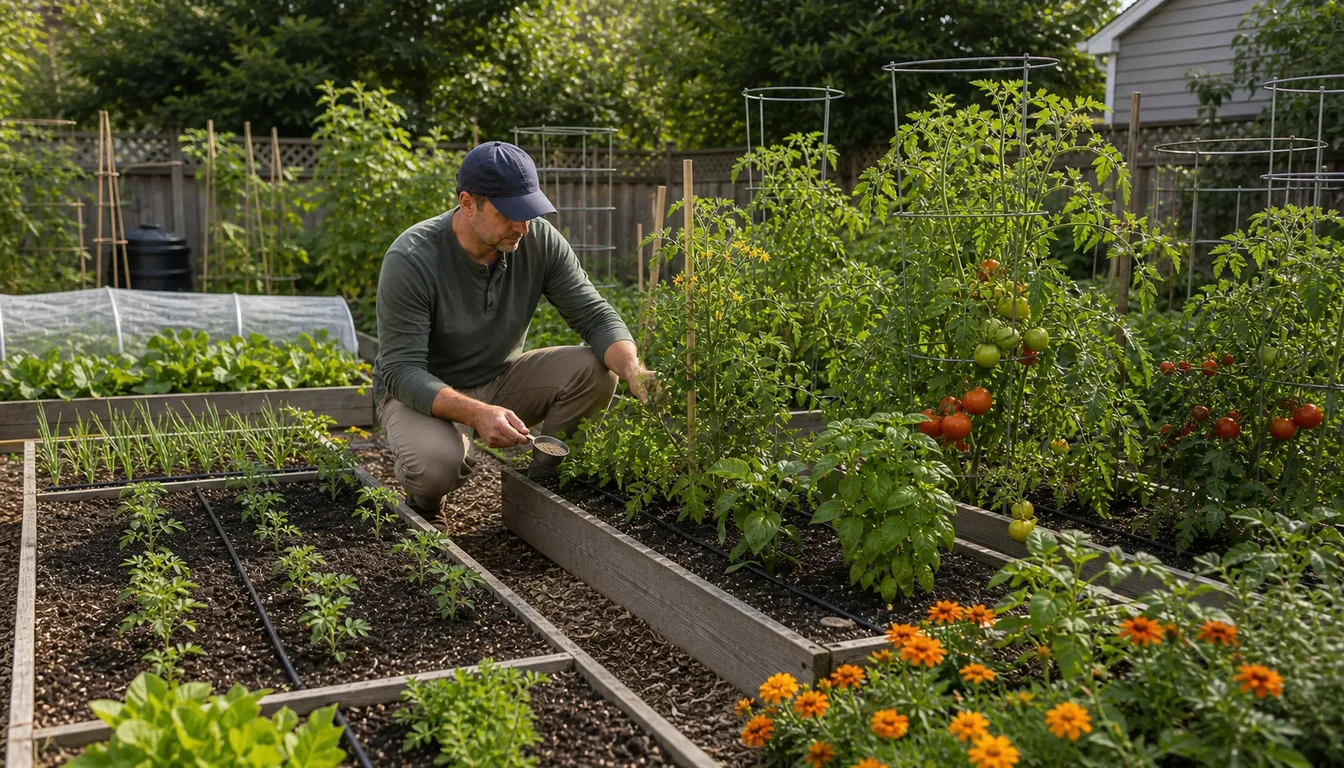
A long-bearing indeterminate tomato may need another application where the soil recommendation allows it, especially in sandy ground or after a long harvest. A determinate plant ripening one concentrated crop may finish without the same repeat feeding.
Use the remaining harvest period and new growth instead of counting a fixed number of weeks from transplant.
Measure the bed area and product. Do not apply by the handful.
Put granules outside the immediate stem zone, lightly incorporate only if that will not damage roots, and irrigate as the label instructs.
Do not cultivate deeply under a mature plant or mound unfinished compost against its crown.
Late feeding has little value when frost is near, disease has removed most foliage, or a determinate plant has completed its crop. Nitrogen cannot make existing green fruit ripen faster, and a flush of tender growth can use resources without contributing to harvest.
| Plant and season | Reassess before feeding |
|---|---|
| Indeterminate plant still setting clusters | Soil recommendation, leaf color, rainfall, prior applications |
| Determinate plant ripening its main crop | Whether meaningful flowering and growth remain |
| Plant with leaf spots and declining canopy | Diagnose disease. fertilizer does not replace lost foliage |
| Late crop near first frost | Days of useful warm weather and fruit already present |
A cucumber sharing the row may exhaust nutrients at a different rate, so crop performance is more useful than assuming the whole bed needs another uniform dose.
How Weather and Soil Change the Feeding Plan
USDA hardiness zones describe average winter minimum temperatures. they do not prescribe a tomato fertilizer schedule.
Local frost dates, soil temperature, rainfall, summer heat, texture, and the length of harvest are more useful.
Cold soil slows root activity. An early transplant may look pale even when nutrients are present, so feeding harder can raise salts without correcting the temperature problem.
During very hot weather, flower set may pause while water demand rises. keep moisture even rather than trying to force fruiting with fertilizer.
Sandy soil loses nitrate and water faster than a loam with good organic matter. Heavy or saturated soil can leave roots short of oxygen, producing yellowing that resembles a deficiency.
Heavy rain justifies another look at the plant and soil, not an automatic replacement of every nutrient.
- Cool soil and stalled growth: Wait for warming and protect roots.
- Long rainy period: Check drainage and new leaves before replacing nutrients.
- Hot, dry spell: Stabilize irrigation and mulch before feeding.
- Long harvest season: Reassess indeterminate plants after each application.
Use a local calendar such as the one for zone 5 gardens or zone 9 gardens to estimate planting and frost timing, but let the soil report control quantities.
How to Read Tomato Leaves Before Adding Fertilizer
A healthy tomato normally loses a few shaded lower leaves as its canopy matures. Nutrient problems usually follow a pattern.
The age of affected leaves, whether veins remain green, and whether symptoms occur across several branches all matter.
Disease spots, herbicide injury, root damage, and irregular moisture can imitate deficiency.
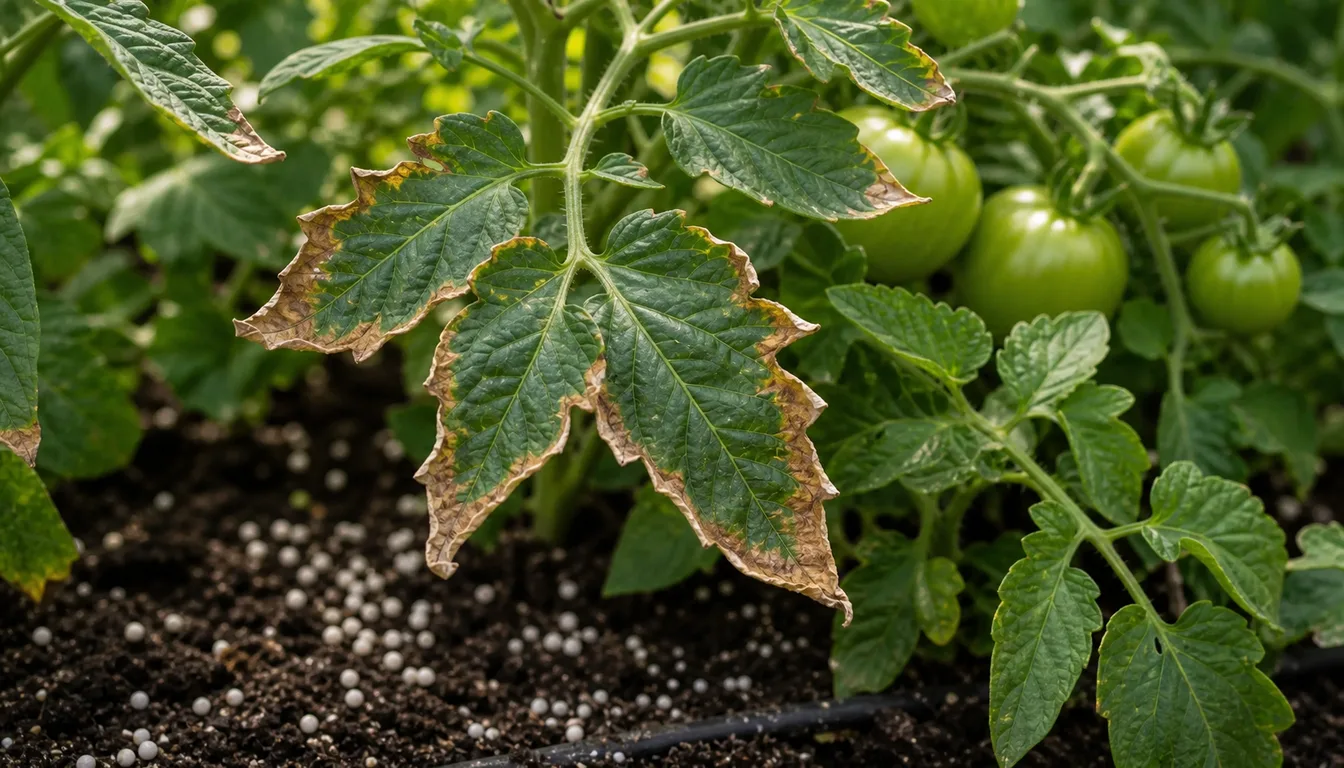
Very dark foliage, thick soft stems, long internodes, and limited fruit suggest excess nitrogen, especially when the bed has received manure or several products. Stop feeding and review what has already been applied.
Do not add phosphorus as a counterweight.
A white crust on a container rim, burnt leaf margins, and wilting despite moist mix can indicate concentrated salts. Leach only if the pot drains freely, use plain water, and pause fertilizer.
In a garden bed, do not attempt to “flush” by waterlogging the root zone.
Uniformly pale growth can justify testing and a labeled feed, but yellow lower leaves with dark lesions or concentric rings need a disease diagnosis instead. A local Extension office can often use clear photos plus a soil report to separate nutrition from pests and pathogens.
Diagnose the pattern first. Extra fertilizer cannot repair roots that are cold, rotten, compacted, drought-stressed, or infected.
Water Tomatoes Before and After Fertilizing
Applying fertilizer to bone-dry soil raises the salt concentration around roots. Water dry beds first, allow excess surface water to soak in, then make the measured application.
Follow the product direction for watering it into the active root zone.
Even moisture also helps prevent blossom-end rot. That disorder is associated with calcium movement into developing fruit, but adding calcium does not solve it when a soil test shows adequate calcium and roots repeatedly swing between dry and wet.
Stable irrigation and an intact root system matter more than a generic supplement.
A two- to three-inch mulch layer can moderate soil moisture, provided it stays away from the stem. Drip or a soaker hose delivers water at soil level.
The deep-watering guide explains how to check the depth reached rather than relying on minutes at the faucet.
Do not fertilize a wilted plant in peak afternoon heat. Determine whether the root ball is dry, saturated, or simply unable to keep up temporarily.
Water appropriately and wait for recovery before deciding that nutrition is the problem.
Fertilizing Tomatoes in Containers and Grow Bags
Container tomatoes have a small nutrient reservoir and are watered often, so they need a different plan from in-ground plants. Start with a quality potting mix and read its bag.
Some mixes contain a starter charge or controlled-release fertilizer, while others contain no plant food.
Choose one coherent program. Either use a controlled-release product at the labeled container rate or use a complete soluble fertilizer at the labeled interval.
If a manufacturer permits combining them, account for both.
Repeated “boosters” on top of an unknown starter charge make salt injury much more likely.
Water until some drains from the pot when the mix needs irrigation, and never let a container stand in a saucer of fertilizer solution. In extreme heat, frequent watering may shorten the interval between feeds, but the label and plant response still govern strength.
A container checklist keeps the program coherent.
- Confirm the pot has open drainage and enough volume for the cultivar.
- Record any fertilizer already blended into the mix.
- Apply one measured product, keeping it off the stem and leaves.
- Watch new growth, fruit set, and salt crust rather than feeding by habit.
- Flush with plain water periodically only through a freely draining pot.
Small patio cultivars and large indeterminate vines do not use the same total nutrients. Match pot size and feeding plan to the mature plant instead of assuming every tomato in a grow bag behaves alike.
Pro Tips
- Test established garden soil before adding phosphorus, potassium, or lime.
- Write down every compost and fertilizer application so products are not accidentally stacked.
- Keep dry granules off tomato stems, leaves, and exposed roots.
- Correct dry, saturated, cold, or compacted soil before diagnosing a nutrient shortage.
- Use one coherent container-feeding program instead of alternating several boosters.
- Treat flower drop as a weather and watering clue before adding fertilizer.
- Stop late feeding when the plant no longer has enough healthy foliage or warm weather to produce another crop.
Frequently Asked Questions
What is the best fertilizer ratio for tomatoes?
There is no universal best ratio. Use a soil test for garden beds and choose a product whose analysis supplies the recommended nutrients without adding more phosphorus or potassium than the soil needs.
Should I fertilize tomatoes when the first flowers appear?
Not automatically. If the preplant recommendation was met and growth is healthy, wait for the fruit-set or side-dress timing in local guidance.
Flower drop often reflects temperature or moisture rather than low fertility.
How often should container tomatoes be fertilized?
Follow the interval on the potting mix and fertilizer labels because formulations differ. Containers usually need smaller, repeated feeds, but starter charges and controlled-release products must be counted.
Can too much fertilizer stop tomatoes from fruiting?
Excess nitrogen can produce dark, vigorous foliage and limited fruit, while excessive salts can injure roots. Stop adding products, review prior applications, and correct irrigation before making another nutrient decision.
Does Epsom salt help tomato plants?
Epsom salt supplies magnesium and sulfur and is useful only when a soil or tissue test shows a relevant deficiency. Routine use can add unnecessary salts and does not prevent blossom-end rot.
Sources & References
Related Guides
Best Fertilizer for Indoor Plants: How to Choose
The best fertilizer for most indoor plants is a complete fertilizer labeled for houseplants, with…
15 min read
Best Fertilizer for Vegetables by Garden Type
Fertilizer only helps vegetables if it matches what your soil and crops need.
11 min read
Can You Fertilize Wet Grass Safely?
A wet lawn right when you planned to fertilize creates second thoughts fast.
11 min read
Homemade Liquid Fertilizer for Healthier Plants
Store-bought fertilizer works, but most of us already own everything needed to brew homemade liquid…
11 min read
How Long Does Compost Take to Be Ready?
Compost does not follow a calendar, it follows conditions.
11 min read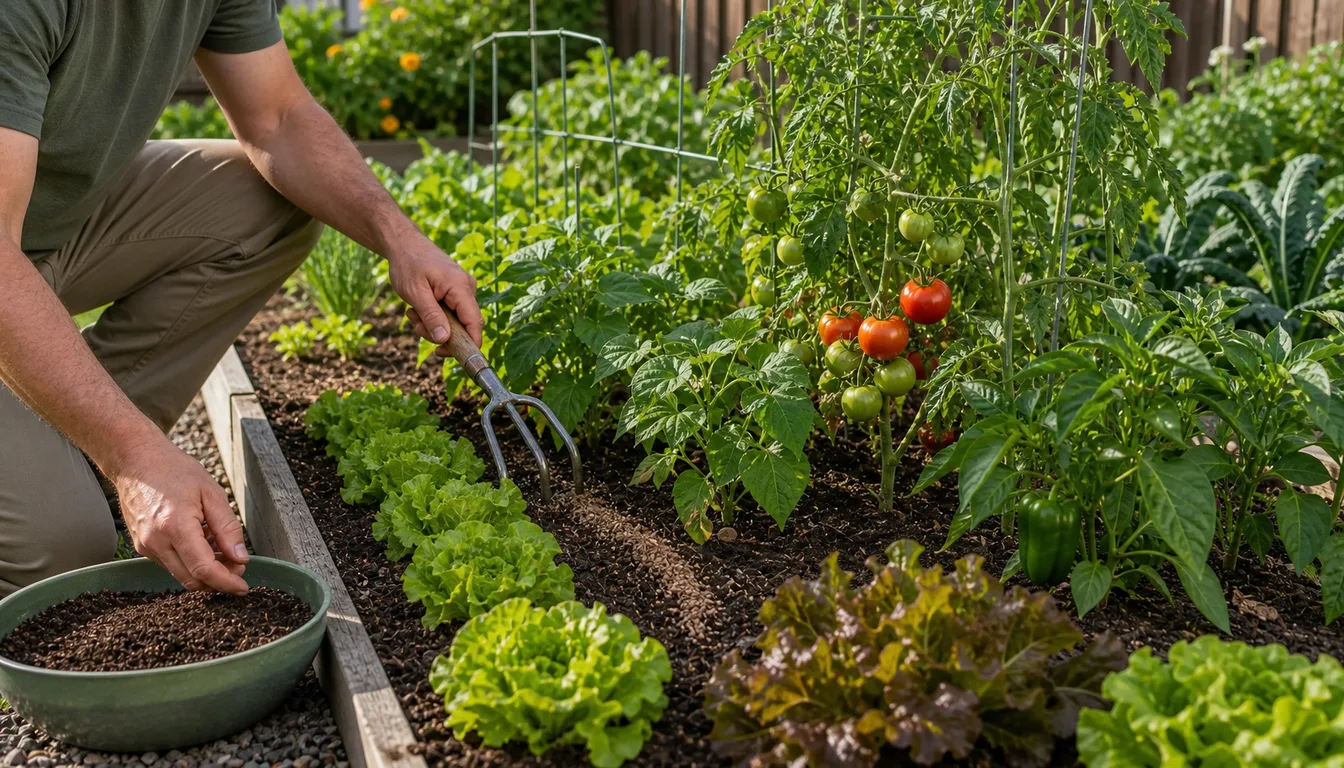
How to Fertilize a Vegetable Garden for Maximum Yield
Fertilizer is not magic dust. It is plant food in a specific ratio.
14 min read