
When to Apply Vegetable Fertilizer, From Bed Prep to Each Crop's Side-Dress
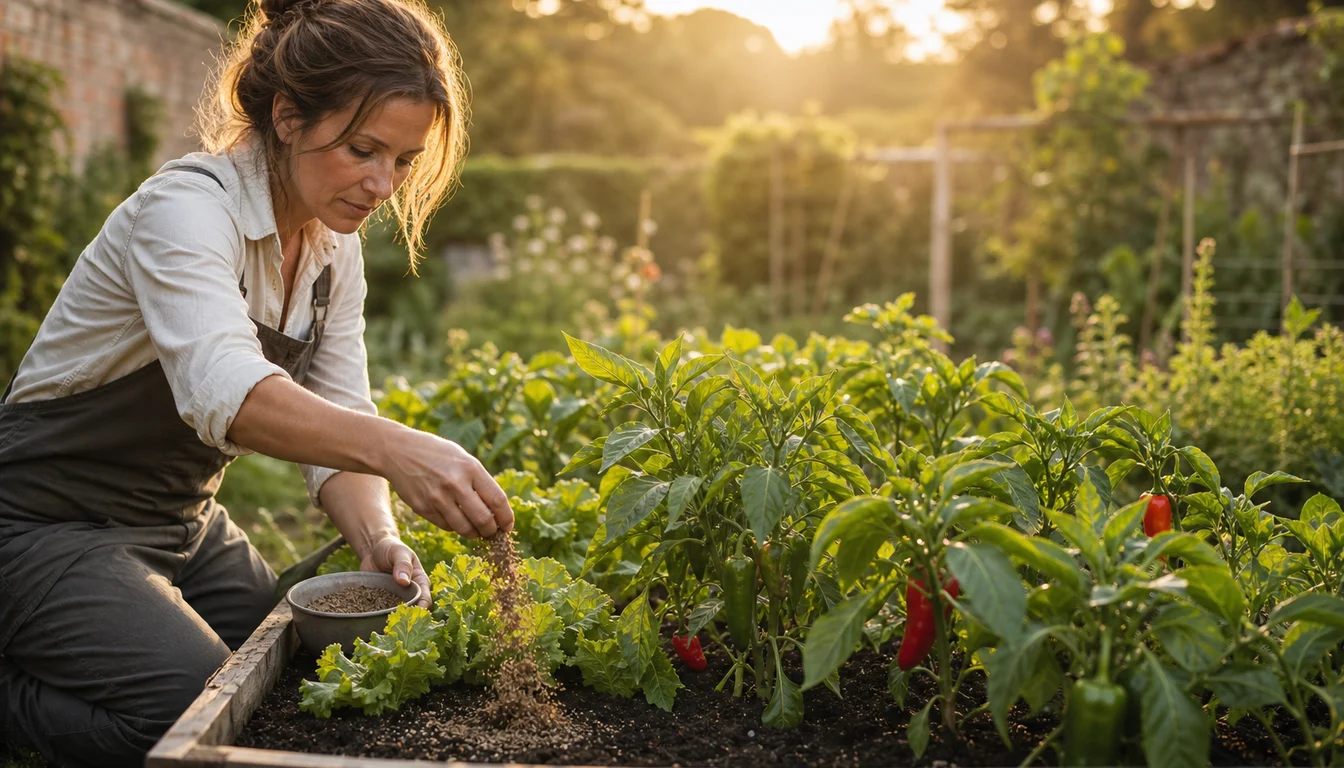
Most of a vegetable garden's fertilizer goes into the soil just before planting, and the rest goes on later as a side-dress, once each crop reaches the stage where it starts using more nitrogen. Clemson Extension puts all of the recommended phosphorus and potassium, plus 30 to 40 percent of the nitrogen, into the bed before planting, then adds the remaining nitrogen about 3 to 4 weeks after planting.
The crop's own stage matters more than the date. Sweet corn gets its side-dress at about a foot tall, tomatoes when the first fruits are about an inch across, and beans and peas usually get no nitrogen at all.
How much goes on at each step is a separate question, answered in pounds per bed in the vegetable fertilizer chart.
At a glance
How Far Ahead Do the Soil Test and Pre-Plant Feed Go In?
The soil test comes first, and it needs lead time. Clemson advises sampling at least three months before liming or fertilizing, which leaves time for the lab report to come back before any lime or fertilizer is bought. A sample taken in fall, after cleanup, returns its results before spring bed prep.
Clemson suggests a new sample every year, while Utah State considers every two to three years enough for gardens and landscapes. A bed with steady results and steady yields sits comfortably at the longer interval, and a new bed or a bed with a problem earns the yearly test.
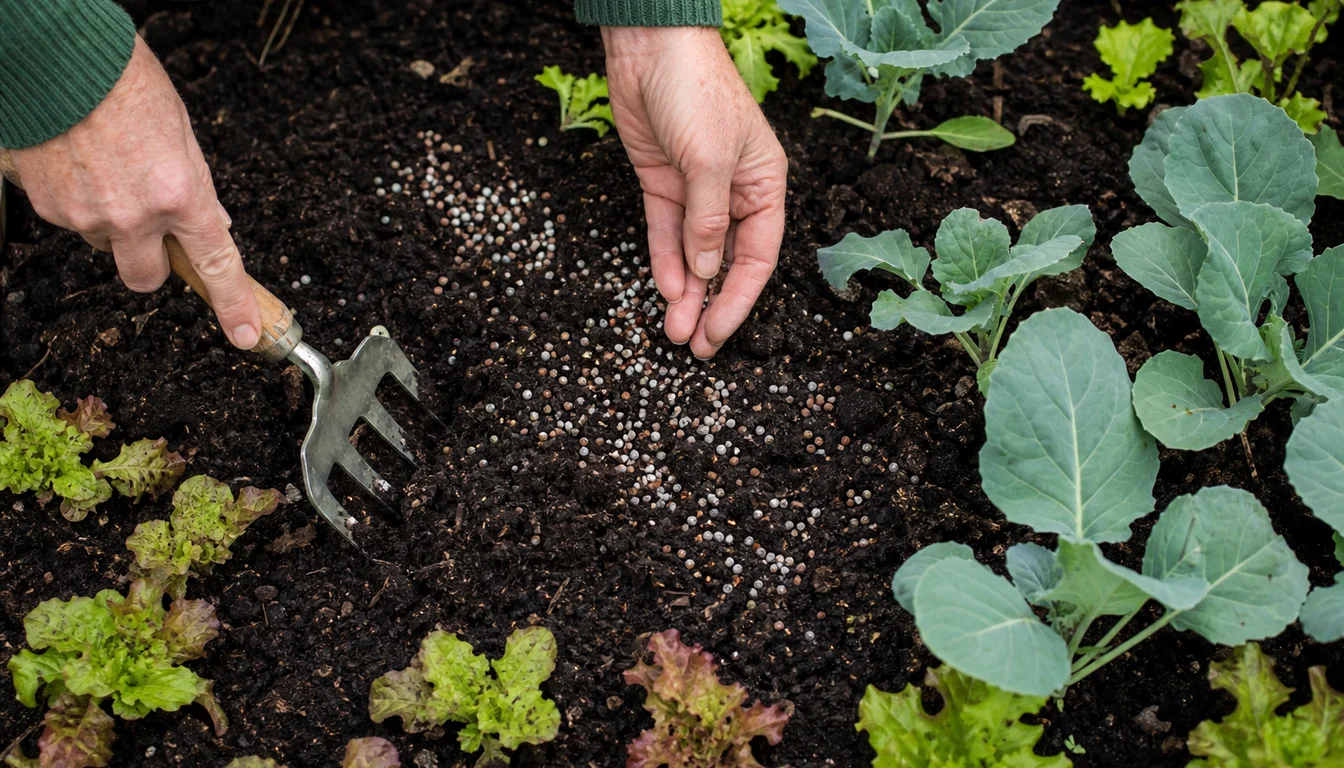
The pre-plant fertilizer goes on just before planting. Utah State spreads it evenly over the bed and rakes or tills it into the surface right before seeds or transplants go in. Working it into the top few inches puts it where the first roots will grow instead of leaving it on the surface.
- Soil sample
- At least 3 months before liming or fertilizing
- Pre-plant feed
- All the phosphorus and potassium, plus 30 to 40% of the nitrogen
- Remaining nitrogen
- Side-dress about 3 to 4 weeks after planting, or at the crop's own stage
- Fresh manure
- At least 4 months before any edible crop is harvested
Organic materials need more lead time than a bag of synthetic fertilizer. University of Minnesota Extension explains that soil microorganisms convert organic nutrients into a form roots can use, and that the conversion takes days to weeks. Compost and manure work over even longer spans. Colorado State estimates that only 5 to 25 percent of the nutrients in compost, and 30 to 50 percent of those in manure, become available in the first year, so compost spread at bed prep feeds this season a little and the next few seasons more.
Fresh manure has its own deadline, set by food safety rather than by nutrients. Colorado State says fresh manure should go on at least four months before harvesting any edible crop. The homemade vegetable fertilizer guide explains the federal 120-day and 90-day manure intervals behind that advice.
Why Is Nitrogen Split Into Two or More Doses?
Nitrogen is the nutrient that gets split. Clemson's schedule puts the whole season's phosphorus and potassium into the bed before planting but holds back most of the nitrogen. Nitrogen levels in soil change quickly, which is also why Penn State notes that standard soil tests do not measure nitrogen at all.
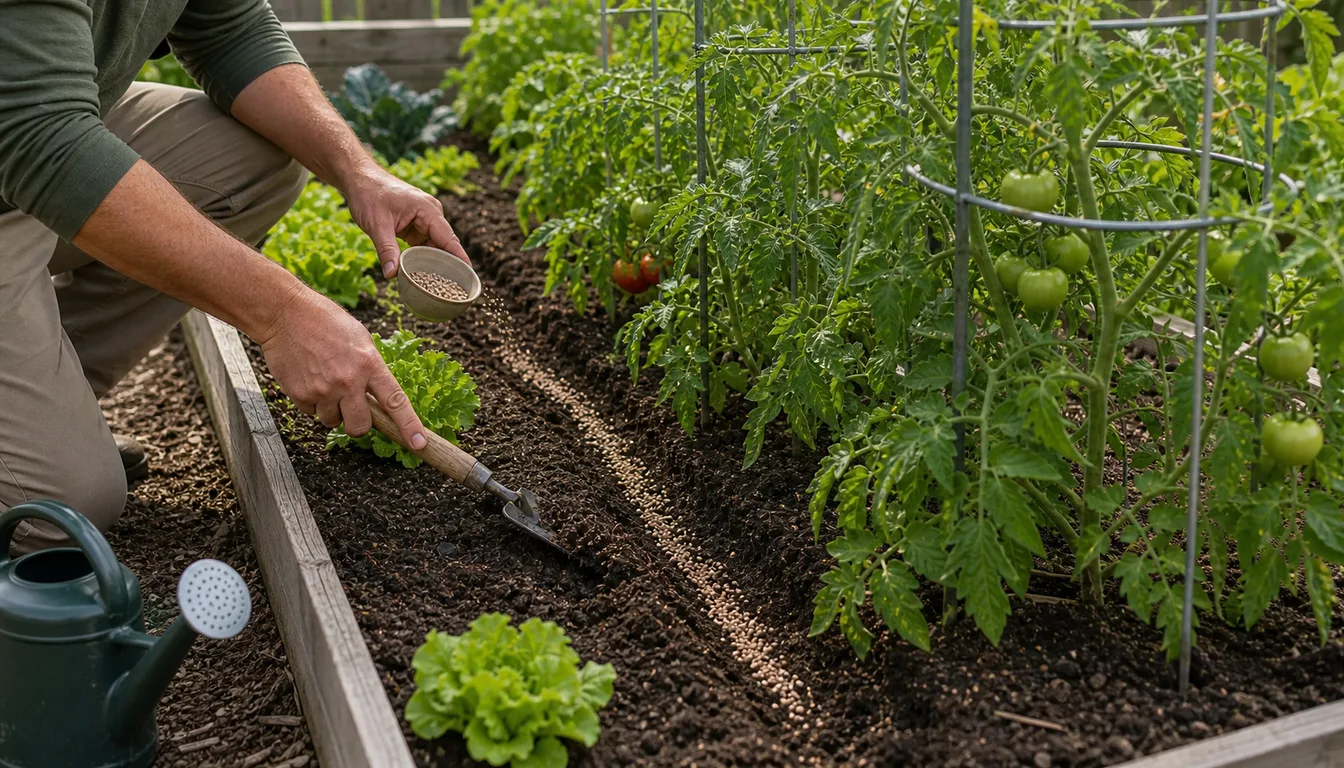
A single large dose at planting arrives while plants are small and their roots reach only a few inches. Splitting it puts part of the nitrogen in the soil for those young roots and saves the rest for the weeks when the plant is large and growing fast.
Soil texture changes how many splits make sense. On most soils Clemson recommends one side-dress 3 to 4 weeks after planting. On sandy soil it recommends two smaller side-dresses, one at 3 weeks and another 3 to 4 weeks later. University of Minnesota gives the same direction for sandy soil, more frequent nitrogen at a lower rate each time.
When Does Each Crop Get Its Side-Dress?
Each crop has a stage when its use of nitrogen climbs, and the side-dress goes on at that stage. Colorado State's vegetable GardenNotes and Minnesota's crop guides give these cues.
| Crop | Side-dress when | Note |
|---|---|---|
| Tomatoes, peppers, eggplant | First fruits reach about 1 inch across | Minnesota says when the first fruits start to enlarge |
| Sweet corn | About 12 inches tall, then one month later | Minnesota side-dresses at one foot tall |
| Broccoli, cabbage, cauliflower | 2 to 3 weeks after transplanting, then 4 to 5 weeks after | Two light feeds |
| Leafy greens | 3 to 4 weeks after emergence | Minnesota uses about 4 inches tall for lettuce |
| Onions | 3 to 4 weeks after emergence | Stop once bulbs begin to form |
| Squash, cucumbers, melons | When the vines begin to run | Minnesota feeds squash as the vines spread |
| Potatoes | About 4 weeks after planting, at hilling | Minnesota repeats it two weeks later |
| Carrots and beets | 4 to 6 weeks after planting, lightly | No fresh manure, which can misshape roots |
| Beans and peas | Usually not at all | Root bacteria supply much of their nitrogen |
| Asparagus | Early spring, then at the end of harvest | A perennial fed around its harvest season |
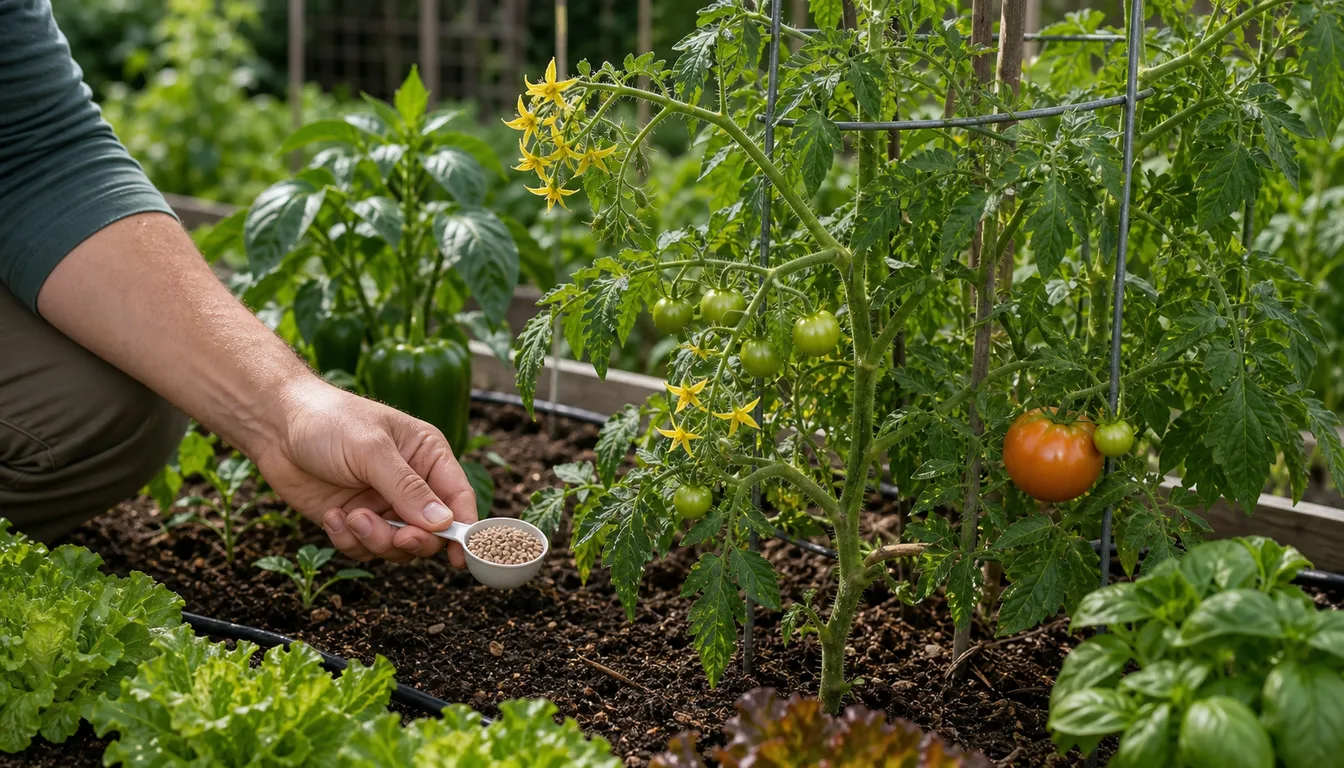
Tomatoes show why the stage matters. Minnesota Extension warns that too much nitrogen gives bushy, leafy plants that are slow to bear fruit. A tomato fed heavily at transplanting puts that nitrogen into leaves, while one fed after its first fruits have formed is already carrying a crop to use it on. Rates and container tomatoes are covered in the tomato feeding guide.
Beans and peas are the opposite case. Colorado State says about 80 percent of a pea crop's nitrogen comes from fixation by Rhizobia bacteria in the roots. It advises against side-dressing beans with nitrogen at all, because nitrogen applied where legumes grow can reduce their yield.
The sources do not agree to the week, and that is expected. Minnesota side-dresses potatoes about four weeks after planting, while Colorado State spreads its potato feeds through midsummer for its own climate. Where a local extension service publishes timing for a crop, that timing fits the local season better than any general table.
When Should Vegetable Feeding Stop?
The stopping point depends on what is harvested. Crops picked over many weeks keep using nitrogen, while crops harvested once need it to taper off before the harvested part forms.
Picked for months
Tomatoes, peppers and eggplant keep getting fed while they keep producing. Colorado State adds another tomato side-dress after the first ripe fruit is picked, and another eggplant feed right after the first harvest.
Harvested once
Onions and carrots need nitrogen to taper off before the bulb or root sizes up, and potatoes get their last feed by midsummer. Late nitrogen goes into tops instead of the part that is eaten.
Legumes
Beans and peas supply much of their own nitrogen, so there is usually nothing to stop.
Colorado State says to avoid nitrogen once onion bulbs begin to form, and Minnesota links too much nitrogen in onions to late maturity, thick necks that are hard to cure, soft bulbs and poor storage. In carrots, Minnesota notes, excess nitrogen gives leaf growth at the expense of root growth. Colorado State finishes potato feeding by the end of July in its climate.
University of Florida makes the point from the other side. Fertilizing should not stop when fruit appears on long-season crops, because continued feeding keeps them producing.
Minnesota's general warning is that too much nitrogen late in the season can minimize or delay fruiting. A short season reaches that point sooner, since late leafy growth has fewer frost-free weeks left to turn into a harvest. The local first frost date, from a frost date lookup, marks the end of the window.
How Do Containers and Compost-Rich Beds Change the Schedule?
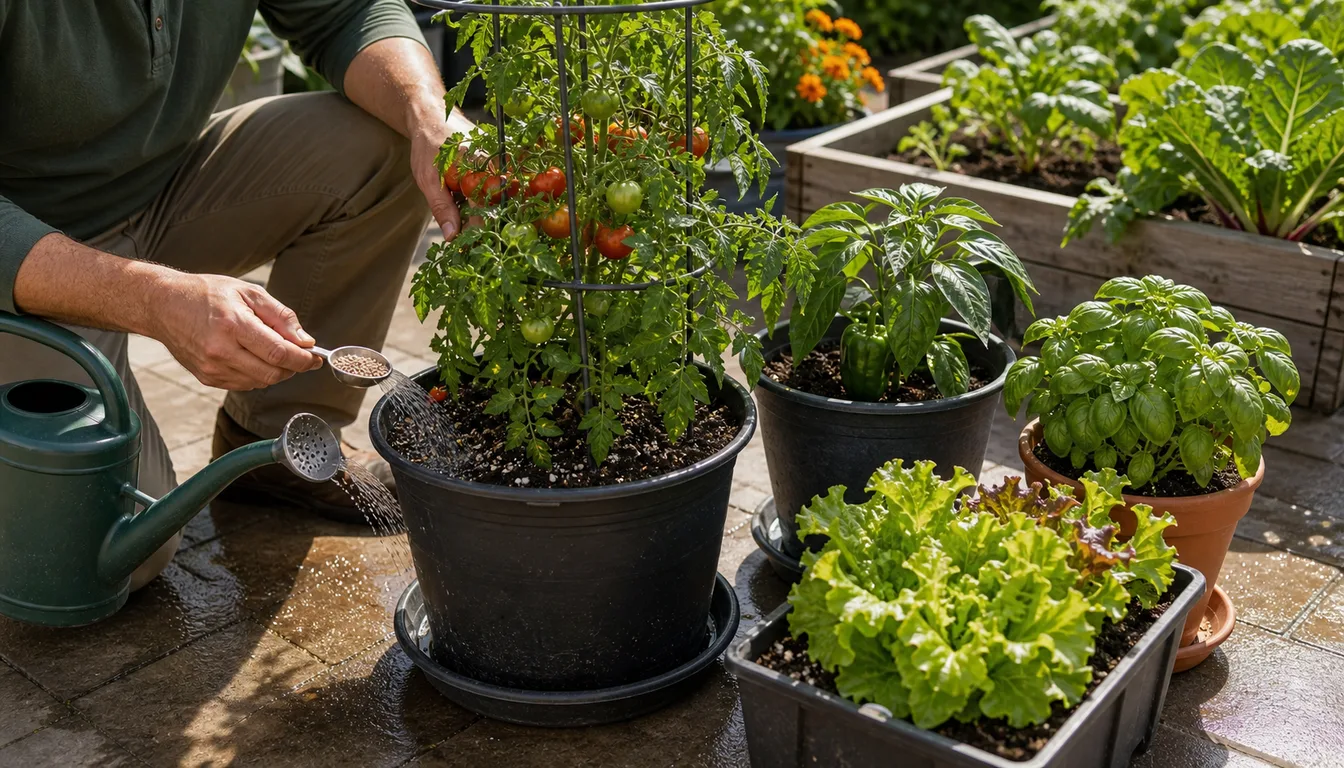
Containers run on a much shorter clock, because every watering rinses nutrients out of a small volume of mix. Iowa State notes that nutrient levels in potting mixes decline quickly through plant uptake and leaching, and that slow-release fertilizers seldom last the whole season.
Penn State's container method pairs a slow-release fertilizer at planting with a soluble fertilizer every two to four weeks after that. Maryland Extension suggests feeding long-season container crops such as tomatoes, cucumbers, eggplant and peppers lightly every two weeks to keep a continuous harvest.
A potting mix that already contains fertilizer moves the first feeding later. Maryland says plants in such a mix have enough for a few weeks before they need more, and it warns that too much fertilizer burns plants and builds salt in the mix. Feeding on top of that starter charge in the first weeks adds salt without adding growth.
Raised beds filled with plenty of compost sit between a pot and an in-ground bed. Colorado State recommends no added nitrogen where soil organic matter is 4 percent or higher, so a new compost-rich bed may need little or no pre-plant nitrogen in its first year. A soil test of the bed mix answers that with a number instead of a guess.
What Do Cold Soil, Heat and Watering Do to the Timing?
Cold spring soil slows nutrient release. Oregon State explains that the colder the soil, the slower microbes break down both organic and synthetic fertilizers, so nutrients become available later. For that reason short-season gardens sometimes use a soluble fertilizer early, when it can reach roots sooner. Colorado State adds that phosphorus is less available in cold soils, so a phosphorus source can help in spring before the soil has warmed.
Heat is a different problem, and fertilizer timing does not fix it. Iowa State says tomato blossoms drop when night temperatures fall below 55°F or rise above 75°F, and that fruit set increases again when temperatures moderate. The one fertilizer connection Ohio State draws is excess nitrogen, which also reduces fruit set. A tomato dropping flowers in a hot spell needs steady water and time, not an extra feeding.
Water carries a side-dress down to the roots. Minnesota's sweet corn guidance is to scratch the fertilizer into the soil and then water the garden. Fertilizer left dry on the surface stays there until rain or irrigation moves it, and a schedule for that is in how often to water a vegetable garden.
Pro Tips
- Take the soil sample in fall so the report is back before spring bed prep.
- Put all the phosphorus and potassium in before planting, and hold back most of the nitrogen for the side-dress.
- On sandy soil, split the side-dress into two smaller feeds about three weeks apart.
- Skip nitrogen side-dresses on beans and peas.
- Stop feeding onions once the bulbs begin to form.
- Water right after a side-dress so the fertilizer moves down to the roots.
Frequently Asked Questions
Should vegetable fertilizer go on before or after planting?
Both, in two parts. The main feed goes on just before planting and is raked into the top few inches. Clemson puts all the phosphorus and potassium and 30 to 40 percent of the nitrogen in at that point, then side-dresses the rest of the nitrogen later.
How soon after planting do vegetables need more fertilizer?
For many crops, about 3 to 4 weeks after planting. Some crops follow their own stage instead, such as sweet corn at about a foot tall and tomatoes, peppers and eggplant when the first fruits are about an inch across.
Do beans and peas need fertilizer?
Usually very little nitrogen. Bacteria in their roots supply much of what they need, and Colorado State advises against nitrogen side-dresses on beans because extra nitrogen can reduce legume yields. A soil test still shows whether phosphorus or potassium is short.
Is it too late to fertilize vegetables in midsummer?
Not for crops that keep producing. Tomatoes, peppers and eggplant can take another side-dress after their first harvest. Onions and carrots are different, because late nitrogen goes into tops instead of the bulb or root, and potatoes finish their feeding by midsummer.
How often should container vegetables be fed?
More often than garden beds. Penn State pairs a slow-release fertilizer at planting with a soluble fertilizer every two to four weeks, and Maryland suggests a light feeding every two weeks for long-season crops like tomatoes and peppers.
Sources & References
- Recommendations for Liming and Fertilizing Vegetables, Clemson Cooperative Extension
- Vegetable Gardens: Soil Management and Fertilization (CMG GardenNotes #711), Colorado State University Extension
- Vegetable Gardening: Nitrogen Recommendations, Colorado State University Extension
- Quick Guide to Fertilizing Plants, University of Minnesota Extension
- Growing Tomatoes in Home Gardens, University of Minnesota Extension
- Growing Onions in Home Gardens, University of Minnesota Extension
- Growing Potatoes in Home Gardens, University of Minnesota Extension
- Tips for Growing Garden Vegetables in Utah: Soil Fertilization, Utah State University Extension
- Selecting and Using Organic Fertilizers, Utah State University Extension
- How to Tailor Fertilizer Recommendations to the Fertilizers You Have, Penn State Extension
- Container Vegetable Gardening: Four Keys to Success, Penn State Extension
- Maintaining Container Grown Vegetables, University of Maryland Extension
- Fertilizer Rates and Requirements for the Home Garden, Iowa State University Extension
- Growing Vegetables in Central Oregon (EM 9128), Oregon State University Extension
- Managing Tomato Diseases, Disorders, and Pests, Iowa State University Extension
- Growing Tomatoes in the Home Garden (HYG-1624), Ohio State University Extension
- Vegetable Gardening: Applying Fertilizer, University of Florida IFAS Gardening Solutions
Related Guides
Best Fertilizer for Indoor Plants: How to Choose
The best fertilizer for most indoor plants is a complete fertilizer labeled for houseplants, with…
15 min read
Best Fertilizer for Vegetables by Garden Type
Fertilizer only helps vegetables if it matches what your soil and crops need.
11 min read
Can You Fertilize Wet Grass Safely?
A wet lawn right when you planned to fertilize creates second thoughts fast.
11 min read
How Long Does Compost Take to Be Ready?
Compost does not follow a calendar, it follows conditions.
11 min read
How to Fertilize Tomatoes Without Overfeeding
Fertilize tomatoes according to a soil test and product label, not a fixed weekly calendar.
15 min read
How to Fertilize a Vegetable Garden for Maximum Yield
Fertilizer is not magic dust. It is plant food in a specific ratio.
14 min read