At a glance
- Fastest Method
- Hot pile, 4–6 weeks when turned at least weekly
- Typical Backyard Time
- 3–4 months for a typical home pile
- Cold Pile Time
- A year or more when untended
- Ideal Pile Size
- 3 to 5 feet on each side
- Best Use Window
- Cured 4–6 weeks before seedlings or vegetable beds
How long does each kind of pile take?
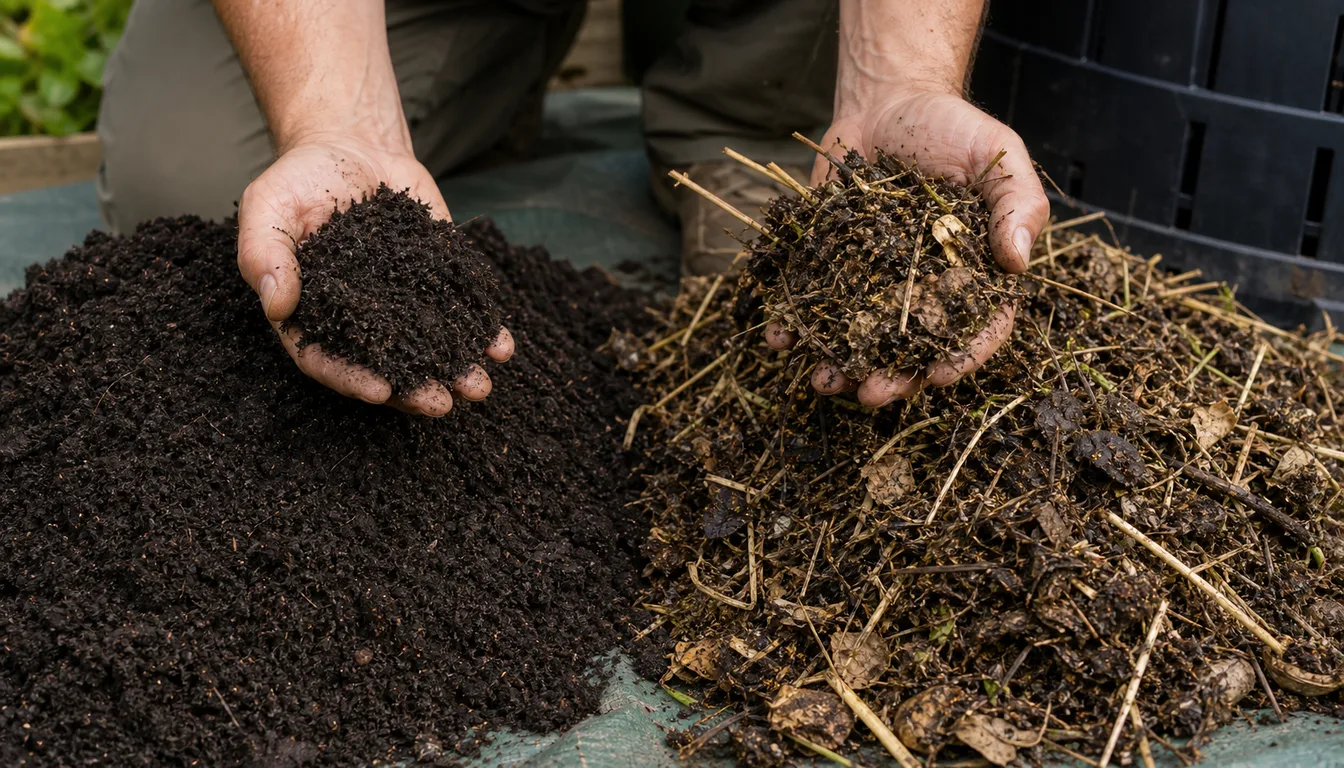
The published times run from about a month for a hot, turned pile to a year or more for one nobody tends, and the sources do not agree on a single number for the middle. Each figure below belongs to the kind of pile it came from.
| Pile | Time to finished compost | Source |
|---|---|---|
| Hot pile, turned at least weekly | 4 to 6 weeks | UC Master Gardeners |
| Hot pile, then curing | About a month until it stops heating, plus 4 to 6 weeks of curing | Oregon State |
| Frequently turned pile | About 3 months, depending on the time of year | Illinois Extension |
| Typical home pile | 3 to 4 months, turned often in the first 3 to 4 weeks | Penn State |
| Well-managed pile in the warm season | 2 to 4 months | University of Minnesota |
| Untended pile | A year or more | University of Minnesota |
| Sheet-mulched bed | Six months or longer | Oregon State |
What speeds a pile up or slows it down?
Illinois Extension lists the size of the pile, its materials and how finely they are cut, its moisture and how often it is turned as the things that change the time a pile takes. The chemistry behind them is in how composting works, from ratios to pile temperatures.
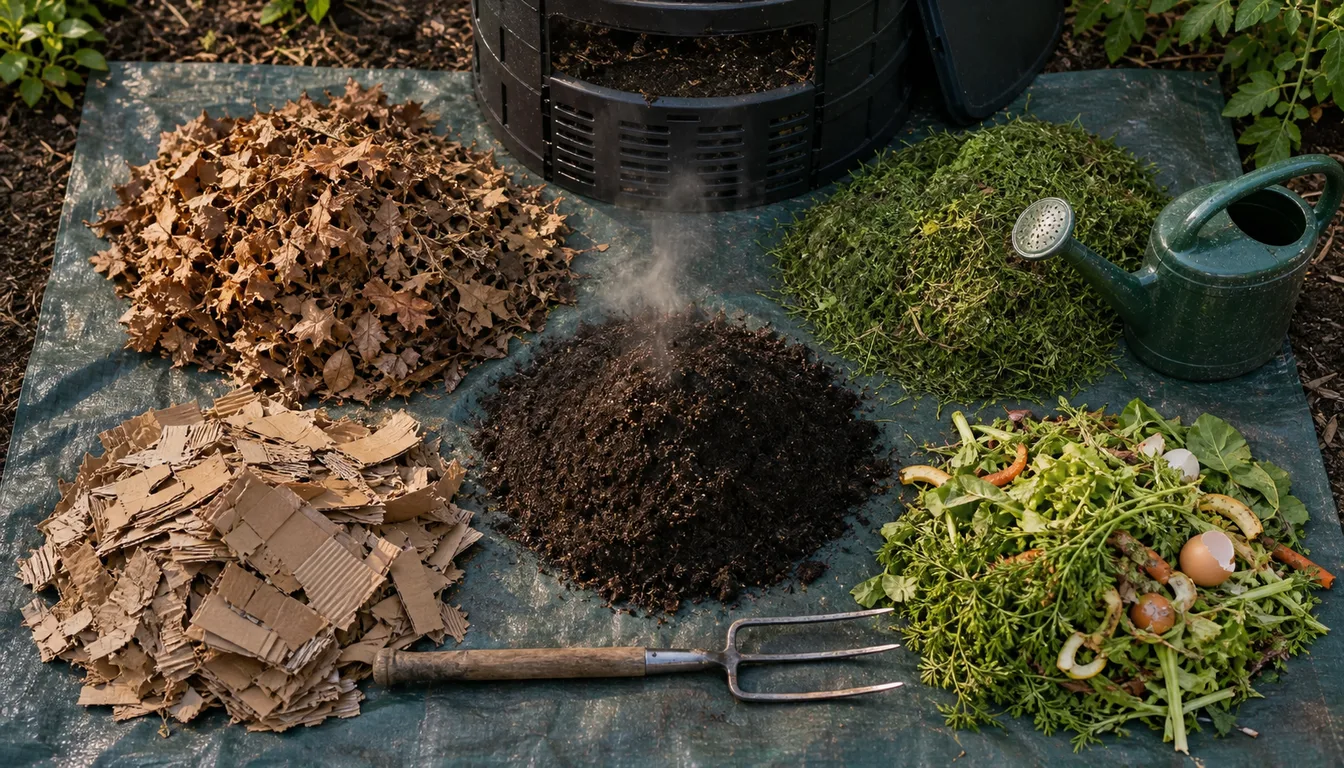
- Size. A pile 3 to 5 feet on each side holds enough mass for the center to heat and still lets air in. Smaller piles take longer, and a bigger one is limited by how much you can turn by hand.
- Greens and browns. Equal amounts of greens (grass clippings, kitchen scraps) and browns (dry leaves, shredded paper) work well. A pile with more brown takes longer, and extra greens or a nitrogen fertilizer, at one cup per 25 square feet, speeds it up. Chopped or shredded material breaks down faster because small pieces give bacteria more surface.
- Moisture. The pile should feel as wet as a wrung-out sponge. A dry pile breaks down very slowly, and a soggy one needs dry browns mixed in.
- Air. Bacteria need oxygen, and turning moves the cool material from the edges into the hot center.
Frequent turning shortens the time, and the sources differ on when to start. Illinois Extension waits at least two weeks so the center can heat and then turns every 2 to 4 weeks, UC Master Gardeners turn after about three days in the 130 to 160°F range and at least weekly, and Oregon State restacks the pile when it starts to cool at 5 to 10 days.
Hot or cold: which method fits your pile?
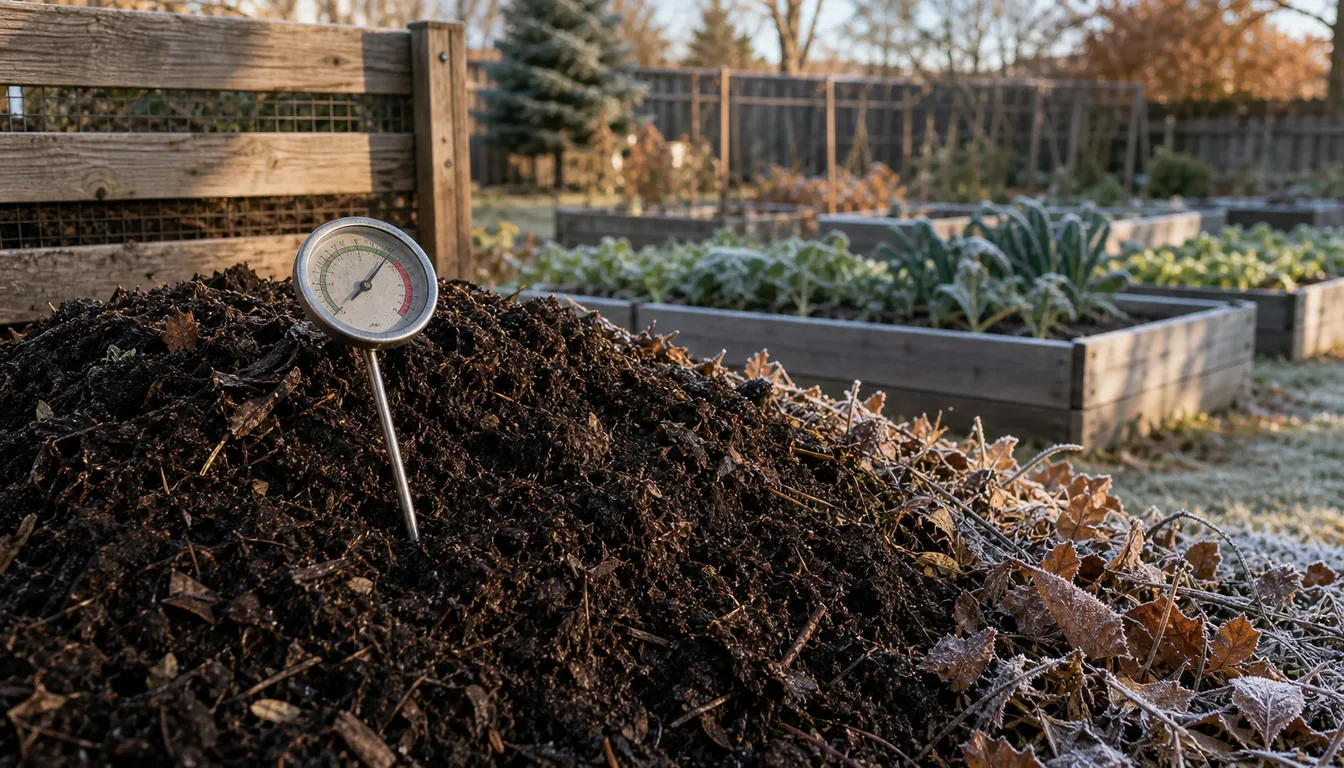
A hot pile starts at about 1 cubic yard (3 by 3 by 3 feet) or more, with enough nitrogen-rich material in it to heat. Mix equal amounts of chopped greens and browns, add water, and check the center after a few days with a compost thermometer or by touch. The active range is 130 to 160°F, and heat above 140°F destroys most harmful pathogens and weed seeds, according to Clemson.
If the pile does not heat up, grass clippings, manure or coffee grounds add the nitrogen it lacks. When it starts to cool, usually after 5 to 10 days, pull it apart and restack it with the outside material in the middle and the middle material on the outside.
Cold composting
A cold pile takes scraps and yard waste as they come, with little or no turning. It never heats enough to kill diseases or noxious weeds, so diseased plants stay out, and weeds go in only before their seed heads form, never the kinds that spread by roots or rhizomes.
The slower pile has one advantage for vegetable beds. High temperatures in a hot pile kill certain fungi and bacteria that help suppress soil-borne diseases, and those beneficial microbes stay intact in slower compost.
How do you tell compost is finished?
Finished compost passes all of these checks together.
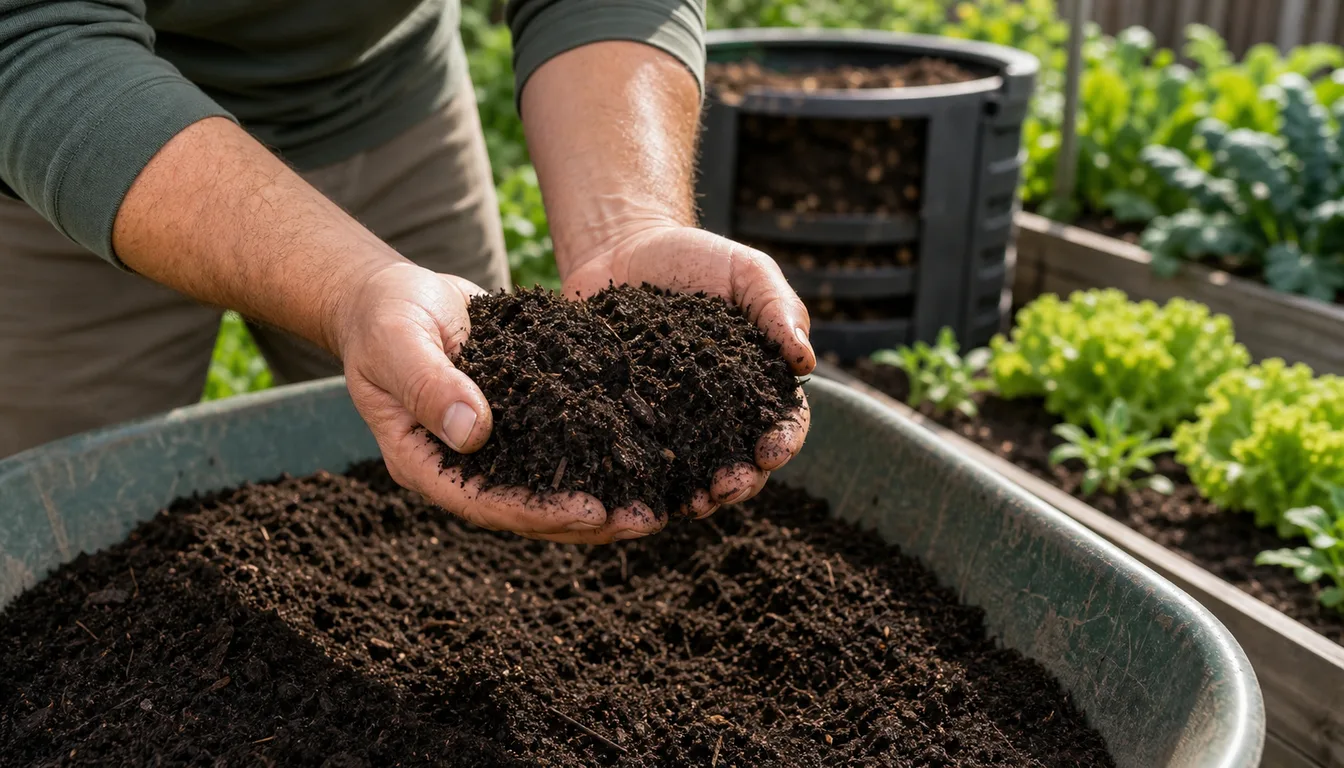
- Color is dark brown to black
- It crumbles when squeezed, and nothing in it still looks like the leaves, peels or grass that went in
- It smells earthy, like fresh dirt, with no ammonia smell
- The center is no longer hot and does not heat up again when you turn the pile
- The pile has shrunk to about half its original height
If a few clumps remain, hardware cloth with ½-inch squares screens them out, and the screened compost works as a 1 to 2 inch mulch.
Using compost before it is cured
Compost that has stopped heating still needs a rest before it touches tender roots. For seedlings or vegetable beds, Oregon State has it cure another 4 to 6 weeks, and Penn State has compost for a seed-starting mix sit an additional month or two so that microorganisms that could attack seedling roots leave the pile or die.
The wait protects germinating seeds, which are sensitive to the volatile fatty acids often present in uncured compost. Very immature compost can also carry ammonia and volatile organic acids that kill or injure plants.
Nitrogen is a second risk, since compost with a carbon-to-nitrogen ratio above 20, which is typical of woody composts, can tie up soil nitrogen in the first season, while well-composted material settles at 10 to 15. Compost used as mulch around established woody ornamentals can go on sooner.
Why is your pile stuck, and how do you restart it?
A stuck pile is short of air, water, size or greens, and the symptom shows which.
| Symptom | Cause | Fix |
|---|---|---|
| Smells bad or is too wet | Not enough air or too much moisture | Turn it and mix in dry browns |
| Pile is too dry | Not enough water, or too many browns | Turn it, moisten it and add greens |
| Stays cold | Pile too small, or too few greens | Build it to at least 1 cubic yard, keep greens and browns equal, and add grass clippings, manure or coffee grounds |
| Flies and insects | Food waste on top | Bury food scraps and cover them with browns |
When should you start a pile so it is ready for planting?
To have compost for spring planting, Penn State starts the pile in fall while the garden is cleaned up for winter. The pile goes dormant over winter and starts to decompose again when air temperatures rise above 50°F, and a second pile started in spring supplies fall planting.
Warm summer temperatures speed up the bacteria and winter slows them, so Illinois Extension recommends stopping the turning after November to keep heat in the center of the pile.
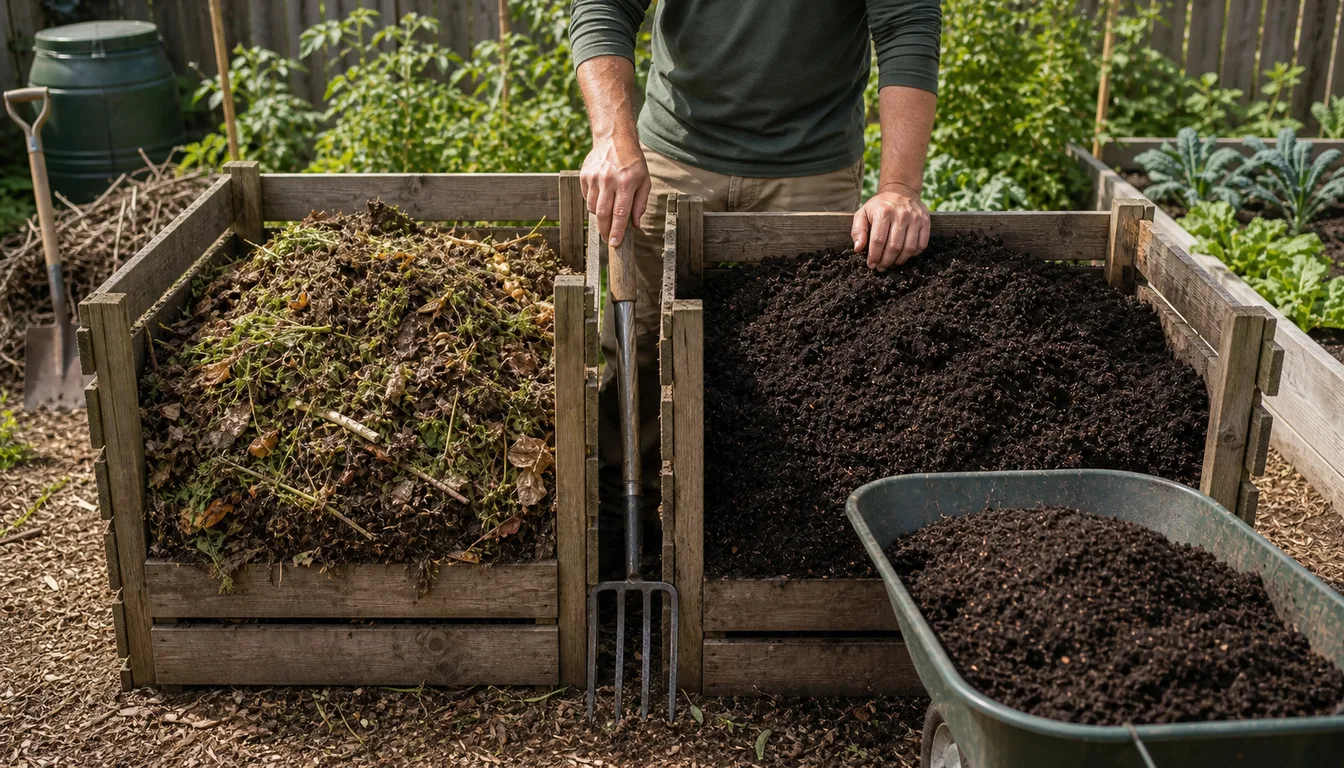
Illinois Extension suggests keeping two piles, one holding finished compost ready for the garden and the other holding unfinished compost. For what finished compost does once it is in the bed, see the benefits of composting.
Pro Tips
- Push a long-stemmed compost thermometer at least 12 inches into the pile to read its interior temperature.
- Chop or shred stems and cardboard before they go in, since small pieces give bacteria more surface to work on.
- Keep a bag of dry leaves on hand, so you always have browns to cover kitchen scraps and to soak up a pile that is too wet.
- Screen finished compost through hardware cloth with ½-inch squares to remove clumps before using it as mulch.
- Uncured compost can go on sooner as mulch around established woody ornamentals, so keep the cured batch for seedlings and vegetable beds.
Frequently Asked Questions
Can I speed up compost by adding fertilizer?
Mainly when the pile is mostly browns. Extra greens or a fertilizer with nitrogen, at one cup per 25 square feet, speed up a pile with more brown than green. A pile that already has about equal greens and browns does not need a commercial starter.
How often should I turn a tumbler?
Rotate a tumbler daily, or at a minimum several times per week. The materials, air and water a tumbler needs are the same as in any other compost setup.
Is one-year-old compost always finished?
No. A pile that stays too dry breaks down very slowly, and an untended pile can take a year or more. Check the color, the smell and whether the center still heats up when turned before you use it.
Can unfinished compost harm vegetables?
Yes. Very immature compost can carry ammonia and volatile organic acids that kill or injure plants, and compost with a carbon-to-nitrogen ratio above 20 can tie up soil nitrogen. Use it as mulch around established woody ornamentals, and keep vegetable beds for compost that has cured.
How long should compost cure after it cools down?
Cure it another 4 to 6 weeks after the pile stops heating when it will go on tender seedlings or into the vegetable garden. Penn State has compost for a seed-starting mix sit an additional month or two.
Sources & References
- It's Alive! The Wonder of 'Hot' Composting, UC Master Gardeners (UC Agriculture and Natural Resources)
- How It Works, Illinois Extension Composting
- Do the Rot Thing: Choosing and Using a Composting System (EM 9475), Oregon State University Extension
- Interpreting Compost Analyses (EM 9217), Oregon State University Extension
- Composting in Home Gardens, University of Minnesota Extension
- Home Composting: A Guide for Home Gardeners, Penn State Extension
- Composting (HGIC 1600), Clemson Cooperative Extension
- Small Scale or Backyard Composting, Cornell Waste Management Institute