
When Should You Fertilize Plants Indoors and Outside?
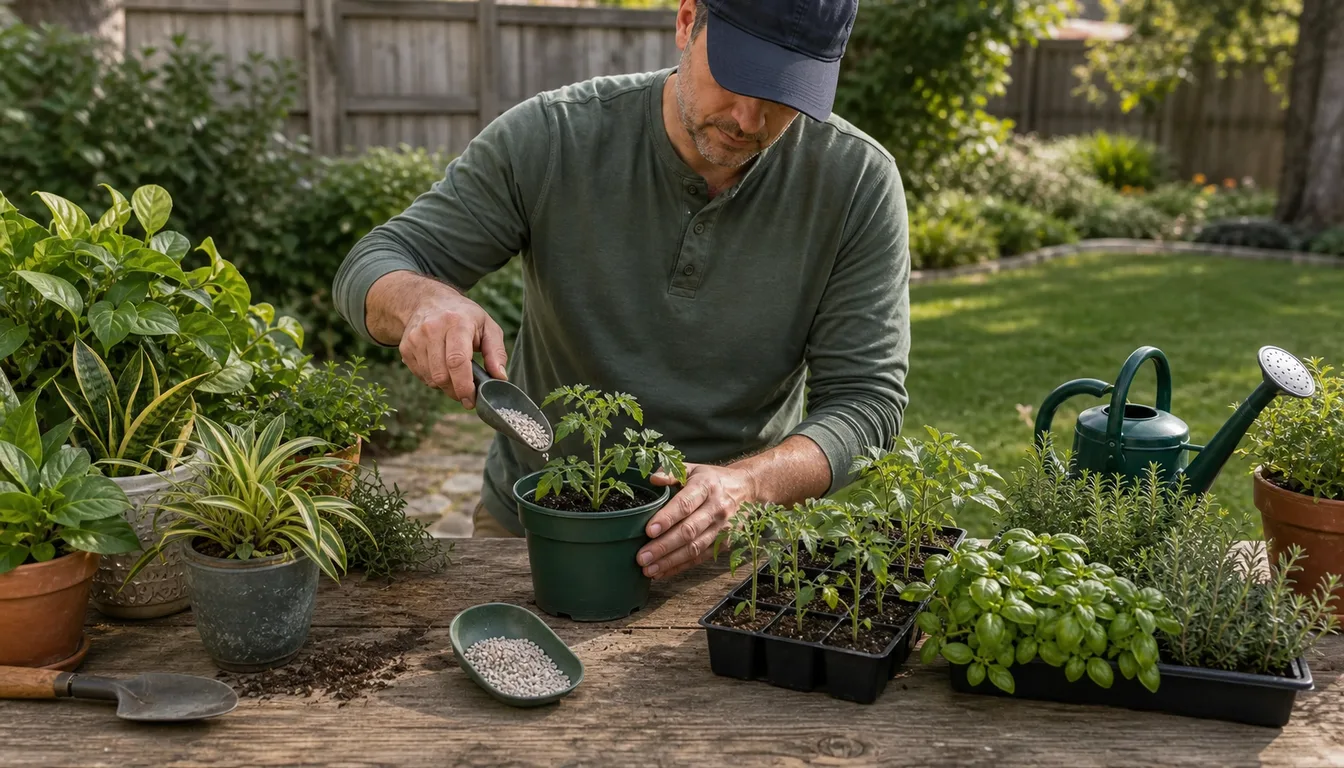
A plant is worth fertilizing when three things are true at once. It is actively growing, it is short of a nutrient, and nothing else such as water, light or damaged roots is holding it back. Fertilizer applied when any of the three is missing goes unused or does harm.
Indoors, light sets the season. Most houseplants slow down in the short, dim days of winter and need little or no fertilizer until new leaves appear in spring. Outdoors the same rule applies through the plant's own stage, which is why a fruit tree, a perennial and a lawn are each fed at a different time.
The season-by-season calendar for each part of a yard is in when to fertilize each part of the garden. The signs below are for deciding about one plant on one day.
At a glance
What Has to Be True Before a Plant Is Fertilized?
Active growth is the first condition, and it can be seen. Nebraska Extension's signs are new leaves, flower buds or flowers, which show the plant is active rather than resting. University of New Hampshire Extension explains why that sign matters, since plants use added nutrients only while they are producing new leaves and roots.
A shortage is the second condition, and it is easy to assume. The useful comparison is against the same plant earlier, or the same kind of plant growing nearby, not against a photograph. Leaves lighter than they used to be, shorter new growth than last year and fewer flowers are the signs the tree and shrub feeding guide uses for woody plants, and the same logic carries over to perennials and houseplants.
The third condition is that nothing else is limiting the plant. Fertilizer corrects a nutrient shortage and nothing more. It does not help a plant that is short of water or light, sitting in waterlogged soil, or growing on damaged roots, and a pale plant in any of those situations gets worse rather than better when fed.
- New leaves, shoots or flower buds are appearing
- New growth is paler or shorter than the same plant's earlier growth
- The soil is moist, not bone dry or waterlogged
- The plant gets the light its kind needs
- Roots are firm, not mushy or circling a cramped pot
When Should Houseplants Be Fertilized?
Houseplants follow light more than the calendar. Nebraska Extension notes that in winter, with short days and low light, some plants rest and produce little new growth, and they need little if any fertilizer during that period. It adds an exception for a plant in a very bright south or west window, or under supplemental light, which may keep growing through winter.
Spring is the restart. UNH Extension calls March a good time to begin, with most houseplants benefiting from an application every one to three months depending on the product. Nebraska's interval for a quick-release water-soluble fertilizer is every two months for actively growing plants, and less often for slow-release products. Both stress the label, and UNH says never to mix a stronger solution than the label recommends.
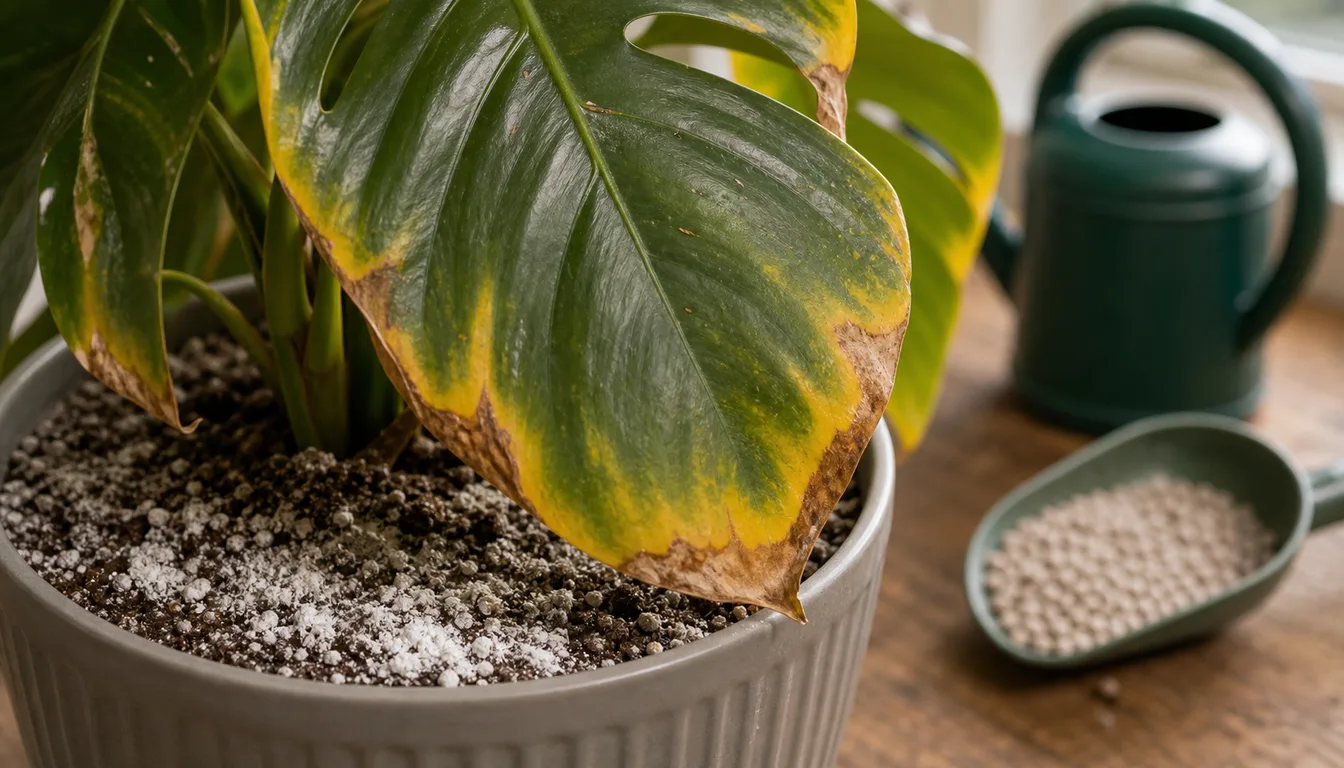
Feeding a resting plant has a cost. Nebraska warns that fertilizing dormant plants can cause a harmful buildup of fertilizer salts, which shows as a yellow to white crust on the soil surface. UNH notes that those salts can burn sensitive root tips and leaf margins.
Product choice, from liquid to slow-release, is covered in the indoor plant fertilizer guide.
Which Plants Should Not Be Fertilized Right Now?
Some plant states rule fertilizer out regardless of the season. Nebraska Extension lists newly repotted, unrooted, dormant and wilted plants as plants that should not be fertilized.
| Plant state | Why fertilizer waits | What comes first |
|---|---|---|
| Newly repotted | Fresh potting mix often carries fertilizer already | Settled roots and new growth |
| Unrooted cutting | No roots yet to take up nutrients | Roots |
| Dormant or resting | No new growth to use the nutrients, so salts build up | The return of new leaves |
| Wilted or drought stressed | Uptake needs soil moisture | Water |
| Newly planted tree or shrub | Water matters far more for establishment | Steady watering |
Repotting is the case that catches people out. Many potting mixes include a starter fertilizer, and Maryland Extension notes that plants in a mix with fertilizer have enough for a few weeks. After repotting a houseplant, new leaves are the signal that the roots have settled and the plant can use more.
Wilting has two opposite causes, and neither is hunger. A dry plant needs water, and a waterlogged one has roots that cannot take up water or nutrients. Telling them apart comes before any feeding, and overwatered or thirsty walks through the signs.
How Often Do Outdoor Container Plants Need Feeding?
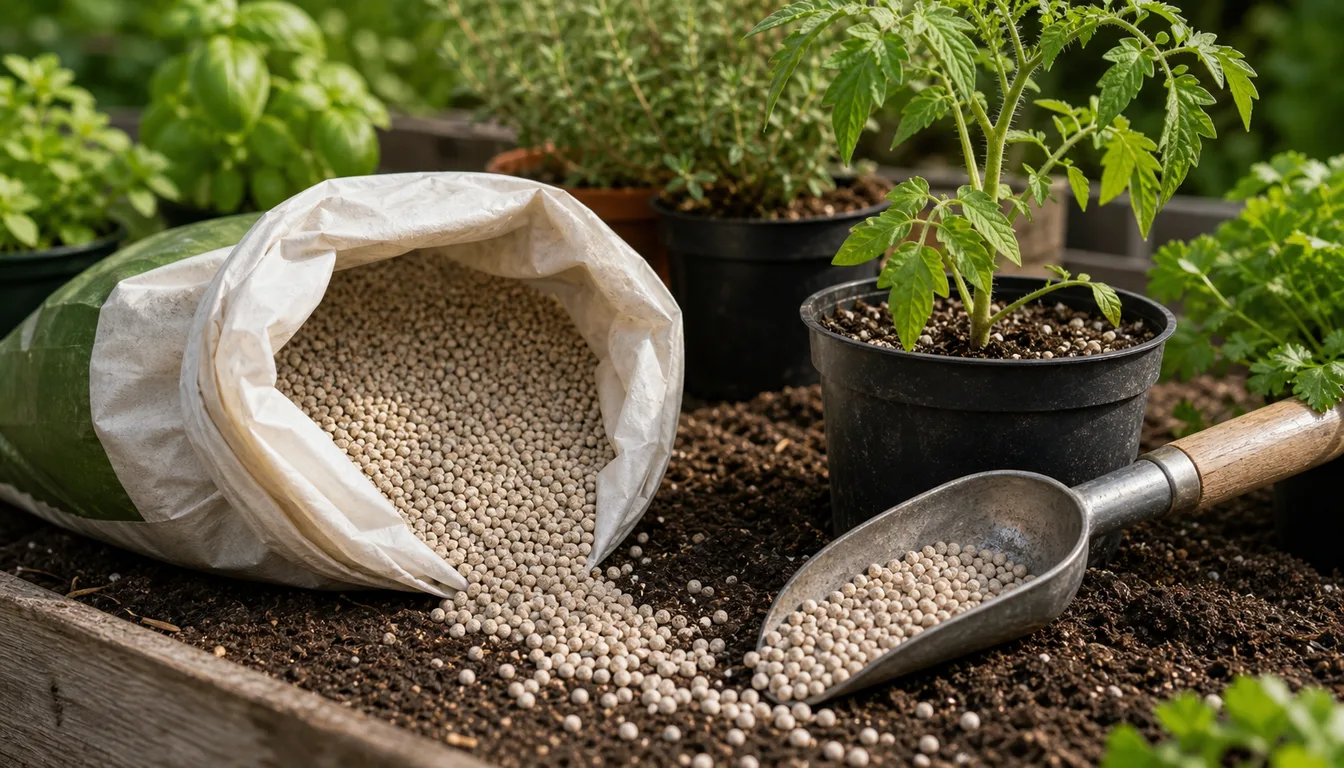
Plants in pots outdoors sit between houseplants and garden beds. They grow fast in summer heat and light, but every watering carries nutrients out of a small volume of mix. Iowa State notes that nutrient levels in potting mixes fall quickly through uptake and leaching, and that slow-release fertilizers seldom last a whole season.
Illinois Extension's container guidance is to reapply about every two weeks, or to feed at every watering with a half-strength solution. It adds that slow-release products made for annuals supply nutrients for about 3 to 4 months, depending on moisture and temperature, so a pot planted in May with a slow-release product can need liquid feeding again by late summer.
The same three conditions still apply. A hanging basket that has dried out to wilting gets water first and fertilizer later, and a pot that drains slowly after rain needs its drainage checked before more food.
How Does a Plant's Life Cycle Change the Timing?
How long a plant lives changes when it uses fertilizer.
Annual flowers grow, bloom and finish in one season, so they keep using nutrients the whole time. Clemson feeds them just before planting and repeats the feeding at 6-week intervals for additional growth.
Perennials build roots over years and need far less. Michigan State recommends at most a single feeding, just before or as new spring growth pushes up, and notes that many perennials in healthy soil need none. Over-feeding them gives leggy growth that flops, with foliage at the expense of flowers.
Spring bulbs kept from year to year are fed either as their shoots emerge or after the blooms fade, Iowa State says, but not both. Their leaves matter more than the fertilizer. Iowa State warns that removing foliage before it dies back stops bulb growth and often reduces next spring's flowers, so the leaves stay until they turn brown.
Trees and shrubs are fed rarely, in early spring or after leaf drop. In cold-winter areas summer feeding pushes growth that may not harden before winter, which is why Iowa State advises against it.
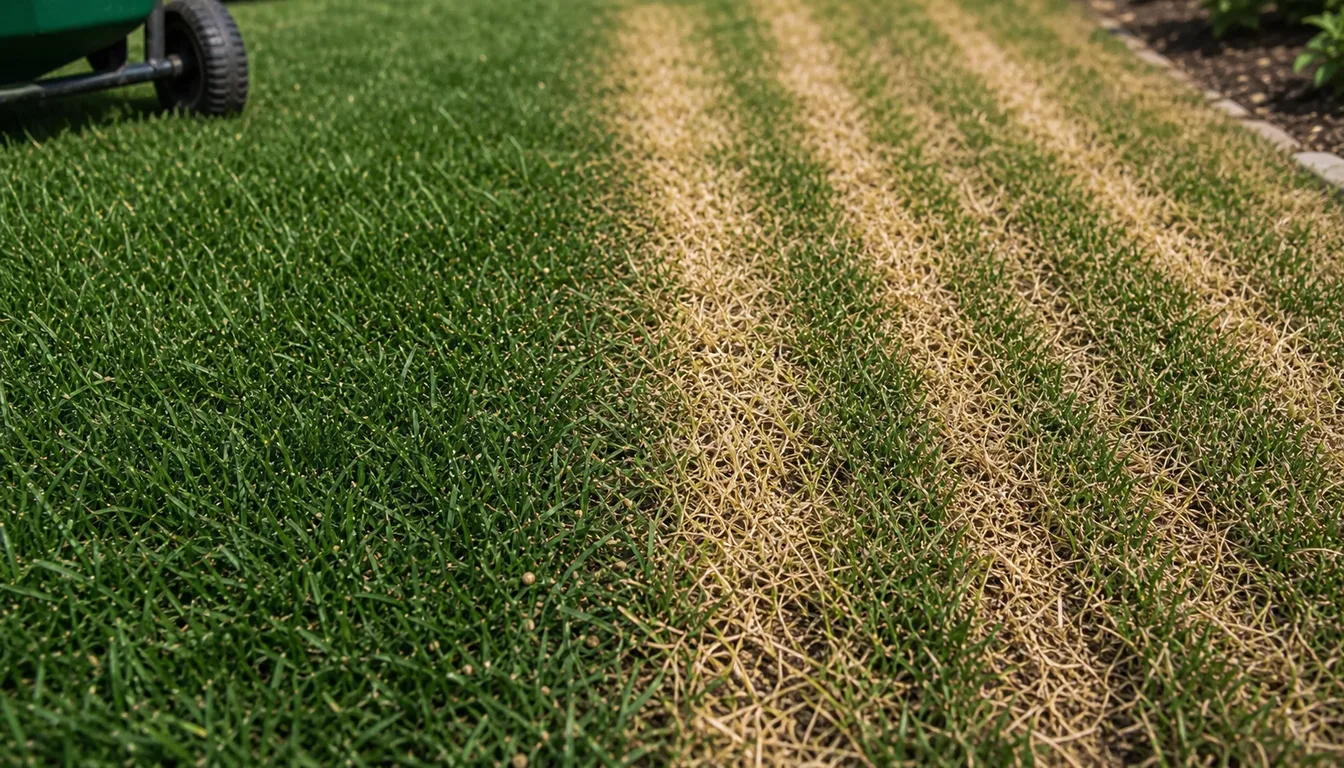
Lawns depend on the grass. Purdue puts most of a cool-season lawn's nitrogen on from late summer through fall, while warm-season grasses are fed after green-up and stop at a regional cutoff in late summer or fall.
Do Flowering Plants Need a Bloom Booster?
Phosphorus is often added at the wrong time and for the wrong reason. High-phosphorus "bloom booster" products are sold for flowering plants, but many garden soils already have enough.
Alabama Extension found that more than 40 percent of the garden soils it tested had very high or excessive phosphorus, built up by years of complete fertilizers, manure and compost. Excess phosphorus, especially in soil above pH 6.5, can induce zinc and iron deficiencies, so adding more can bring on the leaf yellowing those deficiencies cause. University of Minnesota advises a low- or no-phosphorus fertilizer unless a soil test specifically recommends phosphorus.
Timing matters as much as amount. Oregon State notes that phosphorus has low mobility, which makes it better built into the soil before planting than applied to plants already growing. A midsummer bloom booster on a tomato or a rose is therefore a late answer to a question a soil test would have settled in spring. The tomato fertilizing guide covers that crop's case in detail.
Bulbs show where advice divides. Iowa State recommends bonemeal for its phosphorus when planting bulbs, while Illinois Extension notes that most soils have sufficient phosphorus and that bone meal can interfere with the root fungi that help bulbs. A soil test that shows phosphorus is low resolves it in favor of adding some, and one that shows it is adequate resolves it the other way.
Pro Tips
- Look for new leaves or buds before feeding, since a resting plant leaves the fertilizer in the soil as salt.
- Restart houseplant feeding in early spring when new growth appears, not on a fixed date.
- Water a wilted plant and wait before deciding whether it needs fertilizer at all.
- Wait for new growth after repotting, since many potting mixes already contain fertilizer.
- Leave bulb foliage in place until it turns brown, because that is when the bulb rebuilds for next year.
- Skip high-phosphorus bloom boosters unless a soil test shows phosphorus is low.
Frequently Asked Questions
Should I fertilize plants in winter?
Usually not. Most houseplants rest in the short, dim days of winter and need little if any fertilizer, according to Nebraska Extension. A plant still putting out new leaves in a bright south or west window or under a grow light is the exception.
How soon after repotting can I fertilize?
Wait for new growth. Nebraska Extension lists newly repotted plants among those that should not be fertilized, and many potting mixes already include a starter fertilizer that lasts a few weeks.
Should I fertilize a wilting plant?
No. Wilting points to a water problem, either too little or roots damaged by too much, and fertilizer cannot be taken up by a plant in either state. Fix the water first and feed only if new growth later shows a shortage.
How often should houseplants be fertilized?
Only during active growth. UNH Extension gives every one to three months depending on the product, and Nebraska Extension every two months for a water-soluble fertilizer.
Do flowering plants need a high-phosphorus fertilizer?
Rarely. Many garden soils already have enough or too much phosphorus, and Alabama Extension found more than 40 percent of tested garden soils very high or excessive. A soil test shows whether a plant would benefit.
Sources & References
- Success With Houseplants: Fertilization, Nebraska Extension in Lancaster County
- Fertilizing Houseplants, University of New Hampshire Extension
- Maintaining Container Grown Vegetables, University of Maryland Extension
- Fertilizer Rates and Requirements for the Home Garden, Iowa State University Extension
- Fertilizing: Container Gardens, University of Illinois Extension
- Growing Annuals, Clemson Cooperative Extension
- Fertilizing Established Perennials: Feed 'Em and Weep, Michigan State University Extension
- Care of Spring-Flowering Bulbs After Bloom, Iowa State University Extension
- Selecting and Planting Spring-Blooming Bulbs, Iowa State University Extension
- Caring for Your Spring Bulbs, University of Illinois Extension
- Debunking Spring Flowering Bulb Myths, University of Illinois Extension
- Should I Fertilize Established Trees and Shrubs?, Iowa State University Extension
- Fertilizing Trees and Shrubs, Clemson Cooperative Extension
- Fertilizing Established Cool-Season Lawns (AY-22-W), Purdue Extension
- Fertilizing Texas Lawns: 10-Point Checklist for Warm-Season Grasses (E-436), Texas A&M AgriLife Extension
- Excessive Phosphorus in Garden Soils, Alabama Cooperative Extension System
- The ABCs of NPK: A Fertilizer Guide (EM 9691), Oregon State University Extension
- Growing Lettuce, Endive and Radicchio in Home Gardens, University of Minnesota Extension
Related Guides
Best Fertilizer for Indoor Plants: How to Choose
The best fertilizer for most indoor plants is a complete fertilizer labeled for houseplants, with…
15 min read
Best Fertilizer for Vegetables by Garden Type
Fertilizer only helps vegetables if it matches what your soil and crops need.
11 min read
Can You Fertilize Wet Grass Safely?
A wet lawn right when you planned to fertilize creates second thoughts fast.
11 min read
How Long Does Compost Take to Be Ready?
Compost does not follow a calendar, it follows conditions.
11 min read
How to Fertilize Tomatoes Without Overfeeding
Fertilize tomatoes according to a soil test and product label, not a fixed weekly calendar.
15 min read
How to Fertilize a Vegetable Garden for Maximum Yield
Fertilizer is not magic dust. It is plant food in a specific ratio.
14 min read