At a glance
- Blades for granular fertilizer
- Dry, with moist soil underneath
- Skip fertilizing when
- Soil is saturated, heavy rain is due within 24 hours, or the ground is frozen
- Lower burn risk
- Mostly slow-release nitrogen
- Watering afterward
- Enough to moisten the top half inch of soil
The sections below sort your lawn into one of those cases, show how to spread and water in, and cover what to do if brown patches show up afterward.
Is it safe to fertilize while the grass is wet?
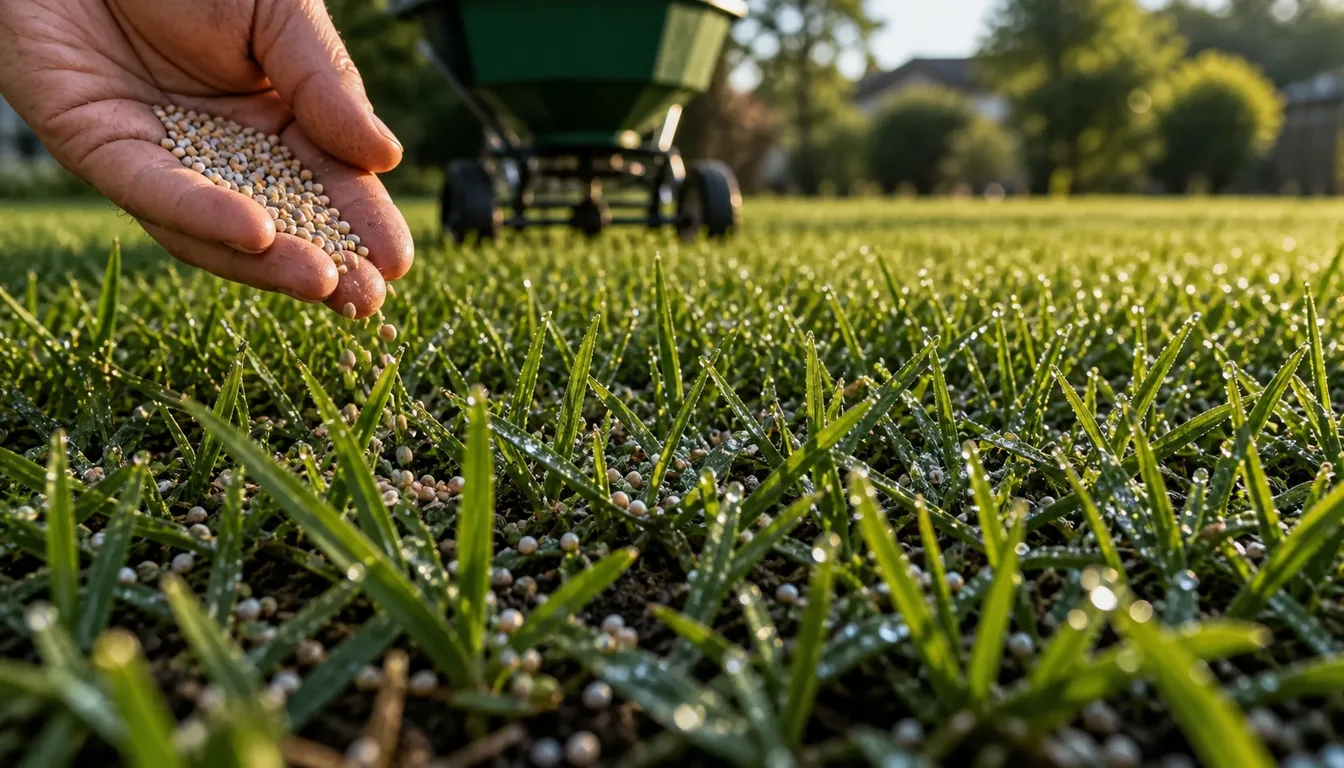
It depends on which part of the lawn is wet. Fertilizers need moisture to work, so damp soil under dry blades is a good place to fertilize, while wet leaves are the part to avoid, since dry or granular fertilizer that touches them can leave burned spots.
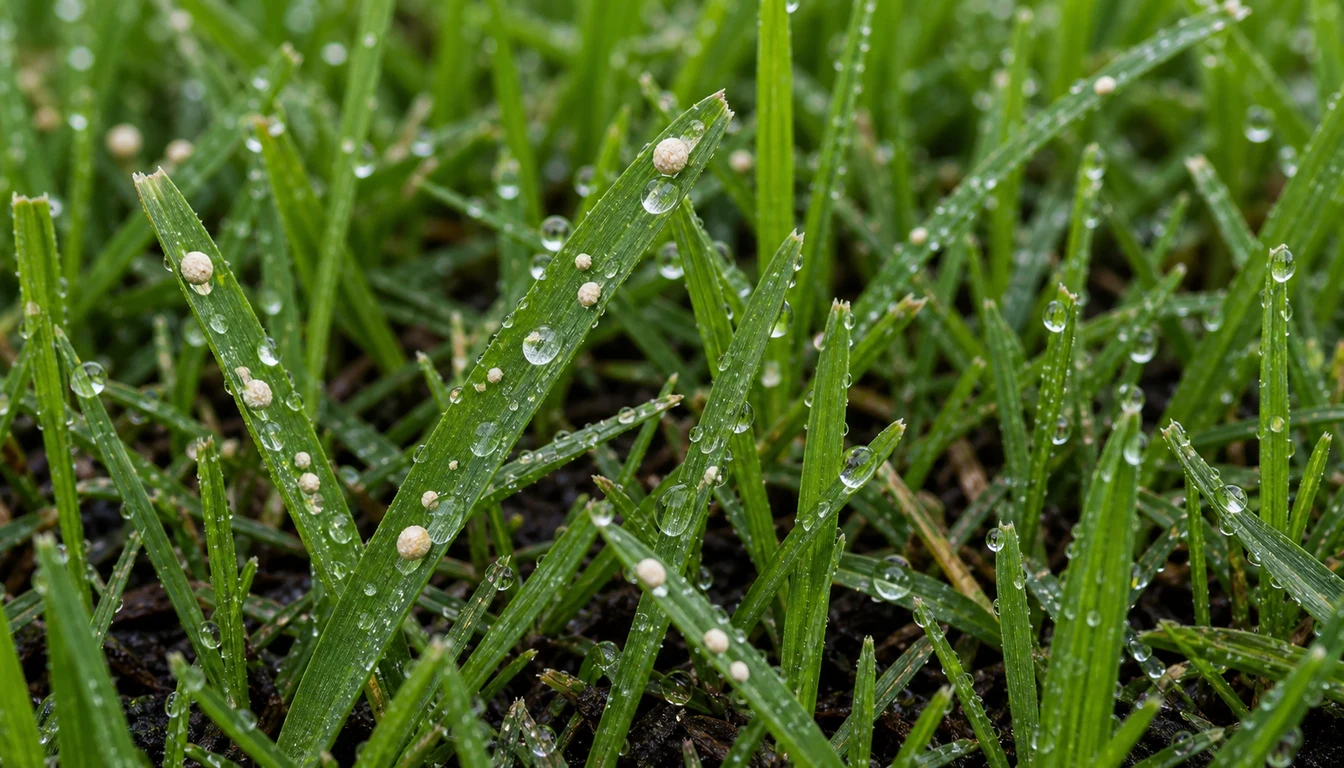
The burn comes from salts. Salts can build up in leaf tissue and cause dieback of the leaf tips and edges, and nearly all inorganic fertilizers can burn grass foliage this way, so they are watered off the blades right after spreading. Dew counts as wet foliage, which means a dewy morning is a reason to wait until the sun has dried the blades.
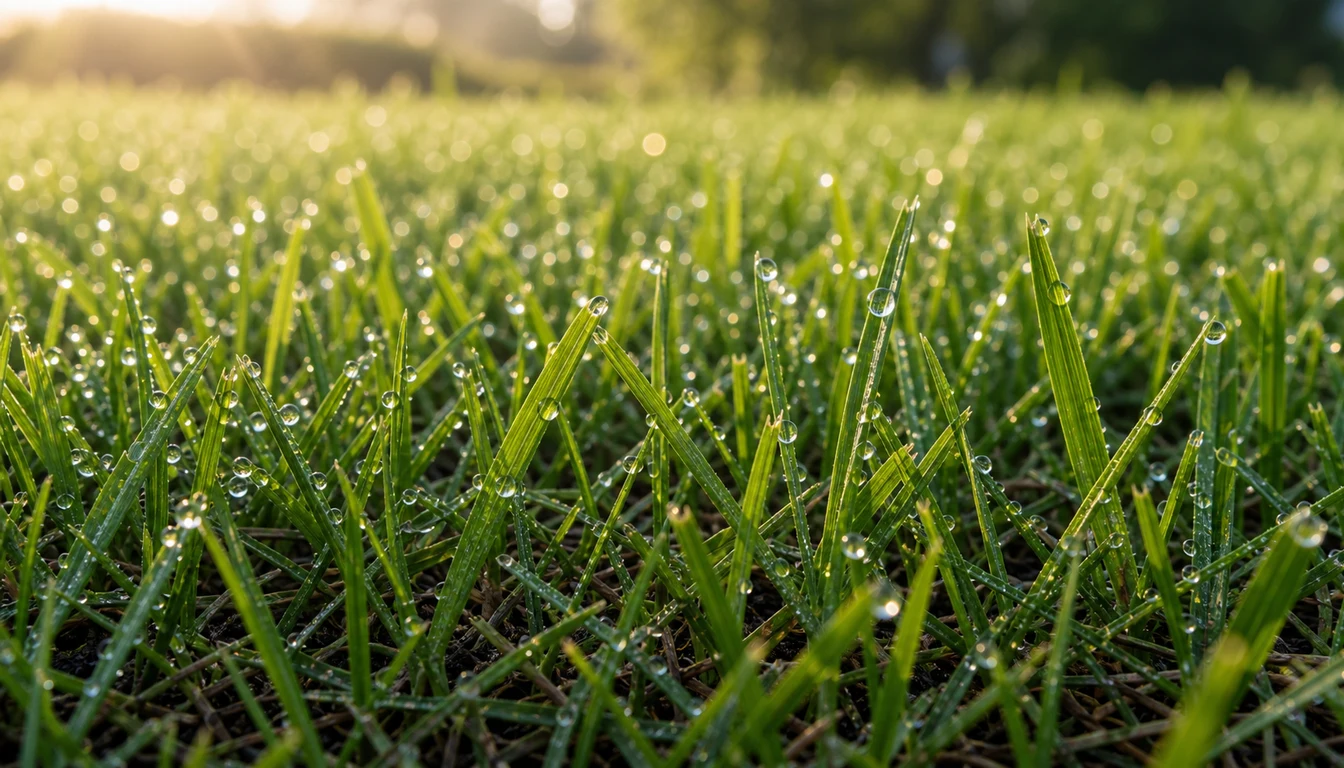
Heat adds to the risk. Burning is most common when a lawn is fertilized in hot weather or without being watered, and fast-release fertilizers are particularly prone to it.
Granular weed-and-feed is the exception to the dry-blade rule. Its herbicide has to stick to weed leaves, so Wisconsin Extension says to spread granular products when the lawn is wet with dew. That clashes with the fertilizer in the same bag, which is watered in to prevent burn while many herbicides need to stay on the leaves. Applying fertilizer and weed killer separately avoids the clash, and the bag's label says whether and when to water.
When is the lawn too wet to fertilize?
Even with dry blades, fertilizer that runs off does not feed the lawn and can end up in storm drains and waterways, so the soil and the forecast need checking too.
| What you see | Spread granular fertilizer? | Why |
|---|---|---|
| Dew or rain still on the blades | Wait until they dry | Granules on wet foliage can burn spots |
| Moist soil, dry blades | Yes, then water in | Fertilizers need moisture to work |
| Saturated soil | No | Fertilizer is most likely to run off saturated soil |
| Heavy rain forecast within 24 hours | No | Storms can wash the fertilizer away before the lawn uses it |
| Frozen ground or dormant turf | No | The fertilizer is not absorbed and is more likely to wash or blow away |
Rain is not the enemy in itself, since it can dissolve the fertilizer so roots can absorb it, but excessive rain makes the fertilizer run off or leach away, which is why the forecast matters. For quick-release urea, much of it is lost when heavy rain falls within 8 to 12 hours of spreading, according to UF/IFAS in Florida. Fertilizing around rainfall goes through the timing.
Frozen ground is the same runoff problem in winter, and Cornell's turfgrass program tells New York lawn owners not to fertilize between December 1 and April 1, with an earlier start in Suffolk and Nassau counties. Lawn fertilizing schedules cover the months that suit your grass.
Does the type of fertilizer change the answer?
It does, because quick-release products build up higher nutrient concentrations than slow-release ones. The three common kinds differ in how much burn they risk.
- Fast-release products such as urea and ammonium nitrate turn into plant-ready nutrients quickly, and burn from hot weather or skipped watering is particularly a problem with them.
- Slow-release products such as sulfur-coated urea, urea formaldehyde and IBDU can still burn, but their nutrients usually do not build up to such high concentrations in the soil.
- Natural organic fertilizers are typically slow-release too, and their danger of grass burn is listed as small, against a high salinity potential for inorganic sources.
For that reason a turf fertilizer whose nitrogen is mostly slow-release is the better choice, since it reduces the chance of burning the lawn. A slow-release bag still gets watered in unless its label says otherwise.
How do you spread fertilizer and water it in?
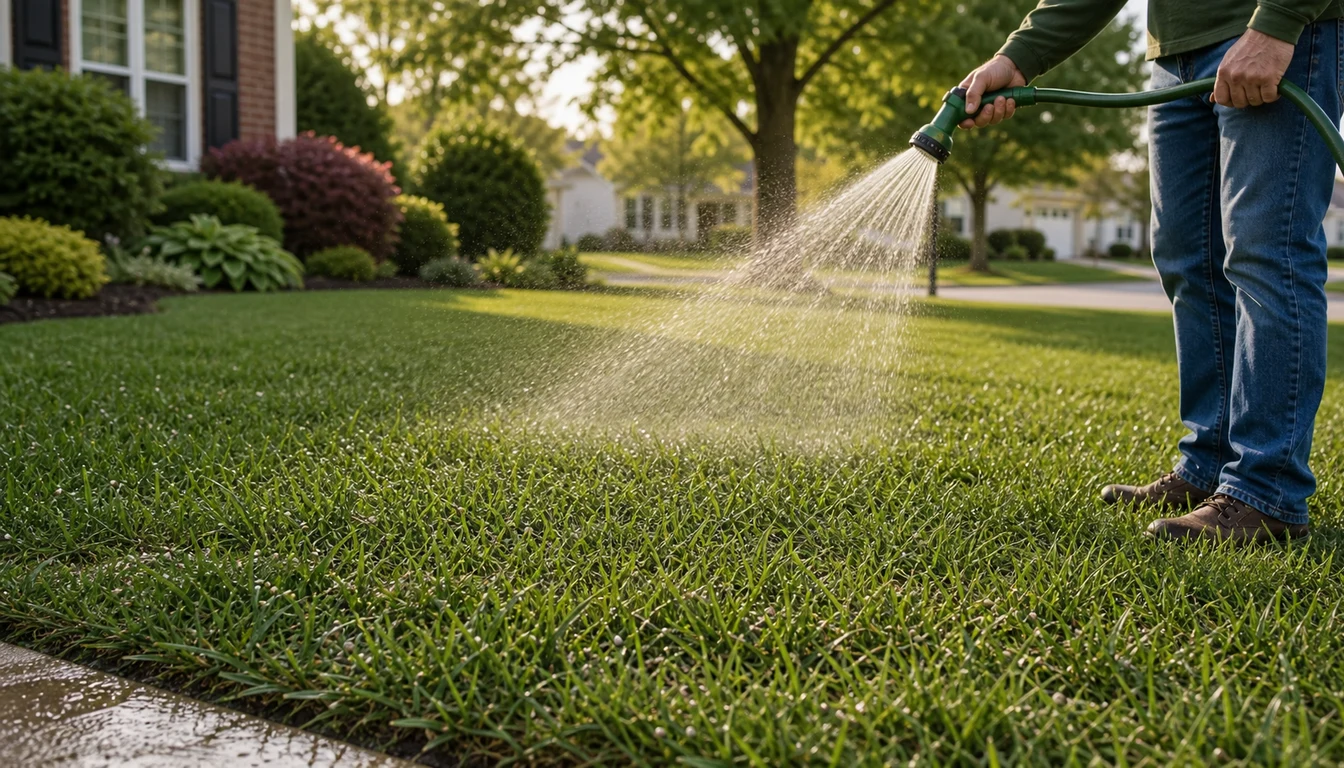
Watering in has two jobs. It rinses granules off the blades, where they would burn, and it carries the nutrients into the soil. A short run does both, because the goal is to moisten the top half inch of soil, and a long soak dissolves the fertilizer too quickly and moves it out of the root zone.
- Fill the spreader on the lawn, not on the driveway, so any spill lands on grass.
- Use a spreader with a deflector shield along sidewalks and other pavement, so the granules stay on the lawn.
- Sweep or blow granules that landed on pavement back onto the lawn right away. Sweep up spills rather than rinsing them away.
- Water in with the sprinkler or hose for that short run. UF/IFAS in Duval County gives one-quarter inch of water as a light watering-in to prevent nitrogen loss and burning the grass.
- Follow the label for how soon people and pets can use the lawn again.
What if the grass turns yellow or brown after you fertilized?
Burn from a spreader leaves a pattern. A lawn where fertilizer was misapplied can show stripes where passes overlapped, or patches of dead, brown turf where the spreader turned, started or stopped and dropped extra. Quick-release products that were not watered in, or that went on in hot weather, are a common cause, so compare the damage with the path you walked before blaming something else.
Water can leach excess salts out of the soil, and Maryland Extension's remedy is to soak the affected area with one-inch applications of water, three to four times.
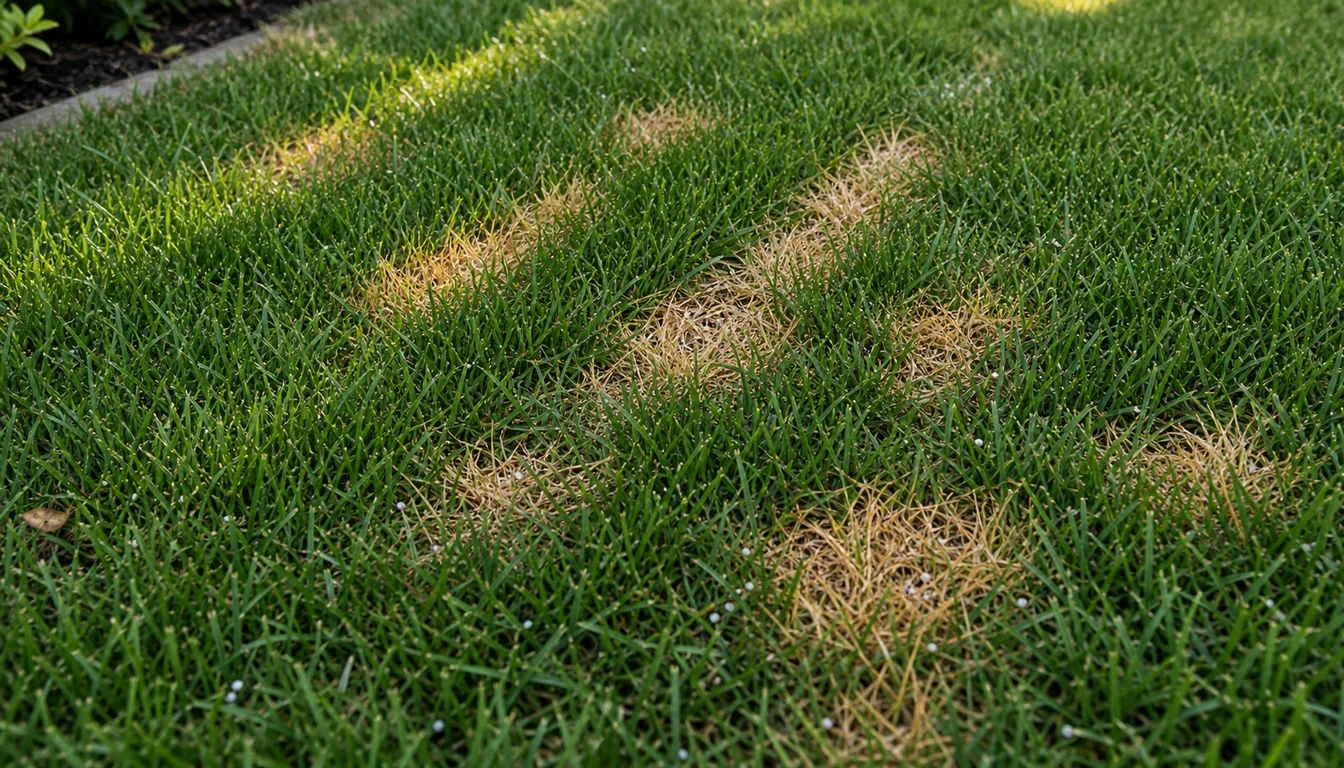
High levels of salt in the soil damage roots and reduce their water uptake, and fertilizer adds salt, so hold off on more while the lawn recovers.
Where the soak does not bring green growth back, the patch needs new seed. Overseeding a lawn covers how.
Pro Tips
- Wait until dew or rain has dried off the blades before spreading plain granular fertilizer.
- Skip the job when the soil is saturated or heavy rain is forecast within 24 hours.
- Water right after spreading, just long enough to moisten the top half inch of soil.
- Use a spreader with a deflector shield beside pavement, and sweep stray granules back onto the lawn.
- If burned patches appear, soak them with one-inch applications of water, three to four times, instead of adding fertilizer.
- Read the weed-and-feed label first, because its herbicide may need dew-wet leaves while plain fertilizer needs dry ones.
Frequently Asked Questions
Can you fertilize grass right after it rains?
Yes, if the soil is not saturated and no more heavy rain is coming. UF/IFAS advises against fertilizing when heavy rain is likely within 24 hours and against putting fertilizer on saturated soil. If the blades are still wet from the rain, wait until they dry before spreading granular fertilizer.
Is morning dew a problem for fertilizing?
For plain granular fertilizer it is, because dry or granular fertilizer that touches wet foliage can burn spots on the leaves. Wait until the sun has dried the blades, then spread and water in. Granular weed-and-feed is the exception, covered below.
Should I water again after fertilizing?
Yes, lightly. Water just long enough to rinse the granules off the blades and moisten the top half inch of soil, unless the label says otherwise. A long soak can dissolve the fertilizer too quickly and move it below the roots.
How do I fix grass that burned after fertilizing?
Soak the area with one-inch applications of water, three to four times, to help leach the excess salts out of the soil, according to Maryland Extension. Skip more fertilizer while the grass recovers, and see the overseeding guide if nothing green returns.
Can I use weed-and-feed on wet grass?
Sometimes. Wisconsin Extension says granular products should go on when the lawn is wet with dew, because the granules have to stick to the weeds. The fertilizer in the same bag is normally watered in to prevent burn, so follow the label for watering and consider applying fertilizer and weed killer separately.
Sources & References
- University of Minnesota Extension, Fertilizing Lawns
- Clemson Cooperative Extension HGIC, Fertilizing Lawns
- Washington State University HortSense, Common Cultural: Fertilizer burn
- UF/IFAS Gardening Solutions, Fertilizing Your Florida Lawn
- UF/IFAS Extension Duval County, Answers to Fertilizing Lawns
- UF/IFAS Extension St. Lucie County, St Lucie County Fertilizer Ban is Over; Now What?
- NC State Extension, Caring for Your Lawn and the Environment
- University of Maryland Extension, Fertilizer Injury: Lawns
- Cornell Turfgrass Program, Feeding
- University of Wisconsin-Madison Extension, Managing Broadleaf Weeds in Lawns