At a glance
- First Feeding
- After full green-up and the second mowing
- Per Application
- 0.5 to 1 lb nitrogen per 1,000 sq ft
- Applications a Year (bermudagrass)
- 1 to 4
- Last Nitrogen
- At least 6 weeks before the first frost
- Soil Test
- At least every other year
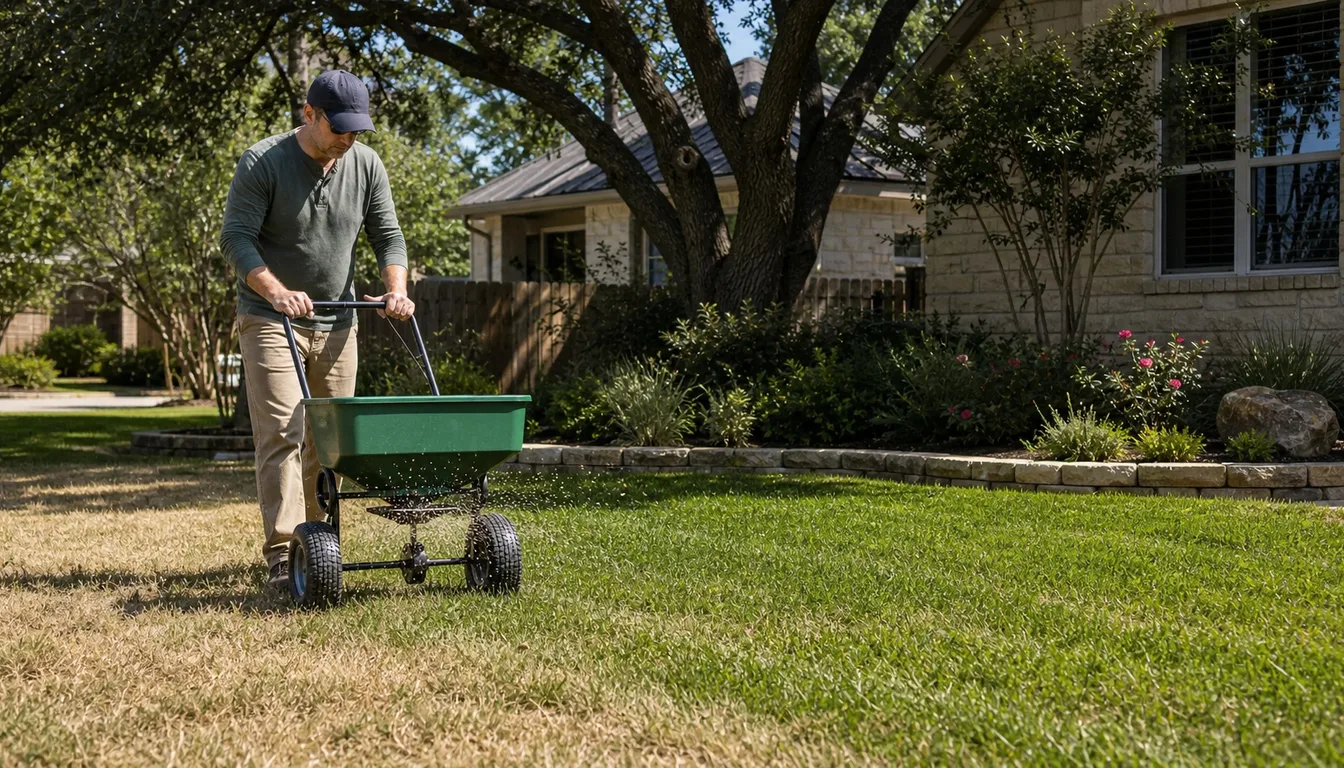
A typical Texas A&M plan for a bermudagrass home lawn runs 1 to 4 applications a year, and an older lawn with well-developed roots may need less.
Which grass do you have, and does it change the schedule?
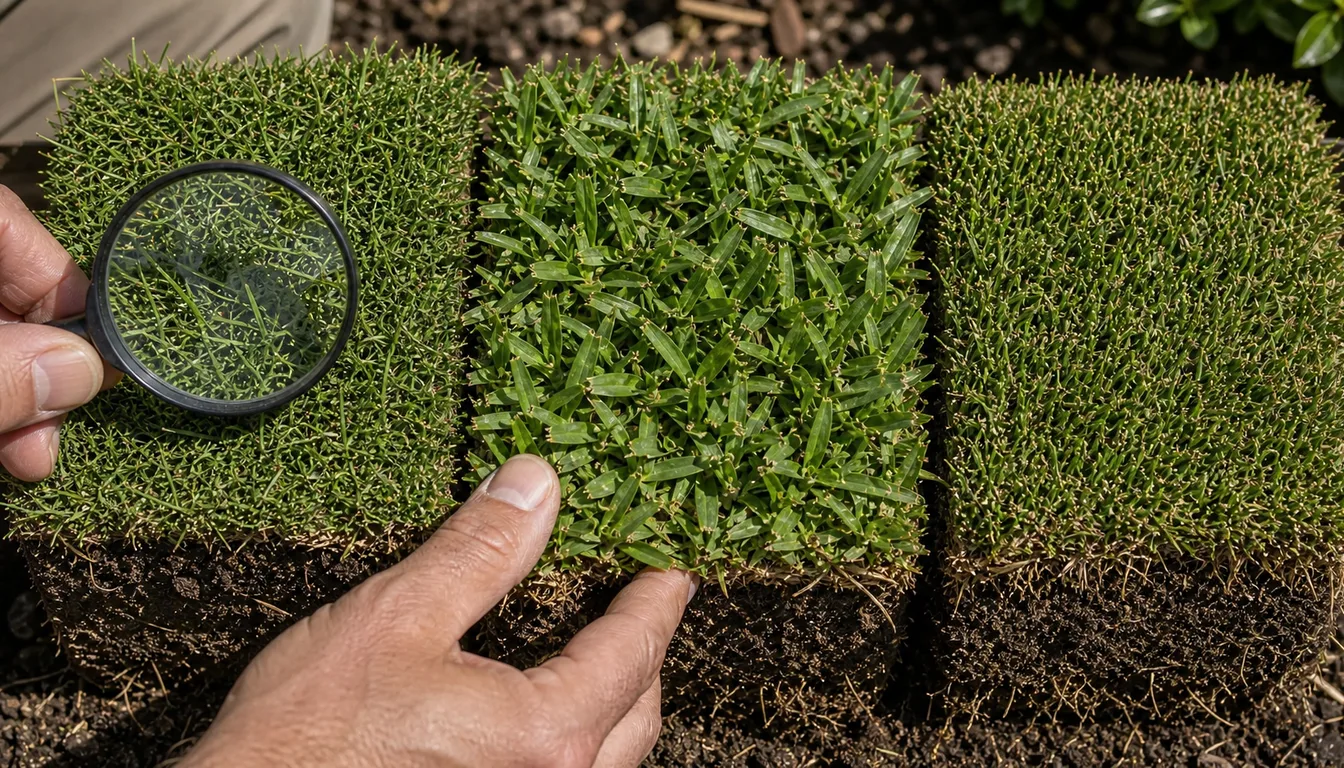
The timing below is for warm-season lawns such as bermudagrass, St. Augustinegrass and zoysiagrass, which grow through the summer and go dormant from late fall to early spring, except in southern Texas where they do not go fully dormant. Bermudagrass is one of the best-adapted species for Texas home lawns, though it may struggle in moderate to dense shade. Where shade is a problem, St. Augustinegrass or zoysiagrass are worth considering.
The green-up, summer and rate guidance below comes from Texas A&M's bermudagrass calendar, and its fall advice covers St. Augustinegrass and zoysiagrass as well.
Cool-season grasses such as tall fescue follow a different pattern. Oklahoma State says tall fescue, Kentucky bluegrass and perennial ryegrass need most of their yearly fertilizer in fall, a little in spring and very little if any in summer, so a fescue patch does not take the warm-season schedule below.
When does the first spring feeding go on?
Nutrients are used most efficiently by grass that is actively growing, so the first feeding waits for full green-up.
The second mowing gives you the cue. Skip Richter, the Brazos County Extension horticulturist, puts the first application after the second mowing of the turf, and he means the turf, not the weeds. Weeds grow vigorously in early spring while the lawn "sleeps in" until the weather warms, and by about mid-April the turf grows fast enough to benefit from fertilizer.
Crabgrass preventers go on before that, because crabgrass germinates in mid-March in the Panhandle, early March in North and Central Texas and mid-February in South Texas.
Before you spread
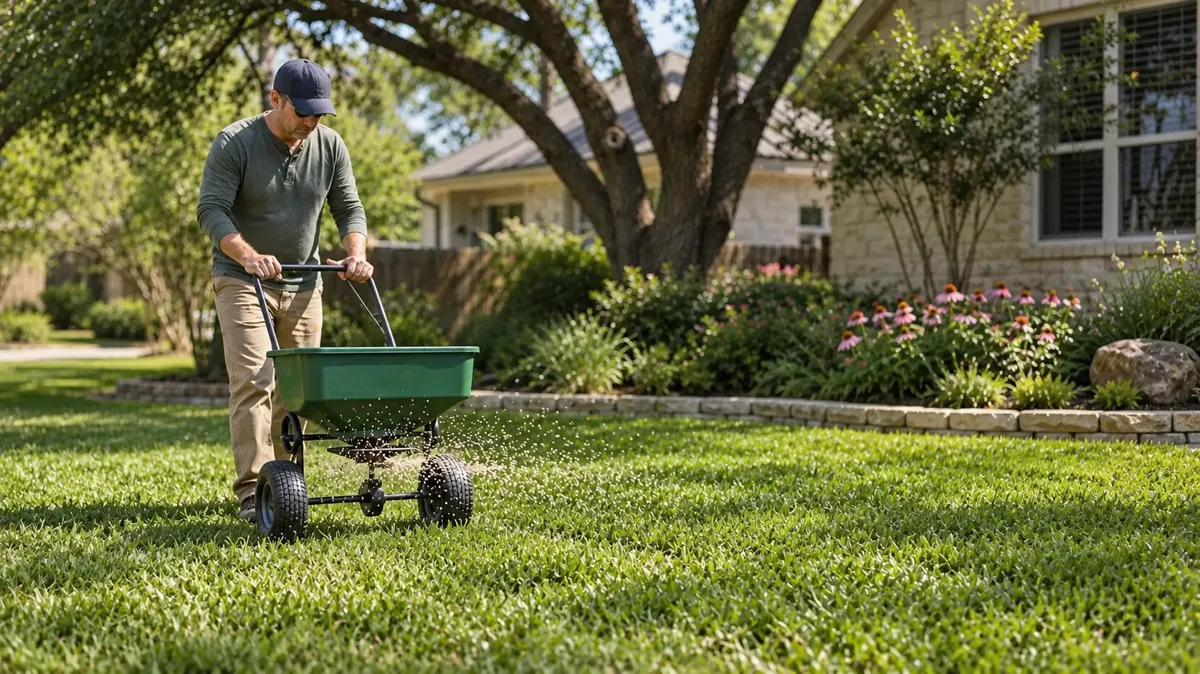
- The lawn is fully green and has been mowed at least twice
- The weather is not a hot, dry spell
- No heavy rain is expected in the next 24 hours
- You know the lawn's square footage and the pounds of nitrogen in the bag
- You can water the fertilizer in lightly afterward
How much fertilizer goes on at a time?
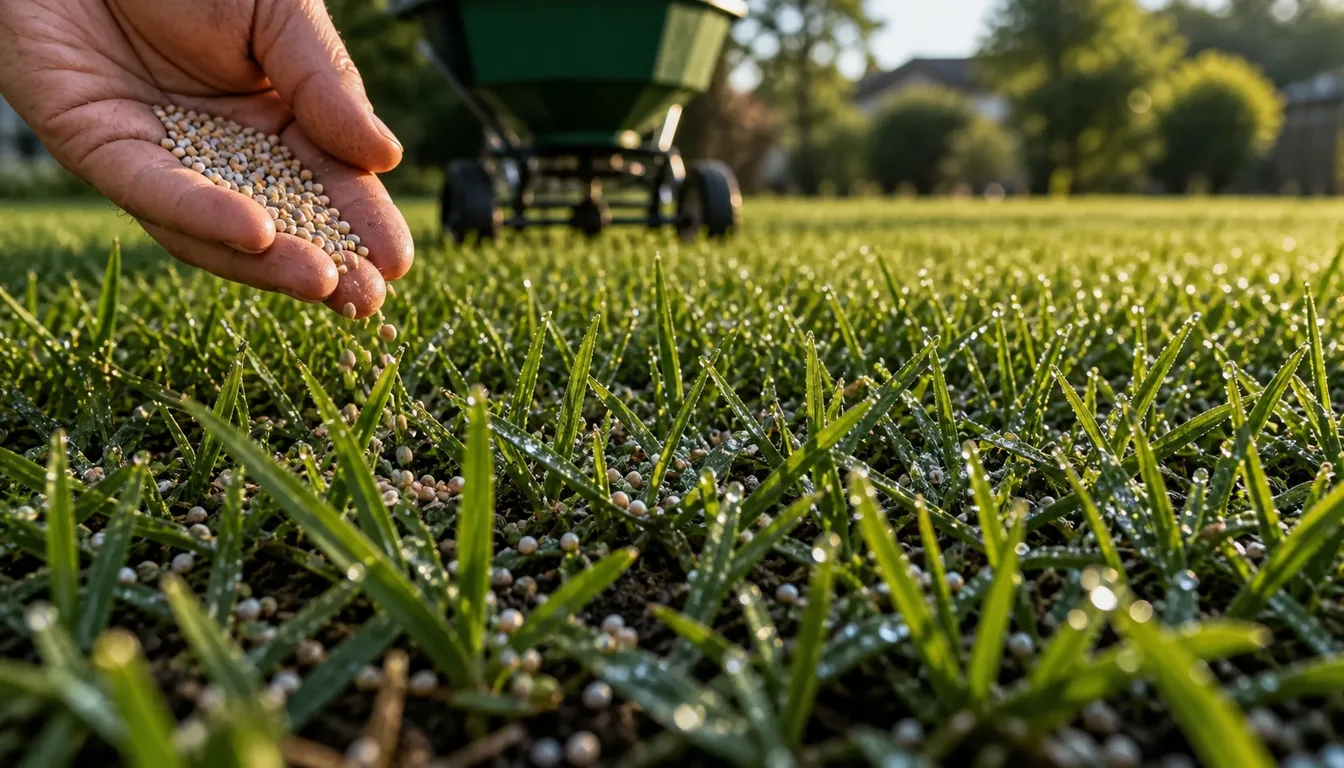
Nitrogen is what drives turfgrass growth, and too much of it can make a lawn grow rapidly for a few weeks and cause scalping and a pile-up of clippings. A single application should not exceed 0.5 to 1 pound of nitrogen per 1,000 square feet. A product that combines quick-release and slow-release nitrogen helps because the lawn gets an immediate response and a longer one.
- Nitrogen per application
- 0.5 to 1 lb per 1,000 sq ft
- Applications a year (bermudagrass)
- 1 to 4
- Bag labeled "covers 4,000 sq ft"
- Usually 0.8 to 1.0 lb nitrogen per 1,000 sq ft
- Soil test
- At least every other year
To work out the bag, multiply the lawn's area in thousands of square feet by the pounds of nitrogen you want per 1,000, then divide by the fraction of the bag that is nitrogen. A 4,500-square-foot lawn, for example, at 1.0 pound of nitrogen with a 15-4-9 fertilizer takes 4.5 x 1.0 / 0.15, or 30 pounds of product.
Without a soil test, Brazos County Extension suggests a 3-1-2 or 4-1-2 ratio, such as 21-7-14 at 5 pounds per 1,000 square feet, and splitting the amount into two applications when the product is not slow-release.
When does nitrogen go on the rest of the year?
| Season | Nitrogen | Why |
|---|---|---|
| Spring | After full green-up and the second mowing | The grass is actively growing |
| Summer | Skip hot, dry stretches in late summer | Grass under heat or drought stress does not use nutrients efficiently |
| Fall | Last application at least 6 weeks before the first frost, after a soil test | Extra nitrogen when levels are already high can raise disease and winter weeds |
| Winter | None on a dormant lawn | Nutrients are used most efficiently by actively growing grass |
Is summer feeding worth it?
Summer fertilizing may green up a lawn, but it also makes the grass grow faster, develop shallow roots and need more water.
How do you time the last feeding of the year?
The final nitrogen goes on no later than 6 weeks before the historical first frost date for your region. A soil test in late summer or early fall shows whether the lawn needs it, because low nitrogen can hurt the grass when it comes out of winter dormancy. Extra nitrogen on a lawn that already has plenty can increase disease pressure, especially in St. Augustinegrass and zoysiagrass, along with winter weed growth and local water pollution.
Early-fall nitrogen combined with over-irrigation can also increase large patch, a fungal disease of bermudagrass.
How do you water in and time the spread around rain?
Texas A&M says to skip the application when heavy rain is expected within the next 24 hours, and to apply irrigation of less than a quarter inch, if possible, to help move the fertilizer into the soil. It also says to sweep or blow stray granules off hard surfaces back onto the lawn.
Skip Richter suggests about half an inch of irrigation and prefers to water in yourself, because you cannot control how much rain falls or how fast, and a heavy downpour can wash fertilizer into ground and surface water. The two figures differ, so follow the bag label where it gives its own watering-in amount.
The rainfall guide covers when rain helps and when it carries fertilizer off the lawn.
Do clippings count as fertilizer?
Returning clippings to the lawn recycles nutrients and acts as a free, slow-release fertilizer, which is part of why older lawns may need less. For brown patches after a spreader pass, the wet grass guide explains how to tell burn from other causes.
Pro Tips
- Wait for full green-up and a second mowing of the turf, not the weeds, before the first spring feeding.
- Keep each application between 0.5 and 1 pound of nitrogen per 1,000 square feet.
- Measure the lawn and work out the pounds of product from the nitrogen percentage on the bag.
- Choose a fertilizer that combines quick-release and slow-release nitrogen.
- Skip fertilizing during hot, dry spells in late summer when moisture is limiting.
- Do a soil test at least every other year, and again in late summer or early fall before a fall feeding.
- Apply the last nitrogen at least 6 weeks before your area's historical first frost.
- Sweep or blow stray granules off driveways and sidewalks back onto the lawn.
- Leave clippings on the lawn to recycle nutrients.
Frequently Asked Questions
How often should I fertilize my Texas lawn each year?
A typical plan for a bermudagrass home lawn in Texas runs 1 to 4 applications a year, each at 0.5 to 1 pound of nitrogen per 1,000 square feet during the growing season. Older lawns with well-developed roots may need less, because clippings, roots and other plant matter return nitrogen to the soil.
What month should I fertilize bermudagrass in Texas?
Wait until the lawn is fully green in spring and the turf has been mowed at least twice. In the Brazos Valley the turf is growing fast enough to benefit by about mid-April. Do not feed bermudagrass in hot, dry stretches or once it is going dormant, and put the last nitrogen on at least 6 weeks before your area's first frost.
Is it safe to fertilize during a Texas drought?
Not during hot, dry periods in late summer when moisture is limiting, because nutrients are used most efficiently by grass that is actively growing and not under heat or drought stress.
Should I leave grass clippings on my Texas lawn?
Yes. Returning clippings recycles nutrients, and they work like free, slow-release organic fertilizer.
How do I know how much fertilizer my lawn needs?
A soil test at least every other year shows the nutrient balance to look for, and the lawn's size and the nitrogen percentage on the bag give the pounds of product. Aim for 0.5 to 1 pound of nitrogen per 1,000 square feet in a single application.
Sources & References
- Texas A&M AgriLife Extension, Bermudagrass Home Lawn Management Calendar
- Texas A&M AgriLife Extension, SPN: Warm-Season Turfgrass Fall/Winter Preparation
- KAMU and Texas A&M AgriLife Extension, A Green Lawn in the Brazos Valley: Skip's Tips for Your Grass
- Oklahoma State University Extension, Lawn Management in Oklahoma