At a glance
- Test first
- A soil test before you buy
- Fast fix
- Water-soluble or liquid fertilizer
- Fruiting crops
- Hold nitrogen side-dress until fruit forms
- Containers
- Slow-release in the mix plus a liquid feed
The numbers on the bag and a soil test come first, since those two decide which of the choices below you need at all.
What do the three numbers on a fertilizer bag mean?
The three numbers on the front of the bag are the percentages by weight of nitrogen (N), phosphate (P2O5) and potash (K2O), always in that order. A 100-pound bag labeled 10-10-10 therefore holds 10 pounds of each.
Each of the three does a different job in the plant, which is why one bag does not suit every crop.
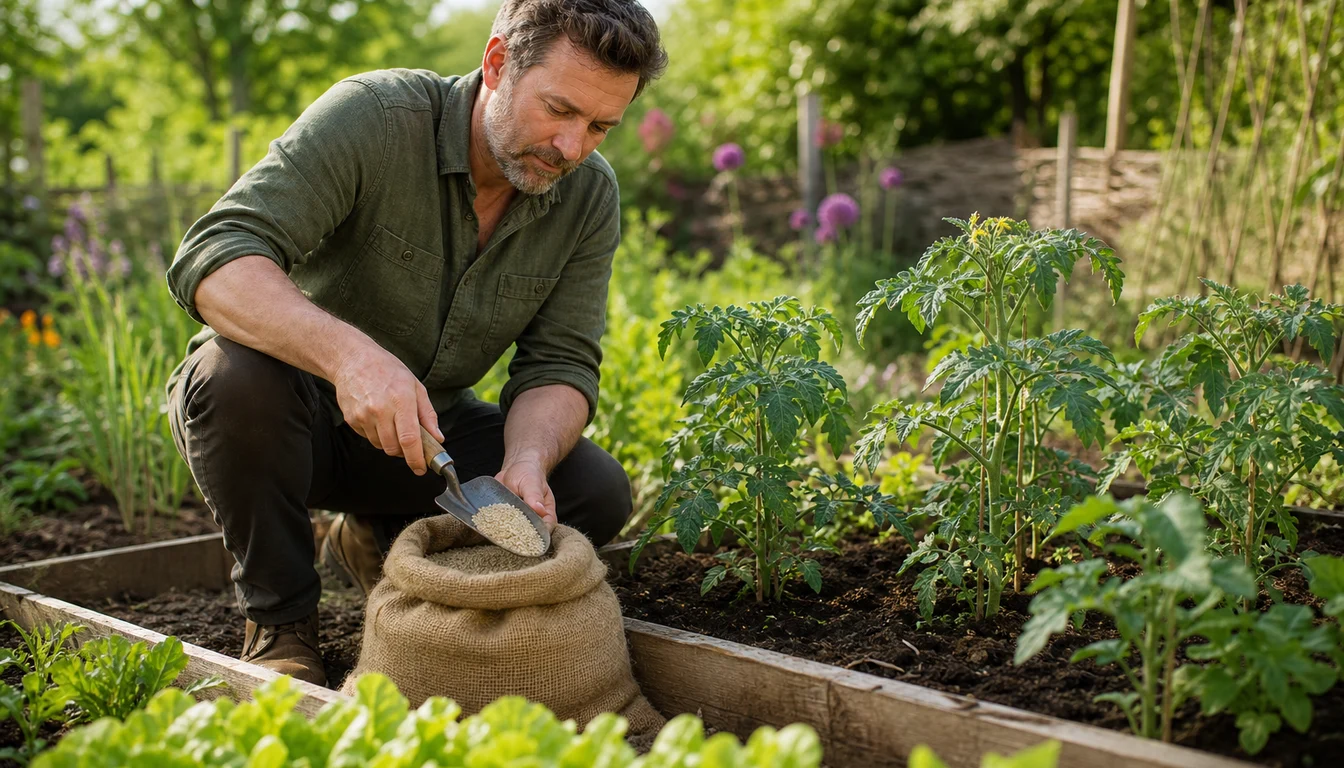
- Nitrogen (N) drives leafy top growth. Rain and irrigation wash out the part the plants have not used, so it usually needs adding every year.
- Phosphorus (P) supports roots and fruit. It moves slowly through the soil and is hard for plants to reach in cold soil, so seedlings can run short of it in a cool, wet spring.
- Potassium (K) supports cold hardiness and disease resistance, and it leaches fairly easily from sandy soil.
A bag adds all three whether the soil needs them or not, and extra phosphorus is not harmless. Too much can aggravate iron and zinc deficiencies and raise the salt content of the soil.
A soil test shows which nutrients the soil already holds, which makes it the best first step in deciding what to apply. Where phosphorus and potassium test very high, a nitrogen-only fertilizer is an appropriate choice.
Should you use organic or synthetic fertilizer?
Both kinds grow good vegetables, because roots take up the same form of each nutrient whichever bag it came from. What differs is how quickly the nutrient arrives and what the fertilizer does to the soil around it.
Organic fertilizers such as blood meal, cottonseed meal and manure release over a fairly long period, since soil organisms have to break them down first. That makes them work best in moist, warm soil, and it means they can fall short of a crop's nitrogen need early in the season.
To mix your own from manure, bone meal and wood ash, see how to make homemade vegetable fertilizer.
Synthetic fertilizers generally act more quickly, but they do nothing for soil structure. Over-applying a nitrogen fertilizer such as ammonium sulfate burns roots and can stunt or kill the plants.
Specialty blends labeled for roses, azaleas or vegetables are generally an expensive alternative to a standard blend applied at an adequate rate.
| Type | How it behaves | Where it fits |
|---|---|---|
| Granular (dry) | The most common garden type. It spreads evenly and has to be worked into the soil and watered in | Bed preparation before planting |
| Water-soluble powder or liquid, including fish emulsion | Fast-acting but easily leached, and costly for continued use across a garden | Transplant starter, containers, quick correction of a deficiency |
| Slow-release (granules, spikes) | Some last all season, and in containers about 2 to 3 months | Pots and planters |
| Blood meal | A good source of organic nitrogen, at 1.5 to 2 pounds per 100 square feet | A nitrogen top-up in organic beds |
| Compost or composted manure | Typically 2 to 4% nitrogen, with only 5 to 25% of it released in the first year | Building soil, not feeding a hungry crop |
What does each kind of vegetable need?
What you harvest decides how much nitrogen a crop wants, and the University of Nevada, Reno groups vegetables on that basis.
- Leafy vegetables such as lettuce and spinach do well with a balanced fertilizer that contains nitrogen, such as 10-10-10 or 16-16-16.
- Vegetables grown for fruits, seeds, roots or bulbs thrive on a low-nitrogen complete fertilizer before planting, such as 6-24-24, 6-12-18 or 8-16-16.
- Corn, garlic, onions and potatoes also need extra nitrogen as a side-dressing during the season, and sweet corn may need it every 4 weeks.
- Beans and peas get nitrogen from soil bacteria, so added nitrogen is best skipped where legumes will grow, because it can reduce their yield.
Nitrogen has its greatest effect for three to four weeks after it goes on, so heavy feeding, or a side-dress before fruit set, can leave tomatoes all vine and no fruit, and in Virginia Tech's example a heavy feeding on June 1 may delay flowers until July 1 and ripening until late August.
Heavy manure or slow-release fertilizer on fruit crops keeps leaf and vine growth going into late summer, so the fruit develops very late in the season.
Root crops need less nitrogen than leafy ones. Carrots and beets also react to fresh manure, which can give misshapen roots.
How does feeding change in beds and in pots?
In a bed, raised or in the ground, the organic matter in the soil decides how much nitrogen you have to add, because it releases some on its own as it breaks down. Colorado State's yearly amounts for a home vegetable garden shrink as organic matter rises and reach zero at 4% or higher.
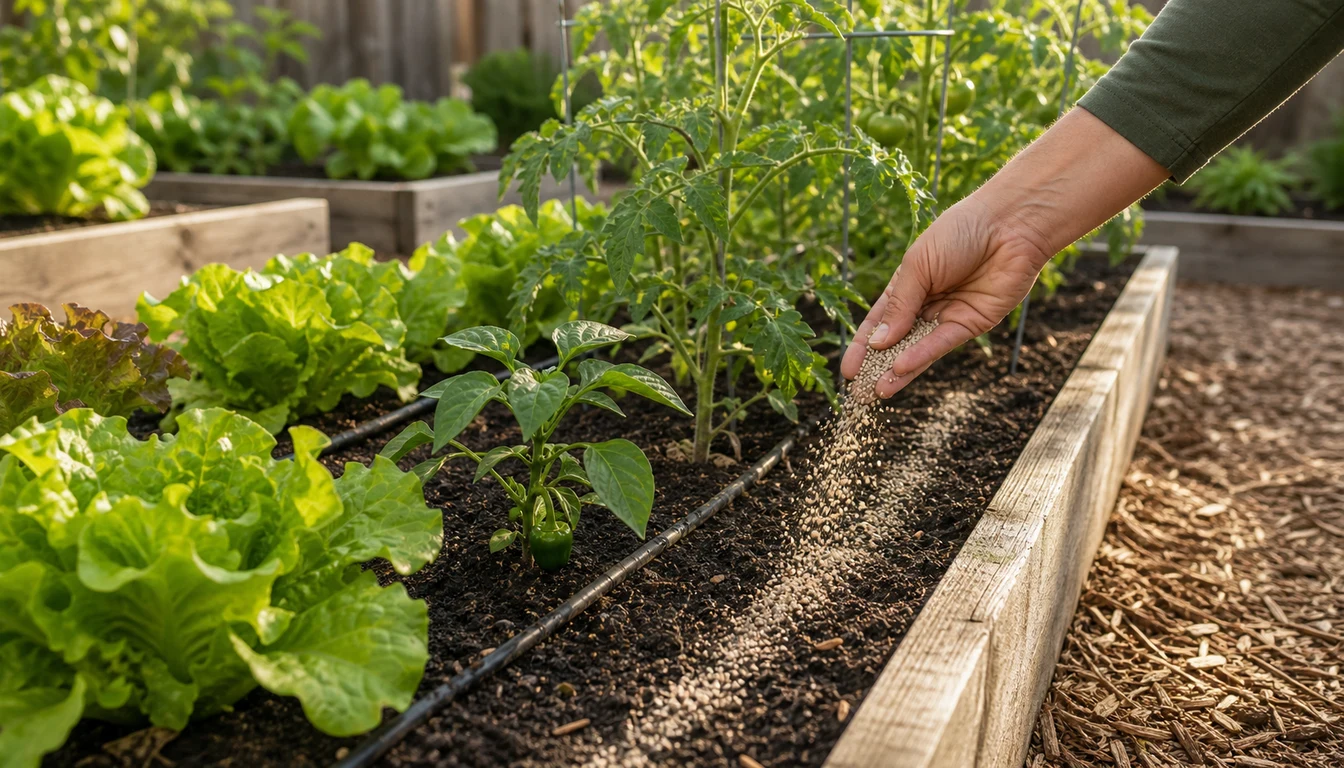
- Under 2% organic matter
- 0.2 pound of nitrogen per 100 square feet
- 2 to 3% organic matter
- 0.1 pound of nitrogen per 100 square feet
- 4% or higher
- None added
To turn pounds of nitrogen into pounds of fertilizer, divide by the percent nitrogen on the label. A 10-10-10 bag is 10% nitrogen, so 0.2 pound of nitrogen takes 2 pounds of that fertilizer per 100 square feet.
Sandy soil needs nitrogen more often than clay. Organic matter helps there because it holds over ten times more water and nutrients than sand does.
Pots and planters
Frequent watering drains nutrients out of a container, so plants in pots need fertilizer regularly whatever the potting mix. Slow-release fertilizer can supply nutrients for 2 to 3 months, liquid feeds have to go on more often, and long-season crops such as cucumbers, tomatoes, eggplant and peppers may need a light feeding every two weeks to keep producing.
A potting mix with fertilizer already in it supplies plants for eight to ten weeks, and a water-soluble feed every two to three weeks follows. A pot has no deep soil to cushion a heavy hand, so a dose above the label rate burns roots and can kill the plant.
When should you feed during the season?
Clemson, writing for South Carolina, puts all the recommended phosphorus and potassium on when you prep the bed, along with 30 to 40% of the nitrogen. The rest of the nitrogen goes on 3 to 4 weeks after planting, broadcast or side-dressed.
On sandy soil that second dose is split in two, 3 weeks after planting and again 3 to 4 weeks later.
Pale green or yellow growth and a slower growth rate about four to five weeks after planting mean vegetables may need more nitrogen, though peas and tomatoes are left out of that extra dose.
| Crop | When to side-dress |
|---|---|
| Leafy greens and onions | 3 to 4 weeks after emergence |
| Sweet corn | At 12 inches tall, and again a month later |
| Broccoli, cabbage and cauliflower | 2 to 3 weeks after transplanting, and again 4 to 5 weeks after transplanting |
| Tomatoes, peppers and eggplant | When the first fruits are 1 inch across |
| Potatoes | Late July to early August |
Tomatoes are where the sources disagree. Colorado State side-dresses them when the first fruits reach 1 inch, while Oregon State and Nevada advise against extra mid-season nitrogen for them. A soil test that shows high nitrogen at the start of the season may mean none is needed that year for any crop.
The vegetable garden fertilizer chart turns these rates into pounds of fertilizer for a bed of your size. The full schedule, from bed prep to each crop's side-dress, is in when to apply vegetable fertilizer.
How do you put fertilizer on without burning plants?
Fertilizer burns plants when its salts sit against young roots or leaves, so where it lands matters. Fertilizer placed in or too near the seed row exposes young roots to excess salts and causes root burn, which is why it is banded to the side of the seeds and below them.
Fertilizer goes on in one of three ways.
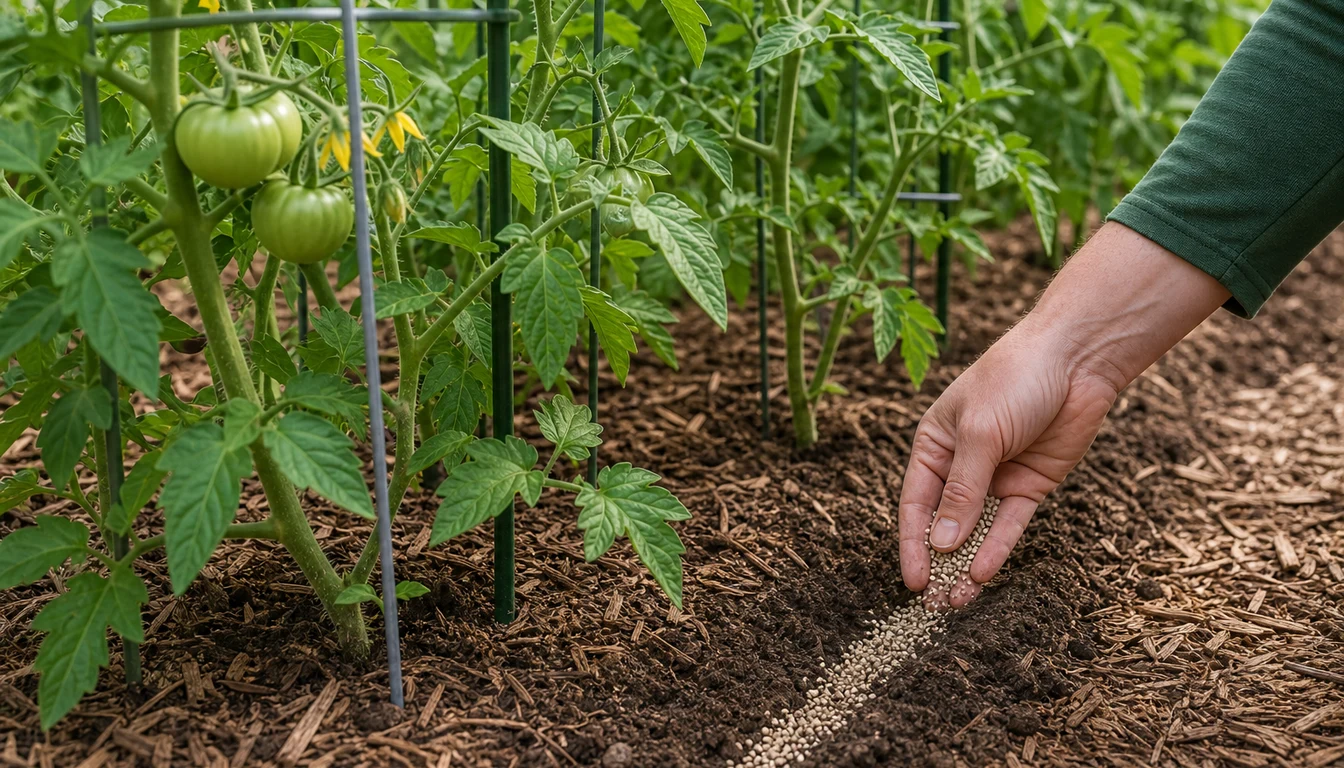
- Broadcast spreads fertilizer over the whole bed, and it is worked into the top 2 to 3 inches before planting.
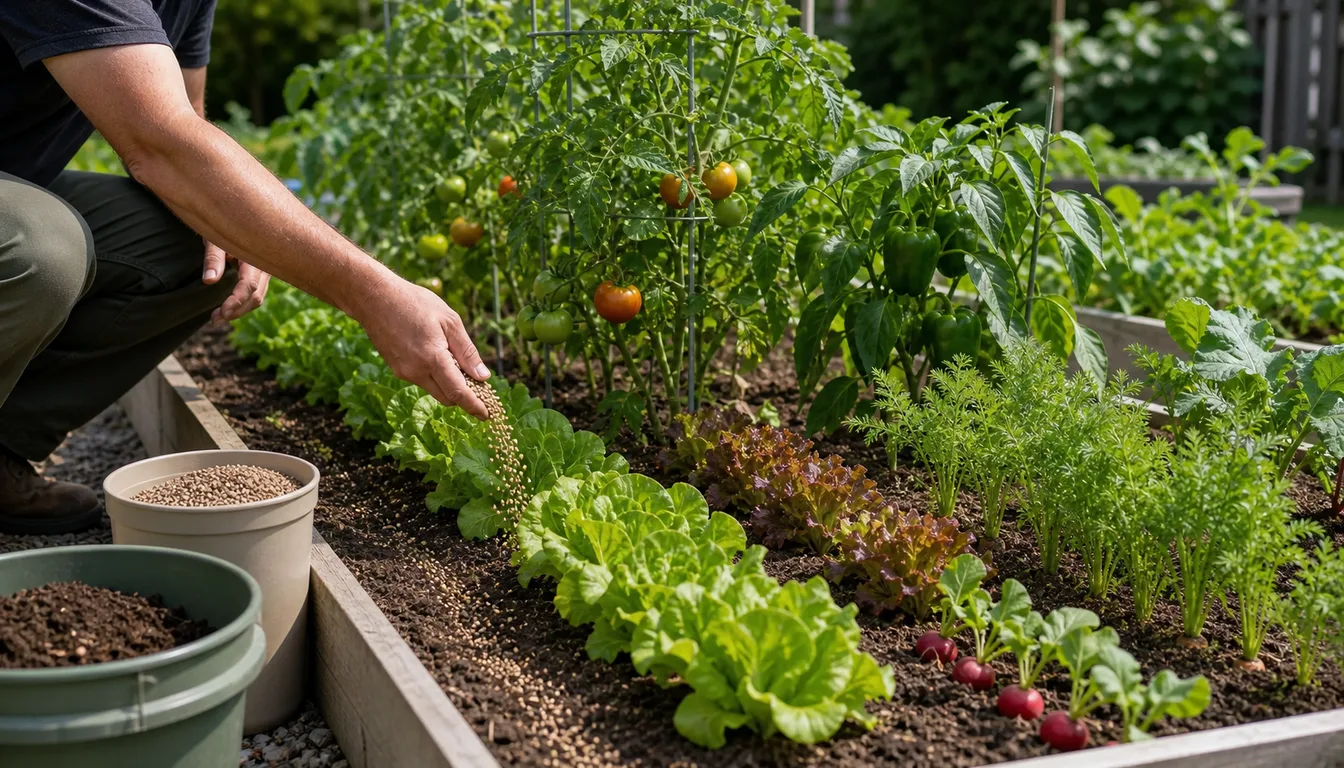
- Banding puts it in a furrow 2 to 3 inches to the side of the seed row and 1 to 2 inches deeper than the seeds. Around widely spaced plants such as tomatoes, the bands go 4 inches from the plant base.
- Side-dressing scatters dry fertilizer beside plants that are already growing, with granules kept off the leaves. Extension guides put it anywhere from 3 to 8 inches from the plants, then work it in lightly without damaging roots.
Once the fertilizer is down, water moves it to the roots. Nitrogen in chemical fertilizers dissolves readily and travels with irrigation or rain, so you need to water the bed yourself if no rain falls within a day. The same watering washes stray granules off the leaves, which avoids scorch after broadcasting.
What do the leaves say about the dose?
Where a symptom starts on the plant narrows down which nutrient is short, and the pattern is worth matching against the list below before any more fertilizer goes on.
Too little nitrogen
Stunted, slow growth, with yellowing that starts on the older leaves.
Too much nitrogen
Lush, fast and leggy growth that holds back flowering, and poorer flower and fruit development in tomatoes and cucumbers.
Too little phosphorus
Stunted growth, short spaces between leaves, purple or dark green foliage and poor flowers and fruit. Cold soil can cause it, because phosphorus is poorly available there.
Too little potassium
Older leaves scorched along the margins, weak stems, shriveled fruit and uneven ripening.
Too little iron
Young leaves yellow between the veins while the veins stay green, usually from a pH problem.
A foliar spray can correct a deficiency fast, since absorption begins within minutes and for most nutrients finishes within 1 to 2 days. It supplements soil feeding at a critical moment because leaves cannot absorb as much as the plant needs. Applying it early in the morning lowers the risk of burn, which rises as the air warms, and a spray stronger than the label burns foliage quickly.
Pro Tips
- Take a soil test before you buy, because it shows whether the bed needs all three nutrients or only nitrogen.
- Divide the pounds of nitrogen you need by the percent nitrogen on the label to find the pounds of fertilizer.
- Band fertilizer to the side of the seed row and below it, never in the row, so young roots do not meet the salts.
- Colorado State holds nitrogen side-dressing on tomatoes, peppers and eggplant until the first fruits are about 1 inch across.
- Skip nitrogen on beans and peas, and use a bacterial inoculant instead.
- Water granular fertilizer in, and rinse stray granules off the leaves.
- Feed container vegetables more often than bed plants, because every watering drains nutrients out of the pot.
Frequently Asked Questions
How often should I fertilize my vegetable garden?
Clemson's South Carolina guide puts all the phosphorus and potassium and 30 to 40% of the nitrogen on before planting, and the rest of the nitrogen follows 3 to 4 weeks after planting. On sandy soil that second dose is split in two.
Plants in pots need feeding more often. A potting mix with fertilizer in it lasts eight to ten weeks, and a water-soluble feed every two to three weeks follows.
Is organic fertilizer always better for vegetables?
No. Roots take up the same form of each nutrient from either kind, and excellent gardens grow with both. Organic fertilizers release slowly and add organic matter that improves the soil, and synthetic fertilizers act faster but do nothing for soil structure.
What is the best fertilizer ratio for tomatoes and peppers?
For vegetables grown for their fruits, extension guidance is a low-nitrogen complete fertilizer before planting, such as 6-24-24, 6-12-18 or 8-16-16. Colorado State waits to side-dress nitrogen until the first fruits are about 1 inch across, and Virginia Tech warns that a side-dress before fruit set may leave the plants all vine and no fruit.
Can I use a weed-and-feed lawn product on my vegetable garden?
No. Weed-and-feed products contain weed killers that will kill vegetable plants.
Should I fertilize vegetables right before harvest?
Late nitrogen does little good. Plants use the most nitrogen during or just before rapid growth, which is the best time to add it, and most plants cannot use nitrogen applied late in the season efficiently, so the excess is likely to stay in the soil.
Sources & References
- Fertilizing the Vegetable Garden, Virginia Cooperative Extension
- Vegetable Gardens: Soil Management and Fertilization, Colorado State University Extension
- Vegetable Gardening Nitrogen Recommendations, Colorado State University Extension
- Fertilizing your garden: Vegetables, fruits and ornamentals (EC 1503), Oregon State University Extension
- Fertilizing Your Vegetable Garden, University of Nevada, Reno Extension
- Recommendations for Liming and Fertilizing Vegetables, Clemson Cooperative Extension
- Growing Vegetables in Containers and Salad Tables, University of Maryland Extension
- Vegetable Gardening in Containers, Virginia Cooperative Extension