
Best Fruits for Containers on Patios and Balconies
Compare the best fruits for containers, including strawberries, blueberries, figs, citrus, raspberries, and dwarf trees, with practical pot sizes and care.
At a glance
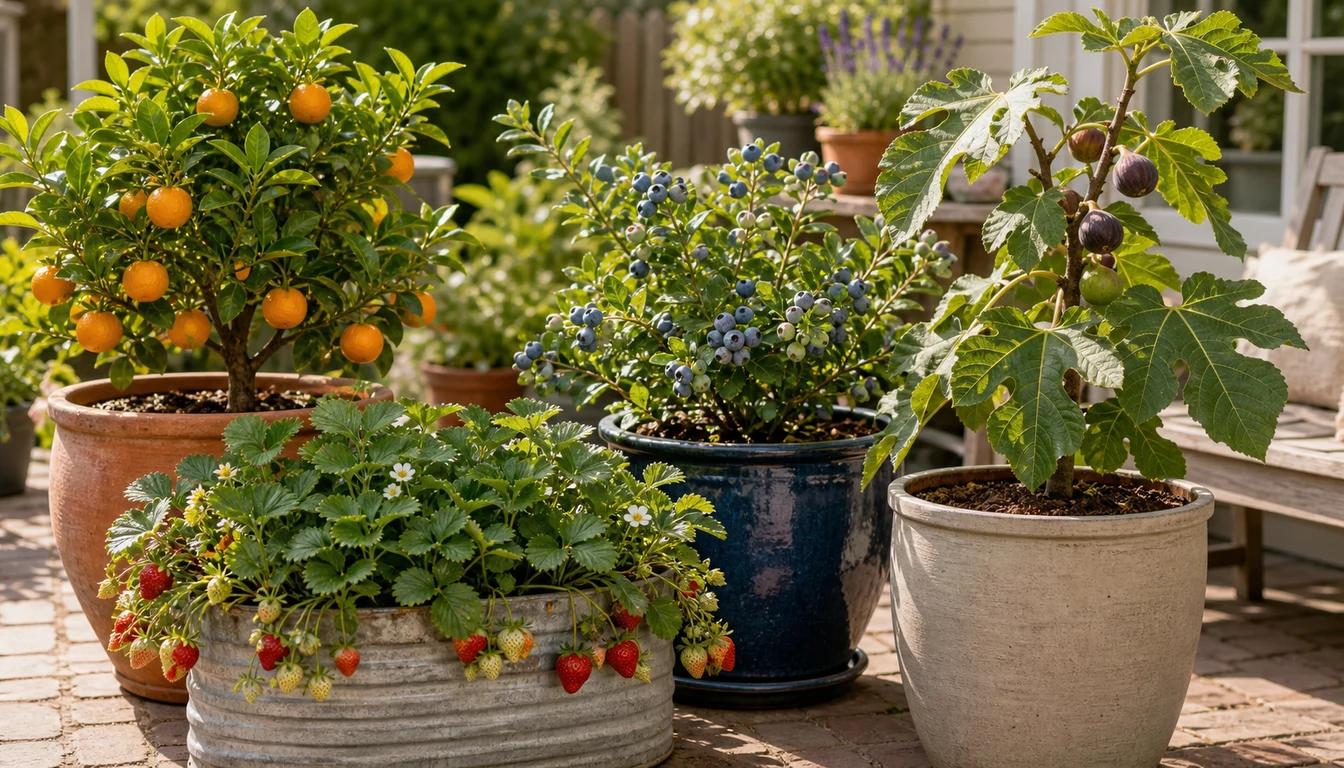
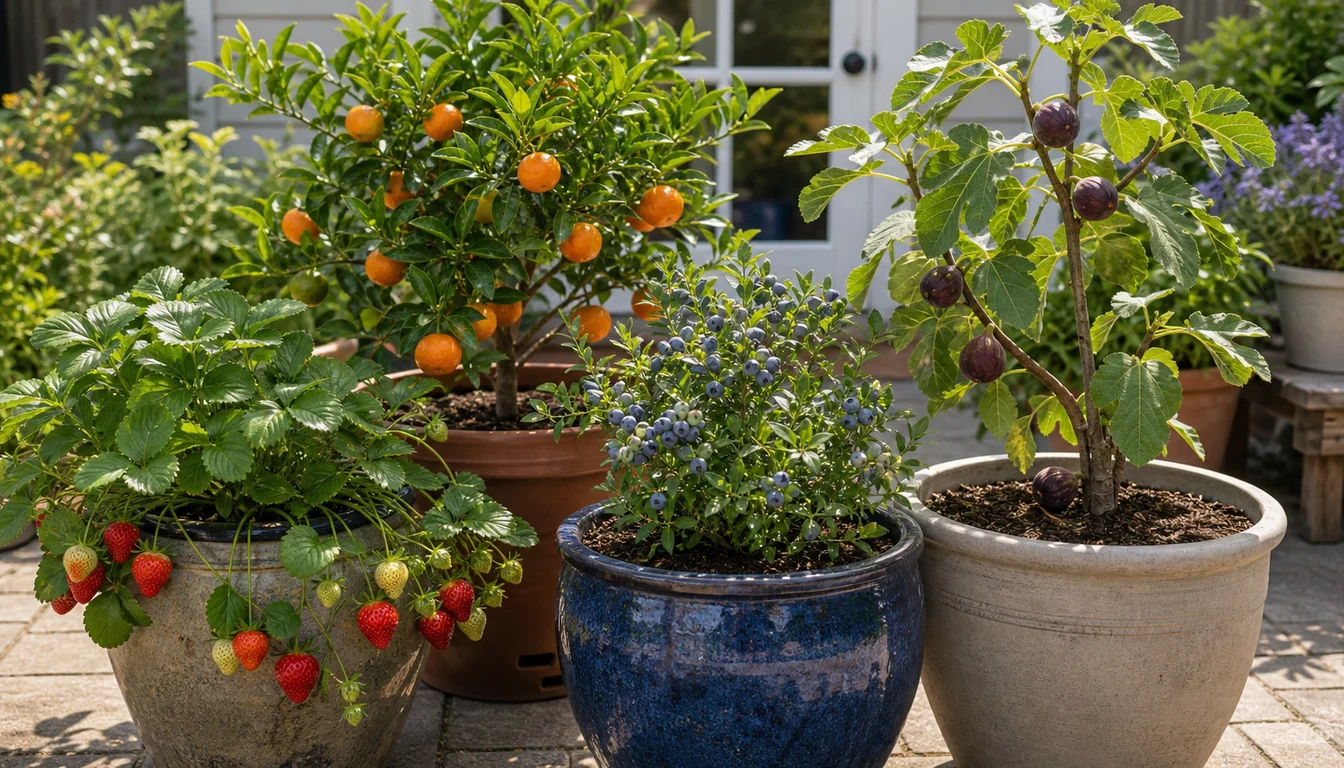
The best fruits for containers are day-neutral strawberries, compact blueberries, figs, dwarf citrus, and selected raspberries. A genuinely dwarf apple can work in a large tub, but its rootstock and pollination needs make it a more demanding choice.
Match the fruit to the space before buying it. A balcony must supply enough sun, a safe weight-bearing surface, drainage, and water close at hand.
A pot is the plant's entire root zone. Choose the container and winter plan before choosing the fruit, because a patio label cannot make a vigorous plant small or protect exposed roots from cold.
Which fruits grow best in containers?
Strawberries offer the easiest first harvest because their roots fit a modest container and day-neutral cultivars can crop over a long season. Oregon State University Extension recommends containers 10 to 18 inches deep and at least 12 inches across, with larger containers holding moisture more steadily.
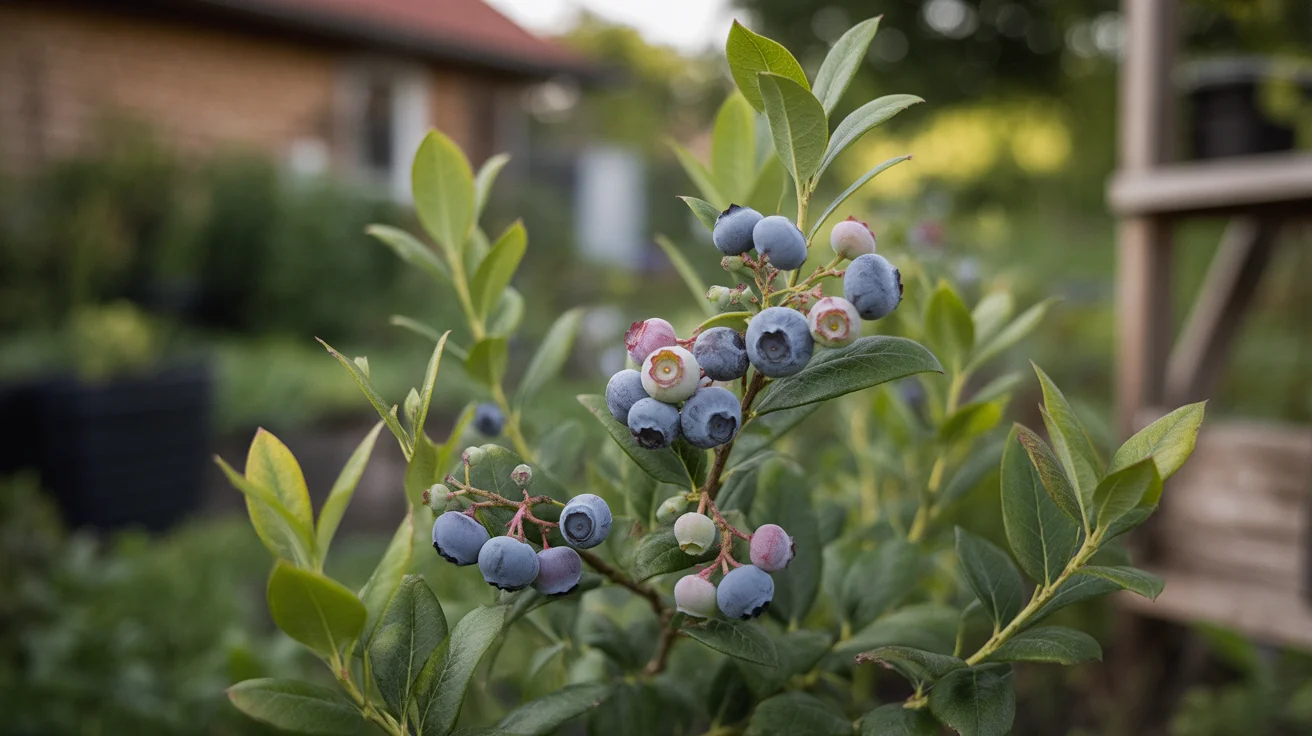
Blueberries suit pots when you can provide acidic mix and dependable irrigation.\n\nHalf-high cultivars fit containers more readily than large northern highbush plants, and a second compatible cultivar often improves fruit set even when a label says self-fertile.
Figs tolerate root restriction better than many tree fruits and can be pruned to a manageable framework. Dwarf citrus is practical where winters are mild or the pot can move into suitable frost protection.
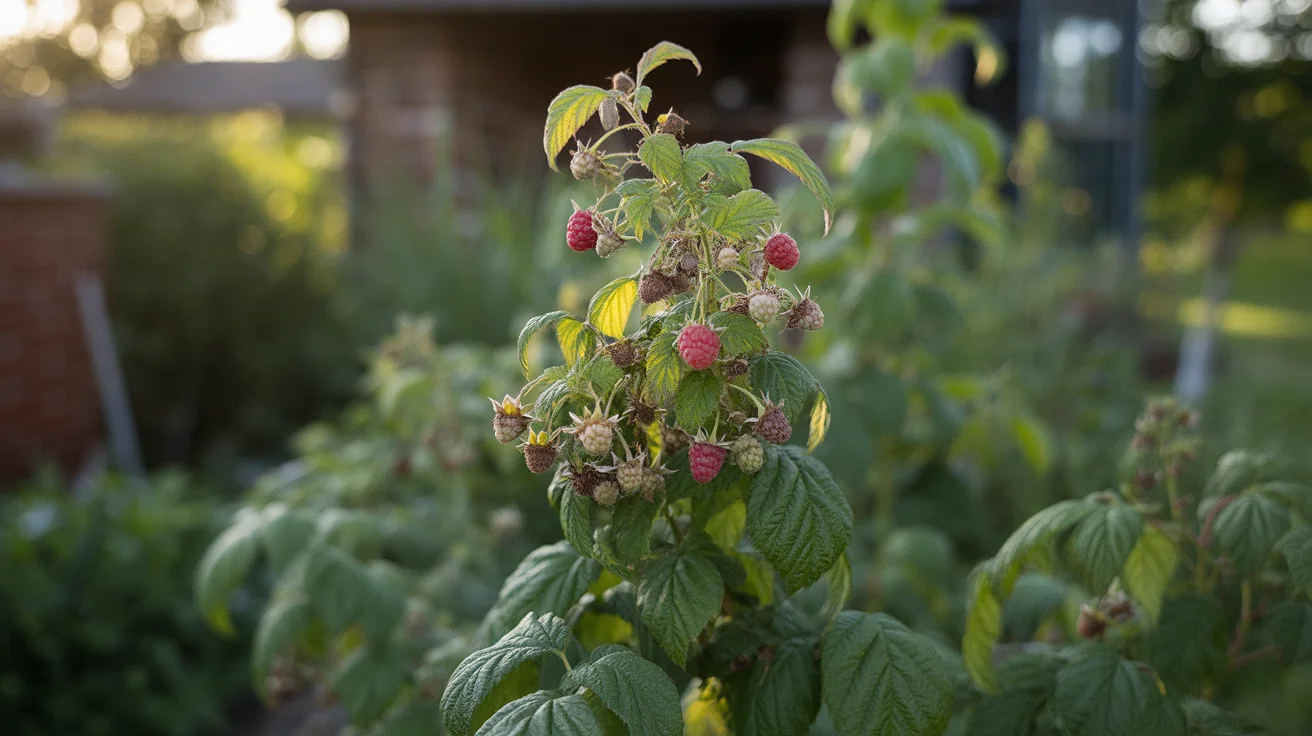
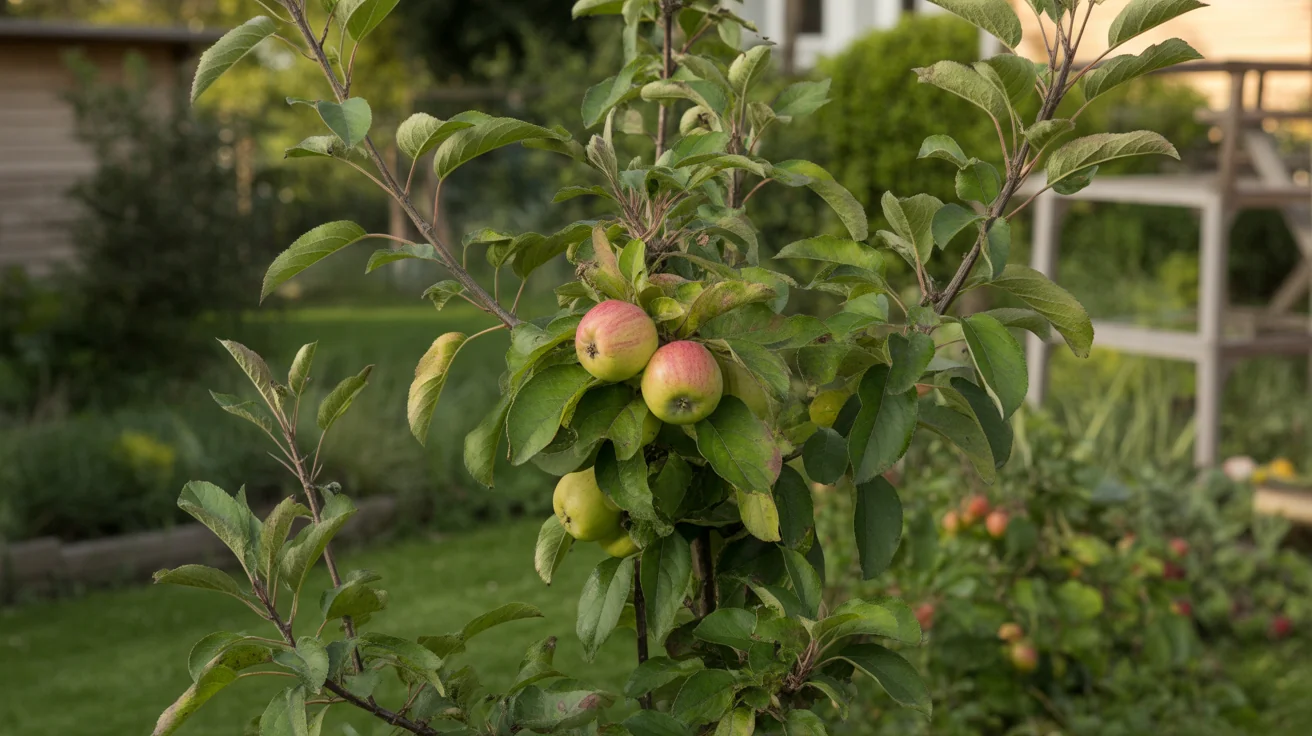
Raspberries need more depth, a trellis, and room to renew canes. Dwarf apples need the largest containers in this group, a known size-controlling rootstock, support, and a compatible pollination plan.
| Fruit | Best fit | Main commitment |
|---|---|---|
| Day-neutral strawberry | Small patio or railing-safe planter | Frequent water and runner control |
| Compact blueberry | Sunny patio with room for a shrub | Acidic mix and steady moisture |
| Fig | Warm wall or movable large pot | Annual pruning and winter protection |
| Dwarf citrus | Frost-free patio or bright winter shelter | Feeding, drainage, and cold protection |
| Raspberry | Large tub beside a railing or trellis | Cane support and renewal pruning |
| Dwarf apple | Ground-level patio with permanent space | Rootstock, pollination, staking, and a large tub |
Grapes, peaches, and other tree fruits are possible in specialized containers, but they are poor beginner choices when the space cannot support pruning, training, dormant care, and a heavy long-term pot.
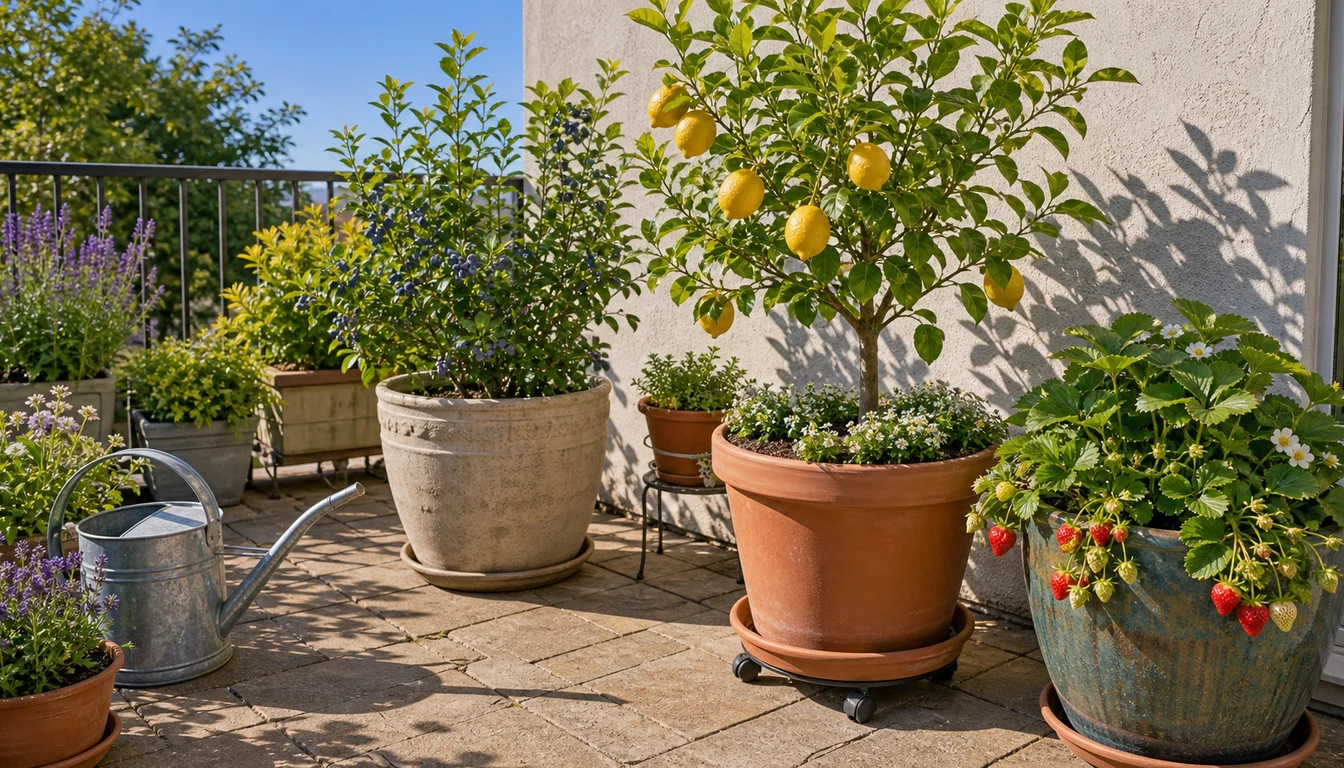
Will your patio support fruit, water, and pot weight?
Most fruit crops need strong direct sun to flower, set fruit, and ripen sugars.\n\nObserve the exact space across a clear day instead of assuming a bright view supplies six or more hours of direct light.
A south- or west-facing wall can add reflected heat. That may help figs and citrus in a cool climate, but it can also heat a dark pot and dry strawberry or blueberry roots quickly.
Wind increases water loss and can topple a top-heavy shrub. A railing, trellis, or wall can supply shelter and support, but it must not shade the fruit or block access to the back of the pot.
Container weight belongs in the first decision. Wet mix, a large ceramic pot, and a mature tree can become too heavy to move, and balcony load limits must come from the building owner or a qualified professional rather than a gardening estimate.
- Direct sun reaches the crop for most of the day
- A hose or filled watering can can reach every pot safely
- Runoff can drain without reaching a neighbor or damaging the surface
- The floor can carry the wet container and mature plant
- Wind protection does not block light or access
- Winter shelter is available before the first freeze
Keep the thirstiest pots on the shortest watering route. A fruit plant at the far end of a balcony often fails because daily access was inconvenient, not because its cultivar was unsuitable.
Choose the cultivar, rootstock, and pot as one system
Words such as patio, miniature, and compact do not define a mature size.\n\nRead the cultivar and, for grafted trees, the named rootstock because that lower portion controls much of the tree's vigor, anchorage, and eventual size.
A dwarf apple on a strongly size-controlling rootstock may need permanent staking. A small tree created only by pruning can regrow vigorously and outgrow the container even though it looked compact at purchase.
Pollination can also decide whether one pot is enough. Some blueberries and apples set a better crop with another compatible cultivar flowering at the same time, while strawberries and many figs do not require a second container for home fruiting.
Inspect the plant before buying. Healthy roots are firm and light colored, while a dense mat circling the pot, black soft roots, a sour smell, sticky leaves, or visible scale insects are reasons to choose another specimen.
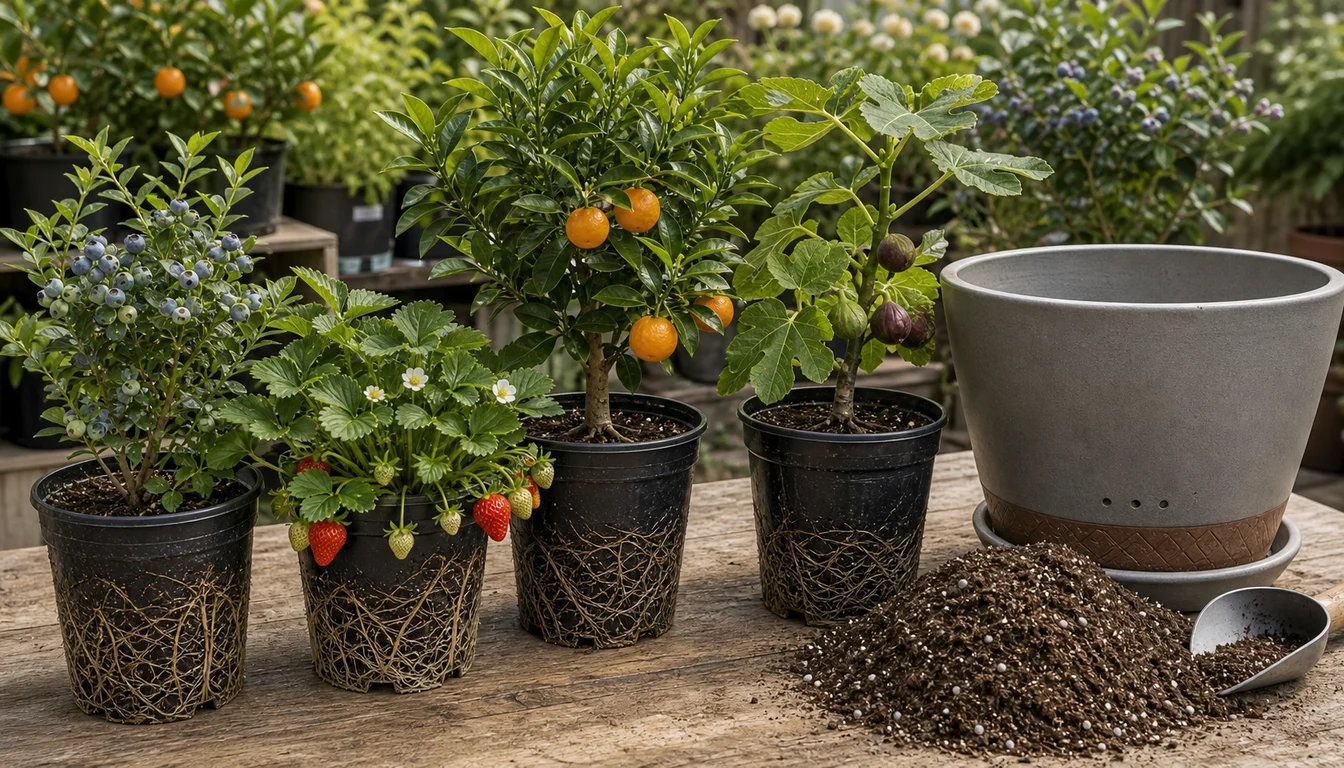
Buy the permanent container only after you know the plant's root needs. Moving a small nursery plant into a huge volume of wet mix can slow drying, while leaving it in a tight decorative pot creates daily water stress.
How large should a fruit container be?
Container dimensions are starting points, not guarantees. Climate, pot material, plant vigor, and irrigation change how much usable root space a crop needs.
Use a wider pot for stability and a deeper pot where the root system or cane framework requires it. Every container needs unobstructed drainage holes, and a saucer must be emptied rather than treated as a reservoir.
| Fruit | Practical starting container | Important detail |
|---|---|---|
| Strawberry | 12 inches wide, 10 to 18 inches deep | More volume dries more slowly |
| Half-high blueberry | 10 gallons or larger | Acidic mix, pH about 4.5 to 5.5 |
| Northern highbush blueberry | 15 to 20 gallons | Half barrel scale and reliable irrigation |
| Dwarf fruit tree | 25 to 30 gallons | Stable base, support, and rootstock check |
| Fig or dwarf citrus | Large tub sized to the current root ball | Move up gradually as roots fill it |
| Raspberry | Deep wide tub with support | Room for several canes and renewal growth |
University of Maryland Extension lists 25 to 30 gallons for dwarf fruit trees. Oregon State describes 10 gallons or more for half-high blueberries and 15 to 20 gallons for larger highbush types.
Those numbers help reject undersized decorative pots. They do not require putting a new one-gallon plant directly into its final tub on the first day.
Choose a material you can manage. Unglazed clay loses moisture through its walls, while plastic and glazed containers usually retain it longer.
Pot feet can protect a flat surface and keep outlets open, but they cannot correct a blocked hole or dense garden soil.
Build a root zone that stays moist and drains
Use a container potting mix rather than digging garden soil into the pot. A useful mix holds water between irrigations while retaining air spaces and allowing surplus water to leave.
Blueberries are the important exception to a one-mix-fits-all approach. They need an acidic medium around pH 4.5 to 5.5, and ordinary compost-rich mixes may drift too high.
Water slowly across the root zone until the full root ball is wet and water exits the drain holes. If water runs down a gap at the pot wall while the center stays dry, rewet in stages and confirm the center absorbed it.
Fruit load increases demand. Strawberries swelling in a shallow planter and berries ripening on a shrub can use water faster than the same plant did before flowering.
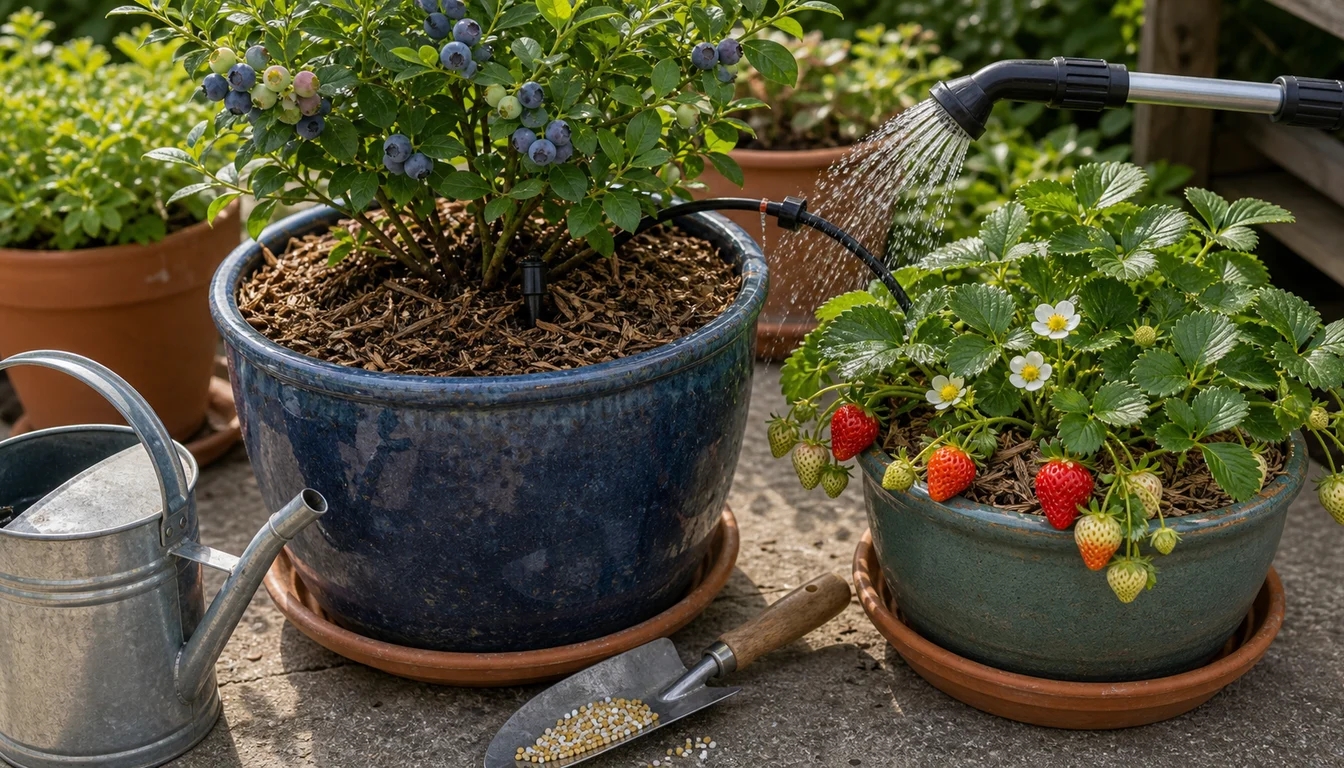
- Check below the surfaceFeel the accessible mix and learn the pot's watered and dry weights instead of judging color alone.
- Wet the whole root ballApply water slowly across the surface until drainage begins, pausing if the mix cannot absorb the flow.
- Remove runoffEmpty saucers and decorative covers so ordinary pots do not remain submerged.
- Recheck during fruit swellIncrease inspection when heat, wind, new foliage, or a heavy crop accelerates drying.
- Feed by label and cropReplace nutrients during active growth without forcing soft leafy growth with excessive nitrogen.
Frequent watering can carry nutrients from a container, but extra fertilizer cannot correct a dry root ball, low light, poor pollination, or root disease. Use the product rate for the crop and stop feeding when growth slows for dormancy.
Make room for pollination, pruning, and harvest
A container limits roots, but it does not remove the crop's normal fruiting biology.\n\nApples still need trained branches and compatible pollen, raspberries still need old canes removed, and grapes still need a durable support system.
Place flowering containers where pollinating insects can reach them and where sprays or screening will not exclude them. On a high balcony with little insect activity, strawberries and some self-fertile crops are safer choices than plants that depend heavily on cross-pollination.
Thin tree fruit if a small branch sets more fruit than it can carry. A compact tree can break under a crop that would be modest on a ground-grown tree.
Keep a clear path for pruning and harvest. Rotating a manageable pot can help even exposure, but a mature staked tree or trellised cane fruit should be positioned correctly instead of moved repeatedly.
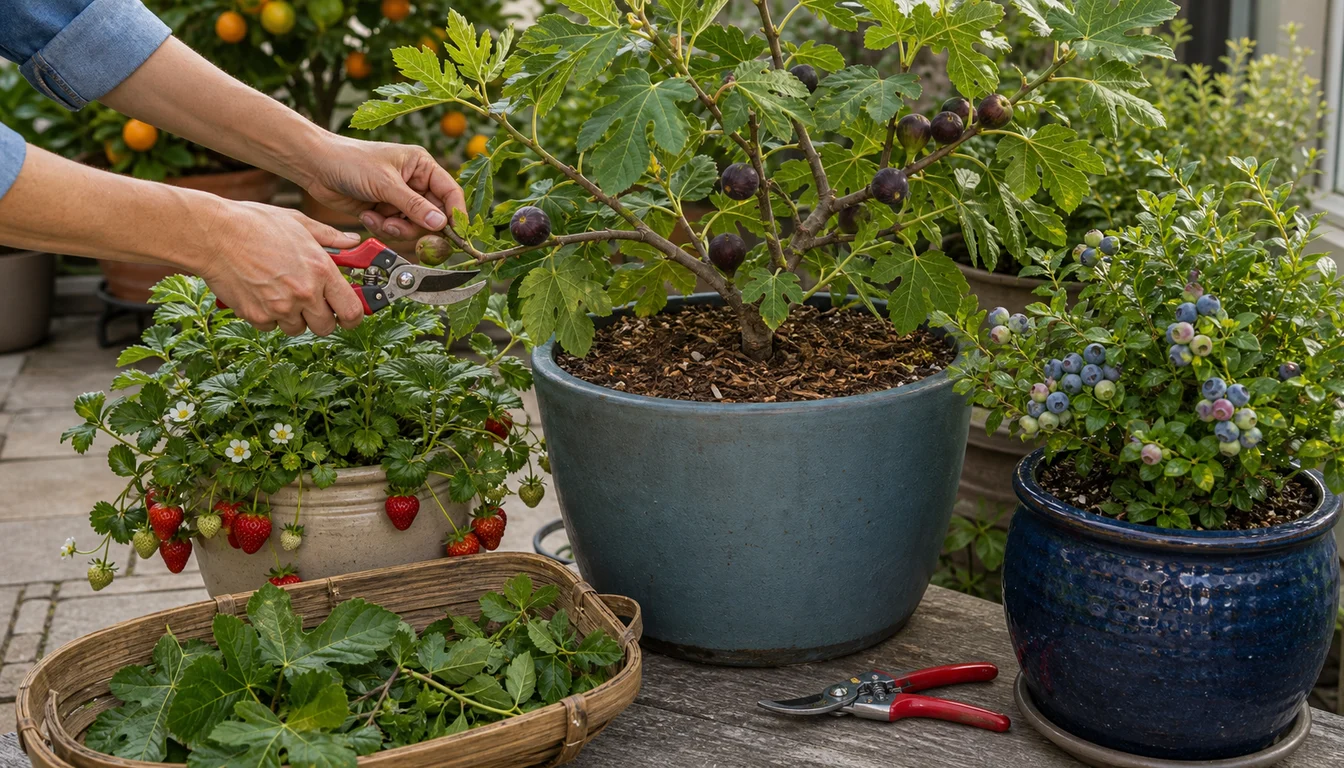
Strawberries
Remove unwanted runners, keep crowns exposed, and pick ripe fruit frequently.
Blueberries
Protect ripening berries from birds without tangling netting in branches.
Raspberries
Tie canes loosely and remove the canes that have finished according to fruiting type.
Figs
Keep an open framework and prune with the local crop cycle in mind.
Dwarf trees
Train branches, support the trunk, thin excess fruit, and keep the graft union visible.
The best container fruit is one you can still reach in August. A beautiful arrangement that blocks pruning or harvest works against the crop.
Protect exposed roots and know when to repot
Roots in a container experience colder temperatures than roots protected by surrounding ground. A fruit plant hardy in the garden may therefore need a more sheltered container position, insulation, or an unheated protected space.
The correct winter method depends on the fruit and climate.\n\nDormant temperate crops should not be moved into a warm living room, while citrus needs frost protection and useful light when kept in growth.
Plan the move before cold weather. A filled 30-gallon pot cannot become portable because frost is forecast, so place large containers on a rated caddy or in their winter location from the start.
Repot when roots densely circle the outside, water bypasses the center, the plant wilts unusually fast after a thorough watering, or growth and fruit size decline without another clear cause. Move up gradually and refresh the appropriate mix.
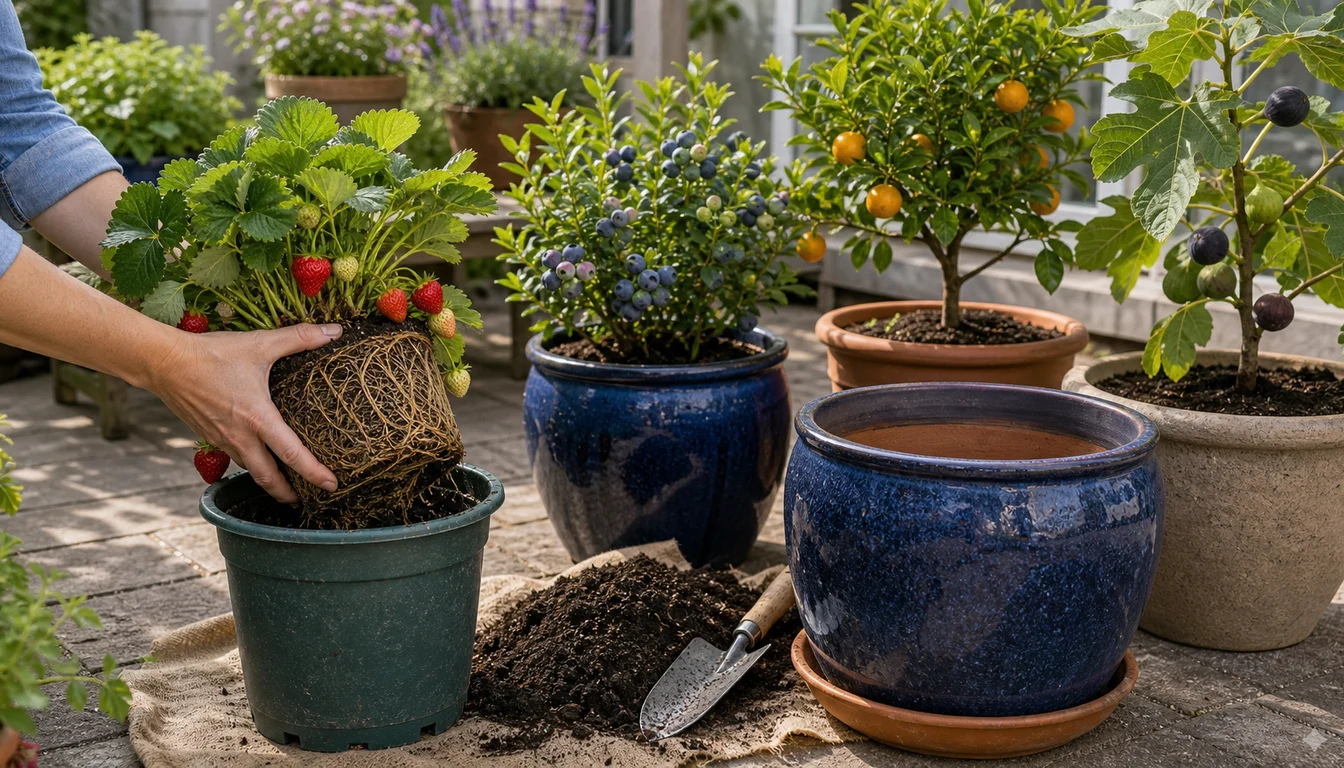
Do not leave dormant roots saturated. Check occasionally because sheltered containers receive less rain, but let drainage and the plant's dormant needs control the amount.
A manageable first container fruit setup
Start with two crops that ask for different amounts of space but fit the same site. A day-neutral strawberry planter and one compact blueberry make a useful temperate-climate test, while a strawberry planter and movable dwarf citrus may suit a mild or protected site.
Set the pots near water, record the cultivar names, and note how often each root ball needs checking during the hottest month. That information is more useful for expansion than the number of empty spaces left on the patio.
- Confirm direct sun and safe wet weight
- Choose named cultivars with known mature habits
- Resolve pollination before buying a single tree
- Provide drainage and the correct potting mix
- Install stakes or trellises before branches need them
- Write down the winter destination for each perennial pot
Run the small setup through one growing season before adding a tree or cane fruit. Expand with the crop that stayed healthy and produced in the container volume you can water, move, and maintain.
Quick Tips
- Choose the permanent site and water route before choosing a fruit.
- Read the named rootstock on a dwarf fruit tree label.
- Use acidic potting mix for blueberries and monitor pH over time.
- Empty saucers after watering ordinary containers.
- Install supports before roots and branches make access difficult.
- Plan winter root protection before buying a heavy perennial pot.
Recommended Plants
8 fruits worth considering.
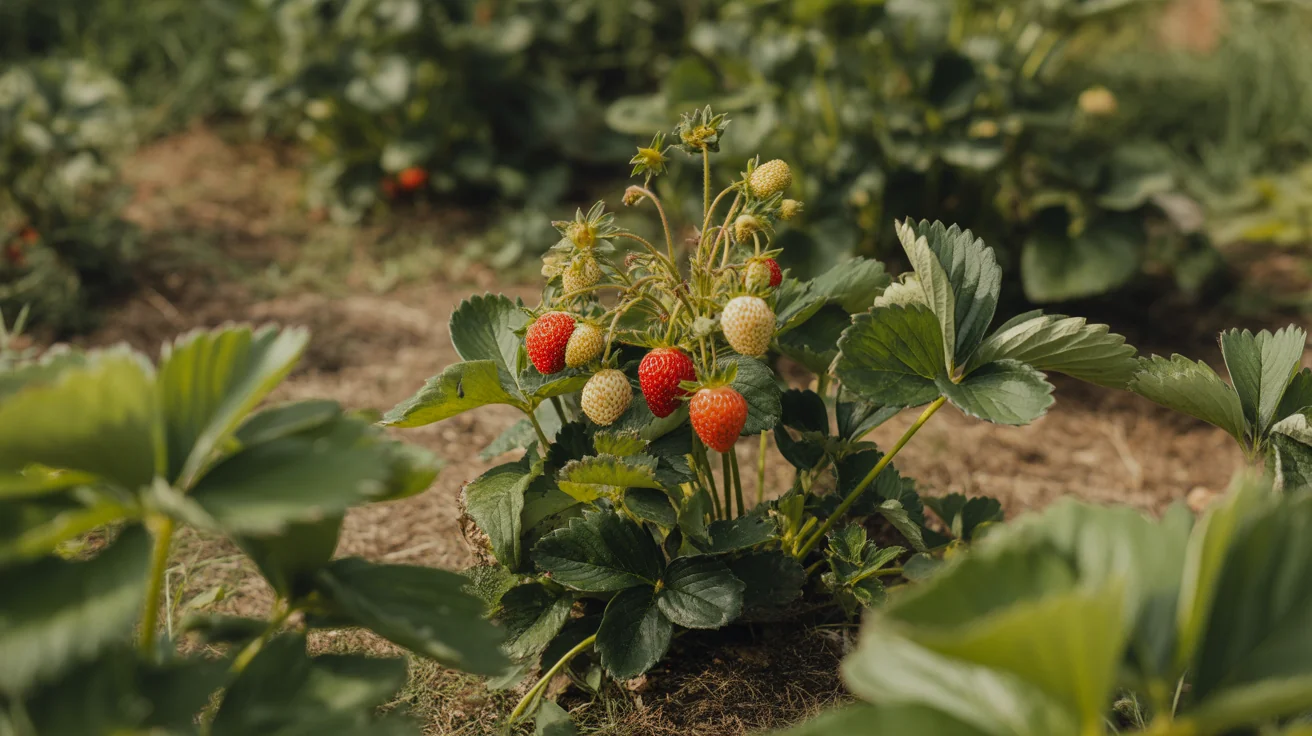
Strawberry
Strawberries are low perennial fruit plants that reward good bed prep, correct crown depth, steady moisture, mulch, and…
Blueberry
Blueberries are long-lived fruiting shrubs that reward careful soil prep more than constant fussing.
Raspberry
Raspberries are perennial brambles grown for fruit on temporary canes.
Apple Tree
Apple trees can be excellent backyard fruit trees when the variety, rootstock, pollination partner, sun, and pruning…
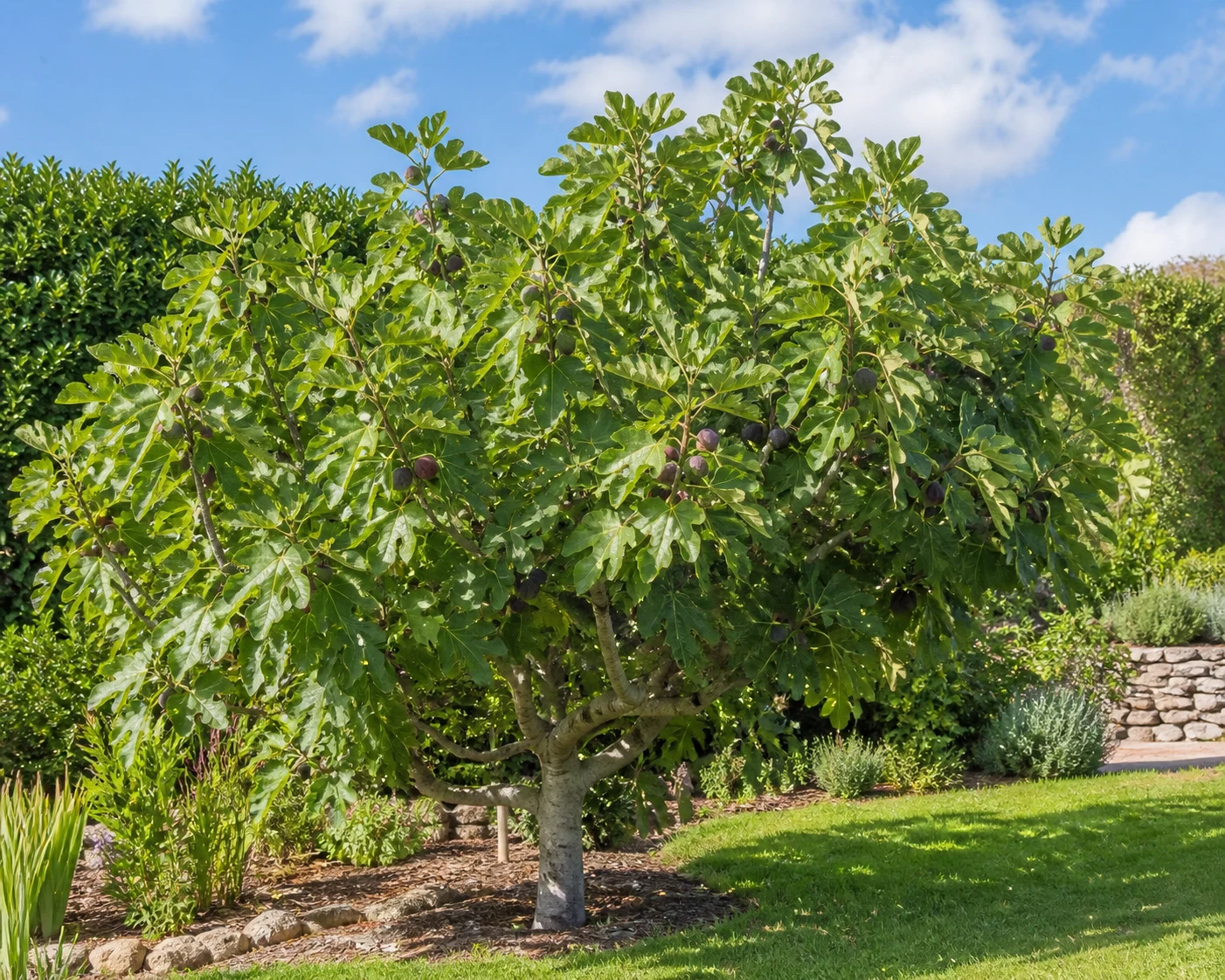
Fig Tree
Fig trees are small deciduous fruit trees or large shrubs grown for soft late-summer fruit, bold leaves, and…
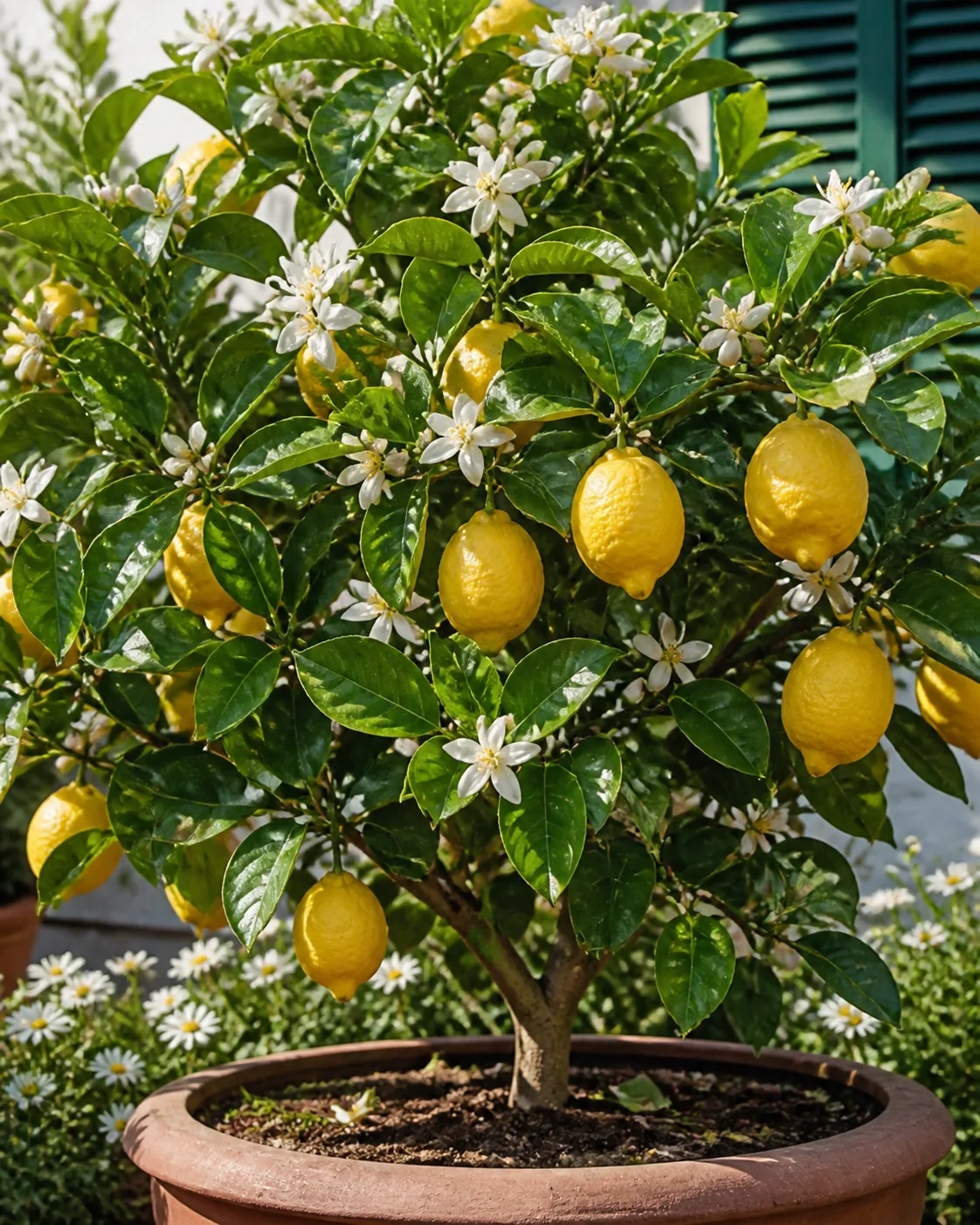
Lemon Tree
True lemon trees such as Eureka and Lisbon produce tart fruit on evergreen trees.
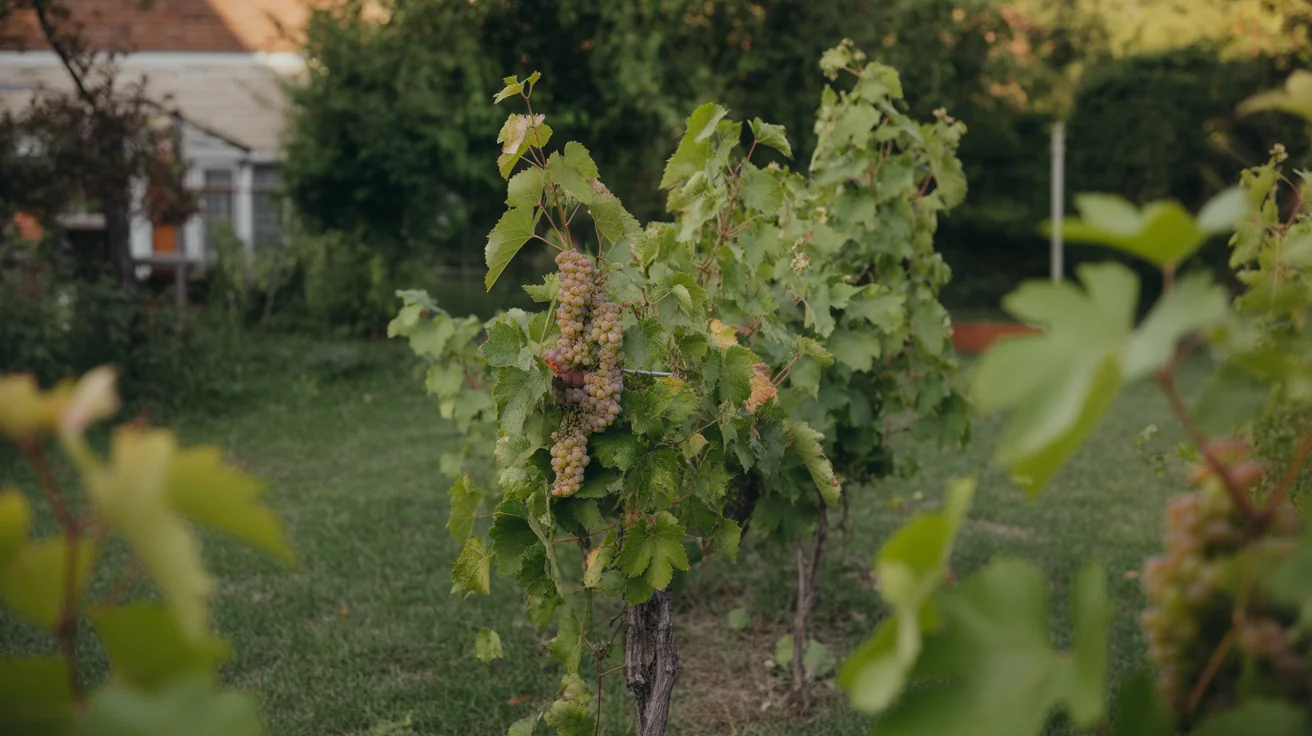
Grape Vine
A sunny fence, arbor, or wire trellis can become a productive fruiting vine, but the crop needs training more than…
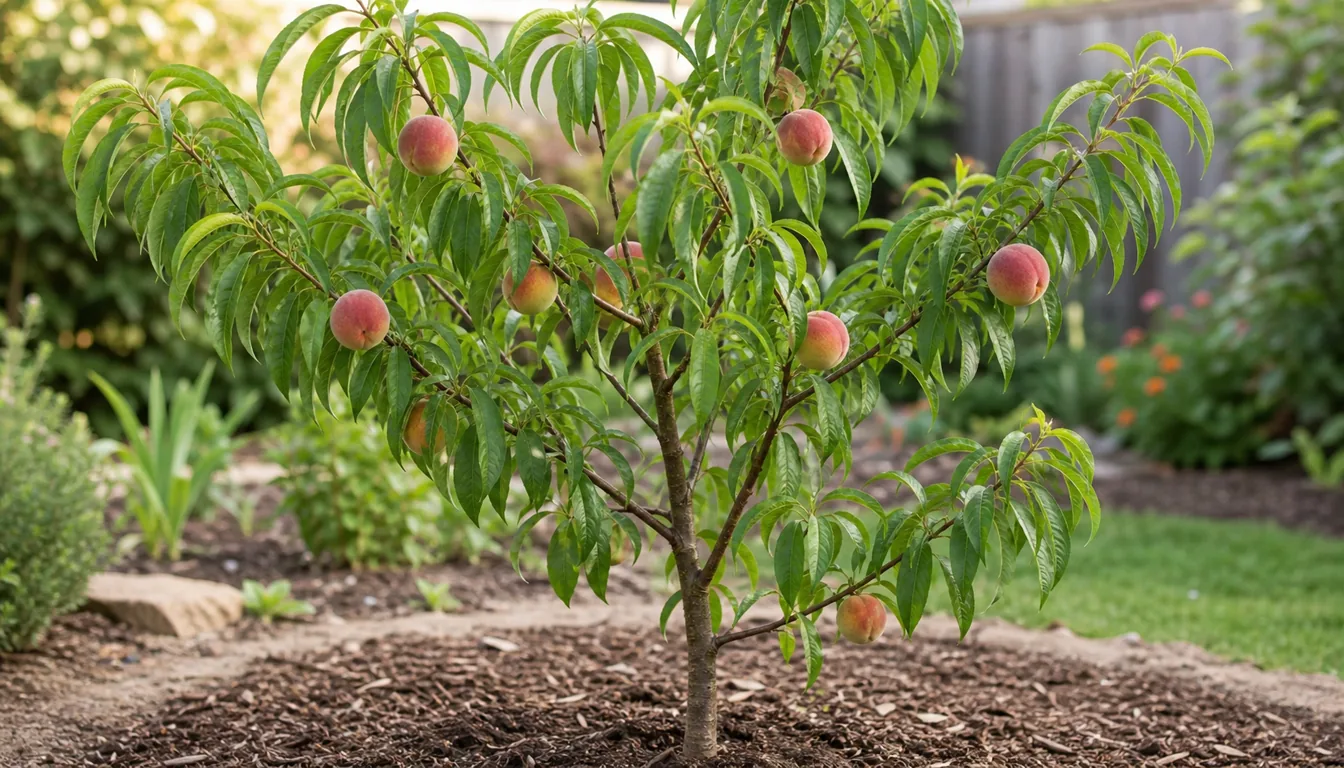
Peach Tree
Peach trees are fast-bearing backyard fruit trees, but they are not plant-and-forget trees.
Frequently Asked Questions
What is the easiest fruit to grow in a container?
Day-neutral strawberries are a practical first choice because they fit a modest container and can fruit over a long season. They still need strong light, regular moisture checks, drainage, and runner management.
Can blueberries grow permanently in pots?
Yes, when the cultivar, container size, acidic mix, irrigation, pruning, and winter protection all fit. Half-high blueberries suit containers especially well, while large highbush plants need roughly half-barrel scale.
How big should a container be for a dwarf fruit tree?
University of Maryland Extension lists 25 to 30 gallons as a useful scale for dwarf fruit trees. Match the final choice to the named rootstock, current root ball, mature crown, support, and safe floor load.
Do container fruit plants need two varieties for pollination?
It depends on the crop and cultivar. Many apples and some blueberries crop better with a compatible partner, while strawberries and many common figs can fruit alone. Check the exact cultivar before buying.
Can fruit containers stay outdoors all winter?
Only when the plant and exposed root ball are hardy enough for the local winter. Container roots get less insulation than roots in the ground, so many perennial pots need shelter, insulation, or a suitable unheated protected space.
Sources & References
- Oregon State University Extension: Growing Strawberries in Your Home Garden
- Oregon State University Extension: Growing Blueberries in Your Home Garden
- University of Maryland Extension: Types of Containers for Growing Vegetables
- Penn State Extension: Fruit Cultivars and Rootstocks
- Penn State Extension: Home Orchards, The Planting Site
- University of Minnesota Extension: Fertilizing and Watering Container Plants
- University of Minnesota Extension: Growing Fruit
- Oregon State University Extension: Berries and Fruit
- Penn State Extension: Tree Fruit