
How to Grow Pomegranates Where the Fruit Can Ripen
Punica granatum Lythraceae
Pomegranate is a heat-loving fruiting shrub or small tree for full sun, sharp drainage, and long warm seasons. It can be grown in the ground in mild climates or in containers where winters are colder, but fruiting depends on heat, steady moisture during ripening, and restrained pruning.
Care snapshot
Pomegranate Is a Fruiting Shrub Before It Is a Tree
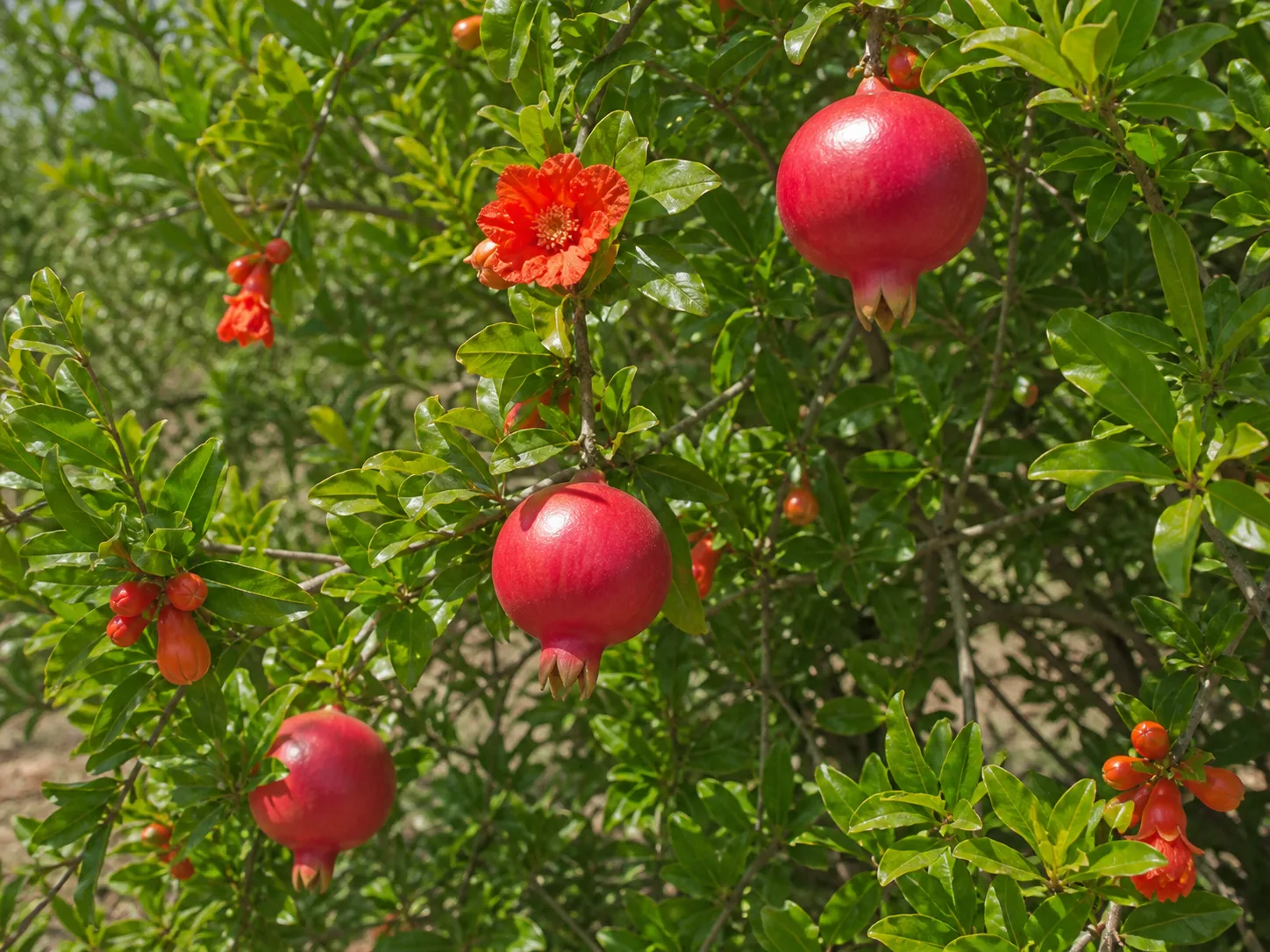
In garden terms, Pomegranate naturally grows as a dense, multi-stemmed shrub with glossy leaves, orange-red flowers, and leathery fruit filled with juicy arils.
You can train pomegranate as a small tree, but the plant keeps wanting to send up basal shoots.
A multi-trunk shrub is often easier to maintain and more forgiving after cold damage.
Compared with olive trees, pomegranate is usually more willing to regrow after cold injury, but it needs more summer heat and steady ripening weather for good fruit.
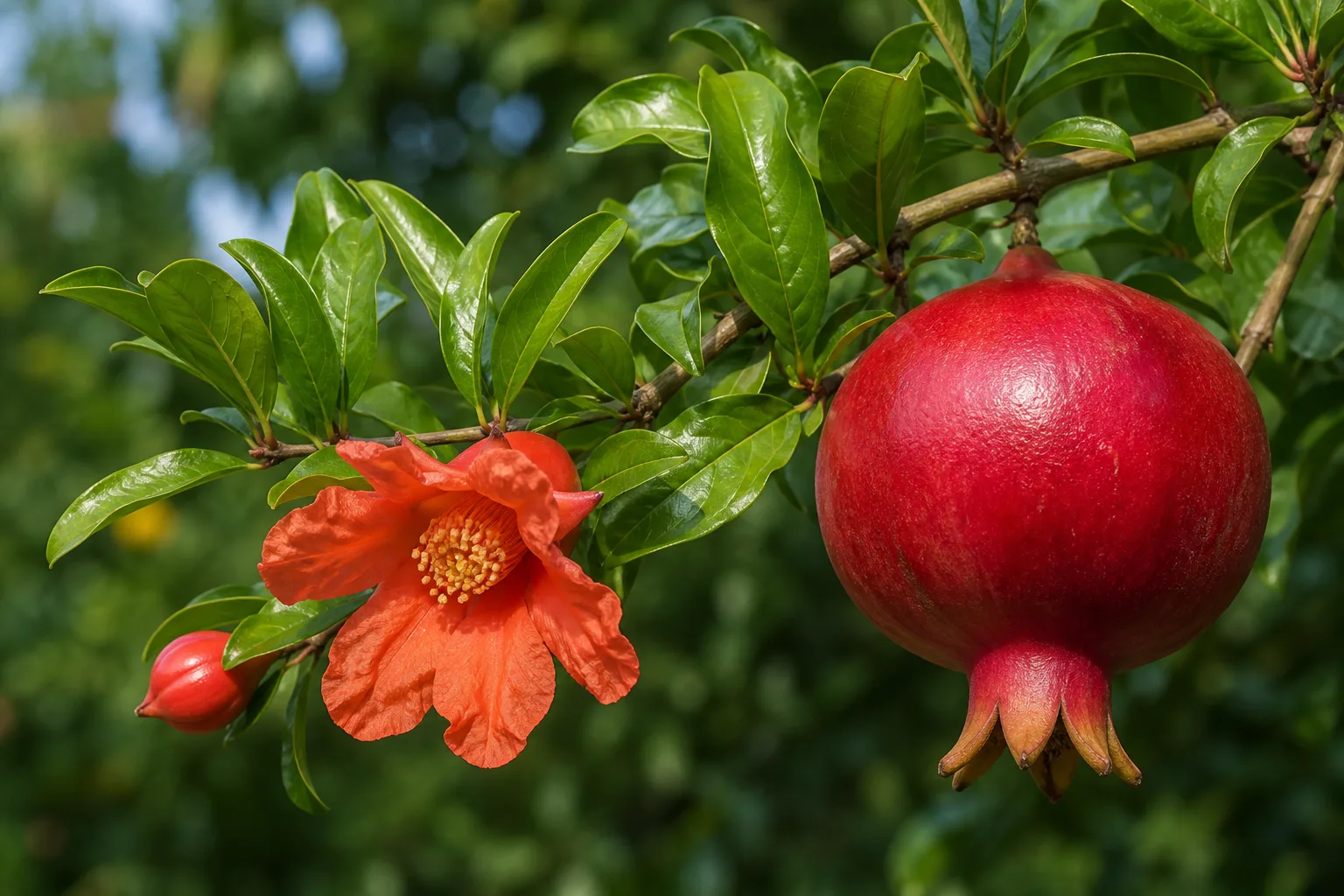
A pomegranate shrub actually produces two kinds of flowers on the same plant, bell-shaped perfect flowers that can set fruit and narrower, vase-shaped male flowers that never do. A tree loaded with blooms but light on fruit is often carrying mostly the male-only type that season, not failing to pollinate.
Even Moisture Prevents Cracking Better Than Flooding
Established pomegranate is drought tolerant, but drought tolerance does not mean the best fruit comes from neglect. Severe dry spells followed by heavy water can split ripening fruit.
Use deep watering during establishment and long dry spells. Soak the root zone, then let the upper soil dry instead of giving daily light sprays.
The fruit rind is what exposes the mistake, since steady moisture is less dramatic than rescue watering, but it prevents more splitting.
Harvest timing matters because pomegranate does not keep sweetening like a pear after picking. Let fruit color and fill on the plant, then harvest before cracking, hard frost, or long wet spells ruin the rind.
Established pomegranates handle dry spells, but young trees need steady moisture to build the framework.
During fruit swell, severe dry-to-wet swings can contribute to splitting, especially after a sudden rain.
Fruit cracking is the clearest sign that the water rhythm got uneven near harvest. The fix overlaps with pomegranate fruit cracking, which is steady moisture, mulch, and avoiding drought-followed-by-flood watering.
A ripe pomegranate often gives a metallic, slightly hollow sound when tapped, a quick check alongside color and weight before cutting it free. Twisting or pulling can tear the skin near the stem, so cutting the fruit off with pruners close to the calyx protects the rind for storage.
Choose for Heat, Cold, Seed Texture, and Size
Pick by habit before color, since Pomegranate cultivars differ in fruit size, sweetness, acidity, seed hardness, cold tolerance, and mature plant size. A famous supermarket type is not automatically the best backyard choice.
Warm, dry-summer climates can grow larger-fruited types more easily. Colder or shorter-season gardens should look for hardy selections and accept that fruit quality may depend on the year.
Pomegranate choice should start with cold tolerance and fruit goal. Some cultivars are mainly ornamental, some have softer seeds for fresh eating, and some need a longer hot season to develop full sweetness.
- Fresh eating
- Look for sweet-tart flavor and softer seed texture
- Juice
- Tart cultivars can be excellent even when seeds are harder
- Cold edge
- Hardier selections may regrow well but still need heat to ripen
- Containers
- Dwarf or compact cultivars are easier to move and prune
The cultivar behind most supermarket fruit, 'Wonderful,' needs a long hot season to fully ripen and often disappoints in short-summer gardens even though it grows fine there.
Regional extension trial lists are a better guide than grocery-store familiarity when matching a cultivar to a specific climate.
Full Sun Is Non-Negotiable for Fruit
The bloom and fruiting cue is light, since Pomegranate needs 6-8 or more hours of direct sun for heavy flowering and proper fruit ripening. In shade, it can stay leafy and ornamental but crop poorly.
Open sun and reflected warmth are helpful in cooler coastal or edge climates. A warm wall can improve ripening where the season is just barely long enough.
Do not tuck pomegranate under taller trees to protect it from heat. Once established, the plant usually handles dry summer sun better than many conventional fruit trees.
Pomegranates need heat as well as sun. In cooler summers, the shrub may bloom and set fruit but fail to develop the sweetness and color people expect from warmer-climate harvests.
- Best site: full sun, heat, and airflow.
- Avoid: shade from fences, hedges, or tree canopies.
- Cool sites: use a warm wall or south-facing exposure.
- Containers: place outdoors in the brightest protected spot.
Unlike apples or many stone fruits, pomegranate needs very little winter chill to flower normally, which is part of why it thrives in mild-winter regions that struggle to grow classic temperate orchard fruit. That low-chill habit is also why a warm, nearly frost-free winter rarely hurts flowering the way it would for a chill-hungry fruit tree.
Prune for Airflow, Not a Perfect Lollipop
New plants start with timing, since Pomegranate fruits on short shoots from mature wood, so hard annual pruning can remove potential crop. Prune to manage shape, airflow, dead wood, and suckers instead of shearing everything evenly.
For a shrub form, keep several strong trunks and remove weak crowded shoots. For a tree form, select one trunk early and keep removing basal suckers before they take over.
Hardwood cuttings are the common home propagation method.
Seedlings can vary in fruit quality, so cuttings are better when you want to copy a known plant.
After hard winter damage, wait until live growth is clear before deciding the final structure. A shrub-form pomegranate can often rebuild from healthy basal shoots more gracefully than a single-trunk tree.
- Remove dead, broken, crossing, or crowded shoots.
- Thin the center enough for light and air.
- Control suckers according to shrub or tree form.
- Avoid heavy heading that delays flowering.
- Root hardwood cuttings from healthy productive plants.
Hardwood cuttings root best when taken in late winter while the plant is still dormant, using pencil-thick sections from the previous year's growth. Rooting is often slow compared with softer cuttings, so patience matters more than bottom heat or rooting hormone for most home gardeners.
Lean Soil Is Fine; Wet Soil Is Not
The planting bed matters because Pomegranate is more tolerant of lean, rocky, or moderately alkaline soil than many fruit plants. The non-negotiable piece is drainage.
Avoid low, soggy planting sites. In containers, use a fast-draining mix rather than straight garden soil, and never leave the pot sitting in a saucer of water.
Good drainage keeps pomegranate roots healthy during winter dormancy. The plant tolerates lean soil, but a cold wet root zone can damage young shrubs even when the top growth looks woody and tough.
- Best texture
- Well-drained loam, sandy loam, gravelly soil, or a chunky container mix
- pH
- Tolerates a fairly wide range if drainage is good
- Containers
- Use a large pot with real drainage and a gritty mix
- Fertilizer
- Light spring feeding; avoid repeated high-nitrogen pushes
Container pomegranates, especially dwarf types, eventually become root-bound and slow down even with good feeding.
Root-pruning and refreshing the mix every few years, rather than only moving up pot sizes indefinitely, keeps a long-term container plant vigorous without needing an ever-larger pot.
Mostly Tough, but Watch Fruit and Sucking Pests
Pest work starts with diagnosis, since Pomegranate is generally resilient, but aphids, scale, mites, leaf-footed bugs, fruit borers, and fungal fruit rots can matter in warm regions.
Leaf pests usually show up as curled tips, sticky honeydew, stippling, or weak growth. Fruit pests show up as punctures, internal rot, or fruit that collapses before harvest.
Fruit splitting is usually a water rhythm problem more than an insect problem. Mulch and steady irrigation during dry periods help prevent the sudden swelling that cracks skins after rain.
Leaf-footed bugs and true stink bugs get confused at a glance, since both are shield-shaped and pierce fruit to feed, leaving similar internal damage. Leaf-footed bugs show a distinctive flat, leaf-like flare on their hind legs, while stink bugs have plain, unflared legs and a more rounded, shield-like outline.
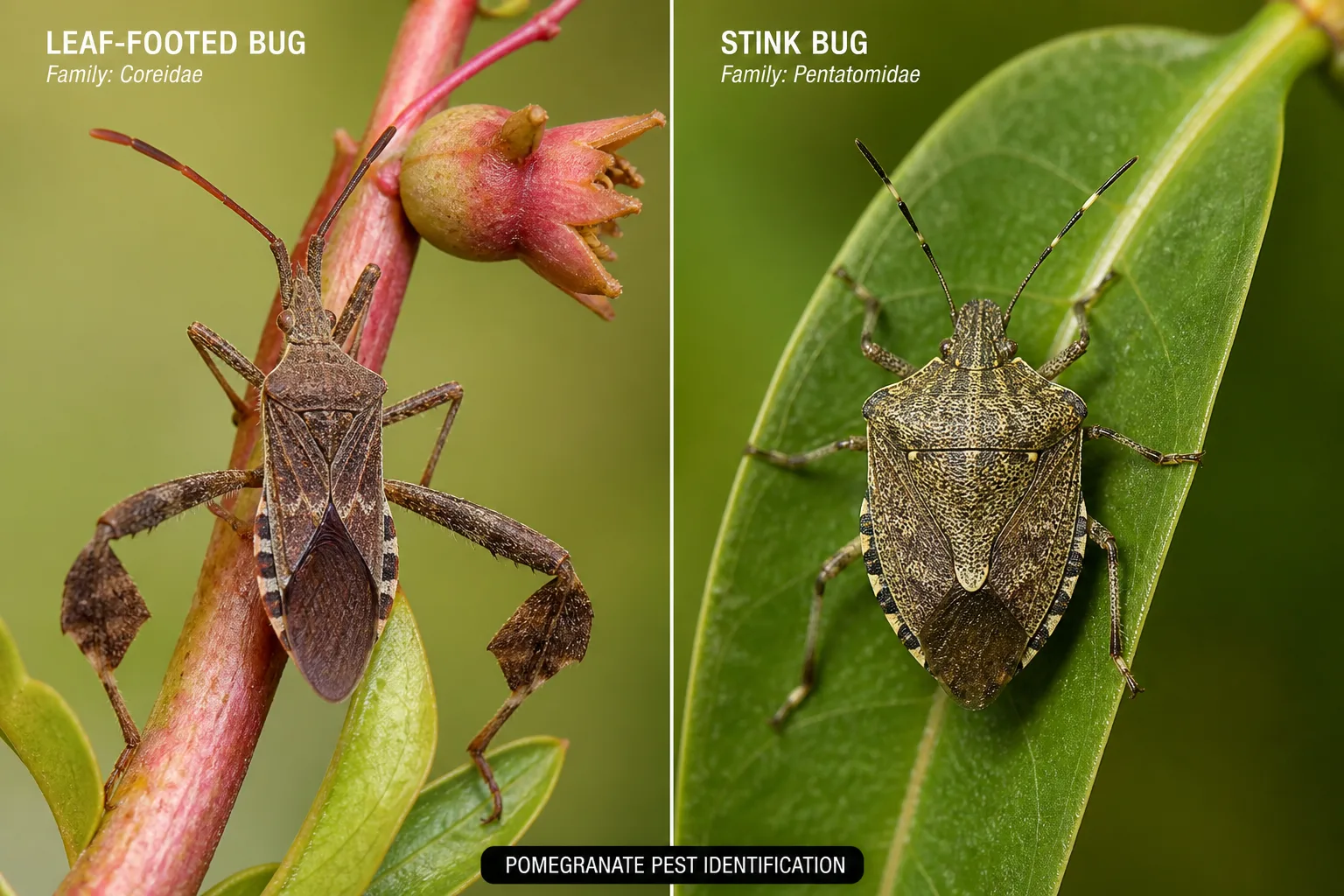
Cluster on tender growth and leave honeydew.
Look like fixed bumps on stems and leaves.
Pierce fruit and can cause internal damage.
Worse when cracked or damaged fruit stays on the plant.
Pomegranate fruit borers tunnel into developing fruit and are easy to miss until the fruit shows a small entry hole or premature color change. Removing and disposing of infested fruit promptly, rather than leaving it to rot on the plant, is the most effective home response since sprays reach the larvae poorly once they are inside.
Seasonal Care by Warmth and Winter Risk
Spring is cleanup and light pruning season for pomegranate. Wait until cold damage is clear, then remove dead wood and shape the plant before strong growth begins.
Summer is heat, bloom, water rhythm, and pest scouting season. Long warm weather is what ripens fruit, but containers may need more frequent checks than in-ground shrubs.
Cold-climate gardeners can treat pomegranate more like a container fruit alongside Meyer lemon. In the ground, protect the base and expect some dieback after hard winters.
Prune with the harvest habit in mind. Pomegranates fruit on short spurs along older wood, so constant hard cutting can reduce bloom, but remove suckers and crowded shoots while preserving a productive framework.
Remove winter damage, prune lightly, and resume feeding if growth is weak.
Water deeply during dry spells and keep fruit moisture steady.
Harvest fully colored, heavy fruit before cracking or hard frost.
Protect containers and mulch the base of borderline in-ground plants.
Whole pomegranates store remarkably well compared with most fruit, holding in a cool refrigerator for a month or more without much quality loss. That long storage window is part of why gardeners can harvest a full crop at once rather than rushing to use fruit within days.
Edible Arils, Thorny Wood, and Pollinator Value
Ecology and safety are separate jobs. Pomegranate arils are edible for people, but neither the ASPCA nor NC State gives a pet toxicity rating for the plant. Still, do not encourage pets or children to chew bark, roots, or large amounts of rind.
Older wood can be stiff and thorny, so use gloves and eye protection when pruning or harvesting inside a dense shrub.
For a dry, sunny edible bed, pomegranate combines well with fig and herbs. Moisture-loving crops such as blueberries belong in a different soil and watering zone.
Because pomegranate tolerates hard pruning and holds dense, thorny growth, it works well as an informal flowering hedge or screen along a sunny property line. Spacing plants 6-10 feet apart gives a solid hedge within a few years while still leaving room to reach in for harvest and pruning.
Frequently Asked Questions
Does pomegranate need full sun?
Yes. Pomegranate needs 6-8 or more hours of direct sun for strong flowering and fruit ripening.
Why is my pomegranate fruit cracking?
Pomegranate fruit often cracks when the plant dries hard and then gets heavy rain or irrigation near harvest. Keep moisture steadier during fruit sizing and ripening.
Can pomegranate grow in a container?
Yes. Pomegranate can grow in a large container, especially dwarf cultivars, but it needs full sun, a fast-draining mix, and winter protection where hard freezes occur.
Does pomegranate need another tree to fruit?
Most pomegranate cultivars are self-fertile, so one plant can fruit. Pollinator activity and a second cultivar can still improve set in some gardens.
When is pomegranate ripe?
Pomegranate is usually ripe when fully colored for the cultivar, heavy, firm, and slightly angular. It does not continue to sweeten much after harvest.
Is pomegranate safe for pets?
Neither the ASPCA nor NC State gives a pet toxicity rating for Pomegranate, so keep pets from chewing bark, roots, rind, or large quantities of fruit.
Sources & References
Related Plants
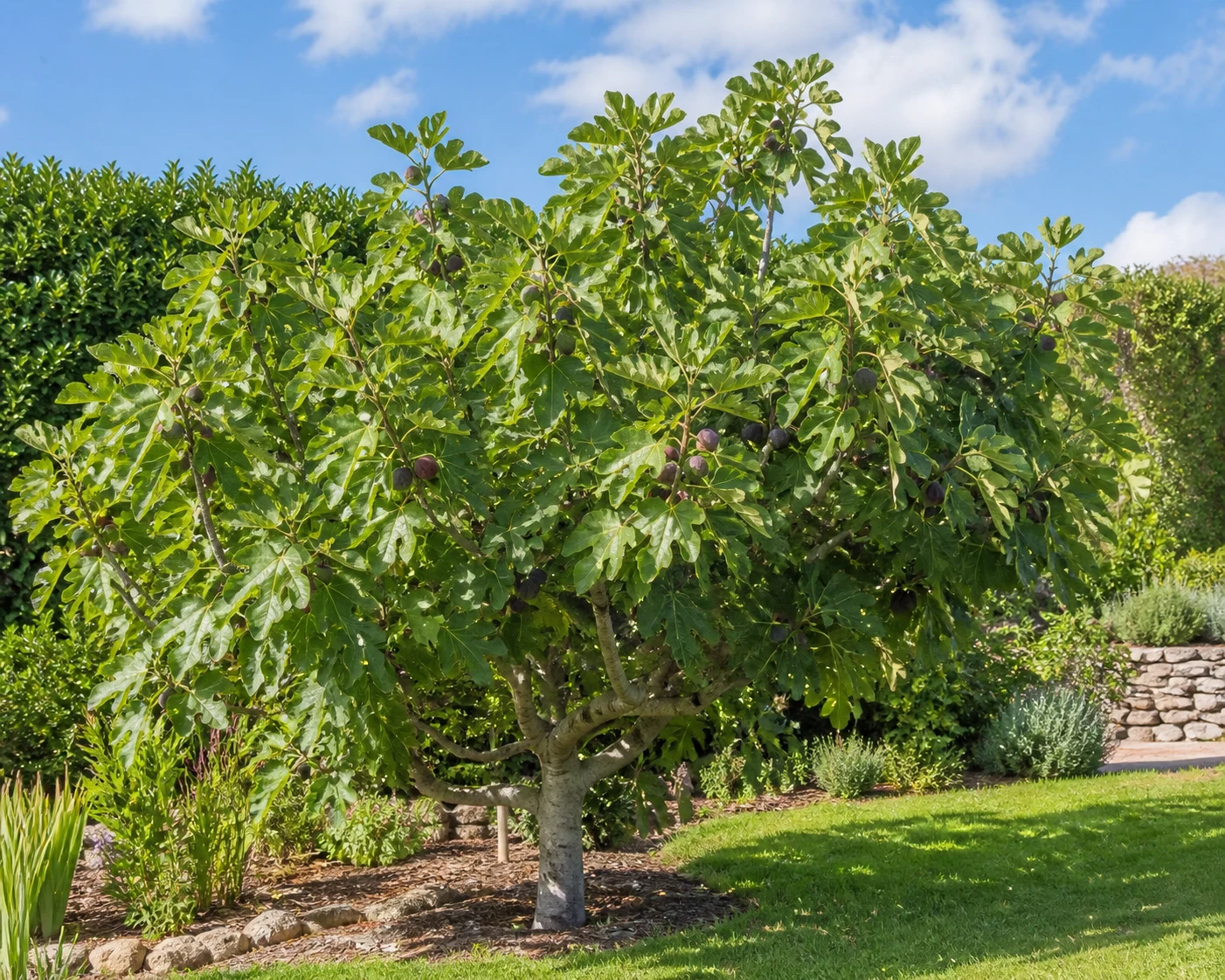
Fig Tree
Another warm-climate fruiting tree that likes sun and drainage.
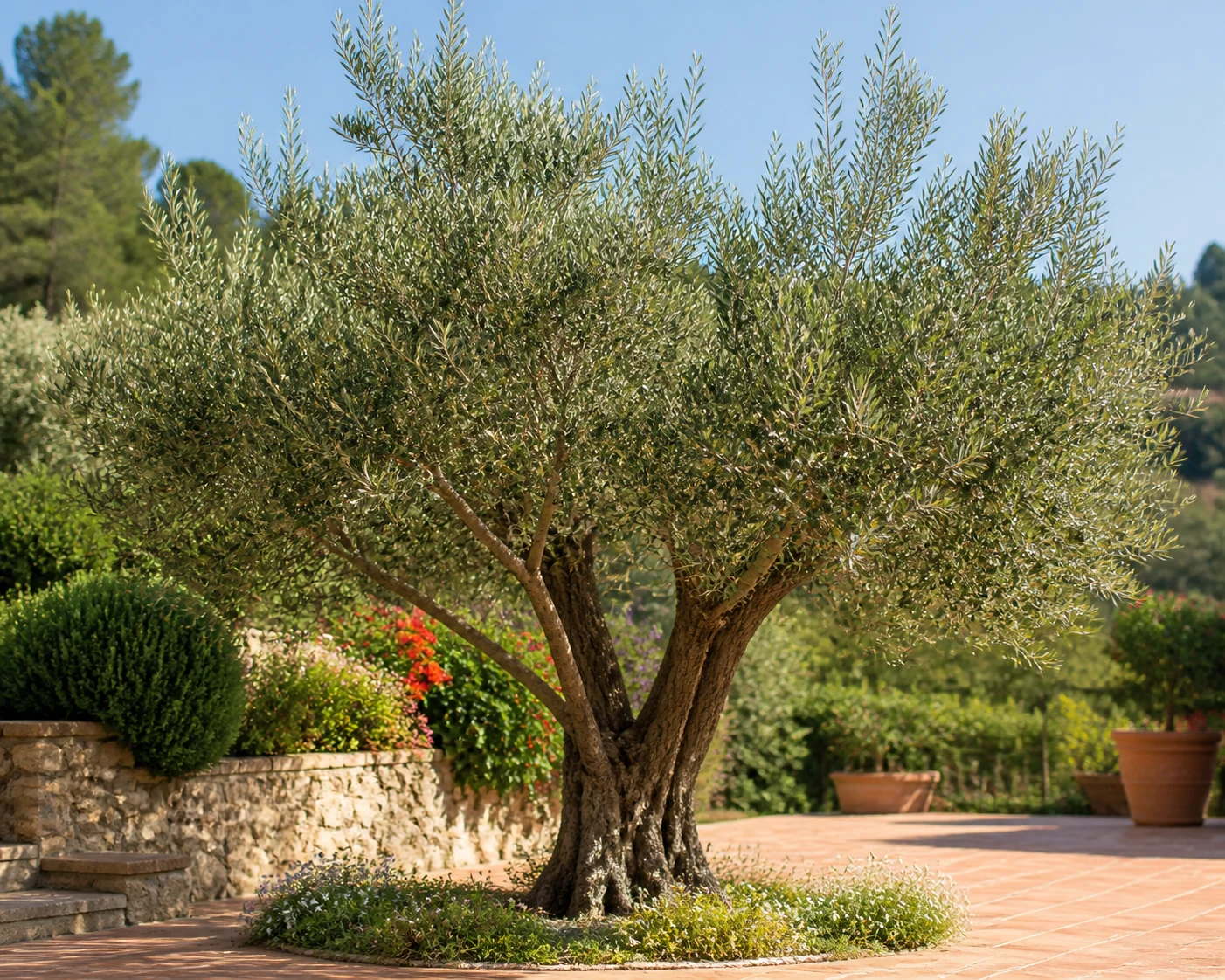
Olive Tree
A Mediterranean-style fruit tree for full sun and sharp drainage.
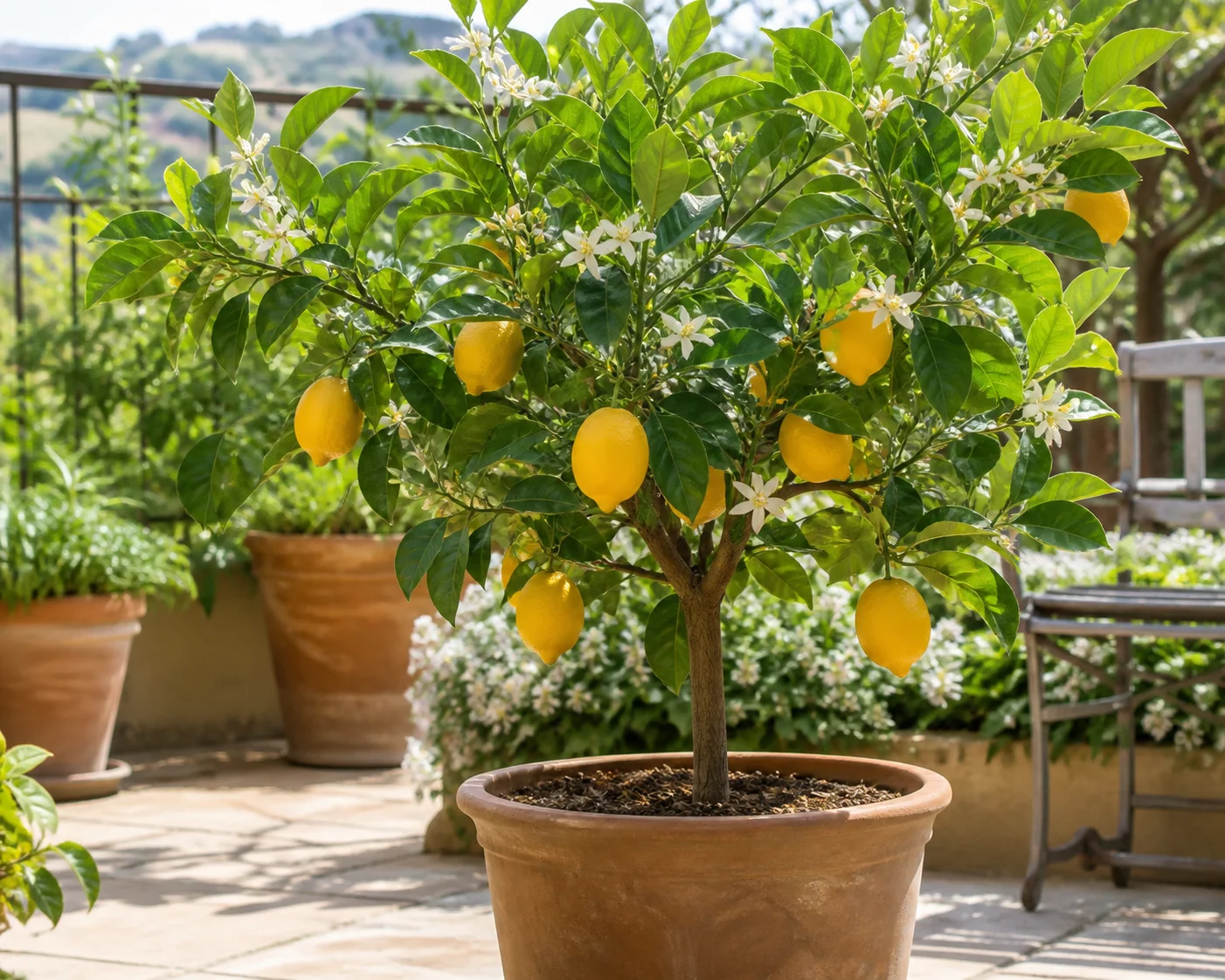
Meyer Lemon
A container-friendly fruit tree for gardeners protecting tender crops in winter.
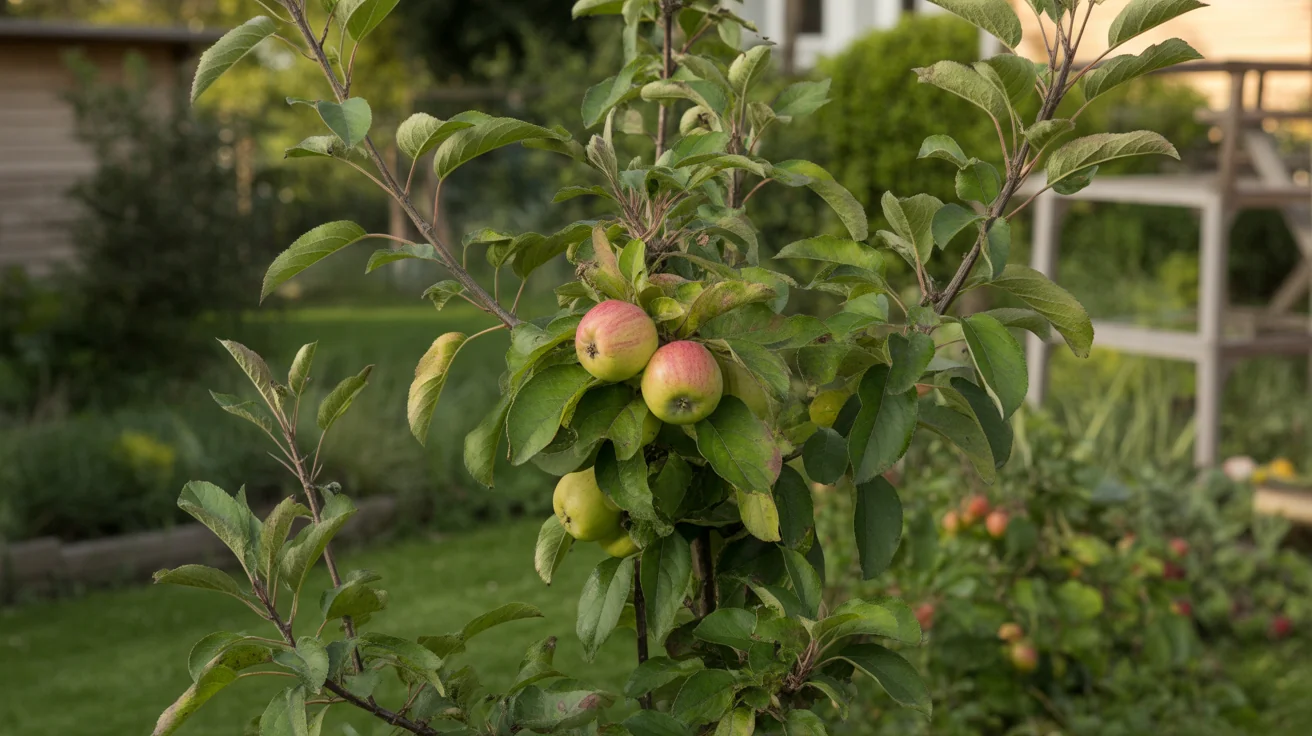
Apple Tree
Apple trees can be excellent backyard fruit trees when the variety, rootstock, pollination partner, sun, and pruning…
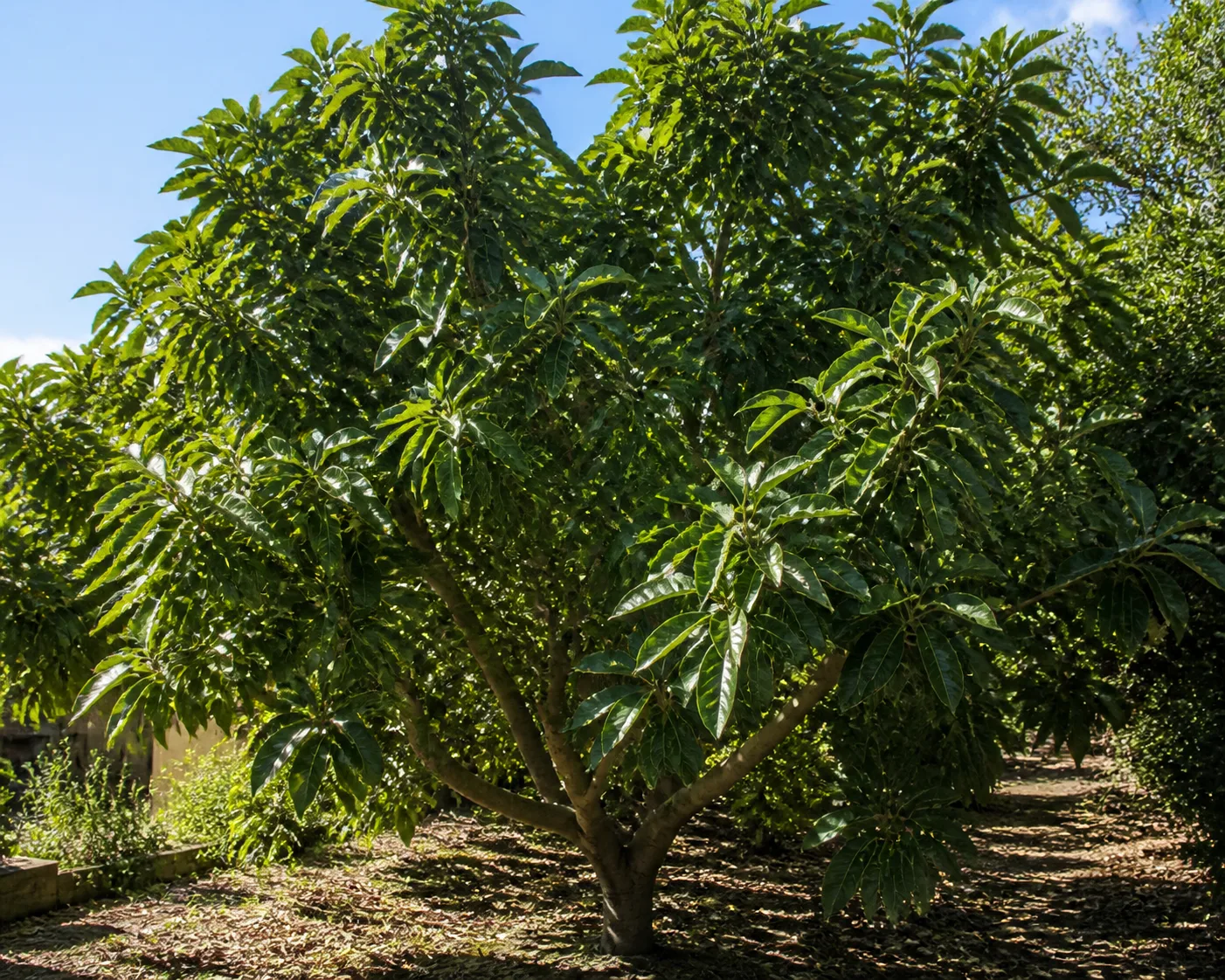
Avocado Tree
Avocado tree is a subtropical evergreen fruit tree for frost-free gardens, warm patios, and bright indoor…
Blackberry
Blackberries are perennial brambles grown for summer fruit on managed canes.