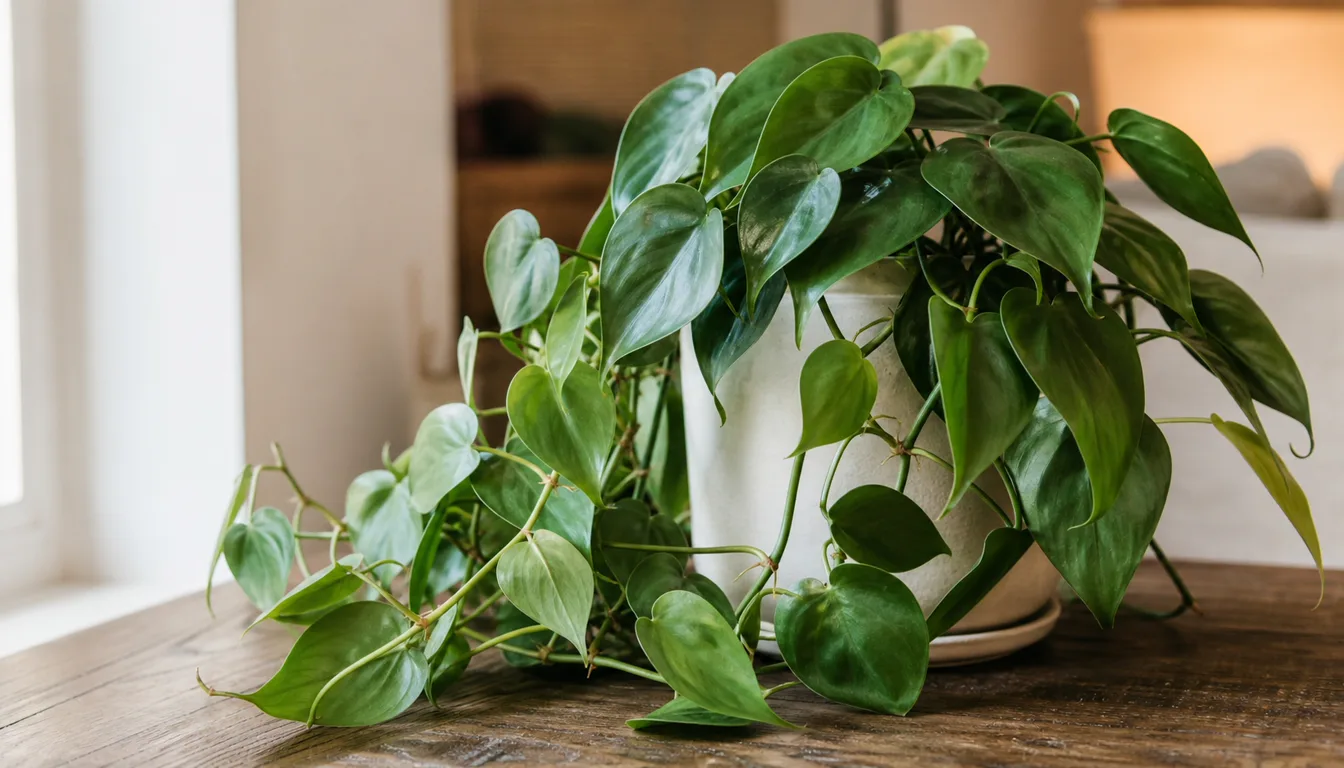
Pothos vs English Ivy
Pothos is usually the easier starting point for a warm room. English ivy offers smaller lobed leaves and works well on a frame, but its site and pest monitoring matter. Neither vine is a safe default for unrestricted outdoor planting.
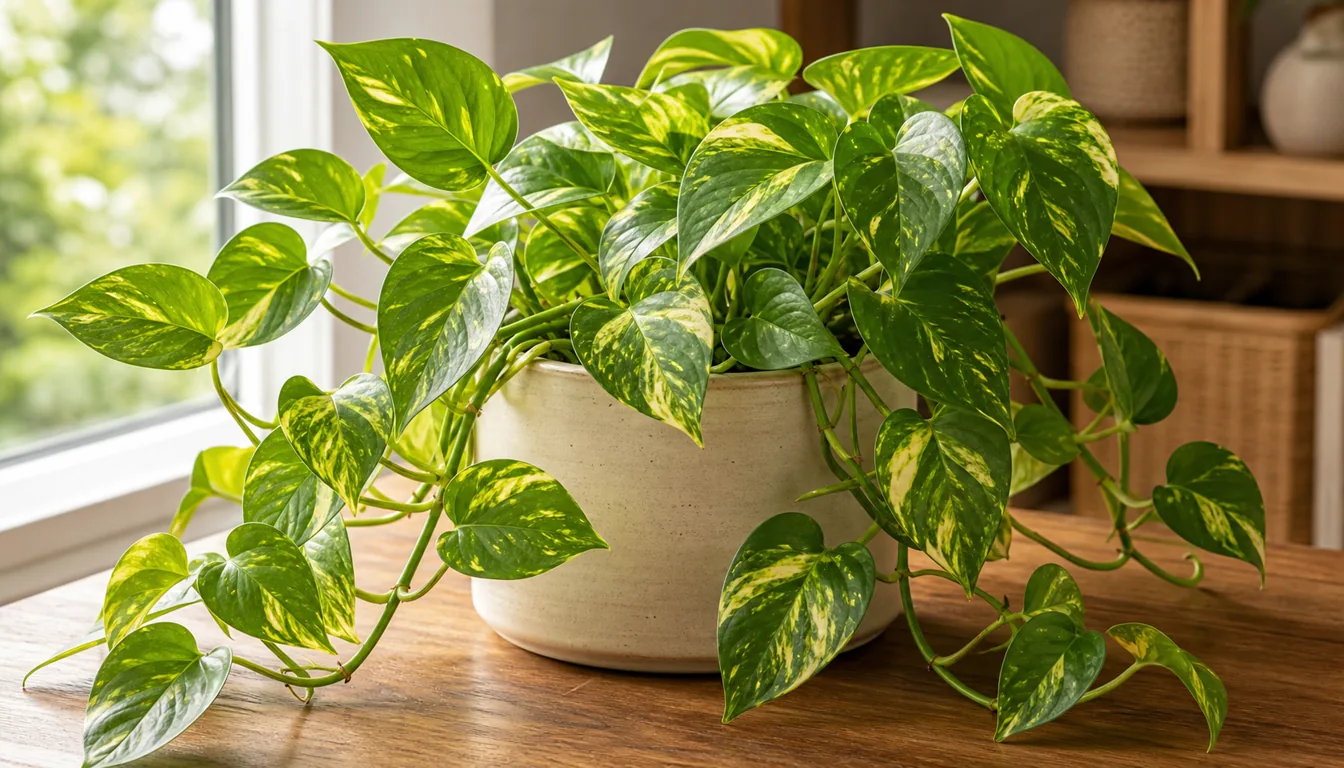
Pothos
Epipremnum aureum
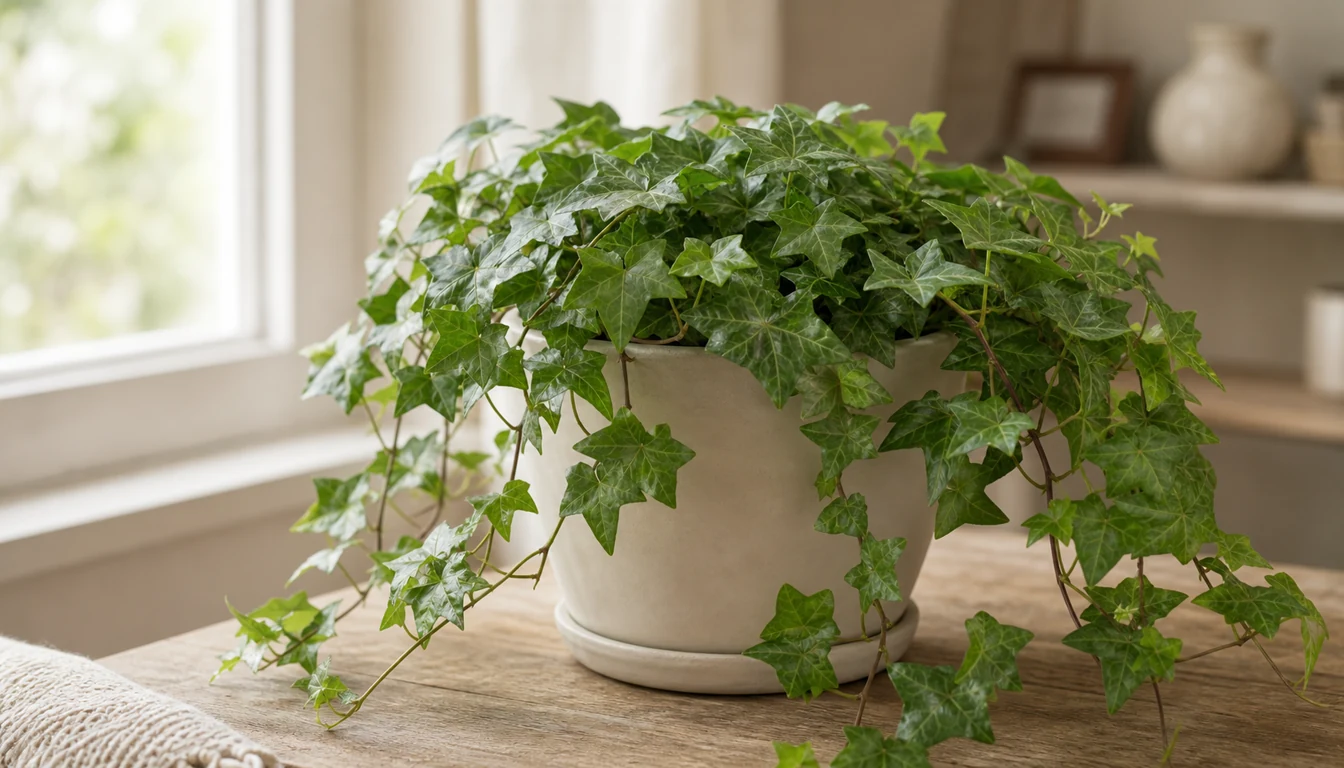
English Ivy
Hedera helix
Pothos and English ivy can both trail from a pot, but they are unrelated plants. Pothos is the tropical aroid Epipremnum aureum. English ivy is Hedera helix, a woody vine with a different growth cycle and outdoor range.
Their names can add to the confusion because pothos is also sold as devil's ivy. A label that says only "ivy" does not establish which plant you have, how it will grow, or whether it belongs outdoors.
For an indoor purchase, the useful questions are whether the room suits the plant, how you want to train the stems, and whether you can inspect the foliage. Cold hardiness and outdoor spread are separate questions from keeping a container on a shelf.
Specifications
Compare the traits that change the growing decision.
| Feature | Pothos | English Ivy |
|---|---|---|
| Identity | Epipremnum aureum, an aroid | Hedera helix, a woody ivy |
| Common indoor leaf | Glossy, heart-shaped to oval; color varies by cultivar | Often lobed juvenile leaves; cultivar shapes vary |
| Display | Trailing basket or supported climber | Trailing pot, hoop, or trained frame |
| Indoor light | Prefers bright indirect light; tolerates lower light | Indirect light; lower-light tolerance varies with cultivar and source guidance |
| Pests | Can have mites, mealybugs, and scale | Mites and other pests need regular inspection |
| Outdoor concern | UF/IFAS rates high invasion risk in Florida | Invasive in North Carolina and other regions |
| Pet access | Unsafe to chew or ingest | Unsafe to chew or ingest |
The light labels overlap more than a simple low-light winner suggests. NC State describes pothos as surviving extended low light while preferring bright indirect light. RHS also describes indoor ivy as tolerant of lower light, so a dim room does not automatically rule ivy out or guarantee vigorous pothos growth.
The difference becomes useful when appearance changes. Pothos can lose variegation in low light, and a long sparse vine may need a better position before pruning can restore its appearance. A plant surviving in a corner is not the same as a plant retaining the compact growth that attracted you.
Both plants pose ingestion risks to pets. NC State flags dogs, cats, and horses for these species. Keep vines and fallen trimmings out of reach, and contact a veterinarian after suspected ingestion. A hanging pot does not keep a trailing stem away from a climbing cat.
Best Use Cases
Choose by the job the planting needs to do.
A warm room with a history of mites
Susceptibility is not immunity
University of Minnesota lists pothos among houseplants that tend to experience fewer spider-mite problems. Wisconsin still records occasional infestations. Its glossy leaves do not establish a barrier that mites cannot grip, and a healthy-looking plant can introduce pests to its neighbors.
English ivy merits regular inspection, especially in warm, dry conditions that favor mites. Fine stippling, webbing, and activity on leaf undersides are reasons for a closer look, not proof that every ivy will fail. The spider-mite guide explains identification and treatment beyond this plant choice.
A cool room or a trained shape
Match the display to the stems
Pothos can trail or climb a support. Supported vines with adequate light can develop larger leaves, so it is not limited to loose strands and is not incapable of being trained. Its eventual leaf scale matters when the intended display is a small, tightly outlined shape.
Small-leaved ivy cultivars can follow a hoop or frame, and pinching growing tips helps make a fuller plant. Illinois Extension favors a cool, bright indoor position. That supports considering ivy for such a room, without promising that a particular temperature eliminates mites.
Watering several houseplants together
One calendar can miss different root conditions
Pothos needs drainage and some drying between waterings. Tolerance of an occasional missed watering does not create a safe number of weeks to leave it dry. A small pot in strong light can dry differently from a large pot in a dim room.
Ivy generally benefits from an evenly moist root zone without standing water. Neither plant needs another watering simply because the other does. The houseplant watering guide explains how pot size, mix, season, and light change the interval.
A patio or groundcover project
Indoor suitability does not settle escape risk
Pothos is frost-sensitive, but that does not mean it is noninvasive everywhere. UF/IFAS rates it a high invasion risk across Florida assessment zones. Discarded cuttings or a vine allowed to root beyond a container can create a different problem from an indoor pot.
English ivy can survive winters that pothos cannot, yet its ability to cover ground is also why it damages natural areas. NC State identifies it as invasive and favors alternatives. Wanting a bank covered does not by itself justify planting an invasive vine there.
Sources & References
- Epipremnum aureum, NC State Extension Gardener Plant Toolbox
- Hedera helix, NC State Extension Gardener Plant Toolbox
- Pothos, University of Wisconsin Horticulture
- Houseplant Pests, University of Minnesota Extension
- English Ivy, University of Illinois Extension
- How to Grow Ivy Indoors, RHS
- Epipremnum aureum Invasion Assessment, UF/IFAS
Related Comparisons
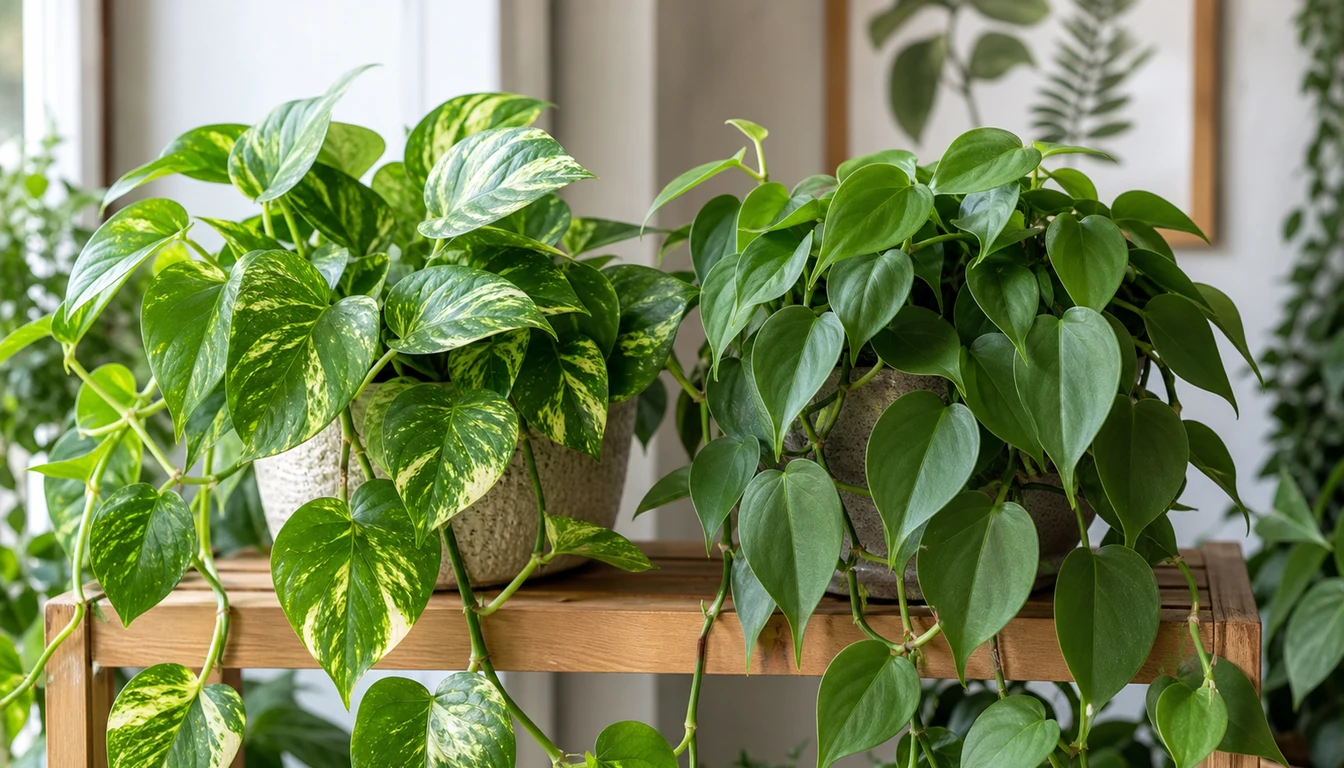
Pothos vs Philodendron: Trailing Houseplant Showdown
Read Comparison
Pothos vs Monstera: Best Statement Plant for Beginners
Read Comparison
Snake Plant vs Aloe Vera: Tough Houseplant Choice
Read Comparison