
What's Aucuba? How to Fill a Dry Shade Corner
Aucuba japonica Garryaceae
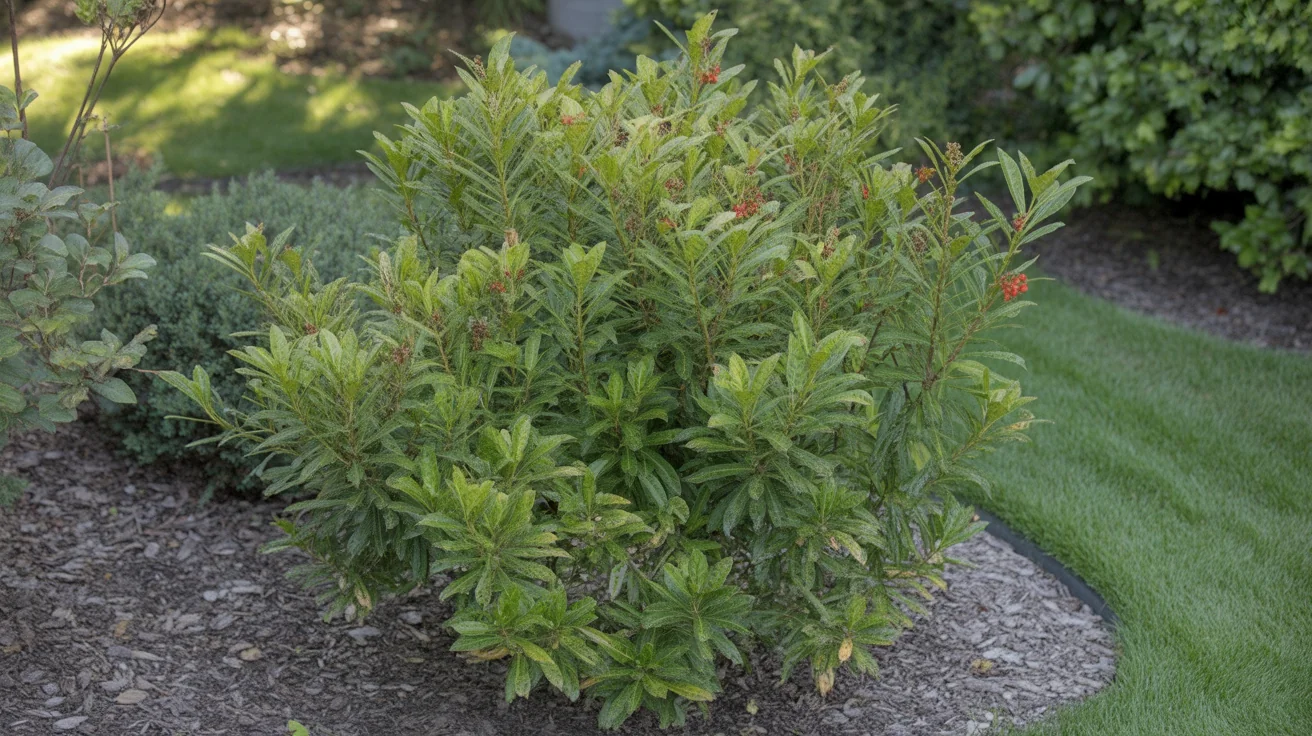
Aucuba is the shrub for bright shade with dry root competition. It keeps evergreen structure near north walls, porches, and tree-covered beds where hot sun would scorch the leaves and wet winter soil would damage roots.
Care snapshot
Use Aucuba Where Shade Removes Other Shrub Choices
Aucuba japonica solves a narrow problem, an evergreen shrub for shade where the soil may dry out under eaves, trees, or porches, not a backup boxwood. It is a broadleaf shade plant with thick leaves that hold color when many flowering shrubs go thin.
Despite the common name Japanese laurel, Aucuba is not related to true laurels at all and sits in its own small family, Garryaceae.
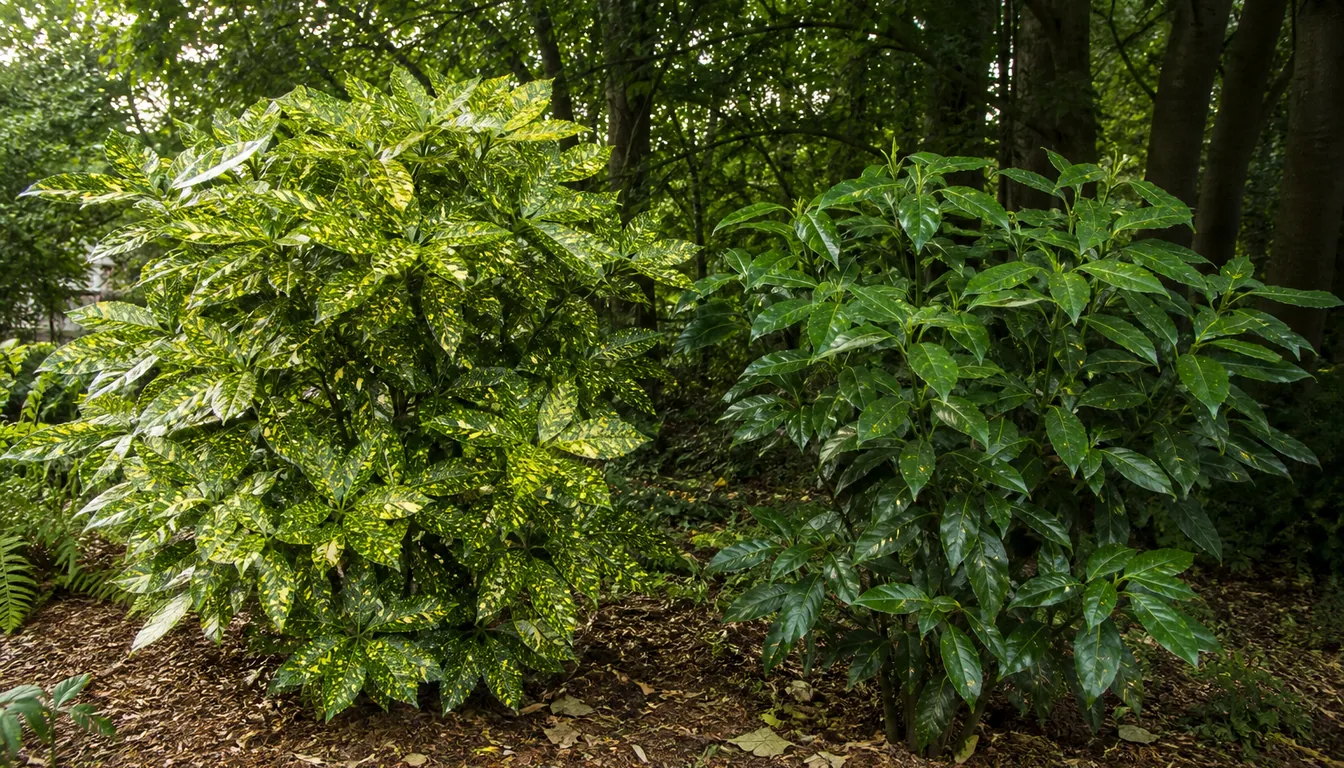
The first decision is whether the spot has enough light to see leaf color. Gold-splashed cultivars brighten a north wall or side yard, but they still need bright shade.
In black shade, the shrub survives more than it shines.
This guide stays focused on evergreen foliage, not general flowering-shrub care. If you want spring bloom, compare with azalea.
Rhododendron belongs in the same shade conversation, but Aucuba is the better fit for evergreen foliage.
Aucuba also tolerates root competition from mature shade trees better than many broadleaf evergreens, which is exactly why it survives where thirstier shrubs struggle.
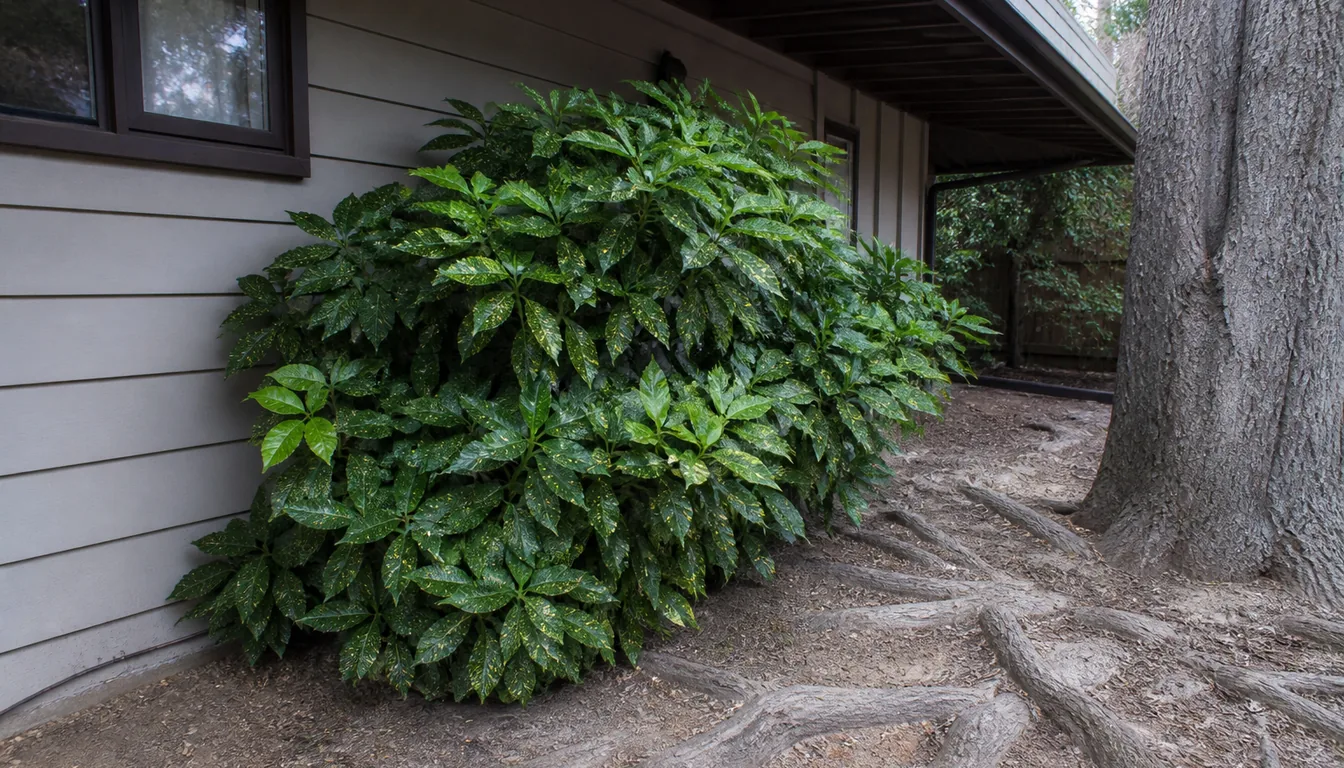
It also shrugs off urban pollution and salt spray better than many broadleaf evergreens, which is why it shows up so often in city foundation plantings and coastal shade beds.
Pick Leaf Pattern Before You Think About Berries
Most gardeners notice Aucuba because of the leaves. Gold Dust types throw yellow speckles across dark green foliage, while green forms look quieter and often fit formal shade beds better.
The gold speckling on variegated types traces back to a virus that infected the species generations ago, a cosmetic trait long since bred into stable garden cultivars rather than a sign of disease.
Berries require both sexes. Many plants are dioecious, so a female shrub needs a male nearby before it can carry red fruit.
If the nursery tag only sells the leaf pattern, ask about sex before you plan a winter-berry display.
- Gold Dust / Variegata
- Brightest shade effect; good near entries, dark fences, and side yards.
- Crotonifolia
- Bold, large variegated leaves; stronger visual weight in deep beds.
- Rozannie and compact forms
- Smaller habit; useful where a full 6-foot shrub would crowd a walk.
- Green-leaf forms
- Best when you want calm evergreen mass behind perennials or ferns.
If the shade bed already has dark evergreen mass, a variegated Aucuba can act like a light source. If the bed sits beside patterned brick or busy paving, a green form may look calmer.
Nursery growers propagate variegated forms exclusively from cuttings rather than seed, since seedlings do not reliably inherit the parent's speckled pattern.
Some nurseries sell named male cultivars specifically as pollinators, since a male plant never carries berries itself but is still worth a spot in the bed if you want fruit on the females nearby.
Give Bright Shade, Then Protect the Leaves From Heat
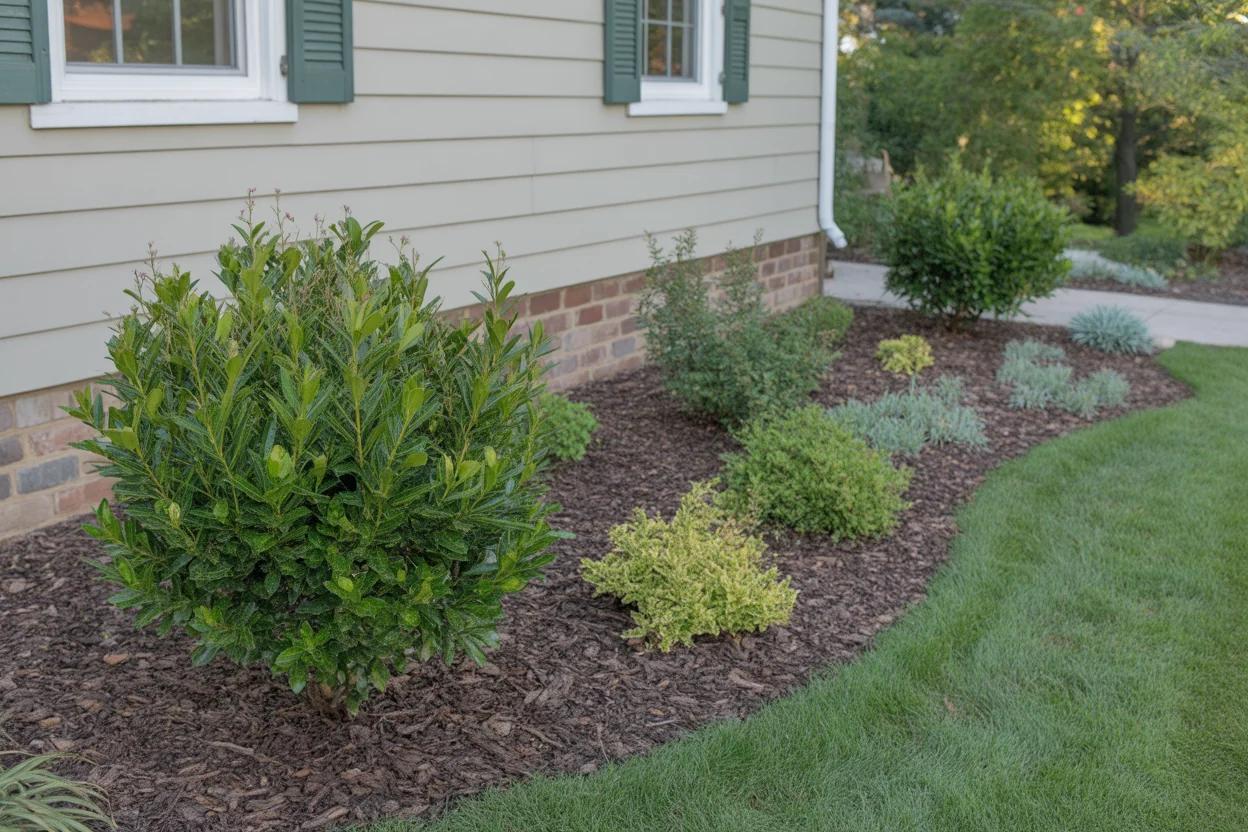
Aucuba leaves scorch when hot afternoon sun hits them, especially on variegated plants. Brown patches on the light-colored parts usually mean the plant is getting more direct light than it can use.
Morning sun is tolerated far better than afternoon sun on the same plant, since lower light intensity and cooler air temperatures in the morning put much less stress on the leaves.
A good site feels like the edge of a woodland, with bright shade, morning light, or filtered sun through high branches. That makes it useful under trees where hostas and ferns already perform well.
Cold areas flip the concern a bit. In Zone 4 or Zone 5, a sheltered wall with gentle morning sun may help the shrub hold leaves through winter.
The key is shelter from wind, not more mid-day sun.
Evergreen leaves keep losing moisture to wind all winter long, not just during summer heat, which is why a wind-sheltered site matters in every season, not only the hottest months.
- Best: bright shade or dappled light.
- Risky: west-facing walls, hot brick, and reflected pavement heat.
- Too dark: dense evergreen canopy where leaves lose color and growth stalls.
- Colder edge: sheltered morning light with wind protection.
Water Dry Shade by Soil Feel, Not by Rainfall
Rain often misses Aucuba planted under rooflines or tree canopies. The weather report may say the yard got an inch, while the root zone stayed dry.
Check under the mulch before you decide the shrub has been watered.
Plants past their second full season typically develop deep enough roots to reach moisture reserves that a young, shallow-rooted transplant simply cannot access yet.
During the first year, water deeply whenever the top 2 inches dry. Once roots spread, Aucuba handles short dry spells better than many shade shrubs, but it should not be left bone-dry through summer heat.
Wet shade is the opposite problem. Cold, soggy soil can yellow leaves and weaken roots, much like overwatered container plants.
If water stands after rain, fix drainage before adding fertilizer or pest treatments.
A dry-shade planting can need water after a storm because roofs and tree crowns divert rainfall. Push your hand under the mulch near the root zone, since that check tells the truth better than the forecast.
When the root zone stays dry under trees, widen the mulch ring and water farther from the trunk. That teaches roots to explore the shared soil instead of circling near the old potting mix.
Drip irrigation works better than a sprinkler under a tree canopy specifically because the canopy already intercepts most overhead spray before it reaches the soil.
Checking moisture at about 6 inches deep, not just at the surface, matters because the surface layer dries out much faster than the actual root zone below it.
Build a Leaf-Litter Soil, Not a Wet Pocket
Aucuba likes soil that feels like old woodland litter, loose, slightly acidic to neutral, and able to hold moisture without staying heavy. Compost and fine bark help more than a deep planting hole full of rich mix.
In clay, plant slightly high and widen the loosened area so roots move outward. A small amended hole can hold water like a bowl.
That same drainage problem hurts camellia when winter soil stays cold and wet.
A quick percolation test, digging a hole and timing how fast it drains after filling with water, is worth doing before committing a whole bed to a spot with uncertain drainage.
- Use 2-3 inches of leaf mold, compost, or shredded bark as mulch.
- Keep mulch off the stems so the crown stays dry.
- Avoid high-nitrogen feeding; too much soft growth burns and wilts faster.
- Use shrub fertilizer timing only when growth is pale or weak.
For a broader shade bed, pair the same soil prep with mountain laurel only where drainage is reliable. Aucuba handles drier shade better, but neither plant wants a cold wet bowl.
A soil pH in the slightly acidic range, roughly 5.5 to 6.5, suits Aucuba well and matches what most other woodland shade shrubs in the same bed also prefer.
Avoid applying lime near the shrub, since lime pushes soil pH toward alkaline and works directly against the slightly acidic range Aucuba prefers.
Root Cuttings When You Want the Same Leaf Pattern
Cuttings matter with Aucuba because seedlings may not keep the parent leaf pattern. If you want the same gold speckling, clone the plant instead of saving seed.
Dipping the cut base in rooting hormone before sticking it in the mix noticeably improves the odds of a cutting rooting successfully.
Take semi-ripe cuttings in summer from non-flowering shoots. Big leaves lose water fast, so trim or remove lower leaves and keep the tray in bright shade.
Do not place cuttings in direct sun under plastic.
Rooting typically takes six to ten weeks under good conditions, so resist the urge to tug on a cutting to check progress before that window has passed.
- Cut 4-6 inch firm shoots just below a node.
- Remove lower leaves and leave one or two upper leaves.
- Use a light mix with perlite and peat or coco coir.
- Cover loosely for humidity and vent daily.
- Pot up after roots form, then keep young plants shaded.
Separate Sun Scorch, Scale, and Wet Roots
Most Aucuba problems show on the leaves. Pale brown patches on the exposed side suggest sun scorch.
Raised bumps on stems or leaf undersides suggest scale. Yellowing that starts while soil stays wet points to root stress.
Scale insects can hide because the leaves are glossy and thick. Scrape a bump with a fingernail, and if it lifts off, treat the active area with horticultural oil or insecticidal soap in cool light, then recheck in 7-10 days.
Do not spray first and diagnose later. A scorched plant will not improve from pest treatment, and a soggy plant will decline faster if you keep watering while searching for insects.
Scale insects are far easier to control while still in the young, mobile crawler stage than once they have settled and grown their protective waxy shell.
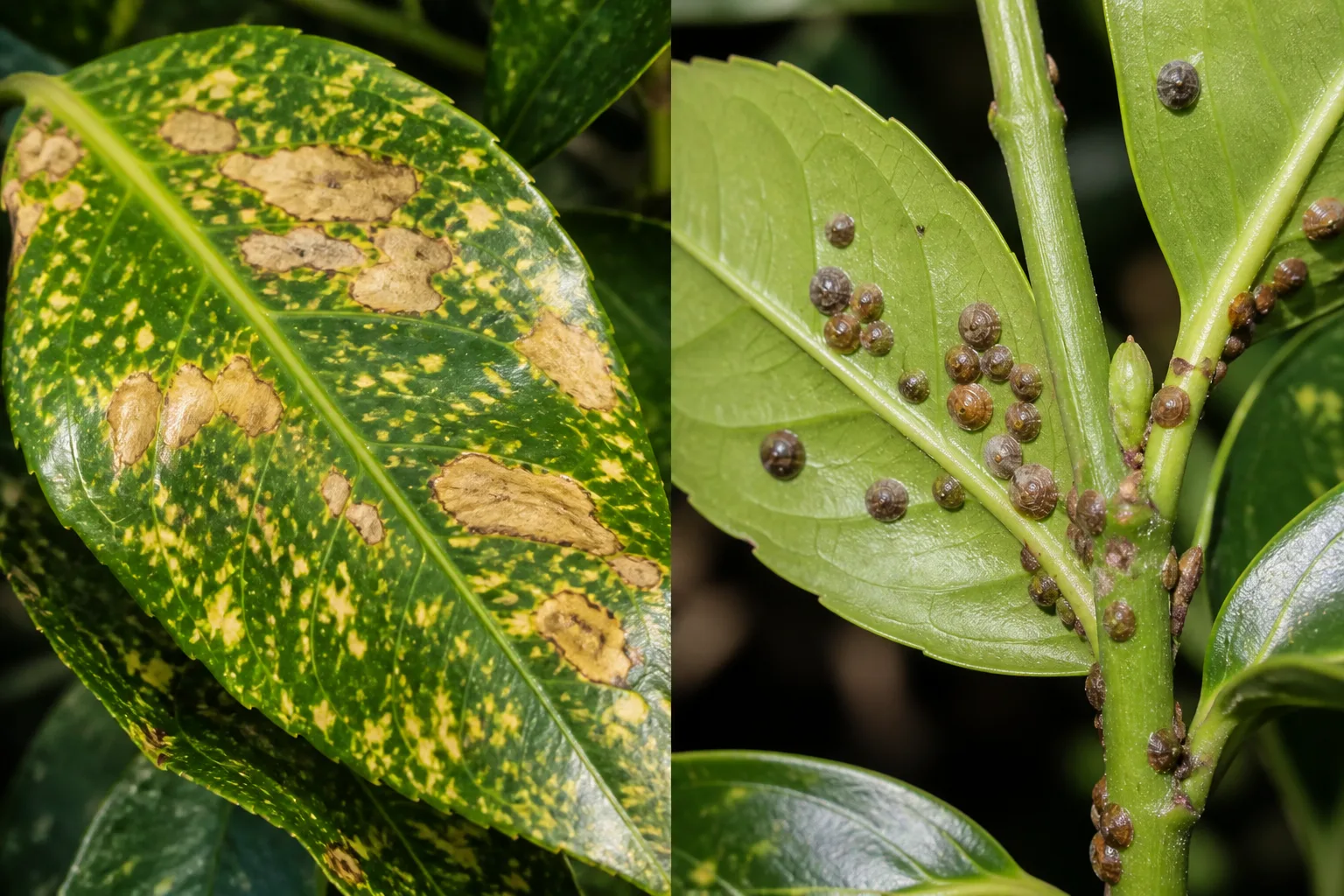
- Brown patches on gold areas
- Sun scorch or reflected heat.
- Raised brown bumps
- Scale insects on stems or undersides.
- Yellow leaves with wet soil
- Poor drainage or overwatering.
- Ragged lower leaves
- Slugs, snails, or physical damage in deep shade.
If scale keeps returning, look at plant stress before repeating sprays. More shade, better air movement, or less winter wetness often does more than another product.
Horticultural oil should go on when temperatures are moderate, not near freezing and not above 90F, since extreme heat or cold at application time can damage the leaves it is meant to protect.
Slugs and snails become more of a nuisance in deep, humid shade than in brighter beds, and hand-picking at dusk usually controls them better than a broad treatment.
If the pest problem is really a crowded evergreen bed, thin nearby shrubs such as yew before you keep treating Aucuba leaves. Better airflow makes each spray, if needed, work more cleanly.
Prune Like a Slow Evergreen, Not a Fast Hedge
Aucuba grows slowly enough that heavy annual pruning is usually a sign it was planted in the wrong place. Remove damaged stems, shorten awkward shoots, and let the natural rounded shape do the work.
Winter injury often shows at the exposed tips. Wait until spring growth starts before cutting because some stems that look tired in February still hold live buds lower down.
Avoid fertilizing right after a hard prune, since that combination pushes soft new growth that is especially vulnerable if another cold snap follows.
Spring cleanup should be selective. Remove stems that winter burned back to live wood, then stop.
A broadleaf evergreen looks ragged when every shoot is clipped to the same plane.
If a shrub has outgrown a walk, thin whole stems at the base instead of shearing every leaf into a flat face. The broad leaves look rough after shearing, while selective cuts keep the plant natural.
Because Aucuba grows so slowly, a sizing mistake at planting time takes years to correct, which is exactly why matching mature size to the space matters more here than with a fast-growing shrub.
Under good conditions, expect roughly 6 to 12 inches of new growth a year, a pace that explains why heavy corrective pruning takes so long to fill back in.
Place Berries Where Kids and Pets Will Not Snack
Treat Aucuba as ornamental, not edible. The red berries can tempt children, and NC State lists the berries and leaves as mildly poisonous to people, with nausea, vomiting, and possible fever. No pet toxicity record was found, so keep pets from chewing them, and if one eats them, contact a veterinarian or ASPCA Animal Poison Control.
Keep berrying plants away from play paths if that risk matters in your yard.
The shrub still gives useful cover. Dense evergreen leaves shelter small birds, and the dark background makes nearby pieris flowers read more clearly in shade.
Berries that persist into winter give birds a food source at a time when few other fruits remain on the landscape.
Because Aucuba fills a dry-shade job, it can reduce the urge to keep replacing failed sun shrubs. That is the real ecological win, matching the plant to the site so you spray less, water less, and disturb the bed less often.
If leaf litter builds up under the shrub, leave a thin layer as natural mulch but remove packed wet clumps against the stems. That keeps the woodland look without holding rot at the crown.
Deer generally leave Aucuba alone thanks to its leathery, unpalatable leaves, which makes it a useful evergreen choice in yards with heavy browse pressure.
For a softer ground layer, use ferns around the shrub instead of crowding another woody plant against it. That keeps airflow around the broad leaves.
The shrub's dense, layered branching also gives songbirds a favored nesting spot, on top of the general shelter its evergreen leaves already provide through winter.
Frequently Asked Questions
Can Aucuba grow in full shade?
Aucuba can survive full shade, but bright shade gives better leaf color and denser growth. In very dark shade, variegated leaves dull and the shrub grows slowly.
Why are my Aucuba leaves turning brown?
Brown patches usually come from hot sun, reflected heat, or winter wind, so check the pattern first. Damage on the exposed side points to scorch, while raised bumps point to scale insects.
Do I need male and female Aucuba plants?
You only need both if you want berries, since a female plant needs pollen from a male plant nearby. If you only want evergreen leaves, one plant is enough.
Is Aucuba a good foundation shrub?
Yes, when the foundation is shaded and sheltered. It is a poor choice for a hot south or west wall, where the leaves can scorch.
Sources & References
Related Plants
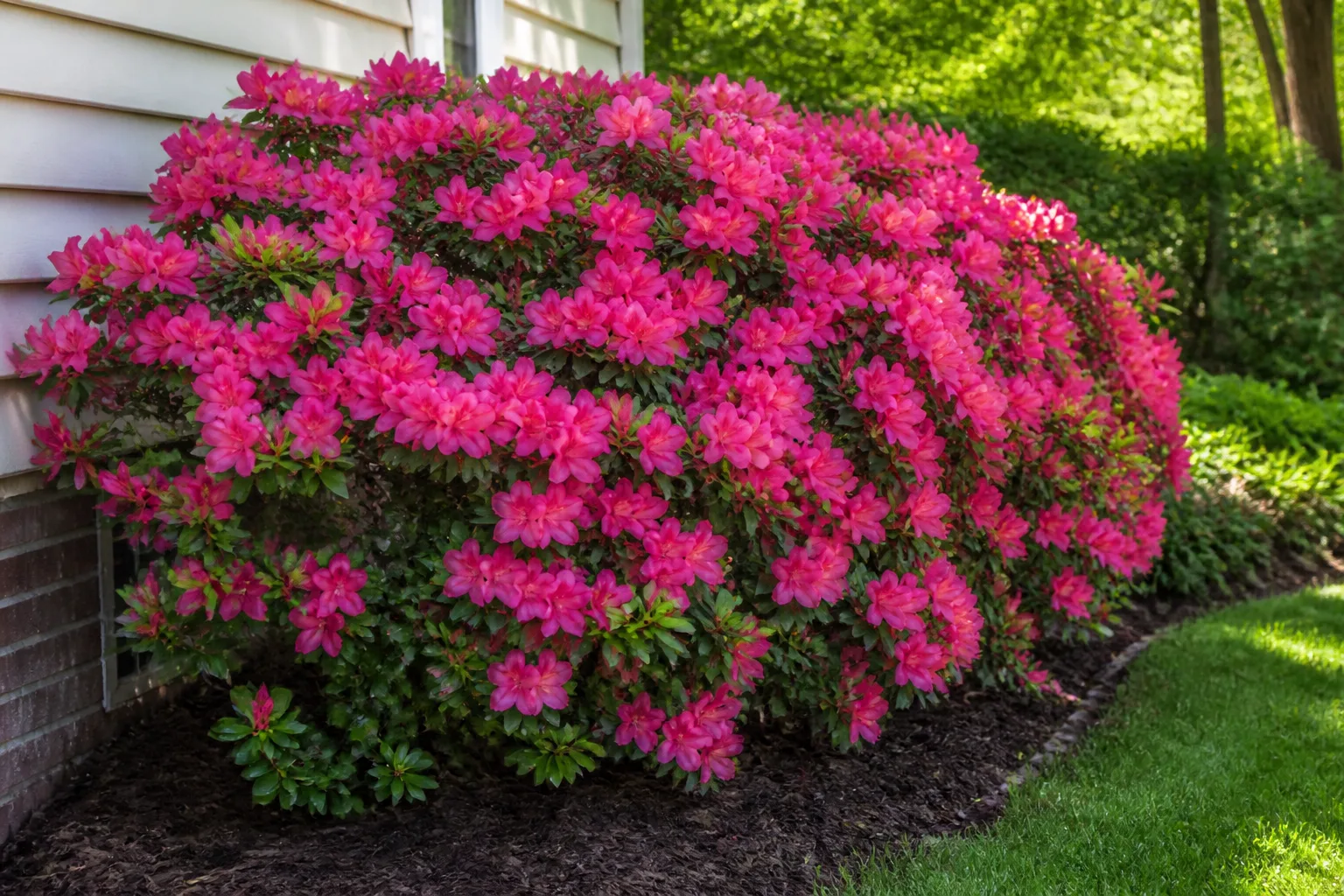
Azalea
Flowering shrub that likes similar acidic, sheltered sites but needs more moisture and care than Aucuba.
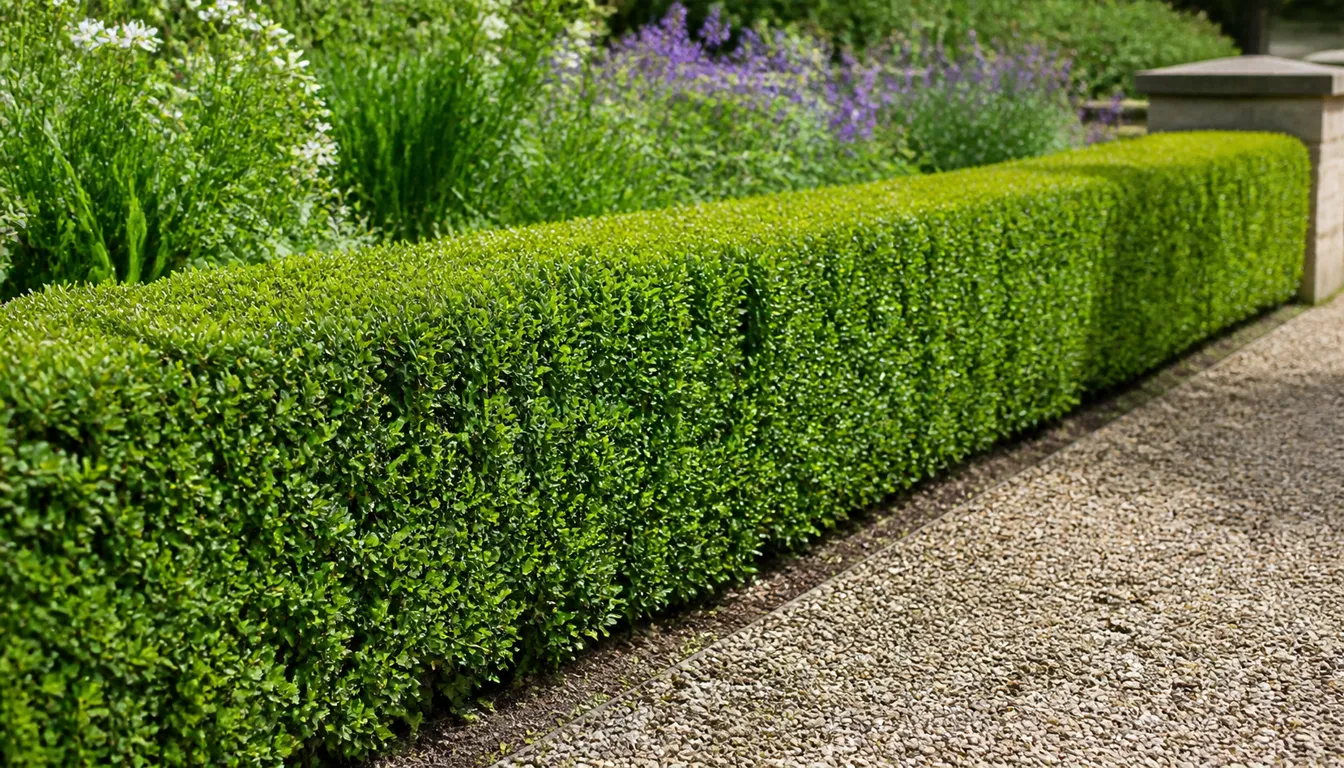
Boxwood
Classic evergreen hedge choice. Pick boxwood for sun, Aucuba for low-light corners.
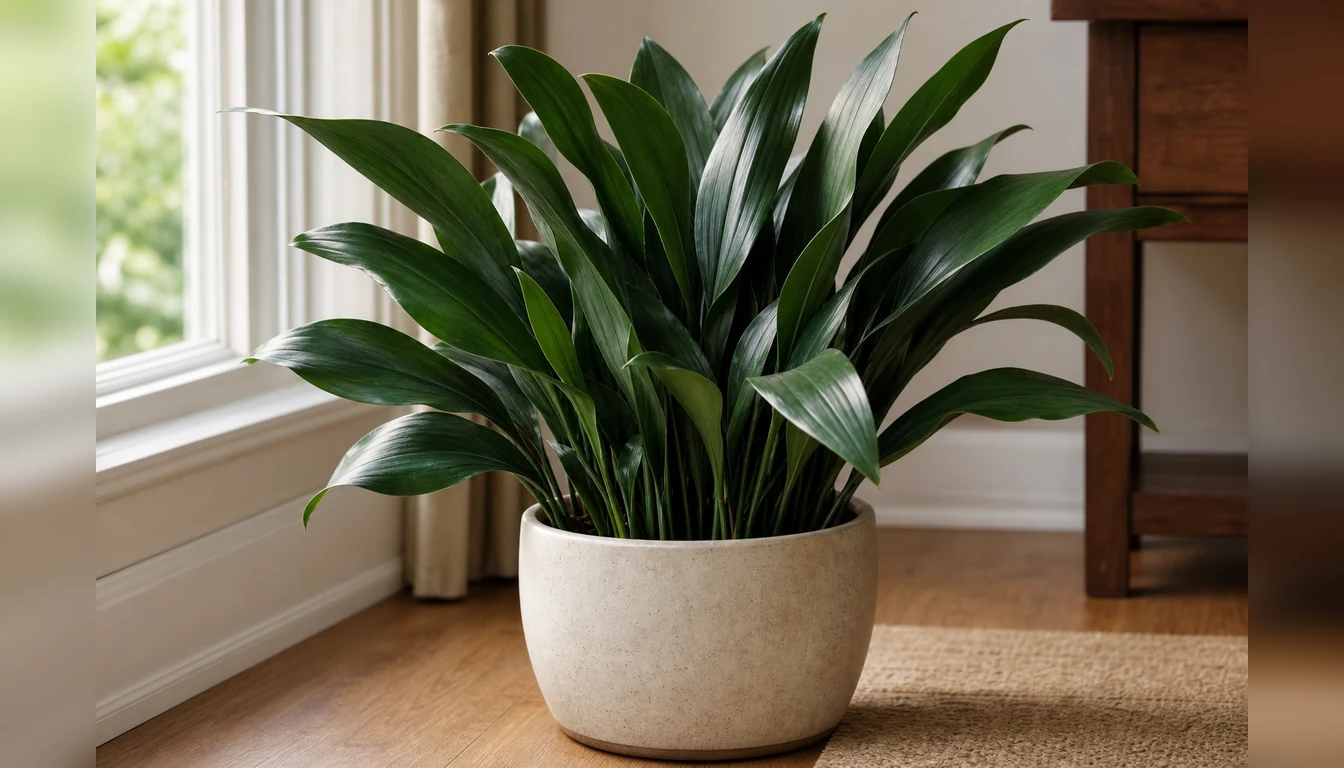
Cast Iron Plant
Houseplant-level toughness outdoors in mild climates, similar low-light tolerance to Aucuba.
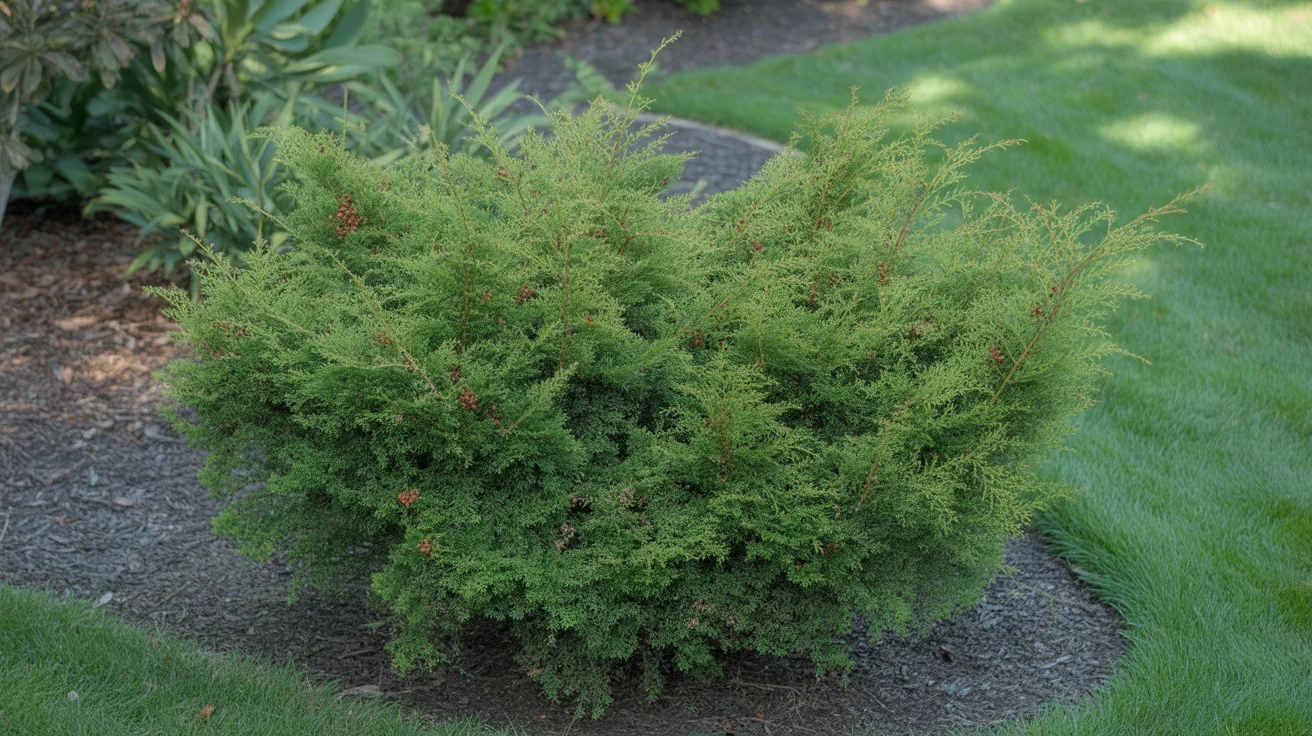
Arborvitae
Arborvitae can form a dense living screen where its mature width, exposure, and water needs fit the site.
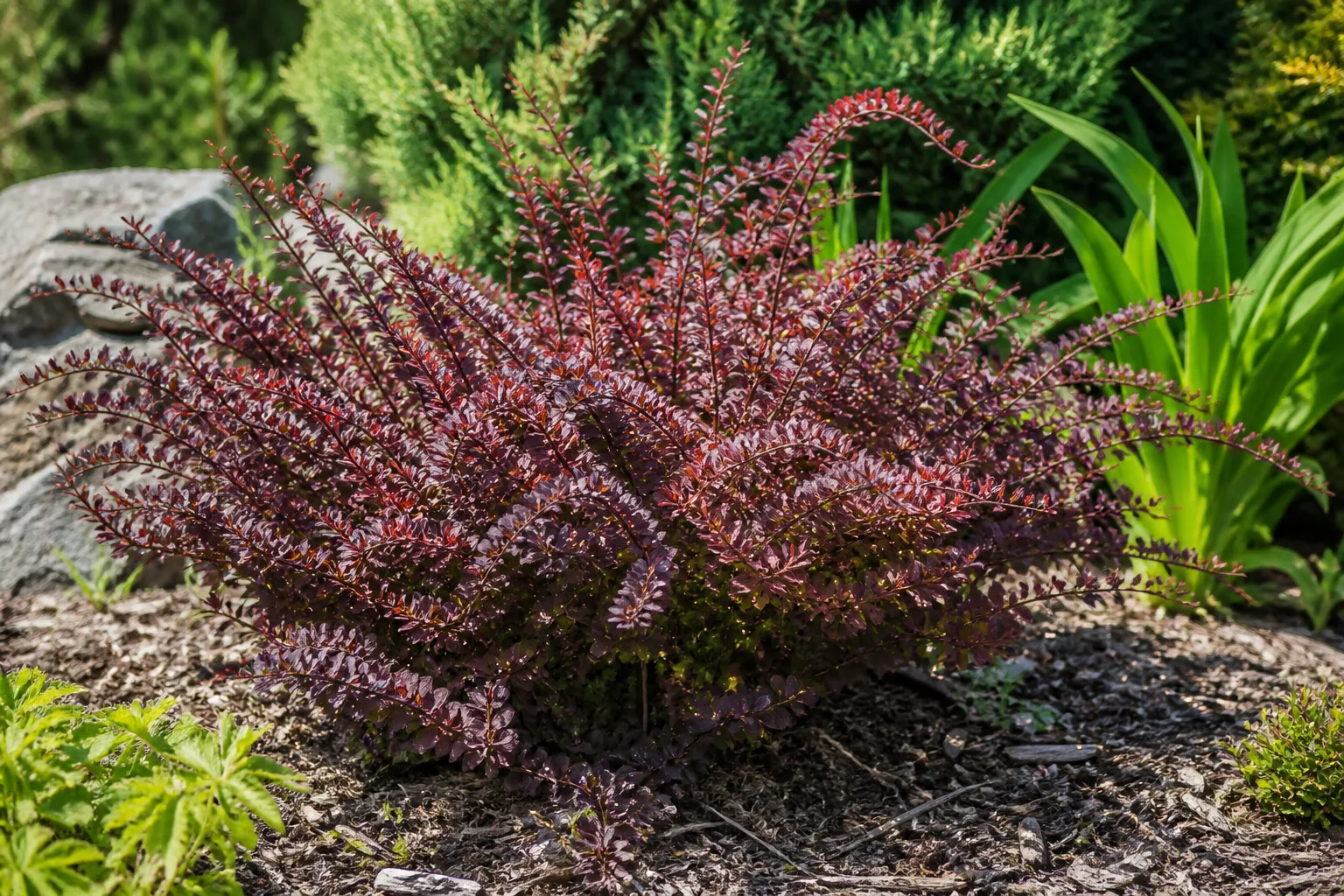
Barberry
Japanese barberry (Berberis thunbergii) is a thorny, deer-resistant shrub whose berries birds carry into woods, so…
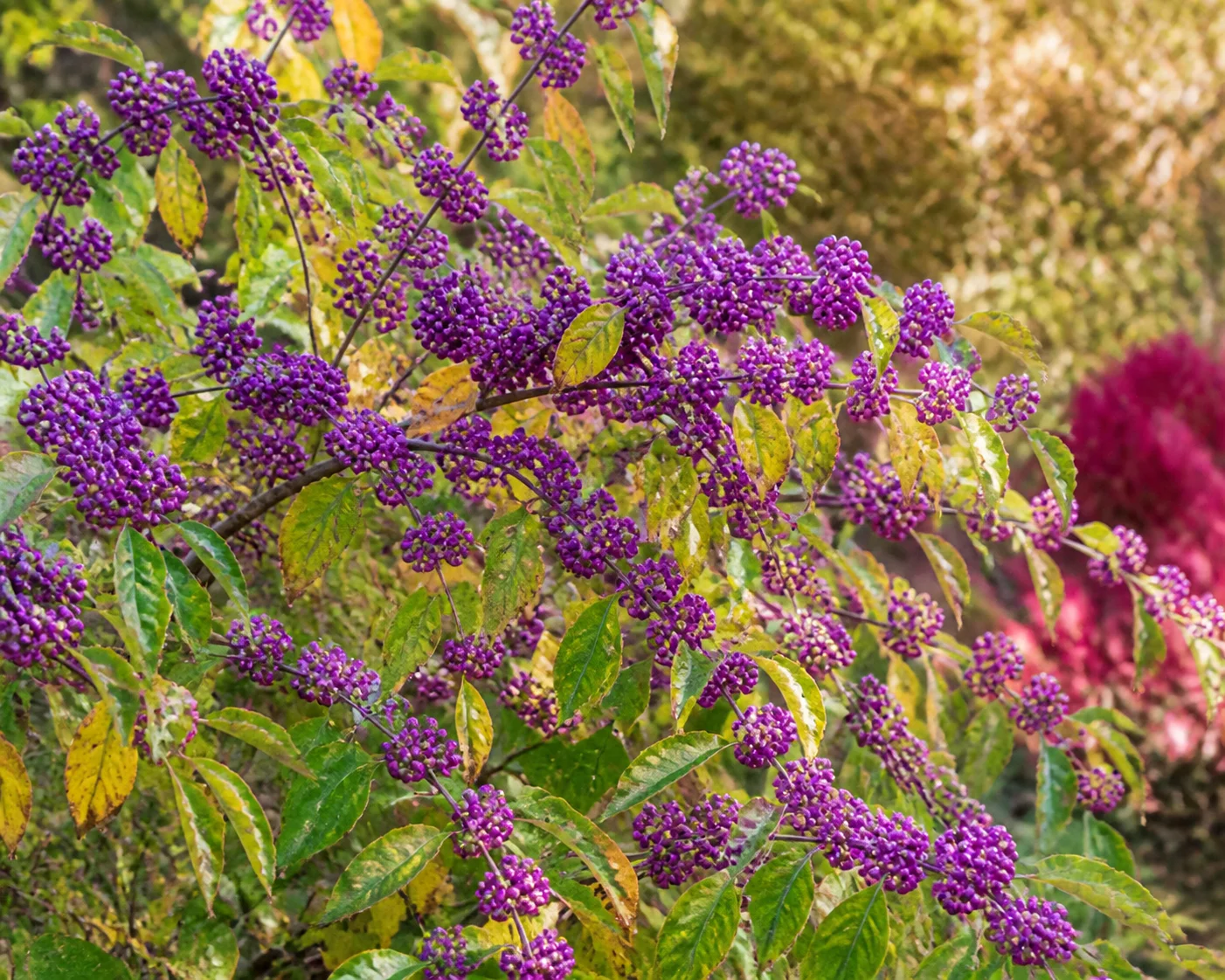
Beautyberry
Beautyberry is a fall-berry shrub, not a formal hedge. Grow Beautyberry where loose arching stems can carry purple…