
What's Pieris Japonica? How to Keep Red Growth Bright
Pieris japonica Ericaceae
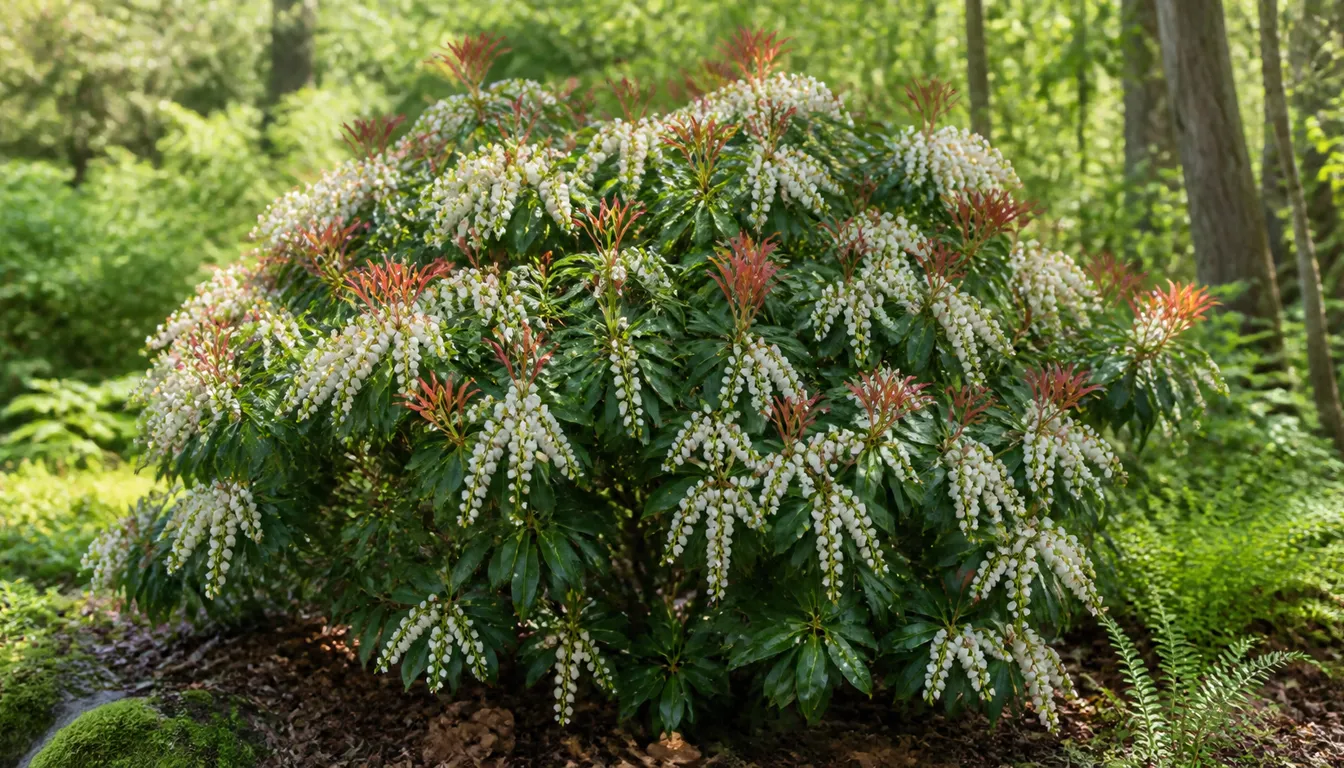
Pieris belongs in cool, acidic, partly shaded beds where red new growth and hanging spring flower chains can carry the show. It is not a hot-wall shrub.
Protect shallow roots, watch lace bugs, and keep the soil evenly moist without making it soggy.
Care snapshot
What Is Pieris and Where Does It Grow Best?
Pieris japonica is a broadleaf evergreen shrub in the heath family, grown for glossy leaves, red spring growth, and hanging chains of bell-shaped flowers.
Pieris belongs only where the bed already suits acid-loving broadleaf evergreens, so check the soil before anything else. Cool roots, acidic soil, and bright shade matter more than fertilizer or yearly pruning.
Pieris is grown for different reasons than Loropetalum foliage color or Boxwood hedge care.
Pieris is grown for red new growth and hanging flower chains in a woodland edge, not for clipped green geometry.
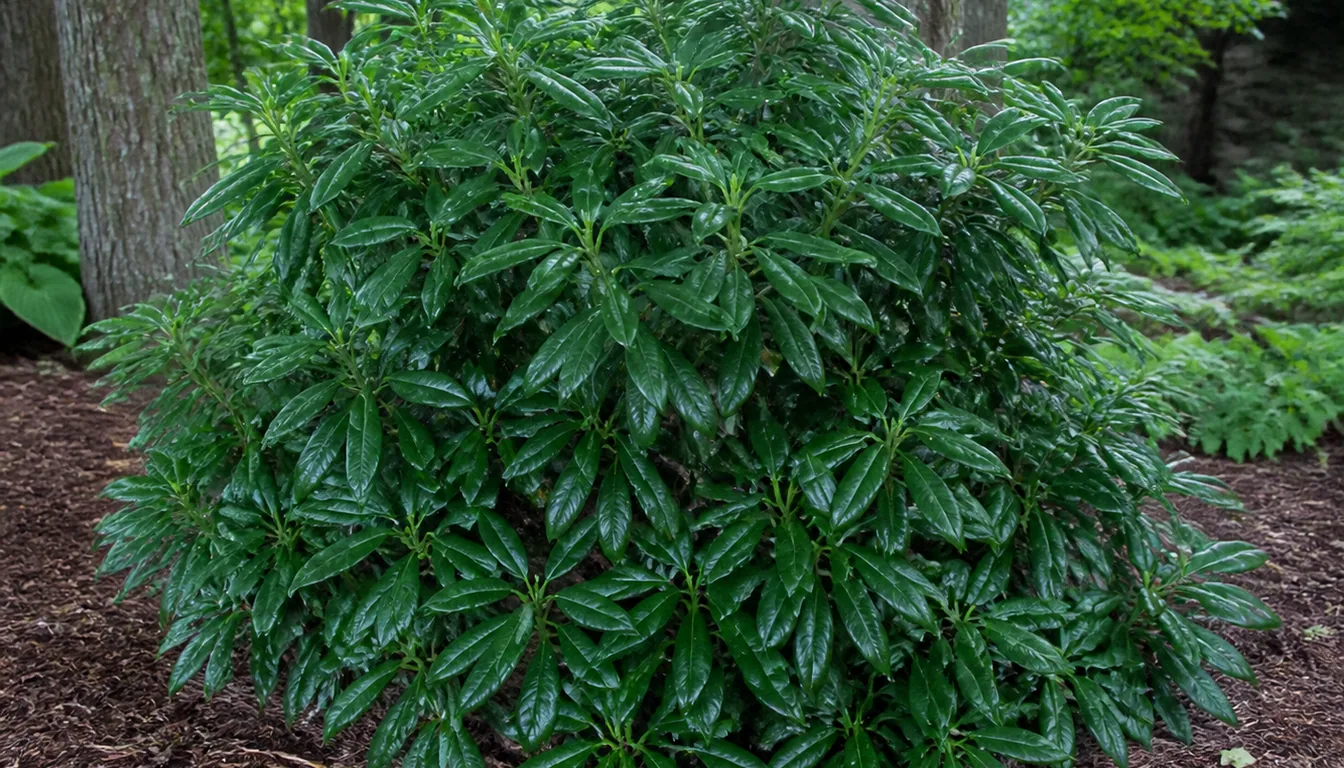
If Azalea, Rhododendron, or Mountain Laurel already grow well in the same bed, Pieris has a fair chance. If those plants yellow, scorch, or sulk there, fix the site before adding another Ericaceae shrub.
The first failure mode is usually a hot or alkaline site.
Leaves yellow, flower buds dry, lace bugs arrive, and the plant never becomes the graceful evergreen accent the tag promised.
Pieris is a member of the heath family, the same family as azalea, rhododendron, and mountain laurel, which is why all four share the same acidic-soil, shallow-root profile. That shared ancestry also means fertilizer formulated for azalea or rhododendron works fine on Pieris.
A site that already frustrates one Ericaceae shrub will frustrate them all.
Testing with an easier companion first is cheaper than losing a full-price Pieris to the same site problem.
In alkaline soil, iron and manganese become unavailable to the roots even when the nutrients are technically present in the ground. That mismatch produces the yellow leaves with green veins gardeners often mistake for a feeding problem.
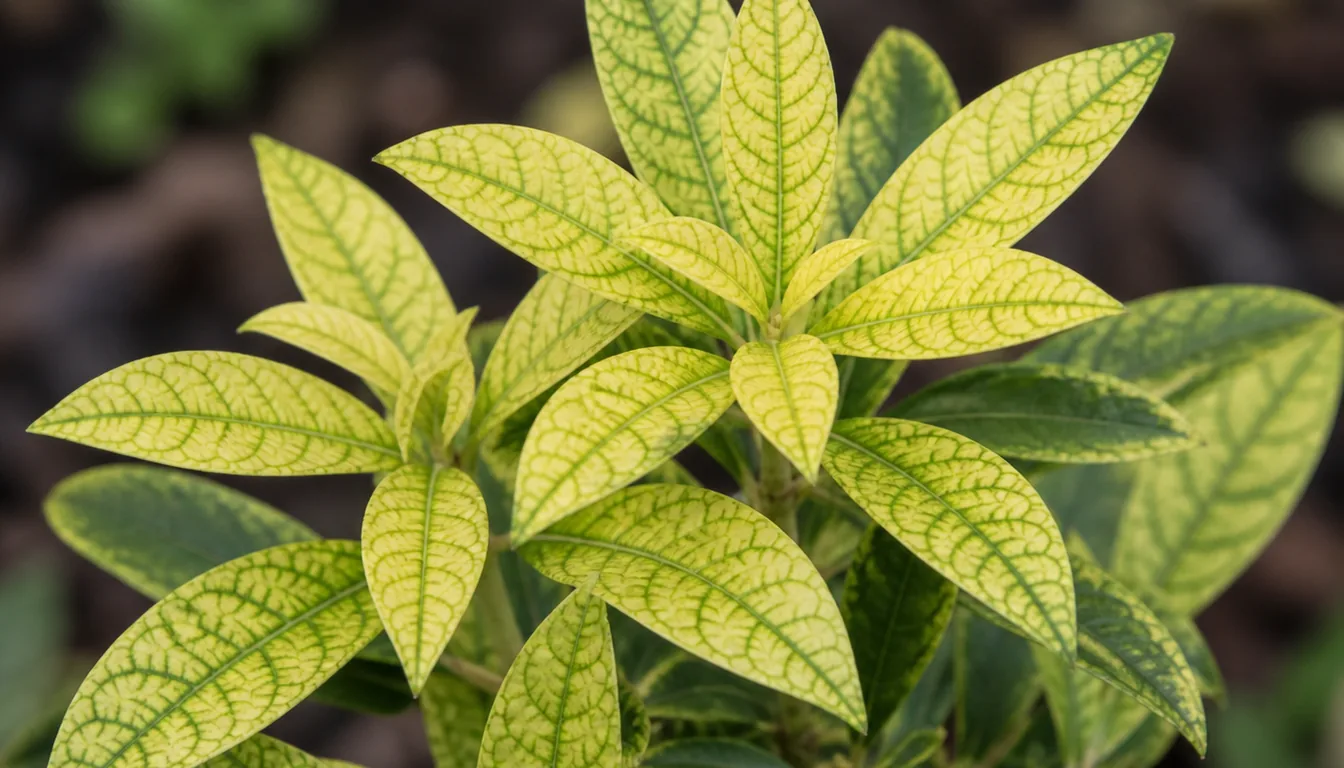
A simple way to check soil pH before buying is a home test kit or a sample sent to a local extension office.
A reading above pH 7 is a clear signal to either amend heavily or choose a different, less particular shrub.
Pieris's toxicity works in its favor against deer, which mostly leave it alone in areas where deer pressure ruins other flowering shrubs. That resistance does not extend to rabbits, which still browse young stems in some regions.
- Botanical identity
- Pieris japonica, in the heath family Ericaceae
- Garden habit
- Slow-growing broadleaf evergreen shrub with layered branches
- Main display
- Red or bronze new leaves followed by hanging white or pink flower chains
- Best light
- Morning sun or bright shade with protection from hot afternoon sun
- Root conditions
- Shallow roots in acidic, organic, freely draining soil
- Safety
- All parts are toxic if eaten
Which Pieris Cultivar Fits Your Shade Bed?
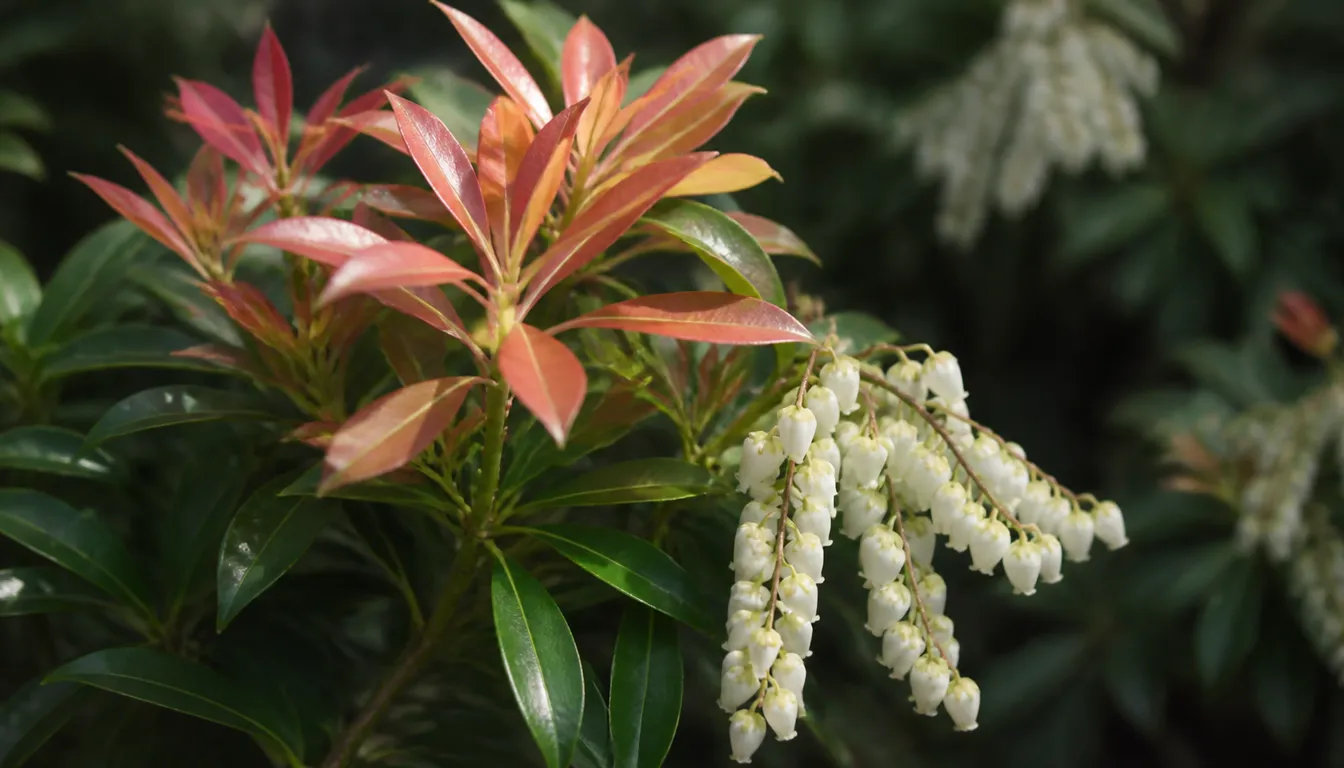
Many people buy Pieris for the white spring flower chains, then enjoy the red or bronze new leaves even more. Choose a cultivar for both moments.
Compact forms fit foundation corners and small shade beds.
Taller forms belong where they can layer with rhododendron shrubs without blocking windows or paths.
Mountain Fire and Valley Valentine are known for the strongest red spring flush among common cultivars. Both hold that color well into early summer before fading to mature green.
Katsura carries deep wine-red new growth into a slightly more compact frame than the species type.
Its tighter habit also means less pruning is needed to keep a neat shape.
Cavatine is a true dwarf, often under three feet, suited to a tight foundation bed where a full-size cultivar would quickly outgrow the space. Its small size also makes it a realistic option for a large container.
Dorothy Wyckoff shows dark burgundy winter buds that add color months before the white flower chains open.
The buds themselves are almost as ornamental as the flowers that follow.
Most garden centers carry only a handful of these cultivars at a time, so ordering from a specialty nursery may be necessary for a specific named selection. Spring is the best season to shop, since that is when nurseries stock the widest selection.
Buying a Pieris already showing red new growth in spring is the simplest way to confirm true-to-name color before planting.
A plant purchased out of season, with no visible new growth, is a bigger gamble on color.
Flower buds form before winter, so a cultivar with showy buds can add interest long before bloom opens. Red new growth is strongest when the plant gets enough gentle light.
- Small bed
- Compact cultivars listed near 3-5 ft tall
- Best foliage show
- Selections known for red or bronze spring flush
- Best flower chain display
- Plants with heavy bud set on outer branch tips
- Avoid
- Large forms forced against walls or under low windows
How Much Sun Does Pieris Need?
Enough gentle light colors the spring flush, while hot afternoon exposure burns evergreen leaves. Morning sun with afternoon shade is the safest target.
Deep shade reduces bloom and turns the plant into a quiet green filler.
Hot reflected sun creates pale stippled leaves and dry buds, especially when wind also pulls moisture from the foliage.
Winter wind is its own separate risk, since evergreen leaves keep losing moisture through the cold months while frozen roots cannot resupply water fast enough. This is the same desiccation risk broadleaf evergreens face generally, made worse by Pieris's naturally shallow roots.
That combination is what causes winter leaf burn, brown crisp edges that show up by late winter even without any summer stress.
A windbreak of taller evergreens or a building wall can prevent most of this damage.
Four to six hours of gentle morning light is a reasonable practical target in most climates. Climates with intense summer sun should stay toward the lower end of that range.
A Pieris in the wrong light rarely dies quickly.
It just declines slowly over several seasons until the yellowing and thin bloom finally get noticed.
Use the same exposure logic as Mountain Laurel in woodland shade, but give Pieris slightly more brightness if red new growth is the goal.
- Use east-facing beds, open tree shade, or high filtered light.
- Avoid hot walls, pavement glare, and dry winter wind.
- Move lace-bug-prone plants out of harsh sun before spraying every year.
How Should You Water Shallow-Rooted Pieris?
Shallow roots make Pieris sensitive to both drought and soggy soil. The root zone should stay evenly moist, not wet.
Plant in acidic, organic soil that drains after rain.
Pine bark fines, leaf mold, and composted leaves help more than a narrow pocket of rich potting mix.
Water new shrubs before the top few inches dry hard. Once established, the plant still needs help during long dry spells because shallow feeder roots sit near the surface.
A soil test before planting confirms whether native pH actually needs correction, since Pieris fails visibly in soil above roughly pH 6.5.
Most standard garden soil tests report pH on a simple scale, so the reading is easy to act on.
Elemental sulfur worked into the topsoil lowers pH gradually over a season or more. Retesting after the first season shows whether a second, lighter application is worth doing.
Planting slightly high, so the root ball sits just above grade, protects the crown in heavy or slow-draining soil where water can pool after rain.
A crown buried even an inch too deep can set the plant back for years.
Raised beds or berms help in naturally heavy clay where true in-ground drainage improvement is impractical. A raised bed also warms and drains faster in spring, giving roots an earlier start.
Drought-stressed leaves curl and droop before they discolor, an earlier warning sign than the yellowing that follows prolonged stress.
Catching the curl-and-droop stage early avoids the more serious yellowing that follows.
A light acid-forming fertilizer in early spring supports new growth, but Pieris rarely needs heavy feeding in soil that already fits its acidic preference. Too much nitrogen pushes soft growth that is more vulnerable to winter injury.
If deep watering habits are already part of your shrub care, apply them slowly at soil level.
Do not keep leaves wet at night.
- Soil pH
- Acidic, roughly 5.0-6.0
- Mulch
- 2-3 inches of pine bark or shredded leaves
- Bad sign
- Yellow new leaves with green veins on alkaline soil
- Worst site
- Heavy wet clay under hot afternoon sun
When Should You Prune Pieris Without Losing Buds?
A well-sized cultivar needs little pruning. Follow shrub pruning timing and make most cuts right after bloom, before the plant commits energy to next year's buds.
Remove dead tips, crossing stems, and awkward shoots.
Avoid shearing the whole plant, because that cuts away the loose branch ends that carry flower clusters and red new growth.
Deadheading spent flower chains is optional. It can tidy a young plant, but older shrubs often look fine if you leave the faded chains alone and focus on root care.
Clean, sharp pruners reduce the chance of spreading disease between cuts.
A quick wipe with rubbing alcohol between plants is enough for most home gardens.
That habit matters more here than on a fast-growing shrub, since Pieris recovers slowly from any wound or stress. A stressed cut can sit unhealed for a full season before new growth covers it.
When a Pieris has swallowed its allotted space, take one oldest stem at ground level and reassess its arching outline before choosing another. Spread renewal across several post-bloom seasons so red flush and hanging flower chains remain on untouched branches.
If you need heavy yearly pruning, the plant is probably too large for the spot. Replace it with a compact cultivar instead of forcing it to behave like formal boxwood.
Can You Grow Pieris From Cuttings?
Cuttings preserve the exact spring color and size of a named Pieris cultivar. Seedlings can vary, so they are not the best choice for a designed foundation bed.
Take semi-ripe cuttings after new growth firms.
Keep the medium airy, the light bright but indirect, and the humidity high without sealing the cutting in stale wet air.
Young plants grow slowly. Protect rooted cuttings through their first winter and do not rush them into a hot exposed bed.
Layering a low branch by pinning it under soil is a slower alternative to cuttings, but it works well since the plant's own low, spreading form makes stems easy to reach the ground.
A layered stem can take a full year or more to root well enough to separate from the parent plant. Check for resistance by tugging gently before cutting the new plant free.
Semi-ripe cuttings taken in mid-to-late summer root more reliably than softwood cuttings taken too early in spring.
Cuttings taken from vigorous, healthy stock root more reliably than cuttings from a stressed or older parent plant.
- Cut non-flowering tips about 3-5 inches long.
- Remove lower leaves and dip the base in rooting hormone.
- Use perlite with peat, coco coir, or fine bark.
- Pot rooted cuttings only after they resist a gentle tug.
Why Are Pieris Leaves Yellow or Speckled?
The common Pieris mistake is treating every pale leaf as a pest problem. Stippling, yellowing, and bud failure point to different causes.
Lace bugs, most often andromeda lace bug, feed under leaves and leave pale speckles above. They are worst on plants in too much sun, so exposure correction matters as much as treatment.
Check leaf undersides for the small dark specks of lace bug excrement, a clear tell separate from ordinary sun stippling.
Yellow new growth usually points to pH or root stress. Brown buds often mean drought, winter wind, or a badly timed freeze rather than a routine insect issue.
Phytophthora root rot is the most serious separate risk, thriving in soggy, poorly drained soil and causing a slow wilt and dieback that looks like drought stress at first.
Once root rot sets in, improving drainage matters more than any fungicide, and a badly affected plant often cannot be saved.
Scale insects occasionally appear on stems as small raised bumps, distinct from the leaf-surface speckling lace bugs cause. A cotton swab dipped in rubbing alcohol removes a light infestation without broader spraying.
Winter injury from cold wind shows as browning concentrated on the exposed, wind-facing side of the plant, unlike a disease that spreads more evenly.
If you also grow azalea shrubs, inspect both plants together because lace bugs and acid-soil stress often show up in the same beds.
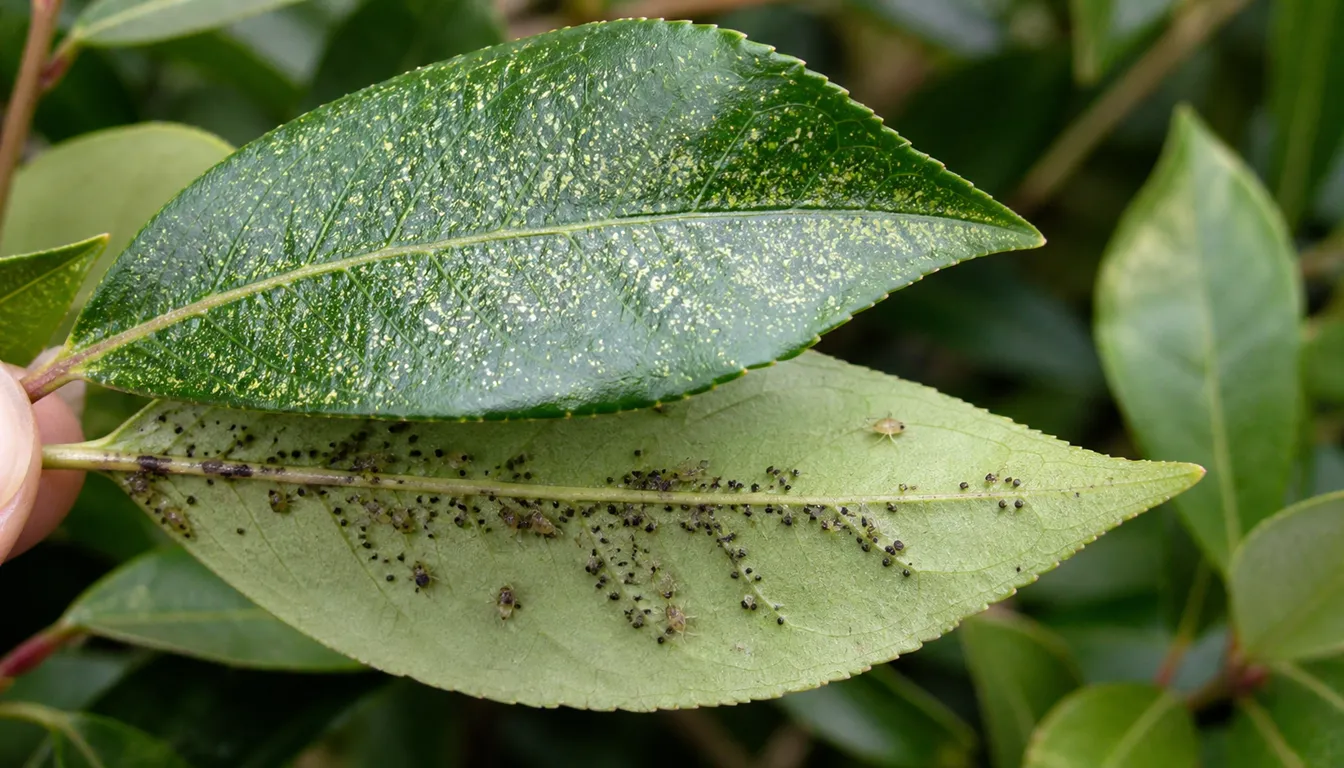
Check leaf undersides for lace bugs and move future plants out of harsh sun.
Check pH, drainage, and root moisture before feeding.
Look at winter wind and late drought before blaming pruning.
Inspect for scale on older wood and leaf veins.
Is Pieris Safe and Useful in a Home Landscape?
Use this shrub as a slow evergreen layer near paths, entries, and woodland edges where spring details can be seen up close. From far away, it is subtle.
All parts can be toxic if eaten, so do not use it where pets or children chew shrubs.
That safety line is similar to Mountain Laurel toxicity, though the design role is softer and smaller.
Pair it with ferns, spring bulbs, and acid-loving shrubs so the red flush and flower chains have contrast. Do not bury it behind fast growers that will steal the shade bed before Pieris settles in.
Early spring flower chains also draw bees at a time when few other nectar sources are active, giving it a real pollinator role beyond the ornamental display.
Give the arching flower stems room to hang without being crowded by a path edge or low fence, since much of the visual appeal depends on seeing the full chain.
Hellebore and hosta are common companion choices, since both thrive in the same cool, part-shade bed Pieris wants.
Its slow growth rate also means a well-placed Pieris rarely needs replacing or relocating once it settles into a bed, unlike faster shrubs that quickly outgrow their spot. That patience pays off in a shrub that can anchor the same spot for decades.
Frequently Asked Questions
Why are my Pieris leaves yellow?
Pieris often yellows from alkaline soil, wet roots, or drought stress. Check pH and drainage before adding fertilizer.
When should I prune Pieris?
Prune Pieris right after spring flowering. Late pruning can remove buds that would bloom the next year.
Does Pieris need shade?
Pieris needs bright shade or morning sun. Deep shade cuts bloom, while hot afternoon sun increases scorch and lace bug pressure.
Is Pieris toxic to pets?
Yes. Pieris can be toxic if eaten, so keep it away from pets that chew leaves or stems.
Sources & References
- Pieris (Japanese andromeda) for the Home Landscape, Clemson Cooperative Extension
- Acid-Loving Shrubs in the Landscape, University of Massachusetts Extension
- North Carolina State Extension, Pieris japonica Plant Profile
- Pieris japonica, Missouri Botanical Garden Plant Finder
- Missouri Botanical Garden, Pieris japonica
- Royal Horticultural Society, Pieris Growing Guide
- University of Maryland Extension, Lace Bugs on Ornamentals
- Toxic and Non-toxic Plants: Pieris | ASPCA
- Toxic and Non-toxic Plants: Lily-of-the-Valley Bush | ASPCA
Related Plants
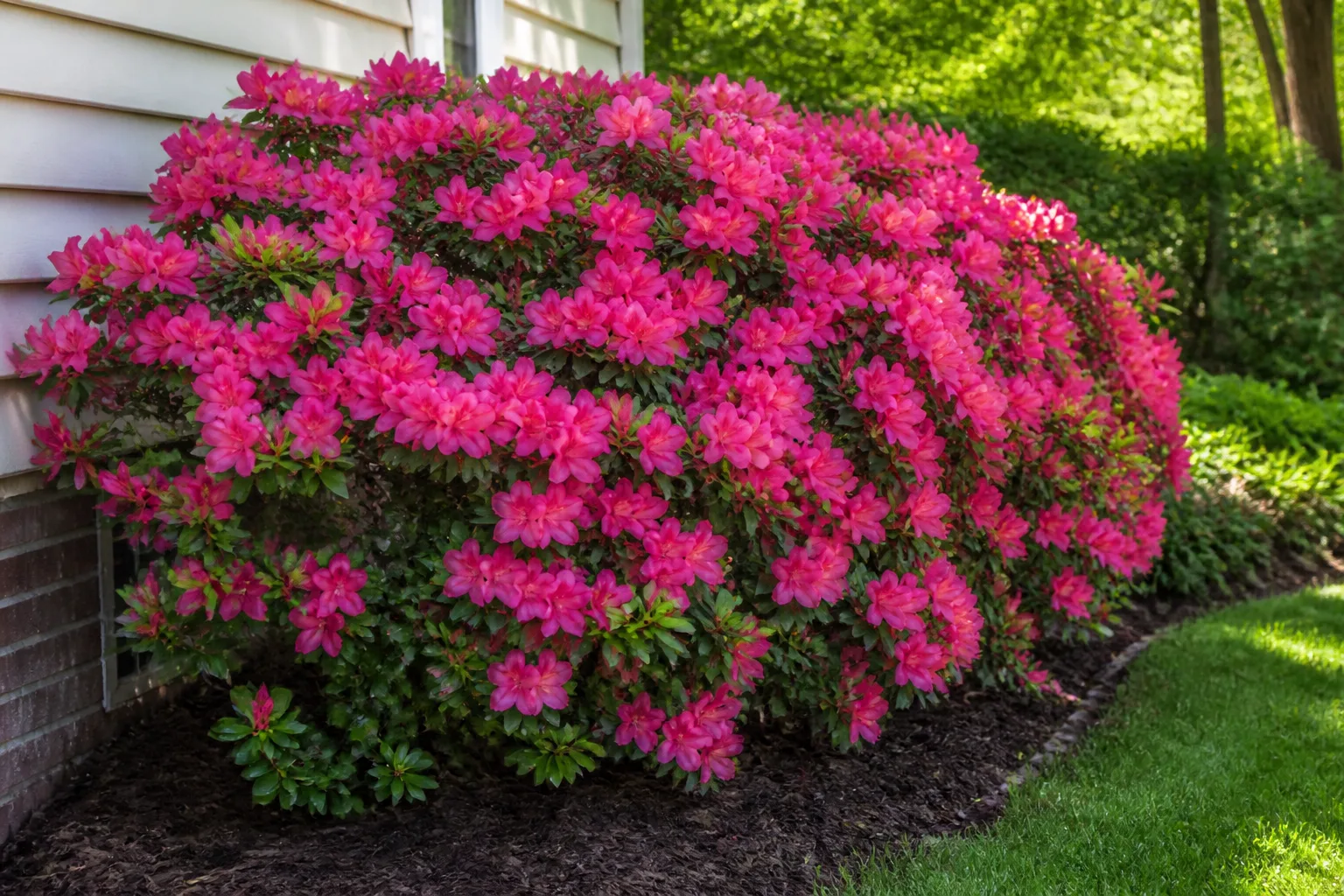
Azalea
A flowering shrub with similar acidic-soil needs and spring bloom time.
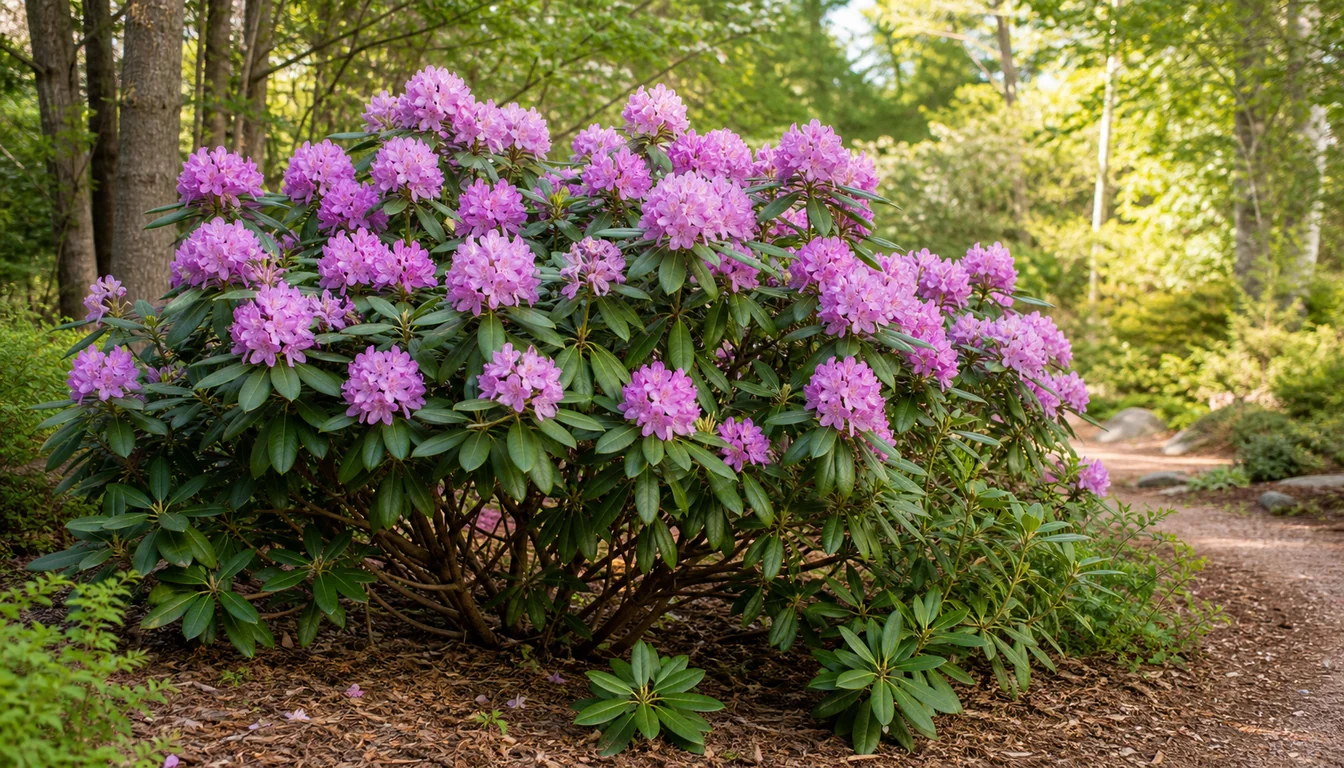
Rhododendron
Evergreen shrub that pairs well with pieris in woodland beds.
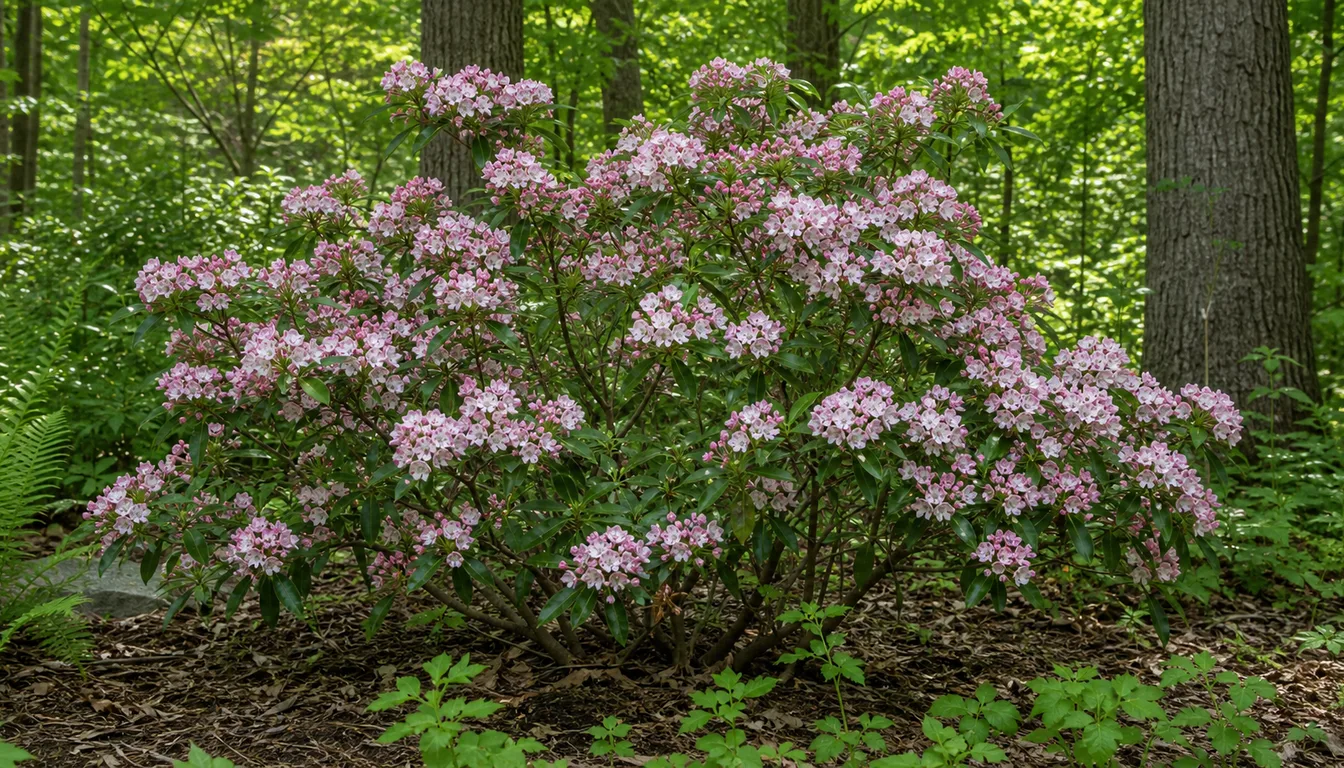
Mountain Laurel
Another Ericaceae shrub that likes similar soil and light.
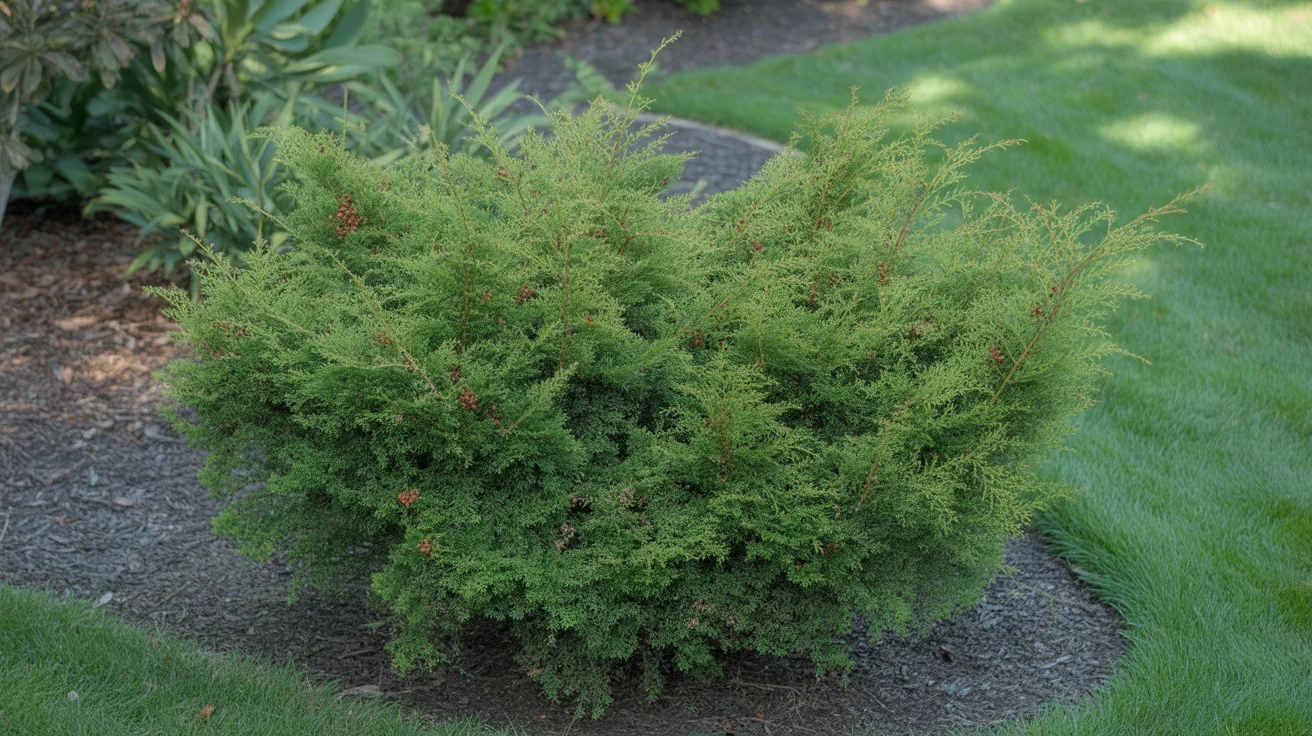
Arborvitae
Arborvitae can form a dense living screen where its mature width, exposure, and water needs fit the site.
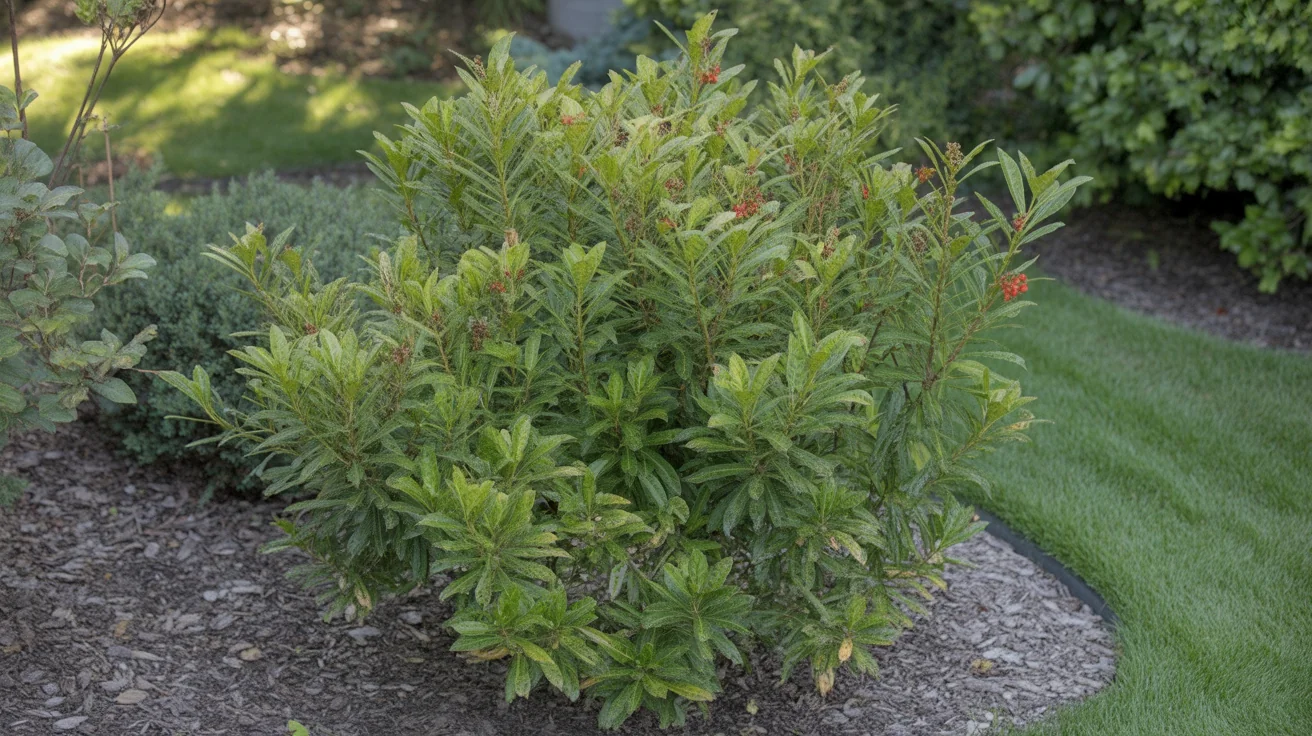
Aucuba
Aucuba is the shrub for bright shade with dry root competition. It keeps evergreen structure near north walls, porches…
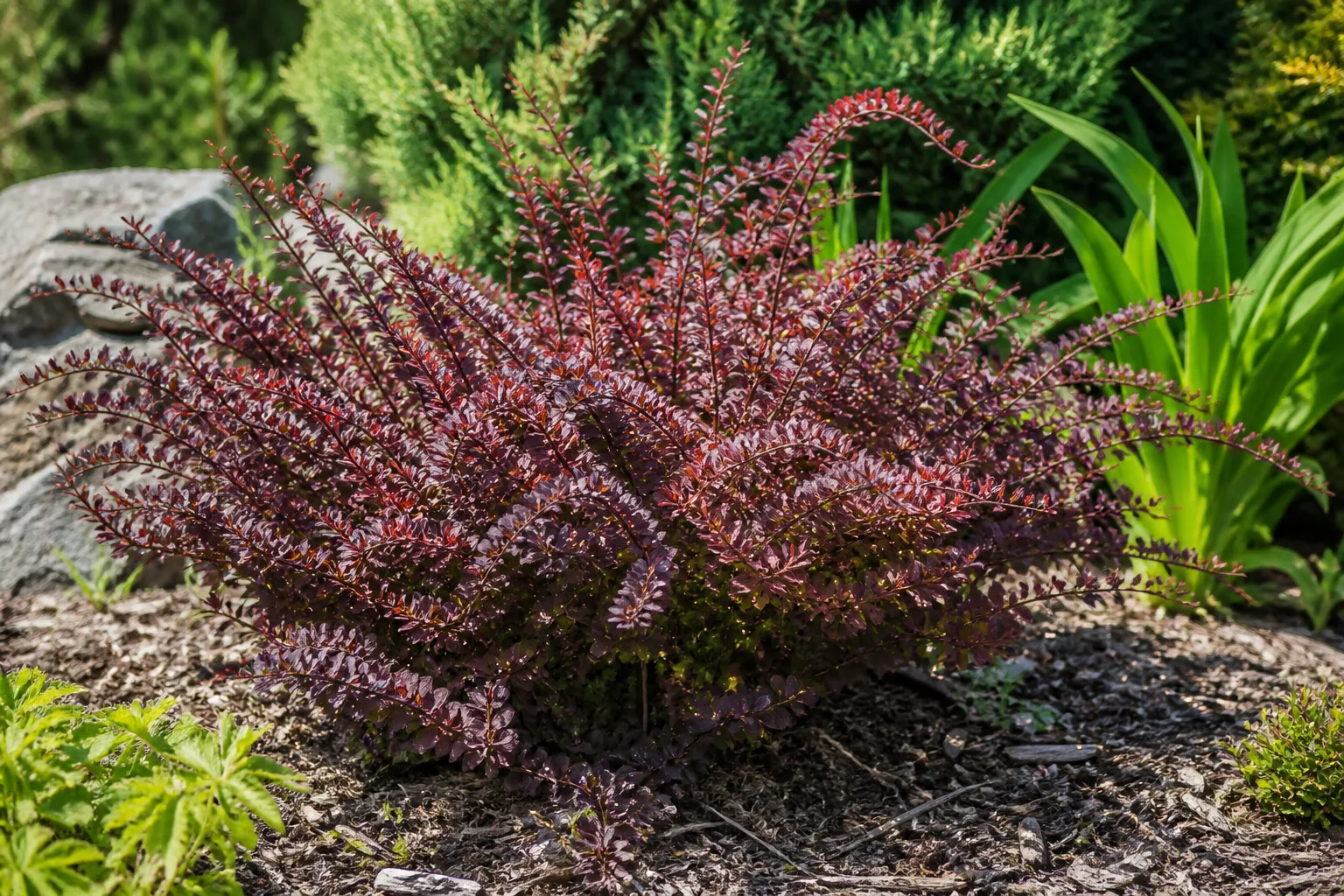
Barberry
Japanese barberry (Berberis thunbergii) is a thorny, deer-resistant shrub whose berries birds carry into woods, so…