
What's Privet? How to Weigh Fast Growth Against Invasion
Ligustrum spp. Oleaceae
Privet can make a fast dense hedge, but it should not be the default privacy answer. Check local invasive rules first, then decide whether you can keep up with clipping, seedlings, berries, and disposal.
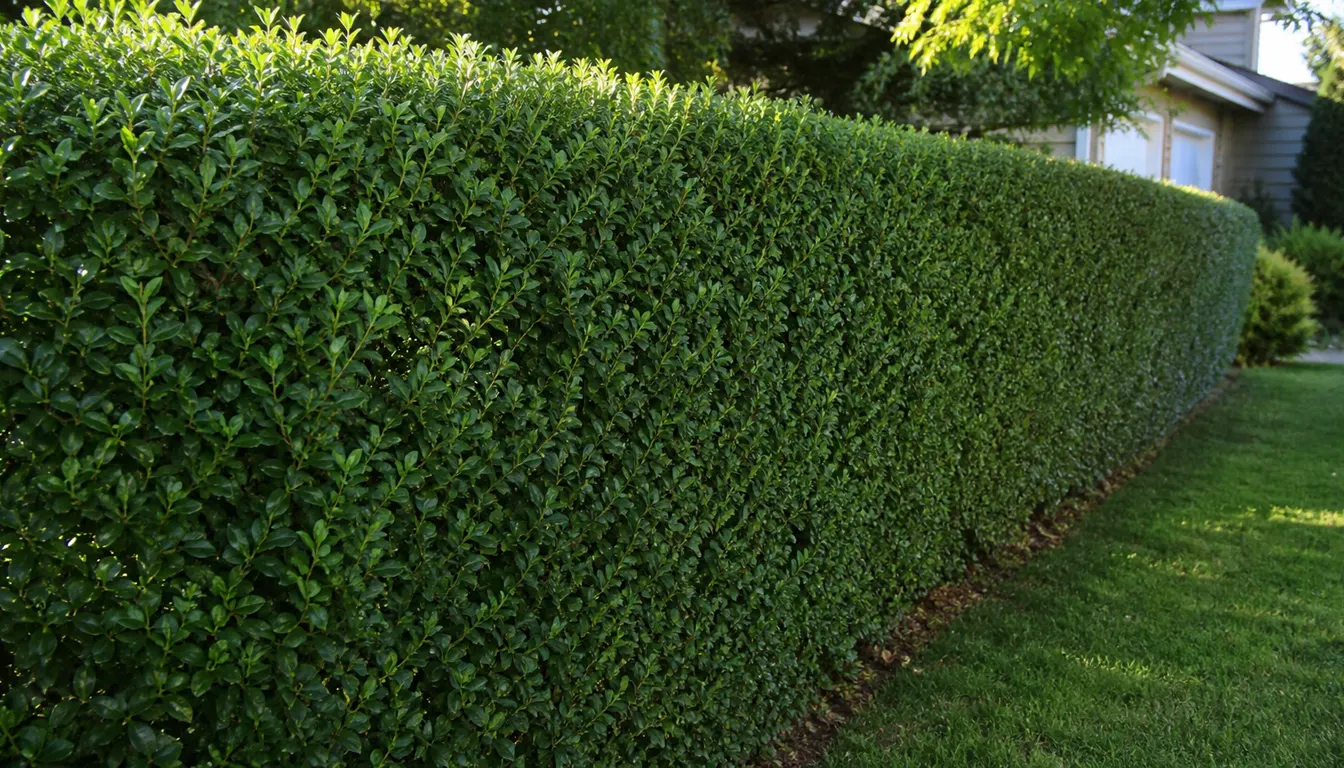
Care snapshot
What Is Privet and Is It Legal to Plant Near You?
Privet is the common name for several Ligustrum shrubs grown as fast, dense hedges, although their flowers, berries, and seedlings can create invasive problems in many regions.
The first answer is not how far apart to plant Privet. First check local invasive guidance before planting so the hedge does not create a legal or ecological problem.
Some Privet species seed into woods and roadsides, especially where birds spread berries. A hedge that looks tidy in your yard can still create seedlings beyond the fence.
Identify the species on the nursery label before you buy because a restriction may name one Privet while local guidance discourages the whole genus, and save the label for later rules and removal advice.
Check beyond your property line each spring and fall, especially under fences, beneath trees where birds perch, and along drainage routes. Pull small seedlings while the soil is moist because waiting turns a quick hand job into woody removal work.
With privet the main question is not just mature width, as it is with Arborvitae privacy screens. With Privet, decide whether the hedge is legal, containable, and worth the clipping load.
If local guidance warns against Privet, choose a different hedge because managing seedlings forever is not a sound plan and the berries can keep spreading beyond the fence.
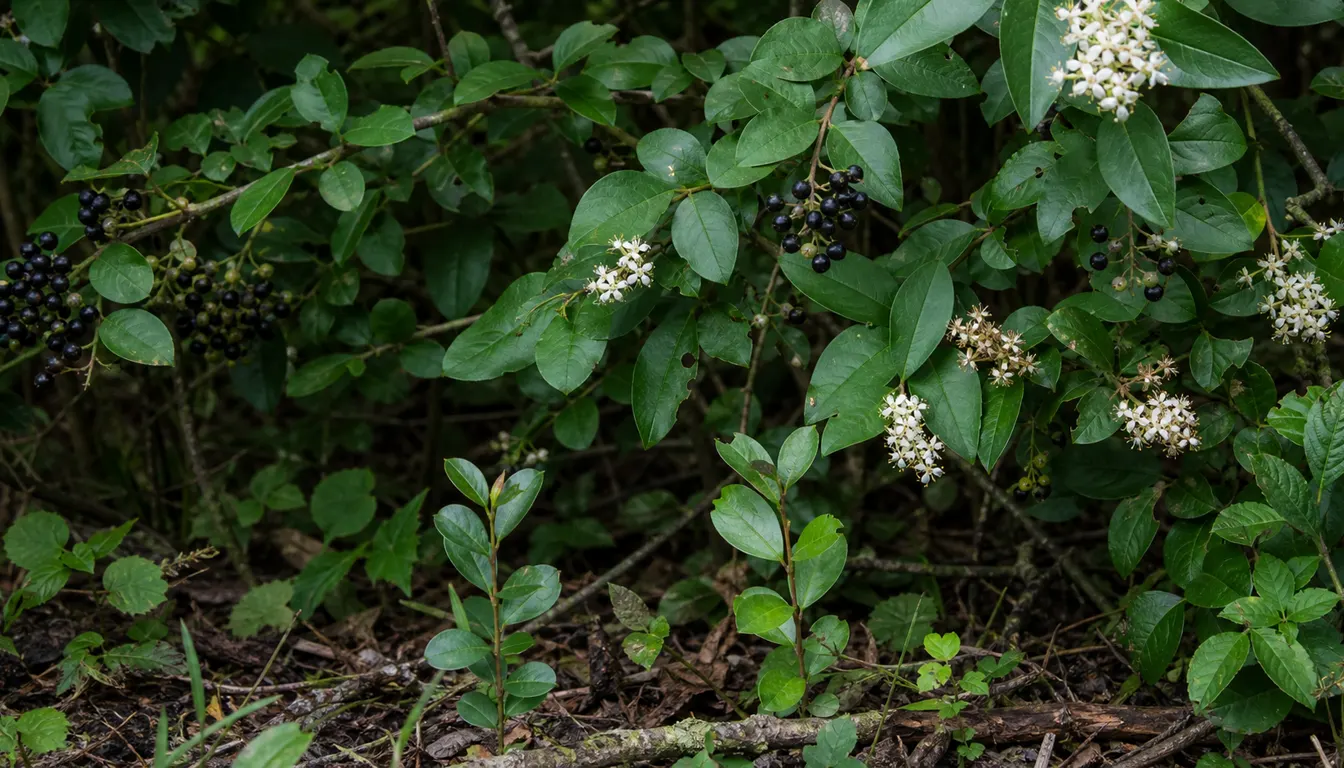
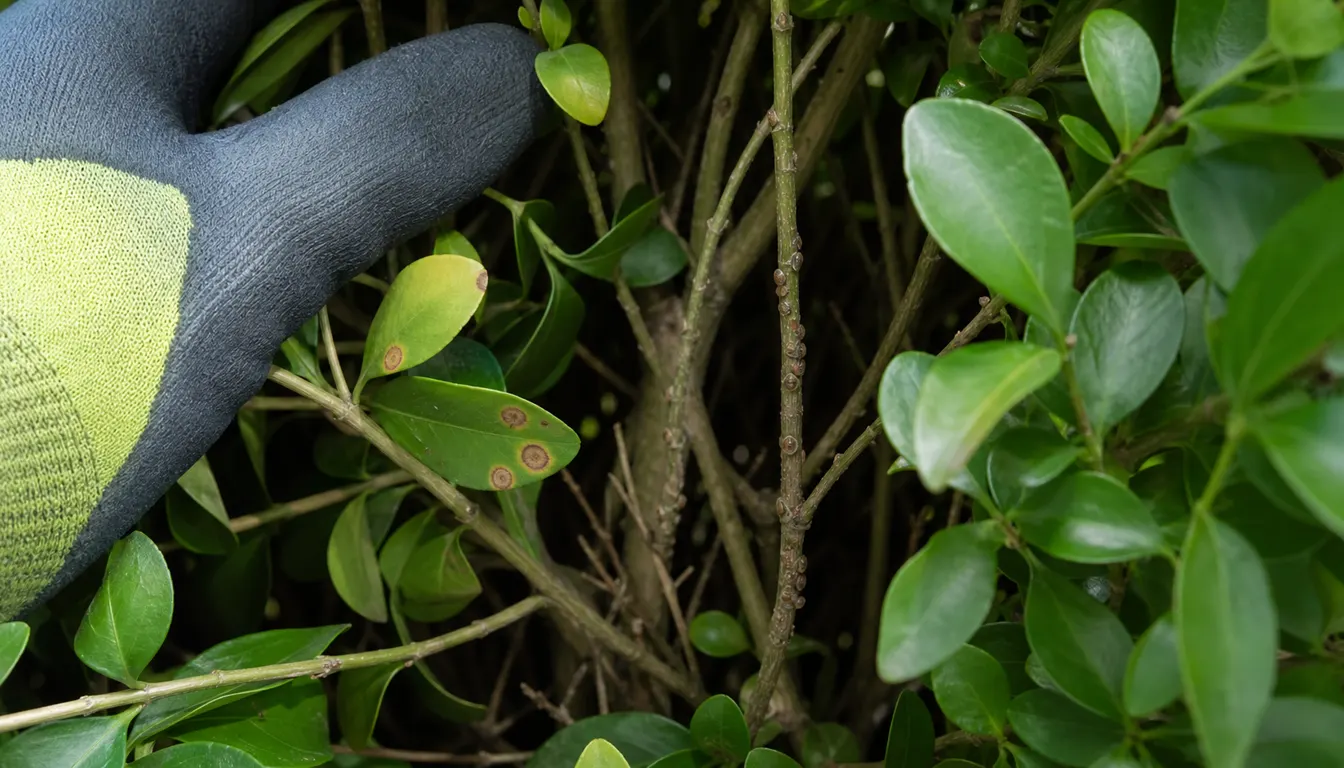
Use the visible fruit and seedlings below as a boundary check, not as a reason to collect seed.
- Botanical identity
- Ligustrum species and hybrids, in the olive family Oleaceae
- Garden habit
- Fast-growing deciduous, semi-evergreen, or evergreen hedge shrub
- Main display
- Opposite oval leaves, white flower clusters, and dark berries
- Maintenance load
- Frequent clipping is needed to hold a formal hedge and control flowering
- Wildlife consequence
- Birds can move seeds away from the planted hedge
- First decision
- Check regional invasive listings before buying or propagating privet
Should You Use Privet for a Fast Privacy Hedge?
Privet grows fast, responds to clipping, and fills gaps quickly.
That is why it became a classic hedge plant.
The tradeoff is constant maintenance. A fast hedge becomes a messy hedge if you do not cut it on schedule, and flowering shoots can turn into berries if you let them mature.
Decide what you want the hedge to do before judging that speed as an advantage because a loose screen can tolerate flowering shoots while a formal boundary needs straight lines, controlled height, and access on both sides for repeated clipping.
Measure the annual work in bags of clippings as well as minutes with shears. A long hedge beside a narrow path may leave nowhere to stand, collect debris, or reach the far face without entering a neighbor's yard.
Compared with boxwood, Privet gives speed and height but less refinement. Compared with Yew, it needs more seed vigilance in many regions.
- Best use
- Fast, clipped screen where local rules allow it
- Main cost
- Frequent pruning and seedling control
- Avoid near
- Woodlots, streams, preserves, and unmanaged edges
- Better choice when
- You need low maintenance or native habitat value
How Do You Space and Shape a Privet Hedge?
A good Privet hedge is wider at the base than the top.
That shape lets light reach lower leaves and prevents the bare-leg look common on old hedges.
Plant spacing depends on species and target height, but tight spacing is not a shortcut to a healthy hedge. Crowded plants compete, thin at the base, and need harder pruning later.
Start shaping while plants are young because waiting until the hedge reaches full height leaves long bare stems inside that never leaf out cleanly and forces harder cuts later.
Mark the finished hedge line before digging, then leave enough room behind it for the plant's mature depth and your body. Planting directly against a wall or fence saves space on day one but removes the access needed to keep the back healthy.
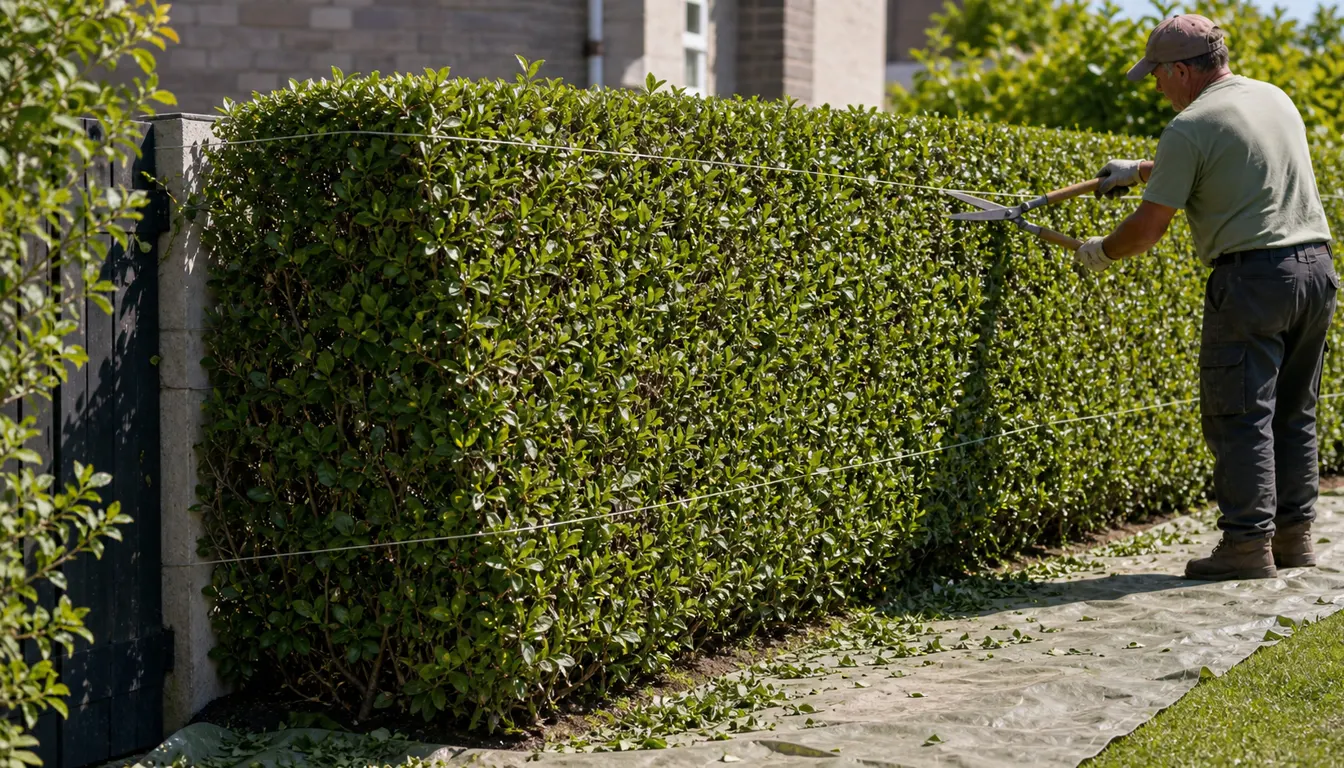
Use guide strings for the top and both faces, but keep the lower string farther from the center line than the upper one. Check the end view several times while trimming because a hedge can look level from the front while quietly narrowing at its base.
If the goal is a tall, narrow evergreen wall with less clipping, compare holly screening or other regional alternatives before choosing Privet.
Step to the end of the row to judge the base and top widths before making another pass.
- Keep the top slightly narrower than the base.
- Clip lightly several times instead of hacking once.
- Remove flowering stems before berries ripen where spread is a concern.
- Leave access space for both sides of the hedge.
How Should You Water a New Privet Row?
A new Privet hedge needs water even though established plants become tough. Fast top growth without roots creates a hedge that browns during its first dry summer.
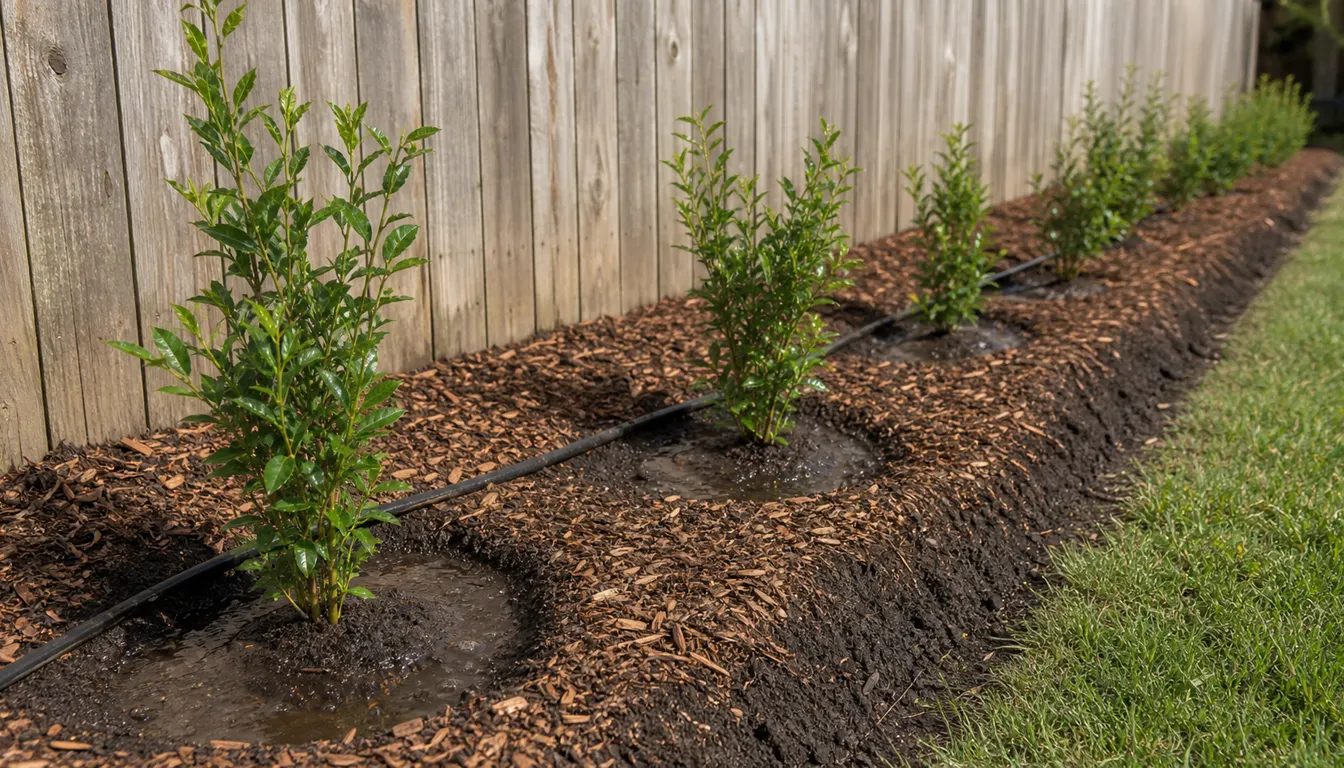
Water deeply through the first growing season and mulch the strip. Do not rely on lawn sprinklers that wet leaves but leave the root zone shallow.
Average soil is usually enough if you fix compaction and drainage before planting, giving roots room to knit together along the line instead of stalling inside wet or hard pockets.
The same establishment logic from deep watering applies here. Soak the hedge strip, then let the surface breathe.
Check moisture beside the original root ball rather than testing only the loose backfill. Water can move around a dry nursery root mass, so a wet planting hole does not prove that the roots themselves received a thorough soak.
Walk the whole row after watering and compare each basin, emitter, or hose section. One blocked outlet can create a single brown gap months later even though every other shrub on the same line grows quickly.
How Often Does Privet Need Pruning?
Privet is not a plant-and-ignore screen because a formal hedge may need several light cuts during active growth to stay dense without producing oversized piles of brush.
Cutting once a year usually creates thick outer growth, bare interior stems, and heavy piles of brush. Smaller, repeated trims keep the hedge denser and easier to clean.
If berries are part of the local spread risk, prune after flowering starts but before fruit ripens. That timing reduces seed without waiting until birds move berries.
Begin each pass by removing obvious outward whips, then use the guide lines to finish the surface. Cutting the whole face deeply in one sweep makes it easy to expose bare interior stems that need a long time to regain leaves.
Spread a tarp before clipping when berries or flower clusters are present, then remove the debris instead of blowing it under shrubs where dropped fruit can undo timely seed control.
- Young hedge
- Tip often to force low branching
- Formal hedge
- Light clips during active growth
- Seed control
- Remove flowers or green fruit before berries mature
- Old hedge
- Renovate in stages, not one brutal flat cut
What Problems Hide Inside a Dense Privet Hedge?
A clipped Privet hedge can look green outside while the inside is shaded, dry, and full of dead twigs.
Open the canopy before assuming the plant is healthy.
Scale, aphids, mites, and leaf spots show up more on stressed hedges. Drought, heavy shade, poor airflow, and overfeeding all make pest pressure worse.
Root problems often show as whole sections thinning at once. If one stretch declines, check soil, runoff, and irrigation coverage before treating the entire hedge.
Part the branches and compare affected stems with healthy ones because fixed bumps suggest scale, fine stippling points to sap-feeding pests, and repeated circular spots call for a closer leaf check.
Map where symptoms start instead of treating every green surface. Damage limited to the sunny face, a low wet corner, or the section beside a downspout usually points to a local condition that blanket spraying will not correct.
Use natural pest habits as a support layer. Inspect early, avoid excess nitrogen, and keep airflow instead of spraying by default.
Open several interior points because one clean branch does not represent the condition of the entire hedge.
Reshape with a wider base and more light.
Check aphids or scale inside the hedge.
Check water coverage and root conditions along the line.
Remove berries earlier or replace the hedge.
Which Shrubs Can Replace Invasive Privet?
The best Privet decision is often choosing a different hedge. Fast growth is not helpful if it creates legal, ecological, or maintenance work you do not want.
For evergreen structure, compare Boxwood, Yew, Holly, or regionally recommended natives. For faster privacy, evergreen shrub groupings can give options without relying on one risky species.
Compare candidates at the height you actually need rather than choosing the fastest label at the nursery because a slower shrub that stops near the fence height may provide privacy with fewer cuts and far less green waste each year.
Evaluate the full planting strip, including winter appearance, shade on nearby beds, access to utilities, and room for roots. Mixing several compatible shrubs can soften a boundary and reduce the chance that one pest or weather event opens the entire screen.
Before ordering a replacement, write down the maximum height, available width, winter screening need, and number of trims you will realistically complete. Use those limits to reject plants that solve privacy quickly but exceed the space or maintenance time after several growing seasons.
Because Privet foliage and berries are unsafe for pets or children to eat, keep clippings away from play areas and never leave berrying brush where animals can chew it.
Frequently Asked Questions
Is Privet invasive?
Some Privet species are invasive or discouraged in many regions. Check local guidance before planting, especially near woods, streams, or unmanaged land.
How often does a Privet hedge need trimming?
A formal Privet hedge may need several light trims during active growth. One hard annual cut usually creates a thin, woody hedge.
Can I keep Privet from making berries?
You can reduce berries by pruning flowers or young fruit before they ripen. If seed spread is a serious local issue, replacing the hedge is the better answer.
What is a lower-maintenance alternative to Privet?
Depending on your climate, Boxwood, Yew, Holly, native viburnums, or mixed evergreen shrubs may need less clipping and create fewer seed-spread issues.
Sources & References
- Privet Shrubs for Hedges, University of Illinois Extension
- USDA Forest Service: Invasive Plant Fact Sheet, Privet
- University of Georgia Extension: Landscape Shrub Disease and Insect Guide
- Ligustrum spp., Cooperative Extension, North Carolina State University
- Privet, Missouri Botanical Garden Plant Finder
- Missouri Botanical Garden: Ligustrum vulgare
- Cornell Cooperative Extension: Woody Shrub Propagation by Cuttings
- Toxic and Non-toxic Plants: Common Privet | ASPCA
- Toxic and Non-toxic Plants: Privet | ASPCA
- Ligustrum japonicum (Japanese Privet, Privet, Wax-leaf Privet) | North Carolina Extension Gardener Plant Toolbox
Related Plants
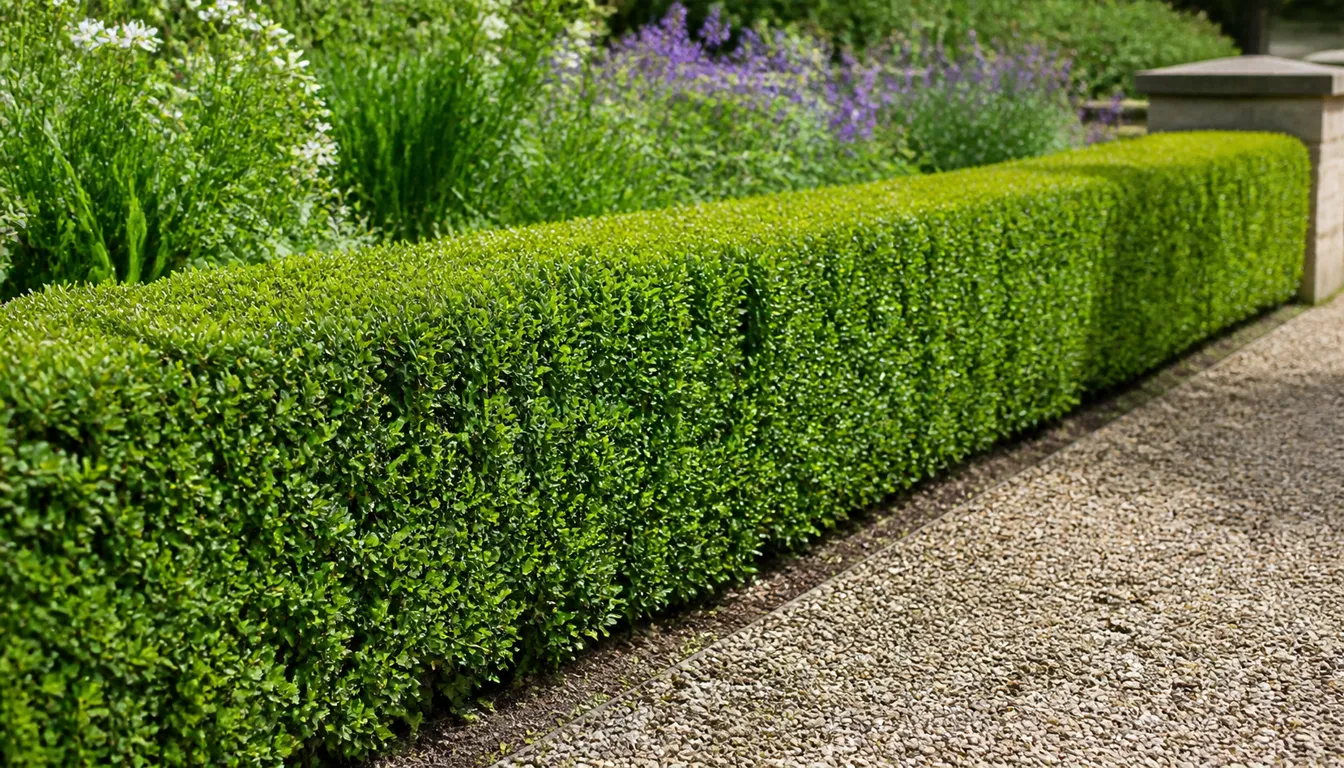
Boxwood
Slower-growing evergreen hedge shrub with smaller leaves and a more formal look than privet.
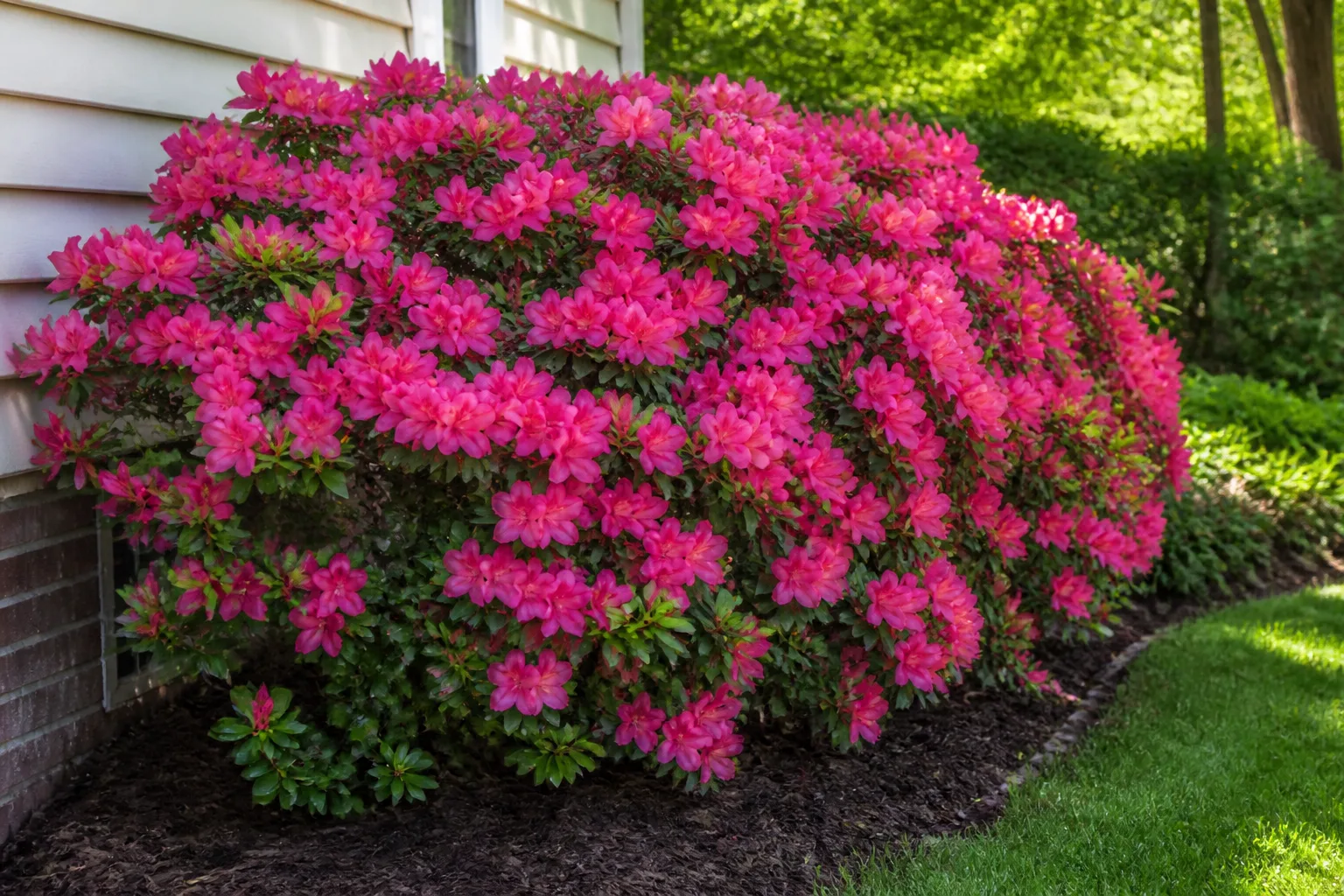
Azalea
Flowering shrub that brings spring color near evergreen privet screens.
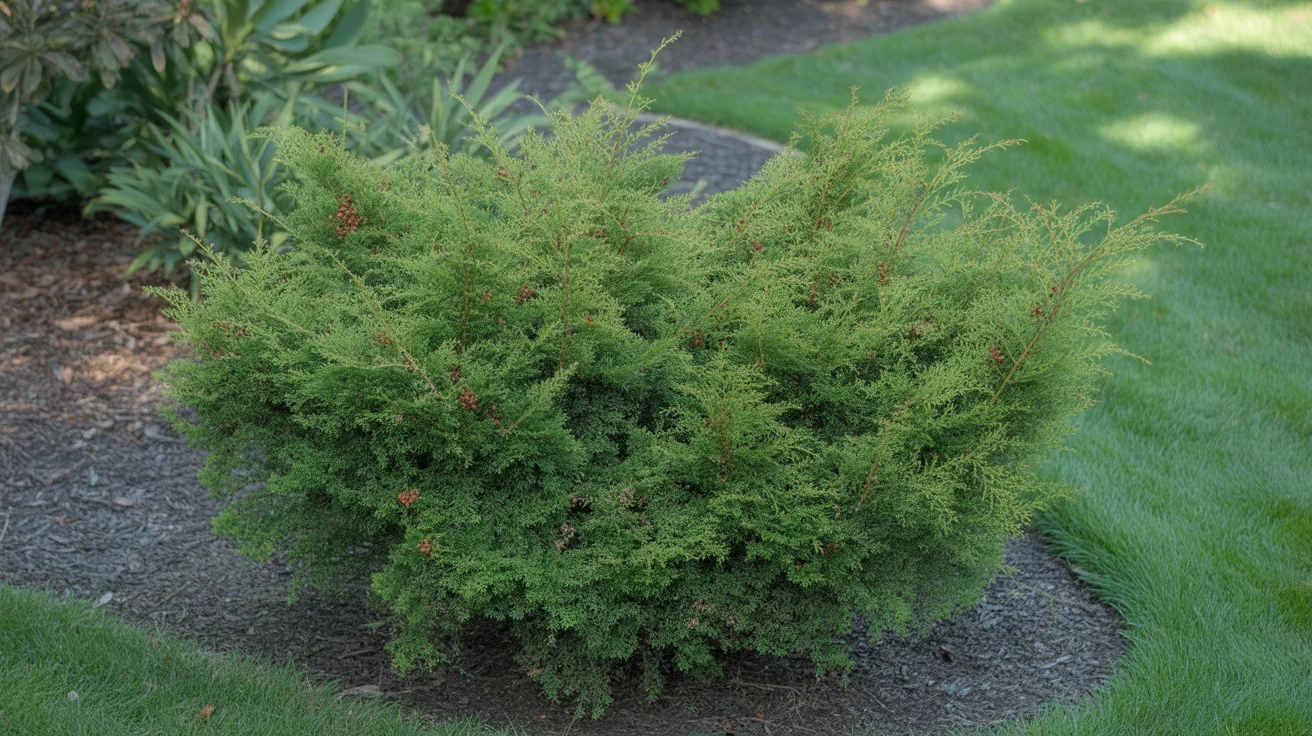
Arborvitae
Upright evergreen tree often compared to privet for tall privacy screens.
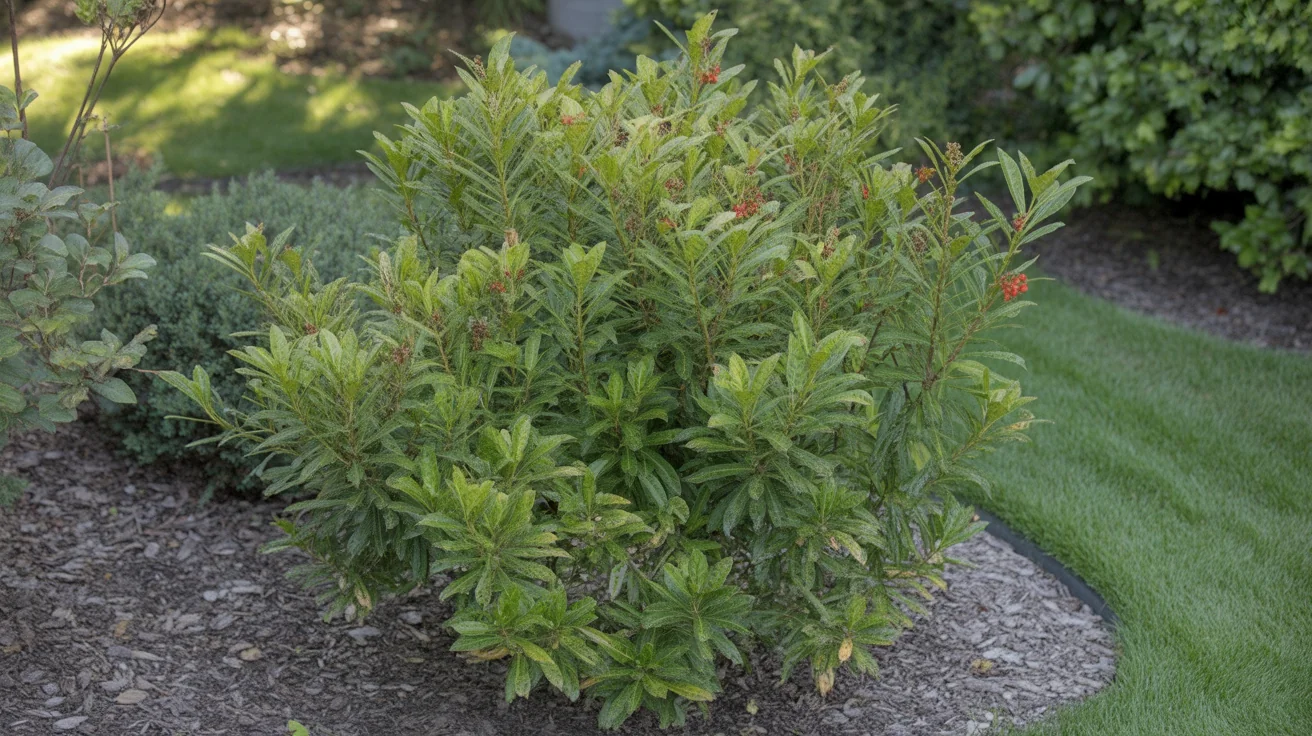
Aucuba
Aucuba is the shrub for bright shade with dry root competition. It keeps evergreen structure near north walls, porches…
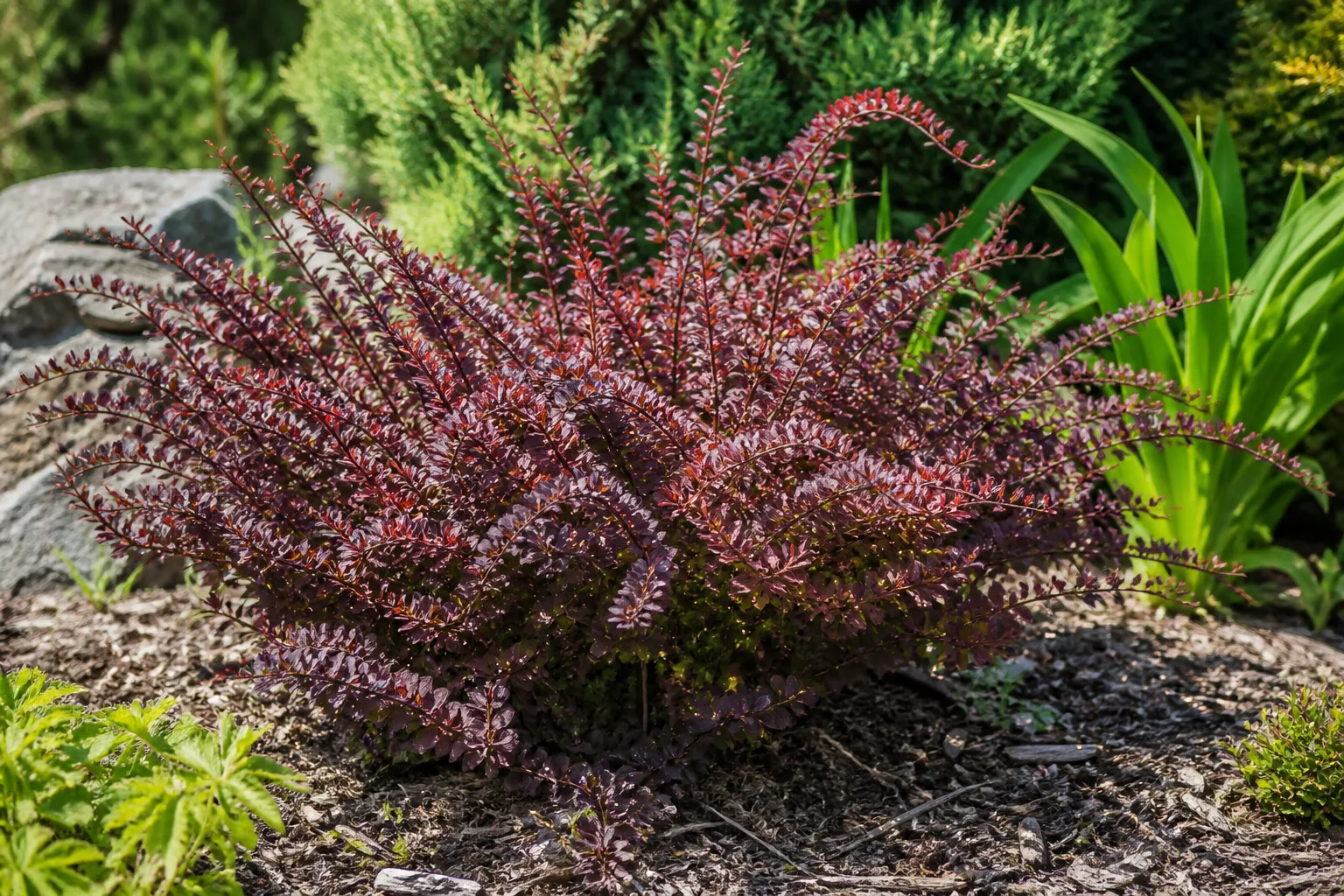
Barberry
Japanese barberry (Berberis thunbergii) is a thorny, deer-resistant shrub whose berries birds carry into woods, so…
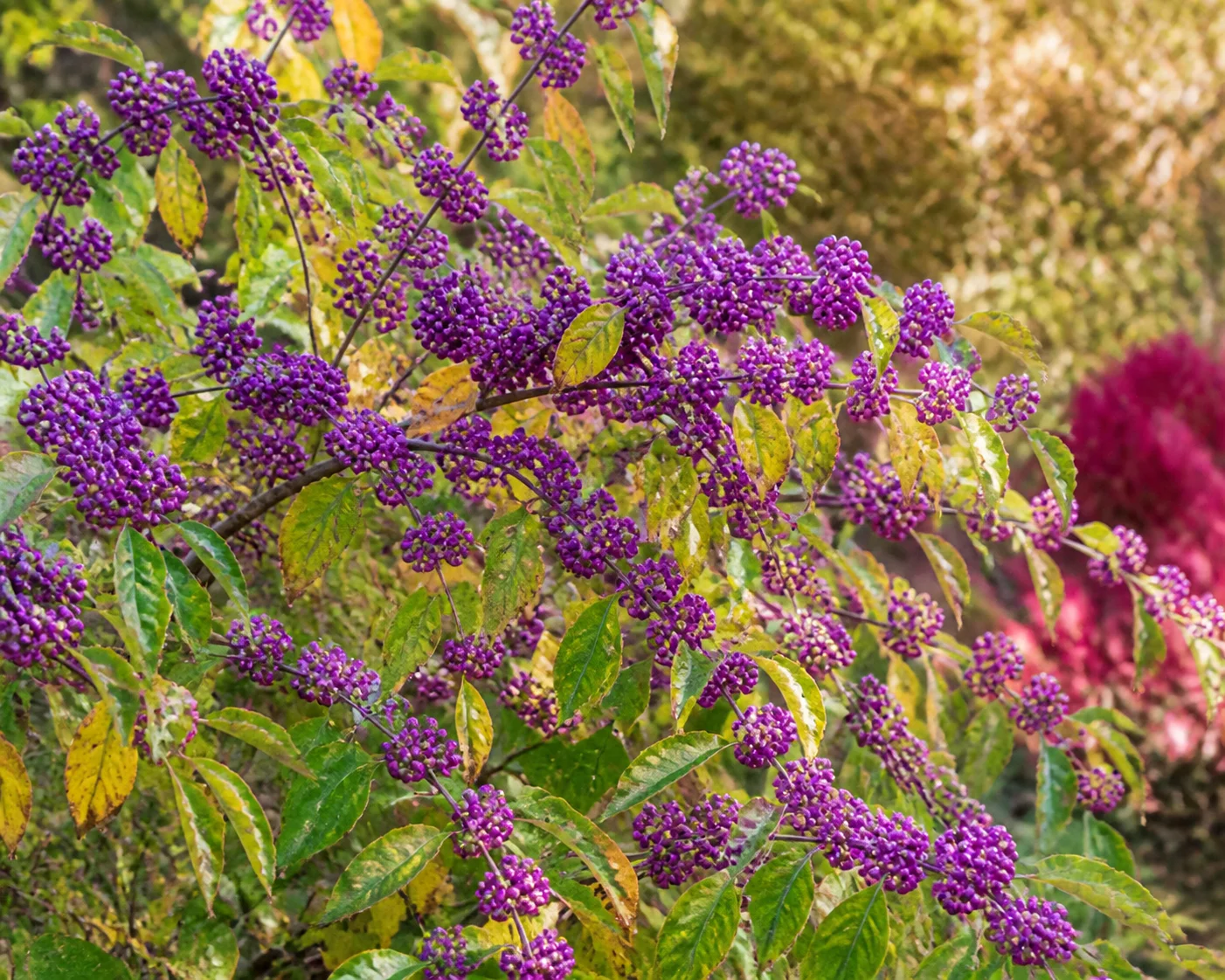
Beautyberry
Beautyberry is a fall-berry shrub, not a formal hedge. Grow Beautyberry where loose arching stems can carry purple…