
How to Deadhead Daisies for More Blooms
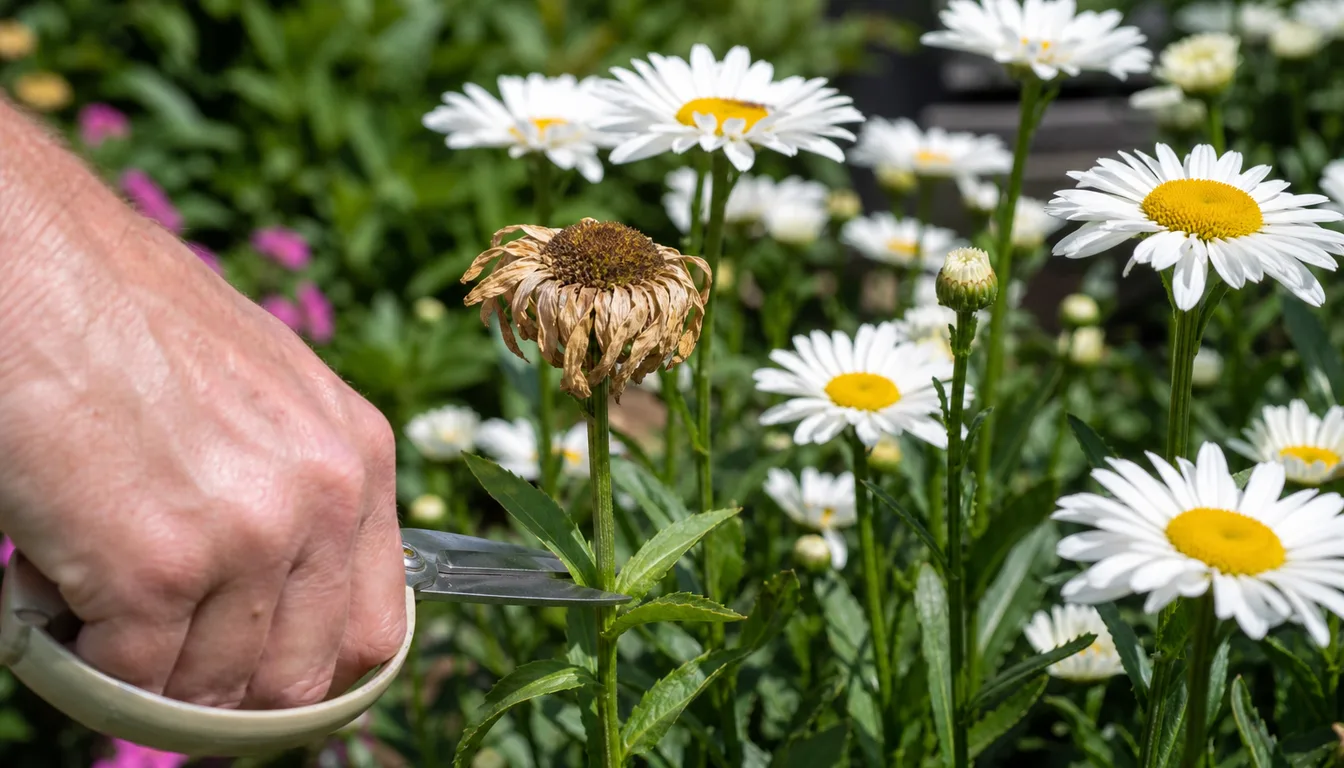
To deadhead a daisy, wait until the petals have faded or collapsed, then follow the flower stem down to a healthy leaf, side shoot, or the plant's crown. Make the cut just above that living growth instead of snapping off only the flower head.
That answer changes slightly with the plant. A branching Shasta daisy keeps its buds on side shoots, a gerbera carries each bloom on a separate stalk, and an African daisy grows as a leafy mound.
Identifying the stem shape first prevents an ugly bare stalk and protects the next bud.
At a glance
Is That Flower Spent or Still Opening?
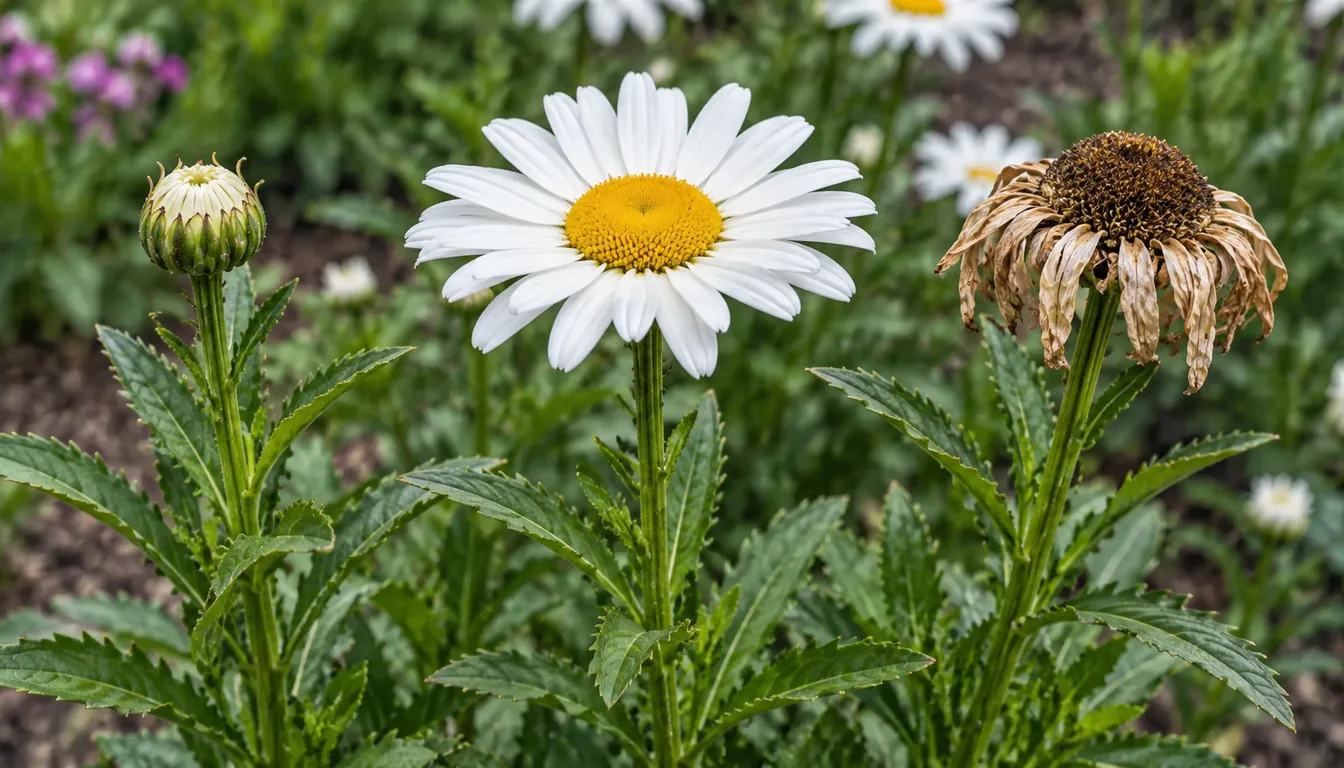
A closing daisy is not always finished. African daisies often fold their petals in dull weather and reopen in sun, while a new Shasta bud may show pale petals inside green bracts before it expands.
A truly spent flower has a dull or browning center, fading petals that hang or drop, and no fresh pollen or active insects working the disk.
The stem below it can still be green and useful, so judge the flower rather than waiting for the whole stalk to brown.
Run a finger lightly over the center if the visual cue is unclear. A developing bud feels compact and firm, while an old disk feels dry and sheds loose material.
- Ready to remove
- Petals are limp, discolored, dropping, or gone
- Leave it alone
- The center is fresh and insects are still visiting
- Check again in sun
- African daisy petals may close with low light
- Keep for seed
- The head is dry, firm, and intentionally marked to remain
Where Should You Cut a Branching Daisy Stem?
On Shasta, oxeye, painted, and many other branching daisies, do not pinch off the brown head and leave its naked stem. Follow that stem down until you reach the first healthy leaf junction or a side branch carrying a bud, then cut a little above it.
The remaining leaves keep feeding the plant, and the side shoot becomes the natural end of the stem. The cut disappears into the foliage instead of standing above it like a green stick.
If one flower has faded on a fork that still holds two buds, remove only the spent branch. If every branch at that level is finished, trace the main stem lower to the next leafy junction.
A precise quarter-inch measurement is unnecessary.
Leave a small margin above the junction so the blade does not bruise the bud, but avoid a long stub that will die back.
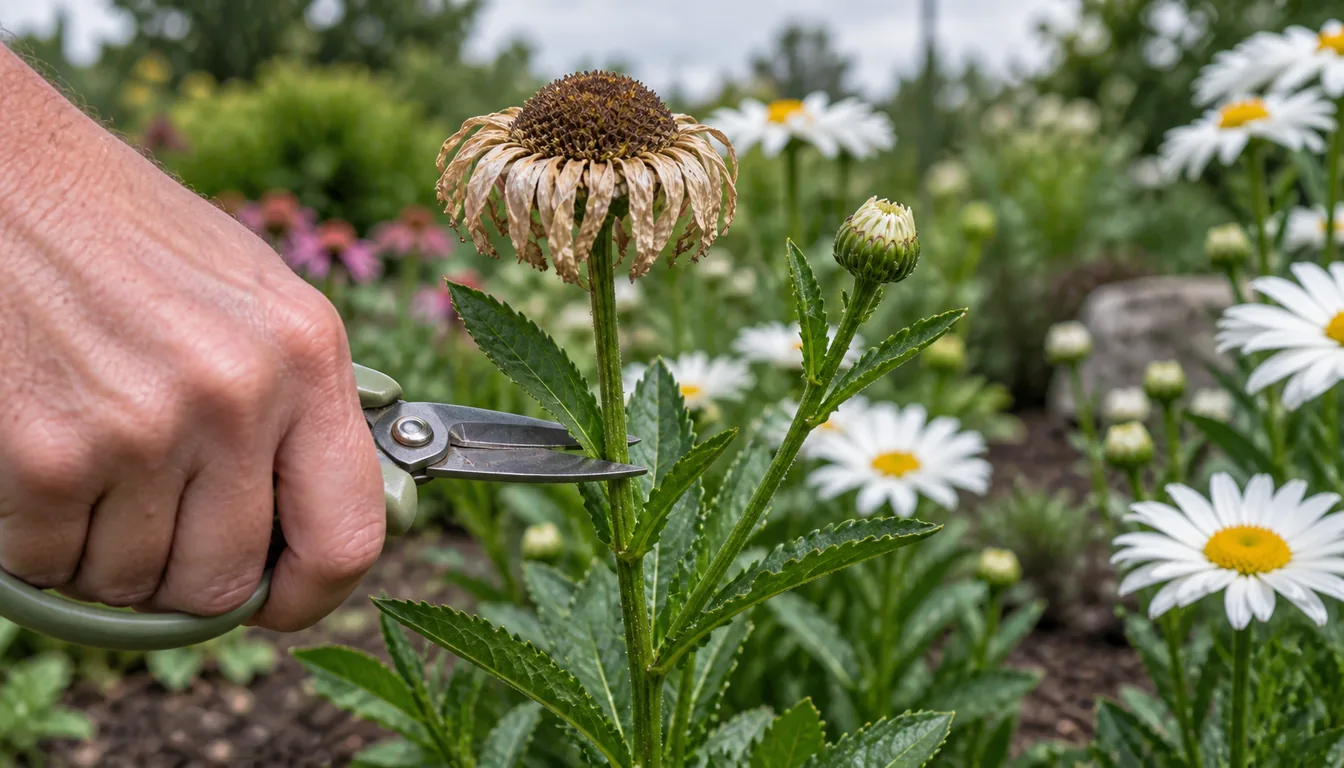
- Confirm the flower is finishedLook for a dry disk and limp or missing petals, not a bud closed by shade or evening.
- Trace the stemMove down past bare stem until you find healthy leaves or a flowering side shoot.
- Protect the next budHold the stem so the bud stays above and away from the blades.
- Make one clean cutCut just above the junction, then place the spent head in a bucket.
How Does the Cut Change by Daisy Type?
The word daisy describes a flower shape rather than one growth habit. Look below the bloom before choosing the cut.
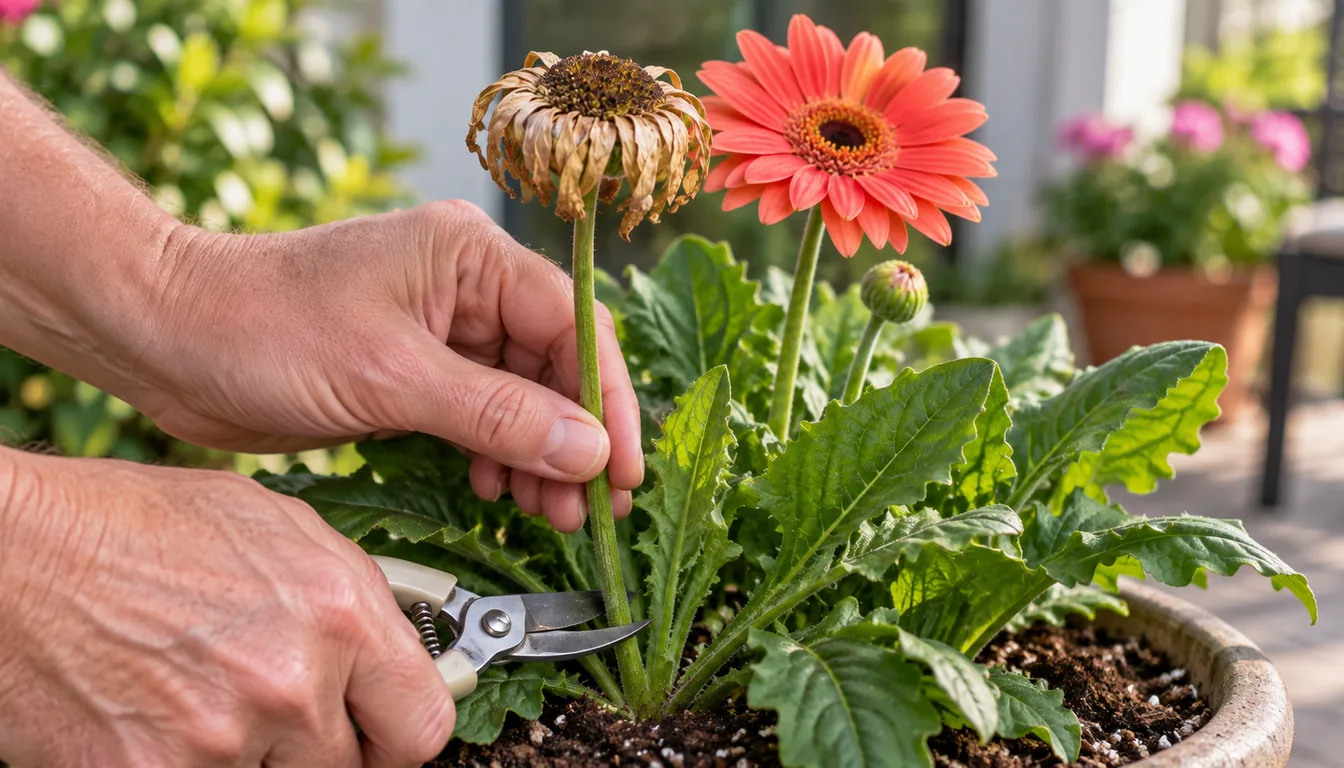
A gerbera sends an individual, leafless flower stalk from a low rosette. Once that flower is spent, follow the whole stalk to the crown and remove it close to the base without nicking the surrounding leaves.
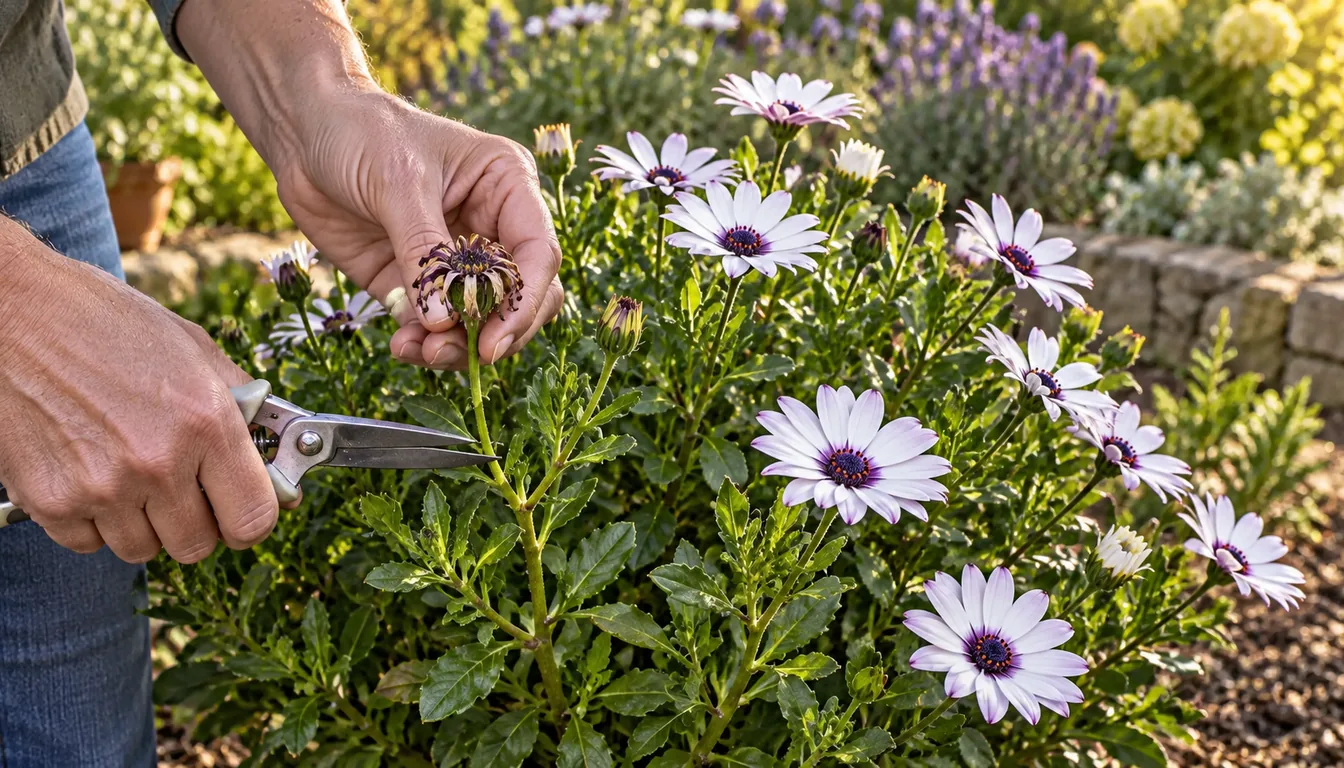
African daisy, or Osteospermum, is different. It forms a branching, leafy mound, so treat it more like a compact bedding plant and cut a spent flower back to a leafy side shoot.
Oxeye daisy needs prompt attention where it is invasive or unwanted. Removing heads before mature seed develops reduces spread, but deadheading alone does not remove established roots or seedlings.
| Daisy type | Stem clue | Best deadheading cut | Main reason |
|---|---|---|---|
| Shasta daisy | Leafy, often branching stem from a perennial clump | Back to the next leaf or flowering side shoot | Hide the cut and preserve later buds |
| Gerbera daisy | One flower on a mostly bare stalk above a basal rosette | Entire stalk near the crown | No useful side shoot remains on the stalk |
| African daisy | Many leafy, branching stems in a low mound | Back to a leaf pair or side shoot | Keep the mound compact and branching |
| Oxeye daisy | Slender branching stems and rapid seed production | Remove the whole flowering branch before seed matures | Limit unwanted self-seeding |
| English daisy | Short flower stalks from a small basal rosette | Pinch or snip each stalk near the base | Keep a low edging or lawn patch tidy |
Can You Shear the Whole Clump After Bloom?
Individual deadheading makes sense while fresh flowers and buds are mixed through the clump. When nearly the whole first flush has faded, cutting stems one at a time adds work without protecting much bloom.
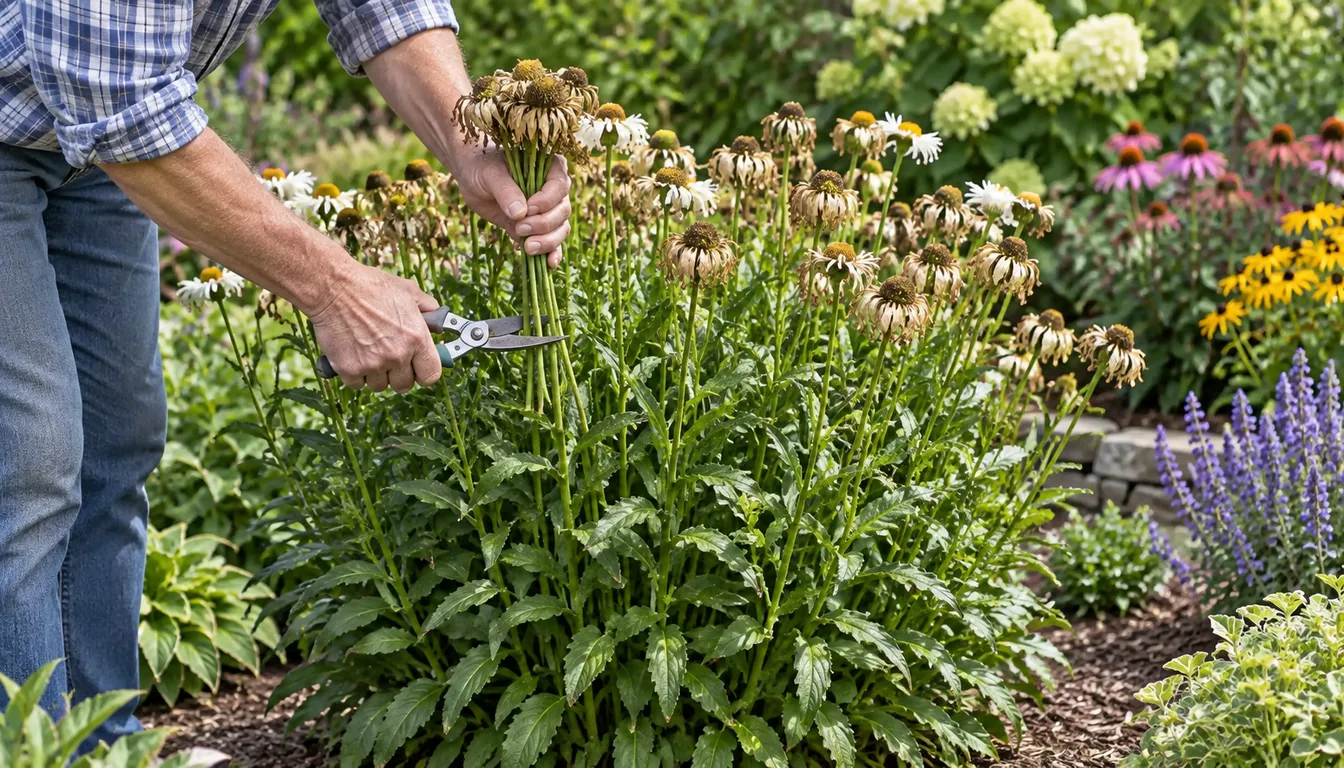
Gather a manageable handful of tired Shasta stems and reduce the flowering growth by roughly one-third. Work in sections with hand shears so you can see and preserve the green basal foliage.
Water if the root zone is dry and keep the soil evenly moist while new shoots develop. Rebloom depends on the cultivar, growing season, light, moisture, and temperature, so a reset encourages another flush but cannot promise nonstop flowers.
Do not use this treatment on a struggling crown, a newly planted daisy with little foliage, or a gerbera rosette. Remove individual dead stalks from those plants instead.
How Often Should You Deadhead Through Summer?
Use the flowers as the schedule. During a heavy flush, a quick pass every 3 to 4 days catches fading heads before they become hard to distinguish from new buds.
Carry a small bucket and work around the plant rather than reaching through its center. This keeps cut heads off the crown and reduces broken stems.
Hot weather can slow African daisies even when you deadhead perfectly. Shasta daisies and other summer-blooming flowers may pause during heat or drought, because removing seed heads cannot replace sun, water, healthy roots, or the plant's natural bloom cycle.
Deadheading redirects effort away from seed production, but it does not create a new growing season. Expect cleaner plants and a better chance of repeat bloom, not an endless copy of the first flush.
- Cut only flowers that are clearly finished
- Preserve every unopened bud on the same branch
- Remove broken, spotted, or collapsed stems separately
- Clean sap and plant debris from the blades before moving on
- Water the root zone if the soil is dry rather than wetting fresh cuts
What Tools Keep the Plant Healthy?
Fingers are enough for soft English daisy stalks and a few tender annual blooms. Branching Shasta stems are easier to place accurately with small bypass pruners or garden snips.
Sharp blades matter more than blade size. A clean cut closes with less damaged tissue than a crushed or torn stem, and narrow snips let you work beside a bud without catching it.
Wipe soil and sap from the blades after use.
If a plant has leaf spots, stem rot, or other visible disease, disinfect the tool before it touches a healthy clump and bag diseased material instead of leaving it beneath the foliage.
Fingers
Fast for thin, soft stalks that release cleanly without pulling the crown
Garden snips
Best control around crowded buds and fine branching stems
Bypass pruners
Useful on thick or woody lower stems at the end of a flush
Bucket or trug
Keeps seed heads and diseased debris out of the bed
Why Is the Daisy Not Blooming Again?
First check whether the plant normally reblooms. A Shasta cultivar may produce a second, smaller flush, while an annual daisy can flower over a longer season and an oxeye stand may simply finish after setting its main crop.
Then look at the whole plant. Leaning stems and sparse flowers point toward inadequate light, soft leafy growth with few buds can follow excess nitrogen, and wilted or crisp foliage points toward water or root stress.
Shasta daisies flower best in full sun, which means at least 6 hours of direct light. A shaded plant may stay alive and green without building a strong second set of buds.
Crowded perennial clumps can lose vigor over time. Divide Shasta daisies when the center thins or flowering declines, following the plant profile's timing rather than digging during active bloom.
A cut made below every green leaf also delays recovery. Leave healthy foliage whenever possible, since the next bloom is built by living leaves and buds rather than by the empty stem you removed.
| What you see | Likely explanation | Best next move |
|---|---|---|
| Fresh side buds but no open flowers yet | Normal gap between flushes | Keep normal care and protect the buds |
| Long stems leaning toward one side | Too little direct light | Reduce shade if possible or move a container |
| Lush leaves with very few buds | Excess nitrogen or immature growth | Stop high-nitrogen feeding and reassess later |
| Dry edges, wilt, and stalled buds | Heat or uneven moisture | Water deeply at the root zone and mulch lightly |
| Old clump with a weak or empty center | Congestion and declining crown | Plan to divide at the suitable seasonal window |
| Bare stems left above the foliage | Only the flower heads were pinched | Recut each stem to a leafy junction |
When Should You Stop Deadheading?
Stop when another flush would have little time to develop before hard frost, or when you want mature seed heads. Leaving selected heads can feed birds, add winter texture, and give you seed to collect.
That choice should be deliberate. Keep a few strong, healthy heads and remove the rest, especially on plants that self-sow more freely than you want.
Do not leave diseased heads for wildlife value.
Spotted, moldy, or collapsed material belongs in municipal green waste or the trash according to local disease guidance, while clean dry heads can stand.
For invasive oxeye daisy, seed prevention takes priority. Check local weed guidance, remove flower heads before seeds mature, and address the established plant rather than assuming one round of deadheading has controlled it.
Keep cutting
Choose this while healthy buds remain and there is enough growing season for them to open
Leave selected heads
Choose this for birds, seed saving, or winter structure on a healthy noninvasive plant
Remove every head
Choose this when self-seeding is unwanted or local guidance treats the daisy as invasive
Pro Tips
- Follow each spent flower down before cutting, because the next bud may sit only one branch below it.
- Use a bucket during the job so mature seed heads and diseased debris do not fall back into the bed.
- Reset a Shasta clump only after most of one flush has faded, and leave the green basal foliage intact.
- Expect heat, drought, low light, and excess nitrogen to limit rebloom even when every cut is correct.
- Leave a few clean late-season seed heads for birds, but remove oxeye heads before seed matures where the plant is unwanted.
Frequently Asked Questions
Will daisies bloom again after deadheading?
Many Shasta and annual daisies can produce more flowers after spent blooms are removed, but the result depends on cultivar, light, moisture, temperature, and remaining season. Deadheading improves the opportunity for rebloom without guaranteeing another full flush.
Can I deadhead daisies with my fingers?
Yes for a soft, thin flower stalk that releases without tugging the crown. Use narrow garden snips on branching or thicker stems so you can cut beside a healthy leaf or bud without tearing it.
Should I cut a daisy stem all the way to the ground?
Cut a bare gerbera flower stalk near the crown. On a branching Shasta or African daisy, stop at the first healthy leafy junction or side shoot unless you are resetting the whole tired clump after its main flush.
Can I compost spent daisy flowers?
Clean flowers that have not formed mature seed can go into a well-managed compost pile. Bag diseased material, and keep mature seed heads out when the daisy is invasive or you do not want it spreading.
Should I leave daisy seed heads for birds?
You can leave selected clean heads late in the season for food and structure. Remove heads from invasive oxeye daisies and from any plant that is self-seeding beyond the space you want it to occupy.
Sources & References
- Deadheading Flowers, University of Minnesota Extension
- Leucanthemum × superbum, NC State Extension Plant Toolbox
- Gerbera jamesonii, NC State Extension Plant Toolbox
- Oxeye Daisy, USDA Forest Service Wildflowers
- Oxeye Daisy, Invasive Plant Atlas of the United States
- Deadheading for More Blooms, University of Illinois Extension
- Leucanthemum × superbum, Missouri Botanical Garden
- Growing Perennials, Colorado State University Extension
Related Guides
Cutting Back a Leggy Houseplant Does Not Fix It
Most people cut a houseplant back because it has gone long and bare.
11 min read
Deadheading Daffodils Matters Less Than the Six Weeks After
Almost every page about spent daffodils tells you to remove the seed pod so the bulb is not…
11 min read
French Lavender Pruning Depends on the Plant and Season
French lavender needs light trimming within its leafy growth, rather than a hard cut into bare…
6 min read
Fruit Tree Pruning Starts With Where the Crop Forms
A fruit tree that gives small, crowded, scabby fruit is usually not underfed.
11 min read
How Deep Can You Cut a Spent Lavender Spike?
Deadheading lavender is the lightest cut you will ever make on the plant, and the one place people…
7 min read
How Do You Prune Spanish Lavender for a Second Flush?
Spanish lavender is the one that flowers first and the one that keeps going.
7 min read