
Best Cut Flowers to Grow for Fresh Garden Bouquets
The cut flowers worth growing first, when to cut each one, how long they last indoors, and which bouquet flowers, such as lilies, are dangerous to cats.
At a glance
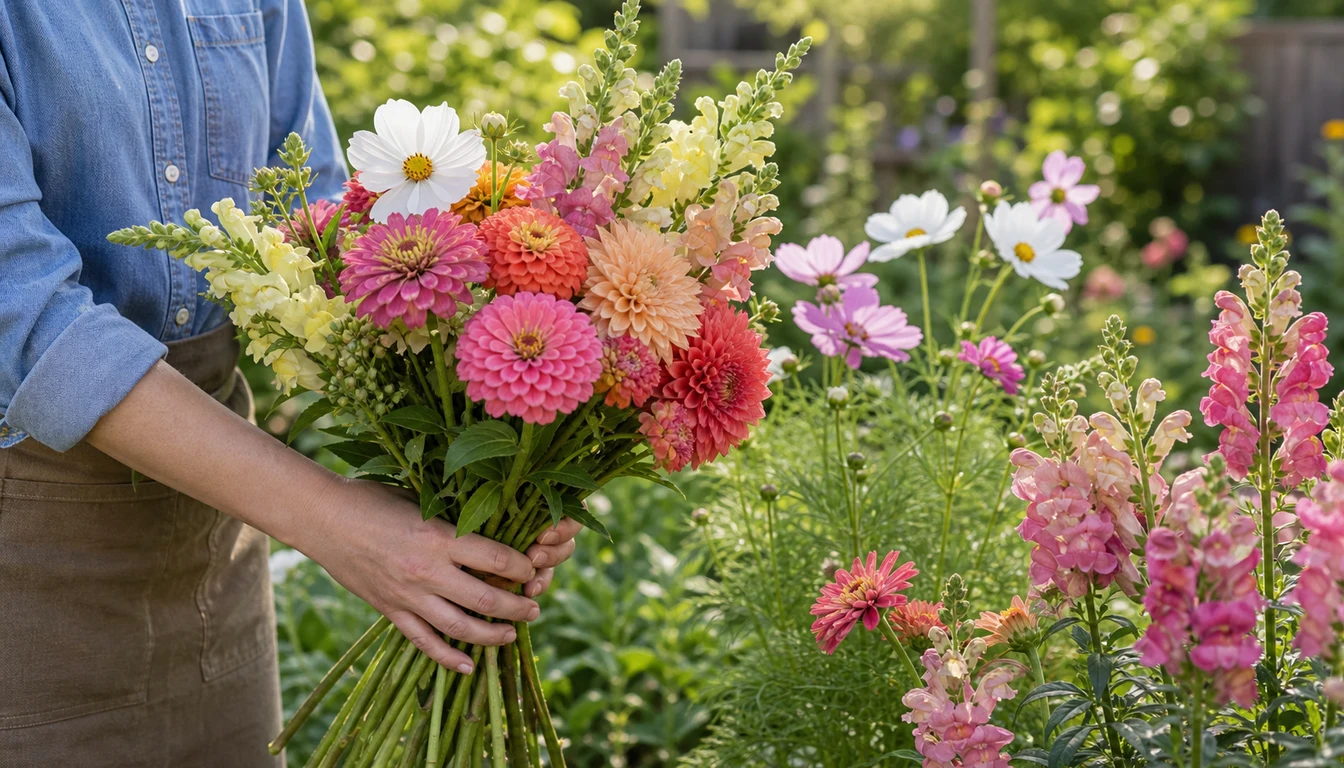
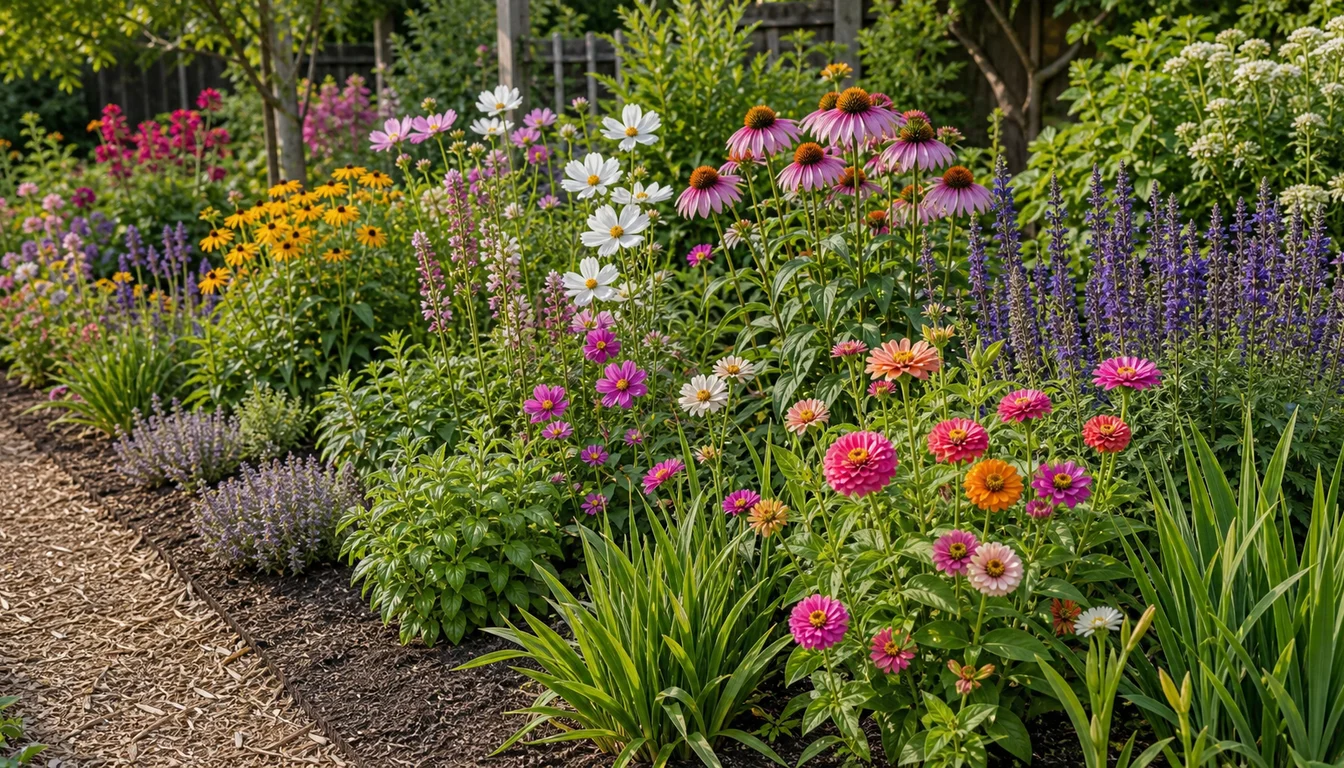
The most reliable first cut flowers are annuals that are easy to grow from seed, such as zinnias, cosmos, snapdragons, celosia, and sunflowers. Penn State Extension treats zinnias as the foundation of a home cutting garden, and Illinois Extension notes that zinnias, cosmos, celosia, and sunflowers can all be sown directly in the bed.
Perennials and bulbs fill the weeks annuals miss. Peonies bloom in late spring, daffodils and tulips in early spring, and chrysanthemums close the season in fall. Penn State notes that very few perennials flower all season, so they work as anchors for particular weeks rather than the main supply.
One choice needs a safety check before it goes in a vase. The ASPCA lists *true lilies, Lilium species, as toxic to cats*, causing kidney failure, and several other popular bouquet flowers are listed as toxic to dogs, cats, and horses.
Which Flowers Give the Most Stems for a First Cutting Bed?
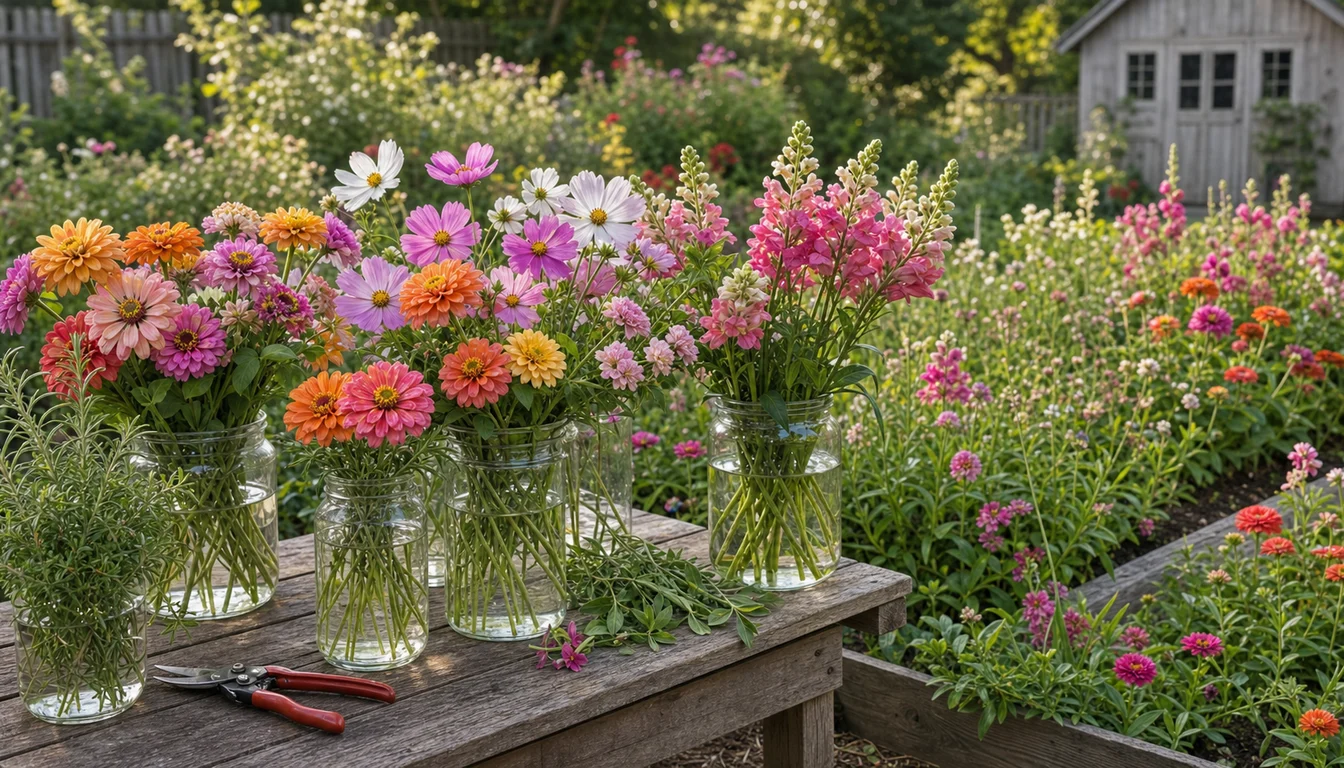
Annuals carry most of a home cutting garden because they flower in the same season they are sown. Penn State Extension builds its home cutting garden around zinnias, preferably varieties resistant to powdery mildew, and adds cosmos, snapdragons, and sunflowers.
Illinois Extension's cut flower sheet explains why these are easy. Zinnias germinate quickly from direct seeding, cosmos and celosia go straight into the bed or start indoors, and sunflowers sow directly as well. The taller sunflowers and some zinnias need staking, so support belongs in the plan from the start.
Repeat harvests depend on where you cut. Penn State cuts the stem ¼ inch above a new side flower, side leaf, or bud, which pushes new growth from that point. Several sowings of annuals across the season, rather than one, keep the blooms coming, which Penn State also recommends.
| Flower | Bouquet job | Growing note |
|---|---|---|
| Zinnia | Round focal bloom in many colors | Direct sow, choose mildew-resistant varieties, stake if needed |
| Cosmos | Airy, lighter stems | Direct sow or start indoors |
| Celosia | Plumes or crests that also dry well | Direct sow or start indoors |
| Sunflower | Large focal flower | Direct sow, stake tall varieties |
| Snapdragon | Upright spike | Grown as a cutting annual in Penn State's home garden list |
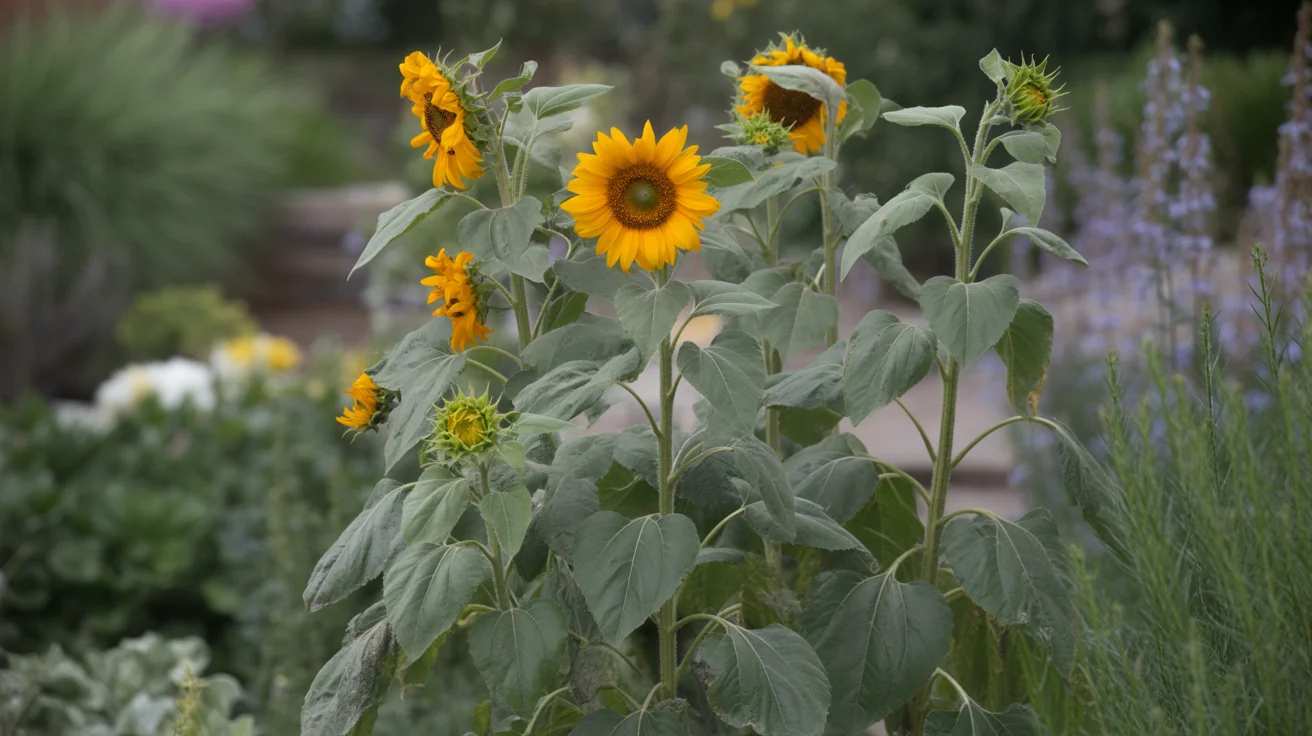
Sunflower
Helianthus annuus
The large focal flower of a summer bouquet, sown directly in the bed
- Mature fit
- Tall varieties need staking, so they belong at the back or north side of the bed
- Main tradeoff
- Cut when the flower is almost completely open. Single-stem types give one bloom per plant.
Which Perennials Are Worth a Permanent Spot?
A perennial earns cutting space when it gives a flower the annuals cannot, in a week they cannot cover. Penn State warns that very few perennials provide season-long flowers, so each one is chosen for its window.
Peonies give the late-spring focal flower. Illinois Extension cuts them at the marshmallow stage, when the bud shows color and feels soft, and notes that stripped, newspaper-wrapped stems can be held for weeks before use.
Iris needs the right type. Illinois finds that Siberian iris makes a better cut flower than bearded iris because it lasts much longer in the vase, and cuts it when the flowers are just starting to open and show color. Bearded iris, the common garden type, has a much shorter vase life.
Liatris gives a summer spike and is cut when the flowers are fully open, according to Illinois. Lavender is rated by NC State as good for both cut and dried flowers, and Iowa State cuts it just as the buds begin to open.
Roses and chrysanthemums extend the season at either end of summer. The RHS lists roses among summer cutting flowers and chrysanthemums for late summer and autumn, and both appear on Penn State's list of commonly grown cut flowers. Both peonies and chrysanthemums are listed by the ASPCA as toxic to pets, which the pet safety section below covers.
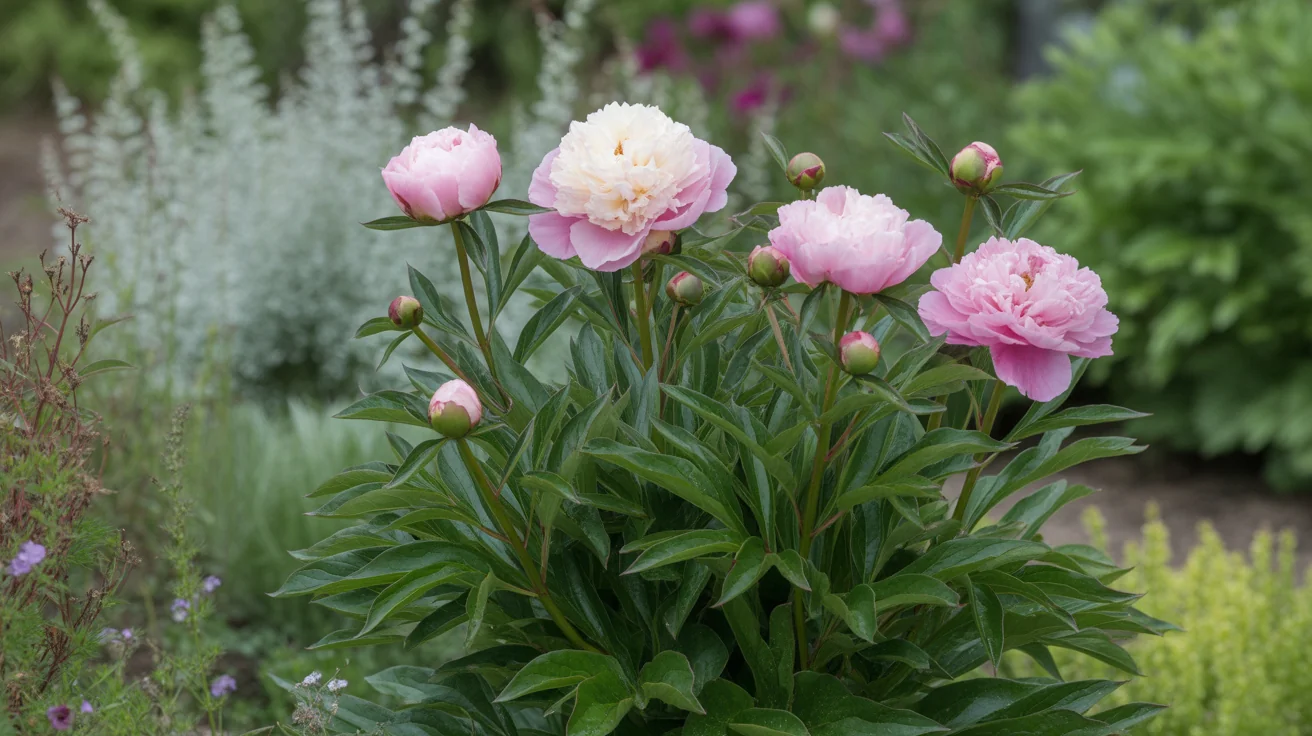
Peony
Paeonia spp.
Late-spring focal flower from a clump that returns for years
- Mature fit
- A permanent clump that should not be dug up when annual rows are replanted
- Main tradeoff
- Blooms in one short window. ASPCA lists it as toxic to dogs, cats, and horses.
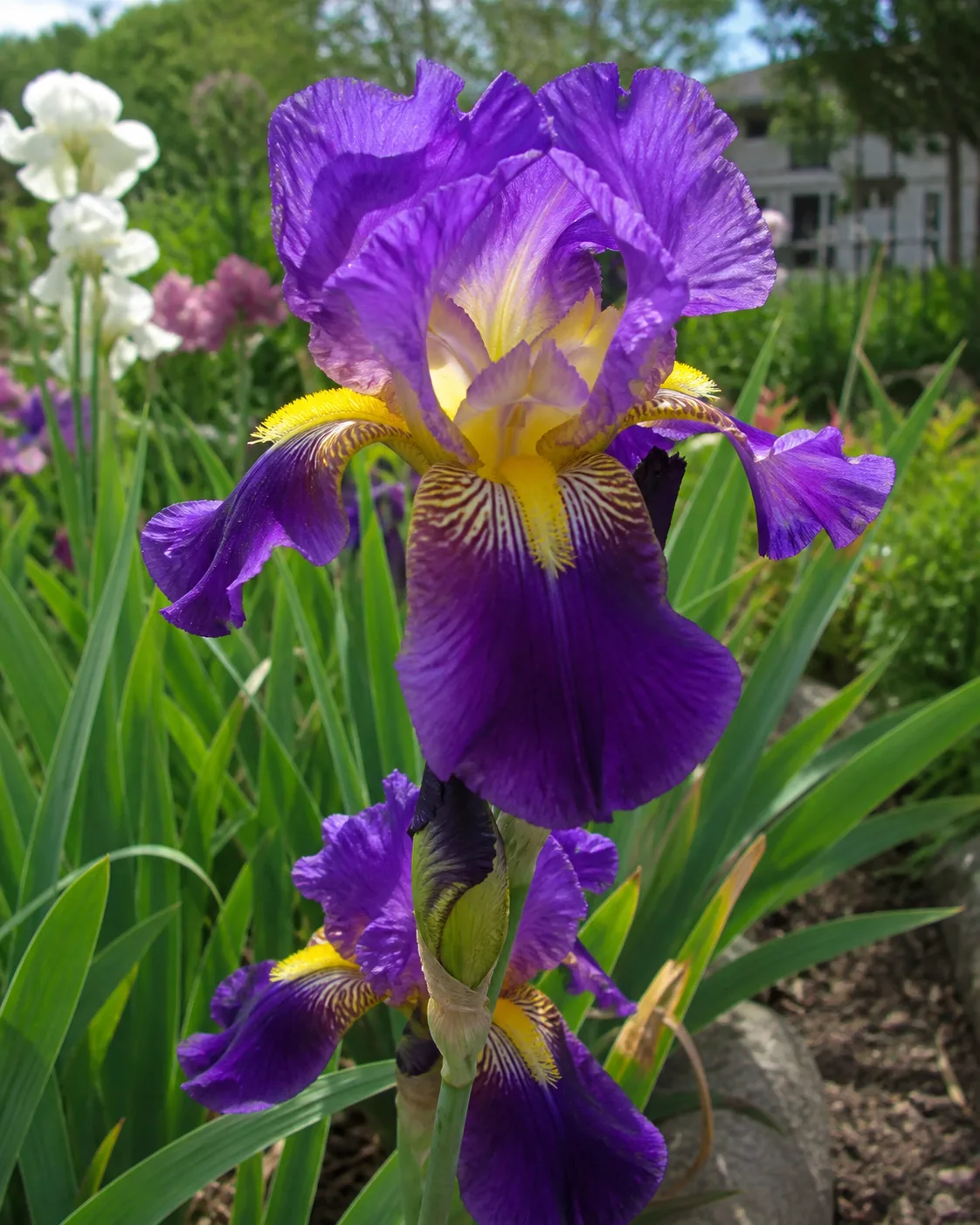
Bearded Iris
Iris germanica
Late-spring flower on tall stalks above sword-shaped leaves
- Mature fit
- Rhizomes stay in one spot and are divided when crowded
- Main tradeoff
- Bearded iris is short-lived in a vase. Siberian iris lasts much longer.
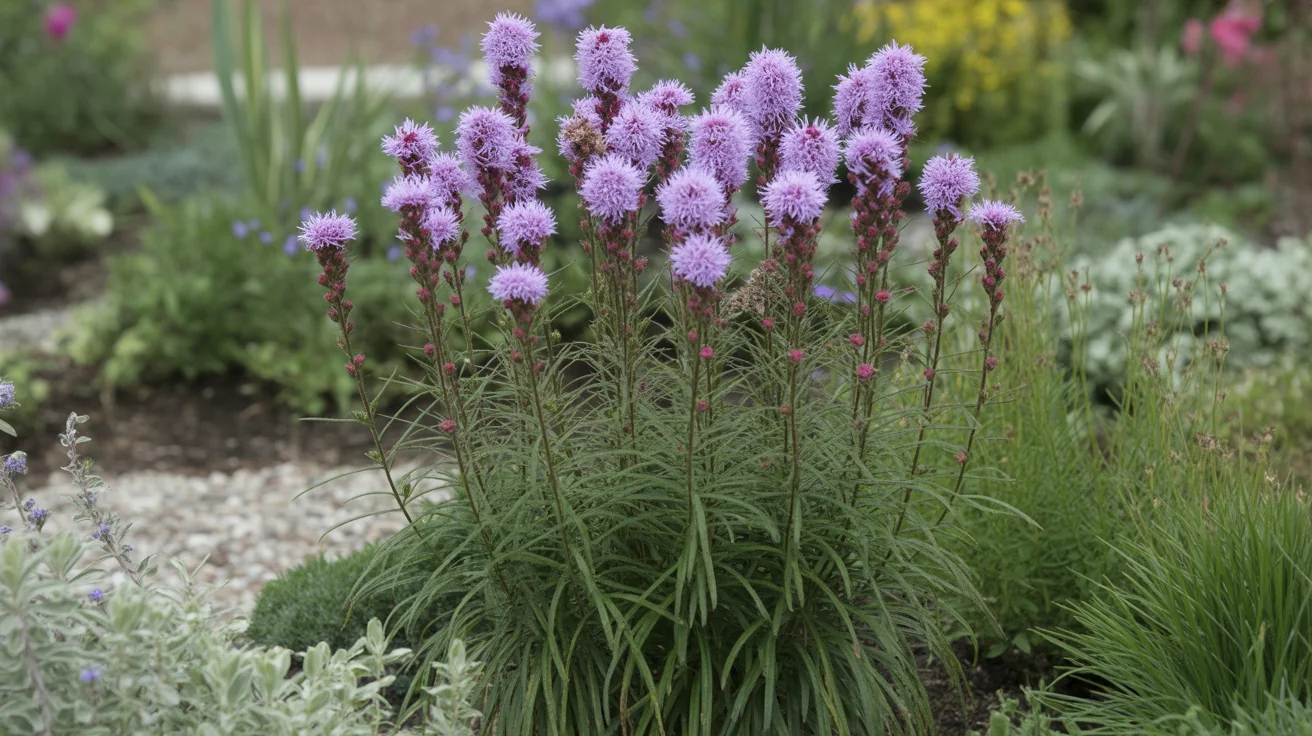
Liatris
Liatris spicata
Summer spike that adds height and line to a mixed bouquet
- Mature fit
- An upright perennial that fits the middle of a cutting bed
- Main tradeoff
- Illinois cuts it only once the flowers are fully open, unlike most early-cut flowers.
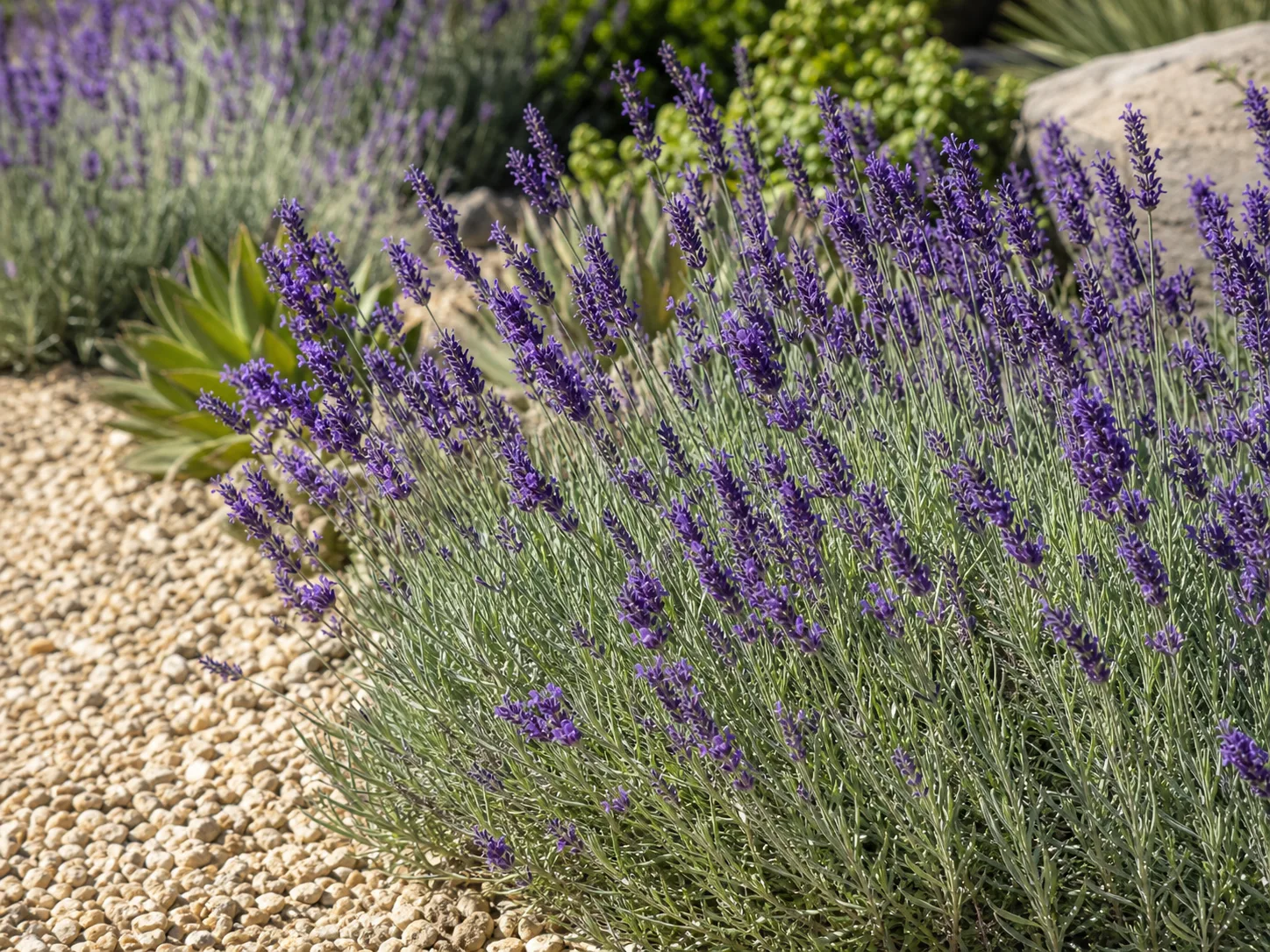
English Lavender
Lavandula angustifolia
Scented summer spikes for fresh bouquets and drying
- Mature fit
- A compact woody mound that needs sharp drainage
- Main tradeoff
- ASPCA lists English lavender as toxic to dogs, cats, and horses.
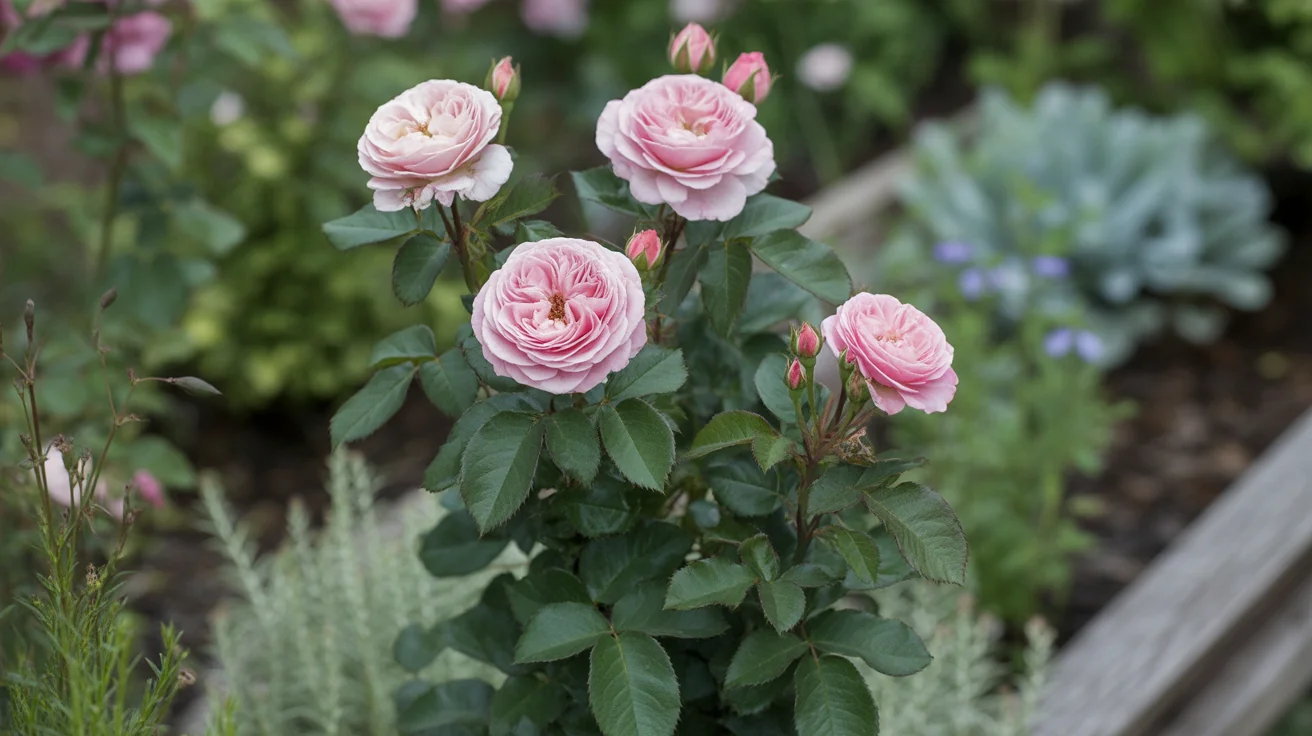
Rose
Rosa spp.
Summer focal flower from a shrub that repeats on many varieties
- Mature fit
- A permanent shrub, often grown outside the annual cutting rows
- Main tradeoff
- Thorns and disease care add work. ASPCA lists roses as non-toxic to pets.
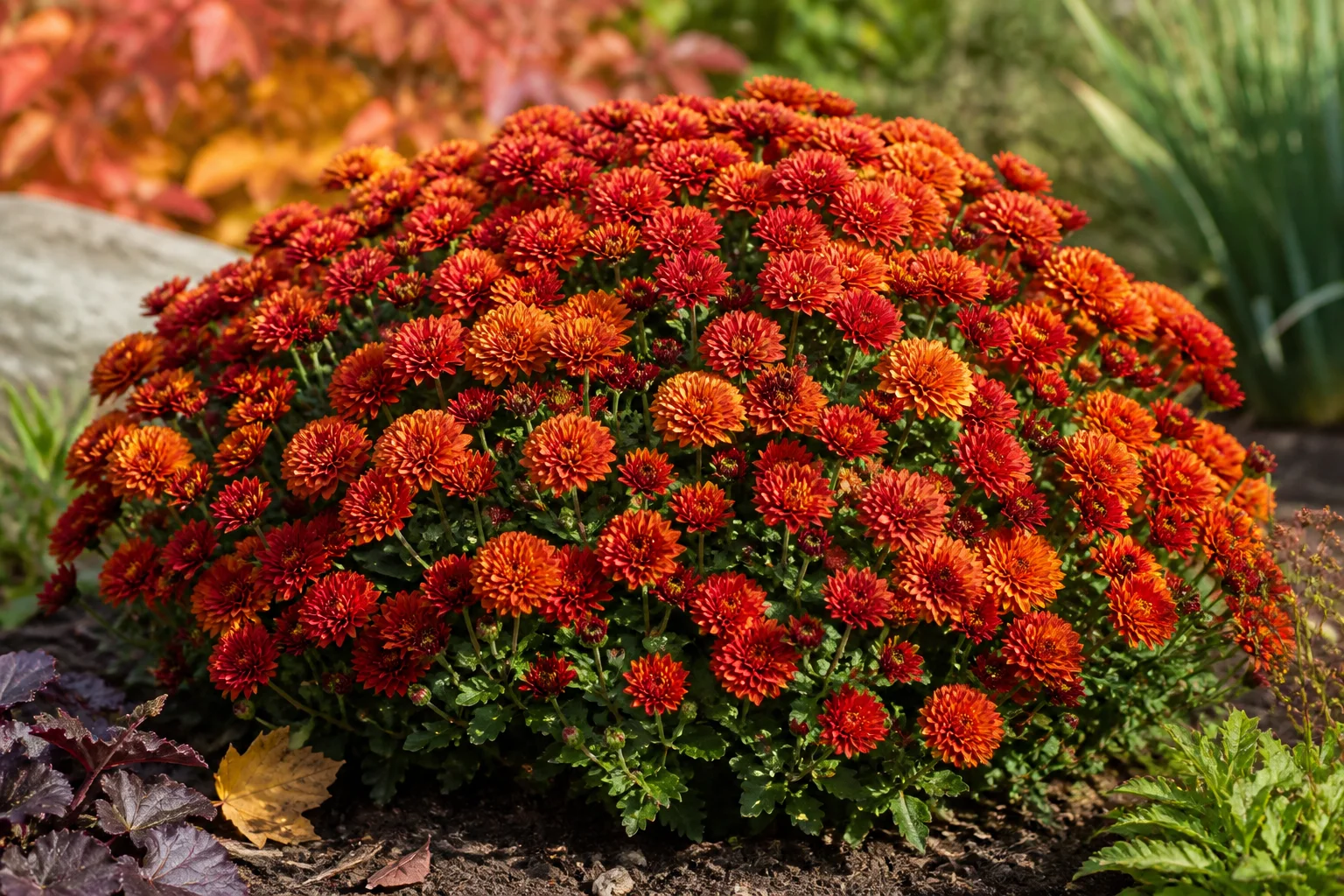
Chrysanthemum
Chrysanthemum morifolium
Late-summer and fall flowers after most annuals finish
- Mature fit
- A clumping perennial that fits the front or middle of the bed
- Main tradeoff
- ASPCA lists chrysanthemums as toxic to dogs, cats, and horses.
Which Bulbs Fill the Spring and Summer Vase?
Bulbs cover the start of the season, before seed-sown annuals flower. Penn State recommends adding bulbs especially for early spring blooms, and its list of commonly grown cut flowers includes daffodils, tulips, and both Asiatic and Oriental lilies. The RHS places daffodils and tulips in spring and lilies in summer.
Daffodils need separate handling. Illinois Extension conditions them in their own container of warm water for 12 to 24 hours before they join a mixed bouquet, because the sap they release can harm other flowers.
Summer bulbs work differently. Illinois describes dahlias and gladiolus as planted after the danger of frost and dug at the end of the season to save. Dahlias are cut when fully open, and gladiolus when the first few florets at the bottom are open.
Daffodils, tulips, and lilies are all listed by the ASPCA as toxic to cats, and daffodils and tulips to dogs and horses as well. The next section explains what that means for a vase indoors.
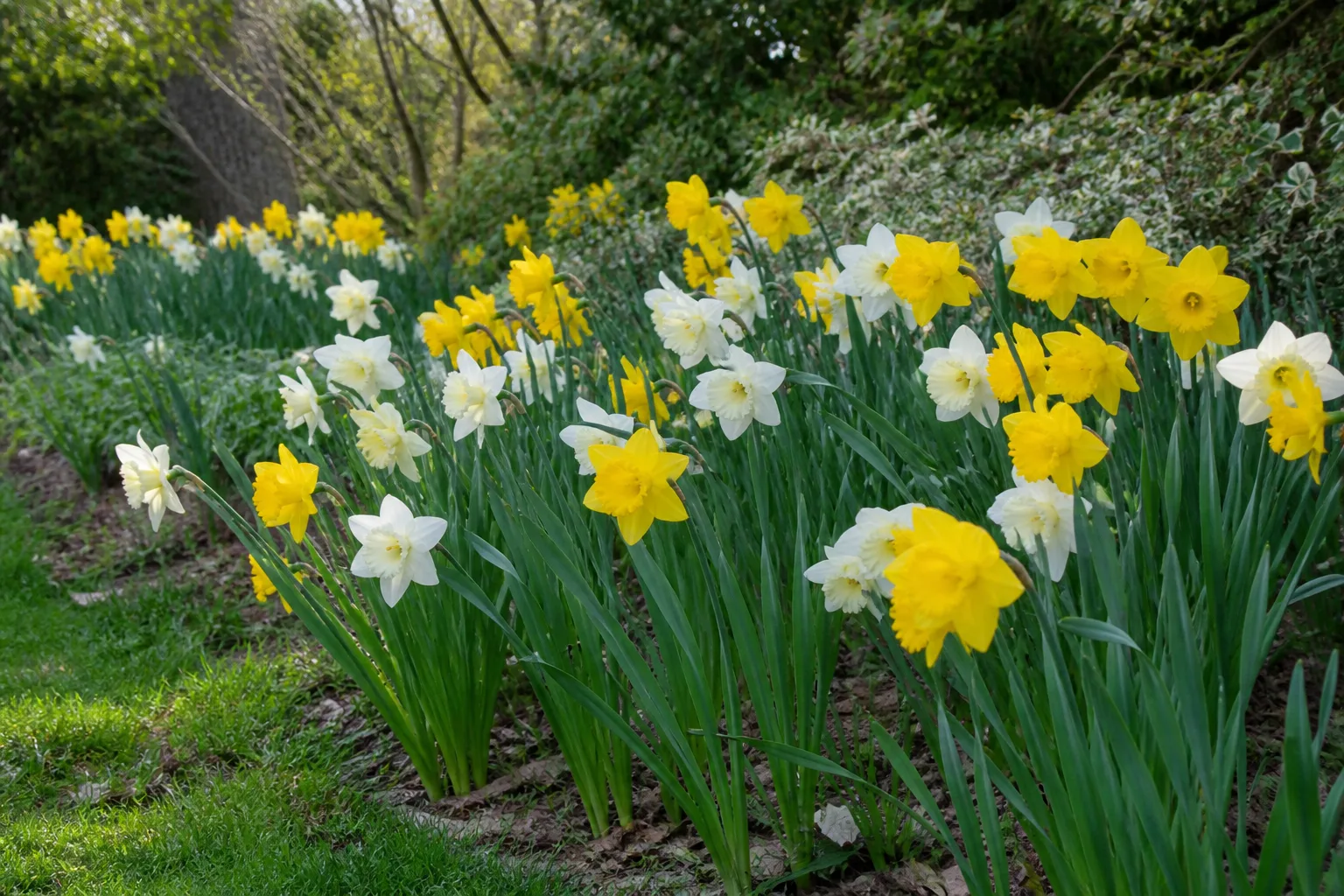
Daffodil
Narcissus spp.
The first spring cut flower in many gardens
- Mature fit
- Bulbs planted in fall that return in the same spot
- Main tradeoff
- Condition alone for 12 to 24 hours. Toxic to dogs, cats, and horses, with the bulb the most poisonous part.
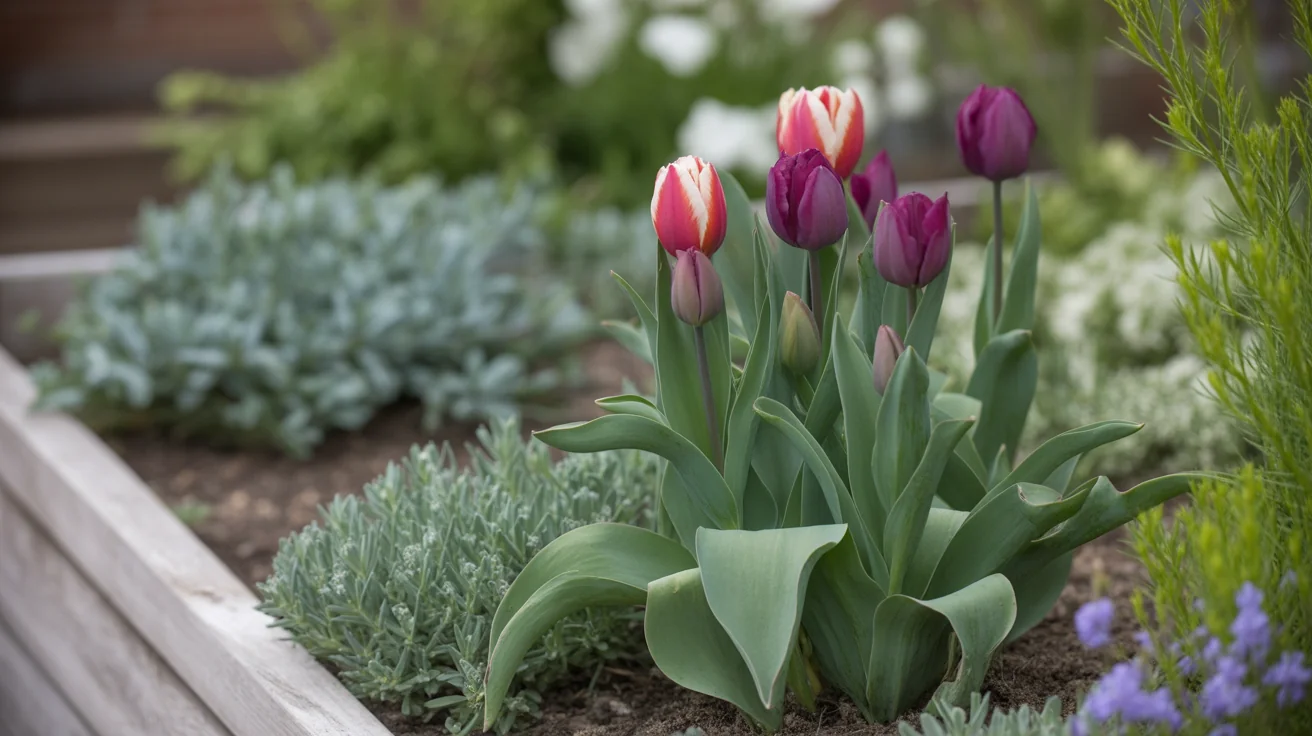
Tulip
Tulipa spp.
Spring color in a wide range of forms
- Mature fit
- Fall-planted bulbs for spring stems
- Main tradeoff
- ASPCA lists tulips as toxic to dogs, cats, and horses, with the highest concentration in the bulb.
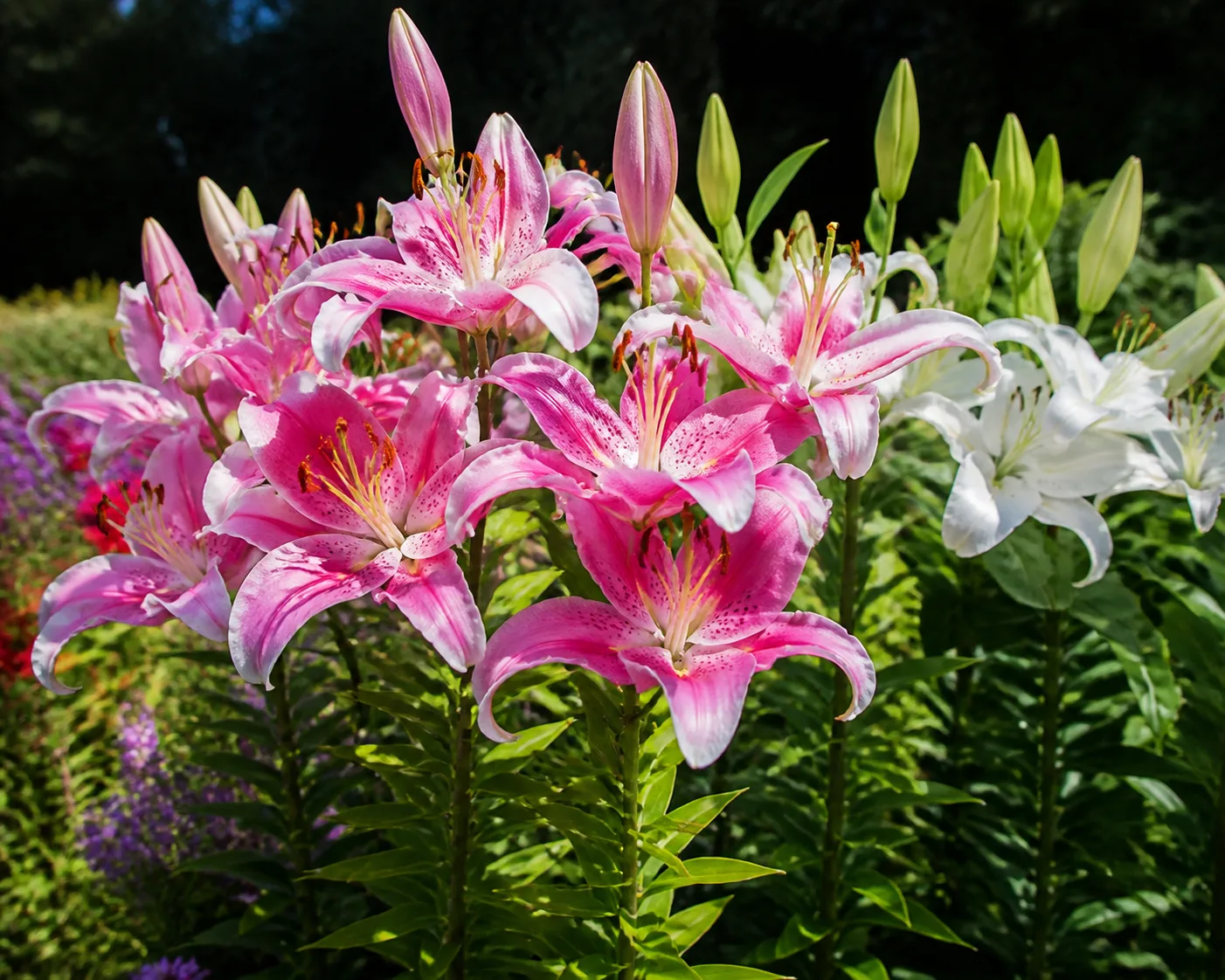
Lily
Lilium spp.
Large, often fragrant summer focal flower
- Mature fit
- Bulbs that stay in place and flower on tall stems
- Main tradeoff
- Toxic to cats, causing kidney failure. Keep lily bouquets out of homes with cats.
Which Cut Flowers Are Dangerous for Cats and Dogs?
A bouquet brings a garden plant indoors, onto tables and counters where pets can reach it. The ASPCA's plant listings separate the common cutting flowers into two groups.
| Flower | ASPCA listing | Signs listed, or other note |
|---|---|---|
| Lily (Lilium) | Toxic to cats. Non-toxic to dogs and horses. | Kidney failure in cats |
| Daffodil (Narcissus) | Toxic to dogs, cats, and horses | Vomiting, salivation, diarrhea. Bulbs are the most poisonous part. |
| Tulip | Toxic to dogs, cats, and horses | Vomiting, depression, diarrhea, salivation. Highest concentration in the bulb. |
| Peony | Toxic to dogs, cats, and horses | Vomiting, diarrhea, depression |
| Chrysanthemum | Toxic to dogs, cats, and horses | Vomiting, diarrhea, salivation, incoordination, dermatitis |
| English lavender | Toxic to dogs, cats, and horses | Nausea, vomiting, loss of appetite |
| Rose | Non-toxic to dogs, cats, and horses | Thorns can still injure |
A non-toxic listing covers the plant itself, not florist dips, pesticides, or flower food. A flower missing from this table is not established as safe for pets.
When Should You Cut Each Flower?
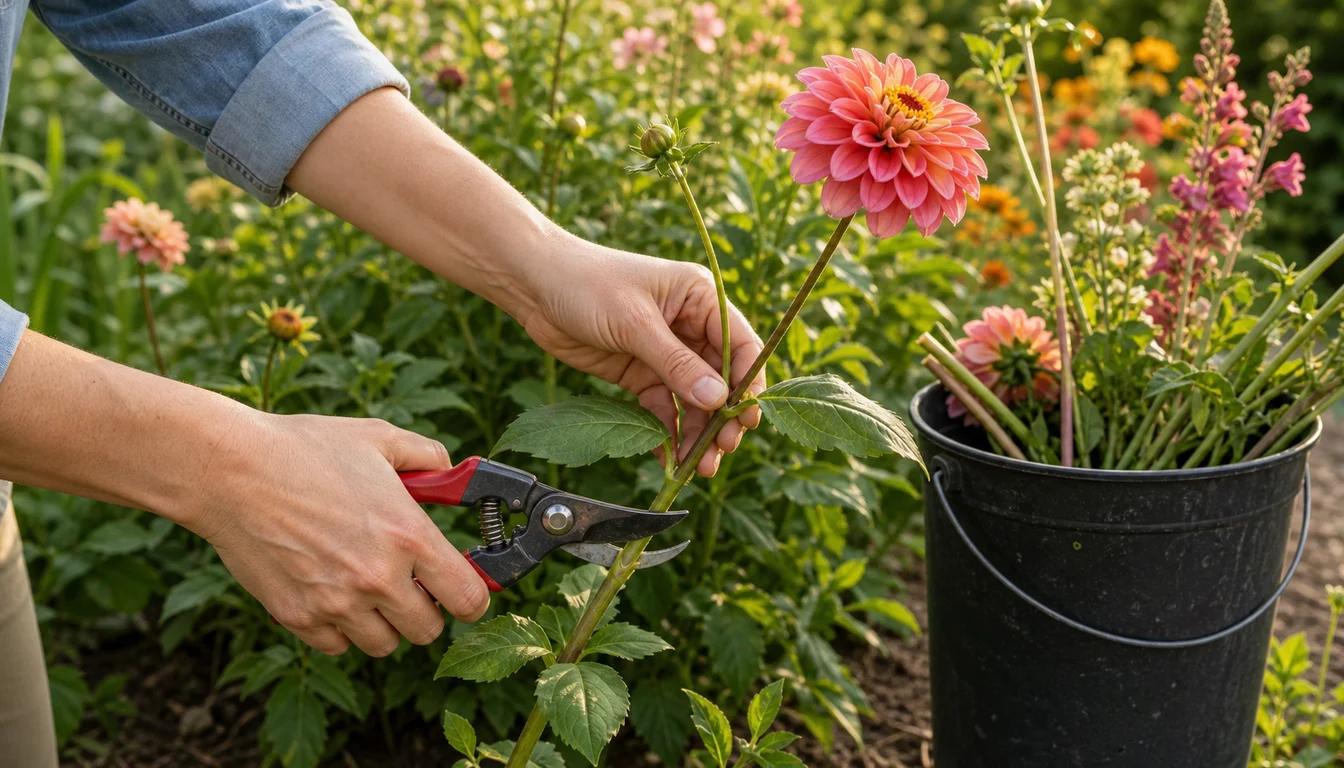
The stage at cutting decides how long the flower lasts indoors. Penn State notes that fully opened flowers look great in the garden but soon fade in a vase, so many are cut earlier. Illinois cuts others, such as zinnias, dahlias, and liatris, only once they are fully open.
| Flower | Cut when | Source |
|---|---|---|
| Peony | Bud shows color and feels soft, the marshmallow stage | Illinois Extension |
| Siberian iris | Flowers are just starting to open and show color | Illinois Extension |
| Sunflower | Flower is almost completely open | Penn State Extension |
| Zinnia | Flower is fully open | Illinois Extension |
| Liatris | Flowers are fully open | Illinois Extension |
| Dahlia | Flower is fully open | Illinois Extension |
| Gladiolus | First few florets at the bottom are open | Illinois Extension |
| Lavender | Buds are just beginning to open | Iowa State Extension |
Time of day matters too, and the sources split. Penn State harvests in the morning after the dew has dried and before the heat of the day, when flowers are cooler and suffer less heat stress. Illinois prefers late afternoon or evening, when the plant has stored the most food, with morning as the next best time. Both agree on avoiding midday heat and putting the cut ends straight into a bucket of water.
Cut stems longer than you need, as Illinois advises, and make each cut just above a side bud or leaf so the plant can branch again.
How Do You Keep Cut Flowers Fresh in the Vase?
Conditioning starts in the bucket. Illinois Extension strips the foliage that would sit in water and leaves stems in warm water for 1 to 2 hours to take up water before arranging.
Leaves below the water line are the main cause of a cloudy vase. Illinois explains that submerged foliage decays and feeds bacteria that harm the blooms, and recommends a fresh cut at every water change so the stem ends stay open.
Flower food helps when it is used as packaged. Illinois describes the packets as a mix of carbohydrates, citric acid, and biocides that extend vase life and slow microbial growth. Penn State also notes that many flowers benefit from floral preservatives.
Placement is the last step. Illinois keeps arrangements away from heat sources, direct sun, and ripening fruit, because fruit gives off ethylene gas, a plant hormone that speeds aging in flowers.
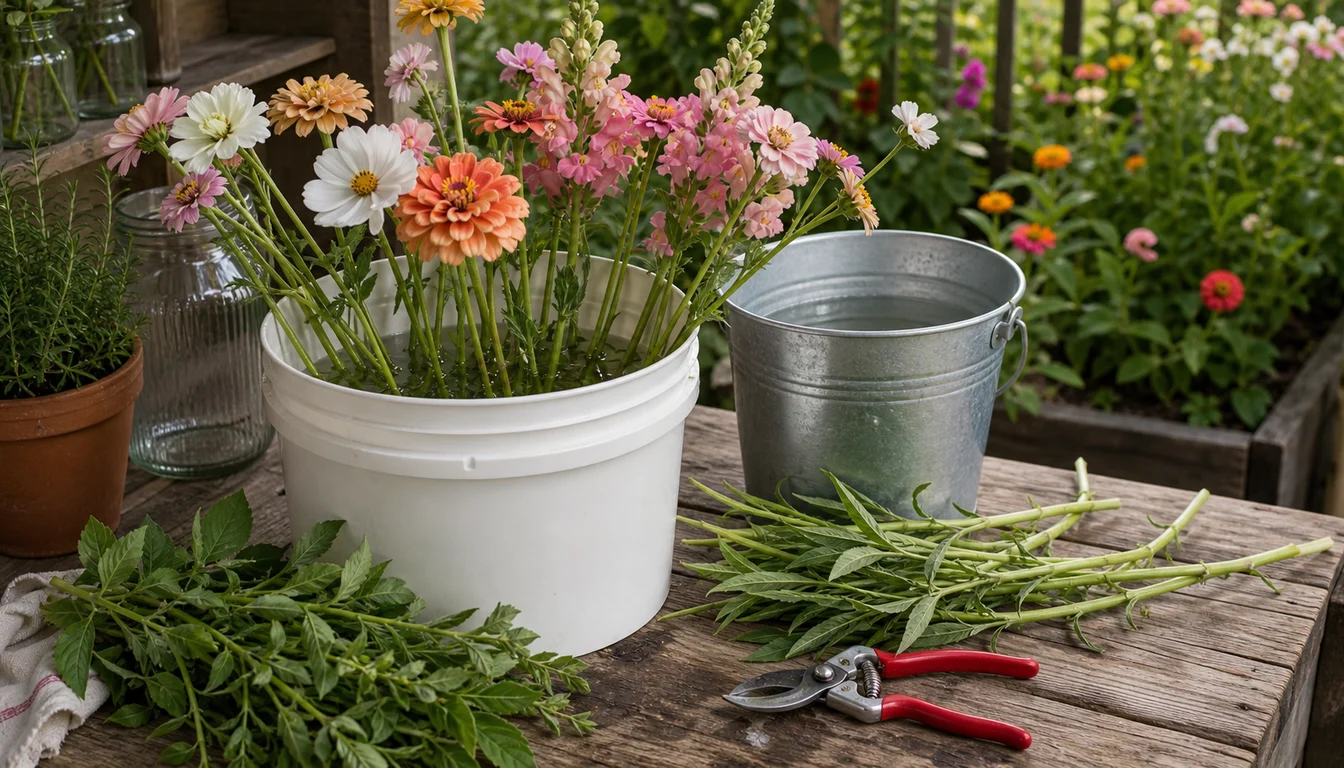
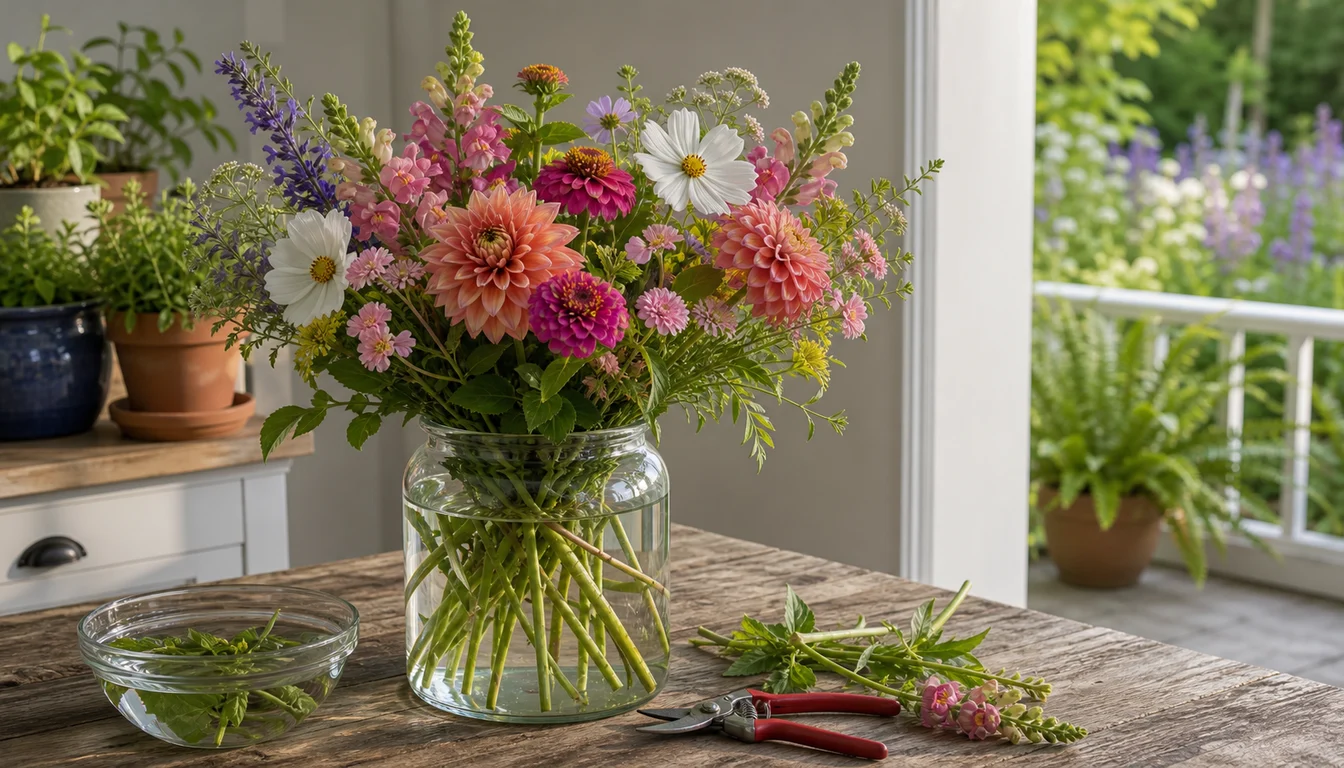
Daffodils are the exception to mixing everything at once. Conditioned alone for 12 to 24 hours first, they can then join other flowers, and the cut flower garden plan covers conditioning for more crops.
What Does a Small Cutting Bed Need?
Most cut flowers prefer full sun, Illinois Extension notes, along with a soil test before planting and water close at hand. It suggests soaker hoses or drip irrigation, and a raised bed where the native soil is poor.
Rows make the bed easier to work. The RHS recommends planting or sowing in rows because weeding, staking, and picking all get easier. Penn State notes that commercial cut flowers are often planted closely to encourage longer stems, while warning that overcrowded home plantings become more prone to pests and disease.
Support goes in early. Penn State stakes some plants or grows them through wide-gap horizontal mesh as they mature, and Illinois notes that tall sunflowers, zinnias, dahlias, and gladiolus often need staking.
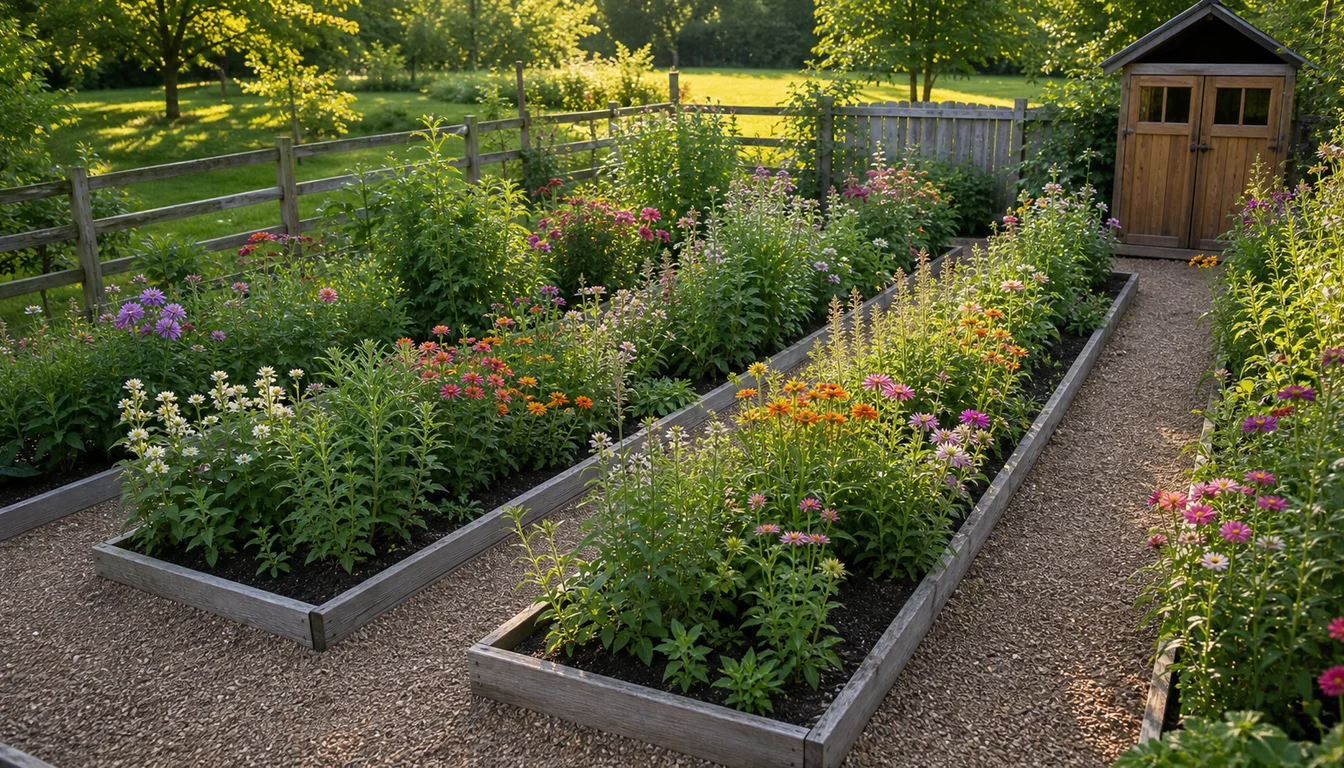
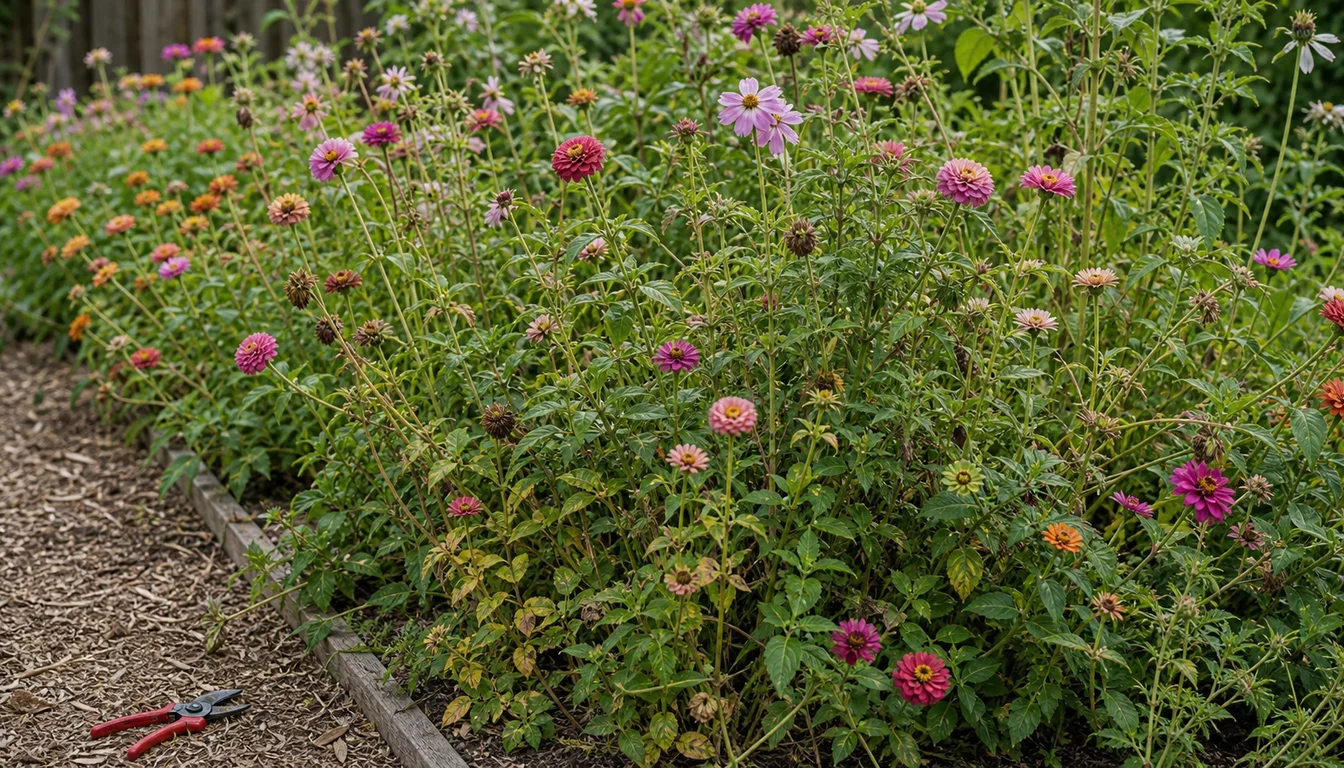
Feeding is light and regular. Illinois fertilizes annuals and summer bulbs every other week with a liquid feed, or uses a slow-release fertilizer. A succession planting schedule keeps the annual rows producing through summer.
How Could You Plant a 4 by 8 Foot Cutting Bed?
A 4 by 8 foot bed is small enough to reach from both sides and large enough to test several flowers in one season. Height sets the layout, so taller flowers go on the north side where they do not shade the rest.
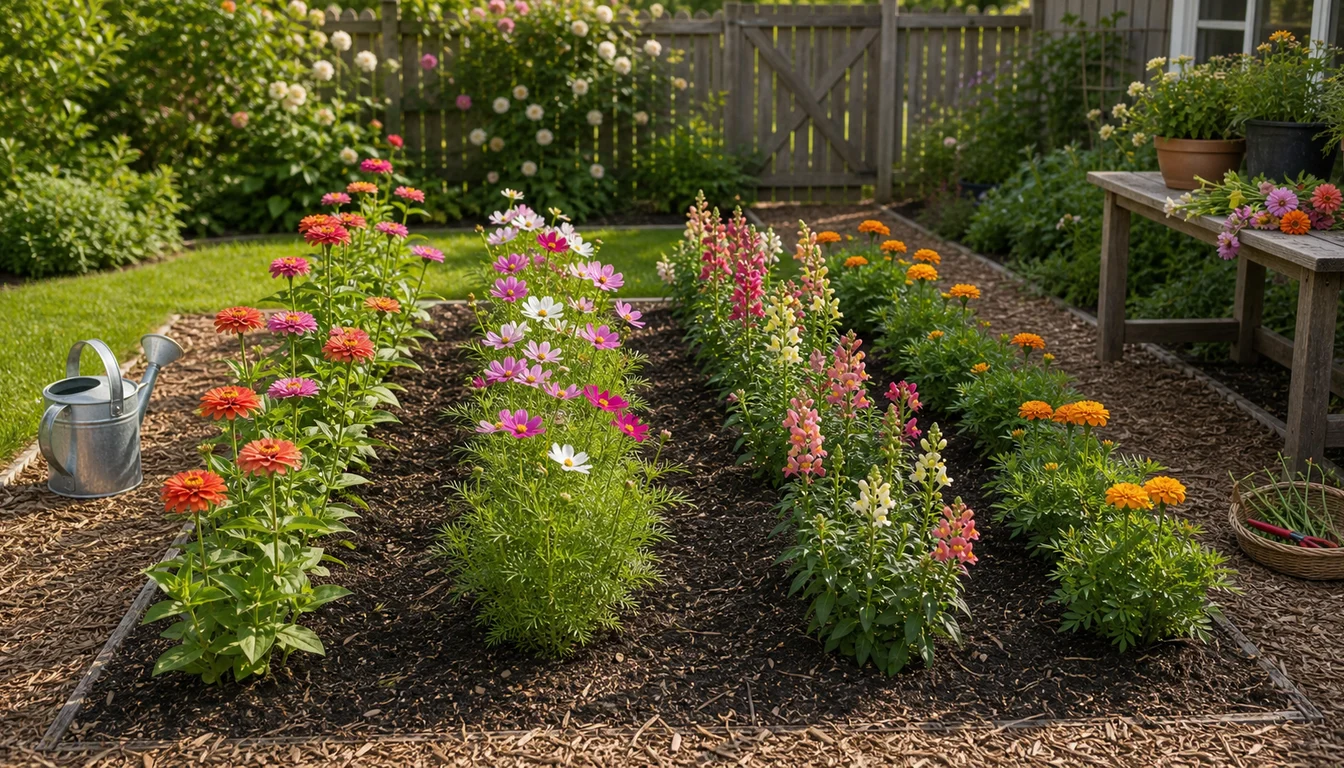
- Back rowSunflowers, sown in two batches a few weeks apart, staked if the variety is tall.
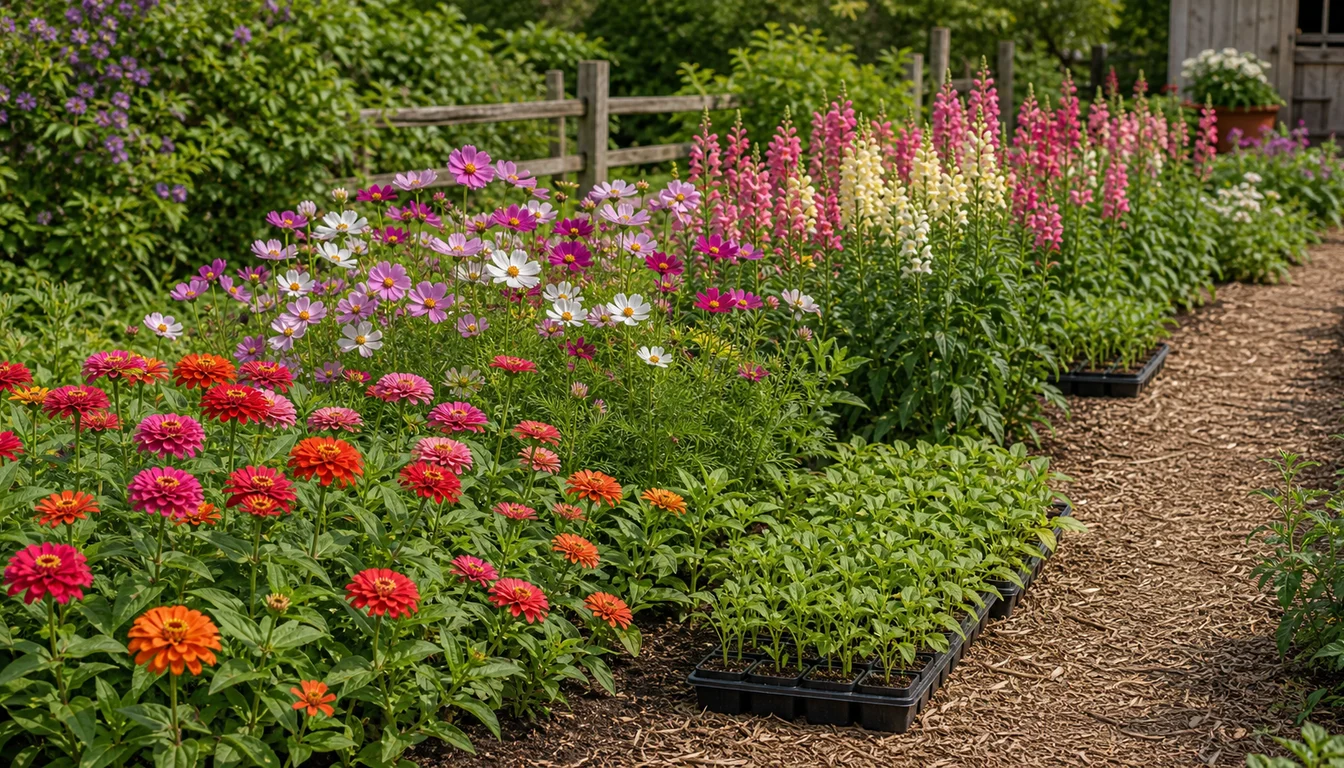
- Middle rowsZinnias and snapdragons, with a mesh support over the zinnias before they lean.
- Front rowCosmos and celosia, which are easy to reach for small jars.
- Permanent edgePeonies, liatris, or Siberian iris along one end, where annual rows can be replanted around them.
- Fall bulbsDaffodils or tulips tucked along the edge for the spring before the annuals start.
Keep a simple record of what you cut. Illinois points out that flower maturity varies by species, and a note of which stems lasted longest indoors shows which flowers deserve more space next year.
Quick Tips
- Choose zinnia varieties described as resistant to powdery mildew.
- Pick Siberian iris over bearded iris when vase life matters.
- Condition daffodils in their own container for 12 to 24 hours before mixing them with other flowers.
- Keep vases with lilies out of any room a cat can reach.
Recommended Plants
10 flowers worth considering.
Frequently Asked Questions
Are lilies safe to keep in a vase with cats in the house?
No. The ASPCA lists Lilium species as toxic to cats, causing kidney failure. If a cat may have eaten any part of a lily, contact a veterinarian or the ASPCA Animal Poison Control Center at (888) 426-4435 right away.
What is the easiest cut flower to start with?
Zinnias. Penn State Extension treats them as the foundation of a home cutting garden, and Illinois Extension notes that they germinate quickly when sown directly in the bed. Varieties resistant to powdery mildew hold up best.
Why should daffodils go in their own vase first?
Illinois Extension conditions daffodils in their own warm water for 12 to 24 hours before mixing them, because the sap they release can harm other flowers in the arrangement.
Which iris is better for cutting?
Illinois Extension finds Siberian iris a better cut flower than bearded iris because it lasts much longer in the vase. Cut it when the flowers are just starting to open and show color.
Should cut flowers be picked fully open?
It depends on the flower. Penn State notes that fully opened flowers fade quickly indoors, so peonies and Siberian iris are cut early, while Illinois Extension cuts zinnias, dahlias, and liatris fully open.
Sources & References
- Cut Flower Production, Penn State Extension
- Growing Cut Flowers for Joy, Penn State Extension
- Cut Flowers information sheet, University of Illinois Extension
- Bright blooms: How to care for flower bouquets, Illinois Extension
- Cut flowers: growing and selection, RHS Advice
- Growing Lavender in Iowa, Iowa State University Extension
- Lavandula angustifolia, North Carolina Extension Gardener Plant Toolbox
- Toxic and Non-toxic Plants: Lily, ASPCA
- Toxic and Non-toxic Plants: Narcissus, ASPCA
- Toxic and Non-toxic Plants: Tulip, ASPCA
- Toxic and Non-toxic Plants: Peony, ASPCA
- Toxic and Non-toxic Plants: Chrysanthemum, ASPCA
- Toxic and Non-toxic Plants: Lavender, ASPCA
- Toxic and Non-toxic Plants: Rose, ASPCA