Daylily vs True Lily
Choose daylily for spreading clumps and a succession of one-day flowers. Choose a true lily for upright stems and larger flowers, but keep both genera out of homes and gardens that cats can reach.
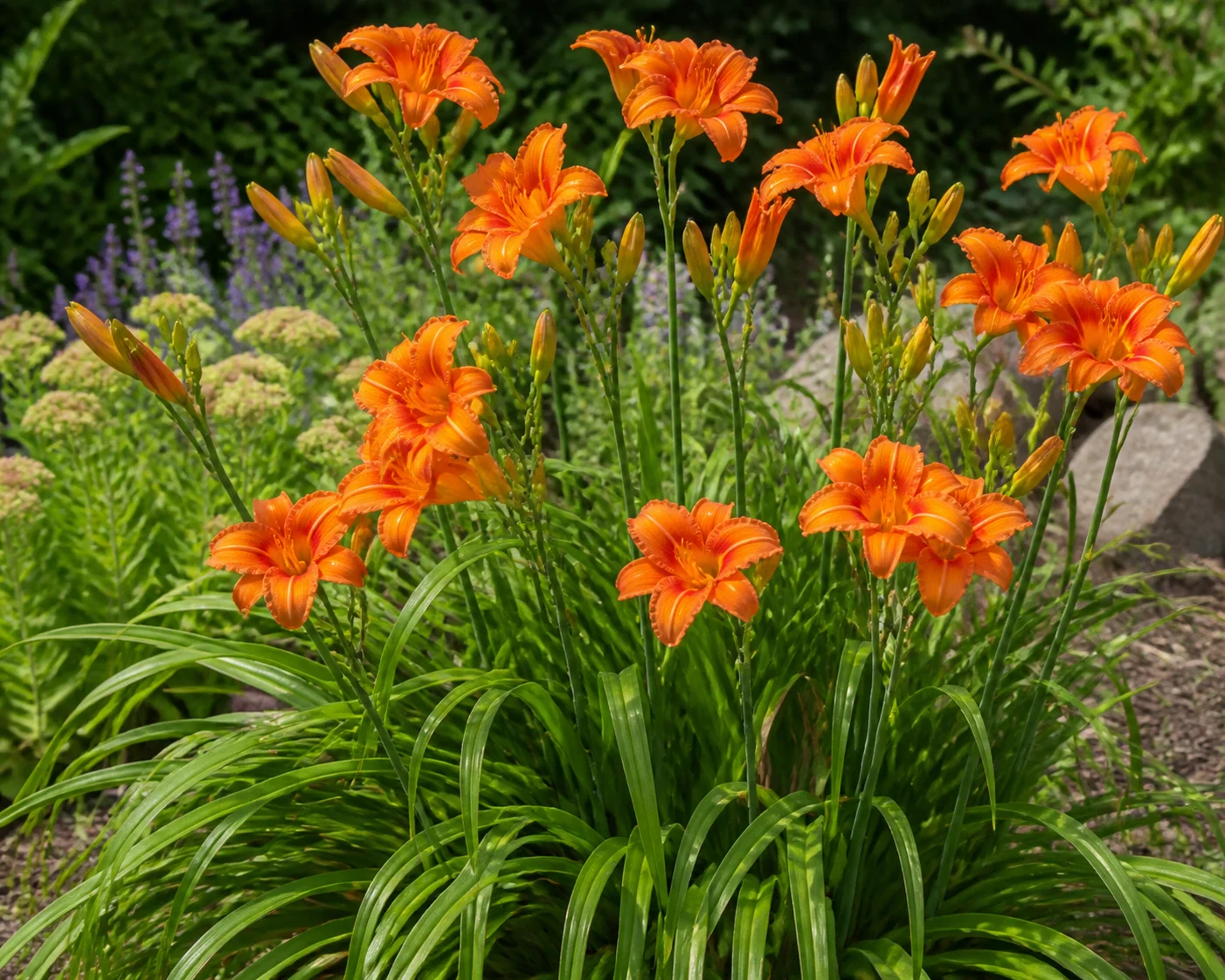
Daylily
Hemerocallis spp.
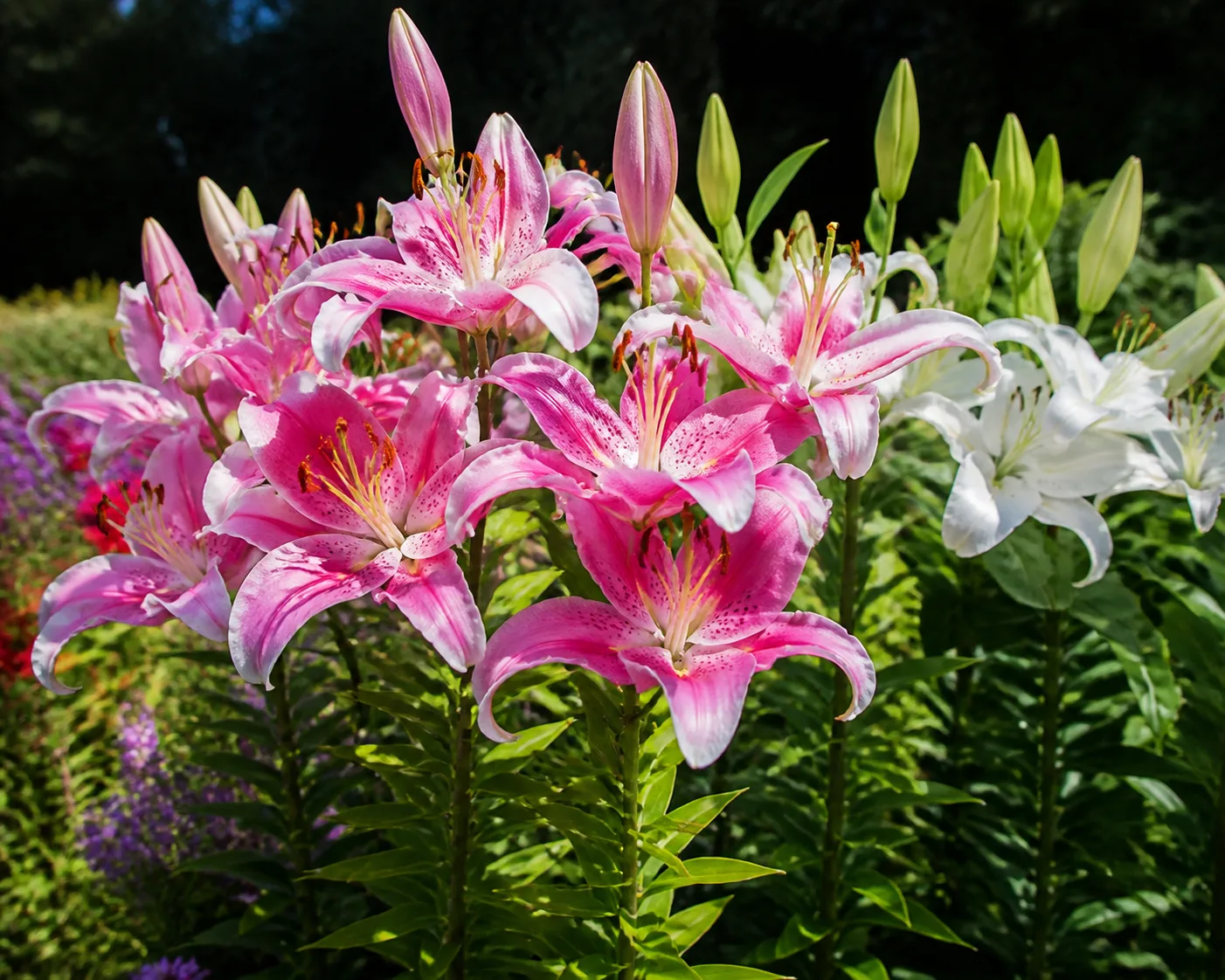
True Lily
Lilium spp.
Daylilies and true lilies share a common-name fragment and a flower shape, but they belong to different genera and grow from different structures. Daylily is Hemerocallis, while true lily is Lilium.
A daylily grows as a crown with fleshy roots and fans of leaves at ground level. A true lily rises from a bulb on a leafy upright stem.
That difference changes planting, division, display, and aftercare. It does not create a safe option for cats because both groups are highly toxic to them.
Specifications
Compare the traits that change the growing decision.
| Feature | Daylily | True Lily |
|---|---|---|
| Botanical genus | Hemerocallis | Lilium |
| What you plant | A crown with fleshy roots and leaf fans | A scaly true bulb |
| Leaf position | Leaves emerge from the crown at ground level | Leaves attach along the upright flower stem |
| Flower duration | One day per flower, with many buds per clump | Individual flowers last longer on a seasonal stem |
| How it expands | Forms a widening clump that can be divided | Produces bulb offsets over time |
| Best visual role | Massed foliage and repeated flowers | Vertical stems and large focal flowers |
| Cat safety | Highly toxic | Highly toxic |
The foliage is the fastest field clue. A daylily flower rises above a basal fan on a bare scape, while a true lily carries leaves up the stem beneath its flowers.
Both plants offer many cultivars, so height and hardiness belong to the exact selection. Do not copy a single range onto every daylily or true lily.
Best Use Cases
Choose by the job the planting needs to do.
Identifying the plant
Look below the flower
Daylily leaves rise in arching fans from the crown, and its flower stalk has no leaves.
True lily leaves attach along an upright stem that grows from a scaly bulb.
Broad perennial color
Clumps along a bed or slope
A daylily clump widens and can carry many buds, so new flowers replace the one-day blooms over several weeks.
A true lily makes a stronger vertical accent but does not spread into the same fan-shaped ground layer.
Tall flowers and cutting
Vertical summer display
Daylily flowers collapse after one day, which limits their value as cut flowers even when the clump keeps blooming.
Many true lilies carry large flowers on tall stems, and fragrant types can provide scent in the garden or a carefully placed bouquet.
A home or yard cats can reach
Pollen and plant parts are dangerous
Daylilies in the genus Hemerocallis can cause acute kidney injury in cats.
True lilies in the genus Lilium carry the same emergency-level risk, including exposure to pollen and vase water.
How can you tell a daylily from a true lily?
Start at soil level because the flower can mislead you. Daylilies make dense fans of long, arching leaves from a crown with fleshy roots.
Their flower stalk is called a scape. It rises above the foliage without leaves and branches near the top to carry several buds.
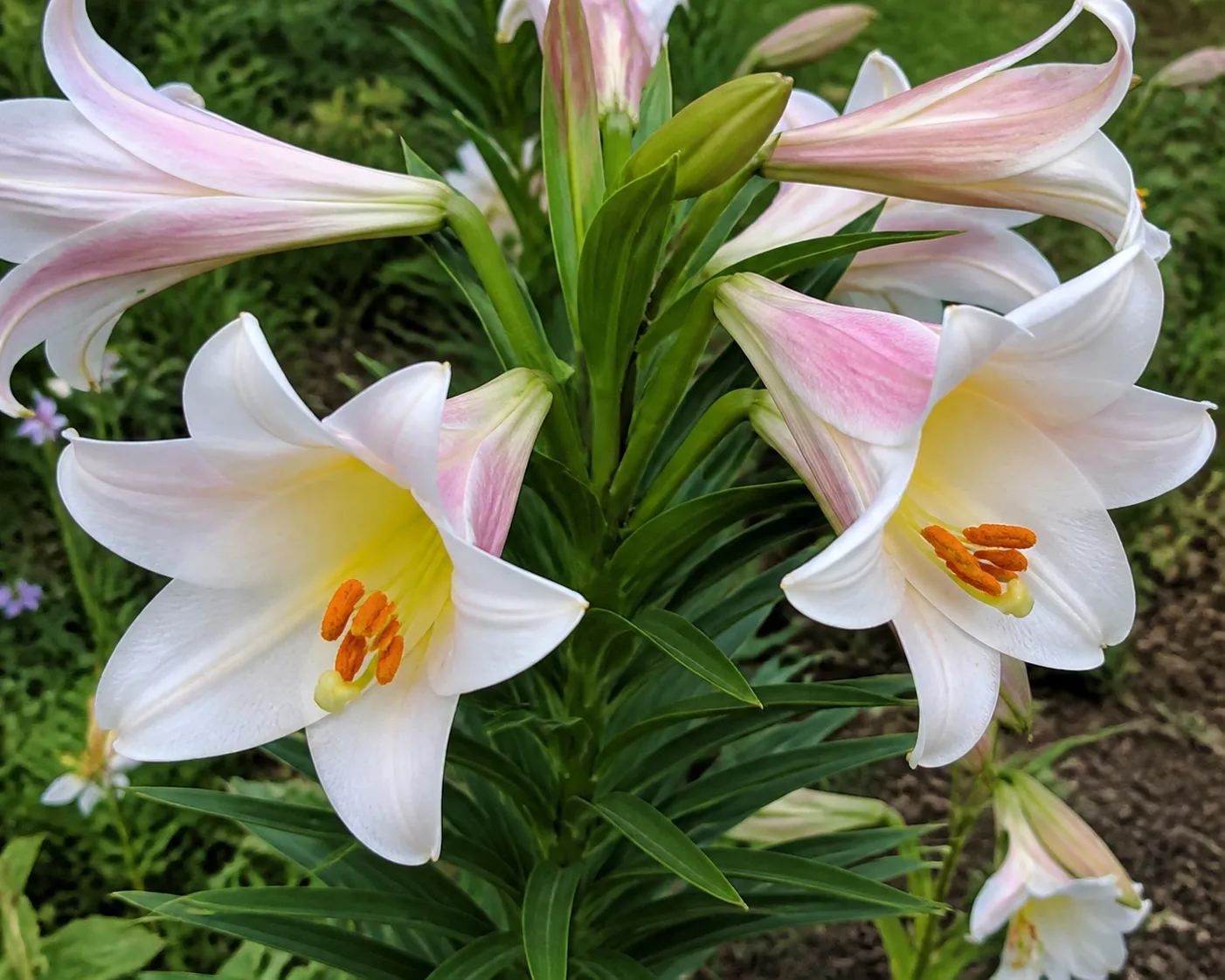
A true lily grows from a bulb made of overlapping scales. Its upright stem carries narrow leaves along the stem, then holds one or more flowers near the top.
Use this checklist when the label is missing:
- Leaves only at the base in fan-shaped clumps point to a daylily.
- Leaves spaced up the flower stem point to a true lily.
- A crown with fleshy roots is a daylily planting piece.
- A rounded structure made of scales is a true lily bulb.
- One collapsed flower after a day is normal for a daylily.
The leaves matter after flowers finish too. Identification from the whole plant is more reliable than matching petal color, because both groups have many flower forms and colors.
Are daylilies or true lilies safe for cats?
Neither is safe for cats. The FDA identifies true lilies in Lilium and daylilies in Hemerocallis as highly toxic.
The entire plant is dangerous, including stems, leaves, flowers, and pollen. Water from a vase holding true lilies can also expose a cat.
A cat can transfer pollen from its coat while grooming, so placing a bouquet on a high shelf does not remove every route of exposure. Outdoor cats can also reach daylily or lily beds in neighboring yards.
Dogs may develop stomach upset after eating lilies, but the FDA does not describe the same kidney-failure pattern seen in cats. That difference does not make either plant appropriate for an animal that chews garden plants.
Which plant better fits the garden job?
Choose daylily for a durable perennial mass where arching foliage and a sequence of flowers suit the design. Clemson Extension reports that individual flowers last one day, while a well-established clump can keep producing blooms for 30–40 days.
Cultivar timing matters. Early, midseason, late, and reblooming selections can extend a planting's display without claiming that every daylily flowers all summer.
Choose true lilies for upright stems and larger focal flowers. Many work well among lower perennials that hide the base of the stem after bloom.
The root structures require different planting methods:
- Set a daylily crown no deeper than about 1 inch below the soil surface.
- Spread its fleshy roots into well-drained soil and water until established.
- Plant a true lily bulb at the depth recommended for its size and type.
- Keep the bulb's root zone drained because saturated soil promotes rot.
- Mark the location before dormancy so later digging does not damage the bulb.
A daylily clump can be divided when crowding reduces vigor or flowers. True lilies usually increase through offsets, which are separated with the bulb rather than sliced through a crown.
What should you do after the flowers fade?
Remove a finished daylily flower for appearance if you wish, and cut the whole scape near the base after its buds are spent. Leave healthy foliage because it continues feeding the crown.
Some daylily cultivars rebloom and others do not. Deadheading cannot turn a single-bloom cultivar into a rebloomer, although removing seedpods can keep the planting tidy.
On a true lily, remove the faded flower or developing seedpod without cutting away the leafy stem. The leaves must continue photosynthesis to replenish the bulb.
Wait until the true lily stem yellows naturally before removing it. Cutting a green stem to hide it weakens the next season's stored growth.
Keep the plant structure tied to the aftercare. Daylily scapes and true lily stems may look similar from a distance, but one rises bare from a crown and the other carries the leaves that feed a bulb.