verifiedSource Reviewed
Hoya Carnosa: Waxy Vine for Bright Indoors
Hoya carnosa
Family: Apocynaceae
wb_sunnyLight
Bright indirect, some gentle morning sun
water_dropWater
Low to moderate; dry out between waterings
heightHeight
Vines 3-10 ft indoors with support
publicZone
Zone 10-12 outdoors; elsewhere as houseplant
airAir Quality
Air Quality Note

Native Region
Eastern Asia and Australia
Read the Vine Before You Chase Blooms
A healthy Hoya carnosa grows like a tough little epiphyte. Thick leaves store water, thin stems wrap around a support, and old flower spurs can bloom again if you leave them alone.
The first Hoya care decision is patience. New owners often expect a full basket as fast as satin pothos, then overwater or overfeed when the vine sits still. Hoya grows in pulses, especially indoors.
Look at the newest stem tips before you change the routine. Firm leaves and extending nodes mean the plant is building strength; shriveled leaves with a wet pot point to root trouble, not thirst.
- check_circleKeep old bloom spurs unless they are dry and dead.
- check_circleGive young vines a hoop, trellis, or shelf edge before stems tangle.
- check_circleExpect fragrance only after the plant has enough light, roots, and age.
Choose the Leaf Pattern You Can Keep Bright
Leaf pattern changes the care promise. A plain green Hoya carnosa forgives more shade, while variegated forms need stronger light to hold cream or pink edges.
Buy for firm leaves and clean nodes, not for a huge coil of vines. Long bare runners can be normal on Hoya, but soft stems or black spots near the soil line are a bad start.
Classic carnosaGreen waxy leaves; best first Hoya for steady indoor growth.
Krimson QueenCream-edged leaves; needs bright light to avoid plain green growth.
Krimson PrincessCream centers; burns faster against hot glass.
CompactaCurled rope leaves; dries slowly and hides pests in folds.
Give It Bloom Light Without Hot Glass
Flowers come from energy, so Hoya carnosa needs bright indirect light for the best chance at buds. A north room usually keeps leaves alive but rarely pushes strong bloom spurs.
East windows work well because the plant gets morning sun before the glass heats up. A sheer curtain can make a south or west window usable, but direct afternoon sun can bleach variegated leaves.
Watch internodes. Tight leaves on short sections mean light is close to right; long bare runners reaching across the room mean the vine wants a brighter spot.
- fiber_manual_recordMove the plant closer to light in small steps over one to two weeks.
- fiber_manual_recordRotate only for even growth; do not keep moving a budded plant.
- fiber_manual_recordUse a grow light if the room cannot support bright indoor plants.
Guide — See AlsoAir Purifying Plants for Cleaner Indoor AirLearn how to pick, place, and care for air purifying plants so they help your indoor air instead of just looking pretty.
chevron_rightEmail Updates
Join the KnowTheYard update list
Zone-specific advice, seasonal reminders, and new plant guides — no filler.
Water Deeply, Then Let the Pot Breathe
A Hoya pot should not stay wet for a week. Water until the mix is evenly moist, drain the saucer, then wait until the top half of the pot feels dry and the pot feels lighter.
Leaves help you read timing. Slight give in the leaves can mean the plant is ready for water, but thin, wrinkled leaves in wet soil mean roots are failing. That is when more water makes the problem worse.
Snug roots change the schedule. A small pot dries fast and supports bloom stress; a large pot holds cold, wet mix around fine roots.
Water earlier in warm bright months and later in cool rooms. The best time to water indoor plants is when you can drain the pot fully, not when the plant will sit wet overnight.
lightbulbUse the pot weight first
Calendar watering causes most Hoya failures. If you need a rhythm, use houseplant watering frequency as a starting point, then let pot weight make the final call.

Keep the Pot Snug and Airy
Hoya roots need air pockets. A mix with orchid bark, perlite, and a small amount of potting soil fits the way the plant grows on tree limbs and rocky pockets.
Repot only when the plant dries too fast, tips stall from root crowding, or the mix has collapsed into a dense sponge. Moving up one pot size is enough.
Pot sizeOne size wider than the root ball, not a decorative oversized cachepot.
DrainageOpen drain hole plus a saucer you empty after watering.
Mix feelChunky and springy, not peat-heavy and packed.
Root Cuttings From Nodes, Not Single Leaves
A single Hoya leaf can root and sit there for months, but it will not grow a new vine without a node. Take stem cuttings with at least one node and one or two leaves.
- 1Cut below a node with clean snips.
- 2Let the cut end dry for a short time if the stem is juicy.
- 3Root in water, damp perlite, or a small airy mix.
- 4Pot the cutting when roots branch, not when the first white nub appears.
Keep cuttings warm and bright. Cold windows slow rooting and invite rot, especially on thick-leaved pieces.
warningDo not cut bloom spurs for cuttings
Old spurs are the plant's fastest route back to flowers. Use regular vine nodes and leave spur clusters attached to the mother plant.
Guide — See AlsoBest Herbs to Grow Indoors for Real Harvests, Not Spindly PotsChoose indoor herbs that can actually produce in your light, temperature, and container setup, then match each one to th
chevron_rightCheck Sticky New Growth First
Sticky leaves can be normal nectar when Hoya buds form, but sticky stems with bumps point to scale or mealybugs. Inspect the newest growth, stem joints, and the underside of thick leaves.
Compacta types need slower checks because pests hide inside the curled leaves. A cotton swab with alcohol can remove small mealybug clusters before they spread.
- fiber_manual_recordScale looks like tan or brown bumps stuck to stems.
- fiber_manual_recordMealybugs look like white cotton at nodes and leaf bases.
- fiber_manual_recordMites show up as dull, stippled leaves in dry rooms.
Use Seasons to Decide When to Feed or Rest
Spring and summer are for growth, support, and light adjustments. Feed lightly with indoor plant fertilizer only when new leaves or stems are active.
Fall can bring buds if light stays strong and nights cool slightly. Once buds appear, keep the pot in place because moving it to a darker shelf can make buds dry and drop.
If you grow other winter-blooming plants such as Christmas cactus, keep their routines separate. Hoya buds come from mature spurs and steady light, not from the same dry-cool treatment.
Winter is a waiting season. Keep the vine warm, water less often, and skip fertilizer if the plant is not pushing new growth.
- check_circleSpring: prune dead stems and start cuttings.
- check_circleSummer: watch hot glass and fast dry-down.
- check_circleWinter: protect from cold drafts below normal room temperature.
Place It Away From Pets and Cold Drafts
Hoya is not usually treated as a high-risk houseplant, but the milky sap can bother skin or mouths. Hang it where pets cannot tug down long vines.
This plant belongs indoors in most climates. Outdoors, use it only in warm sheltered spots and bring it in before cold nights stress the roots.
infoBest fit
Hoya carnosa suits a bright shelf, trellis, or hanging spot where slow growth is welcome. Choose spider plant if you want fast baby plants instead of a patient bloom vine.
eco
Keep Exploring
Related Plants
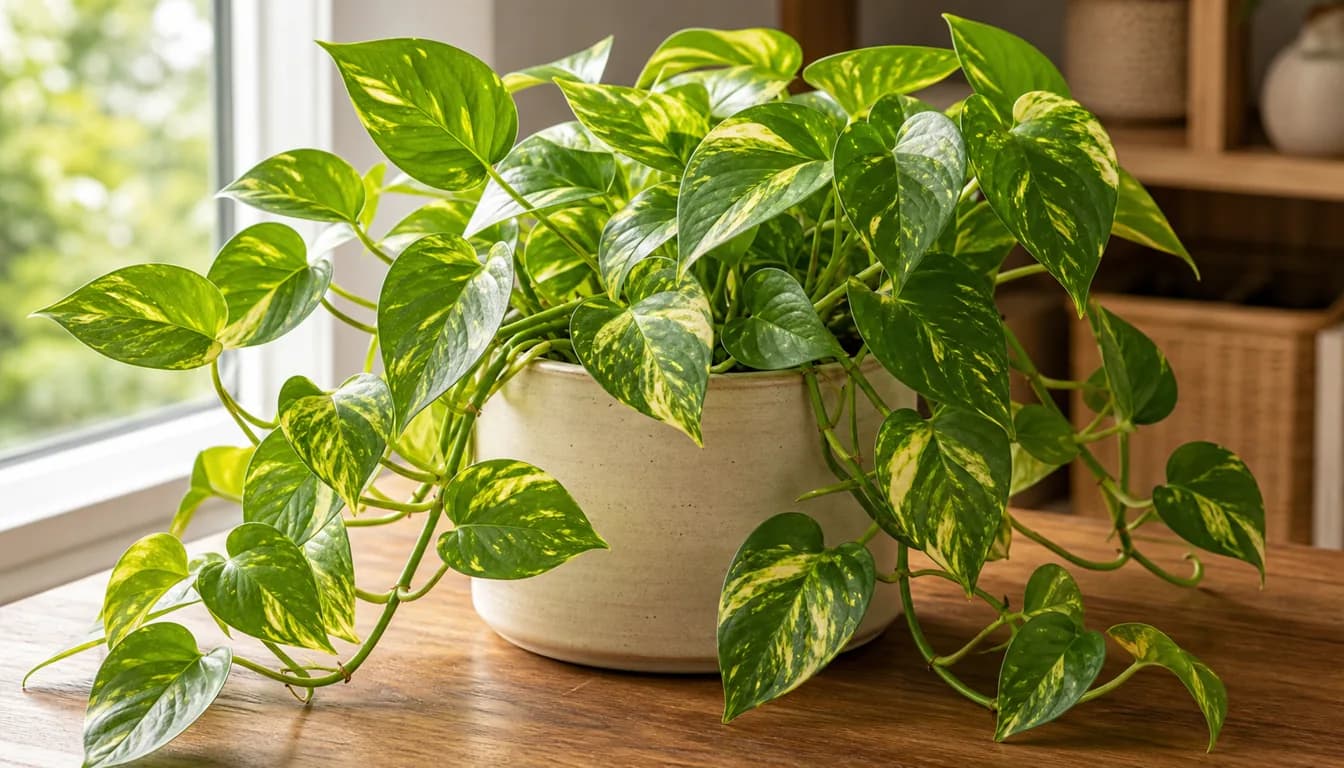 Houseplants
Pothos
Golden Pothos (Epipremnum aureum) is the classic trailing houseplant that forgives low light, skipped waterings, and less-than-perfect soil. Its green leaves sp
 Houseplants
Neon Pothos
Neon Pothos is the color-first pothos: its bright yellow-green leaves look best in medium to bright indirect light. Grow it like a durable vine, but judge s
 Houseplants
African Violet
African Violet is a windowsill bloomer that rewards steady, small-pot care. Keep water out of the crown, give bright indirect light, and feed lightly so the
quiz
Frequently Asked Questions
How do I get wax plant to bloom indoors?expand_more
Give it bright indirect light, keep the pot snug, and do not cut old bloom spurs. A young or shaded Hoya carnosa may stay healthy for years before flowering.
Should I mist wax plant?expand_more
Misting is not the main care lever. Better light, an airy mix, and correct watering do more than wetting the leaves for a few minutes.
Why are the leaves wrinkled?expand_more
Check the pot before watering. Wrinkled leaves with dry, light soil need water; wrinkled leaves with wet soil often mean root damage.
menu_book
Sources & References
- 1.Royal Horticultural Society – Hoya carnosa Profileopen_in_new
- 2.University of Vermont Extension – Indoor Hoya Care Tipsopen_in_new
- 3.Missouri Botanical Garden – Hoya carnosa Plant Finderopen_in_new
- 4.Hoya carnosa, Royal Horticultural Society Plant Detailsopen_in_new
- 5.Hoya (Wax Plant) Care, University of Florida IFAS Extensionopen_in_new
- 6.Houseplants: Hoya, University of Vermont Extensionopen_in_new