
What's Dill? How to Sow It So It Keeps Coming
Anethum graveolens Apiaceae
Dill reaches two and a half to five feet, which the small pot it is sold in does not prepare anyone for, and it transplants poorly because of the long taproot NC State and Illinois both name. It is sown where it will grow, sown again every two weeks because plants decline soon after flowering, and it gives leaf or seed rather than both from the same plant.
Care snapshot
How Tall Does Dill Actually Get?
NC State puts Anethum graveolens at 2 feet 6 inches to 5 feet tall and 2 to 3 feet wide. That is the number the small pot on the herb bench does not prepare anyone for.
A plant bought alongside thyme, parsley and the other essential kitchen herbs finishes the season closer in size to a sunflower than to any of them.
Wisconsin Horticulture gives a lower range, 18 inches to 4 feet, and notes short varieties that are excellent for containers. A named short variety is the one to buy for a pot, and plain dill should be expected to run tall.
- Height
- 2 feet 6 inches to 5 feet, or 18 inches to 4 feet by Wisconsin's range, depending on the type
- Spread
- 2 to 3 feet
- Light
- Full sun of six or more hours, or partial shade
- Soil
- Well-drained, slightly acidic loam with high organic matter
- Grown in
- Zones 2a to 11b, as an annual
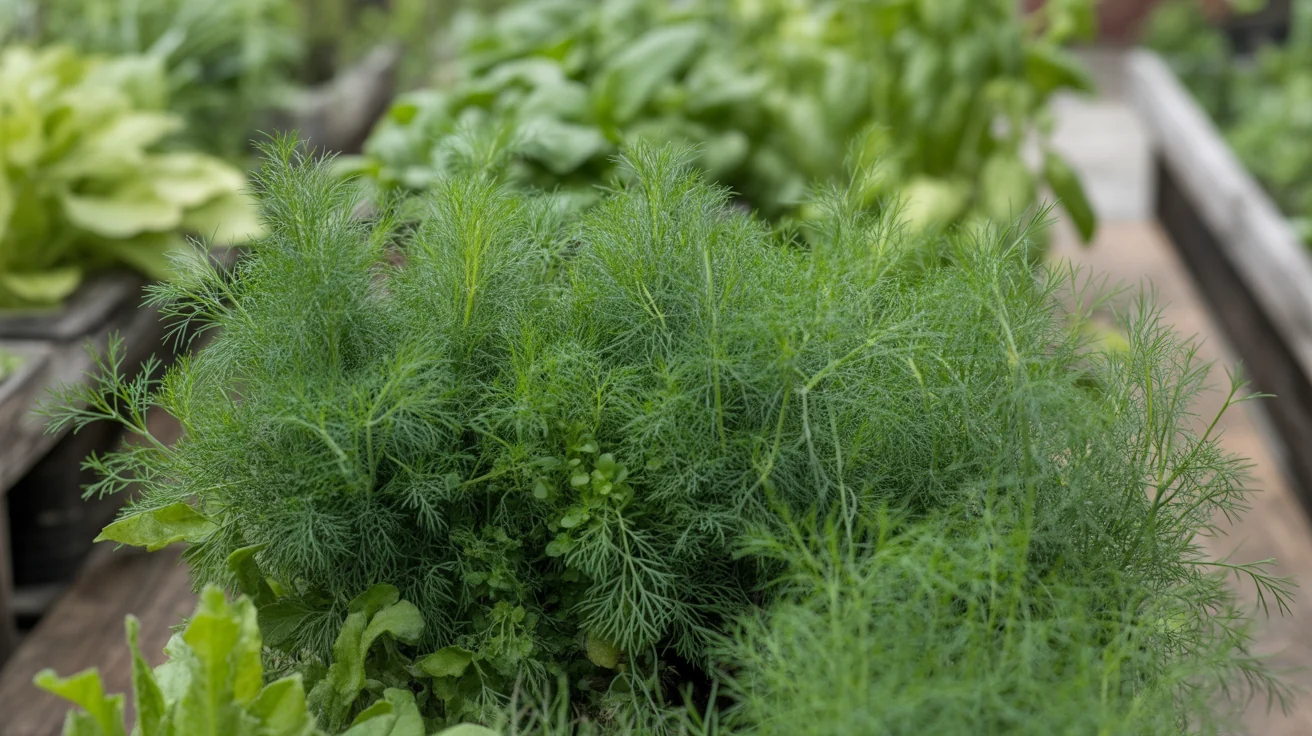
The foliage is what most people are buying. Wisconsin describes soft, alternate, blue-green leaves, finely divided to give a fern-like appearance, and its carrot-family relatives share that finely cut leaf.
A plant that tall changes the bed around it. Anything on its shaded side gets less sun than it was promised, and a row of dill down the middle of a bed cuts that bed in two by midsummer.
The zone range is unusually wide, running from 2a to 11b, because dill is grown as an annual everywhere in it. Nothing overwinters, so the northern limit is about the length of the season rather than about cold, which makes the hardiness figure on a label close to meaningless here.
Why Shouldn't You Buy Dill as a Seedling?
Both sources give the same instruction and the same reason. NC State calls dill a poor candidate for transplant because of its long taproot, and Illinois says it does best when directly sown, because the taproot system makes it difficult to transplant successfully.
Wisconsin is less strict. It compares the root to a carrot's taproot and says transplants can be used, but that they are not usually necessary because the plants grow very quickly.
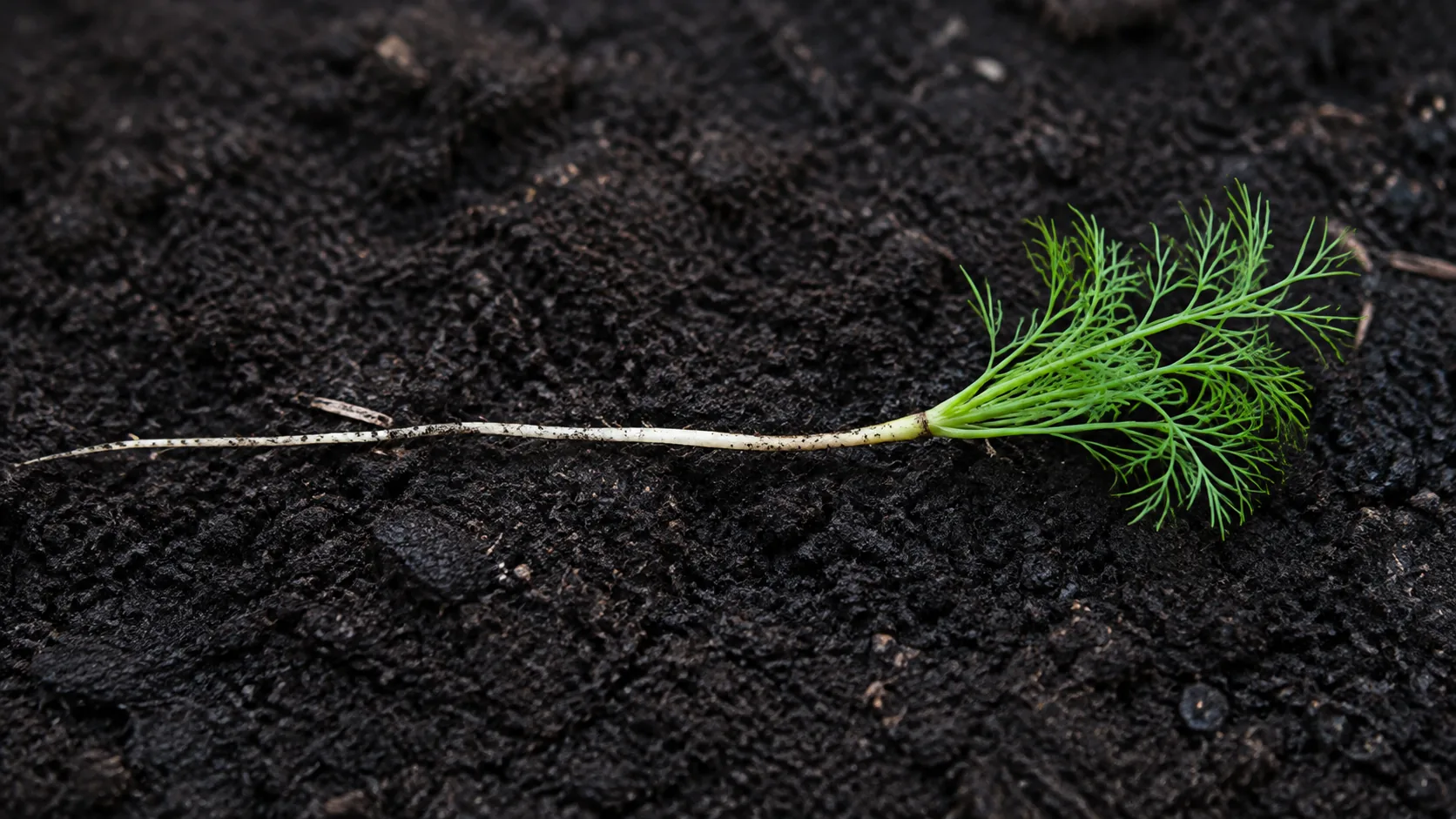
A seedling with one long root and few side roots has nothing to fall back on if that root is broken or bent, which is easy to do when it is lifted out of a pot.
A fibrous-rooted herb loses some roots and carries on. This one has no spares to lose.
Timing is the other half of the instruction. Illinois says to sow one to two weeks before the last frost, and Wisconsin gives the same window as a week or two before the last hard frost. That is earlier than most herbs go out, and UMN Extension lists dill among the cool-season herbs that tolerate cooler soils.
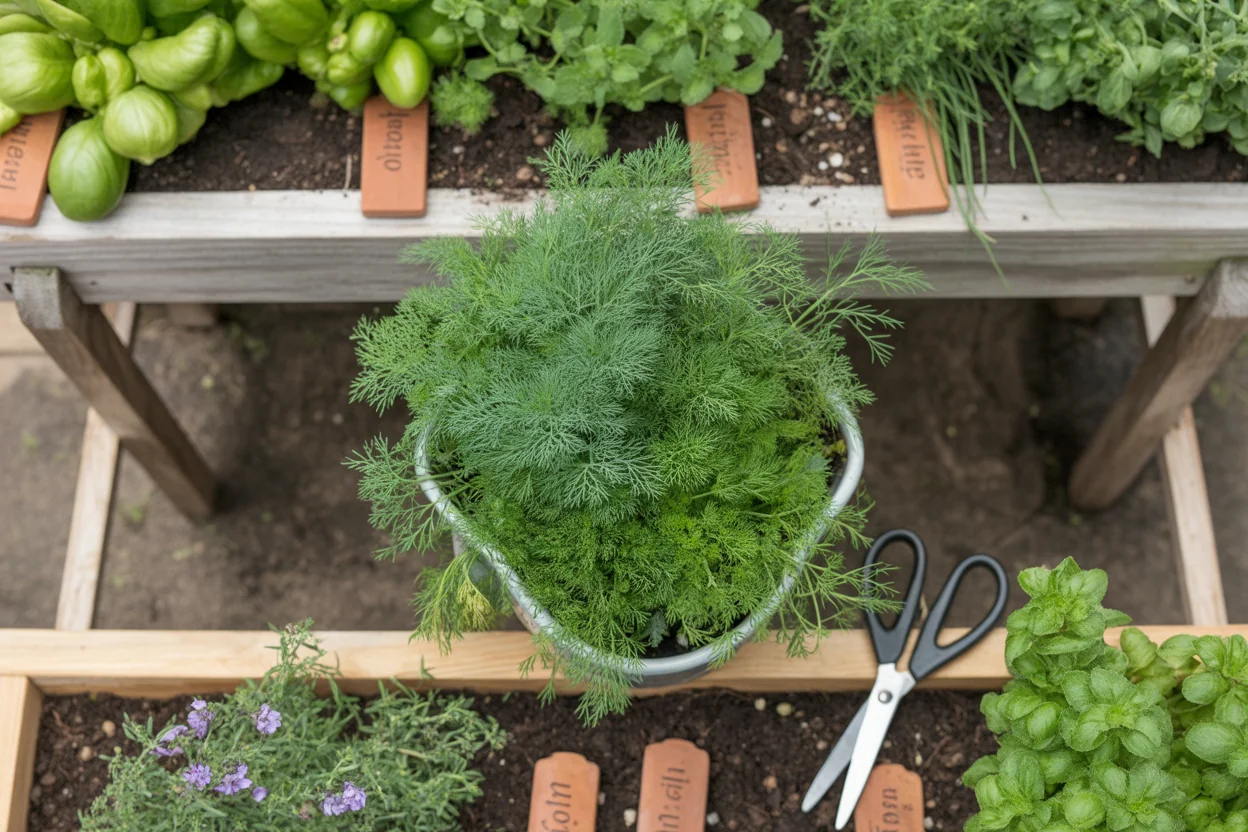
Where there is no bed, Wisconsin points to the short varieties, which it calls excellent for growing in containers.
How Thickly Do You Sow, and When Do You Thin?
Sowing depth is the easy part. Wisconsin gives 1/8 to 1/4 inch and NC State 1/4 inch, and Wisconsin expects germination in 10 to 14 days.
The part people skip comes three weeks later.
Wisconsin thins to 3 to 6 inches apart when the plants are 3 to 4 weeks old, and on a plant that cannot be transplanted, thinning is the only spacing tool there is.
- Sow 1/8 to 1/4 inch deep, a week or two before the last hard frost.
- Expect 10 to 14 days to germination.
- Thin at 3 to 4 weeks old, to 3 to 6 inches between plants.
- Pull or snip the thinnings in place rather than lifting them to replant, since a lifted seedling has the taproot problem described above.
The two published spacings look like they disagree. Wisconsin's 3 to 6 inches and NC State's 2 to 3 foot spread are describing the same plant at two different jobs, and which one applies depends on what the row is being grown for.
A cutting stand of dill weed never reaches full size, because it is harvested and resown long before it can.
A plant left to flower and ripen seed does reach it, and that one wants its full width.
Thin the leaf rows close and give the seed plants room.
Wisconsin compares the root to a carrot's, and the two are thinned the same way, by removing the extras where they stand.
Which Spot Suits Dill Best?
NC State asks for full sun of six or more hours, with partial shade of two to six hours as the fallback.
The soil it wants is a well-drained, slightly acidic loam with plenty of organic matter.
Most beds already meet that, so the thinking goes into the placement decision that follows from the height instead.
- Full sun of six or more hours, which NC State lists first.
- Well-drained, slightly acidic loam with organic matter in it.
- The north side of a bed, so a five-foot plant casts its shadow outside the growing space.
- Two to three feet of width per plant left for seed, which is more than a herb row usually allows.
NC State adds a note on neighbors. Dill planted too close to a carrot crop can reduce its yield, while it is a good companion for cucumber and broccoli, which is the kind of pairing companion planting is built on.
Does Dill Need Staking?
Height turns into a liability in a storm. Wisconsin says tall types benefit from staking, and the qualifier matters, because at the bottom of its 18 inch to 4 foot range this plant needs nothing at all.
The reason is in the stem rather than the height.
Dill stems are hollow, which Wisconsin says leaves them easily damaged by wind, rain or hail.
On an annual close to flowering, a broken stem is not replaced by a second flush, so storm damage in midsummer costs that plant's remaining harvest.
How Often Should You Sow Dill?
What ends a dill plant is flowering rather than frost.
Illinois says plants decline soon after they start to flower, and on a spring sowing that arrives well before the season does.
Waiting for the first plants to fail before sowing more leaves a gap of several weeks with nothing to cut.
The point of either interval is that there is always a plant in leaf while another is in flower.
The plant also handles part of the job itself.
Illinois notes that dill reseeds readily, and that plants left standing in the fall drop seed that germinates in spring.
Wisconsin makes the same point from the other direction, saying it self-seeds readily if the seed heads are not harvested.
That gives a first crop each year without sowing, at the cost of choosing where it appears.
- Sow one to two weeks before the last frost for the first crop.
- Sow a short row every 10 to 14 days after that, through the growing season.
- Leave a few plants standing in the fall so they drop seed for spring.
- Thin the volunteers early, while the taproot is still short enough to make it painless.
Volunteers are worth keeping exactly where they land, because a seedling that came up on its own has never been moved, which for this plant is the whole advantage. Cilantro is also direct-sown in short repeated batches because of its taproot, so the two fit one sowing routine.
Do You Want Dill Weed or Dill Seed?
Dill gives two crops, and the plant makes them a choice rather than a sequence.
The leaves are dill weed and the ripened seed is dill seed. Both come from stages the plant passes through in order, which is why taking one costs some of the other.
Wisconsin puts a start and an end on the leaf harvest.
Leaves can be cut any time after the plant is a few inches high, and cutting continues until the seed stalk begins to form. That stalk is the marker for the end of the leaf harvest.
Since plants decline soon after they flower, one allowed to run through to seed stopped being a leaf plant weeks before the seed was ready. Taking both from a single plant means taking less of each.
- Dill weed is the foliage, cut from a few inches high until the seed stalk forms, and used fresh or dried.
- Dill seed comes from letting the flowers mature, usually 2 to 3 weeks after the blossoms appear, then cutting the heads into a brown paper bag.
The sources differ on the stage to cut seed. NC State says the seed turns golden brown after the stems begin drying out, while Wisconsin cuts the heads once the seeds are fully developed but before they have turned brown, then dries them on screens or in paper bags for about a week before separating the seed.
The paper bag matters more than it sounds. Heads cut and left in the open shed their seed where they lie, and a closed bag catches all of it as the heads finish drying.
The practical answer is to split the planting.
Keep the earlier sowings cut for leaf, and let one or two later plants run through to seed, which also feeds the reseeding described above.
Cutting soft herbs follows the same habit here as anywhere, taking whole stems rather than tips.
Both crops dry well and keep in a sealed container, so neither needs anything elaborate once it is dry.
What Is Eating Your Dill, and Is It Safe for Pets?
The most conspicuous thing on a dill plant is usually not a pest.
NC State lists dill as larval host to the black swallowtail butterfly. Its caterpillar is banded and brightly marked enough to be spotted from several feet away, and being obvious is exactly why it gets removed.
A stand of dill can carry a few of them without much loss. Moving one to another plant costs a few fronds, and the plants are being sown every two weeks anyway.
Parsley, carrot and fennel host the same caterpillar, so a spare plant is rarely far away.
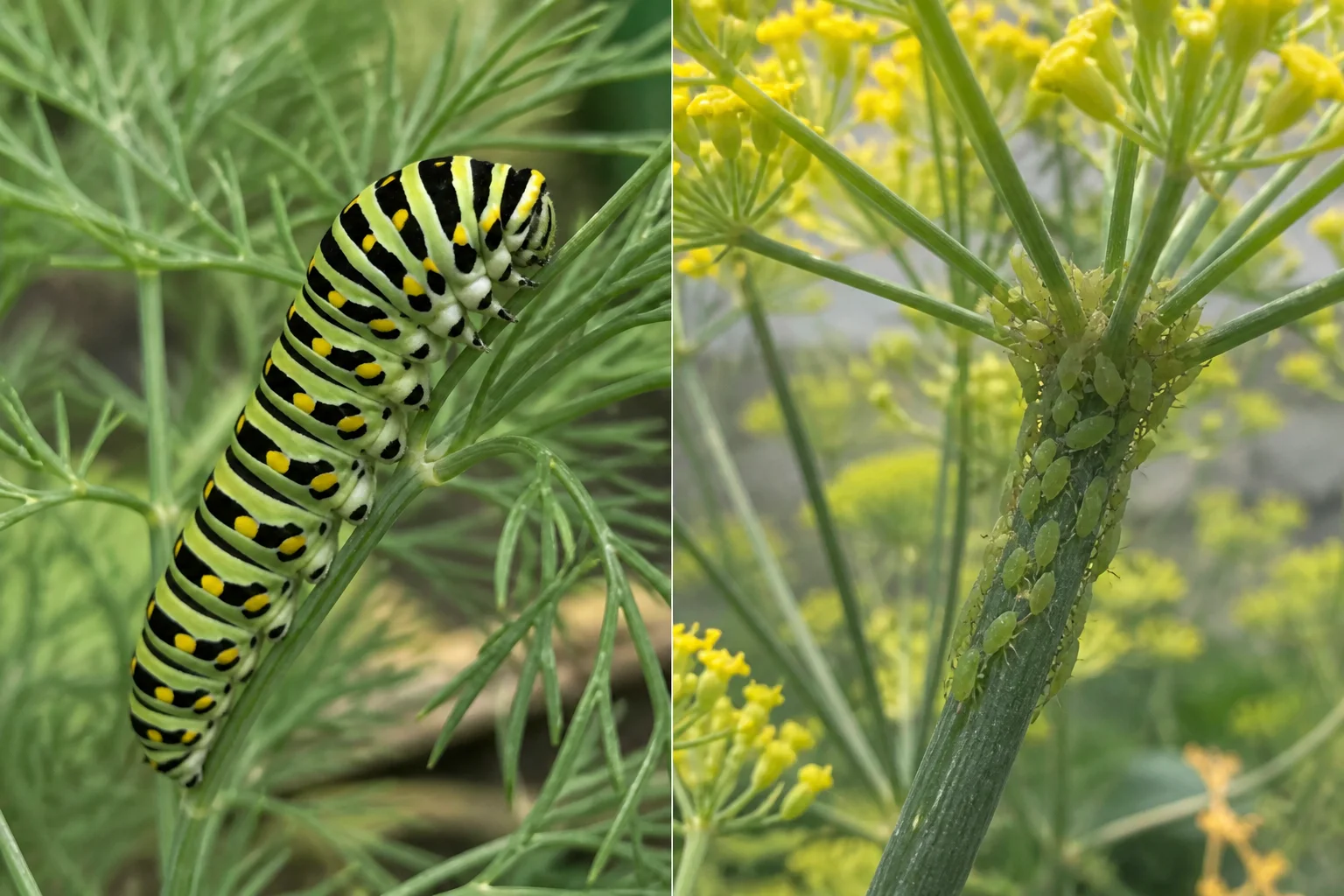
- A banded, brightly marked caterpillar is a black swallowtail larva, and dill is its host plant.
- Aphids cluster along the stems and on soft new growth, where a strong rinse removes most of them.
- Powdery mildew shows as a pale dusty film, and builds where air sits still around crowded plants.
- Blight and aster yellows are the two problems NC State says can cause significant damage.
Wisconsin's summary is shorter, reporting few pest problems other than an occasional aphid infestation or powdery mildew, and NC State opens its own list with no serious insect or disease problems.
NC State's dill entry also names tomato hornworms. Maryland Extension gives the hornworm's hosts as plants in the tomato family, mainly tomato and less often eggplant, pepper and potato, so a large green caterpillar on dill is far more likely to be the swallowtail larva above.
Spacing is the response to powdery mildew. UMN Extension says crowding causes poor air circulation and an increased risk of disease, and a plant given its full two to three feet has less of it.
What dill is actually known for in a vegetable bed is the insects it brings in. NC State says it attracts beneficial insects such as bees, wasps, hover flies and butterflies, the insects that beneficial insect plantings are built around, and it is one of the candidates among plants that attract ladybugs.
Its reputation beside squash rests on that rather than on repelling anything. Left to flower it does the same job as yarrow, which is the other flat-headed plant grown for it.
Frequently Asked Questions
Can dill be transplanted?
Not reliably. NC State calls dill a poor candidate for transplant because of its long taproot, and Illinois says it does best directly sown because the taproot system makes transplanting difficult.
How tall does dill grow?
NC State gives 2 feet 6 inches to 5 feet tall and 2 to 3 feet wide, which is large enough to shade whatever is planted behind it.
How often should dill be sown?
Illinois recommends successive sowings every two weeks through the growing season, because plants decline soon after they start to flower. Wisconsin gives every 10 to 14 days while the weather is cool.
When do you harvest dill seed?
Illinois says to let the flowers mature, usually 2 to 3 weeks after the blossoms appear, then cut the heads into a brown paper bag. NC State adds that the seed turns golden brown after the stems begin drying out.
Does dill come back every year?
Not as the same plant. Illinois notes that dill reseeds readily, so plants left standing in the fall drop seed that germinates the following spring.
Is dill safe for cats and dogs?
Yes, as far as eating the plant goes. Both the ASPCA and NC State list dill as non-toxic for dogs, cats and horses, though the ASPCA notes that its essential oils can cause dermatitis with prolonged contact.
Sources & References
- NC State Extension Gardener Plant Toolbox: Anethum graveolens
- Illinois Extension: Dill
- Wisconsin Horticulture: Dill, Anethum graveolens
- ASPCA Toxic and Non-Toxic Plants: Dill
- University of Minnesota Extension: Growing herbs in home gardens
- University of Maryland Extension: Tobacco and Tomato Hornworm on Vegetables
Related Plants
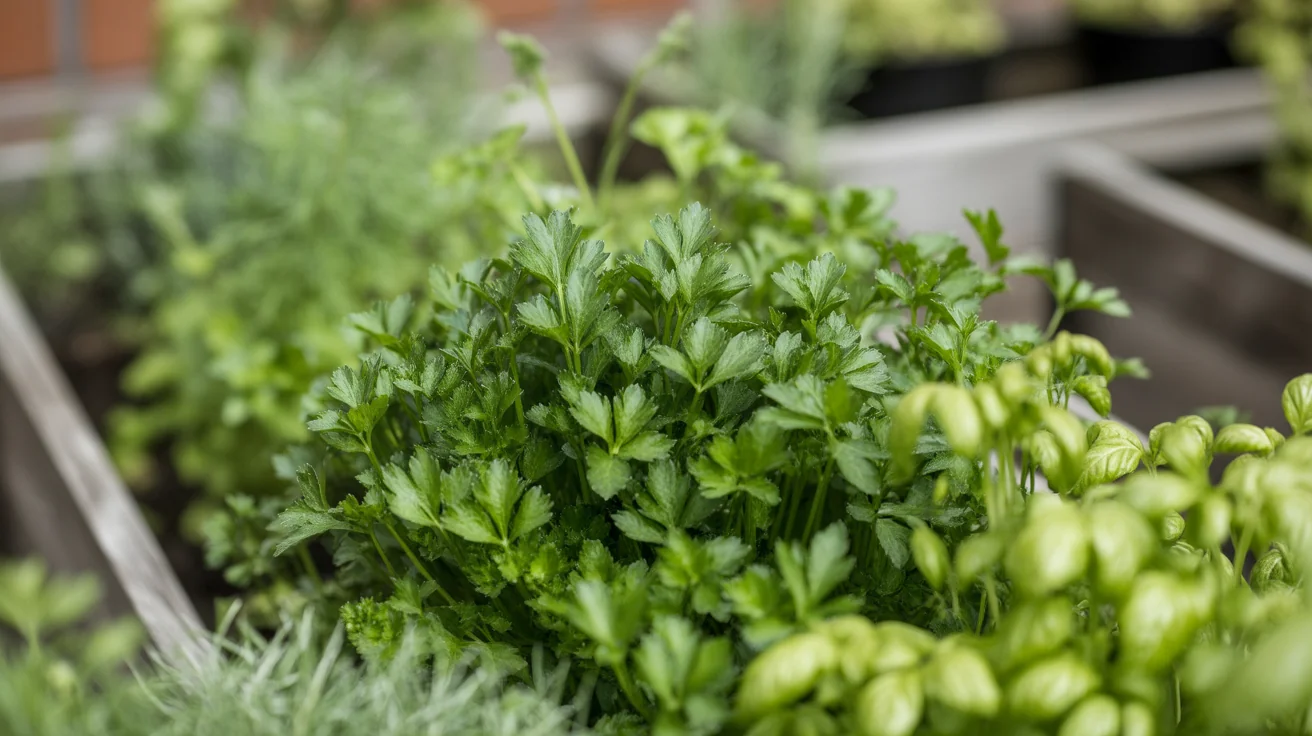
Parsley
Another feathery-leafed Apiaceae herb, but biennial and far slower to bolt than dill.
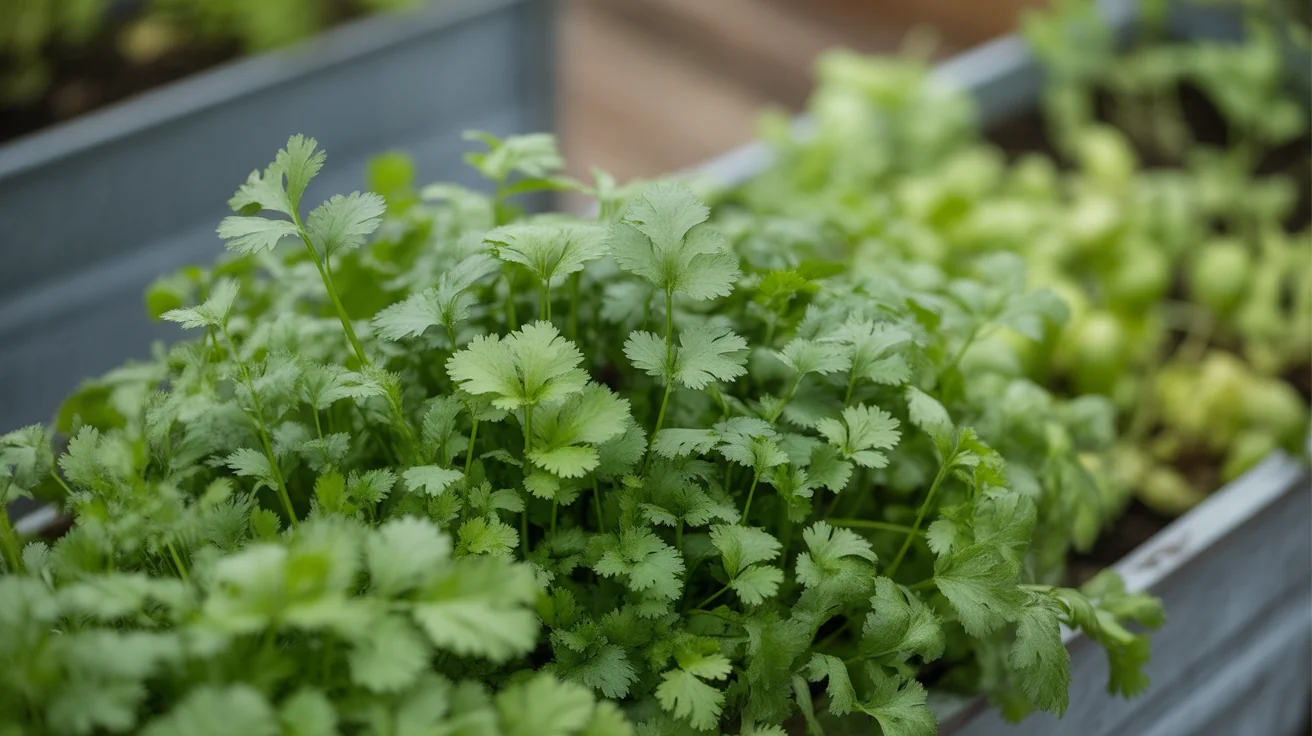
Cilantro
Shares dill's fast bolt-to-seed cycle and self-sowing habit, good for the same succession-sowing routine.
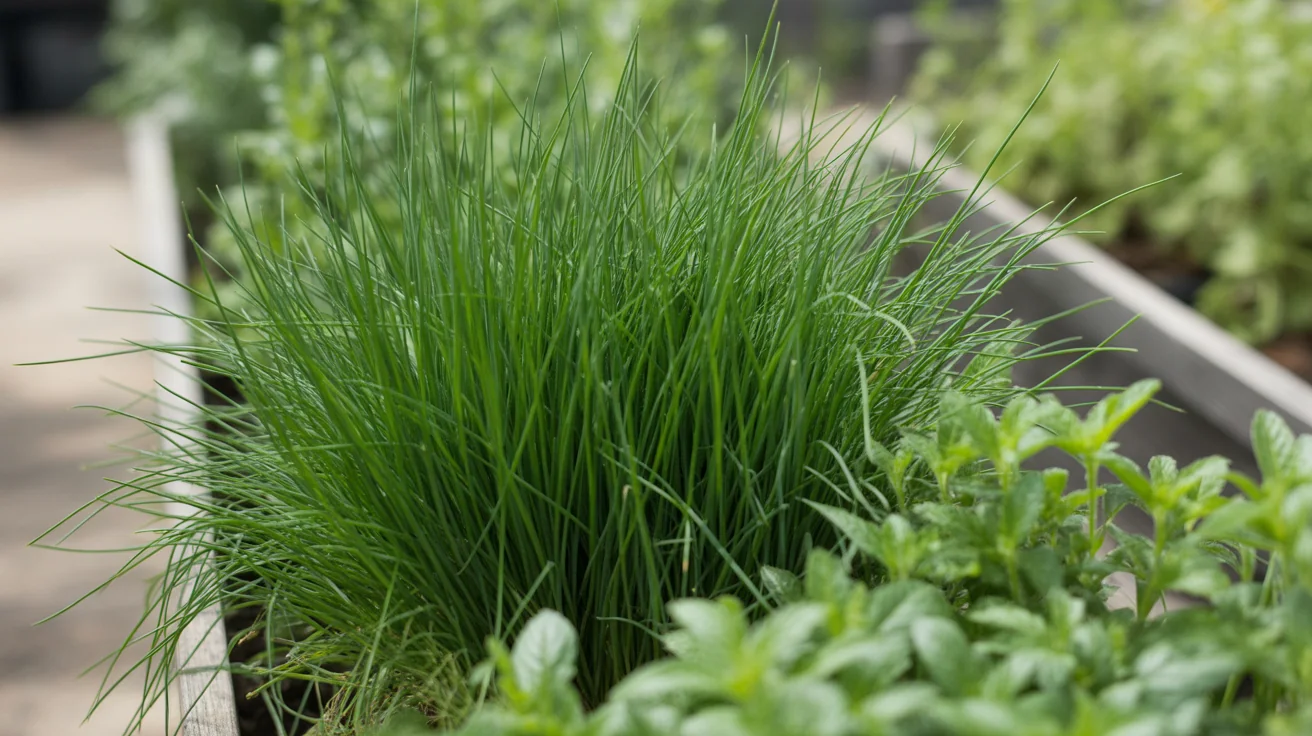
Chives
A hardier, perennial companion herb that fills the harvest gap while dill finishes its short season.
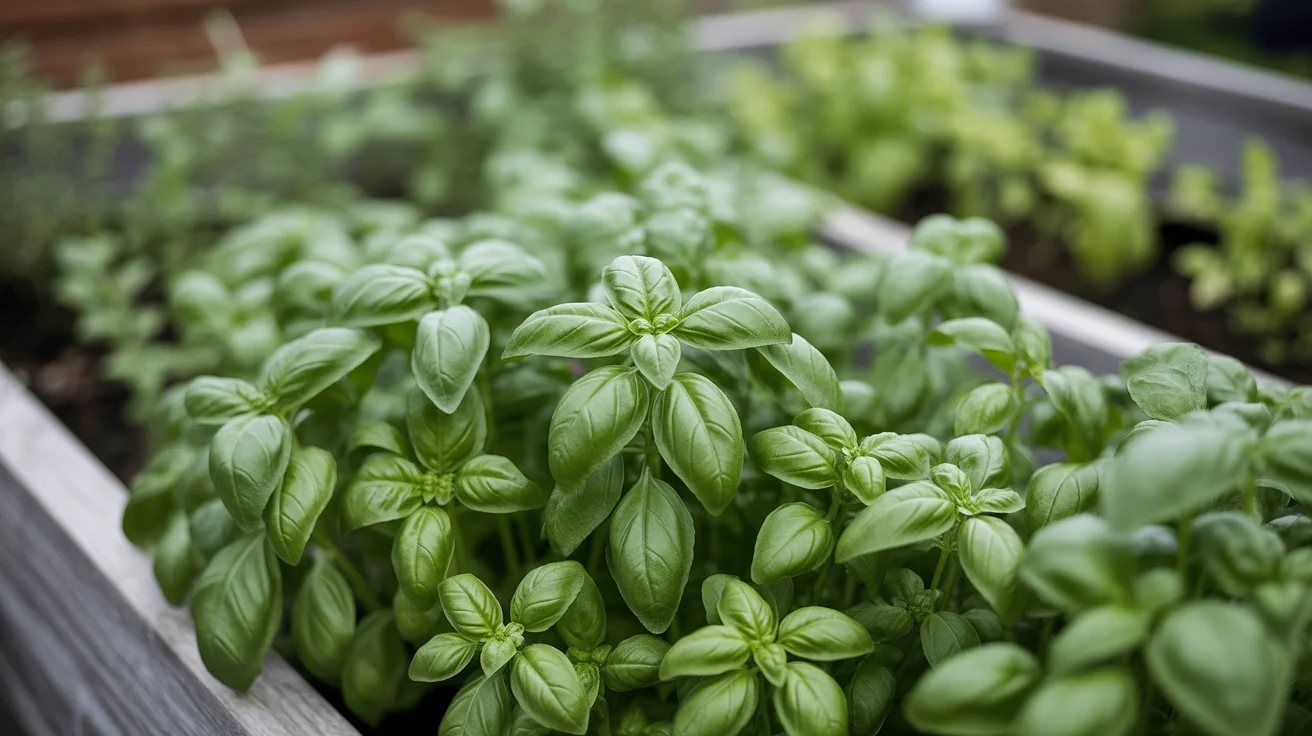
Basil
Basil is a tender annual that turns a warm season into armfuls of soft leaves, as long as it goes out into warm soil…
Bay Laurel
Bay laurel is a tree grown as a container plant, which is why every decision about it looks the way it does.
Lemongrass
Lemongrass is a tender tropical grass that does almost nothing until summer heat arrives and then increases…