
What's a Carrot? How to Grow Straight Roots Without Forking
Daucus carota subsp. sativus Apiaceae
Carrots are decided underground long before harvest. The bed has to be deep, fine, and stone free enough for the root shape you want, the seed row has to stay damp through slow germination, and the growth has to stay even enough that the root never needs to fork, crack, or panic.
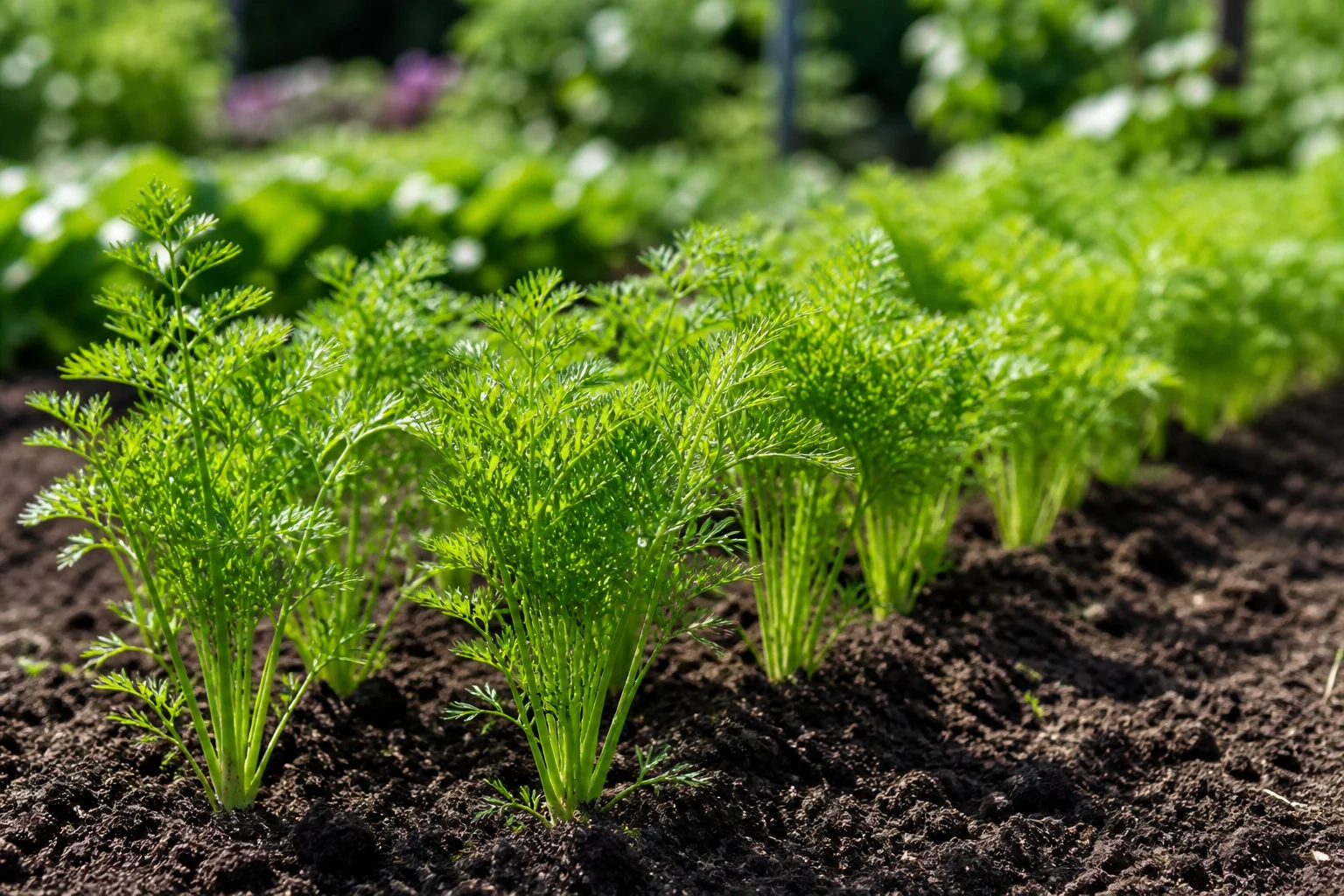
Care snapshot
Which Carrot Type Should You Grow for Your Soil?
The first Carrot choice is not fertilizer. It is root shape.
Long elegant roots look great on a packet, but they only stay elegant if the soil gives them a long clean lane underground.
If your bed is shallow, stony, or naturally heavy, a shorter broader Carrot type often gives a better real harvest than forcing an extra-long type into the wrong ground. Choosing the wrong shape turns every later care step into damage control.
That first choice saves work later because it lets the soil and the variety cooperate instead of fight each other.
This is one reason Carrot and beets are not interchangeable root crops. Beets forgive rougher ground.
Carrot roots document every underground mistake with their shape.
Color is a second axis alongside shape. Purple, red, yellow, and white types are sold beside the familiar orange, and they need the same bed preparation.
Orange roots get their color from beta-carotene, while purple and red types carry anthocyanin pigments. Pick color for the kitchen once the shape question is settled, since a beautiful color on a forked root is still a forked root.
Containers are really just another version of this same shape decision. A pot needs at least 12 inches of depth for most Nantes or Imperator types, but a wide, shallow container as little as 8 inches deep can still grow a full crop of round or short Chantenay types.
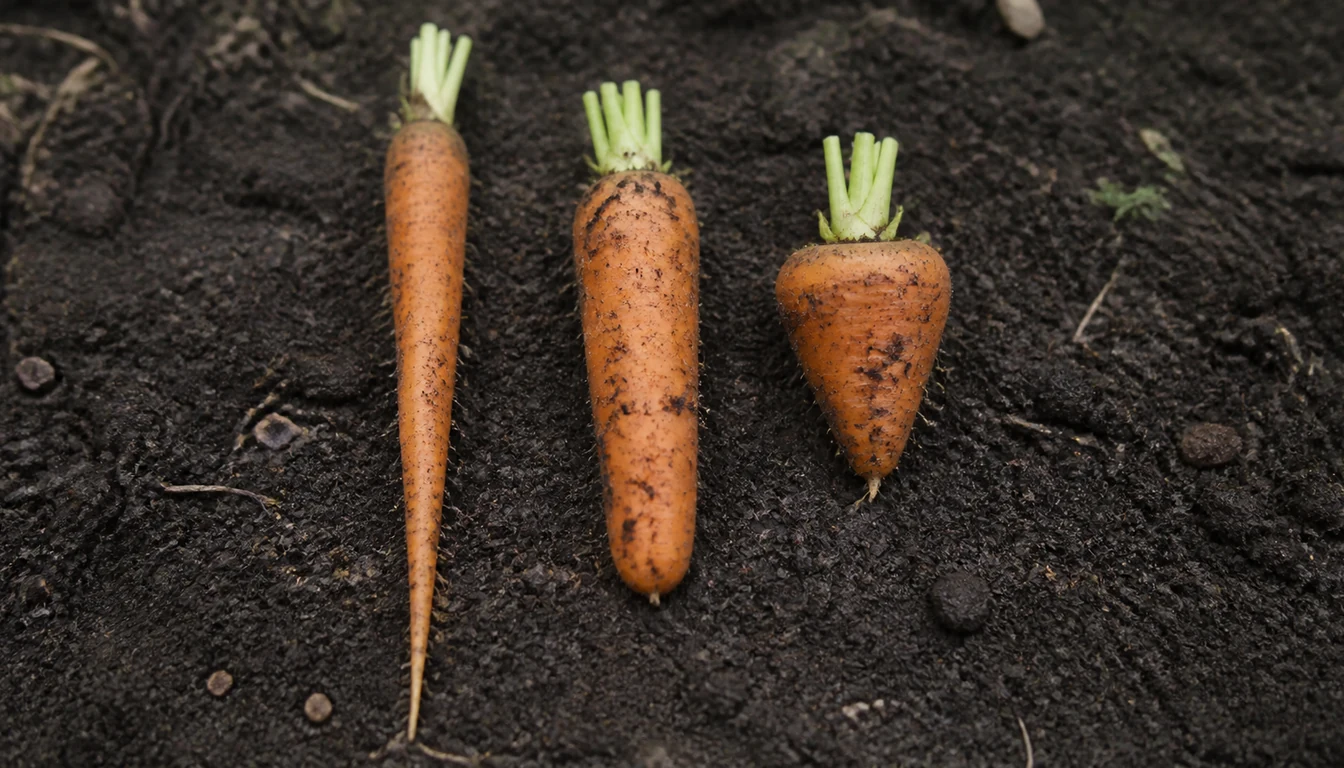
- Nantes types
- Reliable all-around roots for many home beds with decent depth and texture
- Chantenay types
- Shorter broader roots for heavier or shallower soil
- Imperator types
- Long roots that need deep loose stone-free ground
Is Queen Anne's Lace the Same Plant as a Carrot?
Garden Carrot and the wild roadside plant called Queen Anne's Lace are the same species. Queen Anne's Lace is wild Daucus carota, and NC State Extension lists the garden carrot as its cultivated subspecies, sativus, bred for a thick sweet root.
Because they are one species, a carrot bed allowed to flower near wild Queen Anne's Lace can cross with it, and seed saved from that cross tends to give roots closer to the thin, pale wild form.
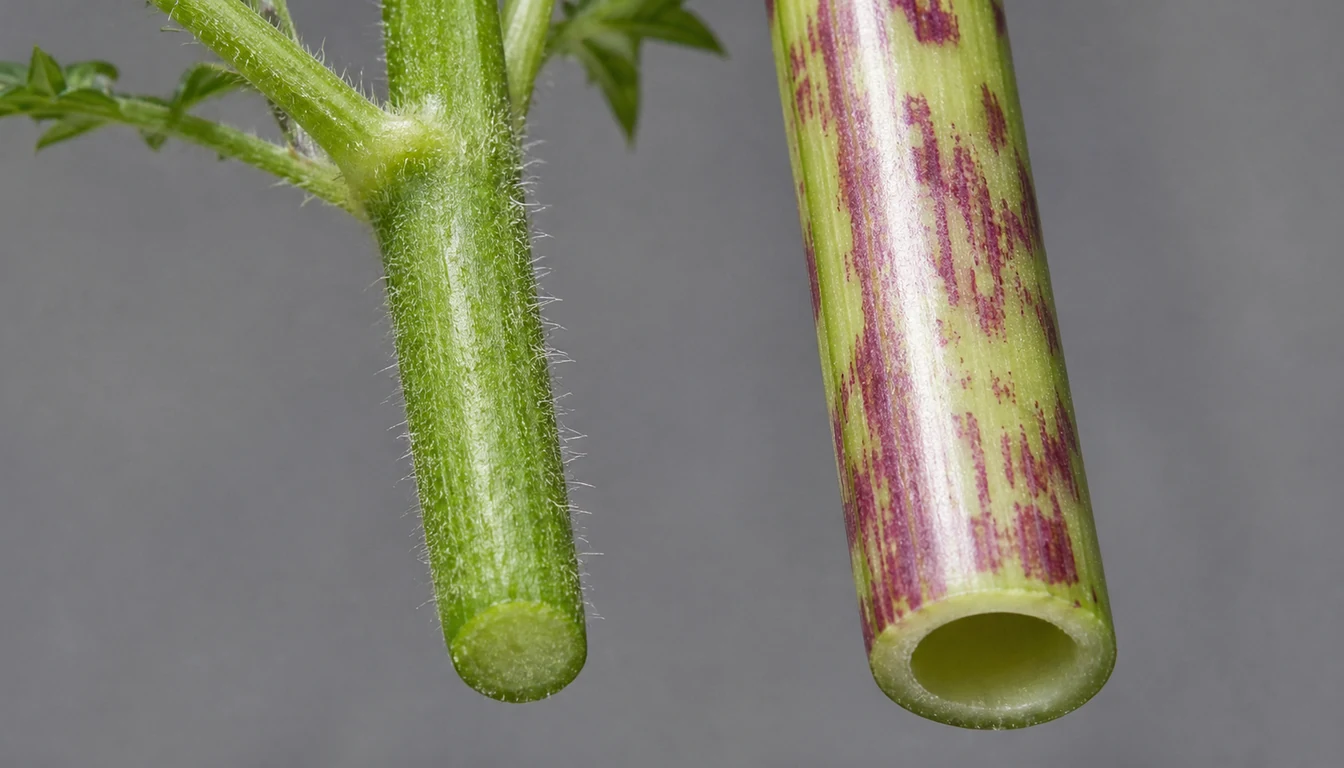
The bigger issue is a genuine safety hazard. Poison hemlock, Conium maculatum, is a carrot-family weed that NC State describes as highly toxic and possibly fatal to people and livestock. Its white taproot resembles a parsnip or carrot, it grows in the same roadsides, fence lines, and ditches as wild carrot, and NC State lists both it and water hemlock among the plants wild carrot is confused with.
Because of that risk, stem and smell checks are not a safe basis for eating wild carrot. They are useful for recognizing poison hemlock as a weed to avoid, by its hollow stems with small purple spots and the foul odor of its crushed leaves, stems, and roots, but a misidentification when eating can be fatal.
Do not eat any wild carrot-family root, leaf, or seed from an unknown patch. If someone may have eaten poison hemlock, call Poison Control at 1-800-222-1222 or emergency services right away.
Wild carrot is not harmless to handle either. NC State notes that its sap can irritate skin in sunlight and cause contact dermatitis in some people, and that poison hemlock can cause dermatitis on sensitive skin, so gloves and long sleeves make sense when pulling either from a garden edge.
For pets the two plants sit far apart. The ASPCA lists the garden carrot as non-toxic to dogs, cats, and horses, while noting it contains psoralens that can irritate skin. It lists poison hemlock as toxic to all three, with signs that range from agitation, tremors, and drooling to paralysis and death. If a pet chews a wild carrot-family plant that may be hemlock, call a veterinarian or the ASPCA Animal Poison Control Center at (888) 426-4435 right away.
How Do You Prepare a Bed for Straight Carrots?
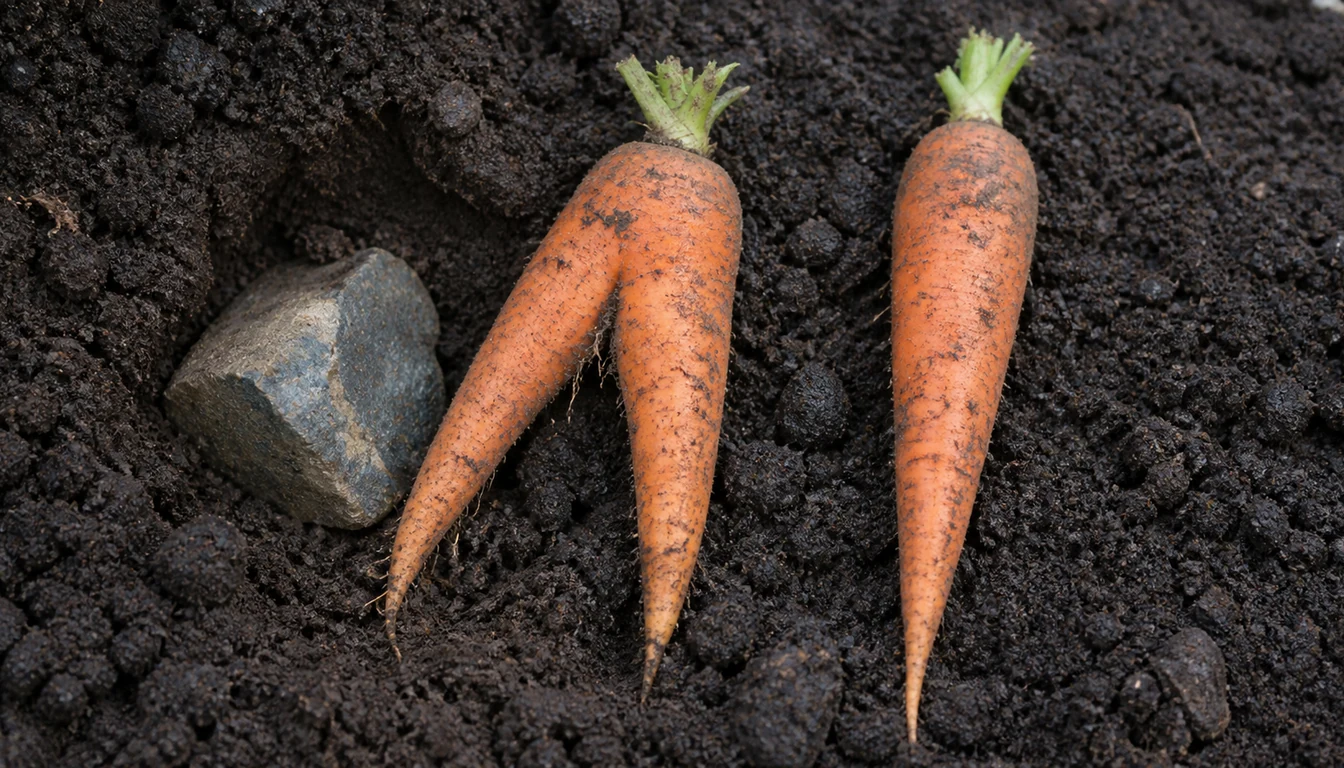
A tiny Carrot seed is trying to make one clear taproot. Every stone, hard clod, root chunk, or compacted layer tells that root to fork, stall, or turn sideways.
That is why soil preparation decides more here than almost anything else you do for the crop.
Loosen the bed deeply, break clods apart, and remove obvious stones instead of pretending the root will push through. If the ground seals hard after rain, fix the structure first with the same logic used in fixing compacted soil.
The target is close to loamy soil, open enough for roots to travel but fine enough at the surface that tiny seed can sit in close contact with moisture.
Loosening depth should roughly match the shape chosen earlier. Imperator types want a clear 10 to 12 inches of loose ground, while Chantenay types can get by with 6 to 8 inches, so matching depth to type avoids wasted digging in a bed that was never going to grow a foot-long root anyway.
- Rake the top few inches smooth so seed depth stays even.
- Remove rocks and woody debris instead of burying them deeper.
- Use raised beds when native soil stays stubbornly heavy.
- Avoid fresh undecomposed manure or coarse compost right in the root lane.
Why Won't My Carrot Seeds Germinate?
Carrot seed is slow, shallow, and easy to lose.
Utah State University Extension gives 14 to 21 days for carrots to emerge, and seed germinates best when the soil is 55 to 65°F, so cool spring soil pushes the timeline toward the longer end. During that stretch, the top layer of soil matters more than the whole bed because the root has not moved down yet.
If the surface crusts or dries even once, the seedlings may never break through cleanly. Utah State suggests covering the seed with compost or fine sand rather than soil that crusts.
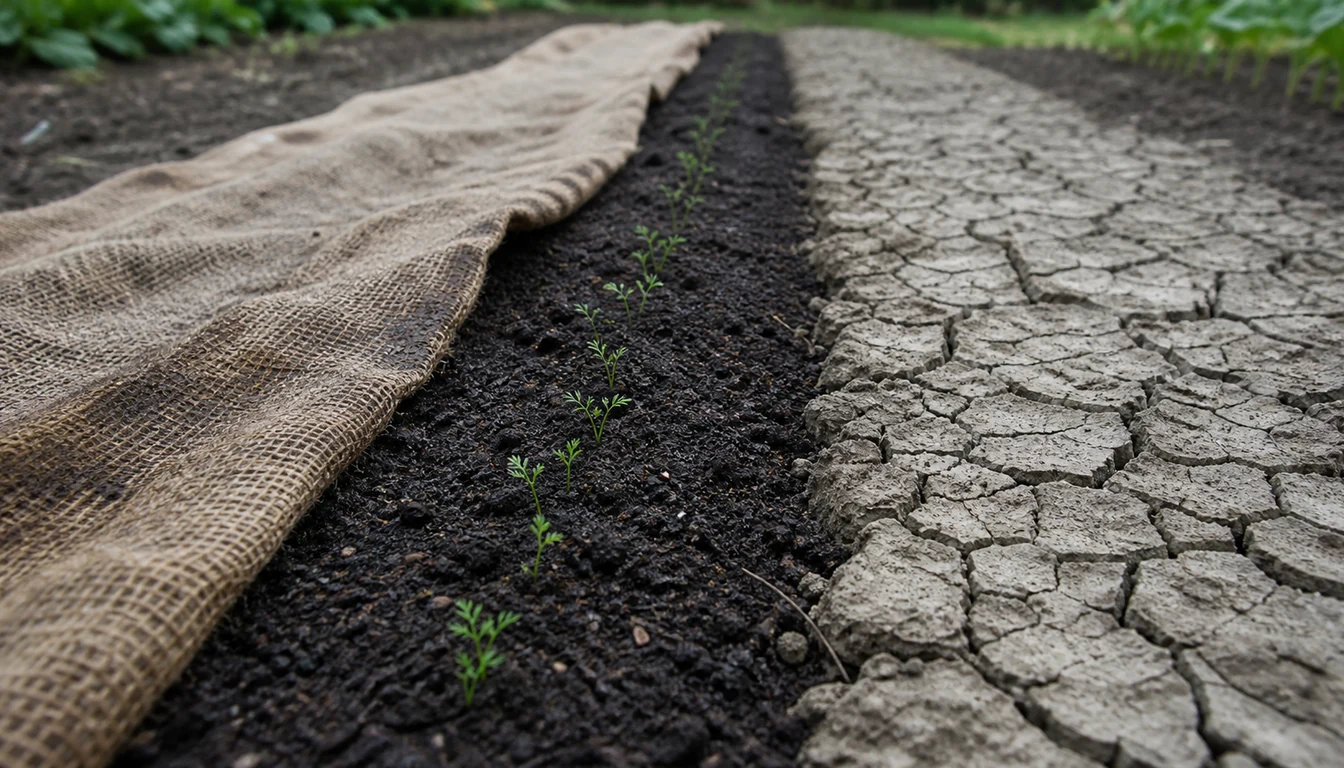
Protect a fine, damp seed row until emergence is done.
Keep the row evenly damp every day it needs it, since this is one of the rare phases when surface moisture matters more than deep watering. Later, the focus shifts downward, and the top inch stops being the whole world.
Direct sow only. Transplanting almost always bends or forks the root, which defeats the point of growing a straight storage crop in the first place.
If you have ever watched parsley emerge slowly, you have seen the same family trait.
Slow is normal here, and drying out is the real problem to guard against.
A board, burlap, or row cover laid over the seed row for the first several days can also hold surface moisture without daily watering, as long as it comes off the moment the first seedlings appear. Pelleted seed, coated into a uniform round shape, is another option that makes even spacing far easier by hand.
How Far Apart Should You Thin Carrots?
Crowded Carrot rows make plenty of tops and not much usable root. When seedlings stay shoulder to shoulder, each one keeps waiting for space that never comes.
The root then stays thin, bent, or undersized.
Thin as soon as you can handle the row without flattening it. The basic logic from thinning seedlings applies here, but Carrot timing matters more because the root starts committing to its final path very early.
Pulling a little soil over the crowns as they rise is the step most growers skip.
Green shoulders are not a seed problem. They are a light-exposure problem after the root crown rose or the bed settled.
Utah State recommends a final spacing of 2 to 3 inches between plants in the row, which gives each root room to fill out.
- Water lightly first so extra seedlings pull cleanly.
- Do an early thin if the row came up thick.
- Finish at the final spacing that suits your Carrot type.
- Pull a little soil over exposed crowns so shoulders do not turn green.
Why Do My Carrots Split or Crack?
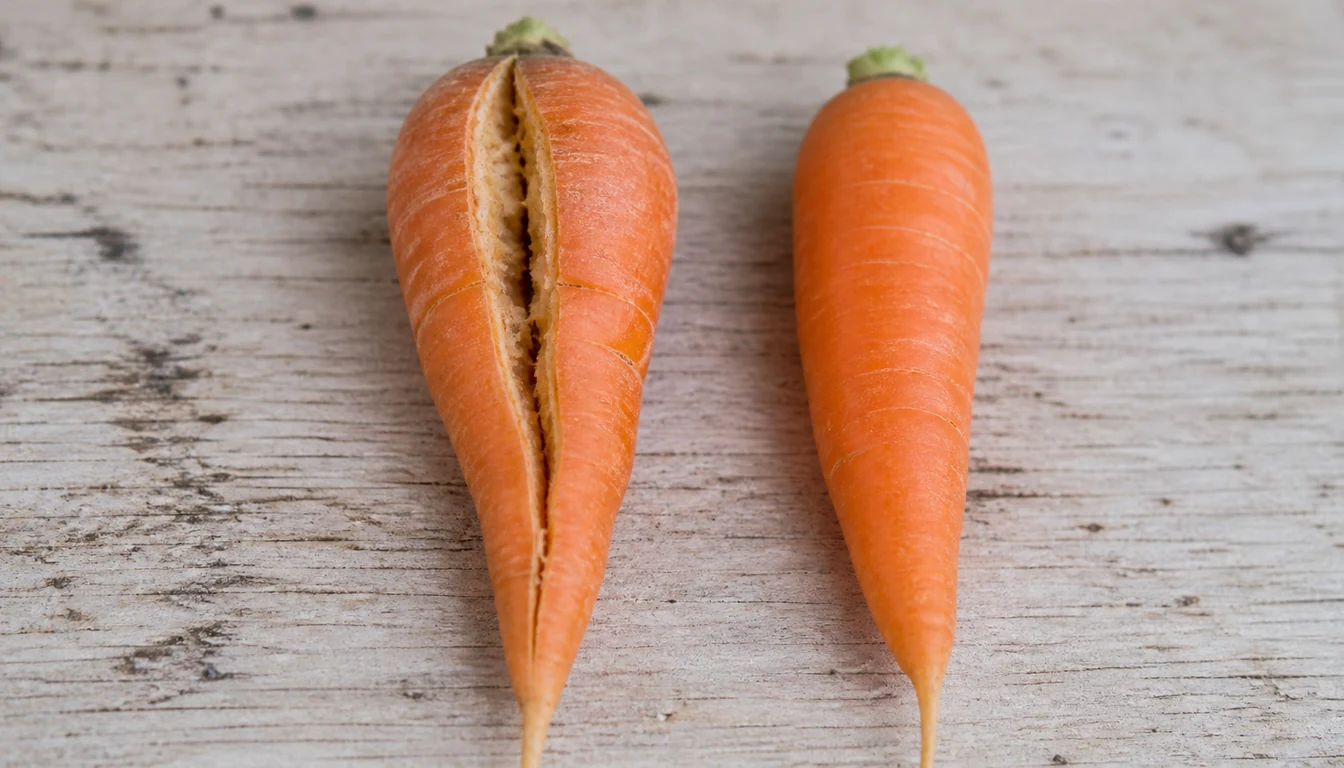
Cracks, rough texture, and sudden oversized shoulders usually come from uneven growth. A Carrot root wants to swell smoothly.
When a dry spell is followed by a hard soak, the root can split because growth restarted too fast. Utah State notes that alternating wet and dry periods favor root cracking.
Once the seedlings are established, shift from seed-row thinking to root-zone thinking. Guidance from watering a vegetable garden helps here because the goal is moisture a few inches down, not a daily glitter of water on the surface.
Late heavy nitrogen is another common mistake. It builds more top when what you really wanted was sweeter, denser root growth.
A light mulch layer over the row helps even out soil moisture swings between waterings, which is one of the simplest ways to prevent the dry-then-drenched cycle that splits roots.
Drip irrigation or a soaker hose is the most reliable way to deliver that steady moisture without the feast-or-famine pattern hand watering can fall into. It also keeps water off the foliage, which helps avoid the leaf blight problems that thrive in wet, humid conditions.
- Steady moisture
- Smoother roots, better sweetness, and fewer cracks
- Dry then drenched
- Split roots and rough shoulders
- Too much late nitrogen
- Lots of tops with less root quality
Why Are My Carrots Forked, Hairy, or Green on Top?
Carrot roots leave a physical record of the season. If you read that record honestly, you can fix the next sowing without guessing.
Forked roots usually mean stones, hard clods, or fresh rough organic matter in the path. Utah State explains that carrots form multiple roots when the primary root tip is damaged.
Hairy side roots often point to coarse fertility or a root lane that never became clean and even.
Green shoulders point to light. Cracks point to water swings.
That is why harvest is also diagnosis on a Carrot bed. The shape tells you which step in the chain needs repair before you sow again.
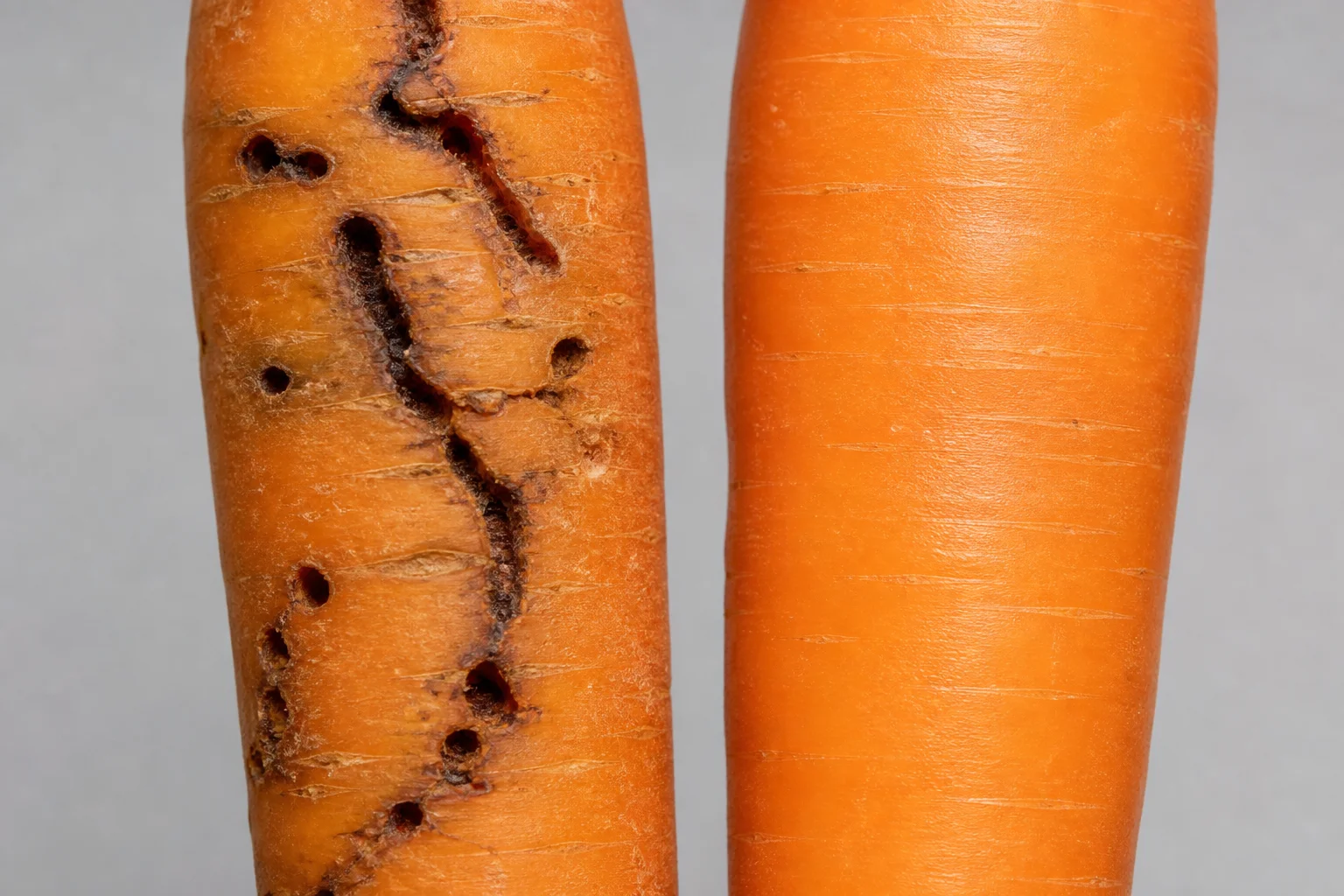
Not every root flaw traces back to soil or water, and rusty brown tunnels bored into the flesh are carrot fly damage instead, from a larva that hatches near the crown and burrows down.
Since the adult fly is a weak, low flier, a simple barrier of fine mesh row cover held above the bed blocks most egg-laying without any spray. Interplanting with onions is a traditional companion pairing that may help mask the row by scent, though the physical barrier is the more reliable fix.
Dill is a carrot-family relative, but it belongs to a different genus, Anethum, so it cannot cross with carrot when both flower the way Queen Anne's lace can.
A fast crop like radish can hide small bed flaws because it is in and out quickly. Carrot is less forgiving, which is exactly why it teaches you so much about soil preparation.
The taproot hit something solid or moved through broken rough structure.
The bed stayed too rough or too rich right in the root lane.
Growth jumped after uneven moisture.
The crown was exposed to light and needed covering.
When Should You Harvest Carrots, and How Do You Store Them?
You do not have to pull the whole bed at once.
Early thinnings, baby roots, and full-size storage roots can all come from the same sowing if spacing and timing were planned well.
Cool fall weather often improves flavor, which is one reason a Carrot crop feels so different from fast hot-weather roots. In colder Zone 3 gardens, a mulched late bed can hold surprisingly well if the roots are already mature and the ground has not locked up hard.
Store only clean sound roots with no cracks, deep wounds, or rot. Misshapen roots are still edible, but damaged roots rarely keep as long as the straight healthy ones.
For longer keeping, Utah State recommends storing washed roots at 32°F and 95% relative humidity, which holds them for 2 to 4 weeks. Packing roots in slightly damp sand in a cool root cellar, or a perforated bag in the refrigerator crisper drawer, are the home versions of those cold, humid conditions.
Frequently Asked Questions
How long do carrots take to grow?
Utah State University Extension gives 70 to 100 days from seeding for roots to mature, and the first two or three weeks of that are germination alone. Baby roots can be pulled well before that if you thinned generously.
Are carrot greens edible?
They are, and they work better chopped into pesto, stock, or a herb sauce than eaten raw, since the flavor is closer to parsley than to the root. Use them from plants you grew rather than from a store bunch of unknown age.
Why did my carrots taste bitter?
Heat during the growing stretch is the usual cause, since stressed roots build more of the compounds that read as bitter or soapy. A crop that finishes in cool weather almost always tastes better than the same variety rushed through summer.
Do old carrot seeds still germinate?
Carrot seed is short-lived compared with most vegetables and drops off noticeably after about three years. A row that never came up is sometimes an old packet rather than anything you did to the bed.
Can I sow carrots in the same bed every year?
Better to move them, because carrot fly larvae and root diseases build up where the family keeps returning. A two or three year gap is usually enough in a home garden.
Sources & References
- University of Minnesota Extension: Growing carrots in home gardens
- How to Grow Carrots in Your Garden, Utah State University Extension
- Missouri Botanical Garden Plant Finder: Daucus carota
- Daucus carota, North Carolina State Extension Gardener Plant Toolbox
- Conium maculatum, North Carolina State Extension Gardener Plant Toolbox
- Carrot Flower, ASPCA Toxic and Non-Toxic Plants
- Poison Hemlock, ASPCA Toxic and Non-Toxic Plants
- Poison Control, National Capital Poison Center
Related Plants
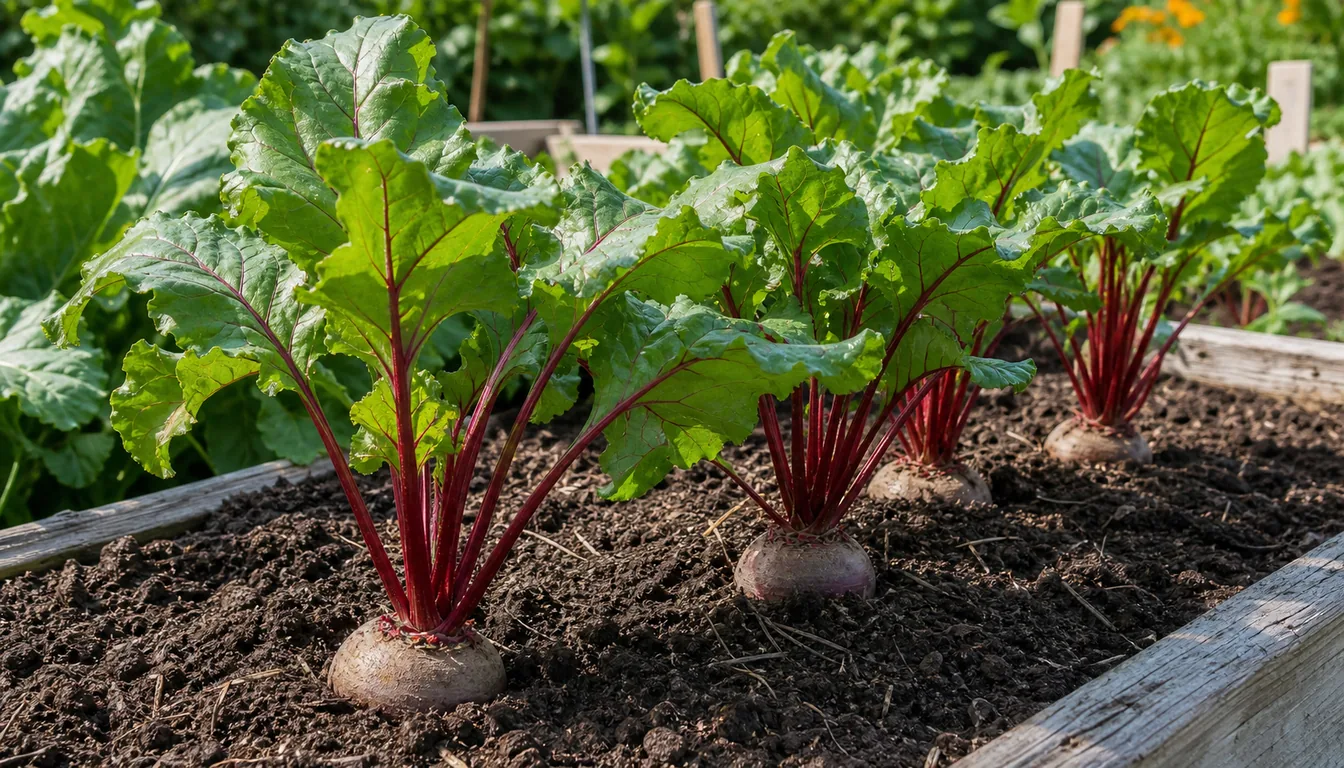
Beet
Another cool-season root crop, but one that tolerates heavier soil better than long carrots do.
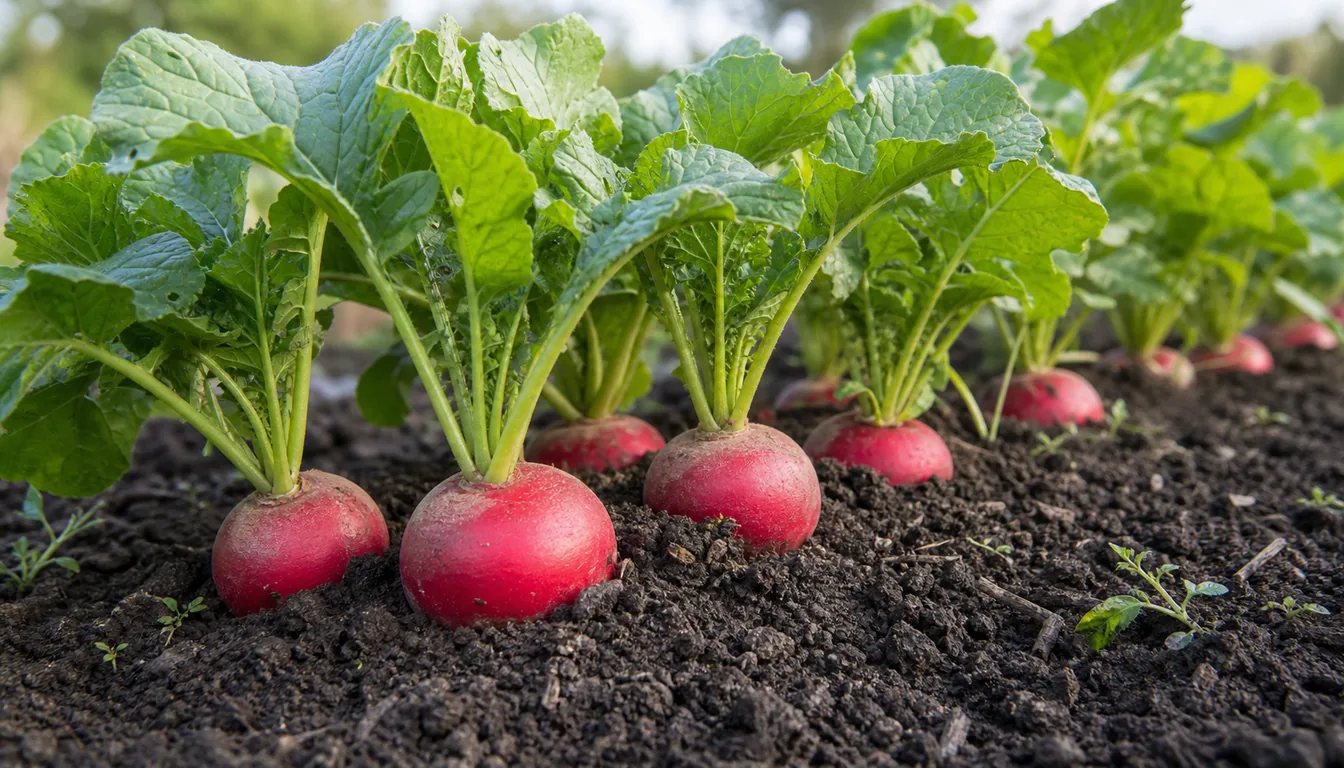
Radish
Much faster than carrot and useful for quick sowings, but far less patient in the bed once mature.
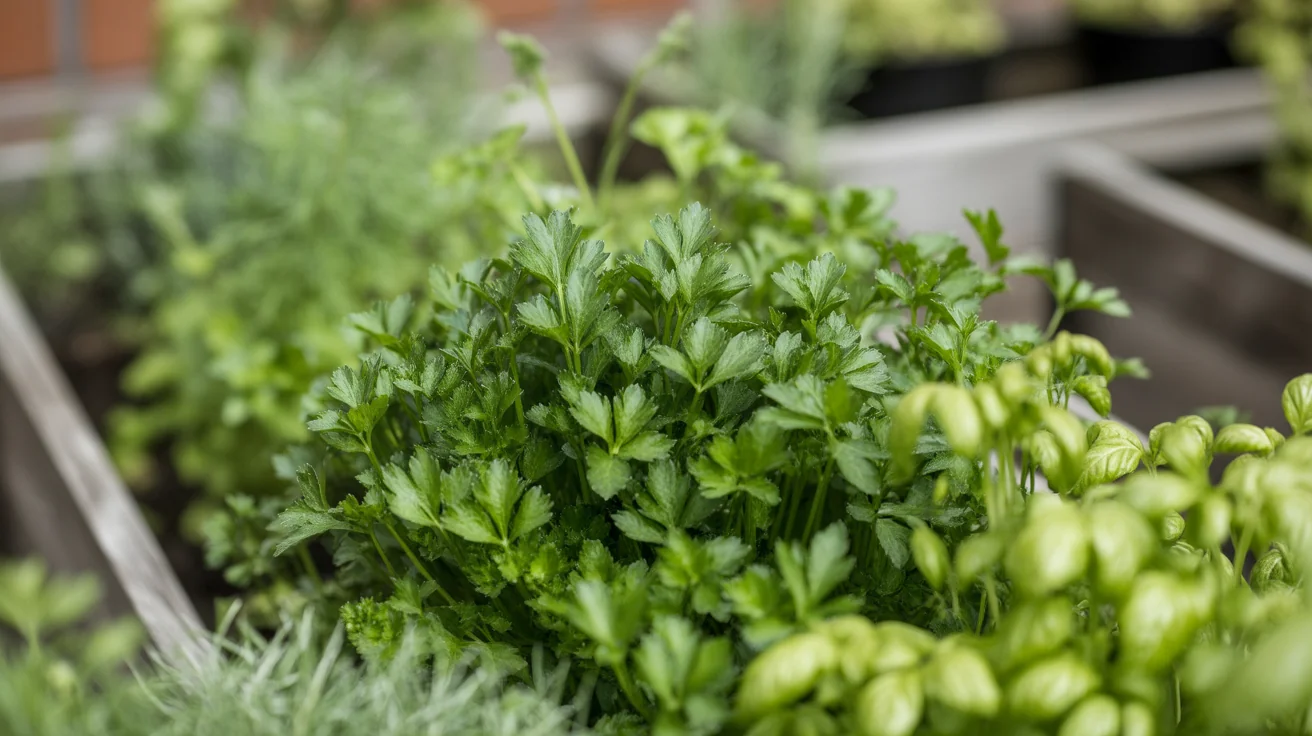
Parsley
A close family relative with similarly slow seed germination, though grown for leaves instead of roots.
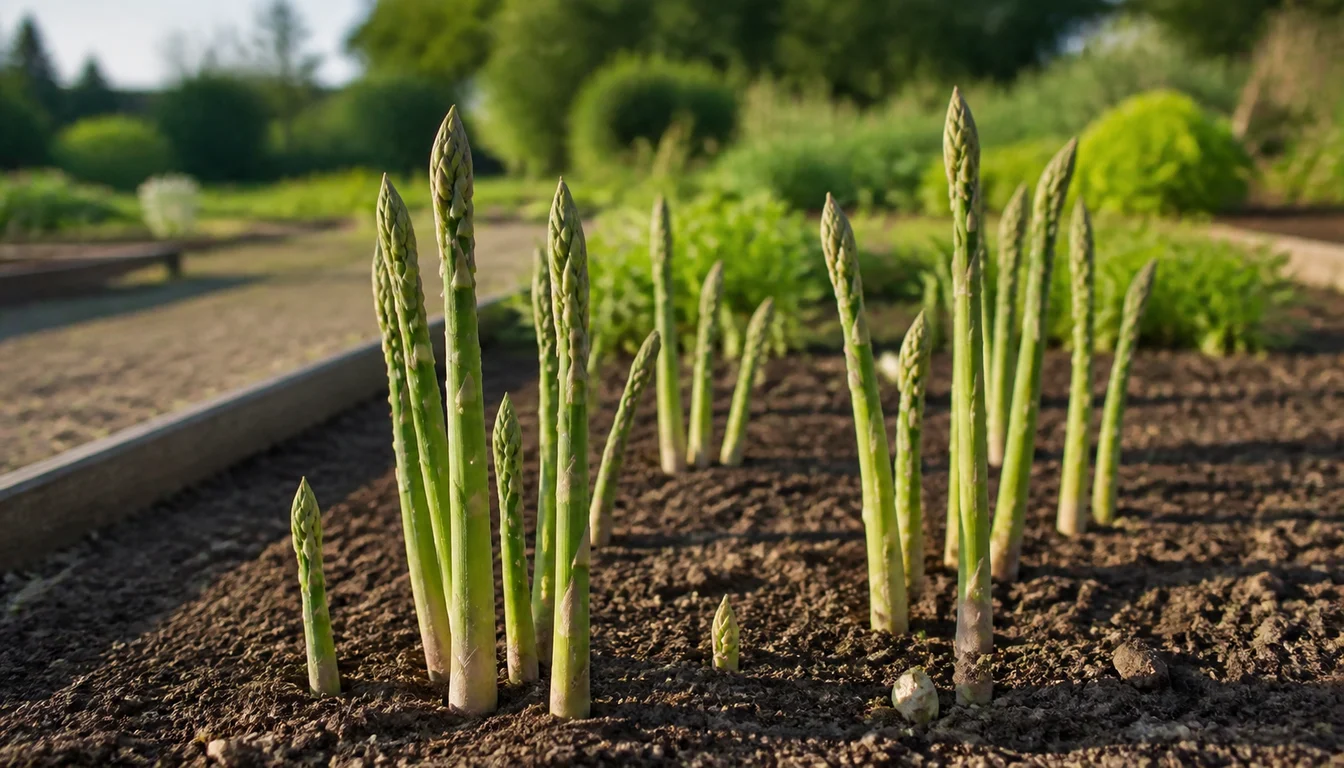
Asparagus
Asparagus rewards careful establishment with spring harvests for many years.
Beans
Two different plants share the name bean, one that stays knee-high and gives most of its crop inside two or three…
Bell Pepper
Bell Pepper rewards growers who manage flowers, roots, and heat together.