
What's Cilantro? How to Cut It Before It Bolts
Coriandrum sativum Apiaceae
Cilantro and coriander are one plant at two stages, and the two crops need different spacing from the day the seed goes in. Heat rather than age ends the leaf harvest, so the answer is a sowing every few weeks, a slow-bolt variety, and soil kept below 75F. A plant left to flower is not wasted, since the umbels bring in syrphid flies and parasitic wasps.
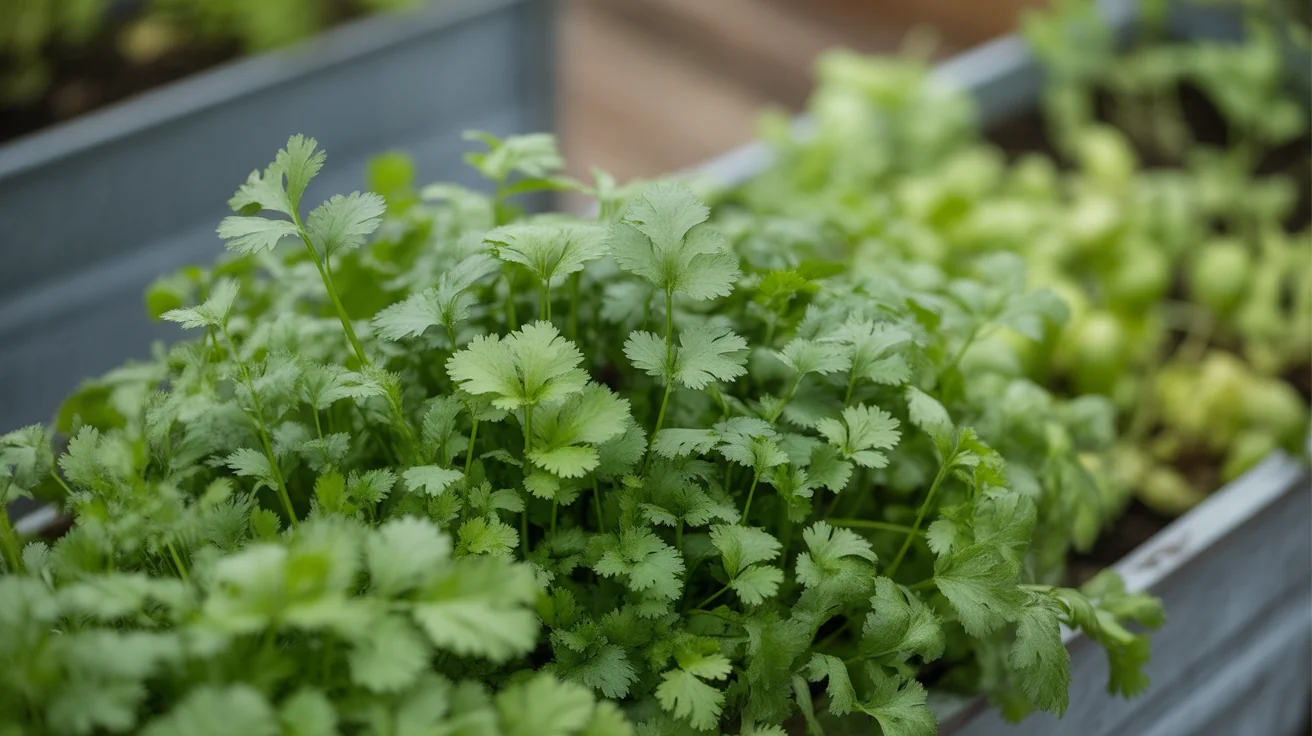
Care snapshot
Are Cilantro and Coriander the Same Plant?
Yes, and the difference is timing rather than species.
Coriandrum sativum is one annual that yields two things people buy under two names.
Wisconsin Horticulture places it in the carrot and parsley family, Apiaceae, which puts it beside carrot, dill and parsley in the bed and in the way it behaves.
NC State separates the two harvests by part.
The leaves and stems are used to flavor dishes, and those are what a shop sells as cilantro.
The mature seeds are called coriander and are used for flavoring in their own right.
- Cilantro
- The leaves and stems, taken while the plant is still low and leafy, before it sends up a flower stalk
- Coriander
- The mature seeds, taken after the plant has flowered and the seed heads have dried on the stem
The plant changes shape between the two.
Wisconsin gives it as 12 to 18 inches high in leaf, with flower stems reaching 2 to 3 feet once it runs. The extra height is the seed crop starting.
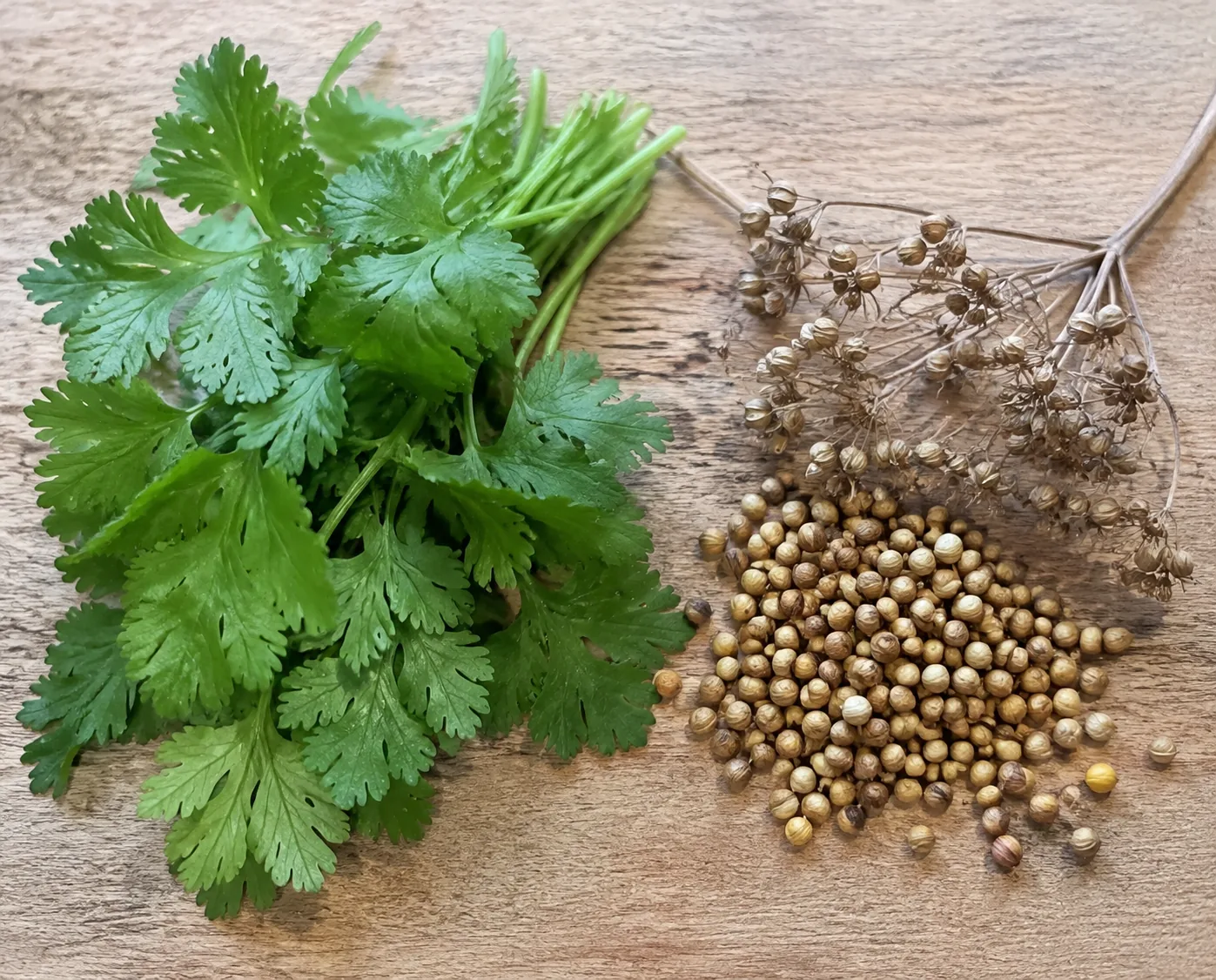
A flowering plant is the start of the coriander crop.
Whether that is useful depends entirely on which of the two you were growing for, and the spacing and harvest figures below treat them as two different crops.
Why Does Cilantro Go to Seed So Fast?
Heat ends the leaf crop.
NC State says the plant bolts easily in hotter climates and grows best in cool climates in spring and fall.
Illinois puts the trigger in plainer terms, saying it bolts when it gets really hot.
Utah State gives the one number worth working to. Keep the soil temperature below 75°F, which is a more useful target than air temperature because soil holds its heat and a bed in full sun runs warmer than the thermometer on a shaded wall suggests.
There is a visible warning before the stalk appears.
Wisconsin describes the wide, flat lower leaves giving way to lacy, fern-like leaves along the flower stalk, and that change in leaf shape starts before the plant is obviously running.
A plant whose newest leaves have gone feathery has already made the decision.
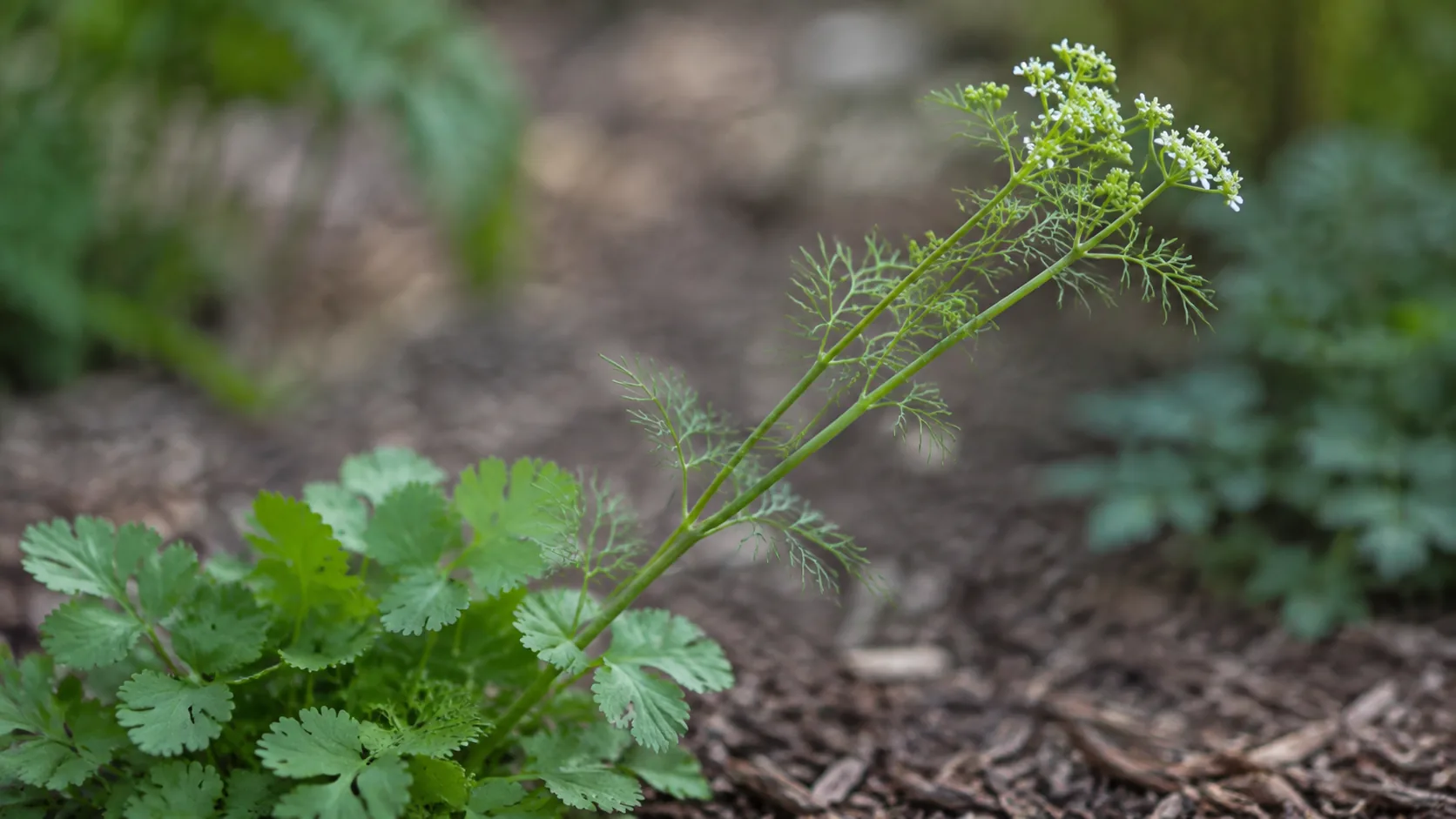
Nothing reverses it once the stalk is up. None of the sources gives a way to turn a bolting plant back into a leaf plant, so from that point the choices are to cut the remaining flat leaves or leave the plant for seed.
At the other end of the year the limit is simpler. Wisconsin says cilantro will not survive a hard freeze, so the fall crop ends on a date rather than on a temperature trend.
How Deep and How Far Apart Should Cilantro Go?
Sow it where it will grow.
Wisconsin says cilantro does not transplant well because of its long taproot, which is the same reason dill has to be direct-sown.
A plug tray is the wrong start for both, and the choice between sowing direct and raising transplants is made for you here.
Depth is uncontroversial. Wisconsin puts the seed a quarter to half an inch deep, and Utah State gives half an inch, so anywhere in that band is right.
Spacing is where the two crops part company. Utah State spaces plants 2 inches apart for a leaf crop and 8 to 10 inches apart for a seed crop, with rows at least 15 inches apart in the second case.
- Leaf crop. Sow half an inch deep and thin to about 2 inches apart, which Utah State gives for cilantro.
- Seed crop. Thin to 8 to 10 inches apart, with rows at least 15 inches apart, which Utah State gives for coriander.
- Rows for a leaf crop can be closer, and Wisconsin puts them at about a foot apart.
- Either way, sow direct rather than transplanting, because of the taproot.
The reason for the gap is what each crop asks of the plant.
A leaf crop is cut young and small, so crowding costs nothing and a dense row gives more leaf per square foot.
A seed crop has to carry a plant to 2 or 3 feet with a branching head on it, and that needs room.
A row sown at 2 inches and then left for seed holds its plants far closer than the 8 to 10 inches Utah State gives, so the plants compete for the room a seed head needs.
Deciding which crop a row is for before the seed goes in is the whole of the planning here.
If seedlings have to be raised under cover, Utah State says to start them 4 to 6 weeks before transplanting and to minimize root disturbance when moving them. Utah State treats that as the fallback, and the taproot is the reason.
How Do You Keep Cilantro Coming?
The answer every source gives is an interval, and they do not quite agree on it.
Wisconsin recommends successive sowings at 2 to 3 week intervals and Illinois gives 3 to 4 weeks. Either turns one crop that ends into a series that overlaps, and the shorter interval buys more overlap in a hot summer.
- Sow a small batch every 2 to 4 weeks rather than one large batch in spring.
- Direct-seed in early spring, which Illinois says gives a harvest from mid-spring to mid-summer.
- Choose slow-bolt varieties such as Leaf, Long-Standing, Slo-Bolt, Calypso or Santos.
- Keep sowing into late summer for a fall crop, since the cool end of the year suits it as well as the start does.
Variety choice buys time on top of the schedule. Illinois names Leaf, Long-Standing, Slo-Bolt, Calypso and Santos as the ones recommended for delaying bolting and staying vegetative longer.
The two work together rather than as alternatives. A slow-bolt variety sown every three weeks gives a longer season than either the variety or the schedule manages alone.
It also pays to sow less each time than instinct suggests. A short row every two weeks beats a long row every six weeks, because the long row bolts as one and the kitchen cannot use it in the window it has.
Basil, grown beside it, wants the opposite weather entirely and does not need this treatment.
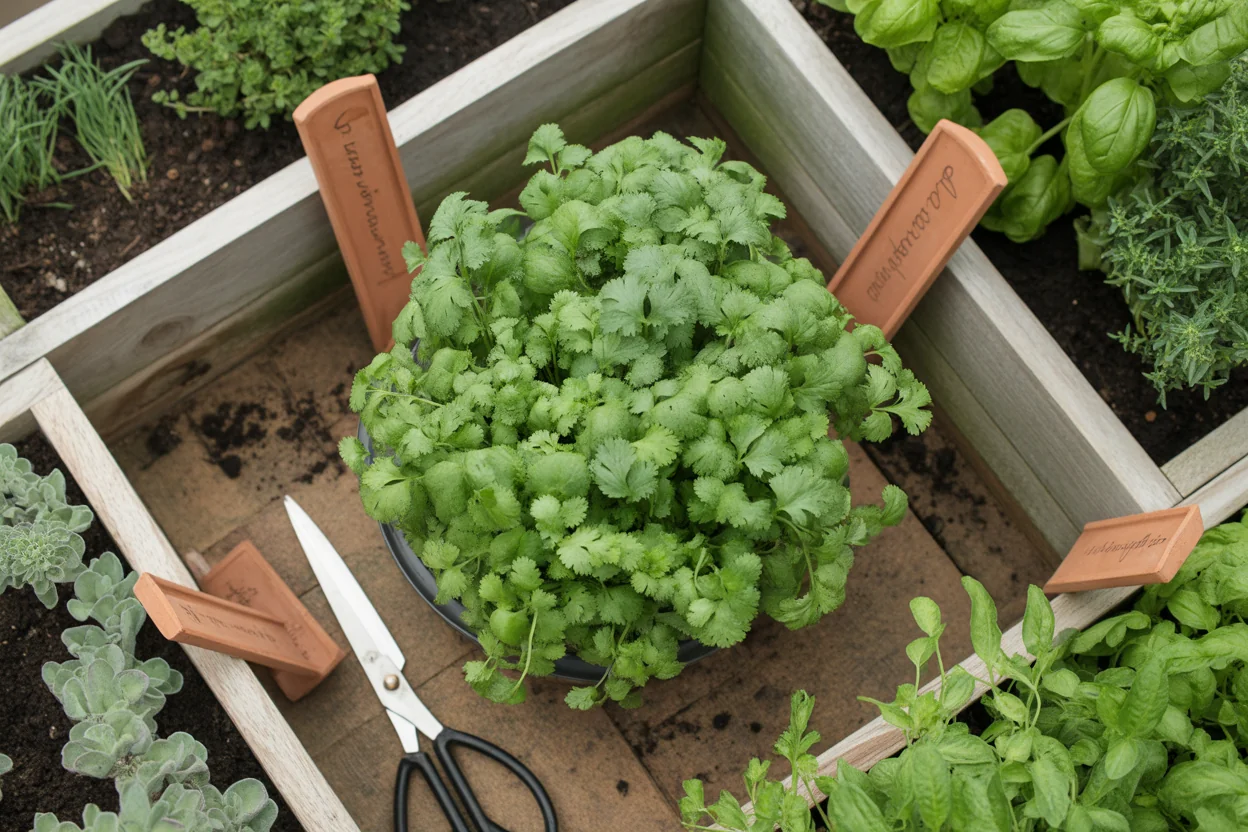
Does Cilantro Really Want Full Sun?
NC State gives a wide light range. It lists full sun of six or more hours, or partial shade of two to six.
Utah State describes the soil simply, saying cilantro grows well in most soil types provided they are well drained and moderately fertile.
Illinois says to keep cilantro in a shadier, cooler location during the heat of summer, which is unusual advice for a plant listed as taking full sun and follows directly from the bolting problem. The shade is there to keep the soil below Utah State's 75°F figure.
- Full sun for spring and fall sowings, when heat is not the limiting factor.
- A shadier, cooler position for anything sown into summer, which is what Illinois recommends.
- Well drained and moderately fertile soil, which Utah State says covers most garden ground.
- Mulch as soon as the seedlings emerge, which Utah State gives for weed control and which also keeps the soil cooler.
Fertility is a light touch rather than a feeding program. Utah State asks for 2 to 4 inches of well-composted organic matter worked in per 25 square feet before sowing, then very little afterwards.
Watering changes as the plant establishes. Utah State says cilantro needs regular watering during establishment and little water once established, and warns against over-watering because the plant does not do well in damp or humid conditions.
That last point matters in a summer bed. A plant that is being watered heavily to keep it cool is being given the one condition it dislikes, and shade does the cooling job without the damp.
When Do You Cut the Leaves, and When the Seed?
The leaf harvest starts earlier than most people wait for.
Utah State cuts leaves when they are about 4 to 6 inches tall, and Wisconsin picks any time after the plants are about 6 inches tall but before they bolt.
Small and early is the whole strategy on a plant with this short a window.
The seed harvest is judged by color rather than by date. Wisconsin says to harvest the seeds when they turn a light brown, which comes 2 to 3 weeks after flowering, and Utah State cuts the heads once plants begin to turn brown.
- Leaves at 4 to 6 inches, cut as whole stems from the outside rather than stripped.
- Stop the leaf harvest once the newest leaves come through feathery, since flavor changes with the leaf shape.
- Seed 2 to 3 weeks after flowering, once the heads have turned a light brown.
- Cut the heads into a paper bag and hang it until the plants finish drying, which is what Utah State describes.
The paper bag does real work. Ripe coriander sheds where it is cut, so heads carried loose to a bench leave most of the crop in the path, and a closed bag catches everything as the heads finish drying.
In practice the two harvests come off different plants. The early sowings are cut for leaf and pulled, and one or two later plants are left to run, which is also what supplies seed for the next year if you want it.
Is There Any Reason to Let It Flower?
There is, and it has nothing to do with the kitchen. Wisconsin describes the flowers as little white or pale pink blooms borne in umbels, which is the flat open head shape the whole carrot family shares.
That shape is the point.
Wisconsin says the flowers are very attractive to small beneficial insects such as adult syrphid flies and parasitic wasps, which consume the nectar. Both are insects whose larvae work on garden pests, and both are too small to feed from a deep flower.
A bolted plant left standing is doing something a leafy one cannot. It is worth leaving one or two at the end of a row for that reason alone, alongside the other plants grown to bring predators in and the rest of a beneficial insect planting, and the same plant is making next year's coriander while it does it.
Which Pests Turn Up, and Is Cilantro Safe for Pets?
Wisconsin gives an unusually short answer, saying cilantro does not have any serious pest problems, and noting only that some commercial growers have reported problems with a bacterial leaf spot. For a soft-leaved annual in a vegetable bed that is a good record.
Penn State Extension gives the fuller list. Aphids are the most common, gathering on the undersides of leaves and along the stems, and a forceful spray of water removes most of them.
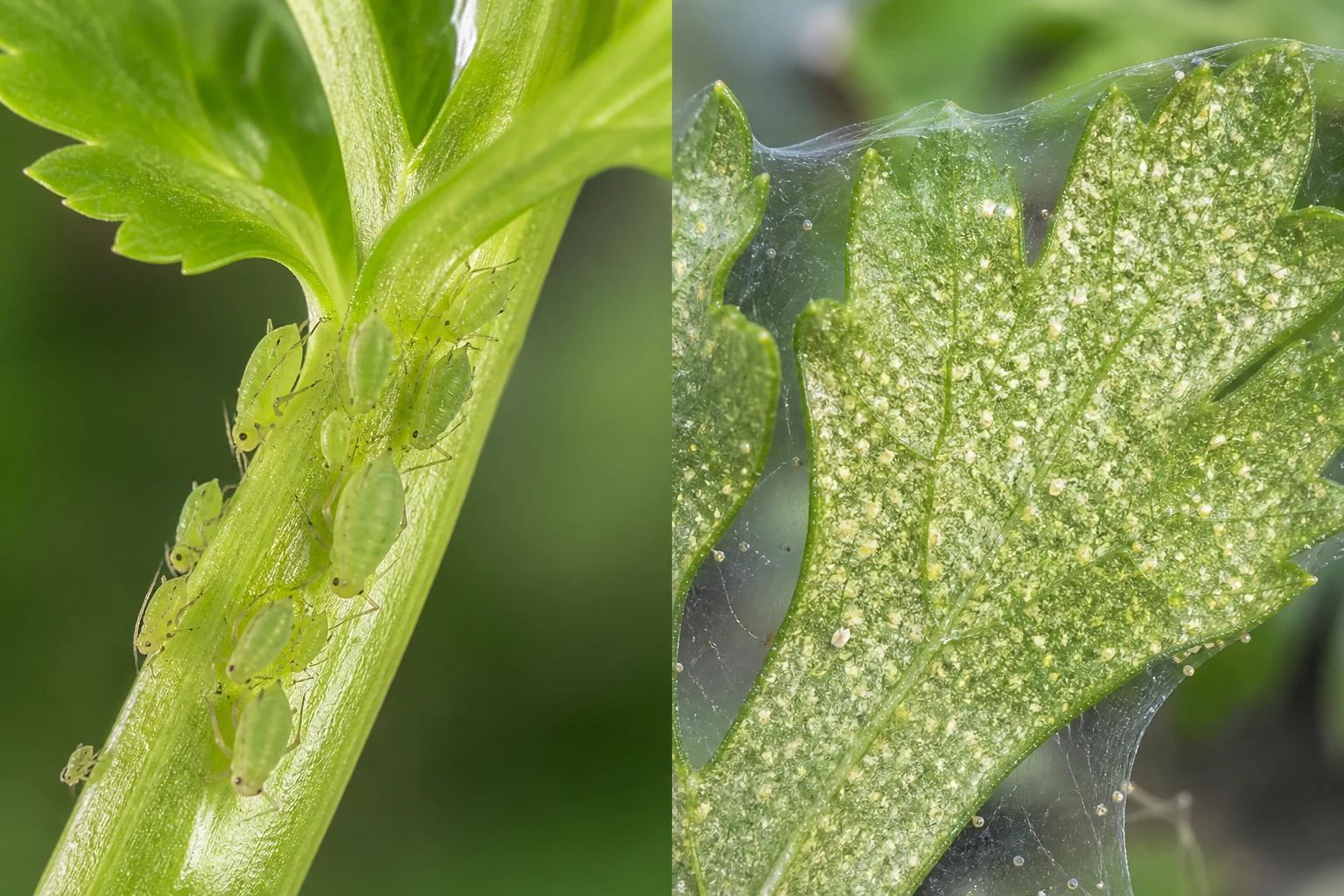
- Clusters of small insects under the leaves and along the stems are aphids, which Penn State names as the most common pest.
- Seedlings eaten off suddenly point to cutworms, cream-colored caterpillars that Penn State says can be removed by hand.
- Skeletonized leaves point to armyworms, green striped caterpillars that are also picked off by hand.
- Water-soaked spots with yellowish edges that darken to brown-black are bacterial leaf spot, the disease Penn State and Wisconsin both name.
- Leafhoppers matter mainly because they carry aster yellows, which Utah State names.
Leafhoppers are worth naming separately. Utah State lists them alongside aster yellows, a disease they carry, in which flowers turn yellow and the plant grows tall and spindly before it becomes sterile. The control Utah State gives is aimed at the leafhoppers rather than the disease.
Bacterial leaf spot has its own handling. Penn State says to remove diseased plants immediately rather than composting them, water at soil level, and avoid sowing where parsley, celery, chervil or dill grew before.
Cilantro is listed as non-toxic to dogs, cats and horses by the ASPCA, which files it under Coriandrum sativum with coriander, Chinese parsley and dhania as other names. NC State's toolbox tags the species non-toxic for the same three animals.
That record covers the plant. It does not cover concentrated coriander oil, and it says nothing about leaves sprayed with a pesticide. The carrot family is no guide either, since the ASPCA lists parsley, in the same family, as toxic to all three animals, which matters when a full kitchen bench goes in where an animal grazes.
Frequently Asked Questions
Is coriander the same as cilantro?
They are the same plant at different stages. NC State says the leaves and stems are used to flavor dishes, which is what is sold as cilantro, and the mature seeds are called coriander.
How far apart should cilantro be spaced?
It depends which crop you want. Utah State gives 2 inches apart for a leaf crop, and 8 to 10 inches apart with rows at least 15 inches apart for a coriander seed crop.
Can cilantro be transplanted?
Not well.
Wisconsin says cilantro does not transplant well because of its long taproot.
If seedlings must be raised under cover, Utah State says to start them 4 to 6 weeks ahead and to minimize root disturbance.
How do I stop my cilantro bolting?
You can only delay it. NC State says it bolts easily in hotter climates, Utah State asks for soil below 75F, and Illinois recommends a shadier, cooler position in summer heat alongside slow-bolt varieties.
When should cilantro leaves be picked?
Early. Utah State harvests when leaves are about 4 to 6 inches tall and Wisconsin picks any time after the plants are about 6 inches tall, but before they bolt.
When is coriander seed ready?
Wisconsin says to harvest when the seeds turn a light brown, which comes 2 to 3 weeks after flowering. Utah State cuts the heads into a paper bag and hangs it until they finish drying.
Is cilantro safe for cats and dogs?
The ASPCA lists cilantro (Coriandrum sativum) as non-toxic to dogs, cats and horses, and NC State tags it the same way. The listing covers the plant itself, not concentrated coriander oil or leaves treated with a pesticide.
Should I let cilantro flower?
One or two plants are worth leaving. Wisconsin says the umbels are very attractive to small beneficial insects such as adult syrphid flies and parasitic wasps, and the same plants produce the coriander seed.
Sources & References
- NC State Extension Gardener Plant Toolbox: Coriandrum sativum
- Wisconsin Horticulture: Cilantro / Coriander, Coriandrum sativum
- Utah State University Extension: Cilantro/Coriander in the Garden
- Illinois Extension: Cilantro
- ASPCA Toxic and Non-Toxic Plants: Cilantro
- Penn State Extension: Cilantro, a Unique Culinary Herb
Related Plants
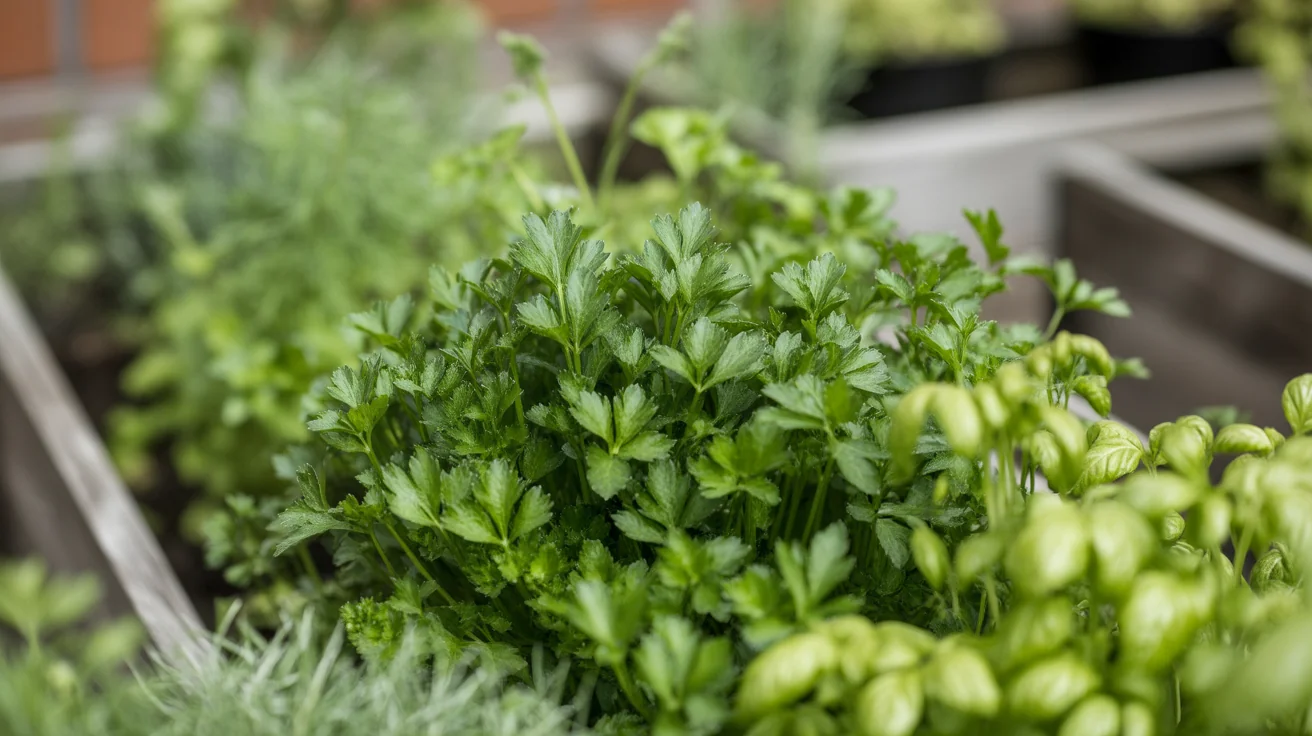
Parsley
Fellow Apiaceae herb with a similar cool-season rhythm and biennial staying power.
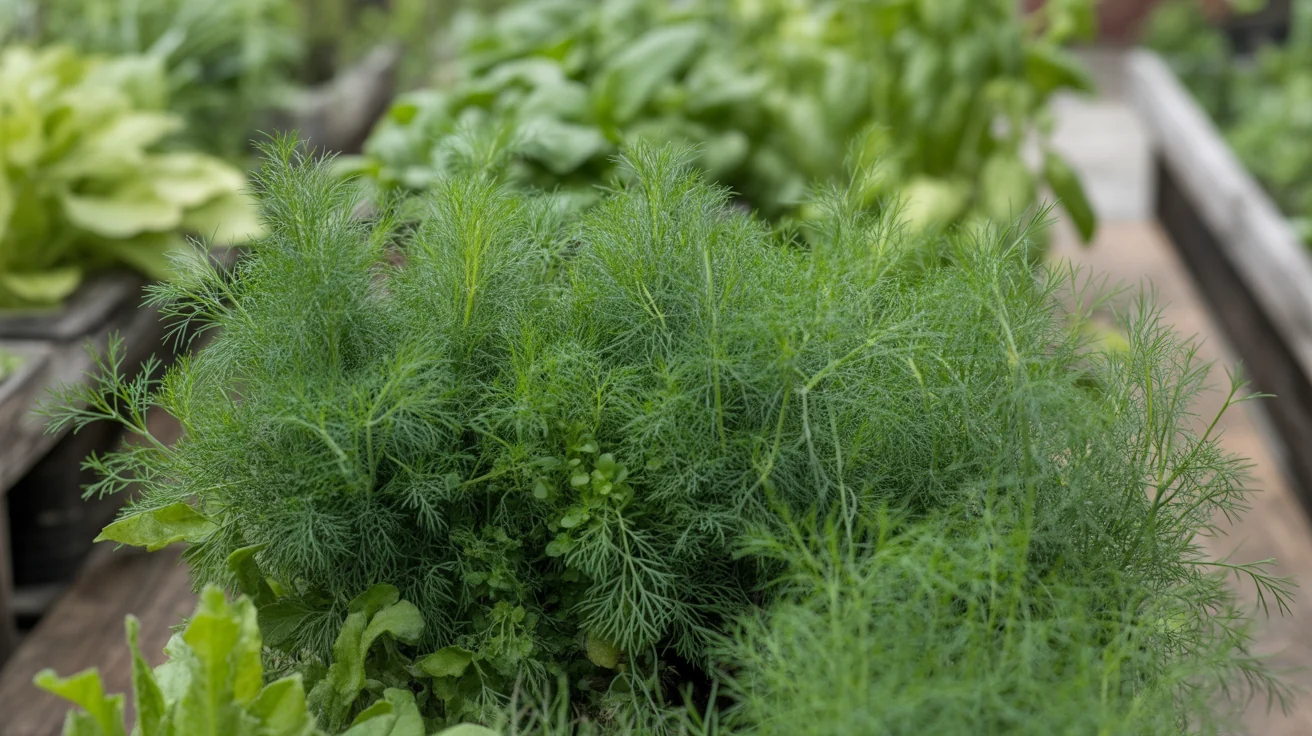
Dill
Feathery herb that draws the same beneficial insects and shares cilantro's fast bolt-to-seed cycle.
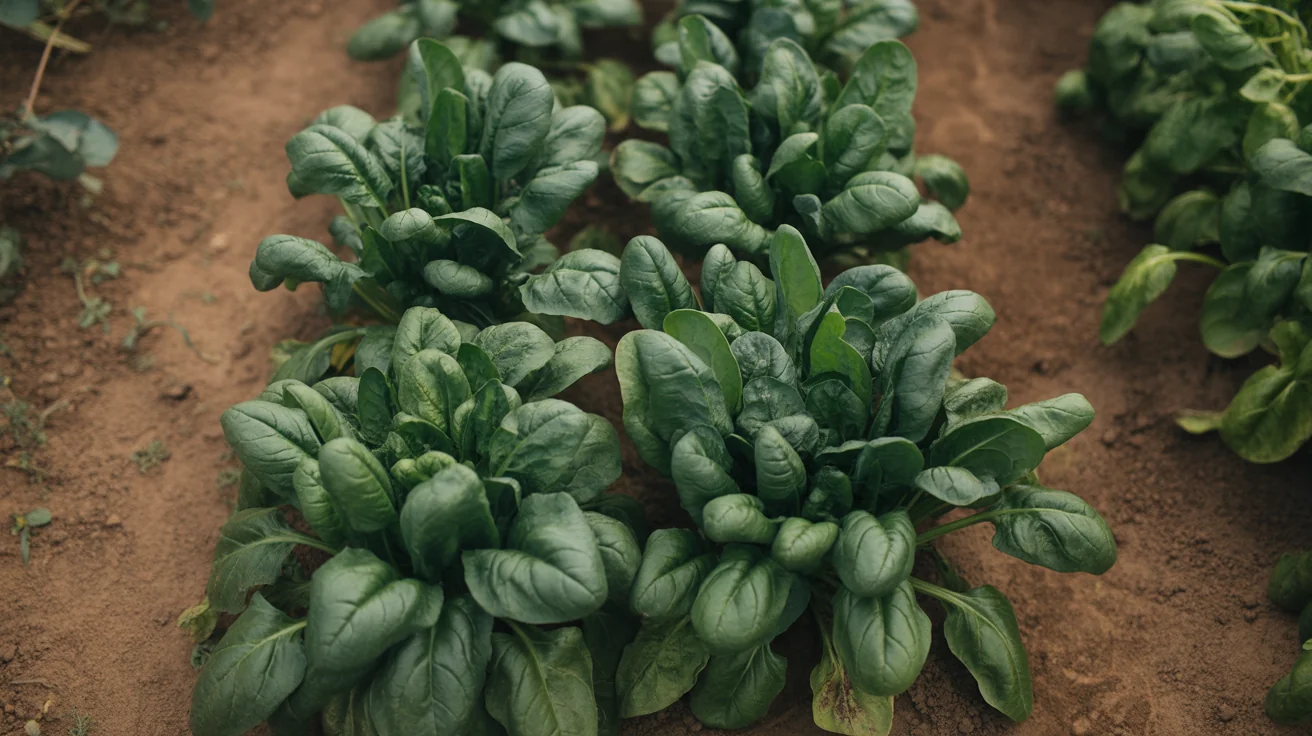
Spinach
Cool-season leafy crop that thrives in the same rich, moist beds and succession-sowing rhythm.
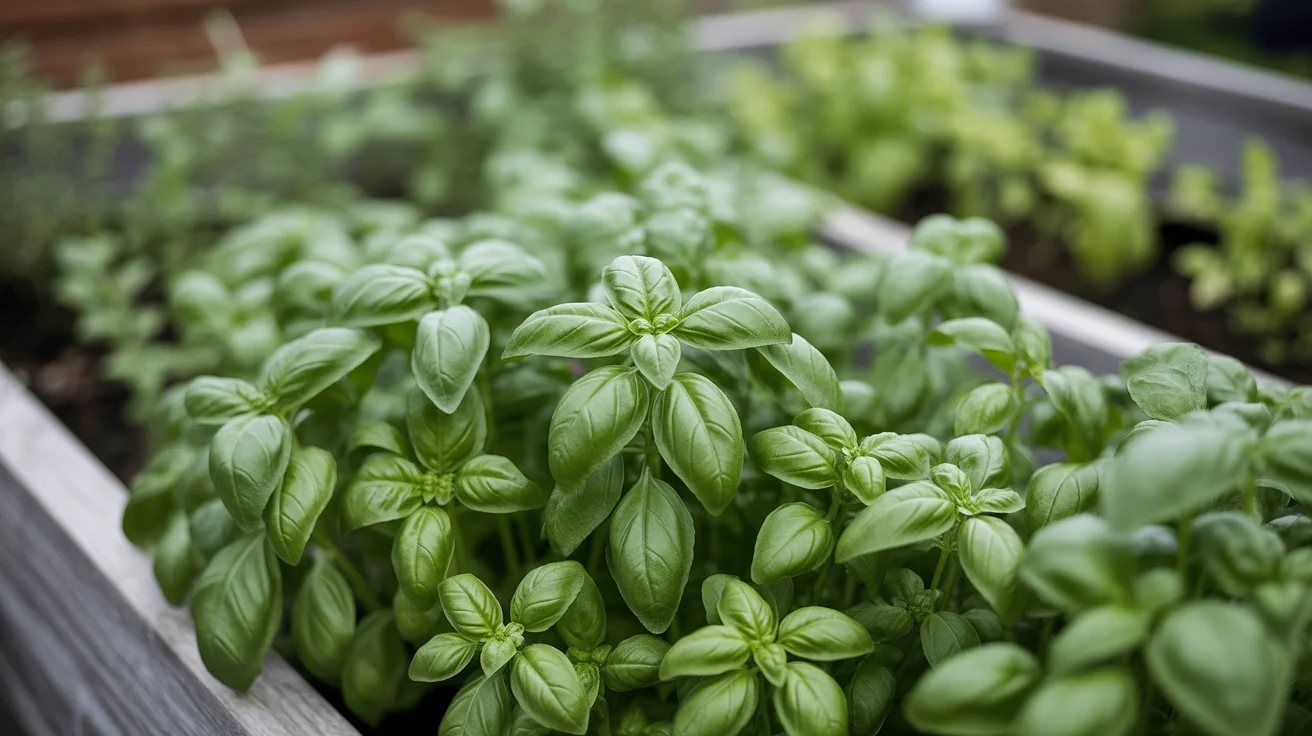
Basil
Basil is a tender annual that turns a warm season into armfuls of soft leaves, as long as it goes out into warm soil…
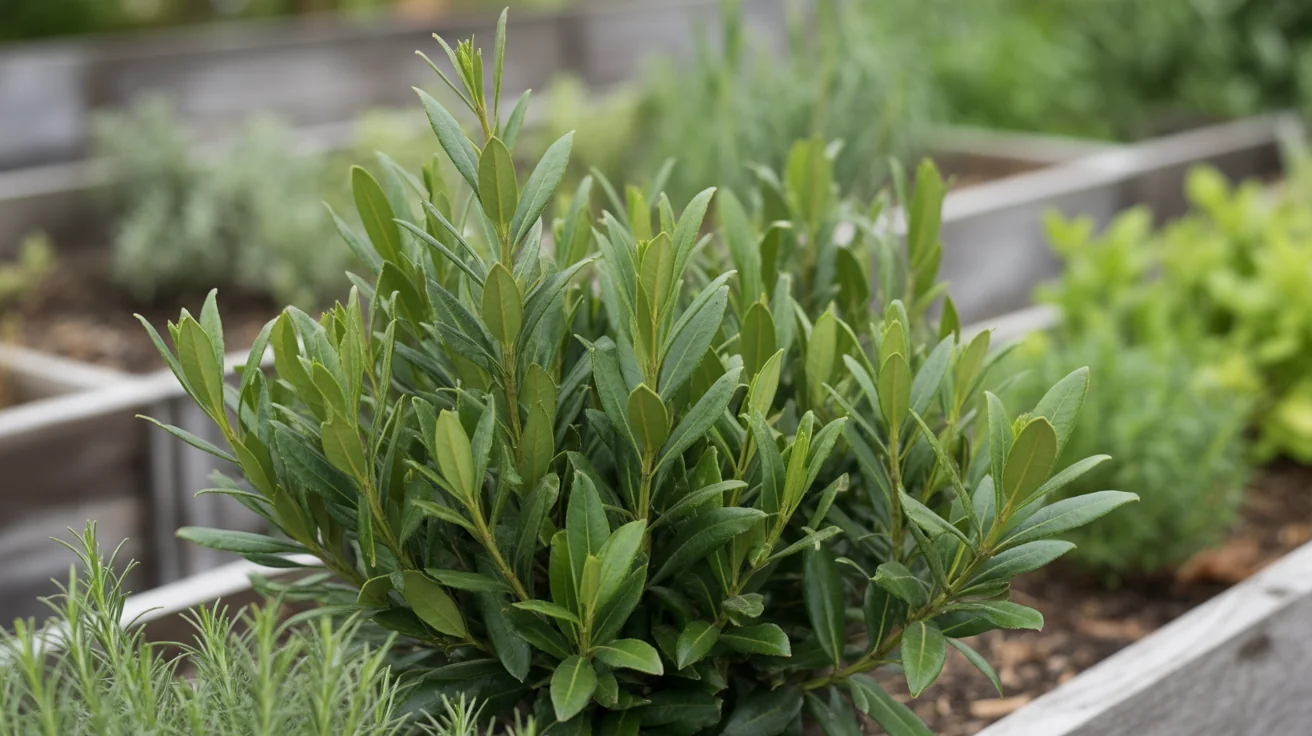
Bay Laurel
Bay laurel is a tree grown as a container plant, which is why every decision about it looks the way it does.
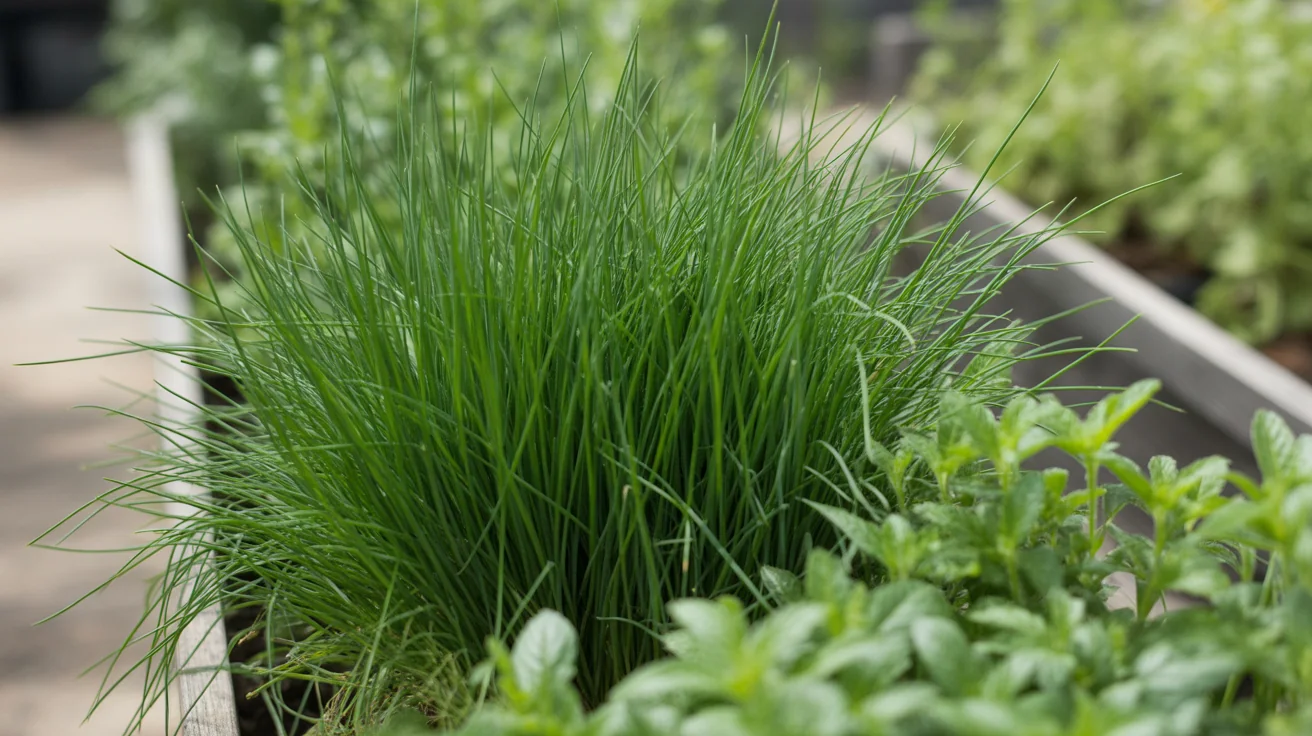
Chives
Chives are an Allium, in the same genus as onion and garlic, and that explains the flavor, the clump of small bulbs…