
What Plants Attract Ladybugs and Help Them Stay?
The best plants for attracting ladybugs are shallow, pollen- and nectar-producing flowers placed near plants that carry aphids or other soft-bodied prey. Sweet alyssum, dill, cilantro, fennel, yarrow, coreopsis, coneflower, cosmos, goldenrod, sunflower, and buckwheat are useful candidates when they fit your climate and site.
Flowers alone cannot make beetles stay.
Lady beetles also need prey, shelter, water, and protection from broad-spectrum insecticides, while ant activity around aphids can block predators from feeding.
Build for resident lady beetles rather than expecting one purchased container to solve an outbreak. A mixed planting that flowers across the growing season supports adults between prey flushes and gives their larvae a better chance to develop where pests are present.
At a glance
What Actually Attracts Ladybugs to a Garden?
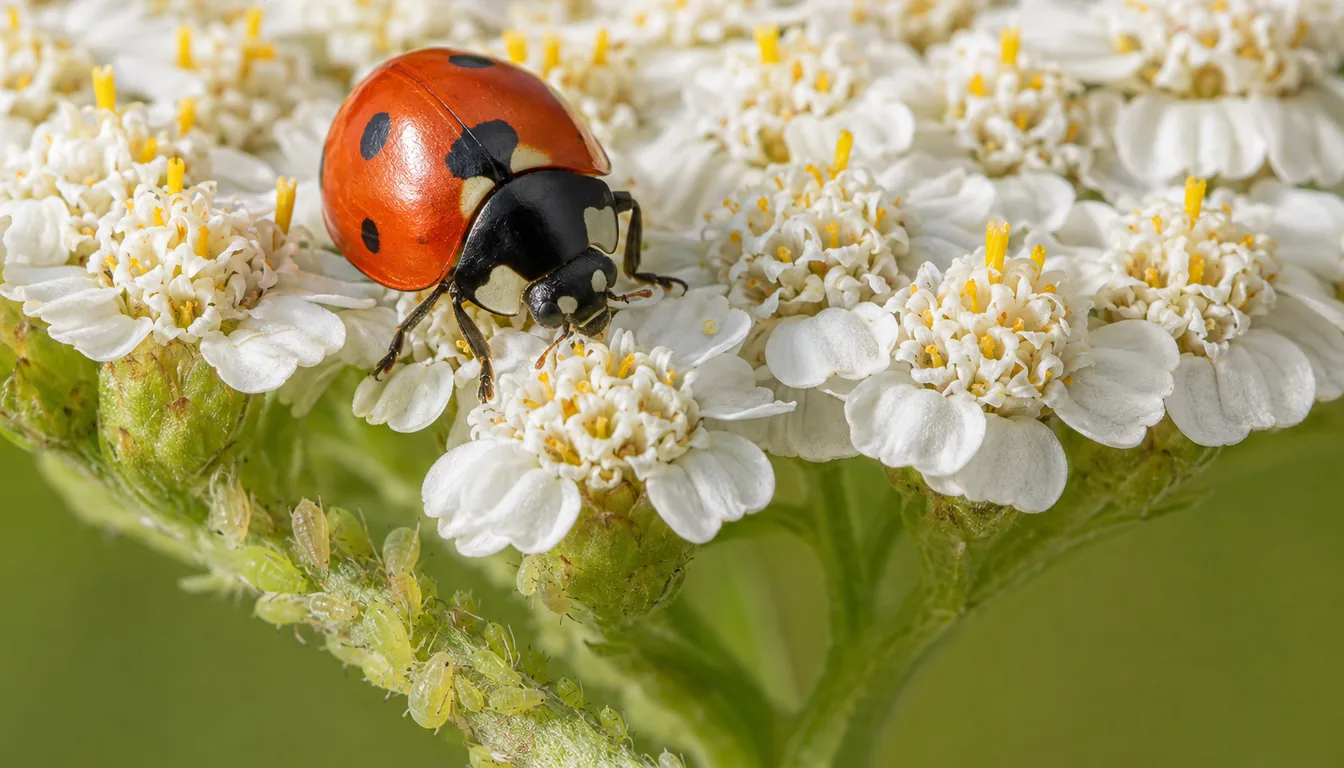
Ladybugs are beetles, so entomologists usually call them lady beetles. Different species eat different prey, but the familiar reddish aphid-feeding species and their larvae commonly hunt aphids and may also take whiteflies, mites, insect eggs, or other small prey.
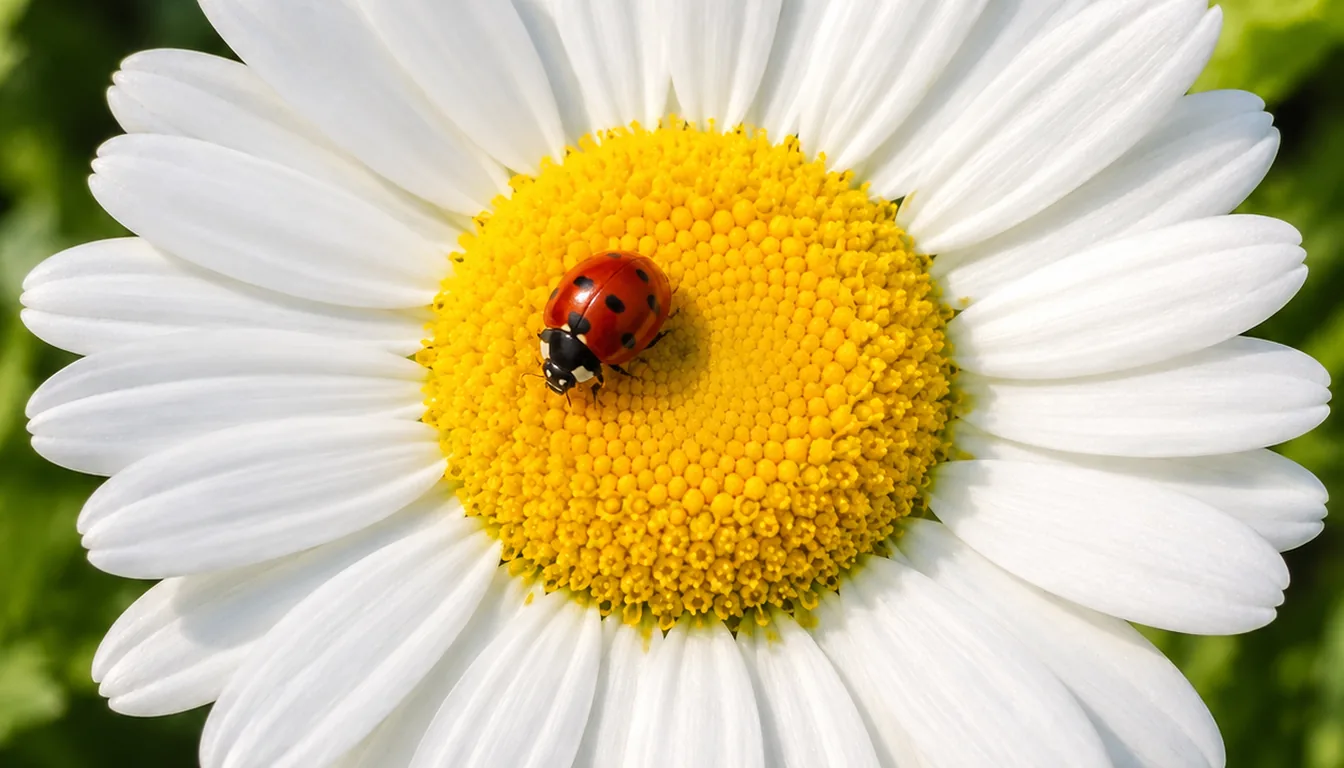
Adults can use nectar and pollen when prey is scarce or as a dietary supplement. That makes flowers valuable, but a bloom without suitable food nearby is a rest stop rather than a complete habitat.
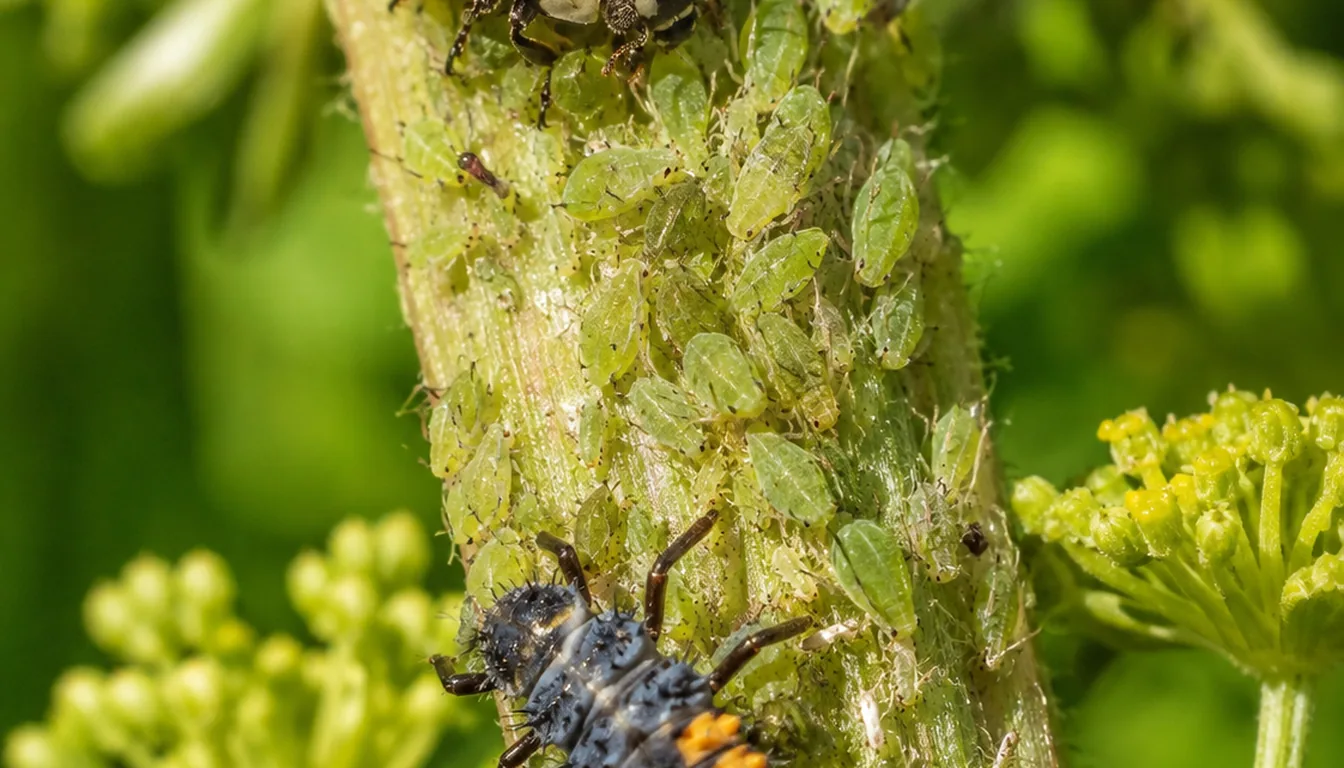
Aphid colonies provide the signal that often brings predators onto a plant.
Adults lay eggs where their young are likely to find food, and lady beetle larvae can consume prey even though they look nothing like the domed adults.
| Life stage | What it looks like | What it is doing | Garden decision |
|---|---|---|---|
| Egg | Small yellow to orange eggs, often grouped on a leaf near prey | Developing beside a future food supply | Do not wipe off an egg cluster until you have identified it |
| Larva | Elongated, dark, alligator-like body, often with orange markings | Actively hunting aphids and other small prey | Protect it from sprays and avoid mistaking it for a pest |
| Pupa | Rounded, attached stage fixed to a leaf or stem | Transforming into an adult and unable to flee | Leave the plant undisturbed unless disease or severe damage requires removal |
| Adult | Usually domed and oval, with color and spots varying by species | Feeding, mating, dispersing, and searching for prey or flowers | Judge habitat by all life stages, not by adult sightings alone |
A healthy insectary planting also supports hover flies, lacewings, soldier beetles, and small parasitoid wasps.
These beneficial insects do not all use the same flower in the same way, so diversity is more dependable than trying to recruit one named predator.
The practical target is not an aphid-free garden. Natural enemies usually reduce pest growth and damage rather than eliminating every pest, which means a few aphids may remain even when biological control is working.
Which Plants Give Ladybugs Useful Flowers?
Choose by flower access and seasonal fit, not by a claim that one color magically draws ladybugs. Small florets in flat clusters, open umbels, and simple composite flower heads place pollen or nectar within reach of many beneficial insects.
Penn State and Oregon State Extension identify several useful plant families.
The carrot family supplies umbels, the aster family supplies broad heads made of many florets, and alyssum and other mustard-family plants carry shallow open flowers.
Shallow, accessible flowers are more useful than highly doubled cultivars whose extra petals replace or hide pollen- and nectar-producing structures. A simple flower can serve predators even when a showier double form of the same general plant type cannot.
| Plant or group | Flower job | Typical garden role | Limitation to plan around |
|---|---|---|---|
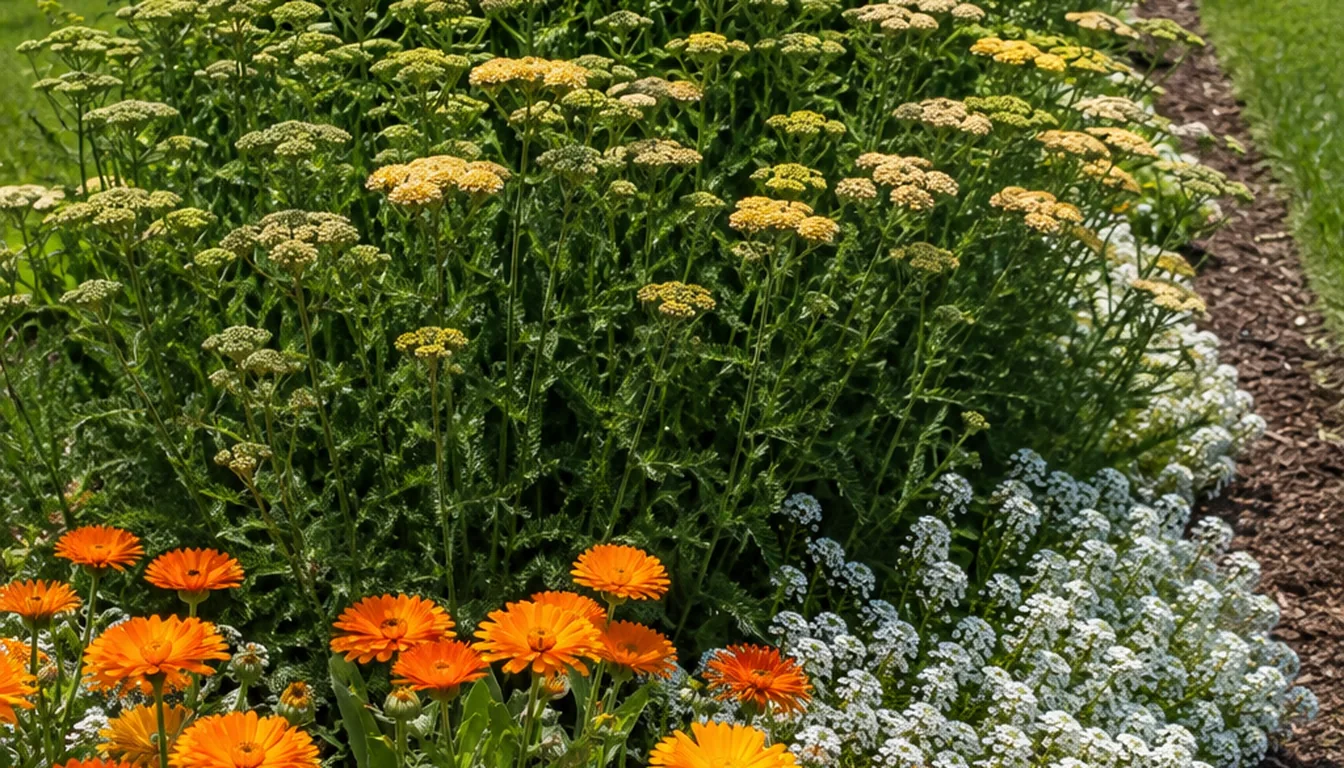
| Sweet alyssum | Many shallow four-petaled flowers with accessible resources | Low edge, container companion, or gap filler near vegetables | Flowering may slow during extreme heat; match the cultivar and season to local conditions |
| Dill and cilantro | Open umbels made of many tiny flowers | Annual insectary strip or scattered plants allowed to bolt | Harvesting every stem before bloom removes the floral resource |
| Fennel | Large, long-lasting umbels | Tall background or dedicated insectary area | Mature size can overwhelm a small vegetable bed; verify local invasive concerns before planting |
| Yarrow | Flat composite clusters used by larger predators | Drought-tolerant perennial patch in suitable soil | Some selections spread; site it where expansion can be managed |
| Coreopsis, coneflower, cosmos, and sunflower | Simple composite heads with many florets | Mid- to tall seasonal layer | Double forms and pollen-poor cultivars may provide less value |
| Goldenrod and asters | Dense late-season flower clusters | Late bridge after summer flowers fade | Choose regionally appropriate species and allow mature width |
| Buckwheat | Prolific flowers with accessible nectar | Fast annual cover crop or temporary insectary strip | It must be cut or managed before unwanted seed set |
| Clover or vetch | Legume flowers and vegetative cover | Cover crop, orchard strip, or bed outside the crop row | Do not introduce a persistent cover where it will compete with vegetables |
Not every plant in the table is right for every yard. Favor noninvasive species that tolerate your soil, available sun, irrigation pattern, and winter conditions; a stressed plant with few flowers does not become useful because it appears on a beneficial-insect list.
Mint-family plants such as thyme, catmint, lavender, and mountain mint can broaden the flower-shape mix.
They support a wider beneficial-insect community, although they should complement rather than replace the shallow flowers specifically highlighted for lady beetles.
Use native plants where they fit the job and are available from a reliable local source. Native status alone does not guarantee the exact bloom window or flower access you need, so confirm the species, cultivar, mature size, and local behavior before buying.
How Do You Keep Flowers Available Through the Season?
A national month-by-month bloom calendar is unreliable because spring in one region can overlap midsummer conditions in another. Build the sequence from local bloom observations, nursery labels, and Extension guidance instead of assigning the same April-to-October schedule to every climate.
Start with three functional windows: the first period when aphids become active, the main vegetable or ornamental growing season, and the weeks before cold or heat shuts flowers down.
Choose at least one suitable plant for each window, then check whether the handoffs actually overlap in your yard.
Early local bloom
Use locally reliable early perennials, cool-season alyssum, or overwintered flowering plants that open before warm-season annuals.
Main-season bloom
Combine bolting dill or cilantro with yarrow, coreopsis, coneflower, cosmos, sunflower, or another proven simple-flowered plant.
Late local bloom
Use suitable goldenrods, asters, late coreopsis, or other regionally appropriate flowers that continue after summer annuals decline.
Heat or drought gap
Select heat-tolerant plants for that exposure, irrigate according to plant needs, and do not assume an early-season alyssum border will flower through the hottest weeks.
Observe the bed at least twice during the first season.
Record when each plant begins and ends flowering, because a label's broad season can hide a two- or three-week gap at your specific site.
Annual herbs make the sequence adjustable. Let one group of dill or cilantro flower while another remains available for harvest, then sow a later group only when its days to bloom fit the remaining season.
Perennials and shrubs provide structure, but their bloom period may be brief.
Use permanent plants as anchors and annual insectary flowers as gap fillers, rather than expecting one perennial clump to feed beneficials for months.
Weather can shorten or shift any planned sequence. A heat wave, drought, heavy rain, or aggressive deadheading can remove flowers early, so review what is actually open instead of following the original calendar after conditions change.
Seed heads and faded flowers can have wildlife value, but leaving every plant uncut is not required for lady beetles.
Retain useful structure where it is safe and healthy, and remove diseased material or plants that are seeding where they are not wanted.
Where Should You Put a Ladybug Insectary Strip?
Put flowers close enough to pest-prone plants that predators can move between resources without crossing a large bare area. The planting still needs its own light, water, and root space, so “close” does not mean crowding flowers into the crop canopy.
Edges, row ends, and short strips beside a bed are usually easier to maintain than random single plants.
Clusters are also easier for insects to find and give you a visible place to inspect for eggs, larvae, prey, and pesticide exposure.
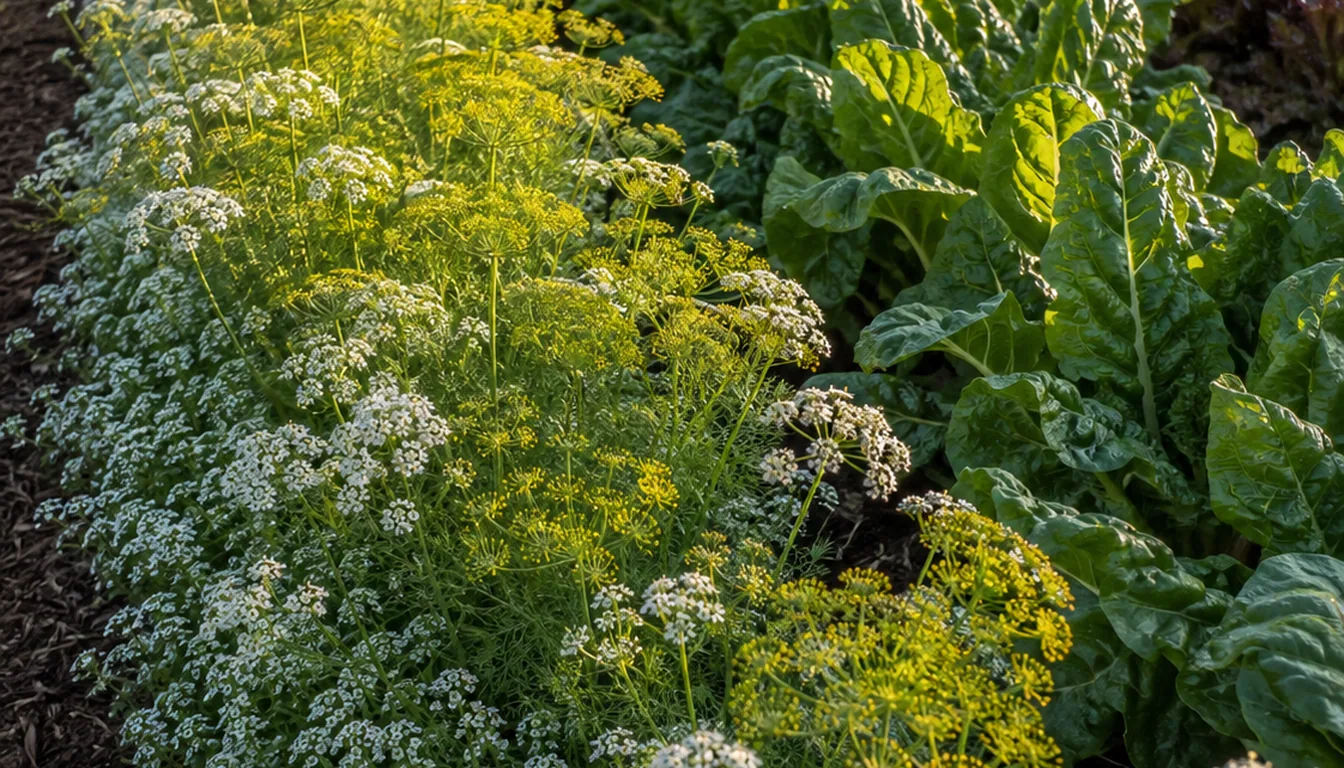
- 1. Identify the crop, rose, fruit plant, or ornamental that repeatedly develops aphids or scale.
- 2. Check the sun, soil moisture, irrigation reach, and mature clearance beside that plant.
- 3. Choose an early, middle, and late flower that fit those conditions and are not locally invasive.
- 4. Place low plants at the accessible edge and taller plants where they will not shade or block the crop.
- 5. Leave a narrow inspection route so you can turn leaves over and manage ants without stepping on roots.
- 6. Label the planting and record bloom gaps, beneficial insects, and pest damage during the first season.
- 7. Replace only the plant that failed its assigned job instead of redesigning the entire strip at once.
One strip cannot cover an entire large property equally well.
Repeat small habitat patches near separate problem areas, especially when buildings, lawn, pavement, or wind-exposed gaps divide the yard.
Containers can help where the crop bed has no spare root space. Group pots of alyssum and flowering herbs beside the bed, but keep drainage open and water them according to the container rather than the in-ground crop.
Avoid planting tall fennel or sunflower where it will block air movement, harvest access, or sight lines.
A shorter plant that fits the bed and flowers reliably creates more value than a famous insectary plant squeezed into the wrong place.
Protect the insectary strip beside the pest-prone bed from treatments used elsewhere.
A beautiful flower patch across the yard may support adults, but it does less to protect larvae developing beside an aphid colony.
What Shelter and Water Do Lady Beetles Need?
Lady beetles need more than flower beds during the weeks when plants are not blooming. Depending on species and climate, adults may overwinter in leaf piles, bark crevices, dead wood, buildings, or other protected places.
Keep some leaves or brush in a part of the yard where they will not smother turf, block drainage, hide a safety hazard, or preserve diseased plant material.
A sheltered area beneath healthy shrubs is more useful than leaving wet leaves packed against every crown and foundation.
A diverse planting with ground-level cover, herbaceous stems, shrubs, and trees creates different temperature and wind conditions. This structural variety also supports other predators that may work alongside lady beetles.
Beneficial insects require water, but an open deep container creates drowning and mosquito problems. Existing irrigation droplets, dew, moist soil, or a shallow feature with secure landing surfaces may supply water without maintaining stagnant water.
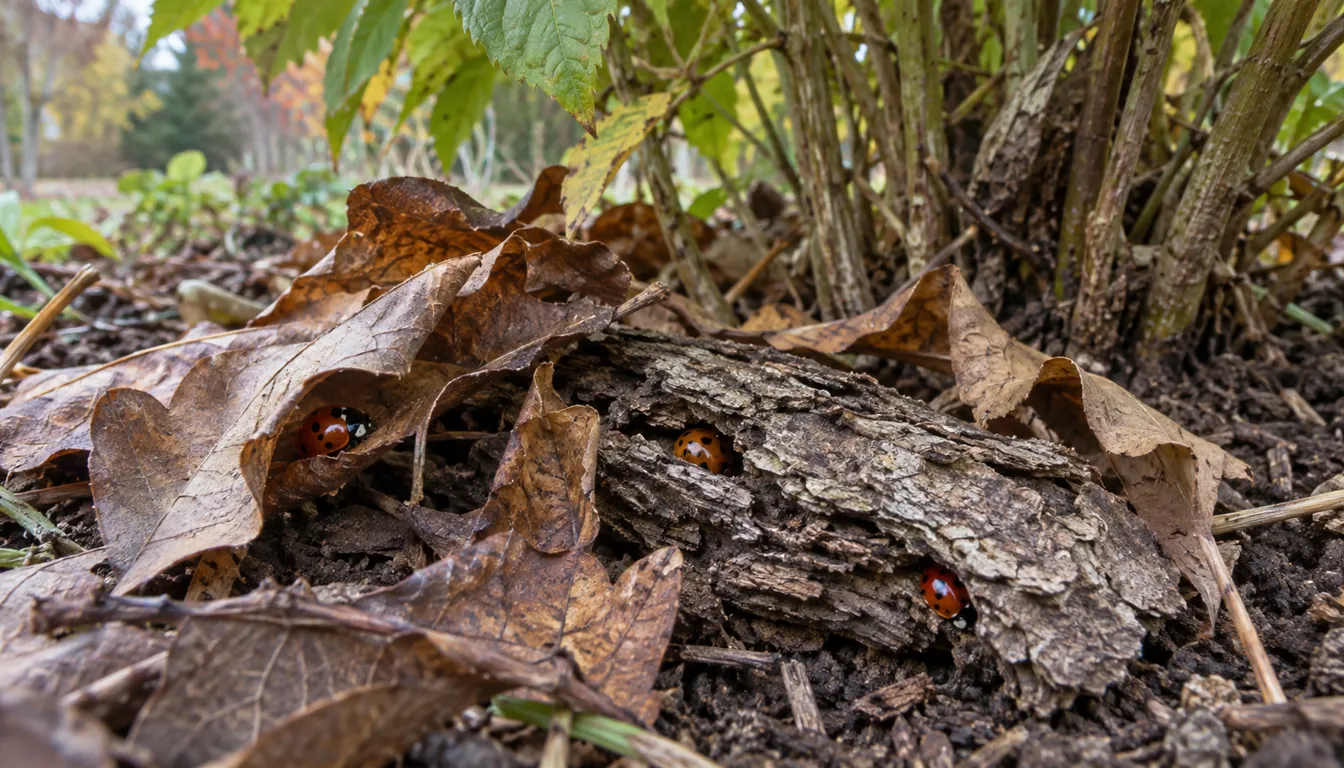
- - Retain a modest patch of dry leaves or brush in a safe, low-disturbance location.
- - Remove material carrying serious plant disease or covering drainage openings.
- - Keep living plants vigorous with site-appropriate irrigation instead of daily blanket watering.
- - Preserve several plant heights and avoid shearing every shrub into bare uniformity.
- - Reduce dust on small plants when it interferes with natural enemies.
- - Inspect shelters before cleanup so overwintering insects are not discarded unnoticed.
Insect hotels are not a substitute for the food, prey, and pesticide safety described above.
Protect ordinary habitat first, because a decorative structure cannot compensate for a sprayed flower bed or a garden with no prey.
Do not manufacture aphid colonies solely to feed predators.
Tolerating a small naturally occurring population on an established plant is different from moving pests onto clean plants or ignoring damage to young, stressed, or virus-susceptible crops.
When Should You Let Ladybugs Work on Aphids?
Begin by identifying the pest and the plant's condition.
Aphids are small, soft-bodied insects that often cluster on new growth or leaf undersides, but curled leaves can also hide mites, whiteflies, caterpillars, disease, or an old injury that lady beetles will not solve.
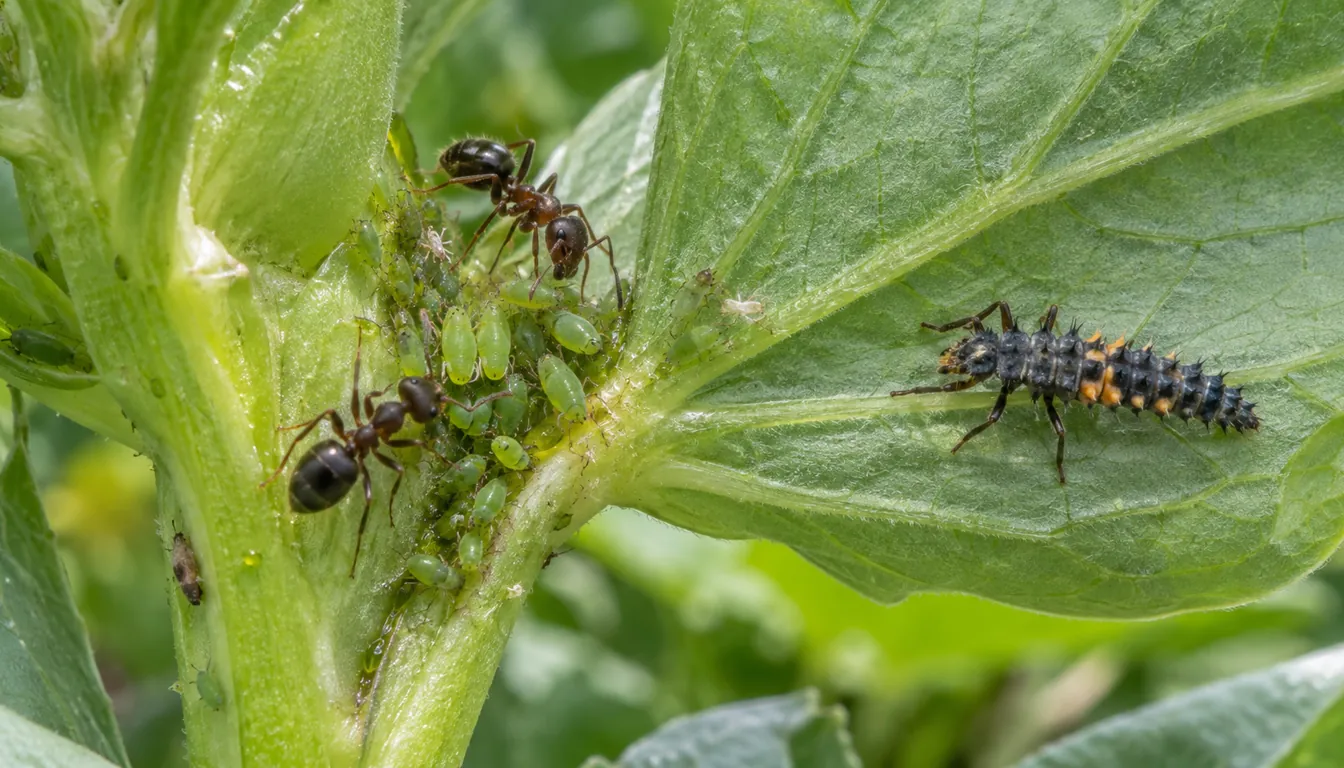
Turn leaves over and look for adults, alligator-like larvae, egg clusters, aphid mummies produced by parasitoid wasps, and diseased aphids.
A substantial natural-enemy presence can mean the colony will decline without an insecticide.
| What you find | What it means | Reasonable next action |
|---|---|---|
| A few aphids on an established plant, with larvae or mummies present | Biological control is already active and the plant may tolerate current feeding | Mark the shoot, wait, and compare pest numbers and new damage after several days |
| Aphids increasing but leaves remain usable | Predators may need time, while the plant can still be protected physically | Use a firm water spray on a sturdy plant or prune a tightly curled infested tip |
| Ants moving repeatedly between the colony and their nest | Ants may be collecting honeydew and defending aphids from predators | Use an appropriate ant-management method that does not contaminate flowers or harm beneficials |
| Seedlings, new transplants, or buds are being distorted | The plant has less tissue to spare and delay carries more risk | Protect the plant promptly with the least disruptive effective method |
| Leaves are sticky or blackened by honeydew and sooty mold | The colony is producing enough waste to affect appearance and use | Reduce aphids, manage ants, and wash surfaces where appropriate |
| Predators are absent and damage continues to expand | Habitat alone is not controlling this outbreak | Reconfirm the pest, assess plant tolerance, and select a targeted response |
Use the plant's damage tolerance to set the waiting period.
Conserving predators does not require sacrificing seedlings, allowing virus vectors to spread, or accepting permanent injury to a valuable plant.
Ants deserve a separate check because some species defend honeydew-producing aphids from predators and parasitoids. Follow ant trails to their source and choose controls suited to the site; spraying the aphid colony while protected ants remain can repeat the problem.
A strong stream of water can knock aphids from sturdy foliage, but it may damage delicate seedlings or flowers. Pruning can remove a localized curled colony, although cutting every infested tip may also remove flowers and new growth the plant needs.
Check the plant again after any nonchemical action.
The useful question is whether new damage and pest numbers are declining, not whether every old aphid or curled leaf disappeared immediately.
Which Pest-Control Choices Protect Ladybugs?
Broad-spectrum and persistent insecticides can kill predators along with pests, so plant choice cannot repair a high-risk spray program. Read the full product label and identify the pest before treating anything.
“Organic” does not mean harmless to lady beetles.
Insecticidal soap, horticultural oil, neem, pyrethrins, and other contact products can affect beneficial insects they hit, even when some have shorter residual activity than broad-spectrum synthetic products.
Use nonchemical methods first when the plant and pest allow them.
If an insecticide becomes necessary, choose a product labeled for the specific plant and pest, follow every direction, and target the smallest practical area rather than treating the whole habitat by habit.
Never improvise a dose, timing, or tank mixture. Temperature limits, plant sensitivity, pollinator precautions, protective equipment, retreatment intervals, and permitted sites come from the current label.
Avoid spraying open flowers or areas where beneficial insects are active unless the label and the actual risk assessment support that use.
Treating at dusk is not an automatic safety rule because residues can remain and some beneficial organisms are active after sunset.
Systemic products can move through plant tissue and may expose insects beyond the moment of application. Their legal availability and permitted uses also change, so rely on current local guidance and the product label rather than an old universal list.
After treatment, continue monitoring.
A product can reduce aphids temporarily without correcting the ant activity, excess nitrogen, water stress, or repeated broad-spectrum use that allowed the problem to rebound.
Should You Buy and Release Ladybugs?
Purchased lady beetles can provide temporary suppression in some carefully managed situations, but an open home garden is difficult to hold them in.
UC IPM reports that many commercially released convergent lady beetles disperse quickly, and Oregon State notes that open-landscape releases often scatter instead of establishing where the gardener wants them.
That does not make every release fraudulent or useless. Results depend on the lady beetle species and condition, target pest, release numbers, temperature, moisture, time of release, prey density, handling, and whether the site can support the beetles afterward.
| Situation | What a release can do | What it cannot guarantee |
|---|---|---|
| Open yard with few aphids and little flower habitat | Add a brief adult presence | Make beetles remain or reproduce in that yard |
| Localized heavy aphid colony on a suitable plant | Temporarily increase predator pressure when handled correctly | Replace monitoring or protect the plant after beetles disperse |
| Greenhouse or enclosed structure | Offer more controllable temperature, prey, and movement conditions | Succeed without matching the predator, pest, and release rate |
| Garden with resident eggs and larvae | Usually adds less value than protecting the life stages already present | Improve control if the same area is repeatedly sprayed |
Before buying, check whether lady beetles are the right predator for the pest.
Caterpillars, chewing beetles, slugs, and many plant diseases require different management even when flowers nearby are full of lady beetles.
Inspect for resident eggs, larvae, and pupae first.
Removing a spray or ant barrier that blocks those residents can be more durable than adding adults that are biologically ready to fly.
If you proceed, follow supplier and Extension handling instructions for that organism rather than a generic release ritual. Wetting plants, cool evening conditions, or staged releases can slow dispersal in some guidance, but none of those measures creates prey or habitat after the beetles become active.
The long-term strategy remains conservation: suitable flowers, tolerable prey, shelter, water, ant management, and careful pesticide choices.
A release is temporary. Long-term habitat continues working after purchased beetles disperse.
Pro Tips
- Choose simple flowers with exposed florets instead of assuming every cultivar of a recommended plant has equal value.
- Let selected dill or cilantro plants flower, but keep them where mature height and reseeding can be managed.
- Inspect aphid colonies for larvae, eggs, pupae, and tending ants before choosing a treatment.
- Place insectary strips beside recurring pest areas without crowding crop roots or blocking airflow.
- Keep a safe patch of leaves or brush for shelter while removing diseased debris and material that blocks drainage.
- Use the product label and current local guidance whenever a pesticide is necessary.
- Record real bloom gaps and pest outcomes during the first season, then replace plants that did not perform their assigned job.
Frequently Asked Questions
What is the single best plant for attracting ladybugs?
There is no universal winner because the plant must flower in your conditions and fit the seasonal gap in your garden. Sweet alyssum, dill, cilantro, and yarrow are useful starting candidates, while a mix of flower forms and bloom times is more reliable than one species.
Will ladybugs stay if there are no aphids?
Adults may visit flowers for nectar or pollen, but many lady beetle species need insect prey to reproduce and support larvae. A garden with no suitable prey may receive visitors without maintaining a local breeding population.
Should I leave aphids on my plants for ladybugs?
A small colony on a vigorous established plant may be monitored when natural enemies are present and damage is tolerable. Do not delay action on seedlings, stressed plants, serious distortion, or a pest situation that can spread disease.
Are ladybug larvae harmful to plants?
Lady beetle larvae are predators, not leaf-eating garden pests. Their dark elongated bodies can look alarming, so identify them before spraying or wiping them from an aphid colony.
Can containers support ladybugs?
Yes, containers can supply flowers near a patio crop or small bed when their plants receive suitable light, water, and drainage. Group several useful plants, maintain overlapping bloom, and avoid spraying the container habitat with broad-spectrum insecticides.
Sources & References
- University of Minnesota Extension: Lady Beetles
- Penn State Extension: Attracting Beneficial Insects
- Penn State Extension: Landscaping to Attract and Conserve Beneficial Insects
- UC Statewide IPM Program: Aphids
- UC Statewide IPM Program: Convergent Lady Beetle
- UC Statewide IPM Program: Beneficial Predators
- Oregon State University Extension: Encouraging Beneficial Insects in the Garden
Related Guides
Best Butterfly Garden Plants for a Complete Habitat
The best butterfly garden plants do two different jobs. Host plants feed caterpillars, while nectar…
15 min read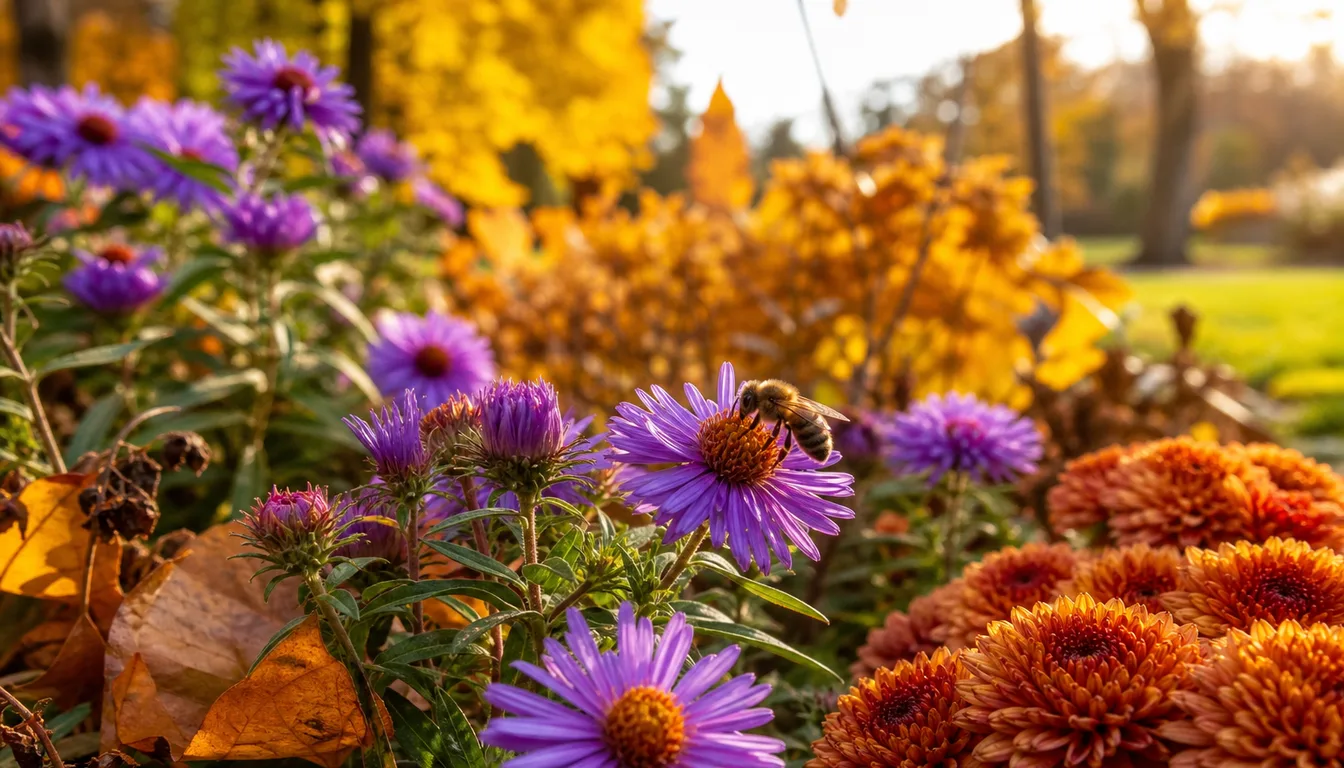
Best Fall-Blooming Flowers for Color Near Frost
A bed that still carries flowers in October usually was planned before temperatures fell.
9 min read
Best Fast-Growing Trees for Shade and Privacy
The best fast-growing tree is the one whose mature crown, roots, climate range, and maintenance…
16 min read
Best Fragrant Flowers for Every Yard and Season
The best fragrant flowers depend on climate, light, space, and the hours you use the yard.
15 min read
Best Full-Sun Perennials for Hot, Bright Beds
The best full-sun perennials are the ones that match the bed's soil moisture and drainage, local…
14 min read
Best Ground Cover Plants for Sun, Shade, and Slopes
The best ground cover is a plant that survives the site and performs the job without escaping into…
18 min read