
What's Broccoli? How to Cut the Main Head and Keep Picking
Brassica oleracea var. italica Brassicaceae
Broccoli heads form best in steady growth at average temperatures of 65 to 75 F, so the planting date decides most of the harvest.
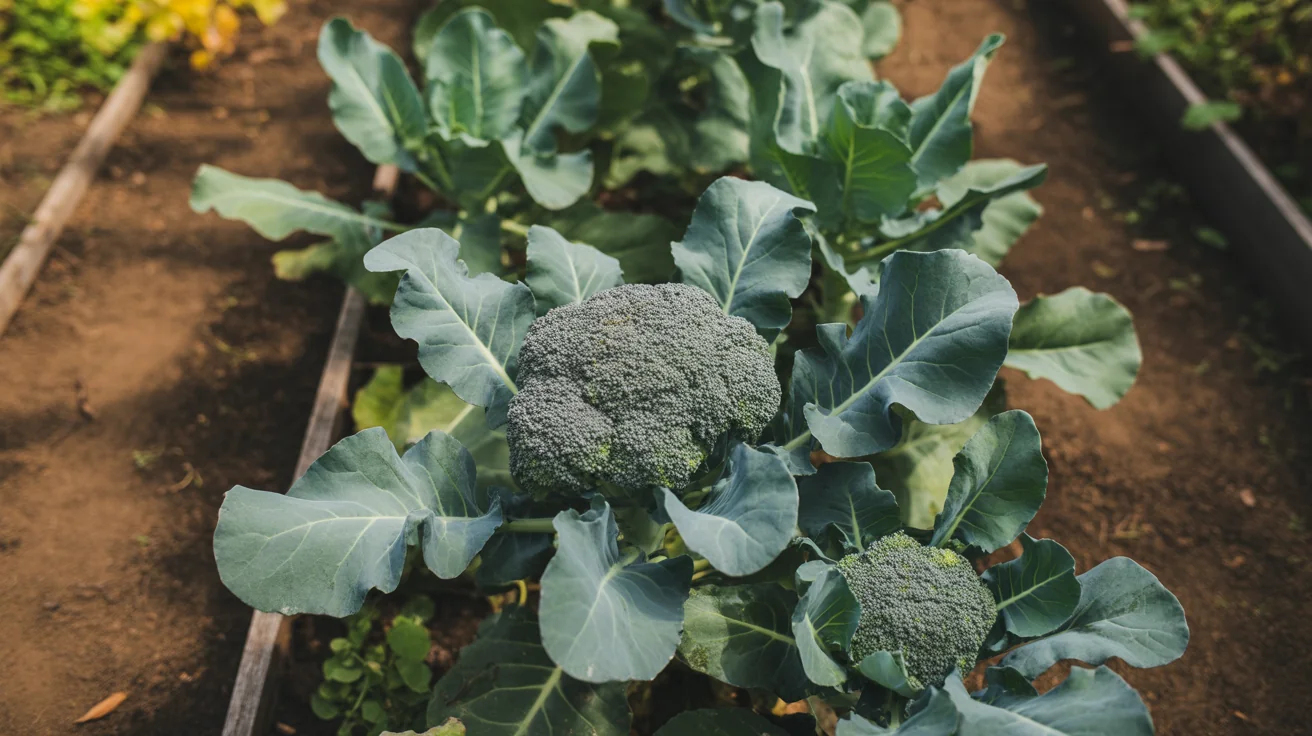
Space plants 18 to 24 inches apart, water until the soil is moist 6 inches down, side-dress with nitrogen 3 to 4 weeks after transplanting, and cut the main head at 3 to 6 inches across while the buds are still tight.
Care snapshot
What Is Broccoli, and Which Type Should You Grow?
Broccoli is Brassica oleracea, Italica Group, the same species as cabbage, kale, and Brussels sprouts. What you harvest is a tight cluster of immature flower buds, not a fruit, a root, or a leaf.
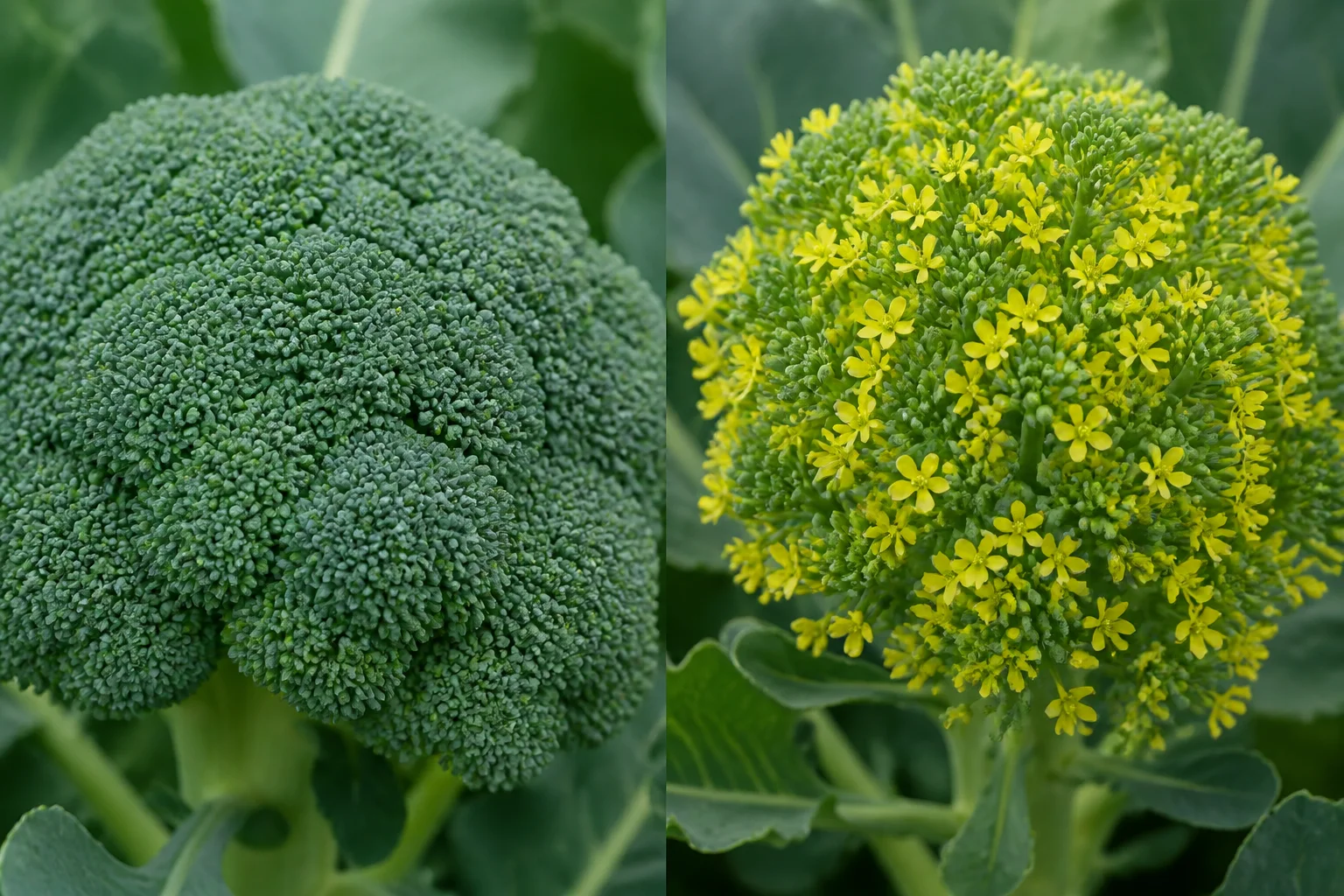
That fact explains the harvest signal. Once yellow petals show, the buds are opening into flowers, and the head loses the tight, tender texture you planted it for.
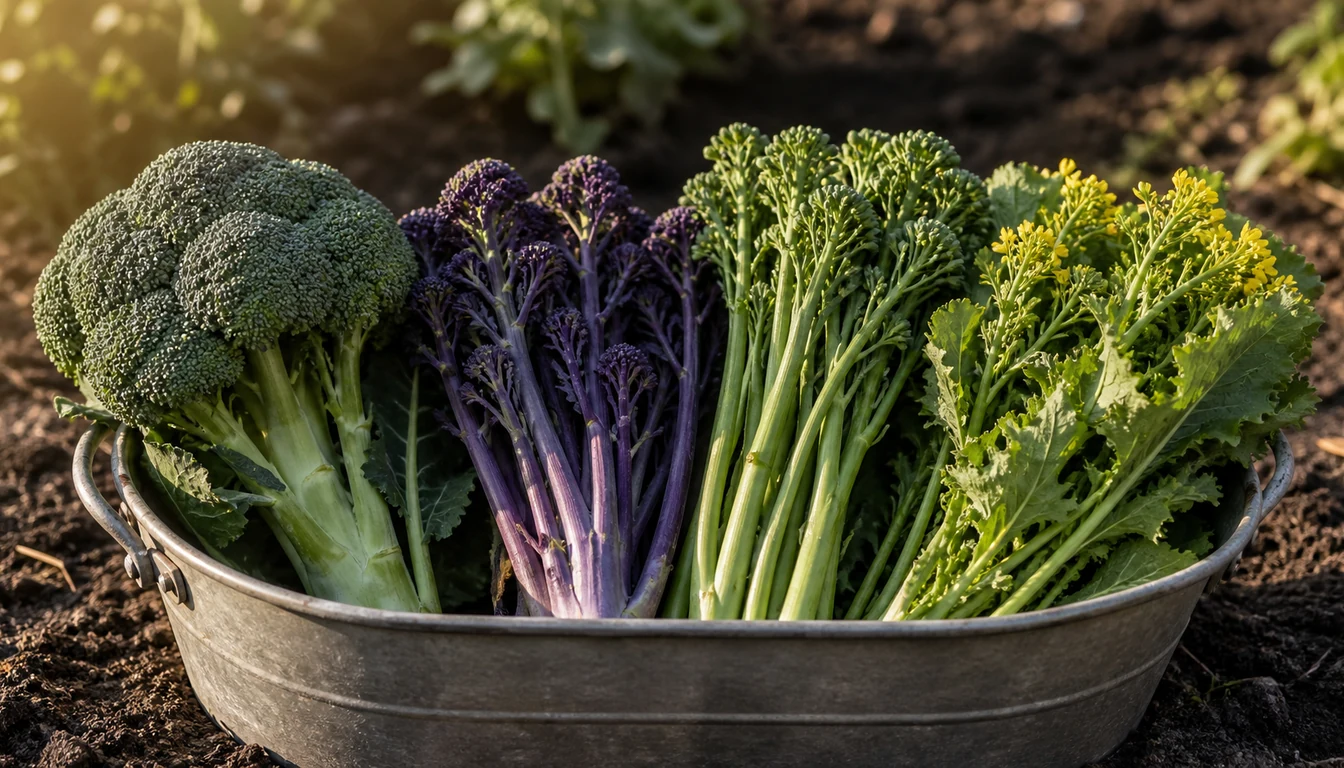
Calabrese types are what most gardeners mean by broccoli. They build one large green central head, and many varieties then push smaller side shoots from the leaf joints after the main cut.
Sprouting broccoli is built differently. The RHS describes it as small clusters of buds, usually purple, on the tips of long leafy stems. Traditional winter and spring varieties take 4 to 10 months to start producing, then give pickings for up to two months.
That long season is the catch. A winter sprouting variety holds its bed space for most of a year, so it suits gardeners who can spare that space rather than those who want a quick spring crop.
Broccolini and rapini are sold beside broccoli but are grown for a different harvest. Neither forms one central dome. Both are cut as thin stems with small loose bud clusters, and rapini is valued for its leaves as well.
- Calabrese
- One large central head, then smaller side shoots on many varieties
- Sprouting broccoli
- Small bud clusters on long stems, 4 to 10 months to first pickings for winter types
- Broccolini
- Long thin stems with small loose florets, cut over a longer window than one head
- Rapini
- No central head, grown for leaves and thin flowering stems
When Should You Plant Broccoli for a Cool Head-Forming Window?
Broccoli prefers average temperatures of 65 to 75 F, and Utah State reports the highest yields when temperatures do not climb past 75 F. Heads that form in hotter weather tend to be loose, and Illinois notes that yellow flowers can open before the head is ready during hot spells.
For a spring crop, Utah State sets transplants out 2 to 3 weeks before the last frost date. The plants are not seriously damaged down to about 28 F, so an early planting carries less risk than a late one that heads in summer heat. Check your own last frost date before counting back.
For a fall crop, count back from the harvest you want. Utah State plants 50 to 75 days before the expected maturity date, and Clemson calls fall the better broccoli season in South Carolina because the heads form while the weather cools instead of warming.
Raising your own plants adds lead time. Clemson allows about 6 to 8 weeks from seed to transplant in spring and 5 to 6 weeks in fall, which is why a fall crop has to be started in the heat of summer.
- Spring crop
- Transplant 2 to 3 weeks before the last frost so heads form before temperatures pass 75 F
- Fall crop
- Plant 50 to 75 days before the date you expect to harvest
- Seed to transplant
- About 6 to 8 weeks in spring, 5 to 6 weeks in fall
- Main failure
- Heads that form in heat loosen and flower early
Why Do Broccoli Transplants Button Instead of Heading?
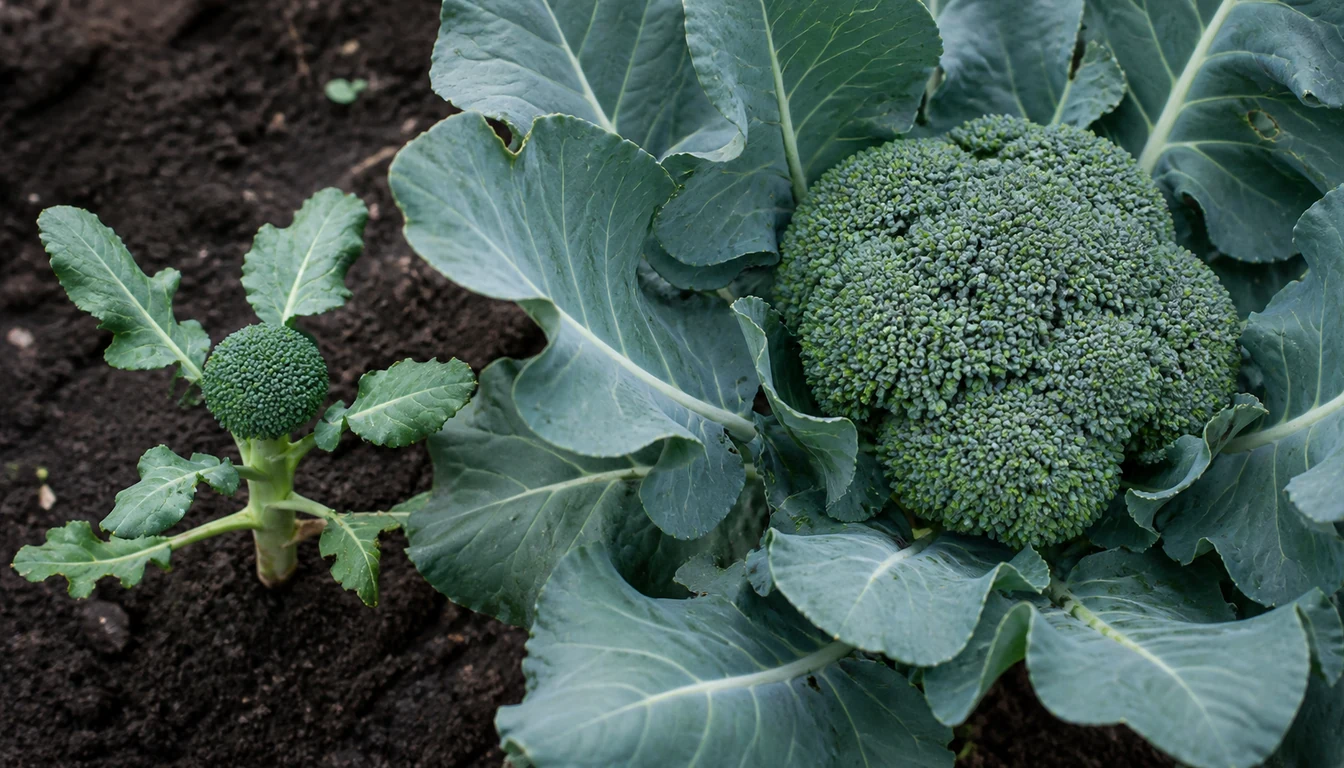
A small early head on a small plant is called a button. Utah State traces buttoning to plants that were exposed to cold or stressed for water or nutrients, which pushes them to head before they have built enough leaves.
Clemson gives the cold trigger in numbers. Ten or more days in a row between 35 and 50 F, after a period of good growth, can make broccoli flower early, and the larger the plant is when that cold spell arrives, the more often it happens.
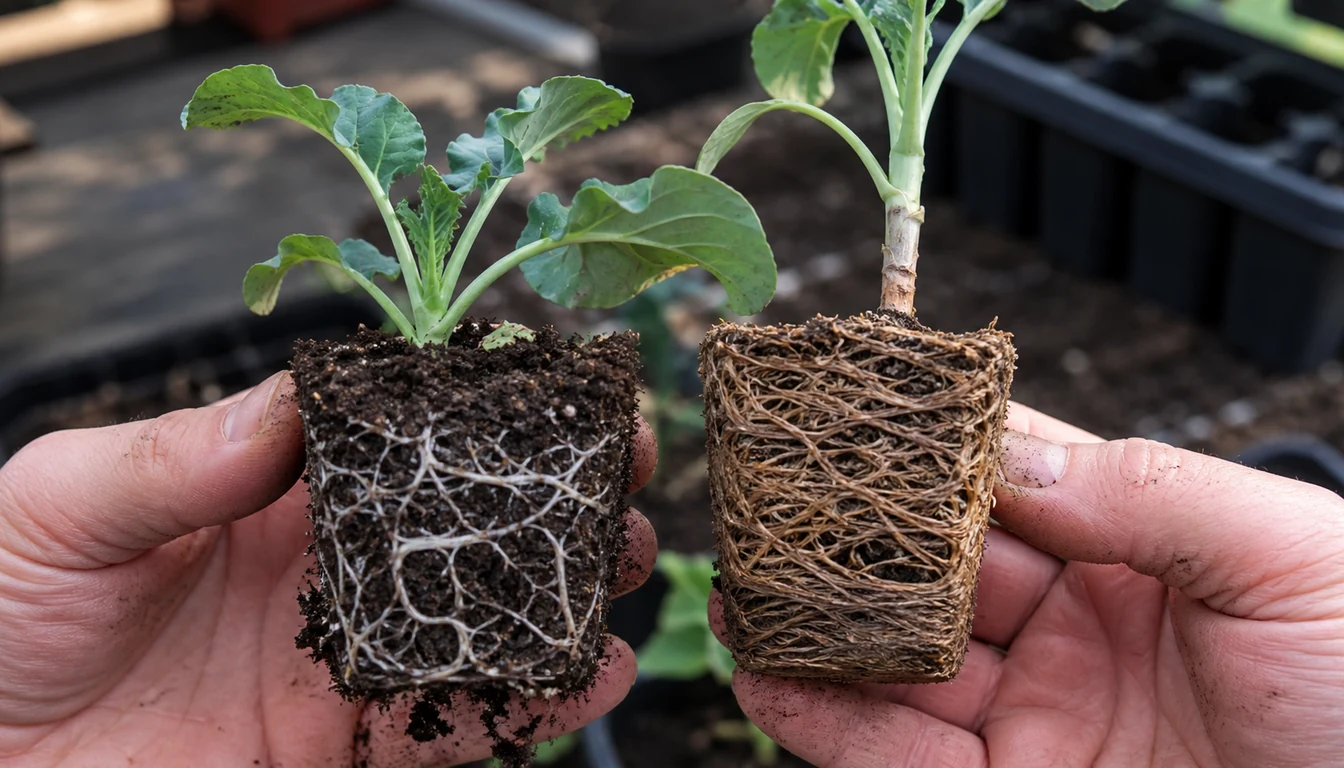
That is why transplant size matters. Utah State recommends plants with 4 to 6 mature leaves and a well-developed root system. Sliding one plant out of its cell before buying shows the roots, and white roots that hold the mix loosely are a better sign than a plug that keeps its shape like a hard cube.
If the stem is already woody and the roots are crowded, a younger tray is the safer buy. If you raise your own, steady seedling watering matters here, because Clemson lists young, healthy transplants that have not been stressed as one of its defenses against early heading.
The same rule holds after planting. Plants that are fully hardened off handle the move better, and Clemson recommends watering thoroughly at transplanting to start root growth and remove air pockets around the roots.
How Should You Feed Broccoli Before the Head Forms?
Clemson calls broccoli a heavy feeder. Without a soil test, it suggests working in 2.5 pounds of 10-10-10 per 100 square feet before planting, then side-dressing with calcium nitrate (15.5-0-0) at 2 pounds per 100 feet of row three to four weeks after transplanting.
Utah State uses a different nitrogen fertilizer on the same clock. It applies half a cup of 21-0-0 per 10 feet of row about 4 weeks after transplanting, then another quarter cup when the head is the size of a quarter. Both schedules feed the plant while it is still building the leaves that will supply the head. The timing logic is the same one used across the bed in vegetable fertilizer timing.
Sandy soil and heavy rain carry nitrogen down past the roots, so Clemson notes that those beds may need more frequent side-dressing. A soil test also settles pH, which Clemson puts at 5.8 to 6.5 for the best growth.
More nitrogen is not automatically better. Clemson links one kind of hollow stem to excess nitrogen combined with warm temperatures, too much water, and low soil pH. Yellowing between the veins of older leaves during cool, wet weather points instead to magnesium deficiency, which Clemson corrects with a spray of 2 tablespoons of Epsom salts per gallon of water.
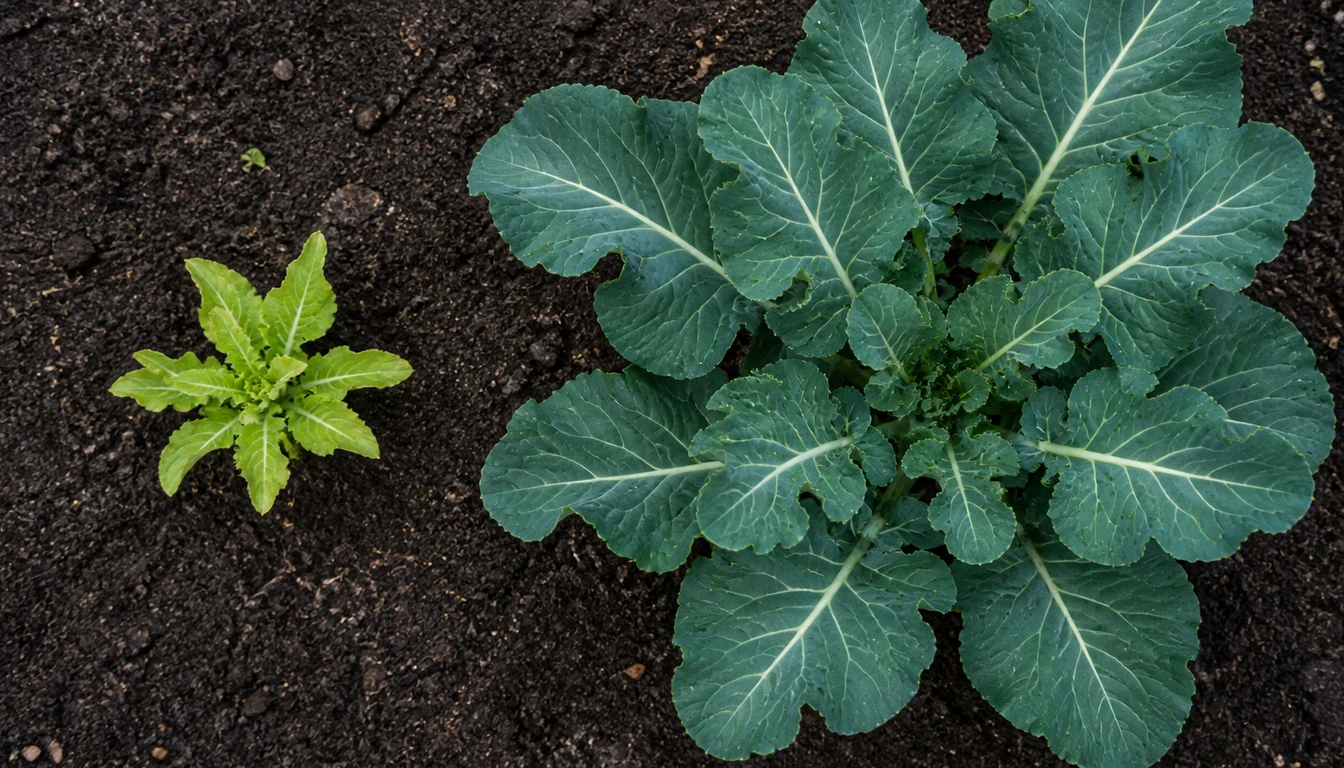
- Small pale leaves
- Too little nitrogen early, before the head started
- Yellow between veins on older leaves
- Magnesium deficiency, most common in cool, wet spells
- Hollow main stem without rot
- Excess nitrogen with warm weather, heavy watering, or low pH
- Tiny button head
- Transplant stress or a long cold spell after good growth
How Far Apart Should Broccoli Go, and When Does Row Cover Help?
Clemson spaces broccoli 1½ to 2 feet apart in rows 3 feet apart, and Illinois uses the same 18 to 24 inches in the row with 36 inches between rows. Utah State allows 12 to 18 inches and notes that a tight 1 by 1 foot grid still works, but head size is reduced.
The choice is a trade between number and size. Closer plants give more heads per bed, while wider spacing gives bigger heads, drier foliage, and room to lift leaves and check for caterpillars without snapping stems.
Row cover is the other early decision. Utah State notes that fabric covers protect young plants from insect pests, and Clemson warns that flea beetles can severely damage small seedlings and that pests need control before heads start to develop.
A cover only works while it stays sealed. If an edge lifts in wind, or pests are already on the plants when it goes on, the fabric becomes shelter for them instead of a barrier.
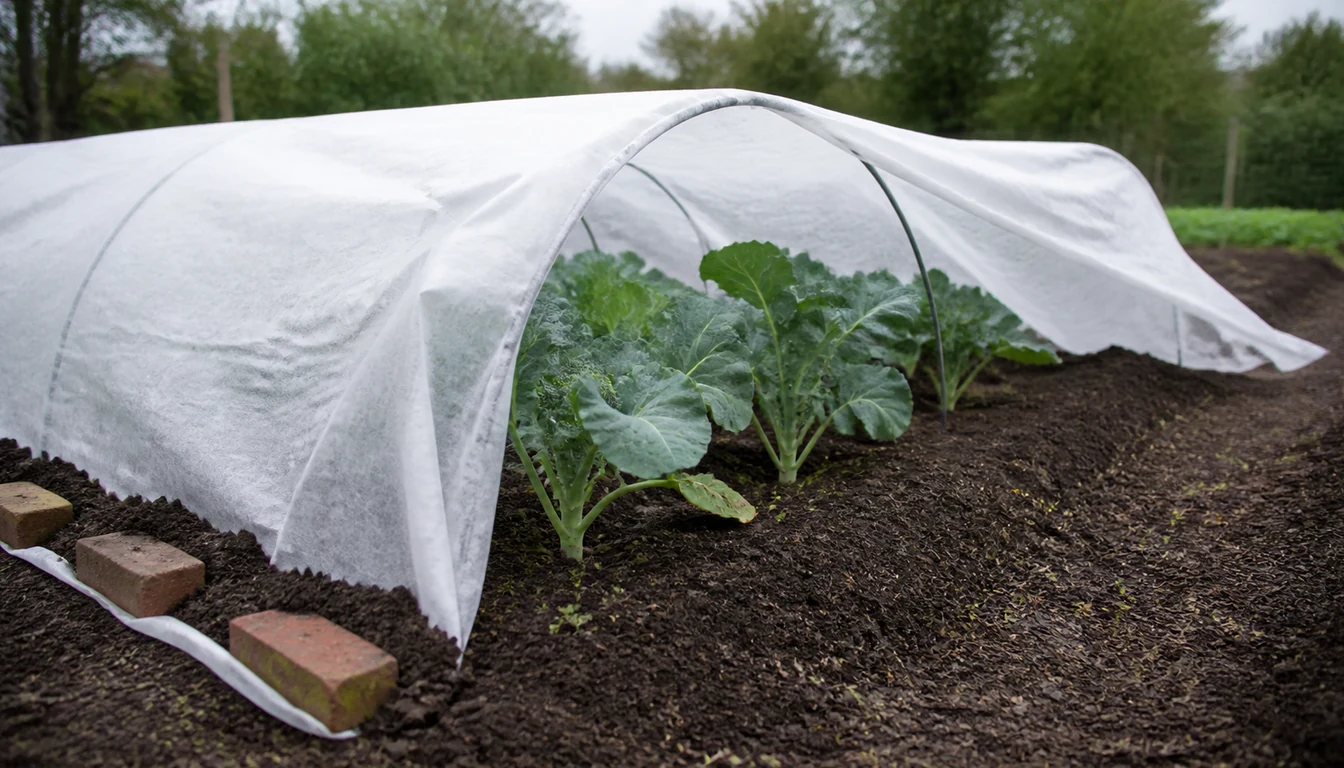
- Leave enough aisle width to inspect both sides of the plant.
- Keep lower leaves from knitting into a damp wall.
- Remove torn row cover before pests walk through the gap.
How Often Should You Water Broccoli for a Tight Head?
Utah State puts broccoli's need at about 1 to 2 inches of water per week, given as deep, less frequent soakings that keep soil moisture even. Clemson describes the same goal by depth. It waters until the soil is moist at least 6 inches down, because light sprinklings keep roots shallow.
Two stretches matter most, according to Clemson. The first is stand establishment, right after planting. The second is head development, when a dry spell gives poorer heads and, in spring, slows the crop just as summer heat approaches.
Clemson also waters in the morning so the foliage dries before night. Deep soakings on that schedule follow the same logic as deep watering, with moisture reaching the whole root zone instead of the top inch.
- Weekly target
- About 1 to 2 inches, soil moist at least 6 inches down
- Even moisture
- Steady growth and better head quality
- Dry spell during heading
- Smaller, poorer heads
- Light daily sprinkles
- Roots stay shallow in the driest layer of soil
When Should You Cut Broccoli, and Will It Grow Back?
Cut the main head when it is 3 to 6 inches across and the flower buds are still tightly closed, which is Clemson's harvest cue. Utah State notes that mature heads can reach 6 to 12 inches depending on variety, so bud tightness is a better signal than size alone. Once yellow petals show, the eating window is closing.
Most varieties are ready 50 to 90 days after transplanting. Clemson lists Packman at about 50 days, Green Magic at 57, and Belstar at 65, which is why the variety on the label sets the date to start checking.
Cut the stem about 6 inches below the top of the head, then leave the plant standing. Illinois notes that removing the central head stimulates side shoots, and Utah State describes 3 to 6 inch side shoots on plants that keep getting water and fertilizer.
This is where broccoli parts company with its relatives. Cabbage and cauliflower each give one main harvest and finish, which is the habit many growers carry over by mistake.
Harvested heads keep up to a week in a perforated plastic bag in the refrigerator, according to Clemson, and surplus can be frozen.
What Is Eating My Broccoli Leaves?
Clemson lists imported cabbageworms, cabbage loopers, diamondback moth larvae, corn earworms, and cabbage aphids as broccoli pests, and flea beetles as a threat to small seedlings. Most of them feed on leaves first and reach the head once it starts to form.
The most common chewer is the imported cabbageworm, the green caterpillar of the small white butterfly that flies low over brassica beds in daylight. Seeing those butterflies is a good reason to turn a few leaves over.
Eggs go on the leaf undersides, which is where a check has to happen. Clemson stresses controlling pests before the heads develop, and early hand-picking and other natural pest control habits work best while numbers are low.
At crop end, pull the thick stems and clear fallen leaves rather than leaving them in the bed, and move the next brassica planting if you have another bed.
Rotation also protects the soil. Clubroot swells and distorts brassica roots, and University of Maine Extension says it can live 10 years in soil without a host. UMaine recommends a four-year rotation for cole crops, and seven years once clubroot has been found.
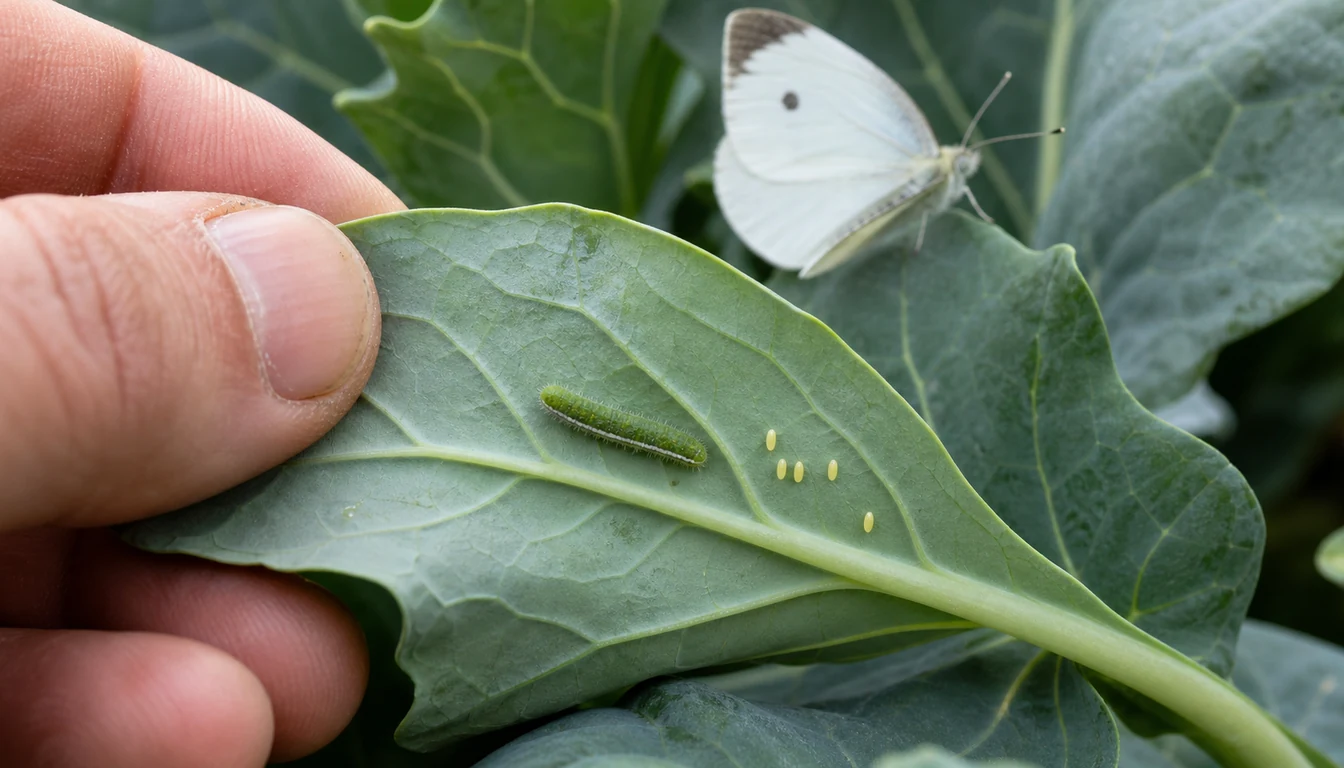
- Check leaf undersides for eggs before they hatch into the head zone.
- Clear old stems and fallen leaves at crop end.
- Move the next brassica planting if you have another bed available.
Frequently Asked Questions
How far apart should broccoli plants be?
Clemson and Illinois both use 18 to 24 inches between plants in rows about 3 feet apart. Utah State allows plants as close as 12 inches, but closer spacing gives smaller heads.
Why is my broccoli head loose and open instead of tight?
Loose heads usually formed in weather that was too warm, or growth stalled during a dry spell while the head developed. Clemson also notes that temperature swings in spring can give uneven heads and loose bud clusters.
Can I plant broccoli where cabbage or kale grew last year?
It is better to wait. University of Maine Extension recommends a four-year rotation for cabbage-family crops, and seven years if clubroot has appeared in the bed.
Will broccoli survive a frost?
Utah State reports that broccoli is not seriously damaged by temperatures down to about 28 F. A harder freeze can damage an exposed head, so cut any head that is ready before one arrives.
Sources & References
Related Plants
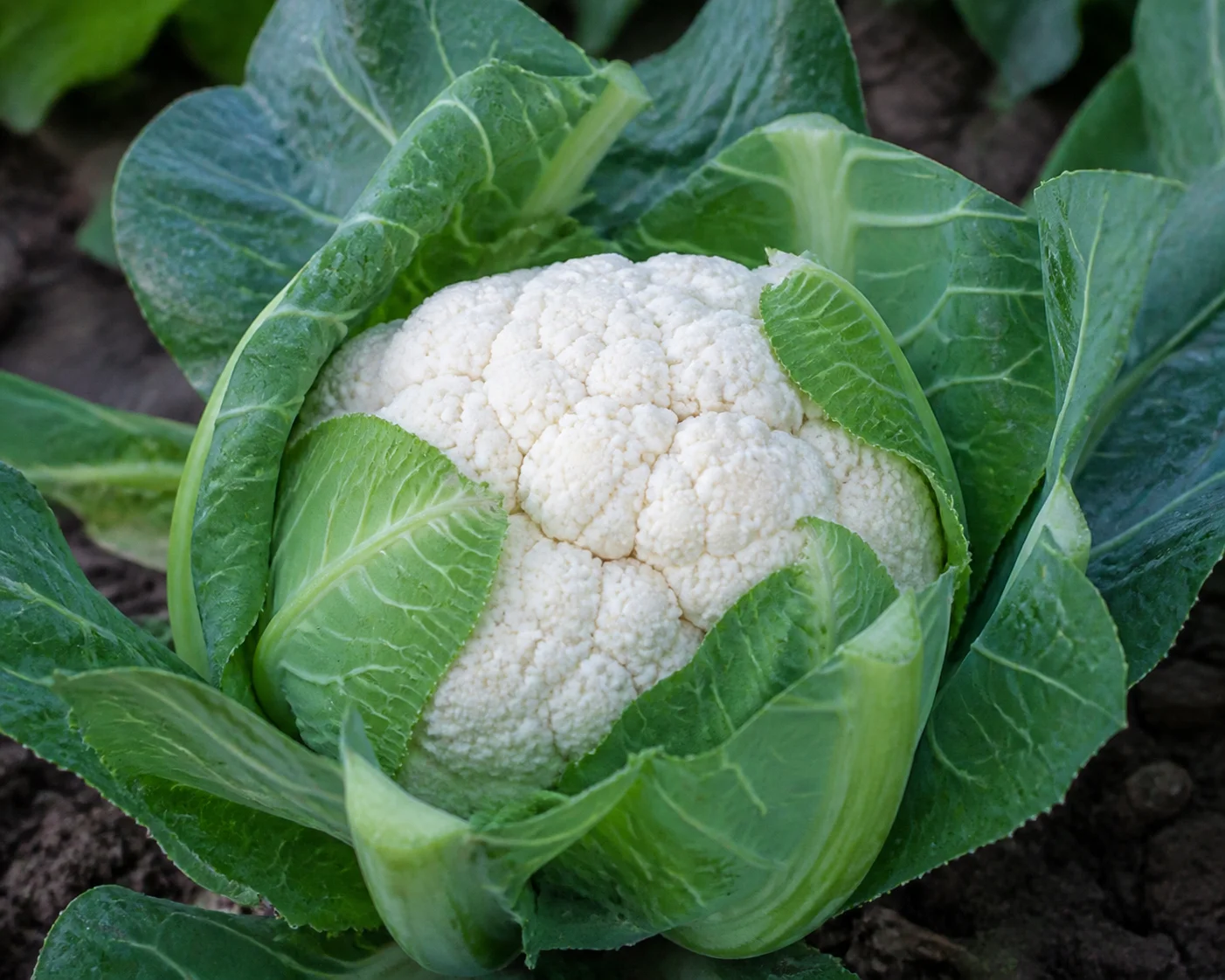
Cauliflower
Another cool-season brassica with similar timing and soil needs but tighter white heads.
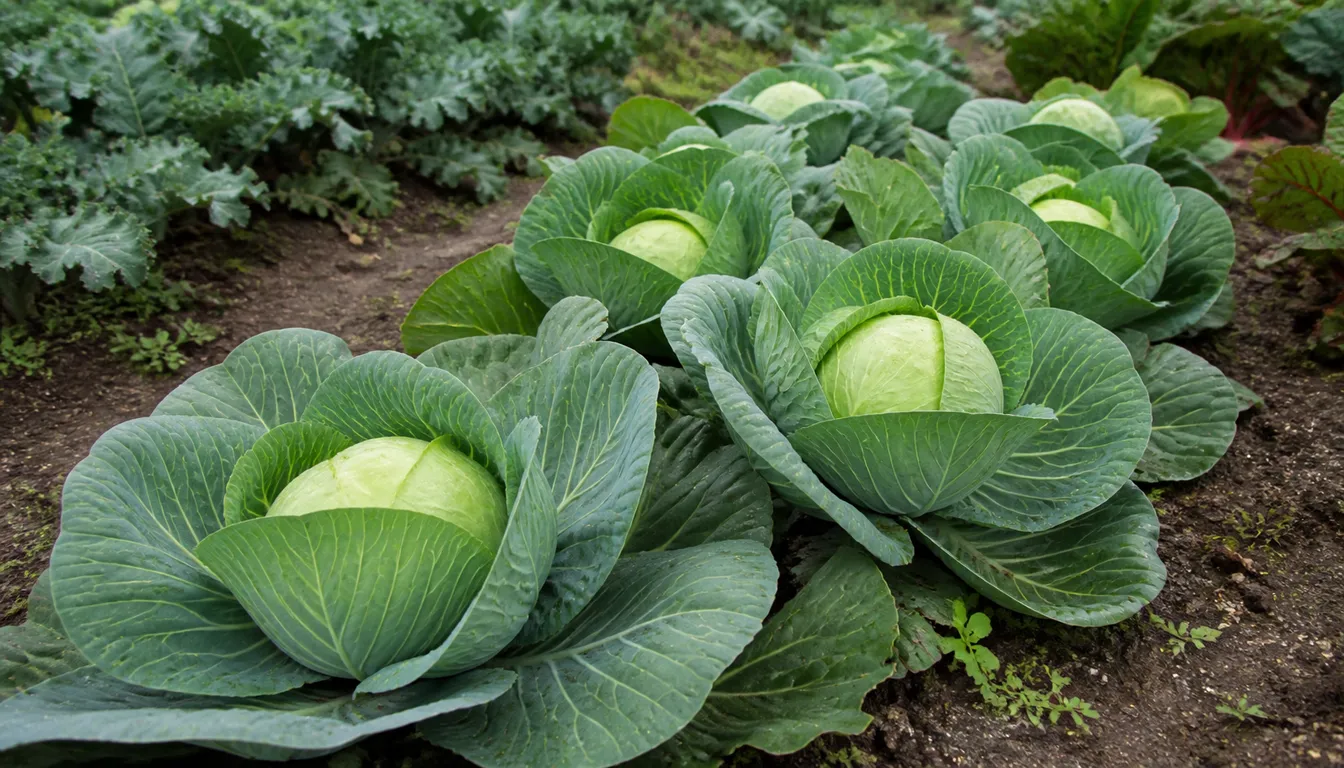
Cabbage
Heading brassica cousin grown more for dense leaves than florets, but sharing spacing and fertility needs.
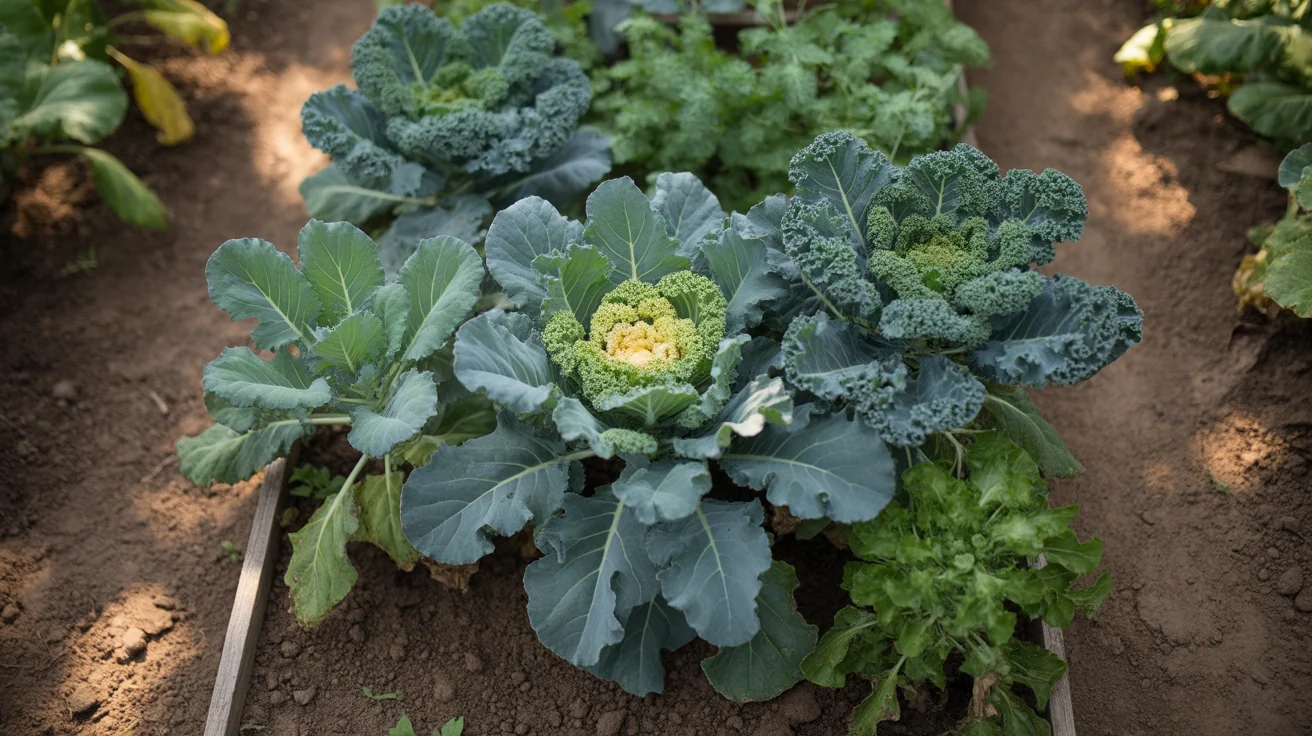
Kale
Leafy brassica that handles wider temperature swings and offers repeated picking through spring and fall.
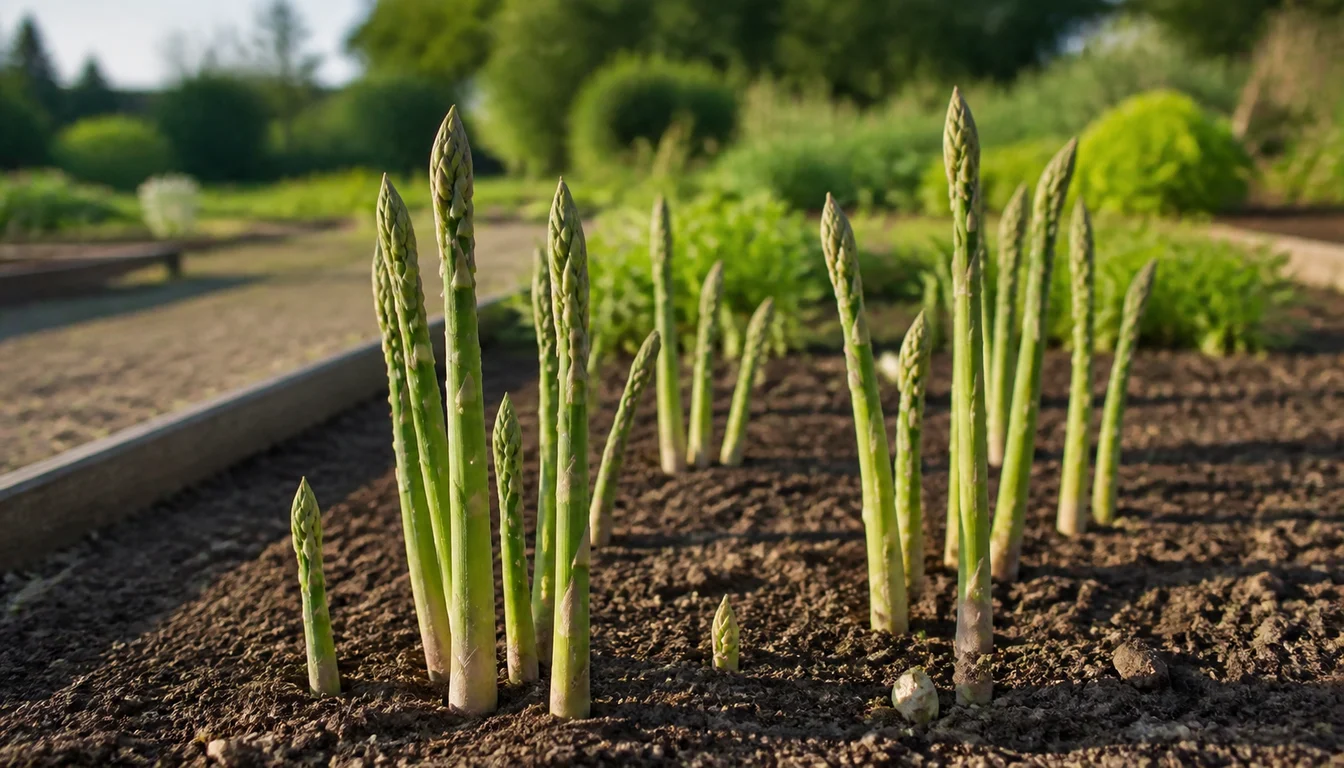
Asparagus
Asparagus rewards careful establishment with spring harvests for many years.
Beans
Two different plants share the name bean, one that stays knee-high and gives most of its crop inside two or three…
Beet
Beet care starts with one unusual fact. Each seed ball can make several seedlings, so the crop needs early thinning…