Basil vs Cilantro
Choose basil for warm-weather leaf production and basil-centered dishes. Choose cilantro for its distinct fresh flavor during cool growing windows, then keep the plants for coriander seed if they flower.
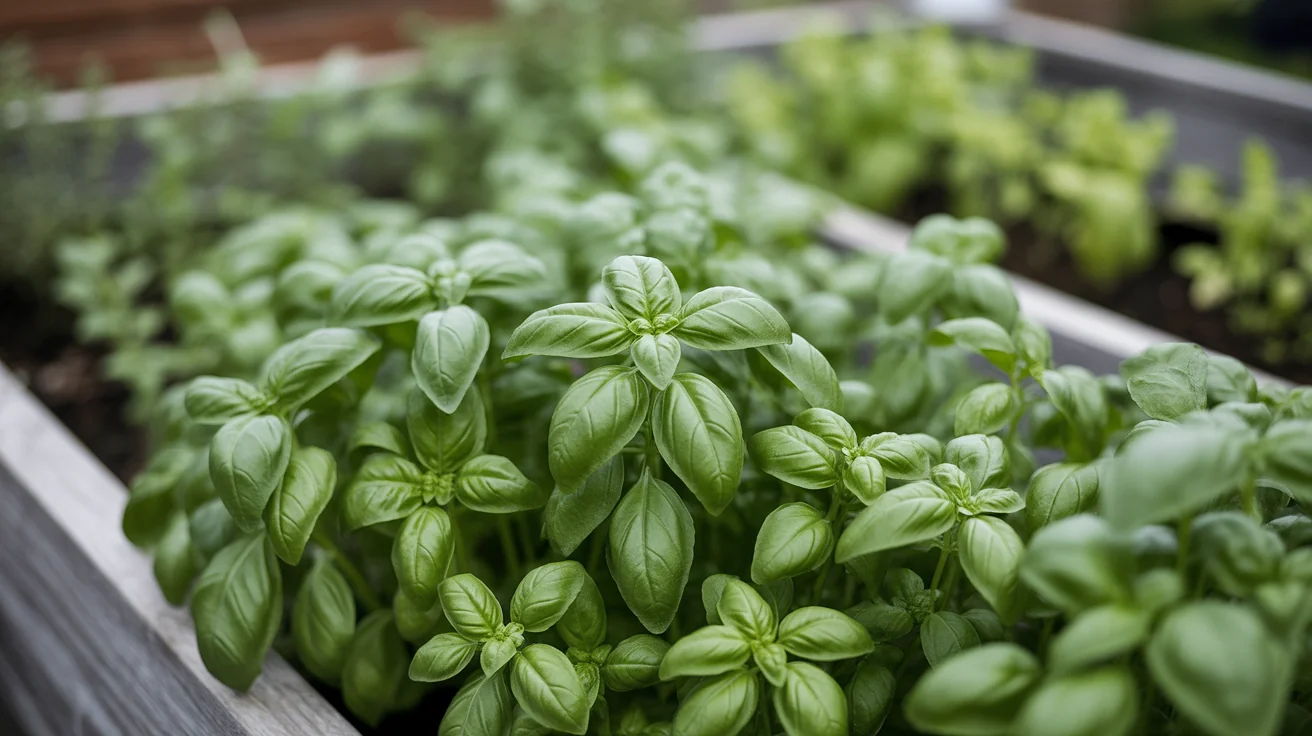
Basil
Ocimum basilicum
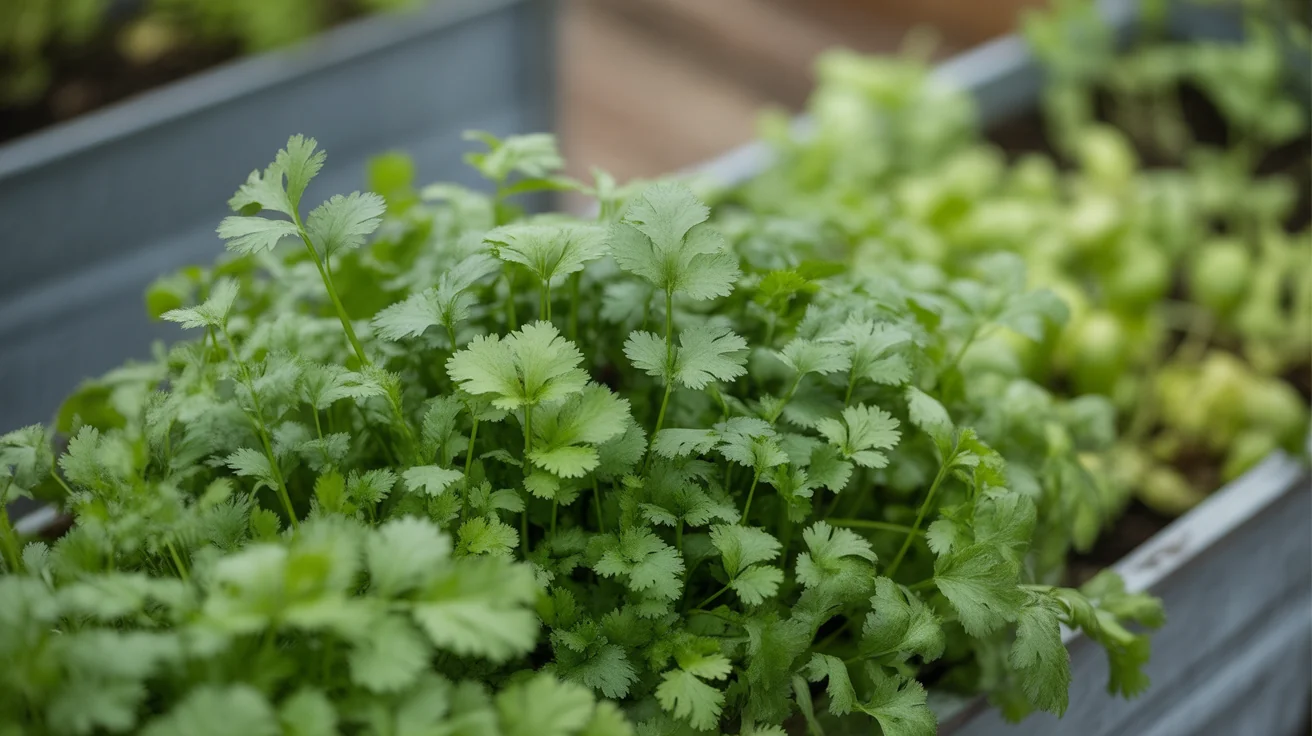
Cilantro
Coriandrum sativum
Basil and cilantro are unrelated annual herbs with different flavors, growth rhythms, and harvest methods.
They are not substitutes in most familiar recipes. Sweet basil supports pesto and tomato dishes, while cilantro supplies the pungent fresh note expected in many Mexican, South Asian, Southeast Asian, Middle Eastern, and other cuisines.
The garden calendar separates them just as clearly.
Basil settles into warm soil after frost danger has passed and can branch after repeated stem harvests.
Cilantro grows best through cooler periods, then shifts energy from broad lower leaves to a flower stalk and coriander seed as temperature and day length favor reproduction.
A small garden does not need to choose one forever. Use the same container or bed space for cilantro in a cool season and basil in the warm season when local timing allows.
Specifications
Compare the traits that change the growing decision.
| Feature | Basil | Cilantro |
|---|---|---|
| Botanical family | Mint family, Lamiaceae | Carrot family, Apiaceae |
| Primary leaf season | Warm weather after frost danger | Cool spring or fall conditions |
| Leaf arrangement | Broad opposite pairs for common sweet basil | Rounded lower leaves, finer upper leaves |
| Flowering response | Pinching can extend leafy branching | Heat and day length hasten bolting |
| Best starting method | Direct sow or transplant | Direct sow with minimal root disturbance |
| Useful harvest | Leaves, tender stems, flowers, seed by type | Leaves, tender stems, roots, flowers, coriander seed |
| Fresh flavor storage | Short-lived after cutting | Short-lived after cutting |
| Longer preservation | Freeze, dry, or make pesto | Freeze leaves for cooked dishes or dry seed |
The choice starts with flavor and planting season.
Leaf shape, flowering behavior, harvest point, and preservation method then decide how each herb fits the kitchen.
Best Use Cases
Choose by the job the planting needs to do.
Pesto and tomato dishes
Large aromatic leaves
Basil provides the tender, clove-like or anise-like leaf character that defines pesto, caprese, and many tomato sauces.
Cilantro changes the flavor direction and loses much of its fresh character under long cooking.
Fresh salsa and garnish
Bright tender stems and leaves
Basil can suit a deliberate fusion dish but does not reproduce cilantro's expected aroma or flavor.
Cilantro leaves and tender stems are normally added fresh or late so their distinctive flavor remains noticeable.
Mid-summer harvest
Warm nights and long days
Basil is a tender warm-season crop that grows strongly after cold weather has passed.
Cilantro commonly produces fewer leaves and flowers quickly during hot, long summer days.
Spring or fall harvest
Cooler soil and shorter days
Basil may stall or suffer cold injury before the settled warm season begins.
Cilantro can occupy the cool-season window, especially when small sowings spread the harvest.
Are basil and cilantro the same herb?
No. Basil belongs to the mint family, while cilantro belongs to the carrot family and grows into the same plant that produces coriander seed.
The common names can create confusion across countries. In American English, cilantro usually means the fresh leaves and tender stems of Coriandrum sativum, while coriander usually means its dry seeds.
Elsewhere, coriander may name the whole plant or its leaves. Check whether a recipe means fresh foliage, roots, green seed, or dry seed before shopping.
Sweet basil is only one member of a varied culinary group. Thai basil, lemon basil, cinnamon basil, purple cultivars, and other types differ enough that a recipe calling for basil may still need a particular kind.
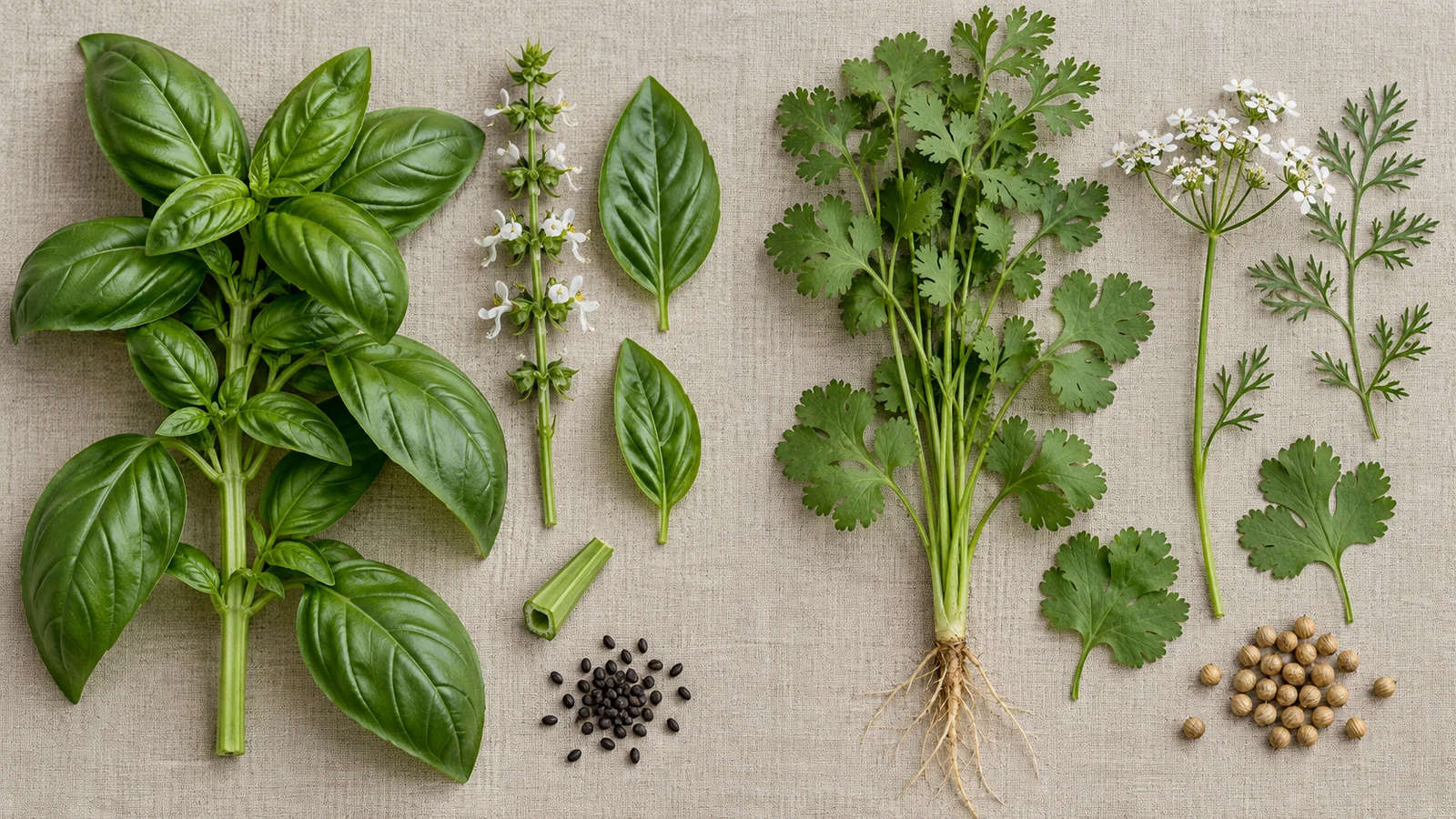
| Clue | Basil | Cilantro |
|---|---|---|
| Stem | Often square, a mint-family trait | Rounder and more delicate |
| Lower leaves | Broad and usually smooth to lightly toothed | Rounded lobes on long slender stalks |
| Upper leaves | Similar broad form by cultivar | Finer and more deeply divided near flowering |
| Flowers | Spikes above the stems | Small umbrella-like clusters |
| Seeds | Small dark nutlets | Round ribbed coriander seed |
The image compares mature leaves, upper foliage, stems, flowers, and seed at one scale. Leaf shape changes as cilantro prepares to flower, so one young-leaf photo does not show its full identity.
How do basil and cilantro taste, and can one replace the other?
Sweet basil tastes aromatic, sweet-spicy, and sometimes clove-like or anise-like. Other basil types lean toward lemon, cinnamon, licorice, or the sharper profile associated with Thai basil.
Cilantro has a bright, pungent green aroma that many people describe as citrus-like. Some people perceive it as soapy or otherwise unpleasant, so taste the raw leaf before planting a large succession for one household.
A direct one-for-one substitution usually changes the identity of the dish. Pesto made with cilantro can be useful, but it becomes cilantro sauce rather than a neutral copy of Genovese basil pesto.
| Kitchen job | Better starting herb | Why |
|---|---|---|
| Classic Genovese pesto | Sweet or Genovese basil | Large tender leaves and expected aroma |
| Caprese and tomato salad | Sweet basil | Flavor and texture match the dish |
| Fresh salsa or guacamole | Cilantro | Distinct fresh pungency |
| Thai curry or stir-fry | Recipe-specific basil or cilantro | They fill different flavor roles |
| Long simmer | Basil added by recipe | Cilantro leaves lose fresh impact |
| Dry spice | Coriander seed | Seed flavor differs from cilantro leaf |
Add tender leaves late when the recipe depends on fresh aroma. Heat softens both herbs, but the result and desired cooking time vary with the dish.
Do not use parsley as an automatic cilantro replacement either. It can provide a fresh green garnish without cilantro's flavor, which may be the right compromise for a diner who dislikes cilantro.
Why does cilantro bolt while basil is just getting started?
The two plants respond to a different seasonal window. Basil is frost tender and grows best after air and soil have warmed, while cilantro extends leaf growth during cooler, shorter days.
Bolting is the shift from leaf production to a taller flowering stem and seed. Cilantro does this quickly when warmth and day length favor reproduction, sometimes before a gardener expecting a summer-long herb has taken many leaves.
A slow-bolting cultivar can extend the leaf window. Shade during the hottest part of the day and dependable moisture may also help, but neither can turn cilantro into basil's full-season summer equivalent.
- 1. Sow the first cilantro: Use the cool-season window recommended for your region.
- 2. Repeat small sowings: Start another short row before the first row bolts so harvests overlap.
- 3. Change crops as heat settles: Move the main leaf job to basil after frost danger and cold nights pass.
- 4. Save selected cilantro plants: Let healthy plants flower when coriander seed or self-sowing is useful.
- 5. Sow cilantro again: Return to it as late-summer heat eases and the local fall window opens.
Basil can also flower. Pinching a stem just above a leaf pair encourages branches below the cut and delays the drop in leaf production associated with mature flower spikes.
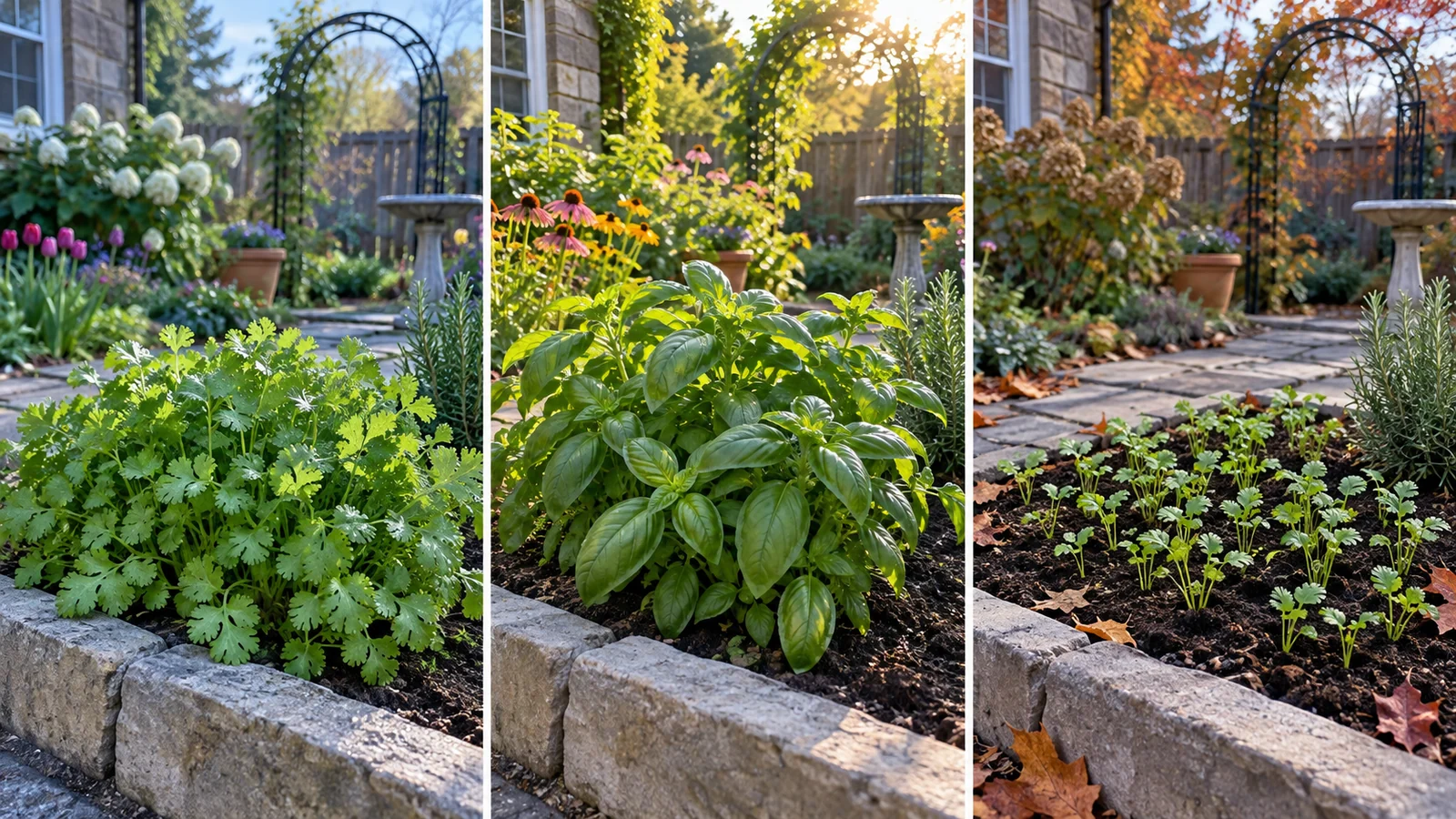
The seasonal image follows one bed from spring cilantro to summer basil and back to a fall cilantro sowing. The local weather handoff matters more than a fixed national date.
Should you direct-sow or transplant each herb?
Basil works with either method. Direct sowing is simple after the soil warms, while indoor starts or nursery transplants provide larger plants near the beginning of the warm season.
Cilantro is usually easiest to direct-sow where it will grow. Its taproot makes avoidable disturbance a poor trade when the crop already has a short leafy phase.
A transplant is not doomed, especially when it is young and the root ball remains intact. It simply offers less margin for rough handling than basil.
- [ ] Drainage holes remain open
- [ ] Potting mix holds moisture without staying saturated
- [ ] Container width matches the number of plants
- [ ] Cilantro has enough depth for an undisturbed root run
- [ ] Basil moves outside only after cold risk has passed
- [ ] The pot can move into afternoon shade when cilantro faces early heat
- [ ] More cilantro seed is ready for the next succession
Do not crowd a grocery-store basil pot indefinitely. Those pots often contain several seedlings competing in a small volume, so separating or thinning them can improve access to light, water, and air.
For cilantro, sow a small patch rather than one isolated plant when the kitchen uses bunches. A sequence of modest patches creates steadier harvests than one container that flowers all at once.
Do basil and cilantro need the same sun, water, and soil?
Both need soil that drains and enough light for sturdy growth. The useful differences appear when heat, root disturbance, pot volume, and leaf wetness enter the picture.
Basil normally wants a sunny warm site with a reasonably steady water supply. Containers dry faster than beds, so the pot should be checked rather than watered from a fixed calendar.
Cilantro also grows well in sun during cool weather. Afternoon shade can slow heat stress as the season warms, although shade cannot prevent the plant's eventual reproductive shift.
| Observation | Basil response | Cilantro response |
|---|---|---|
| Cold wet soil | Slow growth or injury | Cool tolerant, but roots still need drainage |
| Warm sunny bed | Strong leafy growth with moisture | Faster movement toward flowering |
| Dry container | Wilting and reduced tender growth | Stress and shorter leaf quality |
| Constantly wet mix | Root and disease risk | Root and damping-off risk |
| Excess fertilizer | Soft growth and weaker flavor possible | Unnecessary growth and flavor loss possible |
| Overhead irrigation | Wet foliage raises disease opportunity | Dense wet foliage can also decline |
Fertilize from the soil or potting-mix need, not from the idea that herbs must be pushed. University Extension guidance for both crops favors fertile, well-drained soil and warns against excessive fertility.
Water the root zone and let foliage dry promptly. For basil, this also helps reduce the wet-leaf conditions associated with gray mold, bacterial spots, and downy mildew.
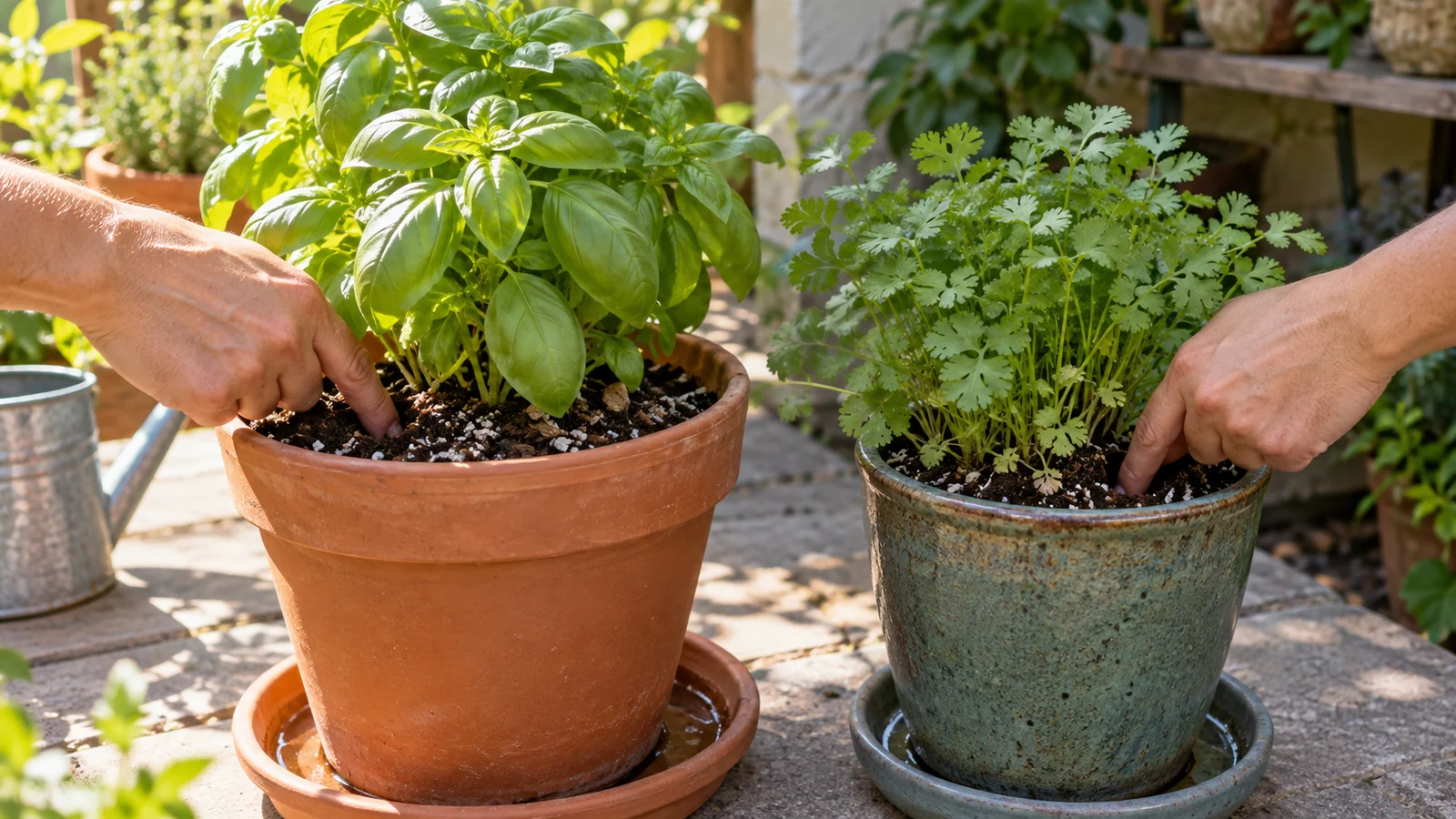
The image compares a warm basil container with a cooler cilantro pot and shows moisture being checked below the surface. Leaf wilt alone can arrive after the useful watering decision has already passed.
How should you harvest basil and cilantro for more useful food?
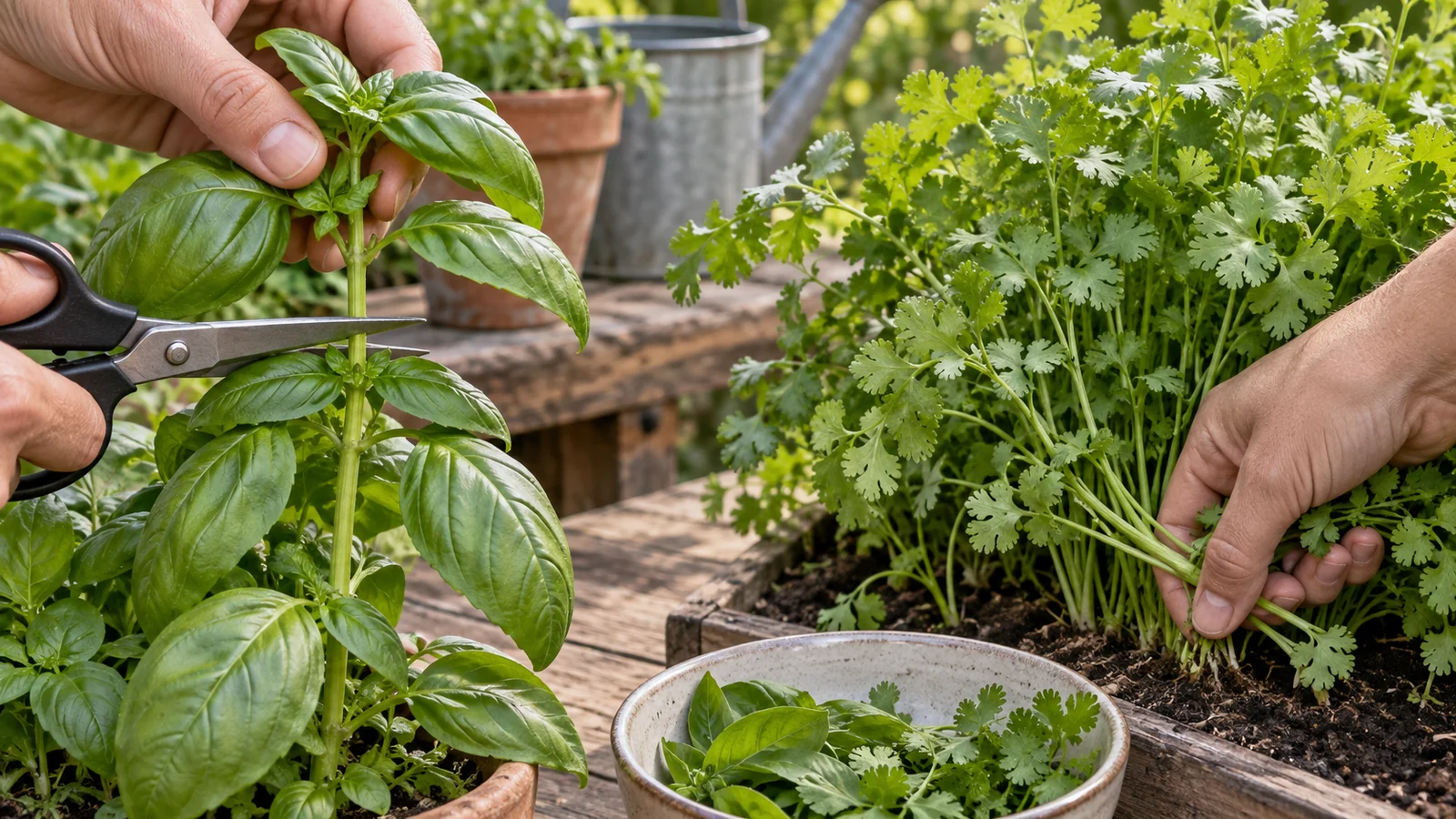
Harvest basil by taking a tender stem just above a healthy pair of leaves. Buds below the cut can grow into two new branches, which makes the next harvest easier to reach.
Repeatedly stripping random large leaves leaves a tall sparse framework. A stem cut shapes the plant while supplying several leaves at once.
Cilantro can be harvested as individual outer stems, a portion of the patch, or whole young plants depending on the next sowing and the quantity needed. It does not branch into a long-lived leafy bush in response to cutting.
For basil, remove flower tips when leaves are the main crop. If flowers, pollinators, or seed are the goal, allow selected stems to mature rather than pinching every spike.
Harvest clean foliage during dry weather when possible. Damaged, diseased, or soil-splashed leaves should be sorted before they enter a storage container.
The image places both cut points at hand scale. The basil cut sits above a leaf node, while cilantro is taken by outer stems or as a small section of the sowing.
How do you store basil and cilantro without wasting the harvest?
Freshly cut basil and cilantro are both short-lived compared with a living plant. Harvest close to use when possible, and keep damaged or wet leaves out of the stored batch.
Basil can darken and lose quality under poor handling. For longer keeping, University of Minnesota recommends drying or freezing, and notes that freezing often preserves a character closer to fresh basil than air drying.
Cilantro leaves are best when fresh. Oregon State suggests refrigerating stems upright in water under a loose bag, while clean dry leaves can be frozen for cooked dishes where texture is less important.
- 1. Sort immediately: Remove bruised, yellow, diseased, or slimy material.
- 2. Match the method to the dish: Keep fresh leaves for garnish and freeze portions intended for cooking.
- 3. Label the preserved crop: Record the herb, cultivar when useful, and date.
- 4. Keep cilantro seed dry: Harvest mature brown seed heads and finish drying before sealed storage.
- 5. Preserve small portions: Package the amount normally used at one meal to avoid repeated thawing.
Basil pesto can be frozen in meal-sized portions. Follow a tested recipe and safe storage guidance rather than assuming oil alone makes herbs shelf-stable.
Coriander seed is a different pantry ingredient from frozen cilantro leaf. Toasting or grinding changes its aroma further, so store seed whole until a recipe calls for it when maximum flavor matters.
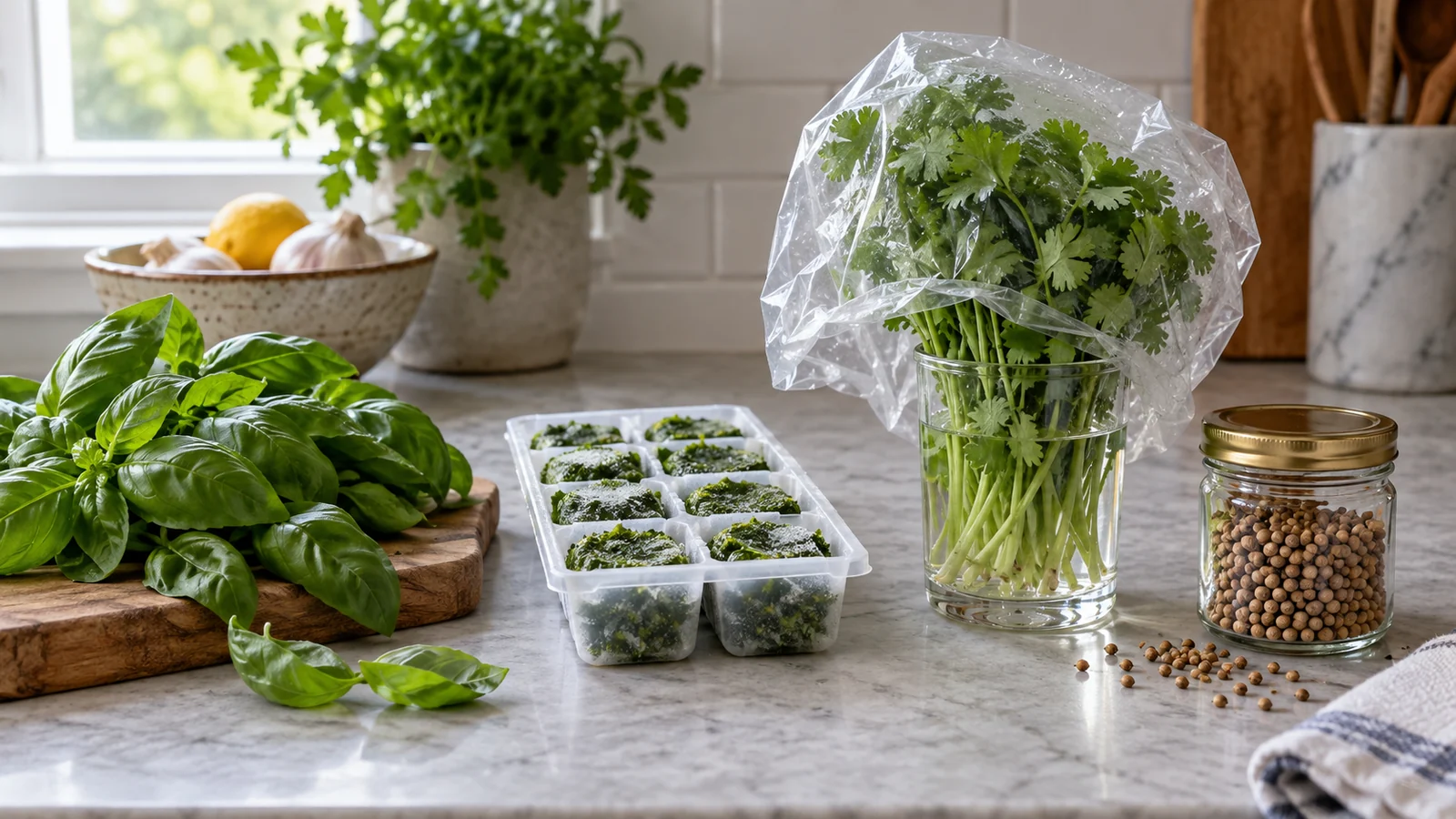
The preservation image shows four distinct outcomes without turning a table into prose. Fresh basil, frozen basil portions, fresh cilantro stems, and dry coriander seed each serve a different kitchen job.
Should you grow basil, cilantro, or both?
Grow basil when your kitchen needs pesto, caprese, tomato sauces, Thai basil dishes, or another cultivar-specific basil flavor during warm weather. Choose a variety for the recipe as well as the garden.
Grow cilantro when fresh cilantro leaves, tender stems, roots, flowers, green seeds, or dry coriander seed serve your cooking. Plan for cool-season sowings instead of judging success by a summer-long leaf harvest.
Grow both when the recipes require both. In many climates, they need not compete for the same peak weeks because cilantro can lead and finish the outdoor herb season around basil's warm run.
- [ ] Name the dishes cooked most often
- [ ] Confirm whether the recipe means basil, Thai basil, cilantro leaf, or coriander seed
- [ ] Taste cilantro before planting a large amount
- [ ] Mark the local frost-free warm window for basil
- [ ] Mark the cool sowing windows for cilantro
- [ ] Reserve seed for repeated cilantro sowings
- [ ] Choose containers or bed space with dependable drainage
- [ ] Decide which harvests will be used fresh, frozen, dried, or saved as seed
Choose neither when the household rarely uses the flavor or the site cannot supply enough light and drainage. Buying a small fresh bunch occasionally can waste less space than maintaining an unwanted crop.
The practical answer may change month by month. Basil owns the warm leaf window, while cilantro earns repeated cool-season turns and can finish as coriander seed rather than failed summer basil.
Sources & References
- Growing Basil in Home Gardens, University of Minnesota Extension
- Basil, Clemson Cooperative Extension
- How to Grow Cilantro for Leaves or Coriander Seeds, Oregon State University Extension
- Cilantro, Oregon State University Extension
- Cilantro/Coriander in the Garden, Utah State University Extension
- Cilantro, a Unique Culinary Herb, Penn State Extension