
What's Mint? How to Grow It Without Losing the Bed
Mentha spp. Lamiaceae
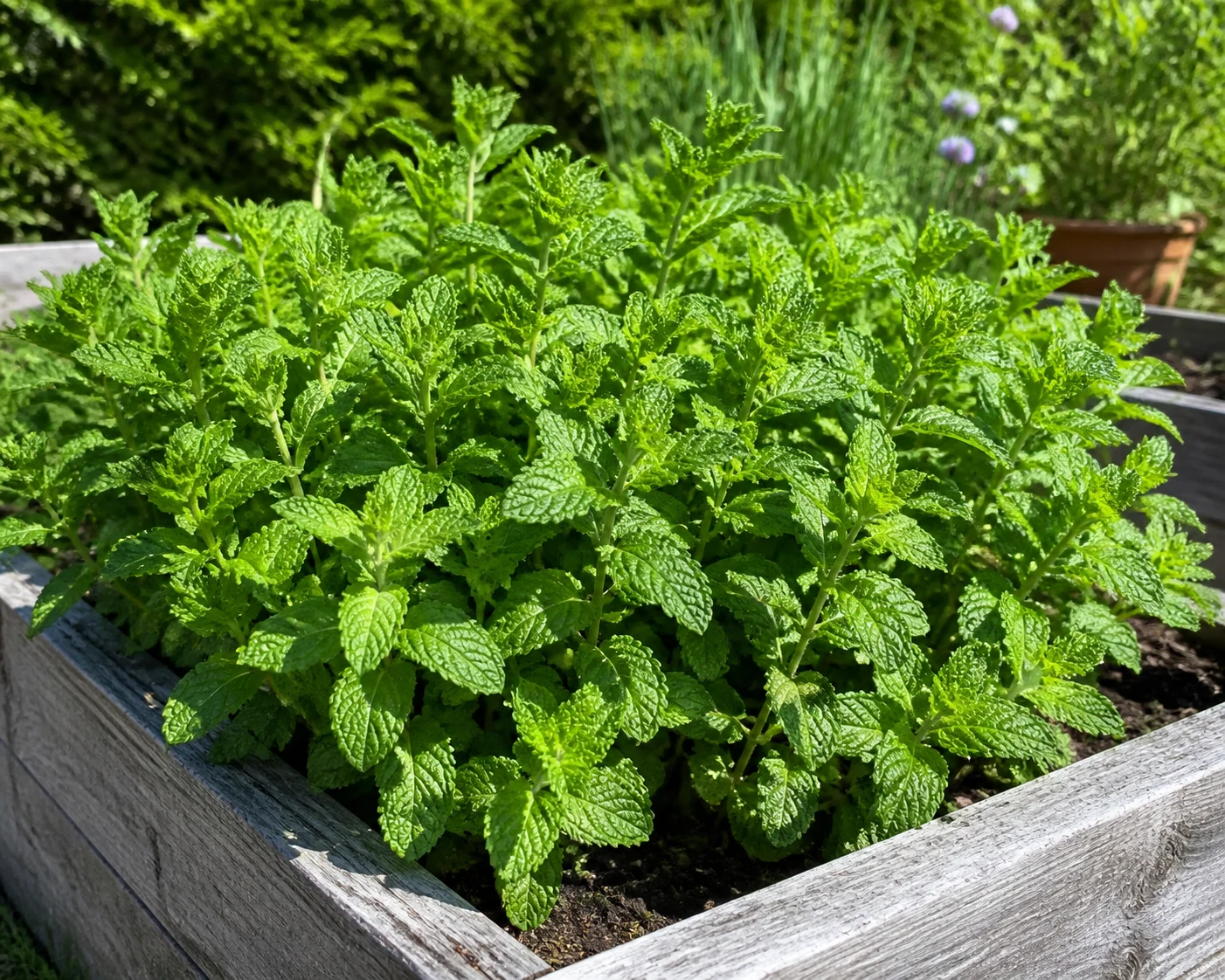
Mint spreads two ways at once. Its square stems root wherever they touch the ground and its rhizomes travel sideways underground, which is why a pot standing on a hard surface holds it and a barrier sunk into a bed often does not.
It also wants the damp, shaded conditions that kill rosemary and thyme, and NC State lists it as a problem for cats, dogs and horses.
Care snapshot
How Fast Does Mint Actually Spread?
The word mint covers several species.
The two on almost every shelf are peppermint and spearmint, and both sit in the mint family alongside thyme and sage. Those two stay where they are put.
Mint does not.
It spreads two ways at once.
NC State notes that the square stems can root wherever they touch the ground, and that it also spreads by rhizomes, which are stems that travel underground.
One habit works across the surface and the other works below it.
The extension sources do not soften this. NC State lists spearmint as weedy and spreading rampantly, and Illinois Extension says mints will become invasive in the garden.
Size and cold tolerance both work in the plant's favor and against yours. Utah State gives the height as up to 3 feet and calls mint generally hardy to minus 20 degrees, which means a patch that establishes in a cold garden is not going to be removed by a winter.
Two of the site's own pages exist because of that habit. Mint taking over a bed is the most-read mint problem on the site, and it is a consequence of the plant working exactly as described here rather than of anything going wrong.
How Do You Stop Mint Taking Over a Bed?
The method that works is the simplest one.
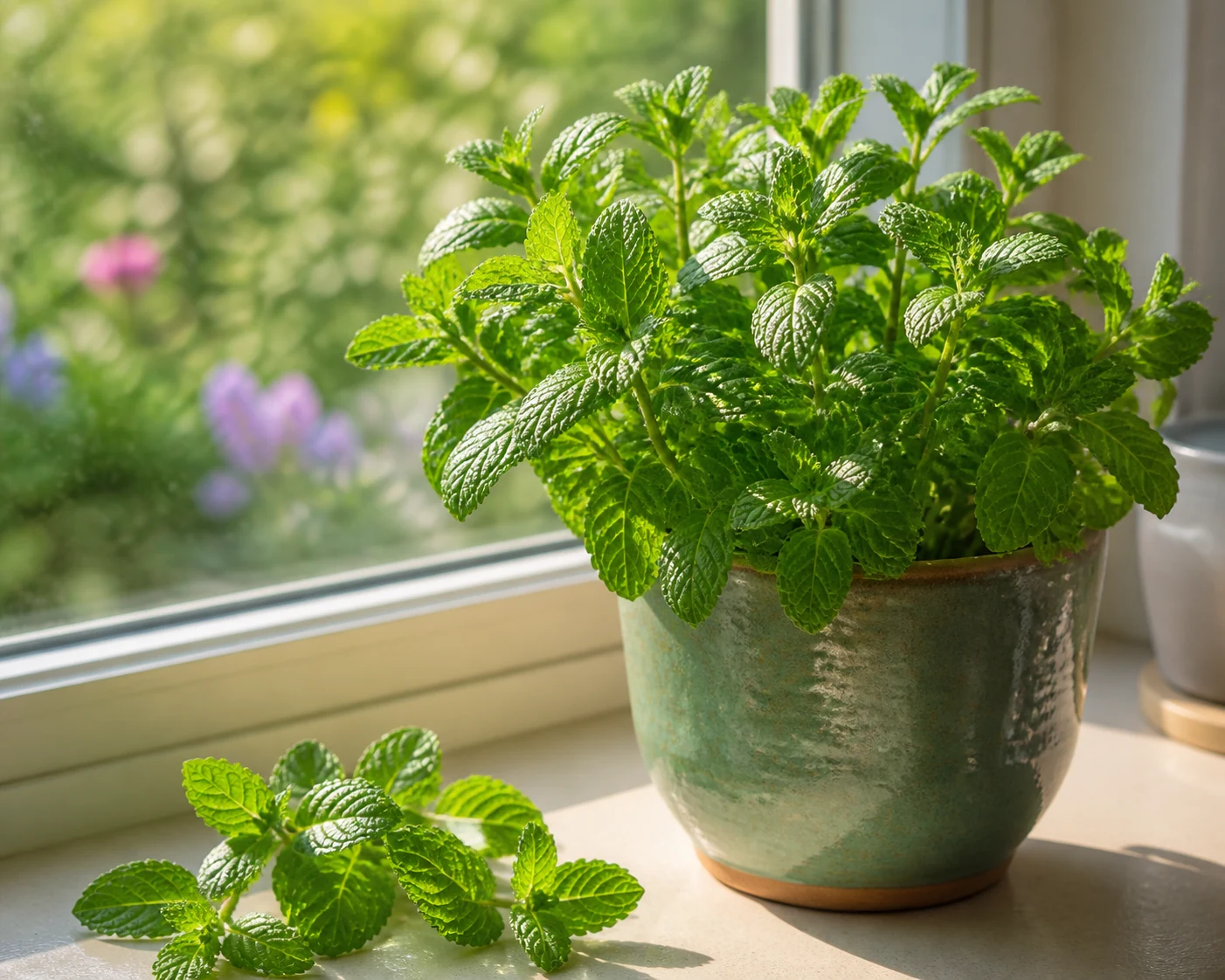
Illinois Extension says to grow mints in containers above ground, which puts a physical gap between the runners and open soil.
A pot standing on a paving slab is a boundary a rhizome cannot cross.
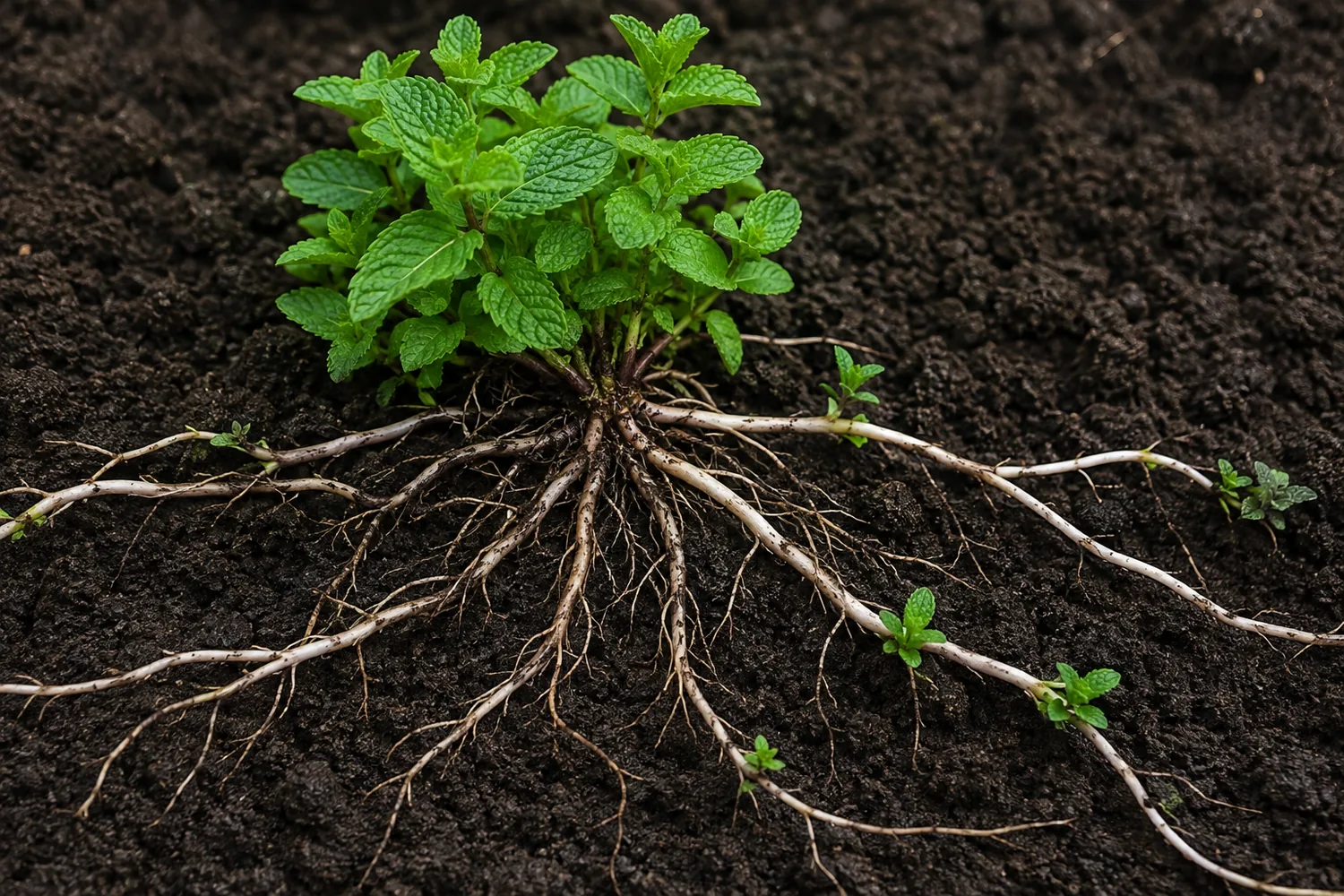
Understanding why matters for every other method. The runners travel sideways and shallow rather than downwards, and each one carries new shoots at intervals along its length, so a foot of runner is several plants in waiting.
Utah State is the source that puts numbers on a barrier, and they are the two numbers most people get wrong. A container needs to stand 3 to 4 inches above the soil surface and reach 10 to 15 inches below it.
Both halves of that figure are doing work.
The depth beats the rhizomes, which run shallow but persistently, and the height beats the stems, which root wherever they touch down.
A barrier flush with the soil stops half the plant and lets the other half walk across it.
Illinois Extension also gives the buried option, which is a large bottomless container sunk into the garden. It adds the honest caveat that the method does not always prove successful.
NC State puts the same idea more mildly and says soil barriers can restrain rhizomatous spread where plants are grown in borders.
- A free-standing pot on a hard surface is the only barrier the runners can neither go under nor around.
- A bottomless container sunk into the bed, standing 3 to 4 inches proud and 10 to 15 inches deep, is Utah State's specification.
- A soil barrier along a border edge can restrain the rhizomatous spread, which is how NC State puts it.
- No barrier at all stops a stem that flops over the top and roots on the far side, so the rim needs checking as often as the depth.
Mint already loose in a bed is a digging job rather than a spraying one. Every fragment of runner left behind can start again, and one pass is never enough.
Some gardeners give up and hand mint a bed of its own to work as ground cover, which is close to what NC State describes peppermint forming. Cutting the plant back regularly keeps it inside its boundary as much as it keeps it productive.
Should You Grow Peppermint or Spearmint?
Peppermint and spearmint are stocked side by side and often labeled just mint. They are separate species with different limits.
Hardiness is the difference that decides a cold garden.
NC State gives spearmint Zones 4a to 9b and peppermint Zones 5a to 9b.
A full zone separates them, so in Zone 4 only spearmint is a reliable perennial.
- Spearmint (Mentha spicata)
- Zones 4a to 9b, 1 to 2 feet tall and wide, takes anything from occasionally dry to occasionally wet, and carries rust and leaf spot as its main diseases
- Peppermint (Mentha x piperita)
- Zones 5a to 9b, 1 to 3 feet tall, prefers rich moist soil at pH 6.0 to 7.0, and is listed as resistant to deer, rabbit and wet soil
Size and soil separate them after that.
Peppermint reaches 1 to 3 feet against spearmint's 1 to 2, and prefers rich moist soil at a neutral pH between 6.0 and 7.0.
Being listed as resistant to wet soil makes peppermint the one for a damp shaded corner.
Spearmint takes the wider range of moisture and is the safer buy where the conditions are not known yet. It sits happily beside the other herbs in the garden as long as it has a pot of its own.
A third plant gets bought by mistake at this point. Lemon balm has the same square stems and the same family, and the two are easily confused, though only one of them tastes of mint.
What Soil and Light Does Mint Want?
Mint wants what the woody herbs refuse. NC State lists full sun of six or more hours or partial shade of two to six, with clay, high organic matter, loam or sand all acceptable, and moisture running from occasionally dry through to occasionally wet.
Illinois Extension agrees that mints prefer a full sun location but will tolerate light shade, and Utah State asks for rich, moist and slightly acidic soils. The pH range is the usual neutral 6.0 to 8.0.
There is one exception to the full sun advice, and it is the plant most people buy for the look of it. Utah State warns that full sun may scorch the leaves of a variegated variety such as pineapple mint, so the cream-edged types want the lighter shade rather than the brightest spot.
- Full sun gives the fastest growth, and light shade is genuinely fine, which puts mint in places most herbs will not go.
- Clay, loam, sand or heavily composted ground all work, so soil type is rarely the limiting factor.
- Sow seed a quarter inch deep and space plants at least 2 feet apart, which is Utah State's figure for a plant that fills its space.
- In a pot, water more often than for any other herb on the bench, and use a pot with drainage holes so it stays moist rather than standing.
Anyone arriving here from rosemary or thyme should drop those rules entirely.
Sharp drainage and lean soil are what those plants need to survive, and mint only grows more slowly in them.
The damp corner that kills a Mediterranean herb is the one to hand mint, provided it is contained.
Does Mint Need Feeding, and How Much Water?
Utah State puts the water at 1 to 2 inches per week, and then adds the warning that matters more than the figure, which is that overwatering leads to disease. A plant that likes moisture is not a plant that likes standing in it.
That distinction runs through the whole page. Mint tolerates occasionally wet soil, takes a damp corner other herbs refuse, and still gets rust and leaf spot when the leaves stay wet in still air.
Feeding is a single date rather than a routine. Utah State gives one early spring application of a slow release complete fertilizer, at 1 teaspoon of 16-16-16 per plant, and caps compost at no more than 1 inch of well-composted organic matter per 100 square feet.
- 1 to 2 inches of water per week, with the soil moist rather than saturated.
- 1 teaspoon of 16-16-16 per plant, applied once in early spring.
- 1 inch of compost per 100 square feet at most, which is thinner than it sounds.
The instinct with a vigorous plant is to feed it more, and here that instinct is exactly backwards. Every extra inch of growth is another foot of runner, so a well-fed mint is a mint that reaches its barrier sooner.
How Often Should You Cut Mint?
Cutting mint is what keeps mint worth having.
Illinois Extension puts it directly and says the more frequently the stems are cut, the more new growth is produced.
A plant picked one leaf at a time grows tall and goes bare at the base.
Utah State gives the two ends of the scale. The first cut comes once plants are 3 to 4 inches tall, and the hard cut takes the plant back to within 1 inch of the ground, two to three times per season.
That hard cut looks brutal beside the one-third rule Iowa State gives for perennial herbs, and the difference is the plant rather than the advice. Mint regrows from the runners under the soil, so what is left standing matters far less than it does on a woody herb.
For drying, the timing is a stage of the plant rather than a date. Illinois Extension says leaves are best taken just as the flowers begin to appear, and Utah State says dried mint then keeps for up to 1 year.
Fresh mint does not keep long. Illinois Extension gives 3 to 7 days standing in water, or about a week refrigerated in plastic, which is one reason a plant at the back door beats a bunch in the fridge.
An established patch tires eventually. Illinois Extension recommends dividing plants every 3 to 4 years to keep them vigorous, and that lift is also the moment to see how far the runners have traveled.
Mint is propagated by either stem or root cuttings, so the divisions go straight back in without any special handling. A patch grown for tea is worth dividing on that cycle too, since a tea garden wants leaves rather than the bare woody middle an old clump develops.
Can Mint Be Grown Indoors?
Mint is one of the few herbs that genuinely works on a windowsill. Iowa State names it among the best performers indoors, alongside parsley, chives and basil, and puts rosemary, sage and bay laurel in the difficult group instead.
Light is still the limit. Iowa State asks for around eight hours of direct light a day indoors, and says some herbs tolerate as little as six, which is where mint's shade tolerance earns its place on the easy list.
Where a window cannot supply that, the fix has figures. Supplemental lights go 6 to 12 inches from the leaves, on a timer for 12 to 16 hours a day.
The watering advice reverses indoors, and it is worth noticing rather than glossing over. Iowa State says to let the soil dry between waterings, because a pot indoors dries far more slowly than a bed does and wet potting mix is what kills herbs on a sill.
Feeding stops for part of the year. Iowa State fertilizes at half or quarter strength from early spring through summer and not during the winter months, when the plant is not growing enough to use it.
Is Mint Safe for Pets, and What Goes Wrong With It?
Mint is toxic to dogs, cats, and horses according to ASPCA. Its listing notes vomiting and diarrhea with large ingestions; human culinary use does not make a pot of mint pet food.
Keep plant material and concentrated oils away from animals that chew them. A veterinarian or animal poison service can assess a suspected ingestion using the plant identity, amount, and animal involved.
Disease on mint is mostly fungal.
NC State says fungal diseases are common in spearmint and names rust and leaf spot as the two main ones. Both build up where leaves stay wet and the air does not move, which a crowded patch guarantees.
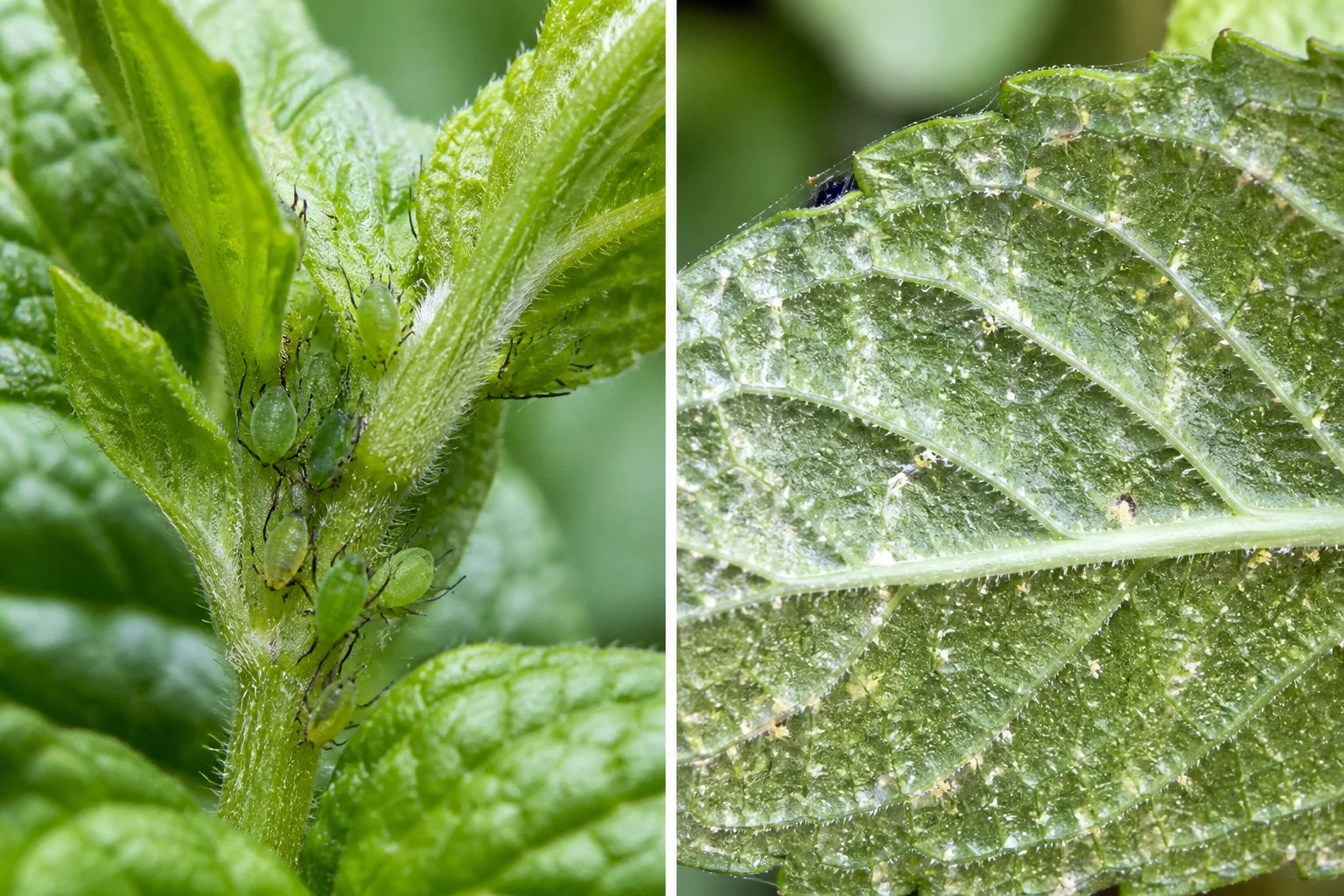
Two pests turn up often enough to be worth recognizing on sight. Aphids and spider mites both work on mint, and they look nothing alike once you know where each one sits.
- Rust and leaf spot are fungal and build where leaves stay wet in still air, so thinning the patch is the first response.
- Aphids cluster in visible colonies at stem nodes and on soft new growth in spring.
- Spider mites leave pale stippling and fine webbing on the underside of leaves, in hot dry still air.
- Deer and rabbits mostly leave mint alone, and NC State lists peppermint as resistant to both.
Changing the conditions handles most of that list. Thinning a crowded patch improves airflow for the fungal problems and removes the still air that mites build up in, which is one more reason to cut hard and often.
Yellowing is the symptom that sends most people looking, and it is the least specific one on the plant. Yellow mint leaves can follow from the watering, the feeding or either of those fungal diseases, which is why the checks come in that order.
Frequently Asked Questions
Will a pot really stop mint spreading?
A free-standing pot on a hard surface will, because the runners cannot reach open soil. A bottomless container sunk into a bed is the other option Illinois Extension gives, with the warning that it does not always prove successful.
Is mint safe for cats and dogs?
ASPCA lists Mentha as toxic to cats, dogs, and horses and notes vomiting and diarrhea with large ingestions. Keep mint away from animals that graze it, and contact a veterinarian about a suspected ingestion.
What is the difference between peppermint and spearmint?
Hardiness and size.
NC State gives spearmint Zones 4a to 9b at 1 to 2 feet, and peppermint Zones 5a to 9b at 1 to 3 feet.
Peppermint prefers rich moist soil at pH 6.0 to 7.0 and is listed as resistant to deer, rabbit and wet soil.
How do I get rid of mint that has escaped?
By digging rather than spraying, and more than once. Every fragment of runner left in the soil can start a new plant, so the bed needs going over again as regrowth appears.
How often should mint be divided?
Illinois Extension recommends dividing plants every 3 to 4 years to keep them vigorous. The lift is also the best chance to see how far the runners have gone.
Can mint grow in shade?
Yes, within limits.
NC State lists partial shade of two to six hours of direct sun as workable, and Illinois Extension says mints prefer full sun but will tolerate light shade.
Growth is slower and the stems stretch more in shade.
Sources & References
Related Plants
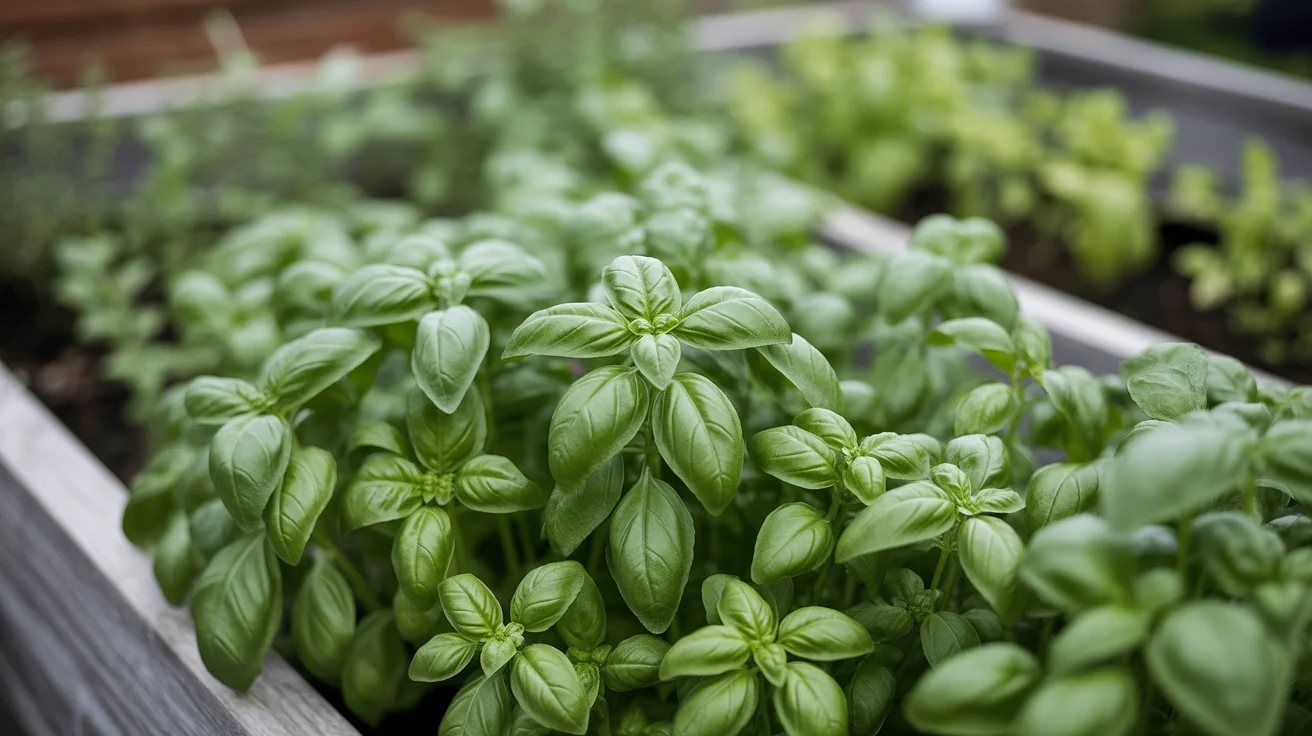
Basil
Tender annual herb for warm weather, pairs well with tomatoes.
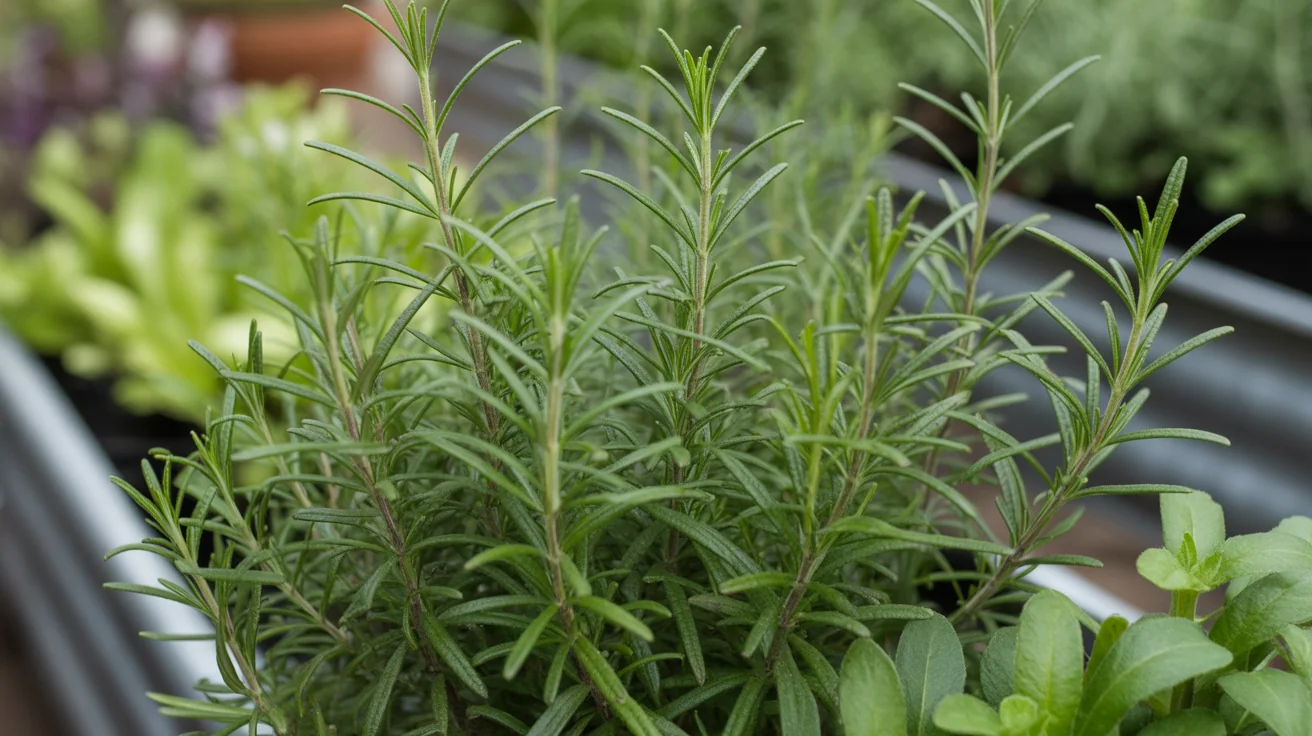
Rosemary
Woody Mediterranean herb that prefers drier soil than mint.
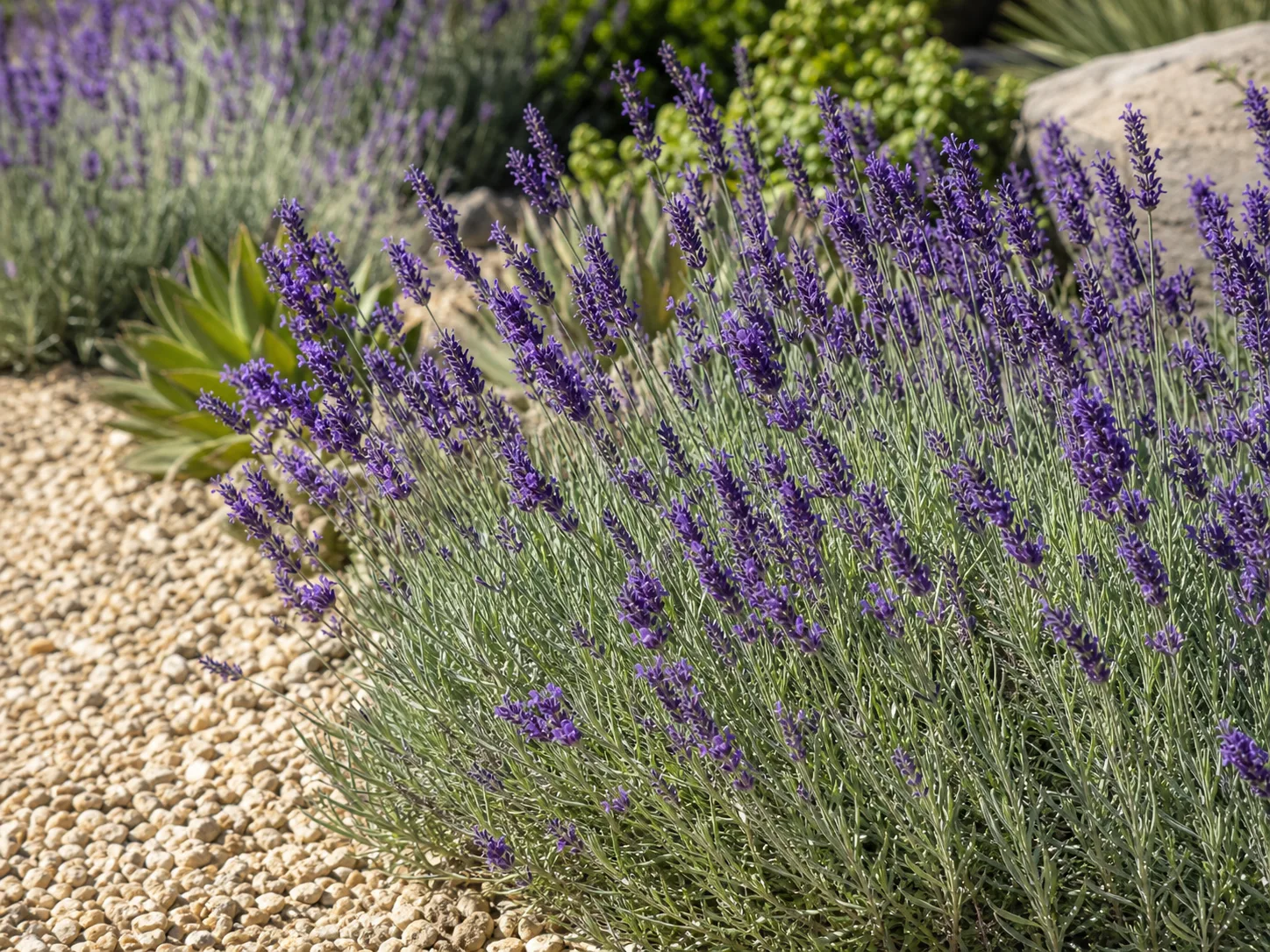
English Lavender
Fragrant perennial herb that likes lean, well-drained soil unlike thirsty mint.
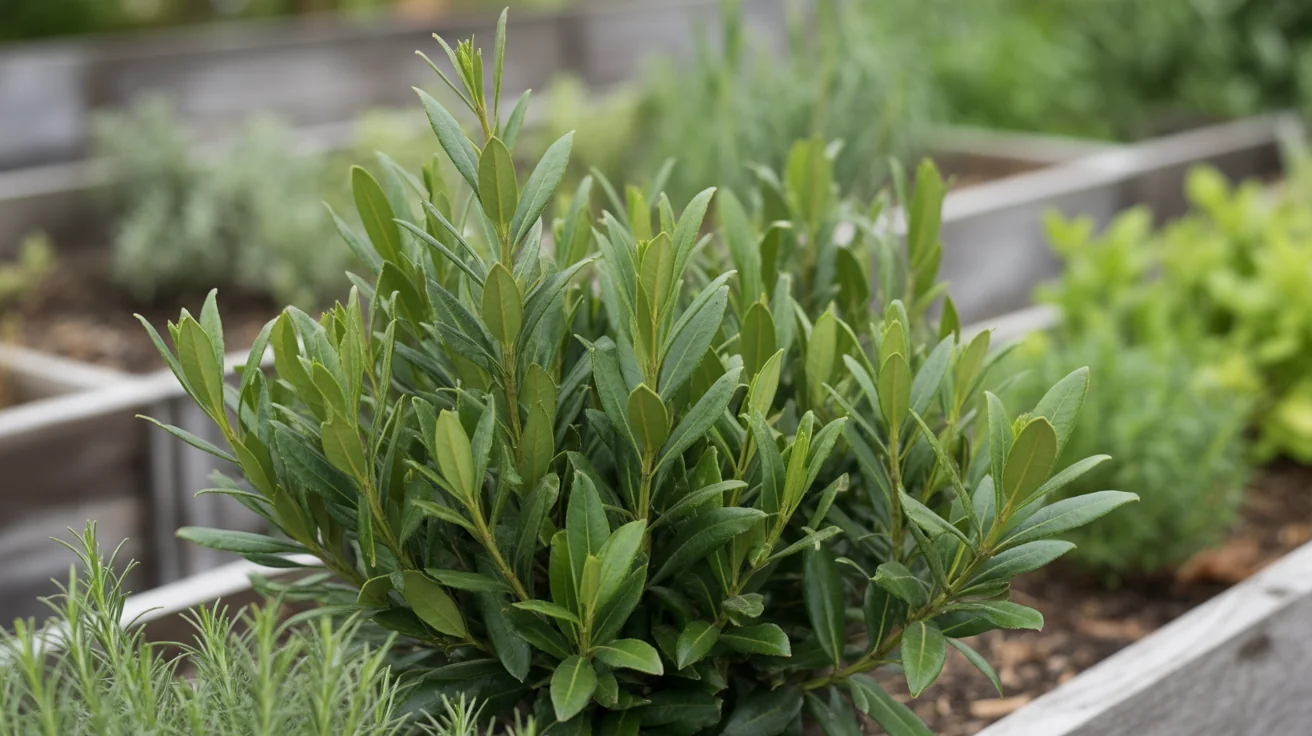
Bay Laurel
Bay laurel is a tree grown as a container plant, which is why every decision about it looks the way it does.
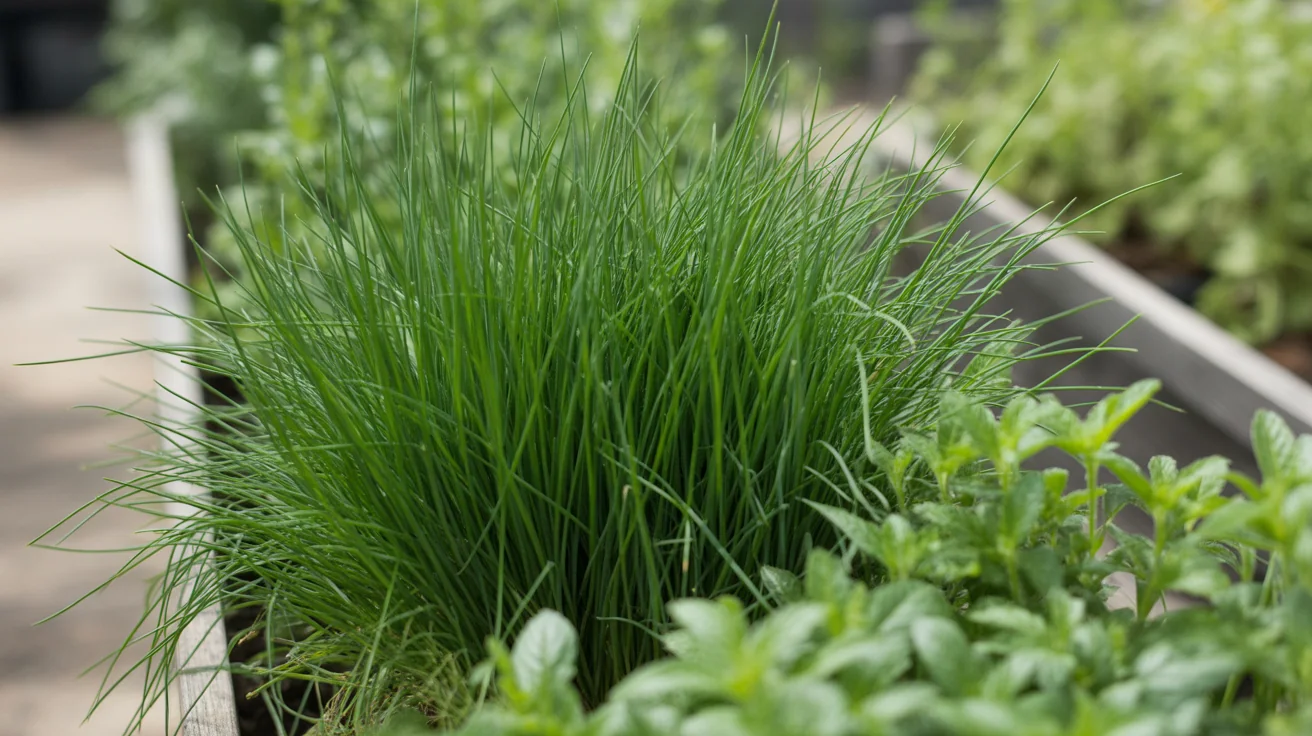
Chives
Chives are an Allium, in the same genus as onion and garlic, and that explains the flavor, the clump of small bulbs…
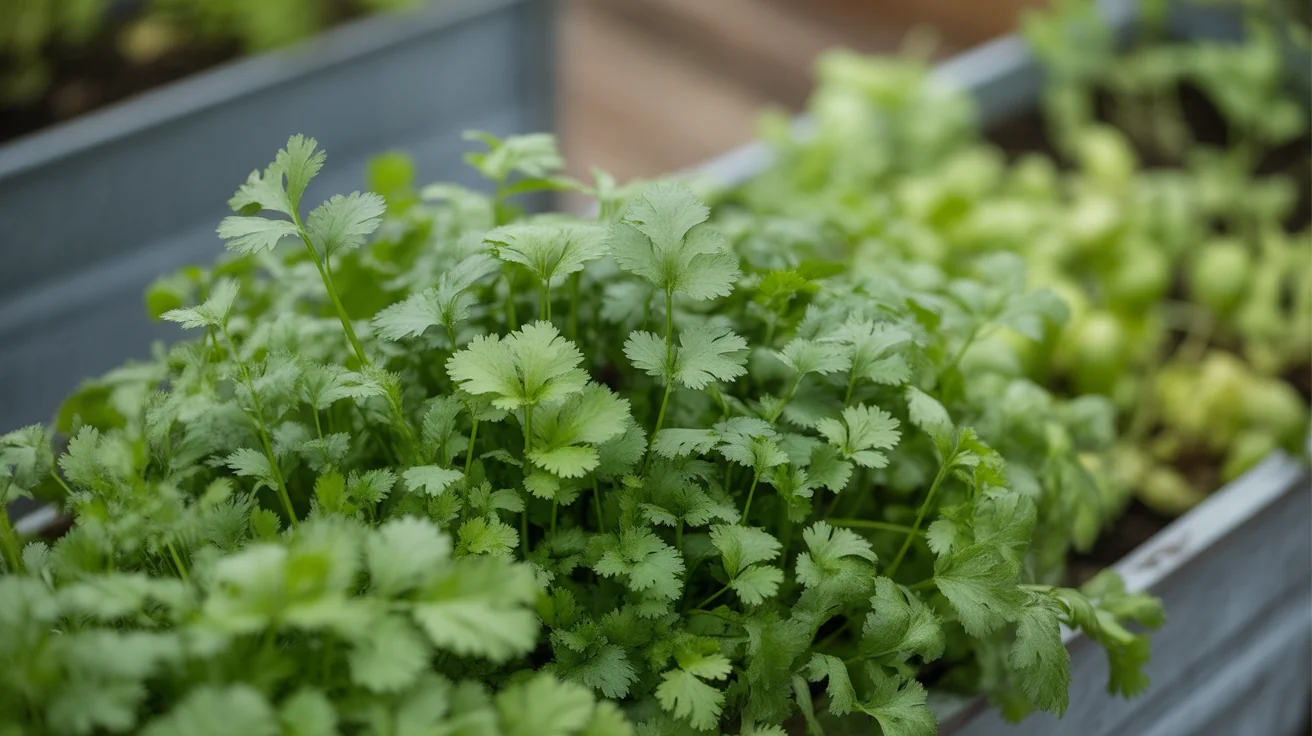
Cilantro
Cilantro and coriander are one plant at two stages, and the two crops need different spacing from the day the seed goes…