
Wateringschedule11 min read
How Much to Water Plants Without Guessing
Learn how much to water indoor and outdoor plants using soil checks, pot size, and weather instead of random schedules. Covers houseplants, veggies, shrubs, and lawns.
Most plants die from kindness, not neglect. Overwatering drowns roots, underwatering stalls growth; you can learn a simple system that works for almost any plant.
This guide turns the vague question of how much to water plants into clear checks you can do with your fingers, a trowel, and a cheap rain gauge. We will cover houseplants like trailing pothos vines, thirsty veggies such as fruiting tomatoes, shrubs, and even lawns so you can water with confidence, not guesswork.
water_dropThe One Rule That Works for Almost Every Plant
Moisture at root depth, not the calendar, should tell you when to water. Roots live a few inches down, so surface dryness does not mean the plant is thirsty.
For most outdoor beds and veggies, check moisture 4–6 inches deep with a trowel. For potted plants, use your finger or a wooden chopstick down 2–3 inches to see what is happening around the roots.
More plants die from overwatering than from being a bit too dry. Soggy soil blocks oxygen and invites rot, especially in houseplants like upright snake plants and succulents.
Use this basic rule. Water only when the top one-third of the root zone feels dry, then water enough to re-wet the whole root zone, not just the top inch. The same root-depth logic sits behind deep watering instead of frequent sprinkles.
- fiber_manual_recordShallow roots (seedlings): Check moisture in the top 1–2 inches of soil.
- fiber_manual_recordMost container plants: Check the top 2–3 inches before watering again.
- fiber_manual_recordIn-ground shrubs and perennials: Probe 4–6 inches deep with a trowel.
- fiber_manual_recordLawns: Aim to moisten soil 6 inches deep with each watering cycle.
Use the depth that matches the roots before you judge the soil by feel.
If soil feels cool and clumpy when squeezed at root depth, wait. If it crumbles apart and feels barely damp, it is time to water.
That simple check beats a fixed schedule almost every time.
ecoHow Pot Size, Soil, and Light Change Water Needs
Two plants in the same room can need very different amounts of water. Pot size, soil mix, and light decide how fast water leaves the pot.
Small pots dry faster than big ones because there is less soil holding water. A 4-inch nursery pot might need water twice as often as a 10-inch decorative pot with the same plant.
Fast draining mixes with extra perlite or bark dry quicker than heavy peat or garden soil. That free-draining blend your tough ZZ plant loves would leave a thirsty peace lily wilting if you water both on the same schedule.
Light also acts like a gas pedal. Bright sun through a south window or full afternoon sun outdoors can double water use compared with bright shade.
- fiber_manual_recordSmall pots (4–6 inches): Expect to water more often, but still wait for the top third to dry.
- fiber_manual_recordLarge pots (10+ inches): Water more slowly until it drains from the bottom holes.
- fiber_manual_recordFast-draining mix: Great for succulents, but watch for faster drying.
- fiber_manual_recordDense, heavy soil: Holds water longer and raises the risk of soggy roots.
A bigger pot behaves like a reservoir until roots actually fill it.
If you just repotted into a much larger container, cut watering frequency in half until roots spread into the new soil.
Guide — See AlsoSigns of Overwatering Grass and How to Fix ThemLearn how to spot the real signs of overwatering grass, stop the damage, and reset your watering schedule before the law
chevron_rightpotted_plantHow Much to Water Common Houseplants
Indoor plants live in a stable climate, so how much you water comes down to species and pot conditions more than weather. A bright-window fiddle leaf in a big pot will drink very differently than a small succulent on a shelf.
Tropical foliage like fenestrated monstera leaves and philodendron usually like evenly moist, not soggy, soil. Let the top 1-2 inches dry, then water until 10-20% of what you pour runs out the bottom.
Drought-tolerant houseplants such as upright snake leaves, thick-stemmed ZZ clumps, and air plants store water. Let at least the top half of the soil dry before you water them again.
Flowering types, including waxed anthurium blooms and African violets if you grow them, sulk quickly when too dry. Keep moisture more even, never letting the pot dry to dust.
- fiber_manual_recordMost tropical foliage: Water when top 1-2 inches are dry, moisten fully.
- fiber_manual_recordCacti and succulents: Dry top 50-75% of pot before watering again.
- fiber_manual_recordThirsty bloomers: Keep soil lightly moist, no standing water in saucers.
- fiber_manual_recordWinter slowdown: Cut watering volume by about 25-50% in low light months.
Always dump water out of saucers within 15 minutes so roots are not stuck in a stagnant puddle.
Email Updates
Join the KnowTheYard update list
Zone-specific advice, seasonal reminders, and new plant guides — no filler.
yardHow Much to Water Vegetables, Flowers, and Lawns
Outdoor beds deal with wind, sun, and changing weather, so measuring inches of water works better than counting watering days. A simple rain gauge or tuna can is all you need.
Most vegetables and annual flowers want about 1-1.5 inches of water per week from rain and irrigation combined. Deep-rooted crops like fruiting tomatoes and watermelon vines can handle a little less frequent but deeper watering.
Perennial beds with plants like bigleaf hydrangeas usually settle into the same weekly 1 inch rule once established. New plantings, especially shrubs such as boxwood or azalea, need more frequent checks their first season.
Lawns built from cool-season grasses like fescue and Kentucky bluegrass prefer 1-1.5 inches of water applied in one or two deep soakings per week, not light daily sprinkles.
- fiber_manual_recordVeggies and annuals: Target 1-1.5 inches per week, soil moist 6 inches deep.
- fiber_manual_recordNew shrubs and perennials: Water every 2-3 days for the first 2-3 weeks, then adjust.
- fiber_manual_recordEstablished lawns: One deep watering to reach 6 inches beats daily misting.
- fiber_manual_recordHot spells: Add an extra 0.5 inch midweek unless you are in very rainy weather.
Place a small straight-sided container in the spray pattern. When it holds 0.5 inch, you know how long that watering cycle delivered.
Guide — See AlsoIs It Bad to Water Plants at Night? What Actually MattersWondering if it is bad to water plants at night? We break down when evening watering is fine, when it causes disease, an
chevron_rightcalendar_monthSeasonal Watering Changes You Cannot Ignore
Seasons change your watering needs more than almost anything else. Cooler temps slow growth and evaporation, even if the soil looks dry on top.
In cool spring weather, roots are waking up but not drinking fast yet. Water deeply, then wait longer between soakings than you will in midsummer.
Hot summer days, especially in zone 7–9, pull moisture fast from pots and shallow beds. Container herbs like potted basil starts might need water every day when it is windy and sunny.
Fall growth slows again, even if days still feel warm. For perennials such as hosta clumps, keep watering until the ground cools so roots go into winter fully hydrated.
Winter usually means very little water for outdoor plants, but indoor pots sit in warm dry air. House favorites like broad monstera leaves can still dry out faster than you expect near a heat vent.
- fiber_manual_recordSpring outdoors: Deep water weekly once new growth appears, even if rain seems regular.
- fiber_manual_recordSummer heat: Plan for early morning watering, then check containers again by late afternoon.
- fiber_manual_recordFall transition: Gradually stretch days between waterings as nights get cooler.
- fiber_manual_recordWinter indoors: Cut watering volume in half for most resting houseplants.
Cold roots need oxygen more than extra moisture.
Frozen soil plus extra water leads to suffocated roots, not extra winter protection.
That seasonal reset matters because cold soil changes the whole watering equation.
water_dropRescuing Overwatered and Underwatered Plants
Wilting does not always mean you should grab the hose. Limp leaves can come from soggy roots or bone-dry soil, and the fix is opposite.
For suspected overwatering, slide the plant from its pot and check the root color. Healthy roots on a tough snake plant look firm and pale, while rotting roots are brown and mushy.
If roots are rotted, trim dead sections with clean pruners and repot into fresh mix. More plants die from chronic overwatering than from forgetting a day or two of water.
Underwatered plants often have dry, crisp edges and soil that shrinks from the pot sides. A thirsty drooping peace lily usually perks up within hours of a slow, thorough soak.
- fiber_manual_recordCheck the soil: Feel 2 inches down before deciding it needs more or less water.
- fiber_manual_recordFix overwatering: Remove rotten roots, repot, then water lightly and let it almost dry.
- fiber_manual_recordFix underwatering: Bottom-water the pot until the top is evenly moist again.
- fiber_manual_recordWatch new growth: Recovery shows up on new leaves, not the damaged old ones.
Choose the reset based on the root zone, not the wilted leaf alone.
Do not keep "babying" a wilted plant with small daily sips, give it either a reset or a real soak.
Guide — See AlsoBest Time to Water Plants for Healthier RootsLearn exactly when to water indoor and outdoor plants so roots drink deeply, leaves stay healthy, and soil stays in the
chevron_rightyardUsing Mulch and Soil Covers to Stretch Each Watering
A thin layer on top of the soil can cut your watering in half. Mulch slows evaporation, keeps roots cooler, and softens the impact of heavy rain.
In garden beds, 2-3 inches of shredded bark or leaves holds moisture around crops like heavy-feeding tomatoes and sun-loving peppers. Just keep mulch pulled a few inches away from stems.
In containers, inorganic covers such as pea gravel or clay pebbles work well. They help pots of lavender or rosemary dry evenly without constant splashing on the crowns.
Fine mulches on heavy clay can trap too much moisture. If your soil stays soggy, swap to chunkier bark or composted wood chips that breathe better.
- fiber_manual_recordBed depth: Maintain 2-3 inches, topping up yearly as material breaks down.
- fiber_manual_recordPot cover: Add a 0.5-1 inch gravel layer on top of potting mix.
- fiber_manual_recordStem clearance: Leave a 2-4 inch mulch-free ring around trunks.
- fiber_manual_recordWeed control: Dense mulch also reduces water-stealing weeds between rows.
Thick mulch piled against stems can rot crowns faster than any hose ever will.
tips_and_updatesIrrigation Tools That Make Watering Easier
The right tool can control how much water plants get almost as well as a schedule. The goal is slow, targeted moisture at the root zone, not wet leaves.
Soaker hoses shine in long beds of thirsty hydrangeas or clumped daylilies. They seep water along their length, which lets you run them on a timer for deep, steady soaking; the setup details in using a soaker hose help avoid dry far ends.
Drip irrigation works better around shrubs like formal boxwood hedges or fruiting plants such as acid-loving blueberries. You control flow with emitters sized to each plant's needs.
For containers and hanging baskets, a simple watering wand with a soft shower head gives you control. Indoor pots of trailing spider plants and tough ZZ plant clumps benefit from slow watering until a small amount drains out.
- fiber_manual_recordSoaker hoses: Run 30–60 minutes for deep bed watering, depending on pressure.
- fiber_manual_recordDrip emitters: Use 0.5–2 gallon per hour heads sized to plant size.
- fiber_manual_recordTimers: Start with 1–2 cycles weekly, then adjust to soil moisture.
- fiber_manual_recordWatering wands: Choose models with shutoff valves at the handle for control.
Run the tool once, then verify the wetting depth before trusting the schedule.
Test new systems by digging a small hole after a cycle to confirm water depth, not just surface dampness.
Guide — See AlsoHow to Water Potted Plants Without GuessingLearn a simple, repeatable way to water potted plants based on soil and pot size, not random schedules, so you avoid roo
chevron_rightwarningThe Most Common Watering Mistakes To Avoid
Most watering problems come from habits, not hoses. Changing a few routines beats buying more gadgets every time.
One big mistake is using the same schedule for every plant. A succulent like indoor jade wants to dry almost fully, while a fern such as Boston fern sulks if it ever gets bone-dry.
Another issue is watering at the wrong time of day. Midday sprinklers waste water to evaporation and can leave lawns like bermuda turf vulnerable to fungal issues if blades stay damp overnight.
People also forget to account for pot upgrades. When you repot a large fiddle leaf fig, the new soil volume holds more moisture, so your old schedule is suddenly too wet.
- fiber_manual_recordOne-size schedule: Group plants by moisture needs instead of watering the whole yard at once.
- fiber_manual_recordWet foliage: Aim for soil at the base, not constant showers on leaves and flowers.
- fiber_manual_recordTiny sips: Avoid daily "spritzing" that never wets more than the top inch of soil.
- fiber_manual_recordIgnoring runoff: Stop and adjust if water sheets off beds instead of soaking in.
If a plant keeps declining, check for root problems or pests instead of only adjusting water and hoping.
tips_and_updates
Pro Tips
- check_circleGroup plants by thirst level so you are not trying to remember ten different watering plans.
- check_circleStick a cheap moisture meter or wooden skewer into the root zone if you are unsure about soil dampness.
- check_circleWater early in the morning so foliage dries quickly and less moisture is lost to evaporation.
- check_circleUse mulch around outdoor beds to keep the top few inches of soil from drying out too fast.
- check_circleIn winter, assume indoor plants need less water unless you are running very dry heating.
- check_circleIf leaves yellow from the bottom and soil is wet, reduce watering before adding fertilizers.
- check_circleFor containers outdoors, water until you see a steady stream from the drainage holes every time.
- check_circleTrack a few weeks of watering in a notebook so you can adjust based on actual plant response.
quiz
Frequently Asked Questions
How much should I water new plants right after planting?expand_more
Give new plants a slow, deep soak that wets the entire root ball and surrounding soil. For the first 1–2 weeks, check moisture every day and rewater when the top 1–2 inches feel dry.
Is it better to water in the morning or evening?expand_more
Morning is usually best. Leaves dry quickly, disease pressure stays lower, and plants like sunny tomato vines can face the day fully hydrated. Evening watering is fine if you keep foliage dry and soil-level only.
How do I know if my houseplant needs more or less water?expand_more
Use your finger or a moisture meter 2 inches deep. Drooping with dry soil means it needs a soak. Drooping with wet soil suggests overwatering, which often shows up as yellowing on plants like vining pothos stems.
How far should water soak into the soil for trees and shrubs?expand_more
Aim for moisture 8–12 inches deep for established shrubs and trees. You can dig a small test hole near plants such as young apple trees after watering to see how far it actually penetrated.
Can I rely only on rain for my garden?expand_more
Sometimes, but not often. Light showers may only wet the top half inch of soil. Check moisture around crops like climbing beans after rain, and supplement with a hose if soil is still dry at root depth.
menu_book
Sources & References
- 1.Colorado State University Extension, Watering Established Trees and Shrubsopen_in_new
- 2.University of California ANR, Managing Irrigation in Gardens and Landscapesopen_in_new
- 3.Clemson Cooperative Extension, Watering the Gardenopen_in_new
- 4.University of Minnesota Extension, Watering Indoor Plantsopen_in_new
Related Guides
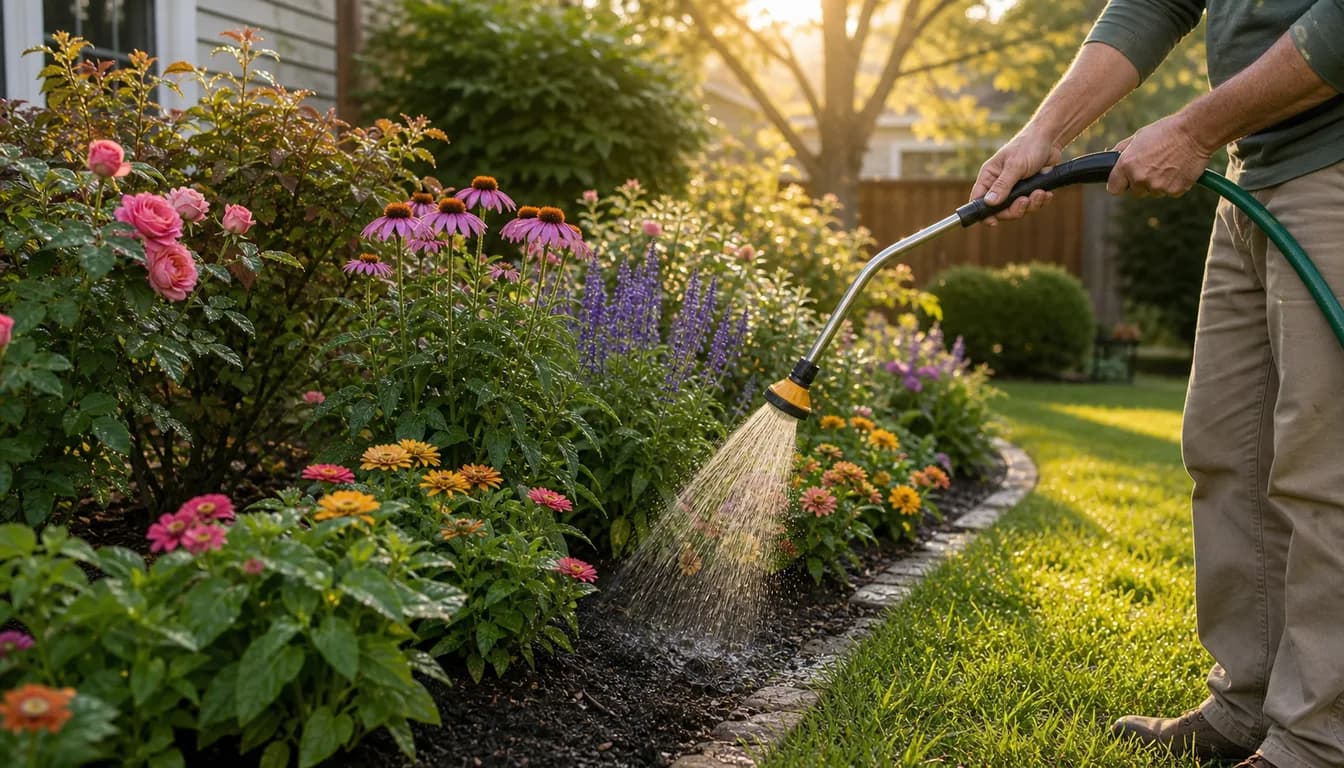
Best Time to Water Flowers for Stronger Blooms
Learn exactly when to water flowers so blooms last longer, plants stay healthier, and you are not wasting water. Covers beds, containers, and hanging baskets.
10 min read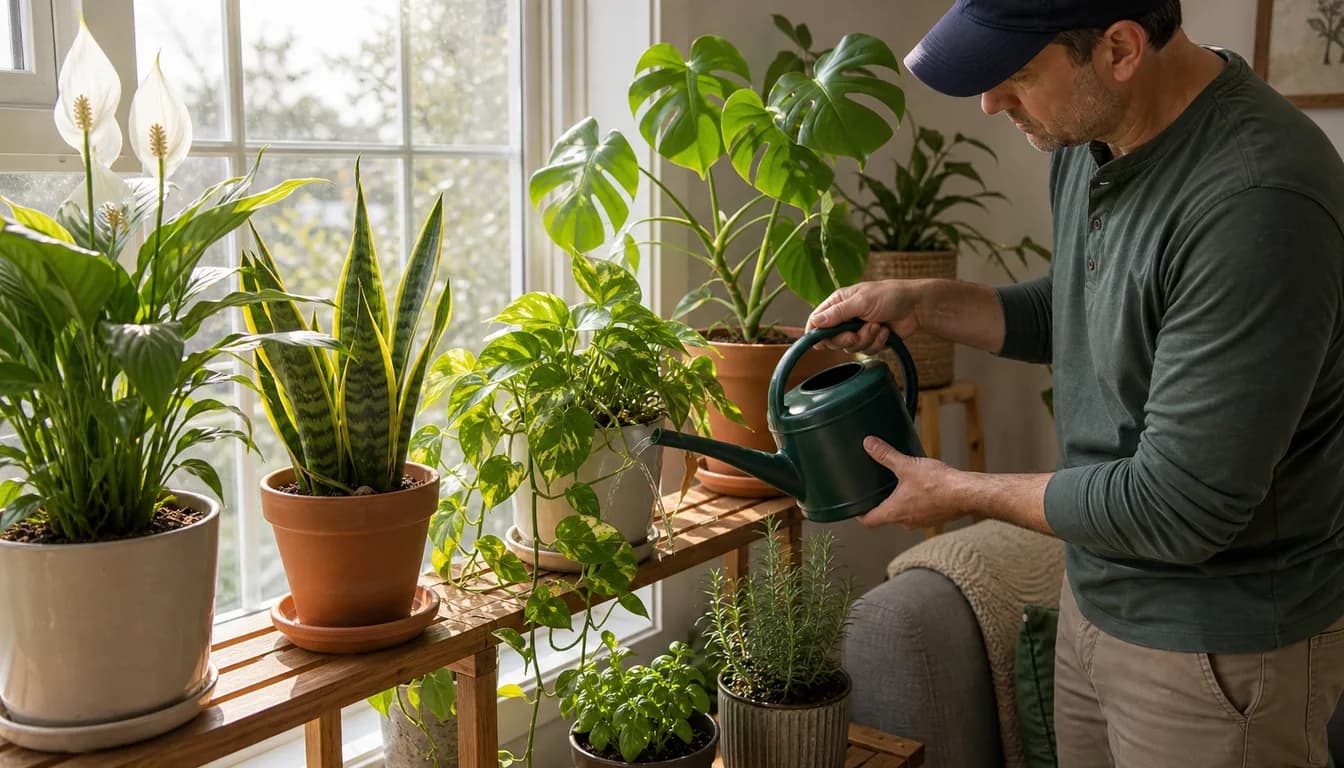
Best Time to Water Indoor Plants for Healthy Growth
Learn exactly when to water indoor plants during the day, how timing changes by season and light level, and how to avoid rot and droop without using a strict calendar schedule.
11 min read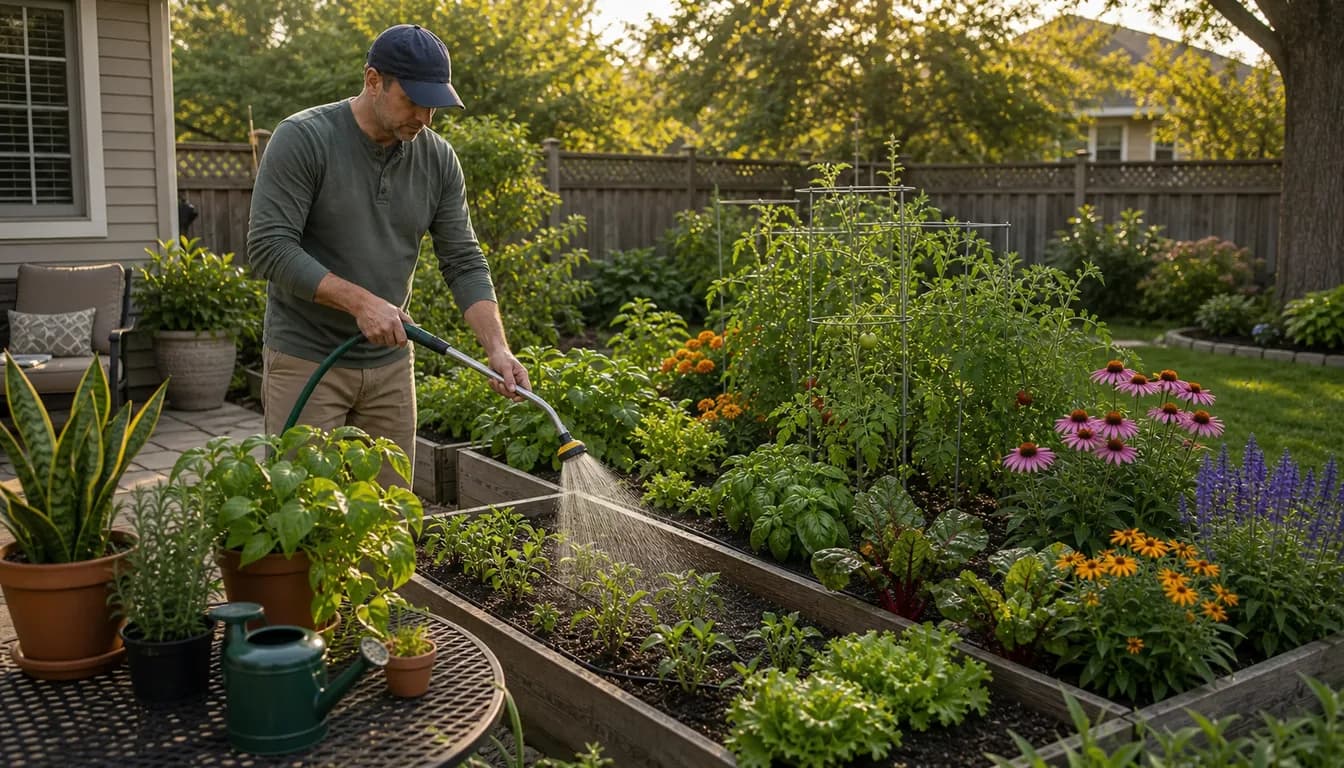
Best Time to Water Plants for Healthier Roots
Learn exactly when to water indoor and outdoor plants so roots drink deeply, leaves stay healthy, and soil stays in the ideal moisture range instead of staying soggy or bone dry.
11 min read