verifiedSource Reviewed
African Violet: Keep the Crown Dry and the Bloom Cycle Moving
Saintpaulia ionantha
Family: Gesneriaceae
wb_sunnyLight
Bright indirect light; no harsh direct sun on fuzzy leaves
water_dropWater
Bottom-water or wick-water; keep the crown dry
heightHeight
6-12 in tall and wide depending on rosette size
publicZone
Outdoors in Zones 11-12; indoors anywhere
petsPet Safety
Pet Safe

Native Region
Tanzania and Kenya (Eastern Arc Mountains)
filter_vintageProtect the Crown Before You Chase More Flowers
The center crown is the engine of an African Violet. New leaves, buds, and the next bloom cycle all come from that tight middle point, so crown health matters before fertilizer, pot color, or flower variety.
Water trapped in the crown can mark leaves or start rot. That is why the best care starts with a dry crown, a small airy pot, and light that supports bloom without baking fuzzy leaves.
This is a different job from Peace Lily, which tells you loudly when it is dry. African Violet asks for small, steady choices before the plant collapses.
lightbulbLook at the crown first
If the crown is firm and making small new leaves, the plant can recover from many care mistakes. A soft or crowded crown is a bigger problem than one old yellow leaf.
Use the table as a quick crown check before changing water, fertilizer, or light.
Healthy crownFirm center, new leaves, buds forming above the rosette
Risky crownWet center, tight debris, soft tissue, or stalled new growth
Main ruleKeep water and dead material out of the center
wb_sunnyGive Bloom Light Without Scorching Fuzzy Leaves
Bloom quality follows the light. Too little light gives flat leaves and few buds. Harsh direct sun can spot or scorch the fuzzy leaf surface.
An east window, a bright north window, or a filtered grow light setup usually works better than a hot west window. Rotate the pot so the rosette stays even, but do not keep moving it from room to room.
If you want a bloom display in lower light, Anthurium or Peace Lily may be more forgiving. African Violet needs enough light to keep making buds close to the crown.
- check_circleFlat leaves reaching outward often mean light is too weak.
- check_circleTight pale leaves can mean light is too strong.
- check_circleFew buds with healthy leaves usually means the plant needs brighter indirect light.
- check_circleOne-sided growth means the pot needs gentle rotation.
Guide — See AlsoAir Purifying Plants for Cleaner Indoor AirLearn how to pick, place, and care for air purifying plants so they help your indoor air instead of just looking pretty.
chevron_rightwater_dropBottom-Water the Small Pot, Then Let Air Return
Bottom-watering works because it wets the root ball without pouring water into the crown. Set the pot in room-temperature water, let the mix drink, then drain it instead of leaving the plant sitting in a saucer.
A wick system can work too, but only if the mix stays airy. Constantly wet heavy soil turns the root zone stale, even when the top of the plant still looks tidy.
Timing matters because the plant sits in a small pot. The indoor timing rules in water indoor plants still apply, but African Violet adds one stricter rule: keep the crown dry.
If you are unsure whether the plant is wet or dry, compare the symptoms with overwatered plant signals. On African Violet, leaf limpness can come from either dry roots or damaged wet roots.
- 1Set the pot in room-temperature water.
- 2Wait until the top of the mix feels slightly moist.
- 3Lift the pot and let extra water drain fully.
- 4Keep the crown and fuzzy leaves dry.
If those steps feel fussy, remember the goal: wet roots, dry crown, and no cold water on fuzzy leaves.
warningCold water spots leaves
Cold water on fuzzy leaves can leave pale marks. Use room-temperature water and aim below the foliage.
Email Updates
Join the KnowTheYard update list
Zone-specific advice, seasonal reminders, and new plant guides — no filler.
potted_plantKeep the Pot Small Enough for Blooming
A snug root ball supports bloom better than a generous decorative pot. A large pot may look kind, but the extra wet mix slows roots and pushes the plant away from bloom rhythm.
Use a light, porous mix made for violets or a fine houseplant mix improved with perlite. The goal is even moisture with air, not swampy peat.
Repot when the neck gets long, the mix breaks down, or the rosette has clearly outgrown its pot. For broader repotting timing, compare repot houseplants with the stricter small-pot rhythm violets need.
Good pot sizeAbout one-third the width of the leaf spread
Good mix feelFine, airy, evenly moist, never compacted
Repot signalLong neck, sour mix, crowded roots, or stalled bloom cycle
Guide — See AlsoBest Herbs to Grow Indoors for Real Harvests, Not Spindly PotsChoose indoor herbs that can actually produce in your light, temperature, and container setup, then match each one to th
chevron_right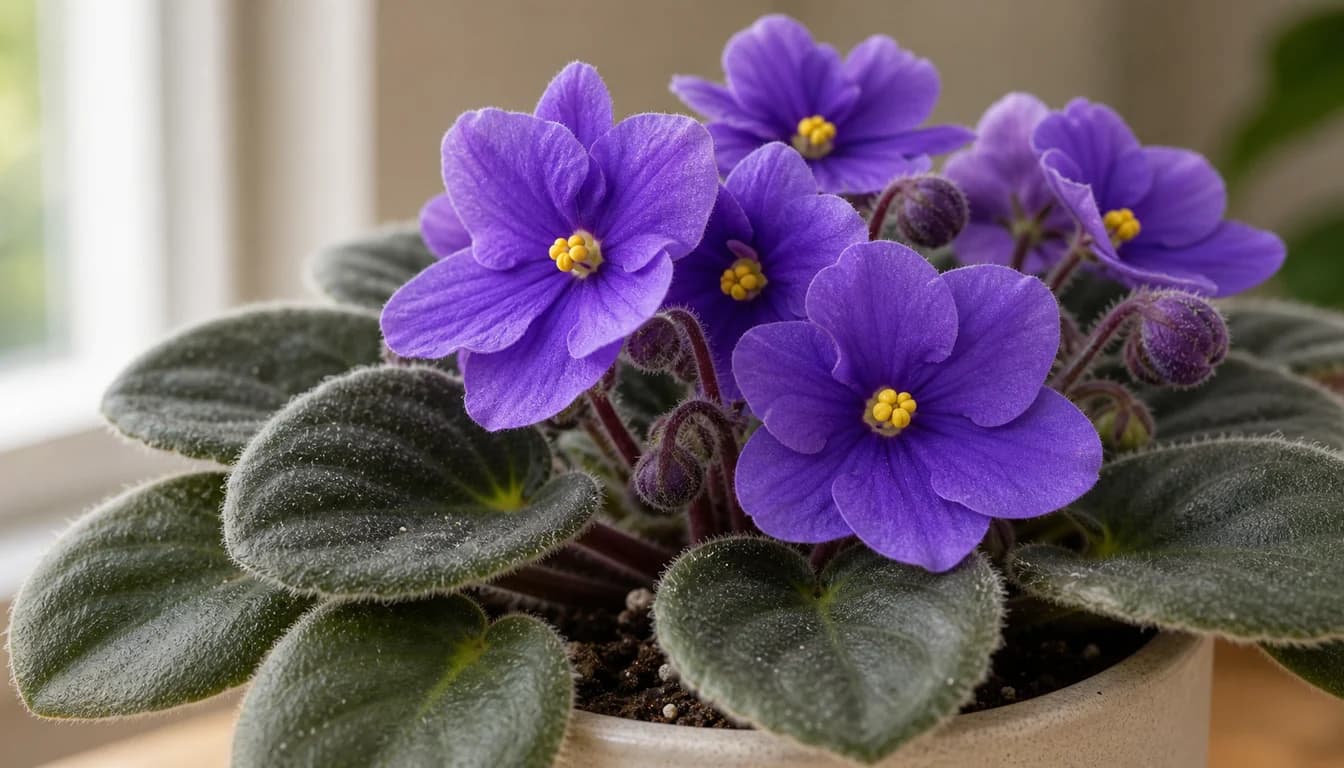
local_floristFeed Lightly to Keep Buds Coming
Heavy feeding does not make African Violet bloom better. It often makes soft leaves and salt buildup. Light, regular feeding during active growth supports buds without pushing the crown too hard.
Deadhead spent flowers and remove damaged leaves cleanly. The plant does not need old bloom stalks sitting in the crown while new buds try to form.
This is where it differs from Kalanchoe, which stores water in succulent leaves and uses a different rest-and-rebloom pattern. African Violet is a steady small-pot bloomer.
- check_circleFeed only when the plant is actively growing.
- check_circleUse diluted fertilizer rather than strong occasional doses.
- check_circleFlush the pot if white crust builds up on the rim or soil.
- check_circleRemove spent flowers before they collapse into the crown.
parkPropagate Leaves Without Crowding the Mother Crown
A single healthy leaf can start a new African Violet, but propagation should not strip the mother plant. Take a mature outer leaf with a short stem and leave the crown balanced.
Root the leaf in a light mix or water, then pot plantlets once they have their own leaves. Keep them humid but not sealed in wet, stale air.
Best leafFirm mature outer leaf with no spots or damage
Bad leafOld yellow leaf, crown leaf, or leaf with pest damage
Best timingActive growth, when warmth and light are steady
Guide — See AlsoBest Indoor Plants for Every Room and Light LevelA practical guide to choosing the best indoor plants for your home, covering beginner-friendly picks, low light champion
chevron_righttroubleshootDiagnose Buds, Leaves, and Crown Separately
Bud blast, spotted leaves, and a soft crown tell different stories. Diagnosis gets messy when every symptom is treated as a watering problem.
Cyclamen mites and thrips can hide in tight new growth and flowers. If pests are likely, inspect buds and the crown before spraying the whole rosette; the steps in houseplant neem oil need extra care on fuzzy leaves.
pest_controlNo buds
Usually low light, old mix, or weak feeding rhythm.
pest_controlLeaf spots
Often cold water, harsh sun, or wet fuzzy leaves.
pest_controlTight distorted center
Can point to mite pressure or crown stress.
pest_controlSoft crown
Often crown rot from trapped water or stale wet mix.
petsUse It as a Pet-Safe Bloomer With Stable Shelf Space
A compact pet-safe bloomer solves a real shelf problem. Many showy indoor bloomers or foliage plants are not safe choices for homes with chewing pets.
The plant still needs a stable shelf. A tipped pot can crush the rosette, and broken leaves will not rebuild the old symmetry quickly.
If your pet ignores plants and you want larger glossy flowers, Anthurium offers a different look. If safety and compact bloom matter first, African Violet owns the job better.
eco
Keep Exploring
Related Plants
 Houseplants
Nerve Plant
Nerve Plant is a tiny veined foliage plant that tells you fast when the room is too dry, too bright, or too unevenly watered. Grow it for a humid desk or te
 Houseplants
Norfolk Island Pine
Norfolk Island Pine is a tropical conifer grown indoors for its soft, layered “mini Christmas tree” look; it stays compact in containers, prefers ==**bright
 Houseplants
Ficus Audrey
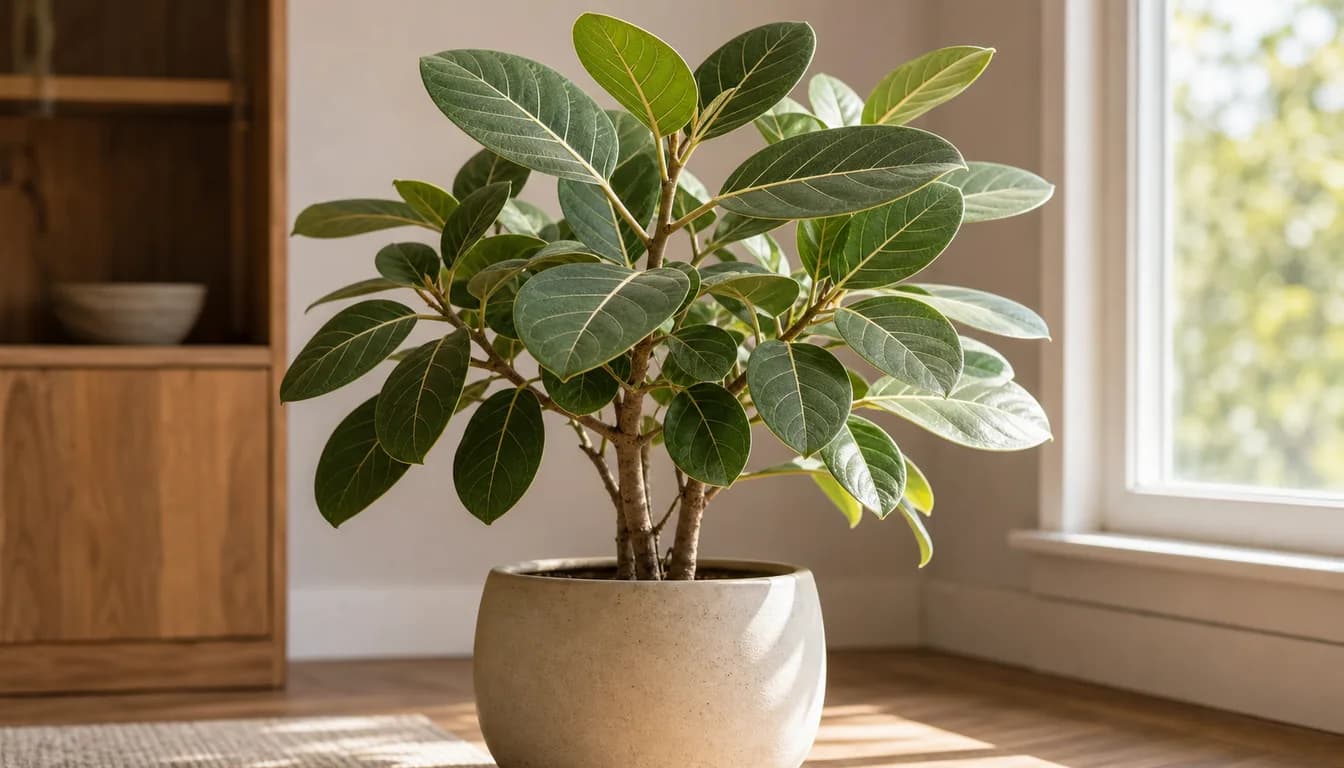
Ficus Audrey is a banyan-type indoor tree with velvety leaves and a thickening trunk. Give it stable bright placement before you judge water, pruning, or le
quiz
Frequently Asked Questions
How often should I water an African Violet?expand_more
Water when the mix is lightly dry at the surface but before the plant wilts hard. Bottom-water, drain fully, and keep the crown dry.
Why is my African Violet not blooming?expand_more
Low light is the most common reason. Old compacted mix, weak feeding, or a crowded crown can also stop the bloom cycle.
Can African Violet leaves get wet?expand_more
A little room-temperature water is not instant disaster, but cold water or water trapped on fuzzy leaves can leave spots. Bottom-watering is safer.
Is African Violet safe for cats and dogs?expand_more
Yes, it is generally treated as pet-safe. Keep the pot stable so pets do not crush the rosette.
Can I grow African Violet from a leaf?expand_more
Yes. Root a healthy mature outer leaf with a short stem, then pot the plantlets once they form their own leaves.