
What Do Japanese Beetles Eat in Gardens and Lawns?
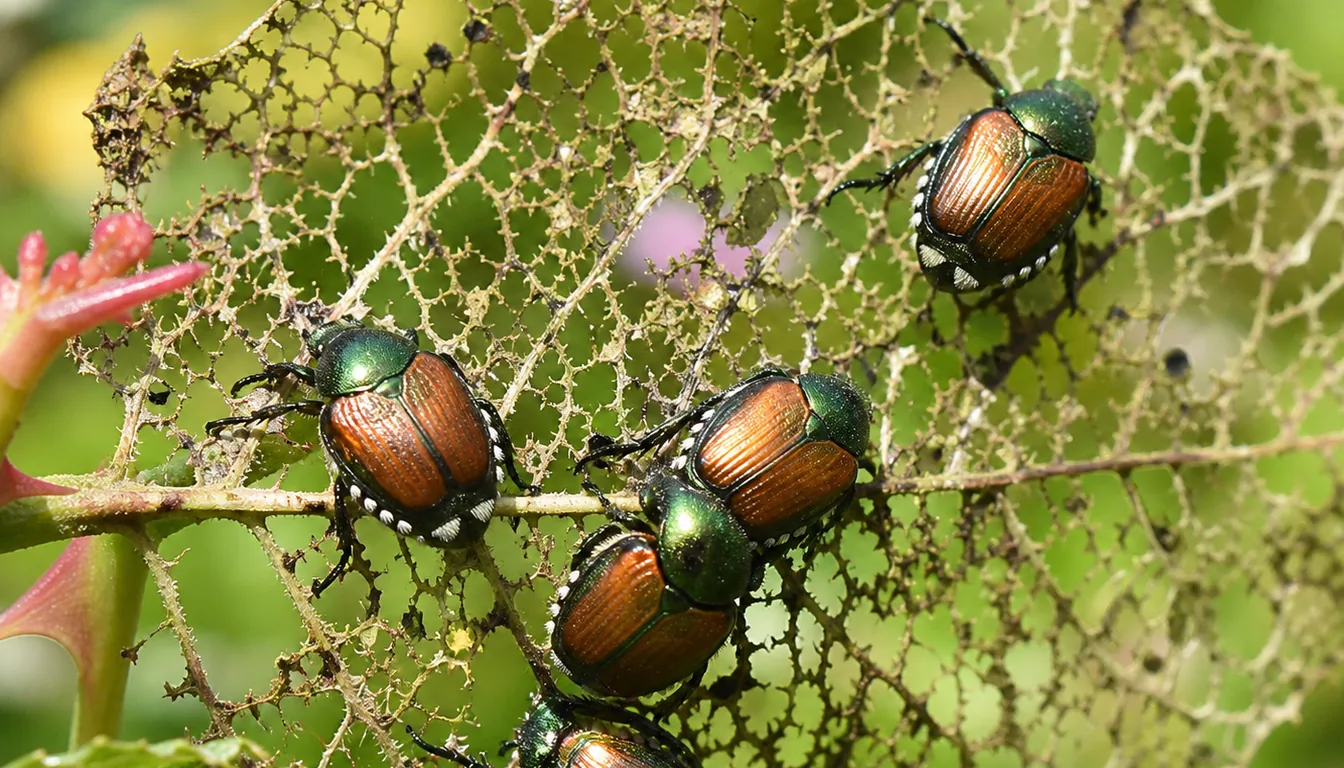
Adult Japanese beetles eat the soft tissue of leaves, flowers, and fruit on more than 300 plant species.
Roses, grapes, lindens, crabapples, raspberries, basil, beans, and corn silks are among the plants they often favor.
Their white, C-shaped grubs have a different diet. They live below ground and feed mainly on grass roots, so a chewed rose and a loose brown patch of lawn can be damage from two stages of the same insect.
The useful question is not whether a plant appears on a host list, but whether feeding threatens the part of the plant you value. A mature tree can lose some leaf tissue with little lasting harm, while beetles in a raspberry patch or corn silks can affect the harvest.
At a glance
Adults and Grubs Eat Different Parts of the Yard
A Japanese beetle changes both its appearance and its food as it develops.
The adult feeding above ground is easy to see, but the larval feeding happens under turf where roots hide the damage.
- Adult beetle
- Chews leaves, petals, soft fruit, and corn silks
- White grub
- Chews roots, mainly beneath turfgrass
- Adult location
- Sunny foliage and flowers, often near the top of a plant
- Grub location
- Soil beneath grass, usually in the upper root zone while actively feeding
Adults are mobile and can fly into a yard from elsewhere. Killing grubs in one lawn therefore does not guarantee that adults will leave the garden alone, and removing adults from roses does not repair an injured root system below the lawn.
The seasons also overlap imperfectly.
Adults emerge around late June or early July in many northern areas and feed mainly through July and August, while grubs hatch in soil and feed on roots later in summer before moving deeper for winter.
Treat the stage that is causing the damage you can confirm. A host list helps you decide where to look, but the feeding pattern tells you whether adults or grubs own the problem.
What Japanese Beetle Feeding Looks Like
Adult beetles usually eat the tissue between larger leaf veins. The remaining vein network gives the leaf a lace-like or skeletonized look, and heavily damaged leaves may turn brown and drop.
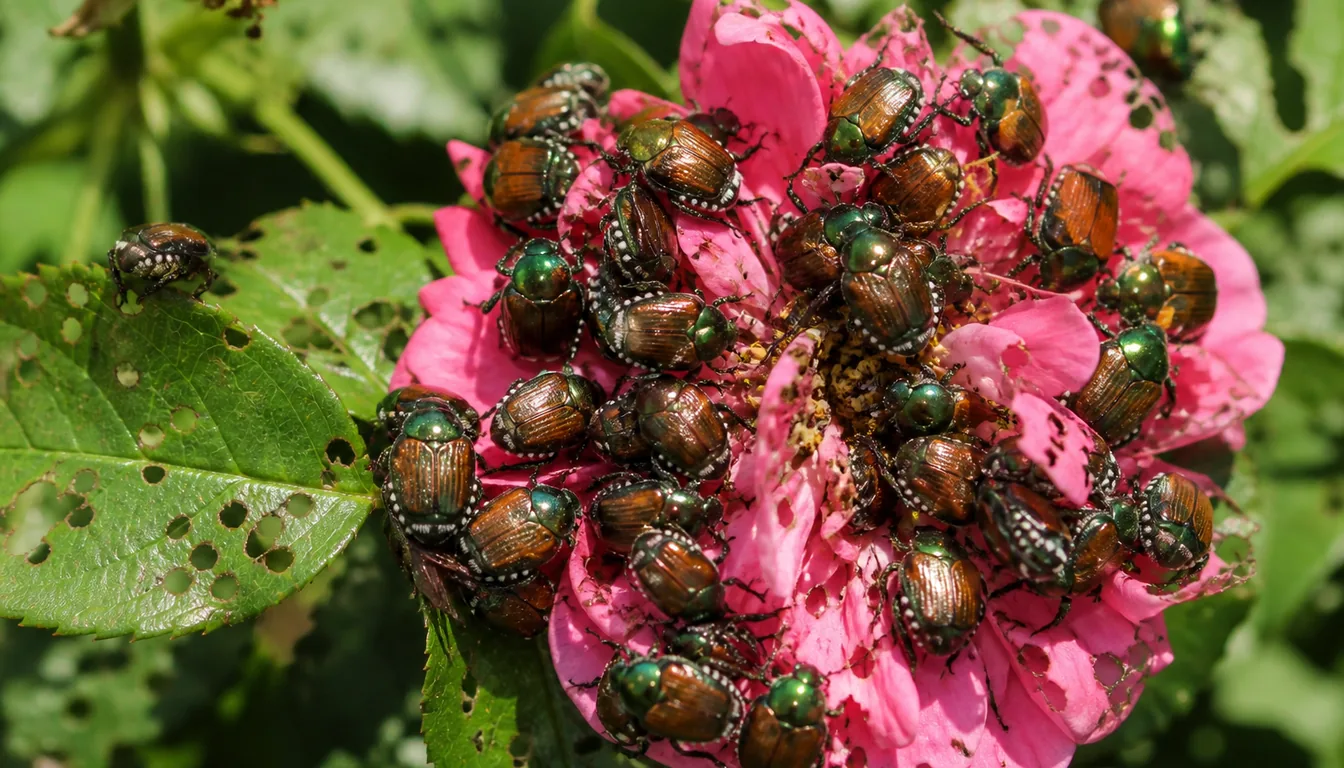
They also chew irregular holes in flower buds and petals.
On ripening fruit, beetles often gather where skin is already soft, split, or wounded rather than boring neatly into hard, intact fruit.
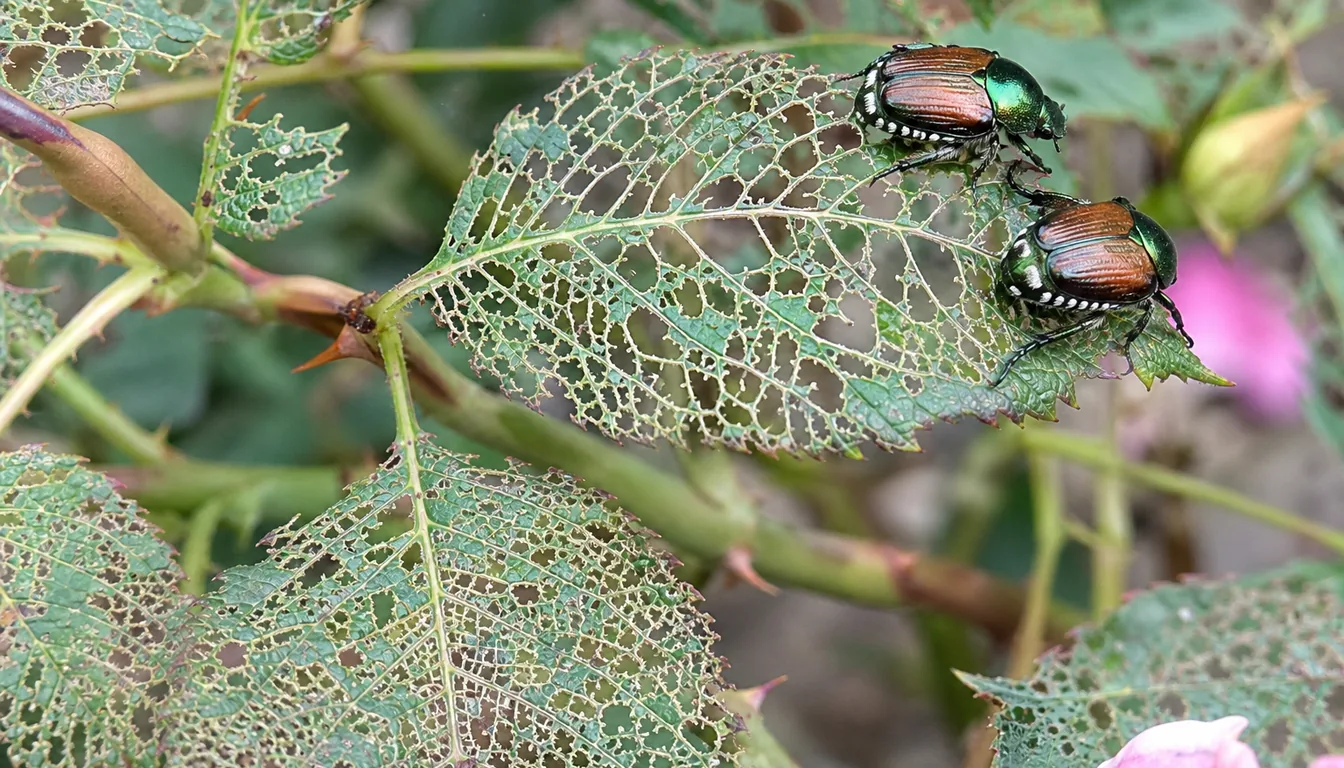
- Metallic green head and thorax with copper-brown wing covers
- Five white hair tufts along each side of the abdomen, plus two at the tip
- Adults about 3/8 inch long and often feeding in groups
- Leaf tissue removed between veins rather than a smooth bite from the edge
- Chewed petals, fruit surfaces, or corn silks during the adult flight period
A hole alone is weak evidence because caterpillars, sawflies, slugs, and other beetles also chew foliage. The white abdominal tufts are the most useful field mark when you can see the insect.
Which Flowers, Shrubs, and Trees Do They Favor?
Roses are the best-known target because beetles can ruin both petals and foliage.
Grapes, Virginia creeper, hollyhock, zinnia, and hibiscus can also gather conspicuous groups in a sunny garden.
Among woody plants, lindens, crabapples, apples, cherries, plums, birches, elms, and some maples commonly appear on Extension host lists. Presence on a list means the plant can be fed upon, not that every specimen will be stripped every year.
| Plant group | Common examples | What adults eat | What the reader may lose |
|---|---|---|---|
| Flowers | Rose, hollyhock, zinnia, hibiscus | Petals, buds, leaf tissue | Bloom quality and display |
| Vines | Grape, Virginia creeper | Leaf tissue, ripe or wounded fruit | Canopy and fruit quality |
| Fruit trees | Apple, crabapple, cherry, plum, peach | Leaves, blossoms, soft fruit | Appearance, young growth, or crop |
| Shade trees | Linden, birch, elm, willow | Leaf tissue between veins | Mostly appearance on healthy mature trees |
| Small fruits | Raspberry, currant | Leaves and fruit surfaces | Marketable or usable fruit |
Plant stress changes the decision. A newly planted or unhealthy tree has less leaf area and fewer stored resources than an established tree.
So repeated severe feeding matters more even when both plants are the same species.
Sun exposure affects where clusters form. A favored plant in full sun may draw more activity than a similar plant in shade, but moving a mature tree solely to escape beetles is rarely practical.
What Do Japanese Beetles Eat in Vegetable and Fruit Gardens?
Beans, basil, sweet corn, grapes, raspberries, apples, peaches, plums, and cherries can all be fed upon. The consequence depends on whether beetles are chewing expendable foliage or the part you intend to harvest.
On sweet corn, adults clip silks rather than eating the ear through its husk.
Heavy silk clipping before pollination is complete can interfere with kernel set, while similar feeding after pollination carries less risk.
Soft fruit creates another timing problem. Beetles are attracted to ripe, overripe, split, or previously wounded fruit, so leaving damaged fruit in place can keep a feeding site active.
- Watch the crop stageInspect silking corn, ripening berries, grapes, and stone fruit more often than leafy plants with plenty of canopy.
- Harvest promptlyPick ripe produce and remove split or fermenting fruit that beetles can continue to use.
- Remove early groupsKnock adults into soapy water before feeding damage and plant odors recruit more beetles.
- Preserve what still worksKeep usable foliage unless disease, breakage, or complete browning gives a separate reason to prune it.
Leaf loss can still reduce growth or yield when it becomes severe, especially on young plants.
A few holes on a vigorous bean plant do not justify the same response as a large group chewing flowers and pods.
Any insecticide used on food crops must list both the pest and the crop on its label. The preharvest interval on that label decides how long you must wait before picking, and it cannot be borrowed from a different product.
Why One Plant Gets Covered While Its Neighbor Does Not
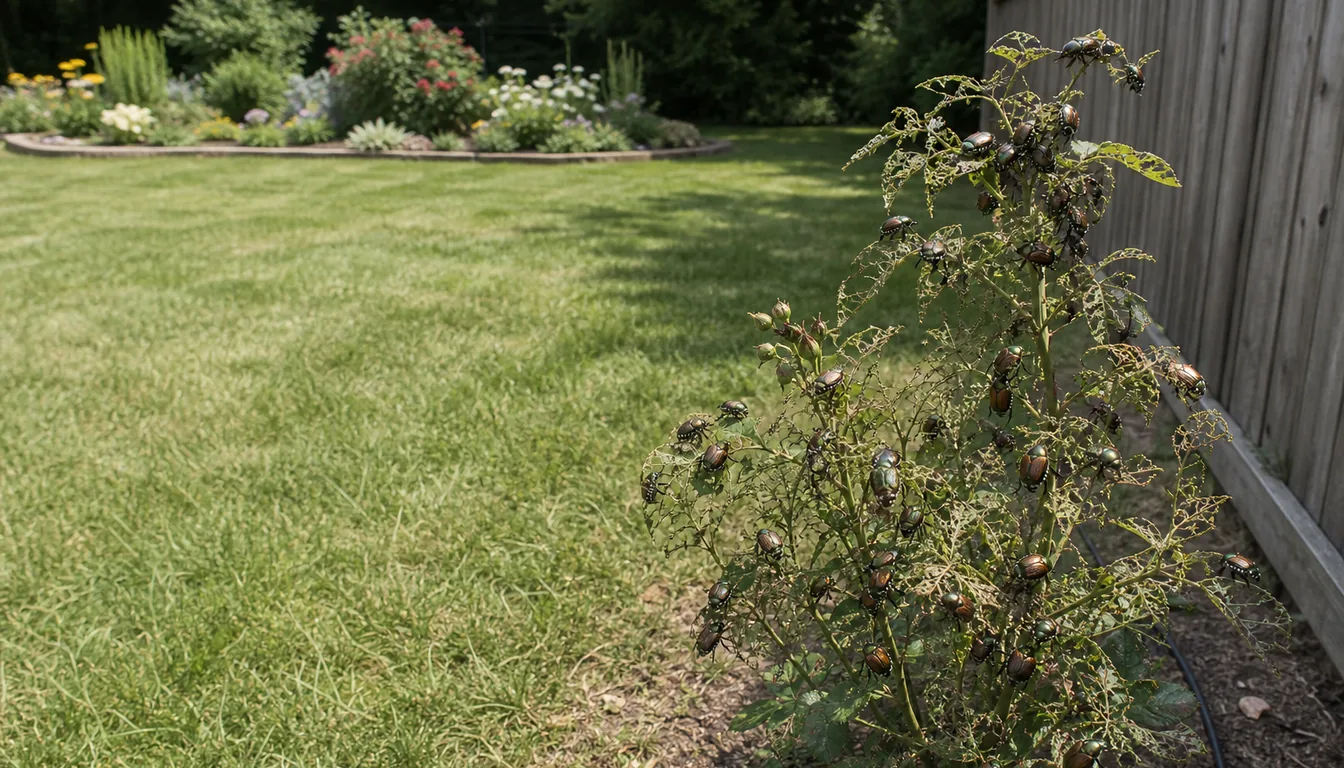
Japanese beetles respond to odors released by damaged plants, and feeding beetles help draw more beetles to the same site.
This positive feedback can turn a small group into a conspicuous cluster while another suitable plant nearby remains lightly touched.
Warm, sunny conditions also favor adult activity. The beetles commonly feed in groups on exposed upper foliage, then become less active when conditions are cool or cloudy.
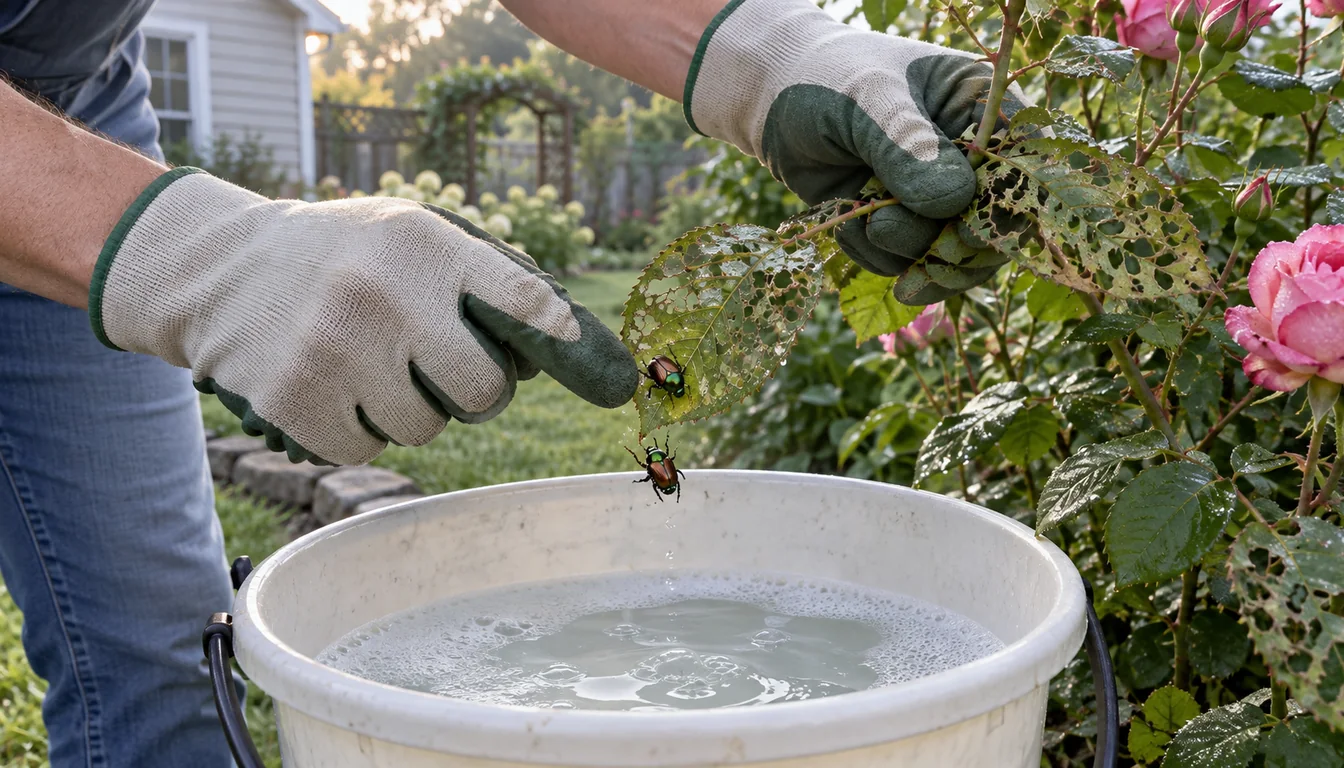
This grouping behavior explains why early hand removal can help a small garden. Removing the first adults reduces current chewing and interrupts one source of the feeding odors that attract more beetles.
It also explains why pheromone-and-floral bait traps can backfire near protected plants. The lure attracts beetles from beyond the immediate garden, and not every incoming beetle enters the bag.
A full trap shows that the lure attracted beetles, not that nearby plants received less feeding.
In a residential yard, routine inspection and physical removal are usually more direct ways to protect a few high-value plants.
What Japanese Beetle Grubs Eat Below the Lawn
Japanese beetle grubs feed mainly on grass roots.
As roots disappear, turf loses access to water and nutrients, wilts quickly during dry weather, and may develop irregular yellow or brown patches.
Severely injured sod can feel spongy or lift away from the soil like loose carpet. Skunks, raccoons, crows, and other animals may tear into the turf while searching for grubs, adding a second kind of damage.
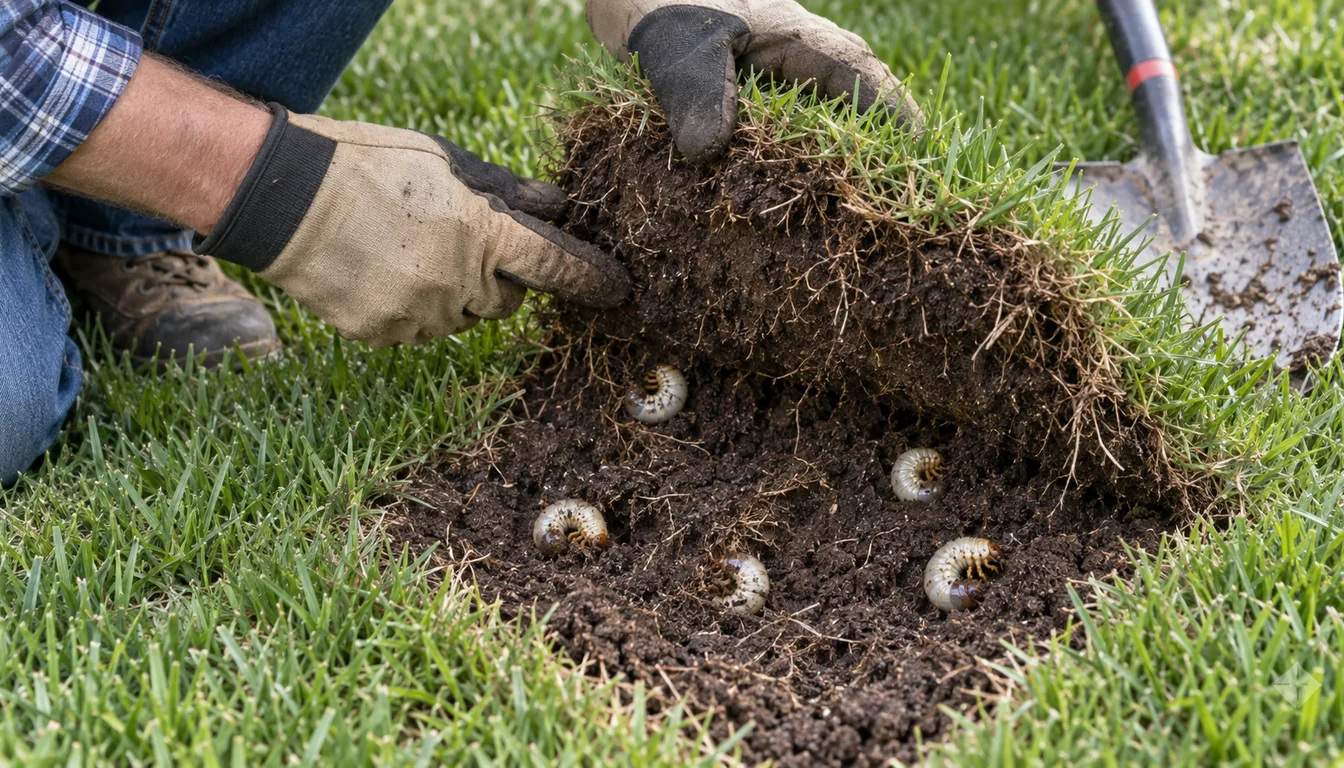
- Look at the edge between damaged and still-green grass, where actively feeding grubs are easier to find
- Cut and fold back a measured section of sod rather than judging from brown color alone
- Look for cream-colored, C-shaped larvae with a brown head and three pairs of legs
- Remember that several scarab beetles produce similar white grubs
- Count what is present and identify the grub before selecting a treatment
The University of Minnesota notes that healthy turf can often tolerate about 10 grubs per square foot. That number is a management guide for healthy turf in its regional context, not proof that every brown patch above that count needs the same product.
Frequent shallow irrigation during egg-laying can make moist soil more favorable for egg and young-grub survival. Deep, less frequent watering that matches the grass and soil can support deeper roots without keeping the surface continuously wet.
A grub treatment protects turf roots when the pest, count, timing, and product all line up.
It does not function as a perimeter barrier against adult beetles flying to roses or grapes.
Are Any Plants Off the Menu?
No landscape plant comes with a guarantee, but some species are rarely damaged compared with roses, grapes, lindens, and fruit trees.
Boxwood, red maple, magnolia, redbud, dogwood, forsythia, holly, lilac, spruce, pine, and yew appear on Extension lists of less-preferred woody plants.
The distinction matters because a plant that beetles seldom eat does not necessarily repel them from its neighbor. Planting garlic, herbs, or another aromatic border has not been shown to create a dependable protective barrier around a favored rose or grape.
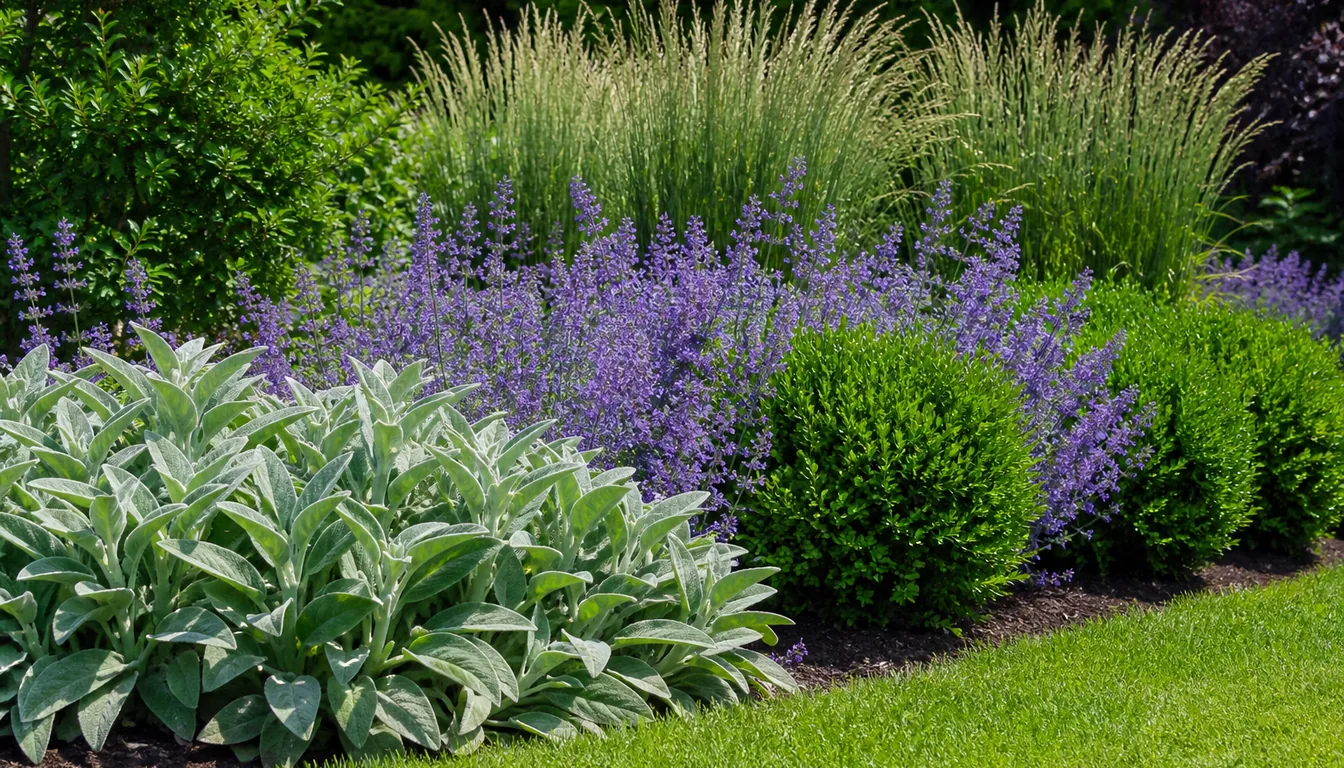
Replace
Swap a repeatedly stripped, low-value host for a species suited to the same light, soil, climate, and space.
Dilute
Mix less-preferred plants into a bed so the whole display does not depend on one highly favored host.
Protect
Keep an important rose, vine, or fruit plant and plan for early monitoring during adult flight.
Accept
Leave cosmetic damage alone when a healthy mature plant retains enough functioning foliage.
A resistant planting plan reduces the amount of attractive food in the landscape. It cannot stop adult beetles from crossing the property or guarantee that a hungry population will never sample a normally avoided plant.
For plant-by-plant replacement choices, use the site's guide to Japanese beetle-resistant plants.
When Does Feeding Actually Need Action?
Adult feeding is often more dramatic than dangerous.
Healthy, established trees and shrubs can tolerate considerable leaf damage without lasting injury, although a ruined rose bloom or scarred fruit may still be unacceptable to the person growing it.
The plant's age, health, useful part, and remaining season matter more than a universal percentage of missing leaf tissue. There is no sound yard-wide rule that says treatment begins at exactly 25 or 30 percent skeletonization.
| Situation | Likely consequence | Best first response |
|---|---|---|
| A few adults on a mature shade tree | Mostly cosmetic leaf injury | Observe and protect tree vigor |
| Adults ruining rose blooms | Lost display during a short bloom window | Hand-pick early and remove spent blooms |
| Groups on ripening berries or grapes | Direct fruit injury and contamination | Harvest promptly and remove adults |
| Heavy feeding on a young or stressed plant | Reduced growth and fewer reserves | Remove adults and correct water or root stress |
| Confirmed grubs with weak, loose turf | Root loss and possible animal digging | Identify, count, and use correctly timed turf guidance |
For reachable plants, knock adults into soapy water in the morning or evening and repeat while new beetles arrive. Row cover can protect some vegetables before flowering, but it must come off crops that need insect pollination.
Neem and other contact products have limits against a continuing wave of adults.
If physical removal is practical, it avoids residues and reduces harm to insects that are not eating the plant.
A Seasonal Check for What They Are Eating
Start above ground when metallic adults appear, usually in early summer.
Walk the plants you value most, look at sunny upper foliage and flowers, and remove early groups before damage expands.
As fruit ripens, shift attention to berries, grapes, stone fruit, and apples. Prompt harvest and removal of split fruit take away the soft feeding sites that adults use readily.
Later in summer, watch turf for wilting or irregular brown patches that do not respond normally to water. Sample the soil before assuming the white grubs are Japanese beetles or buying a preventive treatment.
- Name the life stageAdults are on foliage and flowers; grubs are below grass roots.
- Identify the foodDecide whether beetles are eating leaves, blossoms, fruit, corn silks, or turf roots.
- Judge the consequenceProtect harvests, young plants, and weak turf before accepting cosmetic injury on established plants.
- Use the narrow responseRemove adults, harvest fruit, cover eligible crops, or manage confirmed grubs at the correct time.
- Check againNew adults can fly in, while turf recovery must be judged through new rooting rather than the disappearance of beetles above ground.
A yard can contain adult feeding without having a damaging grub population, and a grub-damaged lawn can exist without the adults staying nearby. Keeping those two facts separate prevents unnecessary treatment.
The best long-term plan combines realistic tolerance with selective protection.
Keep plants you value, replace repeat problem hosts when the maintenance is not worth it, and act only where the feeding changes plant health, harvest, or the display you planted for.
Pro Tips
- Check sunny upper foliage first because adult groups often begin near the top of a plant.
- Remove beetles early from high-value plants before damaged foliage helps attract a larger group.
- Harvest ripe or split fruit promptly instead of leaving a continuing feeding site.
- Confirm white grubs under weak turf before choosing any lawn treatment.
- Treat flower and food-crop labels as binding, especially pollinator and preharvest restrictions.
Frequently Asked Questions
Do Japanese beetles eat tomato plants?
Tomatoes are not among the adults' most consistently favored hosts, though beetles may sample foliage or damaged fruit when populations are high. Confirm the beetle before treating because hornworms, flea beetles, and other pests cause more familiar tomato damage patterns.
Do Japanese beetles eat grass?
The adults are not responsible for the rootless brown turf associated with this pest. Japanese beetle grubs feed on grass roots below ground, while adults feed mainly on foliage, flowers, fruit, and corn silks.
Why are Japanese beetles eating only one of my roses?
Feeding damage releases plant odors that help attract more beetles, so one early feeding site can build a group. Sun, bloom stage, plant condition, and simple chance can leave a nearby rose with fewer beetles.
Will Japanese beetles kill a mature tree?
Healthy mature trees usually tolerate considerable adult feeding because the damage is largely cosmetic. Young, recently planted, drought-stressed, or repeatedly defoliated trees have less capacity to absorb the loss and deserve closer protection.
Does killing lawn grubs stop beetles from eating garden plants?
It may protect a confirmed grub-damaged lawn, but it cannot stop adult beetles from flying in from surrounding properties. Manage turf and above-ground feeding as two related but separate jobs.
Sources & References
Related Guides
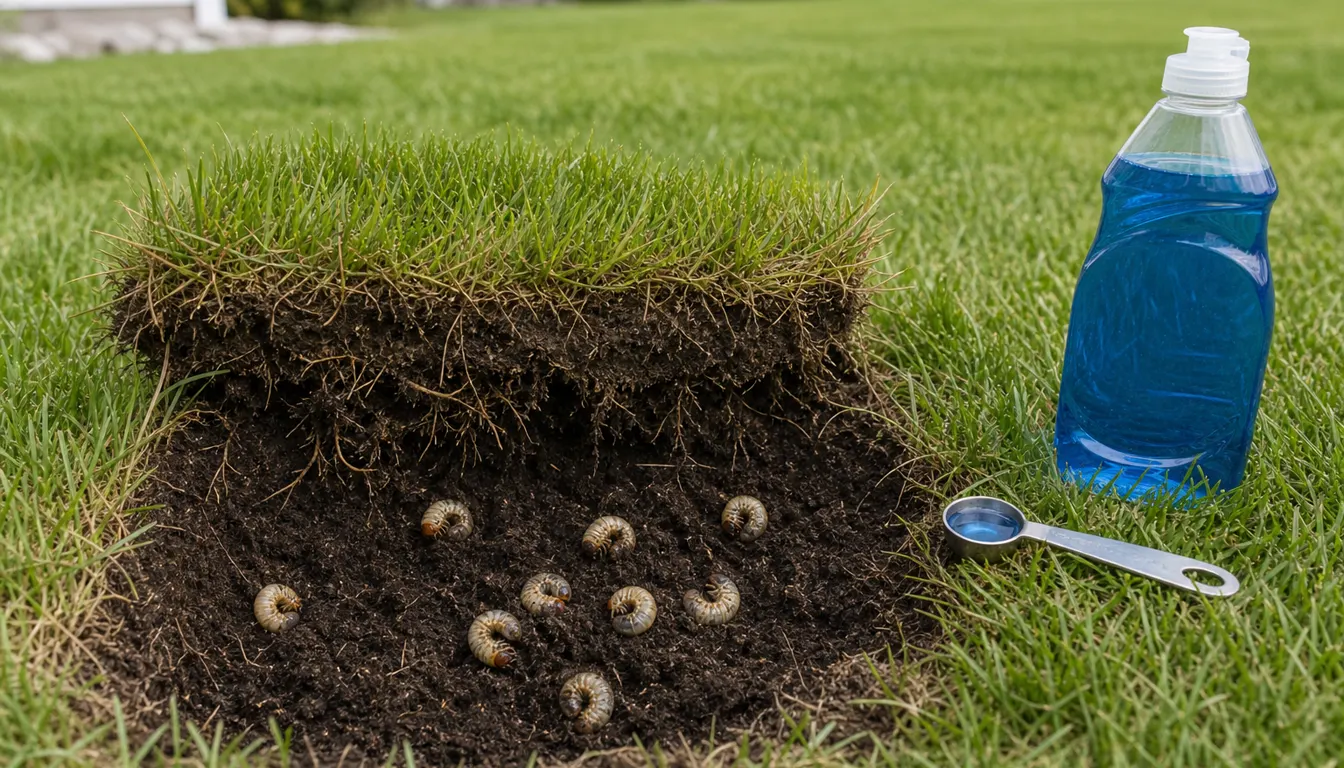
Dawn Dish Soap for Grubs: What Actually Works
Soap solutions can help you spot-check for grubs and knock back a few pests, but they are not…
10 min read
Do Marigolds Keep Squirrels Away From Your Garden?
Squirrels can strip a bed of seedlings or freshly planted bulbs in a single morning.
11 min read
Do Squash Bugs Bite People?
No. A squash bug cannot bite you. Its mouthparts are a slender stylet built to pierce plant tissue…
9 min read
How Do You Get Rid of Spider Mites on Houseplants?
Spider mites on houseplants often can be reduced by repeatedly washing the leaf undersides.
11 min read
How Much Neem Oil Per Gallon? Read and Scale the Label Rate
There is no universal amount of neem oil per gallon. The rate belongs to the exact product and its…
11 min read
How to Control Fungus Gnats in Houseplant Soil
Fungus gnat control works best when it addresses the larvae in potting mix as well as the adults…
15 min read