
What's a Southern Magnolia? How to Fit Its Roots and Canopy
Magnolia grandiflora Magnoliaceae
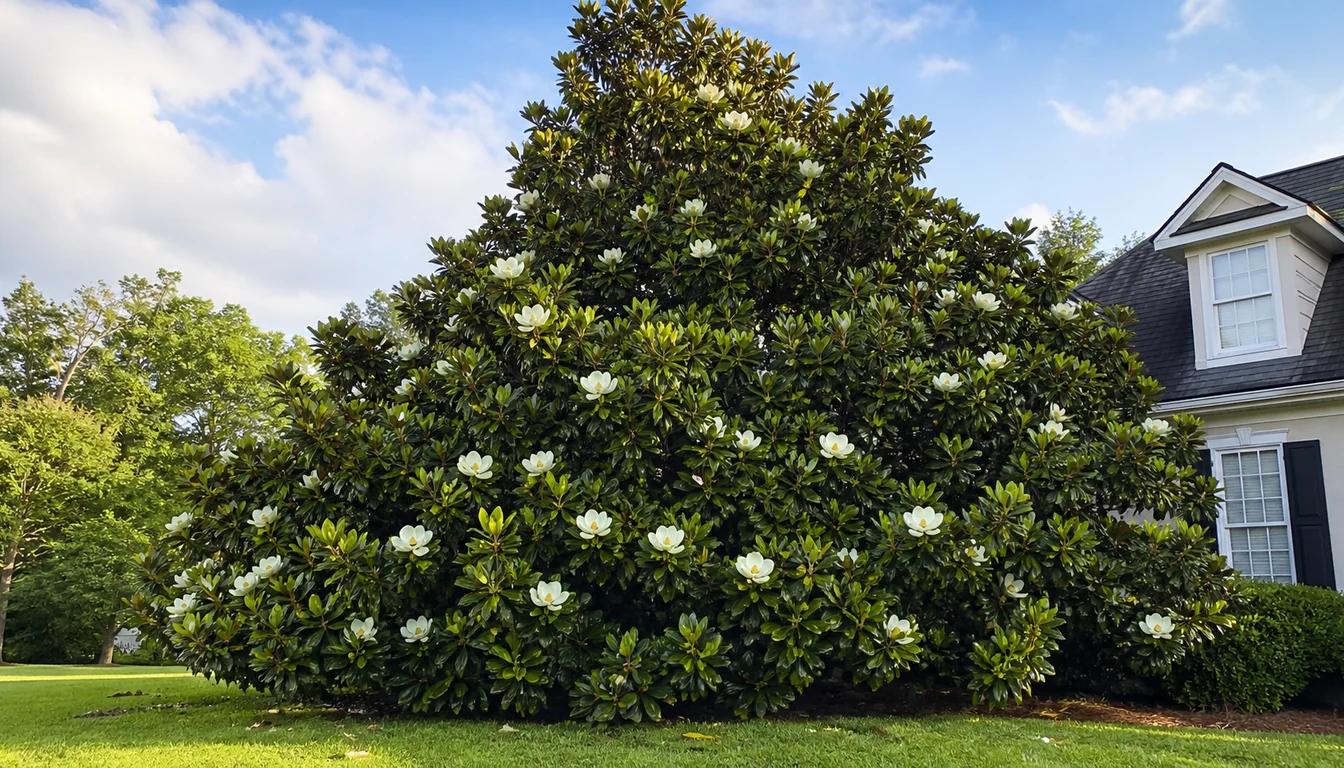
Southern Magnolia is not just a flowering tree. It is a broad evergreen anchor that throws heavy shade, glossy leaves, giant white flowers, and year-round litter.
If the yard has room for that scale, it can be one of the strongest long-term specimen trees you can plant.
Care snapshot
What Is a Southern Magnolia, and Is It the Tree You Want?
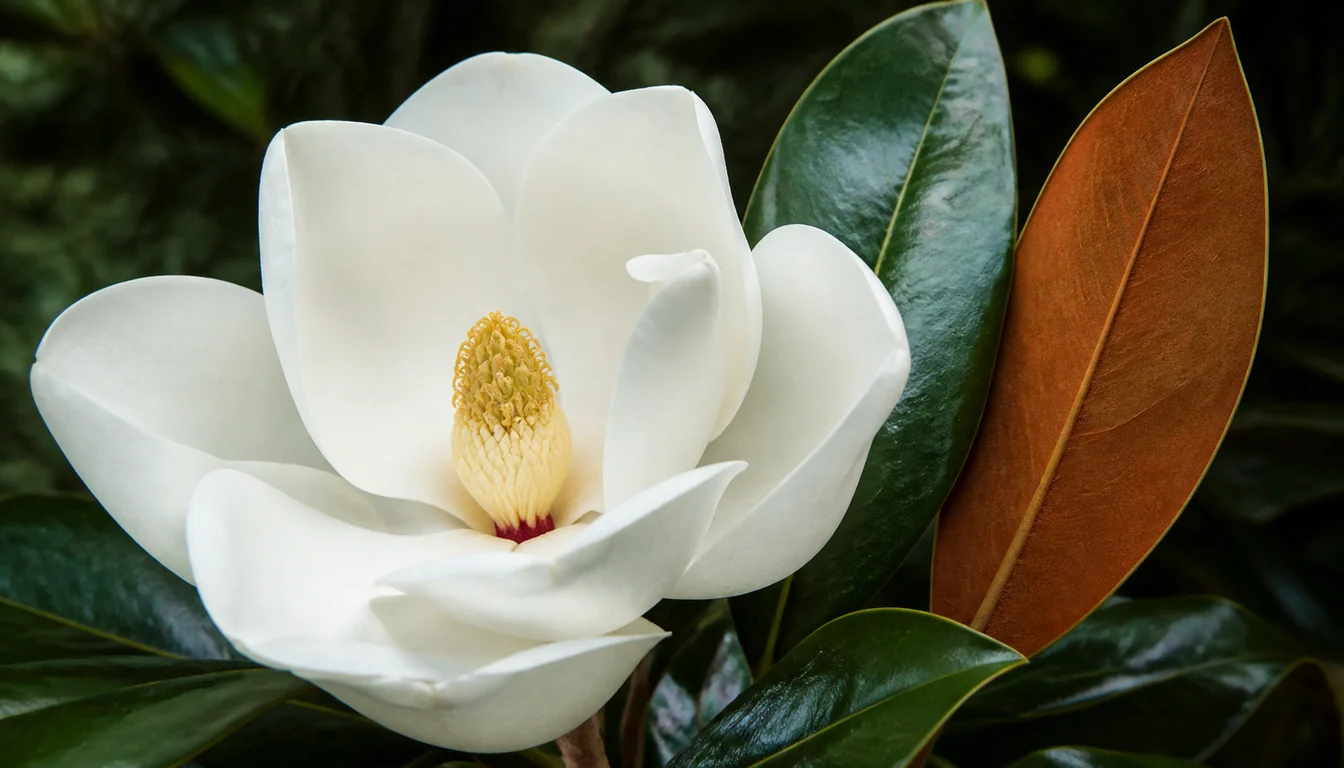
Southern Magnolia (Magnolia grandiflora) is a broadleaf evergreen tree from the southeastern United States, recognized by glossy leaves with rusty undersides and large fragrant white flowers. Its dense canopy, wide root system, and long life make it a yard anchor, so flower appeal alone is not enough reason to plant one.
A mature tree brings year-round dark foliage, thick shade, big roots, fallen leaves, cones, and a strong visual mass. If you only want a neat burst of spring flowers near the front walk, dogwood is often a better fit.
The same goes for tight suburban lots that need a lighter small tree. In that case serviceberry usually carries the space better, even though it does not have the same evergreen presence.
People get in trouble because nursery trees look calm and manageable.
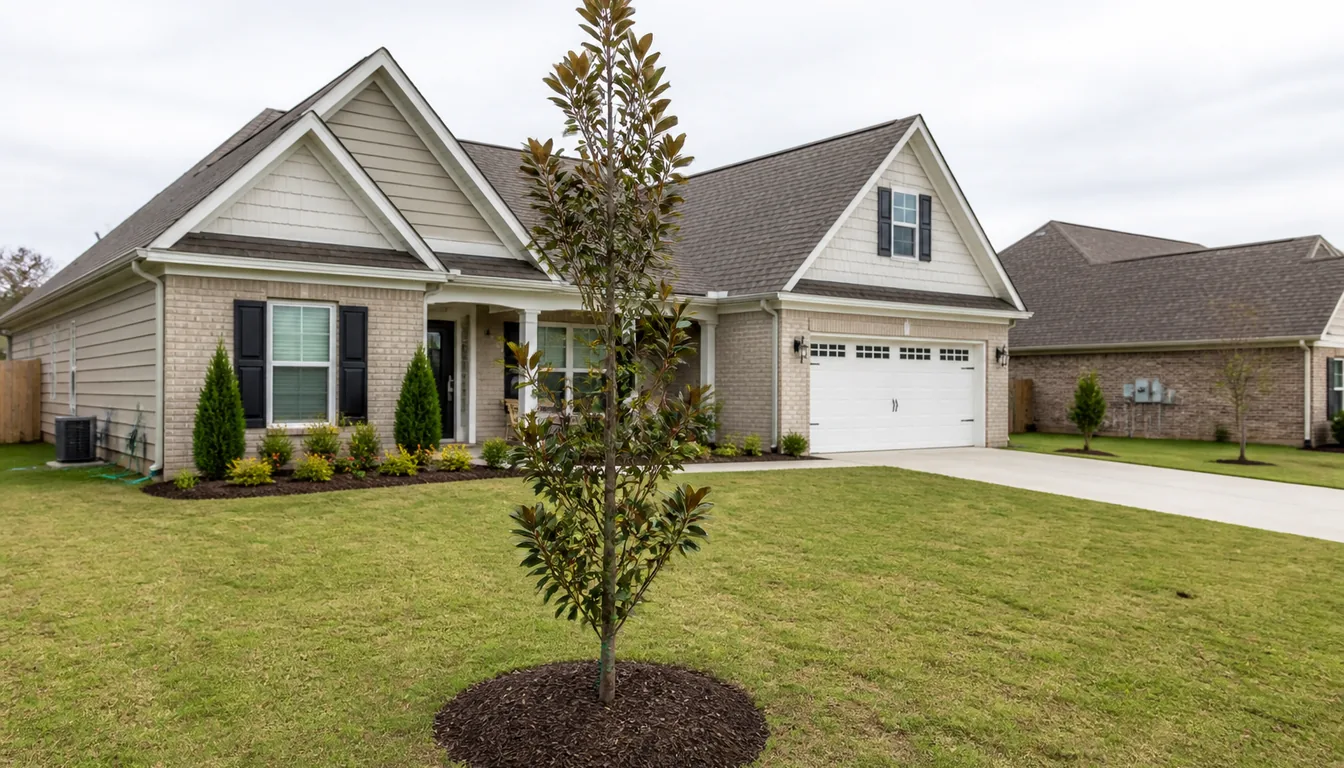
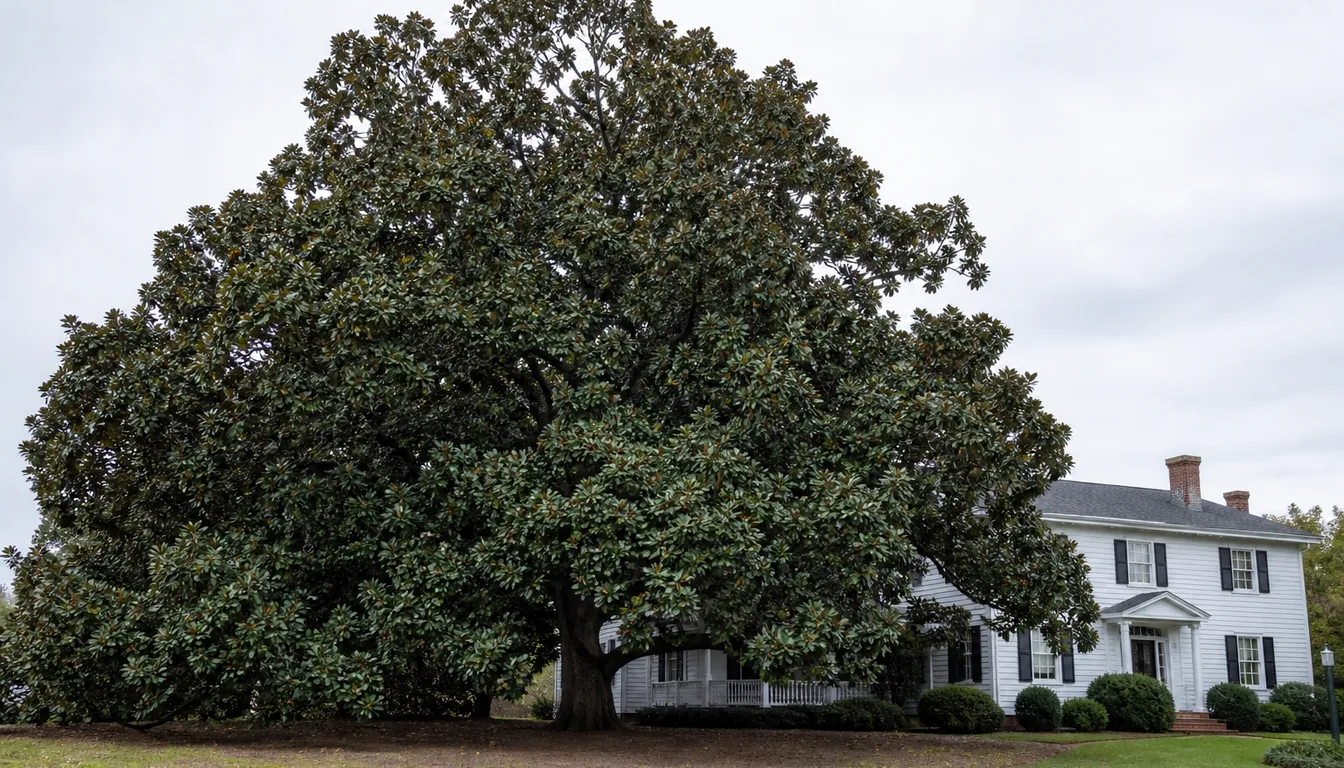
Ten or fifteen years later, the crown is shading the lawn, the roots want a wider bed, and the tree still has decades left to grow.
Which Southern Magnolia Size Class Fits Your Yard?
The cultivar line on the tag is not a minor detail here. It decides between a towering lawn tree and a compact evergreen that can live beside a patio or in a smaller front yard.
That size-class decision also changes maintenance. A full-size tree becomes an upper-canopy project that most people only prune lightly, while a compact cultivar stays easier to inspect, mulch, and water during its early years.
If you want the same sense of permanence but in a tougher deciduous tree, compare the long game with ginkgo. Southern Magnolia is grand, but it is not automatically the right answer just because the leaves are glossy.
The best practice is blunt, buying the smallest mature tree that can still do the visual job, because upsizing later is easier than shrinking the mature canopy you planted too close to the house.
Southern Magnolia also grows slowly for the first several years while it builds a strong root system, then speeds up once established. Gardeners expecting fast screening height in year one or two are usually disappointed, even though the tree eventually catches up and keeps growing for decades.
- Standard seedling forms
- Often 50-70 ft tall and 30-40 ft wide; best only where the canopy can spread freely
- Compact forms such as 'Little Gem'
- Often 20-30 ft tall with a much tighter footprint for average residential lots
- Hardier selections such as 'Bracken's Brown Beauty'
- Useful near the cold edge when you still want the evergreen Magnolia look
When Does Southern Magnolia Bloom, and Why Is Fragrance Uneven?
Southern Magnolia blooms over a long stretch from late spring into summer, with individual flowers opening in flushes rather than all at once. That staggered bloom is part of the appeal, since a mature tree can carry open flowers for many weeks even though any single bloom fades within a few days.
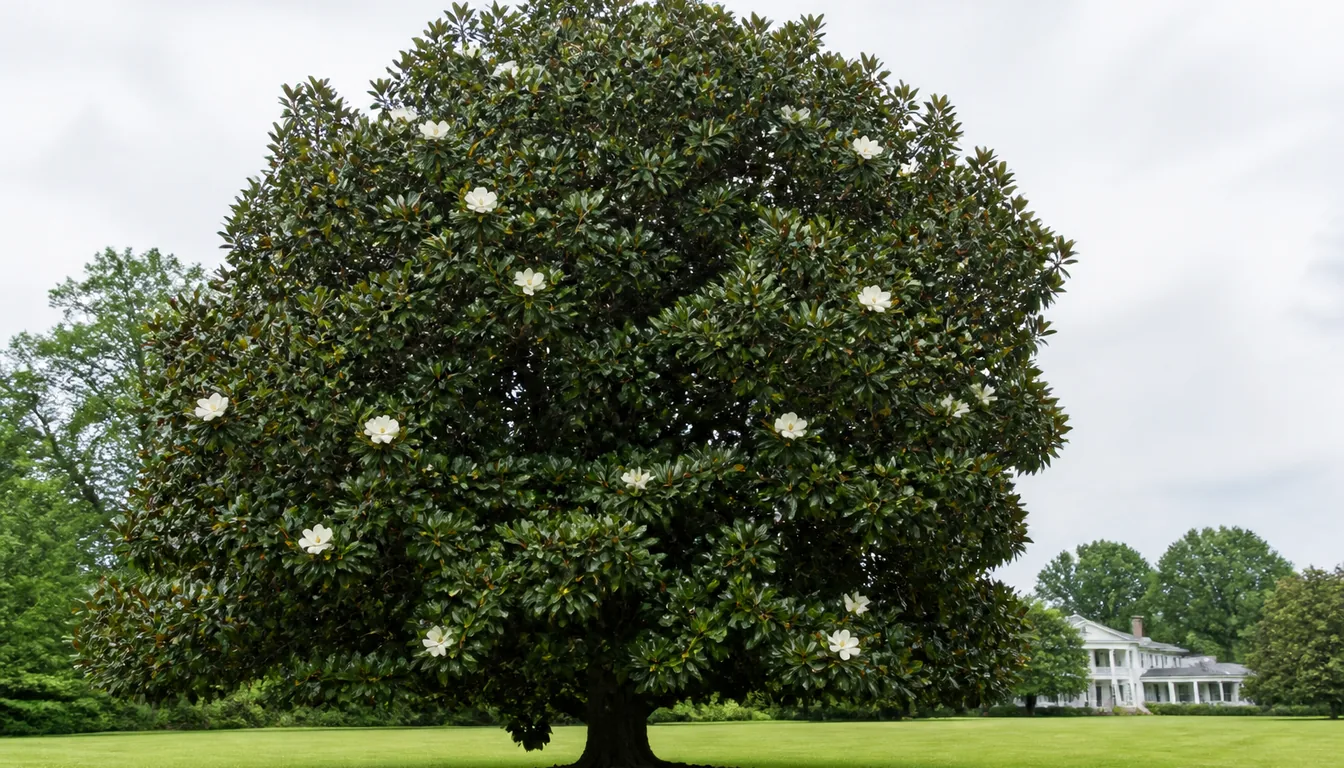
The heavy lemon-like fragrance carries well on warm evenings, which is a real reason people plant this tree near a porch or window despite its size.
Young trees can take several years to a decade before they bloom reliably, so a newly planted specimen tree is a patience investment as much as a design choice. Grafted and cutting-grown cultivars typically bloom sooner than seed-grown trees of the same age.
Cutting a few blooms for indoor display works well, but expect each one to last only a day or two once open in a vase.
Where Can Magnolia Roots and Canopy Spread Safely?
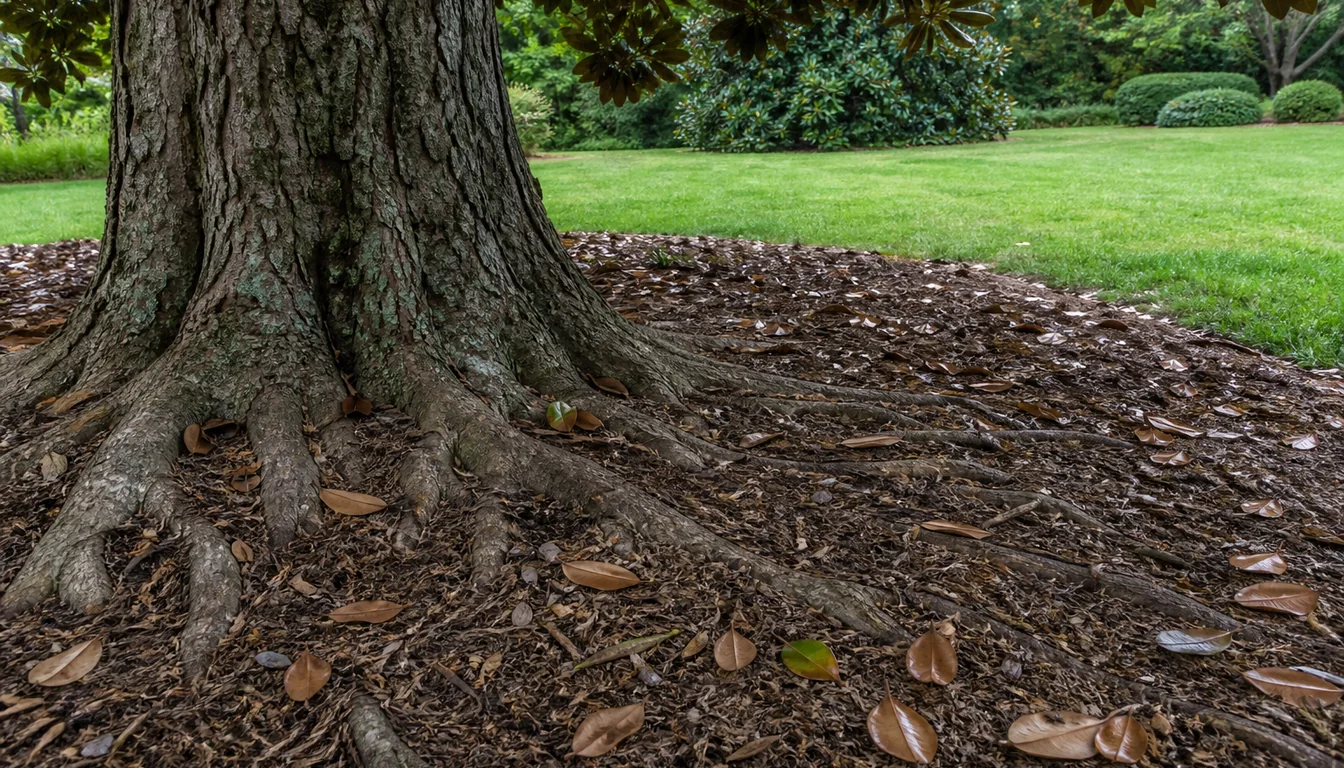
Southern Magnolia wants open sun, a visible root flare, and a wide un-compacted root zone. A narrow strip between pavement and foundation usually gives you a stressed tree and a constant cleanup problem.
Most standard trees deserve at least 20 feet of real clearance from hard structures, and many deserve more.
Compact cultivars still need honest side room because the lower branches, roots, and leaf drop all occupy space even when the tree stays shorter.
Give the roots a mulched bed instead of a turf collar. The same logic behind fixing compacted soil applies here because compressed lawn soil makes a big tree work harder for air and water.
Drainage still matters, especially while the tree is young. If rainwater stands where you want to plant, move the tree or raise the site instead of assuming a species this big can somehow power through root suffocation.
Southern Magnolia tolerates a wide pH range but performs best in slightly acidic soil, similar to what suits azaleas and rhododendrons in the same bed. Very alkaline soil can lock up iron and cause the same yellowing pattern covered in the watering section.
- Aim for full sun in cooler zones and at least bright open light in warmer ones.
- Keep the trunk flare visible after planting and mulching.
- Build a wide bed so roots are not trapped between driveways, walks, and turf.
- Avoid low pockets where water sits after every storm.
What Is It Like to Live Under a Mature Magnolia?
This tree drops something in every season.
Older leaves fall, seed cones shed parts, petals drop after bloom, and the canopy slowly changes the ground under it from lawn space to tree space.
That means Southern Magnolia is a poor match for people who want a spotless patio or a perfect grass circle right to the trunk. The better move is to accept the shade and underplant with things that can actually live there, such as hosta.
In warmer gardens, hydrangea can also work in the outer root zone if you keep water expectations realistic. The bed will never behave like open lawn again, and that is not a failure, since it is the tree doing its job.
Lower branches are part of the Magnolia look, so do not rush to limb them up unless the site truly needs clearance. Once you remove them, you lose some of the dense, grounded presence that made the tree special in the first place.
Fallen magnolia leaves break down slowly because they are thick and waxy, so shredding them before adding to compost or leaf mulch speeds decomposition considerably. Left whole, a thick mat of leaves can smother small plants growing nearby.
Big leathery leaves drop in batches and do not disappear into turf the way small leaves do.
The ground below the tree usually shifts from lawn to mulch and shade planting.
Keep them if you want the classic grounded look, or lift them only where access truly demands it.
How Should You Water and Mulch a Young Magnolia?
Deep water matters most in the years before the roots reach native soil on their own.
The goal is moisture 12 to 18 inches down, not a wet surface that dries out by noon.
That is why the pattern from deep watering works so well here. Slow soakings build a stronger tree than daily light sprinkles ever will.
Yellow leaves can come from opposite problems, chronic sogginess or real drought stress. That is why you should check the soil before changing the schedule instead of guessing from the canopy alone.
A wide mulch ring keeps that moisture more even and protects shallow feeder roots from lawn competition. Keep the mulch a few inches back from the trunk so moisture does not sit against the bark.
If the soil is poor and thin, a light seasonal feeding can help, but heavy fertilizer is not the first move. Follow a basic tree fertilizing schedule only when the tree actually shows weak growth or a soil test points to a shortage.
- First summer
- Water deeply once or twice a week in hot dry weather, depending on rainfall and soil
- Years 2-3
- Keep watering steady during drought while gradually stretching the interval
- Established trees
- Usually need supplemental water only in prolonged dry spells
Can You Grow Southern Magnolia From Seed or Cuttings?
Southern Magnolia can be grown from seed, semi-hardwood cuttings, or grafting, but named cultivars like 'Little Gem' only come true from cuttings or grafted stock. Seed-grown trees revert to unpredictable size, bloom timing, and cold hardiness.
That unpredictability is exactly why buying a labeled cultivar from a nursery is the reliable path for nearly every home planting.
Semi-hardwood cuttings taken in summer can root at home with rooting hormone and bottom heat, but rooting is slow and inconsistent even under good conditions. Most home attempts take many months and still lose a large share of cuttings before any usable root system forms.
Grafting onto seedling rootstock is the commercial method for reliably reproducing named cultivars at nursery scale.
When Should You Prune Magnolia, and What Do Yellow Leaves Mean?
Less shaping is needed here than most owners expect.
Most pruning is just removing dead, damaged, or crossing branches, not redesigning the whole canopy.
If you need to prune, do it with a light hand and a clear reason. The timing principles from tree and shrub pruning timing matter, but the bigger rule is to preserve the natural framework instead of chasing a smaller outline.
It is easy to blame pests first because the leaves are large and visible. In reality, many Southern Magnolia problems start with siting, soil, or irrigation, and the insects arrive after the tree has already been stressed.
That makes this tree very different from a yearly-pruned summer bloomer such as crepe myrtle. You do not manage it by constant cutting, but by making the space fit the tree.
Often point to scale insects producing honeydew and sooty mold.
Often point to drainage trouble, drought stress, or nutrient lockup in poor soil.
Often points to too much shade, rough prior pruning, or a juvenile tree still maturing.
Often point to reflected heat and shallow dry roots, especially near pavement.
What Causes Magnolia Scale, Sooty Mold, or Leaf Spots?
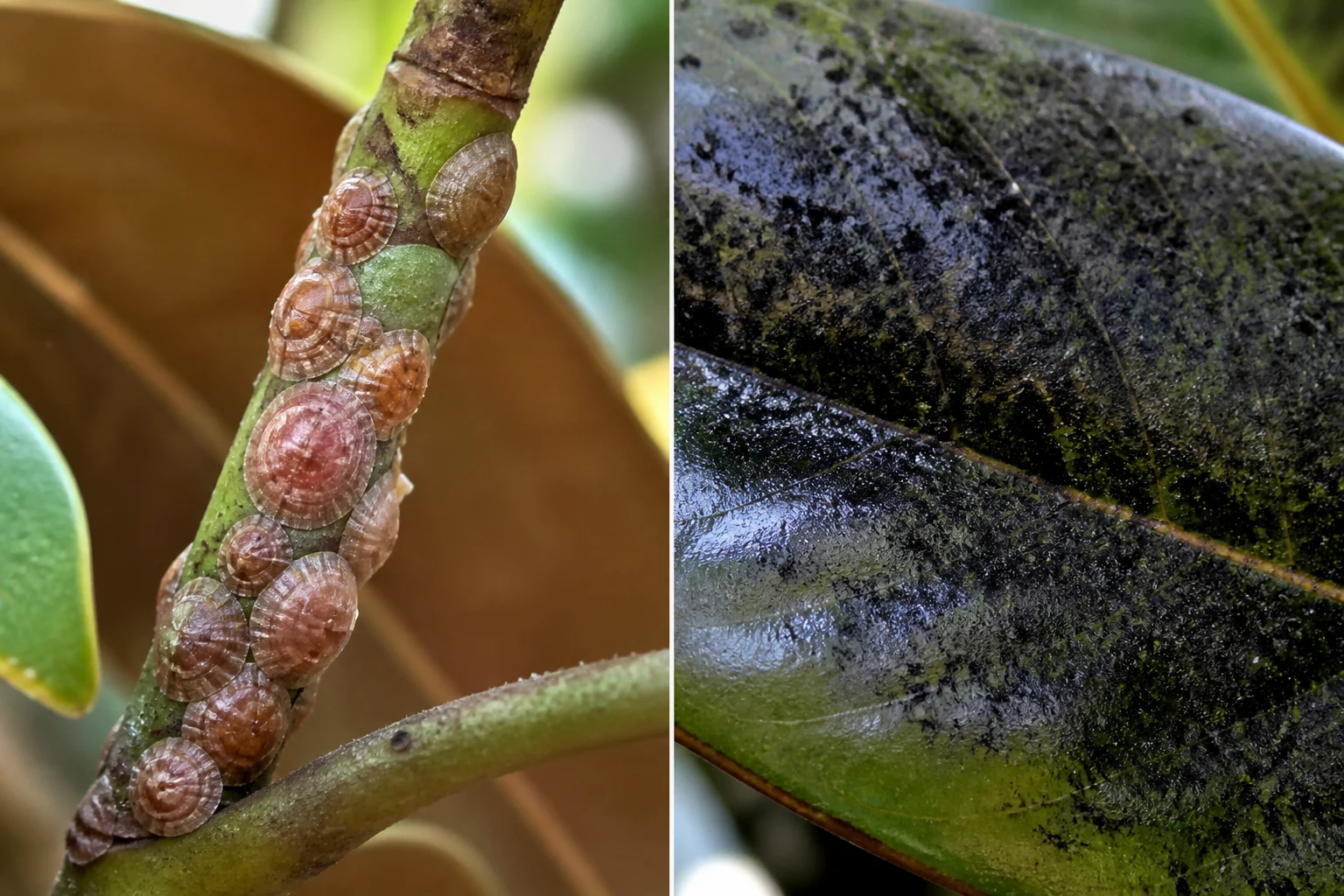
Two complaints account for almost everything owners report in warm humid regions, and they are the same problem seen twice. Magnolia scale and the sooty mold that follows it arrive together, while algal and fungal leaf spot turn up occasionally on trees already stressed by poor drainage or deep shade.
Magnolia scale itself looks like large, waxy, brownish-pink bumps clustered along young twigs, sometimes an inch or more across. Left alone, heavy infestations can weaken twigs and reduce next year's bloom.
Sooty mold is not the pest itself but a black fungal film that grows on the sticky honeydew scale insects excrete. Wiping a leaf clean rarely helps for long if the scale producing that honeydew is still present higher in the canopy.
Scrape light infestations by hand, or treat with horticultural oil in the dormant season.
Treat the underlying scale first, since the black film fades on its own once honeydew stops.
Improve air circulation and avoid overhead watering rather than reaching for a fungicide first.
Can Southern Magnolia Handle Cold, Pets, and Family Spaces?
The safest climate zone for standard Southern Magnolia is 6 through 9. Zone 5 gardeners can still try hardier named cultivars, but they need a sheltered site and realistic expectations after rough winters.
This tree is not in the same danger class as oleander, but it is still not an edible yard plant. Cones, leaves, and bark should stay decorative, not something kids or pets chew on.
The payoff for all that size is habitat value. The flowers feed pollinators, the cones feed birds, and the dense evergreen branching adds shelter that many open-canopy trees cannot give.
Frequently Asked Questions
Is southern magnolia too big for a small yard?
Standard trees usually are. A compact cultivar can work in a smaller yard, but only if you still give it real room away from the house, walkways, and neighboring trees.
How far should I plant a magnolia from my house?
That depends on the cultivar, but most trees need more room than people expect. Standard forms often deserve 20 feet or more of clearance, while compact cultivars still need honest side room for roots and lower branches.
Why is my magnolia dropping yellow leaves in summer?
Some older leaf drop is normal, but widespread yellowing often points to drought, slow drainage, or nutrient stress. Check soil moisture first before you change fertilizer or spraying plans.
Do magnolias have invasive roots?
They have wide strong roots, but the bigger issue is space rather than aggression. Problems usually start because the tree was planted too close to hardscape, not because the species behaves like a willow.
When should I prune a southern magnolia?
Only when needed, and with a light hand. Remove dead or crossing branches rather than shaping aggressively, and avoid turning a specimen tree into a maintenance project.
Sources & References
- Southern Magnolia, Clemson Cooperative Extension
- Magnolia grandiflora, NC State Extension Plant Toolbox
- Selecting Trees for Your Home, University of Georgia Extension
- Magnolia grandiflora, Missouri Botanical Garden Plant Finder
- Southern Magnolia, University of Florida IFAS Extension
- Toxic and Non-toxic Plants: Magnolia Bush | ASPCA
Related Plants
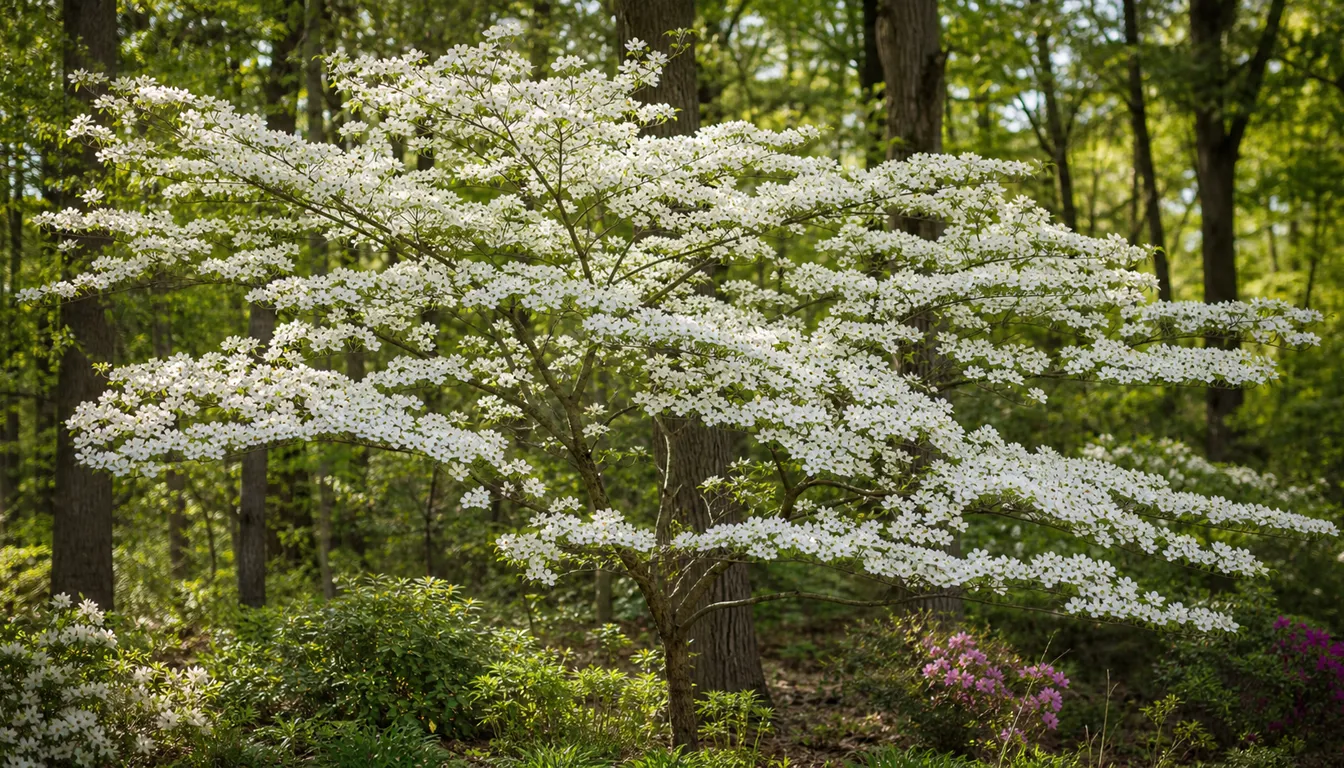
Flowering Dogwood
Smaller spring-flowering tree if you want bloom without the huge evergreen canopy.
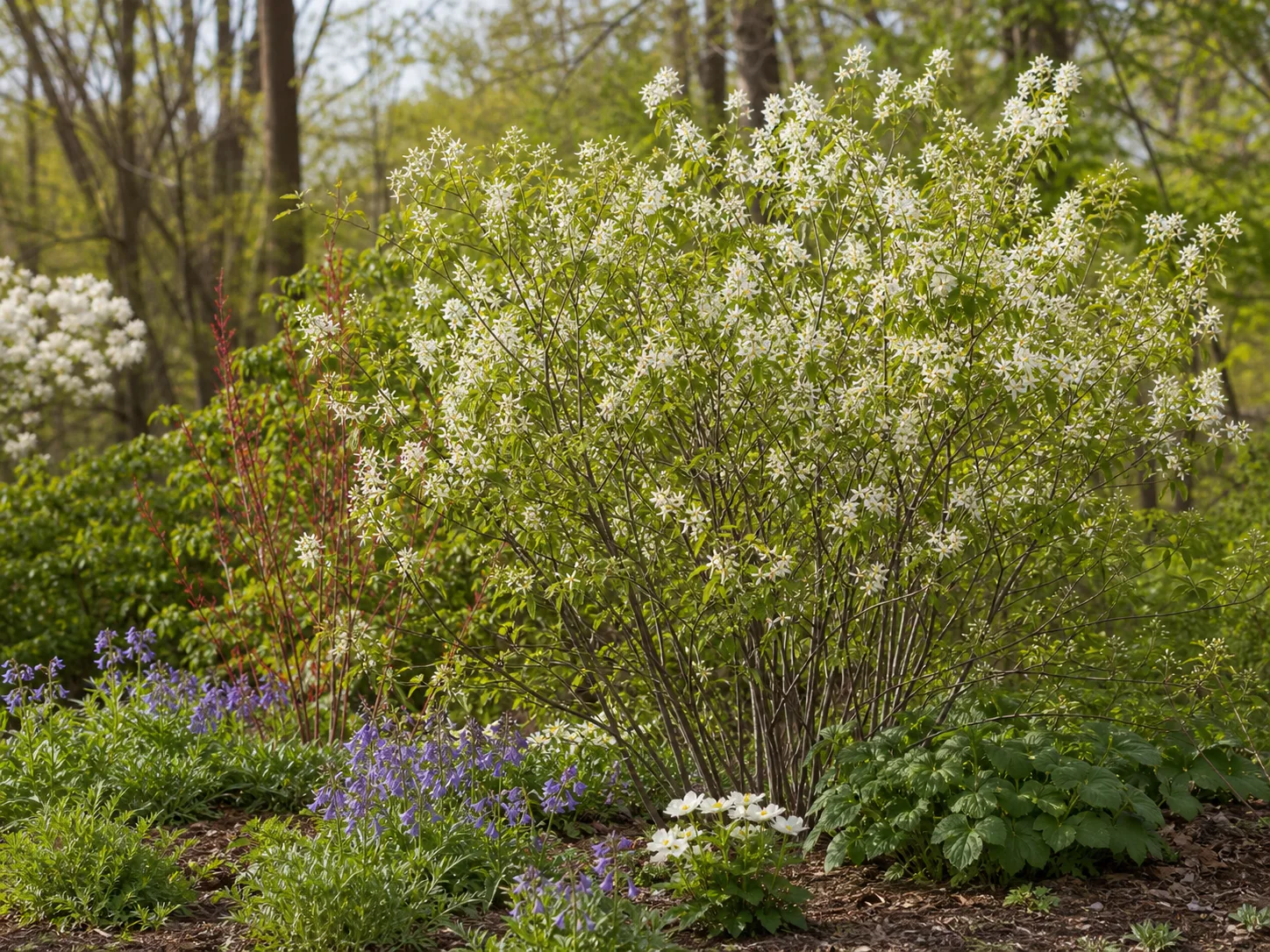
Serviceberry
Better for small yards that want flowers, fruit, and lighter understory scale.
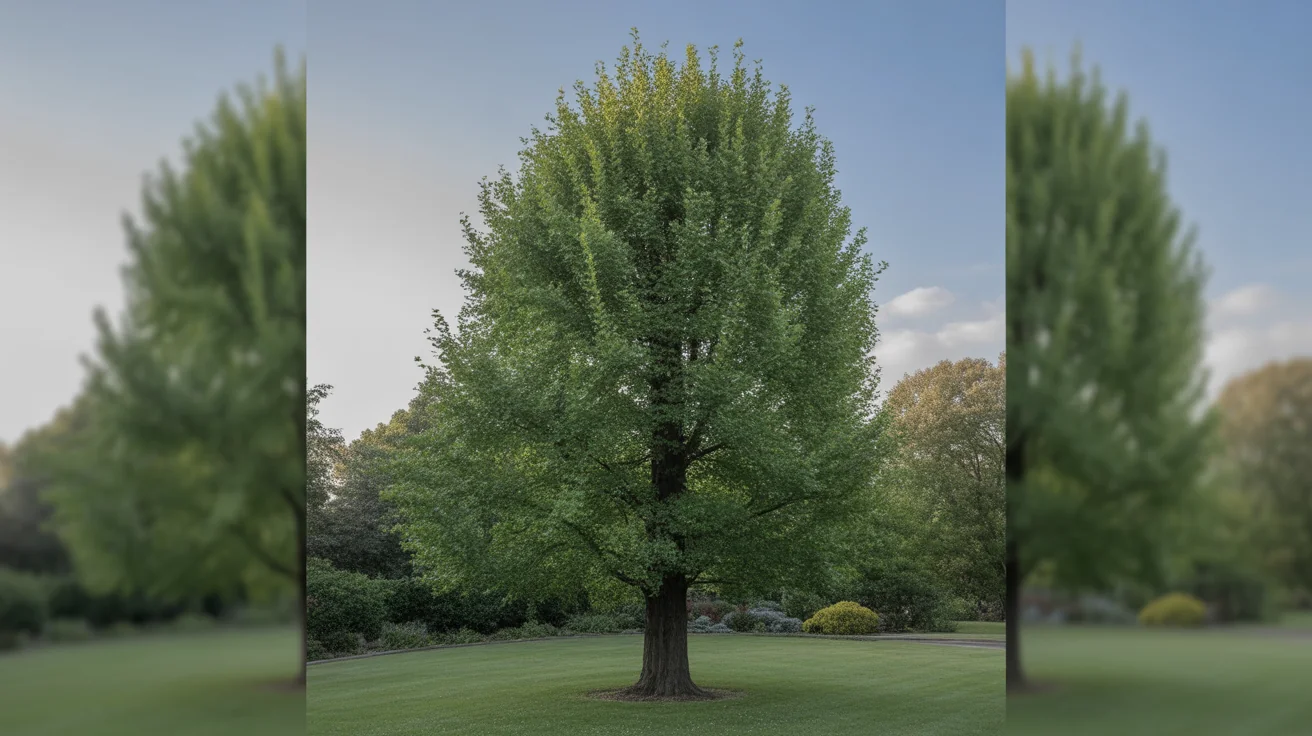
Ginkgo Tree
Another long-lived specimen tree, but deciduous and tougher for harsher city sites.
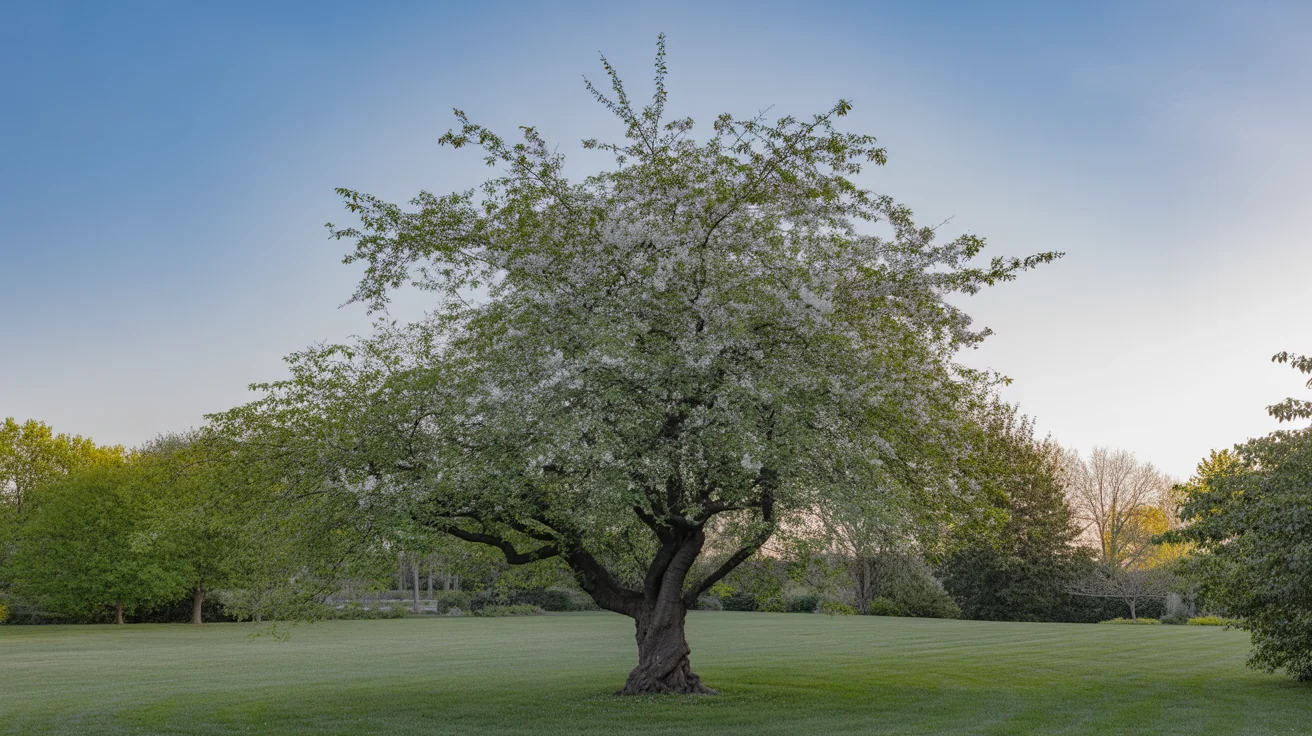
Cherry Blossom Tree
Cherry blossom tree is a common name for ornamental cherries grown for spring flowers rather than a useful fruit crop.
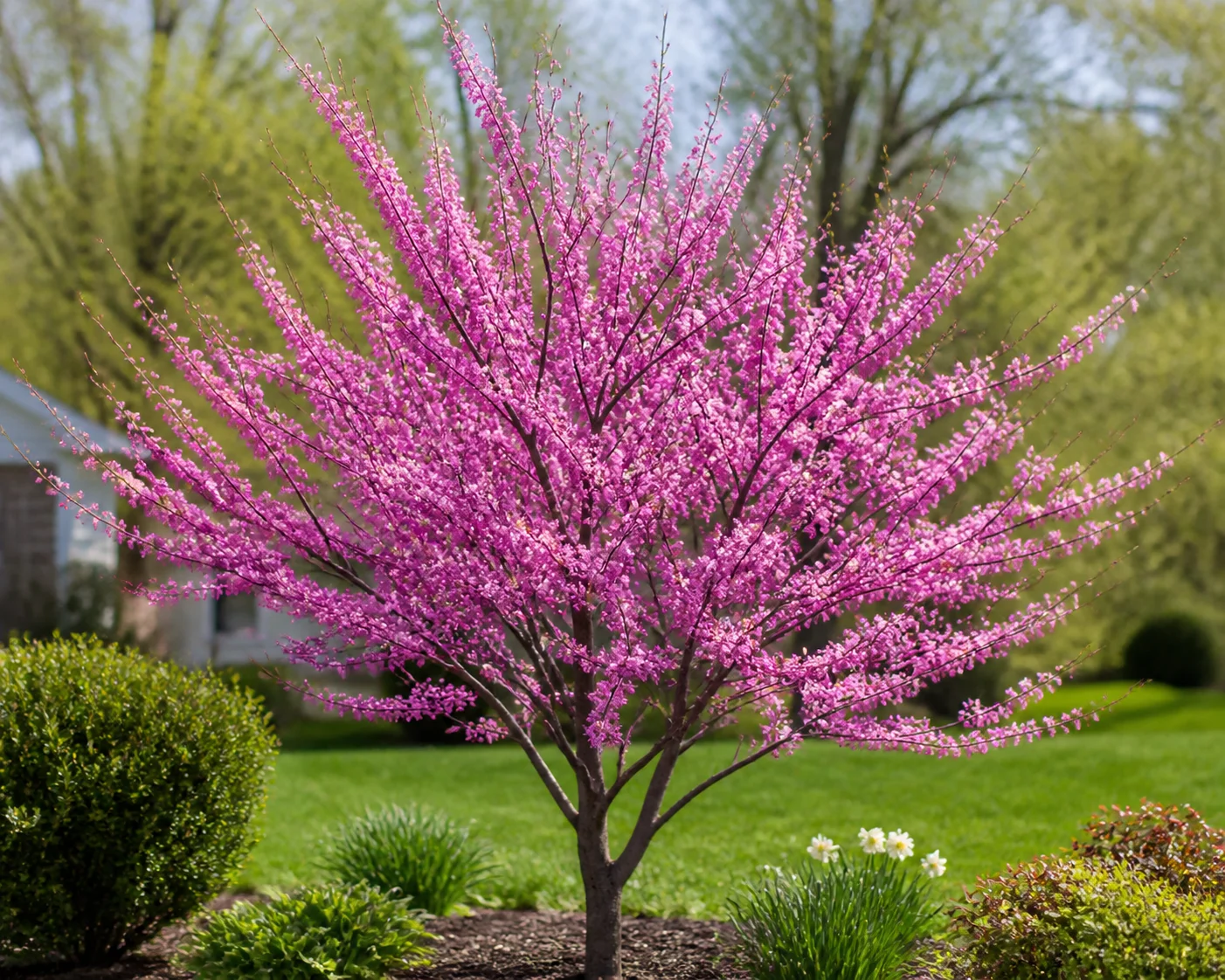
Eastern Redbud
Eastern redbud is a small North American tree with pea-like flowers that open on bare twigs and older wood.
Japanese Cherry Tree
Japanese Cherry is a short-season show tree with real structural limits. The best care is not chasing bigger growth.